[Music] Okay folks, we are in the second part of the ICT scout sniper field training guide and this episode is going to be dealing with boot camp. Okay. Now, what are we going to be covering in this presentation? Well, first we're going to be reviewing the previous episode's assignment, the mark. We're going to be referring to time of Day and the effects it has on price. We're going to be looking at the day of the week and again its influence over price. We're going to be covering institutional orders and pairing of orders. We're going to
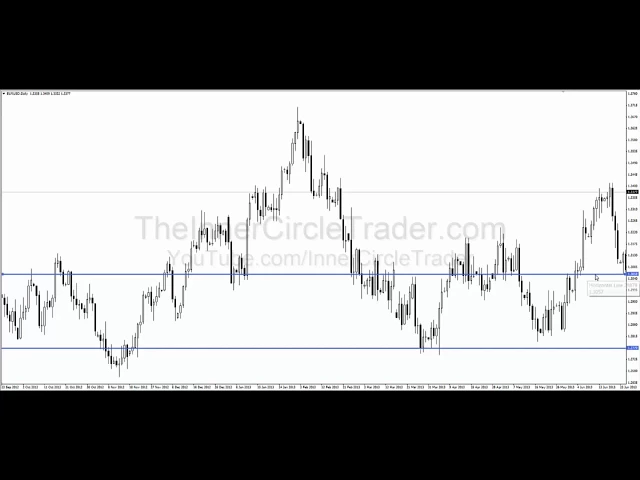
be briefly introducing the market makers business model. We're going to be looking at characteristics of a price swing, specifically dealing with time, price, And melding the two with support and resistance. We're going to discuss price fractals and their role in analysis. And we're going to give you another homework assignment, price reactions. Okay, we are looking at a daily screen capture of the EuroUSD pair. And this is a daily chart. Again, it's specifically highlighting a swing in price that we're going to be dealing with. It's going to be in the latter stages of this price Swing,
but it's not imperative you understand what caused that that swing lower at this juncture because we will cover in greater detail all of these types of moves and how we can far that type of price action out in later episodes in this series. But for now, we're going to be dealing specifically with the fiber in this uh pair. How we can look for um turning points and how we can anticipate certain uh characteristics and price action that Repeat over and over and over again. And I promise you, when you are finished watching this episode, you're
going to have a far greater understanding of what price action is like and how you can use it going forward in the new week of Forex trading. Okay, if you remember the last episode, I gave you some homework regarding the first week of July of 2013. Now, if you're watching this video and it's a number of years old. Um, I apologize That you got to the party too late, but that's not my fault now, is it? But we're going to go over some some details here so that way you can at least digest the the
main focal points and how you can use it going forward. These are very generic concepts. They do not fall out of favor. They're not a Fed gimmick indicator. These are essential core tenants to price action. And I promise you, if you apply these things not only just to the the fiber pair, but If you look at the cable and all the other majors and the exotics as well, you'll see these reoccurring themes that take place over and over again in price action. Now, the screen capture we're looking at here is a 15minute basis, and we're
going to digest a lot of information just in this small sample size of price data. Let's look at the second portion of study we gave as part of your assignment in the previous episode. Now, we're looking at a price rally. Okay? And in this price swing, we're going to be breaking this specific price swing down and how we can utilize generic concepts that go along with every facet of smart money trading. Now again, this is a 15-minute time frame, but we're going to be applying smart money concepts to this time frame that are based on
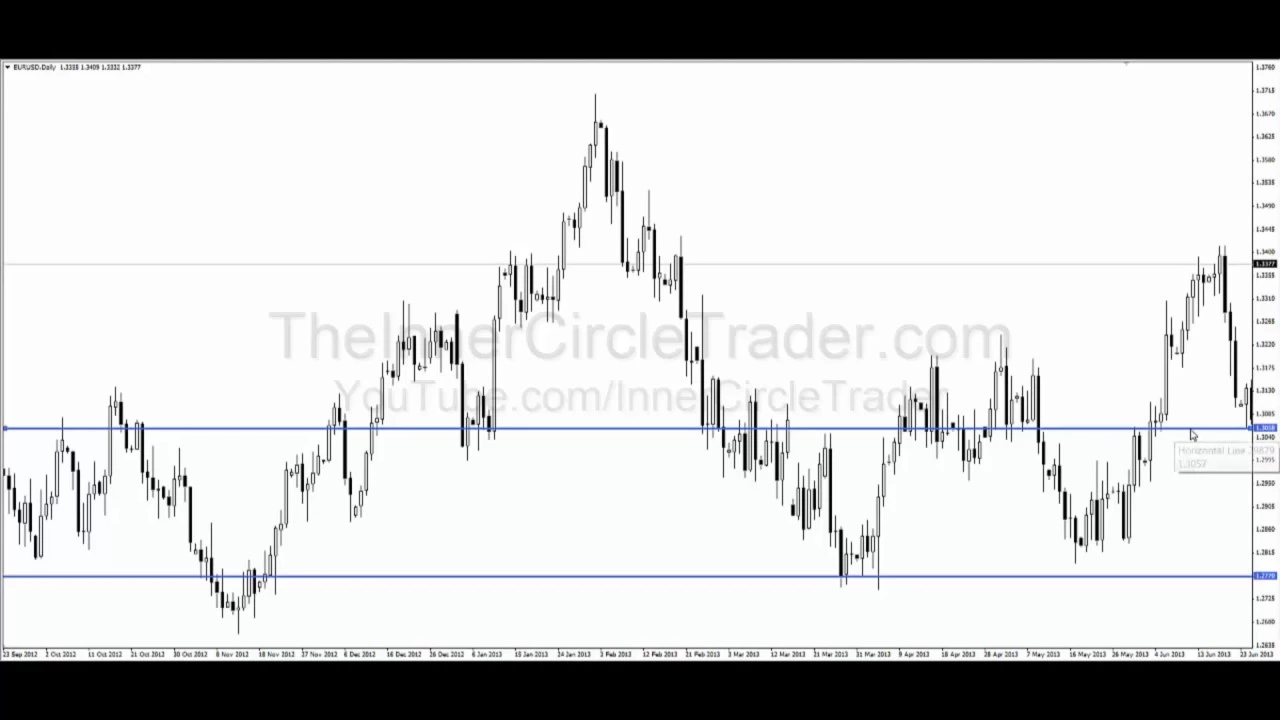
a higher time frame, which is where the institutional level traders and banking traders do the majority of Their analysis. Okay folks, we are looking at the fiber Euro USD is the daily chart and this is the top or the highest point of the price swing that we're going to be analyzing and our first sample size of price action. But I want you to keep your eye on what takes place in price and as price starts to slide down, you'll start to see a pause in price action here. And you see this is the first bullish
candle in this down leg. Now, if you look to the left over here, you'll see a small little consolidation in here. And you keep going over to the left, you'll see some old highs, a consolidation with some highs and bodies of candles, a short-term high here, and a turning point here, a turning point here prior to that big leg up in price here. Okay, this was the lowest low. As price rallied up, it made a high here as well and then started to move lower in a very large price swing. It came down to a
previous level of support. Now, the reason why I have this level here is if you look at the body and wicks of all the candles in here, you have the the low, the wick here, the wick essentially in here, the top of this candle's wick, this wick here, just stab it just a little bit. Again, same here, the bodies Of the candles here. Okay? And if you look at really essentially it's the 12770 level and price when it come down to that same price point again the body of the candle stopped here. Granted the wick
of the candle traded through it just a little bit. Then we have the body of the candle here as well with a small little wick as well. The body of the candle here comes right down to that same level. Rallies and trades right through it one more time and then starts To rally off. price comes back down, makes this smaller short-term swing lower. Okay? And I promise I'm taking you somewhere. I'm just going over the major price uh reactions and and and levels that you would be hunting in your future analysis in your demo account
trading as you develop as a trader. when price bounced off this level, came right back down to the same point or cons uh consolidation in here and price Come down to that uh same price level. Notice we failed to get to that same old low or support level 12770. Price found a new level, consolidated and moved out of that consolidation and started to trade higher. Now this price swing in here, okay, is the basis of this price rally here. Now, as price starts to move lower, we would be looking for areas where we would reasonably
expect to see price to stall. Price bounced here. Now, just for illustrative purposes, let's just use the very low the wick here. And it's going to double check the candle. Make sure I am indeed on the low. The low is 13058. And we're going to move our level right to that point. Now, you can see this swing high. Remember, we talked about in the first episode, a swing high is a high that has a lower high on either side of it. Okay, We have a nice level of support and resistance in here. Same thing here.
Nice support resistance. Nice support and resistance. Nice support and resistance. Again, same here. Okay, we have a nice swing high as well. So this price point while it is an off even number it could be very easily calibrated to 1360 level. Okay, which I think is a much more Reasonable level to move this line to. And what that means is the institutions like to use large round numbers. Uh they're not so finicky in terms of trying to get like the uh the eights and the fours and the threes and such in terms of filling. uh
they they'll just use the round numbers to get their orders off on. And I'm just going to key that in here manually. So you can see. So I'm using 1360 as a round number. You see it gets right to that high here as Well. And again, it doesn't really essentially change too much over here, but when we get down to a smaller time frame, it might be more useful to us as we see the levels more closely calibrated to a smaller round number. Now, when price gives a bullish candle here, this by itself indicates a
lot of different things. And this episode will not be um uh long enough to go into the information that these types of candles create, but I promise we're going to Delve into those things in later episodes. But for now, we're going to be giving a lot of generic broad ideas about how smart money operates in the marketplace and how you can more or less follow their coattails and try to hopefully uh see a profitable swing in your favor. Now, as price continues to move lower, okay, this same bullish candle, okay, when we caused this uh
bounce in here, Something about this level at 1360 was a catalyst. Okay, now institutional level trading again revolves around round numbers. So, a lot of questions I get through email and if I'm haunting a particular forum or such, they will invariably ask me, hey, ICT, can we get a little bit more understanding of how it is that you arrive at what would be considered your key support and resistance levels? And what do you mean by institutional levels when you say uh Price is going to come down to this institutional level or you expect to see
uh particular levels swept? Okay, I'm going to cover that in this module so that way you have a greater understanding. That way, not only will you understand my videos when I do reviews and and trade recaps, what I'm referring to, but you're also going to see how to look for it in your own charts, and you'll understand what it is specifically that price action is doing And why. So, price bounces here, okay, at an old swing high, bounces here. Now price trades through it, but if price ever comes back at that same level, that is
a potential area of a setup. Okay, so we could look for a selling opportunity should price get to that same level again in the future. And you can see price trades right up to this level here. Uh the high of this candle comes right in At 13059. say we fell one pip short of the actual round number, but you'll see when we go down to a smaller time frame, it really doesn't make that much of a difference because there's a lot of other factors that will be more beneficial to us. So now we have the
next candle here. It sweeps up through it and then trades lower and closes on the almost the low the candle. Price trades right back up into a Bullish candle here right into our 13060. Now, the high again on this candle comes in at 13073. So, we're 13 pips off. So, again, we're looking at a daily chart. So, if we're going to be just off by 13 pips and we're looking at the daily ranges, again, these are all full daily bars, that's not bad in terms of, you know, highlighting areas of potential uh setups or bounces.
And that's your your your framework is going To build upon this because it's not about getting the weekly high and riding it all the way to Friday or the weekly low and riding all the way to Friday or getting a thousand pips a month or trying to keep up with the next guy learning my concepts. That is not what you're trying to do in the beginning. What you're trying to do is build a fundamental base of price action and we're going to build and expound on that each episode. And I Promise by the end of
the eighth episode, you're going to have a wicked understanding of price action. And you're going to be blowing your socks off. And not only will you be impressing yourself as you go and deep deeper study of price action, but you're going to start seeing by studying the other quote unquote street money or less informed traders that invariably talk on forums or you see them even in uh you so-called expert circles. they really Have no idea what they're talking about. Okay, so again, really go through this video module a lot. Not just one sweep isn't going
to do it. You're going to be going through this a couple different times and there's a lot of things that's going to go right over your head the first few times. But I promise by taking notes, yes, taking notes. Remember, you're supposed to be having a notepad next to you as you watch these videos because When we discuss a specific topic, you're going to be wanting to know the details or specifics around that concept. So that way, it's not that you have to go back to this video and see it or which video it was
that specifically talked about this concept or that. You'll know where to get the information from, okay? and how to apply it without spending too much time chasing after where it is in the fundamental concept behind it all. So again, we have that 13060 level in Here. Okay, this daily candle trades up into it. Just squeeze through about 13 pips and then the next candle, we have a very nice reaction here trading lower. Now again, all we're looking at is how price is moving on the daily chart. So, as we see price moving lower, we just
keyed off of a nice price level here. Now, as price is trading lower now, where would we reasonably expect price to trade back down to if it continues at all? Because there's no guarantee that Price is going to continue lower, but because we have seen price trade off such a nice move lower, we broke through old highs. So, now what are we going to be looking for? Old lows. They are found here. And if price trades through that, where would we go next? These lows. And if price was to trade through these, where would we
go next? These lows. Okay? And that's what you're looking for. Again, a consistently highly successful Trader does majority of his analysis on the higher time frames. Okay? uh you don't have to spend so much time on the monthly charts and you don't have to spend so much time on the weekly charts but it's advisable but certainly spend a lot of time on your daily your 4 hour and 1 hour only if you can't really discern anything like right now if you need to be trading you know short-term day trading uh you know that's when you
Spend a whole lot of time on your hourly but really focus on your 4 hour and daily because that's where the banks the institutional level traders and the smart guys like you're going to try to be in the in the future by applying these concepts. You're going to be spending the majority of your time doing your analysis on these time frames. Now, it flies in the face of what you're commonly referred to as this is too slow. Well, that's fine. That's exactly What you want because you're going to learn later on this in in this
episode, slow is good. Okay? And one of the uh central tenants to understanding what you should be doing as a trader is understanding what traders are hopefully trying to capitalize on and that's price movement. Now I'll give you a quick question before we go any further. Can you as a retail trader move the market? No, you can't. Can we as a group of retail traders move the market? Sure. on a shortterm basis, but not very much. And we're talking about a minor little blip in price action. So, who is it that moves price? Who can
take price from these levels here all the way down here? They are the large dominant players or what is commonly referred to as the smart money. Same entity takes price from these levels up to here and vice versa from this high down to this low And this low to these highs. this high down to these lows. So the question begs is this. If you're not spending time trying to learn what it is that they do, okay, on a larger time frames, aren't you really shooting in the dark? I mean, you're really not giving yourself any
real measurable um chance. you're stacking the odds against yourself if you're looking at time frames less than 60 minutes all the time Because there's no there's no neon sign jumping out on your chart saying, "Okay, this is a buy." Now, you may believe that's the case, but I can assure you that is not how it works. If you spend the time in the exercises that we're going to be covering in this episode, really roll your sleeves up, get yourself some time in front of the charts, and spend some study, not looking for trades. You want
to be studying what price has done in the Past, why it's behaved that way. And I promise you will activate your reticular activating system where it basically tells you every time you see something that you've grown accustomed to seeing your your brain will immediately allow that to come into your mind and you'll receive it and you'll say, "Okay, the last time I saw this happened, this is what transpired as a later effect." If you don't first train your mind to see what it is that price has done in The past and it repeats over and
over and over again, invariably you're going to be a better trader because of it. Now, I'm not saying better trader is consistently profitable. That's nothing that I can promise. What I can promise is you're going to have a much greater grasp on what price action is doing. So then you can start applying some concepts even from your own repertoire or your toolbox that will assist you in making trade decisions. Now again, I'm Not advocating you use real money. Learn to to develop into the trader that you aspire to be with these ideas to stimulate your
development. Again, I don't want the credit for your success and I don't want the credit for your losses either. So, please be responsible with the information I'm presenting with you in these modules because again, I'm not acting as an adviser, but I'm just showing you the things that I do in my own trading and what I've done for Almost two decades. And I promise if you spend some time with it, you're going to see some value in it. So we have this 1360 level in here, okay? And price starts to trade off. And as price
moves lower, again, we're eyeballing these levels in here. Now, as price starts to move into these lows, we could reasonably expect to see pauses, bounces, but you can see there's a very large acceleration moving lower. Price Gets a small little bounce in here, this little bullish candle. Okay? And that's on the heels of these lows here. Okay? But price eventually trades all the way down right into this 12770 level again which is that level we have over here and these lows here and you can see how price reacts there. Now there there really isn't any
magic to this. is since simply understanding what the institutions have done in the past at that particular level and when price Comes back down to it, we anticipate the same reaction or a similar reaction in deference to what price is going to do next. Uh we don't have a crystal ball. We don't know for sure what's going to happen. There's no guarantee that it's going to always transpire like this. So that's why we use stop-loss orders and we use sound prudent risk management modules models rather where it gives us a shield. Okay, we're not we're
not expecting perfection. We're not Expecting to know every single swing in the marketplace. We're not expecting to not be stopped out in trades. we're expecting to be more consistently uh positive than negative and permitting ourselves to have that occasional and maybe even string of incorrect I'll use that term for now because I don't want to talk in terms of profitability yet uh in terms of correctness in our analysis. Okay, that's where you want to be um focused On now. You want to be looking at are you doing the same thing consistently over and over and
over again with a large sample size of data that supports this theory. Okay? And we're going to give you a whole lot of things to look at that you can study on your own because I'll ask you this also if you're new to trading and you have your your charts open. Maybe you're at work or maybe you come home from work And it's, you know, over the table, dinner table, you got your laptop or iPad or whatever it is that you may be using to look at charts and you're looking at these price charts and
you're staring at it like a deer in headlights trying to figure out what it is that you should be seeing. A lot of that fog is going to be lifted. Okay, it won't be completely eradicated, but it's going to be lifted in this episode. Okay, so you can clearly see Just by the simple approach of looking at the higher time frame charts here. Look at the nice price moves here from this same level we just highlighted here. Okay, if we look in terms of pips, now again, we're not expecting to get the entire move, guys.
So, please don't build that as an expectation on your part, but if you look at that move from that uh level down to this level, that's 292 pips. That's pretty respectable. Now, again, these are all daily candles, So that's less than a month. So, if you break that down, it's pretty uh you know, it's a pretty good month. I know you're probably scratching your head, wait a minute, I'm not making 500 pips a week. No, I don't shoot for those types of levels in terms of pips because there's no guarantee you're going to get that
high. Two, it puts an unrealistic level of expectation as a uh trader should not be doing as they're developing. even a season pro and I'm Not going to you know well yeah I guess I will I am I could guess I would be able to be classified as a season pro I mean almost two decades of doing it um not specifically forex but trading um I think I would fall in the category as a season pro and I don't have these highlevel expectations that you new traders uh are expecting and I I consider myself pretty
avid in terms of um price action understanding and I I have a good feel what price is trying to Do on any market any time frame but it doesn't mean I'm in there every single day 15 times a day because the common question is is okay once you understand it and you understand more and more and more of it then you can start trading more in terms of leverage you can take more trades and therefore you're going to be super rich and you're going to be the you know the next George Soros and that's not
what happens okay because what happens is you eventually grow Comfortable with the fact that you don't have to be in front of the charts all the time. Life is out there and I like being a part of it. So don't think because you're learning all these concepts that you should be spending even more time trading. In fact, I'm hopefully gonna take your hand away from the keyboard and the mouse so you don't trade all the time. And you're just going to be looking for these really cherry setups. And that'll allow You to go to the
market and pull out one that's highly stacked in your favor versus what majority of you guys do as new traders. You turn the chart on and simply because you sat down after work, it's time to make money. It doesn't work like that, guys. Okay. So again, this level here something we could arrive at simply based on old highs and old lows and again using the daily time frame. Okay. And there's a whole lot of other things that we're going to talk about Not in this module, but when we get down to actually uh understanding how
it is that we take trades and entries and such, uh we're going to get in here and start breaking down these little points of which you can use to fine-tune a specific entry point. and reasonable expectations and why where and why price is going to bounce and move extrapolated um price surges and and drops and like like this here. Okay, we just covered this one here and we're not going to Beat it to death because we are going to be breaking down this little section of price action. But moving ahead, you can see price does
have the very very aggressive move higher and then we start to consolidate. Look at the wicks. Okay, see the wicks? They're all stabbing through that 3060 level, but the bodies are having a hard time making any measurable move lower. You see that? Now, watch what happens. This same level now, okay, becomes an Inversion level where it was support here, it inverts. Now it's changed its uh role and now it acts as resistance and as price comes right through it again here. Now we're on the northern side of it again. So now it resumes its role
of what? Support. Okay. So this tells you that the institutions are doing some pretty significant dealings around this level here. Okay. So as price moves away from it here and if you see any kind of type of retracement Here, this is when you can start to hunt a buying opportunity because now we can trust with a certain measure of expectation that this is now going to potentially hold price above that 1360 level. the price rally up here, this level here becomes sensitive because this old low here, which is these old highs here. Okay, so again,
we're looking and studying, not just, okay, well, I'm going to grab this high and this low. And if you just look at these highs and it's this low and this high until price gets to these level, that's a long time you're waiting for. You're going you're not going to be doing a whole lot of trading. So, what are you going to do? You're going to chase systems. you're going to chase something that you know is more active. Okay? And that's problematic for a new trader because it's not about how many trades you take, it's the
quality of the trades That you take. Okay? So now when price moves away from this level here, we could start looking for other specific price points that will aid us in support resistance. Now, these old highs here, price trades right up into them again, okay? And then trades off. Now, again, it's not about capturing every single major high and low. You just want trading opportunities. Just in this price swing here is 191 pips. Just this 191 pips. And we're talking about a week's worth of trading. And then price does what? It snaps off again. What
did this rally take? um action off of. See this high here? See this swing low in here. You have a lot of body candles and then boom, right here. And you see price rally up. price punches through this high and this high and gives us a reaction here and then trades back into this candle as well. We're going to be looking at two sections of this market and we're going to be looking at this move here and we're going to be looking at this move down here. So, we're going to be looking at a trending
environment, which is what this is here, and a potential reversal area. And we're going to be looking at this specific price sample here. And it's a little bit different characteristic of this that will not be so noticeable here. Okay? But we'll talk about it in uh in greater detail in other episodes. But let's for now let's take a look at this section and price action first. Okay, we are in that small little section of price. And what I'm going to do is I'm just going to pull up this area here. As you can see now,
the first episode I talked about looking at the 1st of July To about the 9th of July. Okay? And I wanted you to study what price was doing in all this sample size of data. Now again, we were talking about that section. And this is where price was moving down, trading lower, lower, lower, aggressively again off that 1360 level that we noted. And again, I'm just going to add that level back here so you can see it. Okay? And this is that daily move where it trades right up into it and then had a bearish
move lower. Okay? And then we started to move lower and lower and lower. Because we study the higher time frame, we can discern where the institutions and large traders are more apt to to muscle, if you will, the price of a particular market one direction or the other. You as a retail trader, me as a retail trader, I can't move the market. I have to rely on the entities that are large enough that their orders and their uh buying and selling Pull price out of the current status that it's at right now. For instance, when
price was trading around that 1360 level in here, let me fix this level here. when it's trading here, large institutions come in and they put big orders through, okay? But they don't put all of their orders in at one time. They have to work that order in because they're not like you and I where we're hoping to trade, you know, uh 100,000 of Euro, okay? They're not worrying about making $10 a pip. you they're moving massive blocks of uh price orders that hopefully can be uh filled before price starts to move away. So, as price
moves into these levels, they're putting small pieces in at a time. Okay. Why do they do that? What is it specifically that they're trying to avoid? Much like anybody else, they want to get a good price, but because they're smart money and they're on a institutional Level, they are huge. Okay? For instance, um let's take a step back conceptually looking at the market, okay? The Forex market, you'll end up as a new trader, okay? we have a very childlike perspective of this is like a video game or this is um this is an adventure, okay?
Or this is going to be very fun. This is going to be my new hobby. And we'll stick with the childlike theme. Okay, so this represents Forex. Looks inviting, doesn't it? Just want to jump in there and and have a splash. But we're going to use this analogy, this small little pool here that will represent the market. Okay? The arena is the pool. Okay? And price is the water. We can get in that pool and we can make little splashes around. Okay? As retail, but that water will not be displaced by retail traders. We'll make
small little minor little blips, okay? like you see here. Okay. But when smart money Gets involved, okay, they're like that elephant in the room. You can't really hide him. He's standing right there in front of you. Okay, imagine if that same elephant now decides it wants to join the pool party. What are you going to have? You're going to have a large displacement of water. They cannot hide it. Okay? they are invariably going to be noticed if you understand their footprints. Okay, as price trades up to this level at 13060 Level, it's trading off. It
trades through it again and then trades off. It trades through it again and then trades off. See, this is the first telltale sign that somebody on the big level. Okay, we don't need to know who specifically, but we just know that somebody on a larger perspective is now getting involved with this market. And what are they doing? They're shorting. Okay, they're becoming sellers at an at a level now that we discerned on the Daily chart that this is probably going to be an area that's sensitive and price comes up, stops right on a dime here,
then trades off a little bit. Now, what's happening is they'll put orders in, they'll sell a little bit and sell a little bit and sell, sell, sell, sell, and eventually when they know they can put their last bit of uh, you know, their trade on, okay, they will, you know, just stack their orders all in this level and it may be a Little bit above it, a little bit below it, but they're generally trying to get an average price around that 1360 level. Okay? It may be that 1350 level as well because it's a it's
a half of a full figure mid-figure level. So that may be the price level they're actually working to. But as price moves above, okay, you can see how every time it does this around that level, just look at this whole price action in here. You can see that this is a failure to run above this Old high. Okay. Now, when we see price trade off like this and it fills in all of that price decline like it does here, okay, this is smart money trying to get that same price action. They put a large block
on here. Now, their liquidity is limited to whatever's there at the time. So, if there isn't a large pool of buyers here, okay, there will be a issue for them to get the rest of their orders off. So what they'll do is they'll put small and again to us it would be large But to them it's small blocks to get their overall average price of their net short position that they want to be establishing once it's established. Okay, price will do what? Drop. Because there will not be any more buyers for the other side of
their trade. Okay, there's no more buyers. So what's going to happen is it's going to create a heaviness in the marketplace. So now the net selling will take a Larger toll on price action. And as price starts to trade back down these every little rally in here, okay, will be new selling opportunities. Now many times you'll see traders see these rallies here and they'll chase that. How many times have you done that? See this type of thing here? Look at this, man. It's rallying up. I better chase it. Let me buy this because it's probably
going to go through these levels here. It's going to go through these level. It's Probably going to keep on going and maybe we'll see 130 150 or whatever else the guy in the forums or on the internet was talking about how it's going to go there because their cool little indicator said so has nothing to do with any of that. Okay. If you start looking at how price is now moving lower, okay, you can see they're rapidly moving price to a specific price point where remember that 12770 Level on the daily chart that we looked
at. Let's put that in right here. And I'm sorry if I'm boring you guys because, you know, this isn't sexy. And it wasn't sexy the first time I learned all this stuff either. In fact, I ignored it. I I said this is this is so boring. It has nothing to do with making money. I want to get in and get out. Okay? Had I understood what I understand now, okay? And if you're struggling with This right now, if you're falling asleep, try to really get this point. If you can't grasp this concept here, wild success
will evade you. Consistent levels of success will evade you. Sure, you might have moments of profitability where you have a string of winners, but anybody can do that. If you have a career of consistency, then now you're talking. Okay? Because you're going to be doing what? You're not Expecting to be smart. Okay. Does it take a certain level of uh understanding? Certainly. But you're not trying to be a genius. Okay. I'm not a market maven. I'm not in here, you know, uh understanding every detail or fundamental driving force behind all these moves. But I understand
by looking at price action, what's the psychology behind it all? And that's what we're dealing with in this episode because this is one of those central market Tenants that just is glossed over in text. Oh well, you have to understand market structure. You have to understand market dynamics, internal pinnings of the market. Okay. And that was the actual the last thing, the internal pinnings of the market. That was an expression I learned from Larry Williams. And the term ex, you know, it intrigued me, but he didn't really go into great detail as to what the
hell he was talking about until you spend a lot More time and money in his work. And I'm not sure if that was planned because he is an educator by trade, but he is a successful trader as well. So, you know, one could argue is it really meant to be learned all in one time? Who knows? I don't know. But all I know is if you spend time understanding these ideas that we're expressing here, you will be far far greater in terms of a price action trader than you learn in books or on your own
because you just don't learn This stuff, okay, just by turning on the computer and going to the internet unless you're watching my channel. Plug plug. So anyway, let's get back to uh what we're looking at specifically in here. Now, the first decline here and trades right back up into this level. Note that this price drop takes out a major, well, not major, but a significant swing here as we trade into that level. Now, again, the main focal point is the higher time Frame key level, that 13060 level. Okay? We don't go to the lower time
frames hunting a pattern or a signal or a a setup and then try to find a level that supports that notion. That's not how we're doing this, okay? You start on the higher time frame chart and you find key levels, okay, that are obvious because if they're obvious, that means it takes all the guesswork out. Now, it may take some patience on your part. That dreaded word, P, patience. The long and short of this is you're going to need to exercise a whole lot of patience because until price gets to these higher time frame key
levels, you aren't going to see institutional sponsorship behind the moves. Okay? Unless you find a move like we're describing here where we have a level noted on a higher time frame and another level based on that same time frame that is a higher level support level. So between these two levels here, we don't Have a whole lot in terms of higher time frame support line lines that you that would really expect to see price turn around on a dime. Okay. Now, we do have intermediate term swing lows here. Okay. And we have short-term swing lows
here that cause pauses in the marketplace. Okay? But we're not focusing on the short term. We're trying to train our eye to see the intermediate term price swings. Okay. So, now let's take a closer look as to what's taking place in Here. We're going to introduce the time of day. And what we're going to do is is we're just going to highlight with uh some arrows. Okay. Um we're going to look at specific little areas where price made significant price highs and lows. Okay. And what I'm doing is because on the higher time frame we
had already established a bearish Tone to the market. In other words, we were expecting this level to be sensitive and that we would expect to see price moving lower. Okay? And where it would be low moving lower towards this level down here because it would be the next higher level time frame support level. So we have a whole lot of range to work between. Okay? And this gets to the the the central tenant of directional bias because a lot of traders It just escapes them. And it's simply because they're expecting it to be again real
easy to determine because look at the chart. Well, you have to go and spend some time on the higher time frame because that's where it's going to tell you. So, we have a range of 291 pips between the high here and the low here. these two higher time frame levels. So, 290 pips. Now, watch what happens. We're going to be looking at Oops. Let me get the rest of my highs in here. And okay, so we have highs represented here. Okay. And we're going to be looking for things that are generically uh repeating. Okay. So,
we're going to introduce also support and resistance. But before we do that, we have to break our chart down into time And day of the week. Now, the double lines represent Sunday. So this vertical line to this vertical line represents trading for that week on a Monday. From this vertical line to this vertical line represents Tuesday. This vertical line to this vertical line is Wednesday. And this is Thursday's trading. And then Friday. Then we go into a new week on Sunday. On your notepad, write this very, very big, okay? And underline it. in bearish Market
environments. Okay, what do I mean by bearish market environments? If the daily chart is poised to move lower, you have a 70% chance of seeing the high of the week form by Tuesday's London open. Okay? So if you have a bearish expectation on the marketplace, expect the high of the week to form by Tuesday's London open. Now, sometimes you may get that weird crazy move that will take out Tuesday's high with Wednesday, and that may be because of a major market uh you know, moving indicator or report that comes out and and that's going to
be that one wild card event where, you know, sure, you may have been in a profitable trade and if you didn't take any profits as you went down going into Wednesday's uh trading before it trades and and runs your stop or runs you out of your uh position, you know, they're going to happen and I I can't I can't I have not Been able to find a way to avoid those types of things. Okay? But by far and large, if you look at when markets are trading softer and moving lower based on the higher time
frame, again, we're we're specifically dealing with the daily chart here. Okay? But you can also move down to the 4our, but really only if it's really not clear to you on the daily. So again, the daily or the 4 hour, that's where your higher time frame uh key support and resistance and Bias is determined from because we're looking at these higher level time frame support and resistance levels that the institutional traders are going to be keying off of. Okay, so again, with the notion that this market's moving lower, okay, we would reasonably expect to see
the high of the week form on Tuesdays by Tuesday's London open or Wednesday's London open at the very latest. Okay. Doesn't mean you can't see the high of The week form on Monday. It just means that a large percentage of the time you'll start to see the um the high forming for that particular week by Tuesday's London open. Okay? And you can see that is the event here. Okay? And I promise you, if it's the first time you heard this, it sounds like a whole lot of hindsight mumbo hindsight mumbo chumbo. It's just too perfectly
cherrypicked. Go back over the charts yourself, guys. Don't take my word on It, okay? Study it. That's how you get better at this. Dig into it. Okay. When bullish market structures suggesting higher prices on the daily chart, look and see if the um the low of the week wasn't formed on Tuesday. Okay? And the times that it isn't, it's on Monday or Wednesday. And what does that what does that mean? That means a whole lot as we're going to discuss here. We see the high form for this week on Tuesday. Okay? And as price trades
up to That point, it's coming off of this low here. Okay? So, we have this low as a reference point. And it'd be nice if I would have kept that on the the load before it was drug away. Let's put that back where it belongs. Okay. And what we're going to do is we're going to draw this all the way through the week. Okay? Because this level is sensitive because it's a nice swing low going into a key level And traded off. Even this little bounce in here is tradable. But we are focused on being
what? A seller. Because of what the premise is that we have seen price trade up to this 13060 level on the daily chart as we discussed earlier in this episode. And as trade as price trades down and it starts to have these bounces, we do not get all excited and frothing at the mouth thinking that okay, now it's going to trade higher and we want to be buyer. Okay, think classic Chart patterns. Does this not look like a bull flag? Okay, price rallies up, consolidates, and it's even doing what? Finding old support. See here? See
the support? See the support? And what do they teach us in a textbook? Three points of contact confirms the support level, right? You don't think the dealers know that stuff? They know what you're going to do. They're going to hold price here. Okay. And allow what? Orders to stack Up. What kind of orders are going to stack up? Buying orders. Who's buying? Retail. The less informed traders. Okay. Well, if they're buying it, who's providing the other side of the trade? The smart money. What? Yep. The smart money. They're selling it to them. Lock, stock, and
barrel. Okay. Who's going to win an arm wrestling match? The elephant or the child? the little kid in the swimming pool, it's going to be elephant. When elephant gets in that Pool, boom, the kid is taken completely out and the water is displaced. So, what do we see? Displacement. Okay, price is now taken and driven lower. Okay, those that would have been trading what would be whatever their idea of this is a climax reversal or something along the lines that would support a uh a buying indication in here. And again, we're not arguing or making
any case for that, but we're just going to assume for a moment that Somebody out there in the retail world uh assumed that that level was probably a good area to buy. So, if they bought here, where would their stop loss be? right below that. Okay, so price is driven where to where the liquidity is going to be here. Okay, so here we're have price trade down and trade right back up to what this level now becomes another selling opportunity. Who's going to sell? Some more of the smart money. So they're going to put Some
more of their orders in and then boom, it rides lower. Okay, this short-term swing low here because we're not drawing levels on it. Okay, you can look at a lower five-minute chart and see even greater dynamic support and resistance levels, but I'm using the 15-minute chart simply because you'll learn later on that your trade setup's really going to form on this time frame. But we're going to keep it uniform and keep the continuity going. And we're going to use this low here. Price trades up to there and once we bro below through it, we we
trade through it again. Okay, but we come right back up into this old swing low here. So, I could have another level, but to keep it clean on the chart, I'm just going to keep it, you know, just like you have here. Don't expect, you know, perfection in terms of your support and resistance levels there. Sometimes they'll they'll knock Your socks off and be so specifically um you know right to the minute on uh on the pip, but we're only talking about here 14 pips in terms of variance. So again, that that's half less than
half of what my normal stop loss is. Again, um for those who don't know, I usually trade around with a 30 pip stop loss. And again, we'll understand later on why I use that later on. Again, not now. So we move into a new week. Okay, price rallies up and this little pause here And turn down happens where? Look over here. See that? Okay, so price trades down. Okay, finds some shortterm support, which we're not going to look at because it's going to be on the five-minute chart. You can do that on your own. Rallies
through. Okay, and does what? Blows out a swing high. Why? Because maybe at this point some guys have figured out this is in a down move. Okay. So they're going to be doing what? They're gonna be selling. Yeah. Those guys sometimes in the street, okay, get it right. But do you think the elephant really wants them in the pool with them? No. Okay. So what's going to happen? Well, they're going to be short. Okay. and they're going to use this old high as a a level to do what? Protect their position, right? Even if they're
selling down here or here, or maybe they saw this low here and they want to be a seller right there. Great. What are they going to use as their stop loss? It could be this high here or this one. So, let's take a look at what happens. Here's your old high and we're going to use that level and we're going to just go above a few pips. Not much. Here you go. When price trades right there, the nature of the spread does its work right there. What order would be resting here? Again, assuming that the
retail traders are short, there's going to be a buy uh stop right here. a buy stop. So when that price trades up and boop, stabs into that level here, what's going to happen to that buy stop? It becomes a market order to do what? Buy. Who's going to sell it to them? Smart money. And then when you see price rally up like that, bang. What do they do? They drive it down to their level. Okay? And now this is where they liquidate all their short positions back here. Now, they could have, you know, liquidated some
in here, okay? And that's what caused the the pause in here because now they're buying back some of their net short position that they've assumed between the 13060 and 150 level up here in this block of price action. But as price trades down to this level here, okay, they're essentially now no longer heavily net short. They may have Some shorts still on, but essentially they have been unloading every time price dropped lower. Okay, because they're larger institutional traders, they have to be exiting during the move, but certainly driving price down to a specific price point
as we noted on the higher time frame. Now, when price gets to these levels here, we could look for patterns to trade because again, this would be a higher level support level. Okay? Okay. And then you Can see price does indeed rally up. Okay. And for those that had been using these points here, okay, and trade on a daily time frame because they are 9 to5 desk jockeyies and they can't be in intraday traders. So they use daily bars to put their uh stop-loss orders. Okay, those guys are crushed as well and left feeling bewildered
and like the game is rigged and you just learned that is in fact it is rigged and there but there's A there's a means of understanding how it's rigged. Okay, let's look at these specific times when price moved. Okay, this high here takes place at 1445 GMT or 1500 rather 1500 GMT. This high here takes place at 1,500 GMT. This high here is essentially 23. What is that? 2330 GMT. And this high here is 11 GMT. This high here is 12 GMT. And the high here is 6:30 GMT. That's early um New York. I'm sorry.
New I'm sorry, early London Open or Frankfurt. This is New York Open. This is the very beginning of New York open. This is Asia. This is London close. And this is London close as well. So you can see there are specific turning points that are occurring at session open and closings. Okay? And I promise that we're going to go into great detail as to what those specific time pockets are. Okay? And in my trading, I call them kill zones. Uh it's not because I'm uh uh supportive of serial killing or or the notion of Killing
people. Um, I adopt the mindset of a sniper, but I don't I don't have uh, you know, suicidal or uh, psych uh, psychological issues where I I'm I'm attracted to killing. Okay, don't think don't think that's what this is. I I just use it to adopt a specific mindset. Okay, and and I view trading as a sharpshooting exercise. Okay, much in the terms of a sniper. So, u it's not That I'm supportive of going out and, you know, shooting people. I'm I'm supportive of the idea of being a marksman. Okay? So, please don't send me
nasty emails or or leave comments that I invariably forgot to turn off on my YouTube channel making comments about how, you know, I shouldn't be supporting the, you know, war or anything like that. So, please don't don't run with the idea of the sniper theme, okay? and and think that I'm supporting you the Killing of human life. But a lot of the themes I use in teaching comes from my way of learning. So I had to create a language for myself to understand what it is I was seeing in price action. And it also is
valuable as a means of communicating or creating a vocabulary because a lot of this stuff it it came through just staring at charts. Now when I do get to concepts that I learn from other people, I will always give credit to where credit is due. Okay? Um I Believe that's should be always the case. But you see many times and I've seen my own work, okay, appear in things that you could buy on the internet. And I just recently bought a new course and I'm not going to say who it is or what it is
in this video, but uh I was very disappointed to see something of mine and it is uniquely mine and it wasn't credited to me and I'm very uh you know disenchanted by the whole thing. But uh yeah, I might talk about it later on, But certainly not going to bring it up in this video series. But if you do see a concept um in this video series that I personally learned from someone else, um I will certainly do my very best to give them their credit as well. Let's look at the notion of fractals in
price action. And we're going to move over to our second portion of price action and study this segment of price. Okay, this is the Second portion of price that I was asking you guys to study. And what I have here is I have the price levels on a 15-minute basis because remember we talked about how price is universally um limited to trading within support and resistance levels. But each time frame has its own support and resistance levels created as price gyates up and down. What I did here, and this is certainly Not every single one
of them, but what I want to draw out with your eye is I want you to see there's a specific overall price structure here. Okay? Now, this concept is not going to be fully explained and understood by watching this one video, but if you spend time in the charts yourself, you'll start seeing these things repeat over and over and over again. And it's one of those things you have to keep looking at it before your eye gets accustomed to seeing it. And then right away your your brain will do the the magic, okay, of seeing
it, remembering, oh yeah, this is what this is. And then boom, you'll know naturally what you should be doing. And that again, I'm not talking about trading with your gut, okay? This is what you do by with your eye, okay? You're trading what you see. Price trades off of a level of support. Okay. And we're just going to assume that the 132 figure was significant enough to provide support. And price rallies off here. Okay. Price comes back down, trades down into that 130 to 30 level essentially. Okay. and bounces and runs through and creates a
short-term support level. Okay. Now, price has since been trading higher from that low we discussed when price came down in our previous example on the higher time frame where found that Support level. Now, as price moved higher, okay, you can see this stairstepping environment that you can see price doing and eventually it reaches a level of resistance. Now, we're going to show why it's a facade on your part to look at these lower time frames and expect with any reasonable consistency to be able to see what's going to transpire next without having any idea what
the higher time frames are doing. Now on a short-term level, okay, short-term basis rather with a higher time frame premise in mind until a higher time frame barrier is met and this is going to be in the form of resistance. Okay, and that would be seen up here which we'll look at in a moment. Until that is met, that barrier or that obstruction to higher prices, one could capture trading opportunities when price is finding support. Okay. So, I'm very uh well known for what I coined As the optimal trade entry, which is simply nothing more
than a Fibonacci retracement back to the 62% or 79% retracement level or my own level 70.5, which is between the 62 and 79 retracement level. they uh they have a very um consistent level of reaction in price when they are hunted. And I'm going to give you some examples on how just by using this price structure here, okay? How many times you can see these in you these signals setting up. Now again, we're looking at the first week of August. Okay, the first week of August and again we're assuming again the market is still bullish.
So we'll be looking for the low of the week. Okay, now we reverse the script we learned earlier about the trading day of the week for down moves. We expect see the high of the week form by Tuesday's London open or Monday and the very latest by Wednesday's London open. But 70% of the time you see the high form on Tuesday or the low form on Tuesday. In this case, the low of the week, okay? Because here's the end of the week. Here's here's Friday's close. Here's Monday's open. The market opens on Monday, trades lower.
This is the low of the week. Okay? Write this on your notepad. When there is a large range bar, okay, whether it be a daily or 4 hour or 1 hour Or 15 minute, it really doesn't make a difference as to what time frame it is. But whenever you have a large bar or large candle, large candles on any time frame do not usually work both sides of the opening of that candle very much. Okay. And what do I mean by that? Well, we're going to use this example here. The market opened on Monday on
this particular week. It trades up a little bit, but we're not talking about very much here. Okay. Let's look at exactly What we're looking at here. It's uh moves up 25 pips. It moves down 42 pips. Okay. So, it starts off going up about 20, goes down about 40, and then starts to move higher. But notice it doesn't work both sides of the opening very much. If we're bullish, we can reasonably expect to see any decline be very modest. Okay? So, we could be a buyer on weakness with this with the understanding or level of
confidence that if this is a bullish week and it Trades lower, okay, on Monday or Tuesday, we could be a buyer if it finds support. Okay, but now prior to this price drop, I'm going to ask you, what do you see here? Now, we're looking at the 13230 level here, but again, because we moved down to a lower time frame, what other level stands out? You see this high here, the short-term high. Let's note that. Now, I will admit it's not very much in Terms of difference between here and here. Okay, this level, let's note
it so you can see what it is. It's the 13226 and this is the 13230 level. So, it's not much in terms of pips, but if this was an hourly chart or a 4hour chart, this could very easily be 50 60 different uh you know any number of pips that's greater than just less than 10 here. So again, I'm trying to take your eye and train it on a Conceptual basis and not limit it to a specific time frame. Okay? Uh the things that are generically inherent or sensitive to time frame is the higher time
frame, the daily, 4 hour, and 1 hour. So the the trend, the directional bias, the high higher level support, resistance levels, those things don't move. They're very very very powerful. They're static. you have to corre uh directly relate them to the higher time frame again daily, 4 hour, one hour. No Trade whatsoever, you should never take a trade outside of having a key support level or resistance level that is either either from the 60-minute minimum, 4 hour or daily chart. Okay, if you do this, your trading is going to move to another level immediately, but
it's also going to force patience, which is a very hard characteristic for traders, especially as a new trader. You're not going to have that level of patience. Okay? But by applying the higher time frames, support resistance levels, it's going to force you to wait. And that's a good thing because that's a that's a characteristic of good trading that has a learned characteristic. We just we don't open a book up and say, "Okay, I read that chapter. Now I'm patient." You know what I'm talking about. I mean, you know, we've you've had your demo Accounts. You've
overleveraged it. You know, $100 per pip just to see what would happen. You know what's going to happen? Nothing. Nothing went in your pocket. You wasted time. And if it lost money, you didn't pay attention to that one. But the ones that do, you're sitting at work daydreaming. That's the way you're going to get out of having to ever have to work anymore. Okay? So, you know what you did. You know what you do all the time. So, stop doing all that Mess. So, now looking at this price action here. Okay. We have this short-term
high here. Okay. We have these swing lows in here. Okay. So what what in this block of price what level in here is being worked? Any idea? The 132 big figure. Okay. 132 big figure. So what we'll do is we'll just move this down. Okay. And what I'll do is I'll take this level. And I'm just going to put that here. Okay. So, we have a price level that's being worked here. And we have a very shortterm high here as well. But this retracement here, okay, you see that we're going to introduce briefly um I
don't want to do too much of this because I can very easily turn this into a 4hour teaching just on fibs and won't even scratch the surface on what's applicable with it. If you pull a fib from that level, okay, this is a support Level. Okay, we have price here rallying up away from it making this high here. Okay, you see that? Do you see? Now, let me put this right on the level because I want to be consistent about what I'm showing you. This is the 70.5 level. This is the 79% level. And this
is the 62% level. Price comes down to 62 and bounces. And then what does it do? It rallies off. trades up into old lows, old high resistance into Tuesday. Okay, Tuesday trades down. It makes a low. The low here comes at 6:30 GMT. Thinking time of day. That's middle of Frankfurt, the very early stages of London open. Okay. Uh just go back here for a second. The low on this day here forms at 13:45 GMT. The high of that day on Monday forms at 7:45 which is the London open. So now we have another minor
move here and retracement. Okay, If you pull a fib from that price swing from here to here and I'm going to take this one off so you can see price comes right down to that 62% retracement level. Now, we're hunting or stalking buying opportunities. Okay, but this 62%, what else could we use? Okay, well, let's see what else happens around that 62%. We have the 13247. So, isn't that really the 13250 level? It's a big big round Number, right? So, you can see price comes down to that midfigure level and then bounces. So there's a
confluence of support like that. Okay. Now price rallies up, comes down, bounces here, trades up, finds a high, and then retraces to do what? Well, this old high here, once it's broken through, this becomes an inversion level again. It's resistance here. Once broken, okay, its role is inverted. Now it becomes a support. Rallies off, okay? Okay. And then comes back down on the very next day. So you don't have to rush. If you miss this move, fine. Then you start seeing on Wednesday price retraces. Okay? And you would do what? Expect it to find support
where here. But now watch what happens. You take your fib and the previous day's low. Pull it up to the high. This is the highest point from this low to this high as it retraces. Do you see what it's Done here? Here's the 62% retracement, the 79% retracement level. We have a confluence of support and resistance on that 70.5 level or sweet spot. Okay, this is like that target crosshair on uh a sniper scope. This is exactly what you're looking for. The very low of this candle, okay, comes exactly at 9 GMT. That is the
uh London open kill zone. Price rallies up, takes off. Okay, breaks through this old high. Okay, see that old high here? Breaks through that. Let's take our fib that we had drawn here off. Okay, price rallies through it and comes back and does what? Finds an inversion level. This resistance broken. The roll is inverted. Boom. It becomes what now? support. Okay. Now, I'm going to refrain from breaking down to a fiveminute chart just to show you the um optimal trade entry here. But, uh you see this swing low here. This is London close. This little
swing Low here, this occurs at London close. Write this down on your notepad. every session high and low. In other words, the highest high and the lowest low it makes during each session. Okay, that means the London session, the New York session, the Asian session. Okay, I only look look at those three major uh trading sessions and you want to be looking for the highest high and the lowest low. And it's easiest to do that research on a five minute basis. Okay? And you want to be getting used to seeing what those ranges are for
those individual sessions. Now, when you use that information, you'll be able to pull your fibs from these particular price points and you'll see the signals that evade many people. And a lot of times people watch my videos and say, "Well, it looks like hindsight to me." You'll see that this is the same stuff applied over and over and over again. Okay. So, we have old um Sorry, a low here, which is old highs here on Tuesday. So, these are all lower level support levels, they're now dynamic. So, this level is good, but you can fine-tune
it also. Okay. But more importantly, as price trades back down to this level here, I'm going to show you this is the high and the low. And here's the 79 trace level lying right on top of this support level. So we have real support resistance with overlapping Fibonacci 79 retracement level with a directional bias in mind looking for higher prices. Okay? So you could be a buyer on this candle here. And this candle comes in at 245 GMT. So you guys that work all day, you could have been a participant on this move. This is
a Asia session trade. price moves up, blows through a short-term high that it creates on this day here and meets a otherwise Unknown resistance level. Okay? Do you see the facade here? If you're just looking at these types of charts, you 15 minute basis. If you're looking at sub 60 minutes, anything less than 60 minutes without having a reference point on the higher time frame, you really are throwing darts in the dark. You have no idea what you're aiming for. Okay? You may think you know what you're doing because price is trading up and maybe
You're drawing trend lines and all that business. Look, if you don't have the higher time frame premise in mind, you are gambling. There's no other way of saying it. you're just simply gambling. So now we're going to look in a moment at what this catalyst was, okay? And it's going to be very clear to you. It won't be like, oh, this is hindsight picking it. You're going to see it's so clearly obvious why it turned here, but eventually price does break down and Trades down, breaking all of the higher highs, higher lows, higher high. It's
all broken here. This low is broken here. So now we have a break in market structure that we're going to learn more about in later modules. But as price breaks down, okay, this support level as we see a minor little bounce here, price comes down, breaks through it, and trades right back to it now. Okay, so now if you pull a fib from this high to this low, you can start Seeing overlapping. And you can do this on your own chart because this video is getting very long. You can see there's this uh selling opportunity.
The candle here comes in at 6 GMT. This is Frankfurt opening at the very uh beginning of Frankfurt. Price trades down, finds some support. Okay. Um if you just look over here where price starts to take off in here, this little pause or consolidation, it bounces right at that same point. Comes Up and starts making a larger range. Okay? and creates a tap to this old swing low is resistance and then trades lower and breaks through this swing low. Trades softer back right back down to old lows that I did not have low uh on
the chart as a a horizontal line. It bounces trades up to a known level of resistance. Okay. And comes back down and starts consolidating. but it's consolidating around that 13250 level. So, let's just calibrate our level here. Okay, we're going to leave that there. And I'm going to take this one off just so it won't be confusing to us when we go out to a higher time frame chart because I want to illustrate what it is that's transpiring here. And now up here, if you look over here on the left, I'm sorry, on the right
hand side, this is essentially the 134 figure. So, what we're going to do is we're just going to highlight The 134. Okay? and it it was uh 13398 was the high that day. But we're going to see there's an actual high on the higher time frame that this would have been utilized as an reasonable expectation. Expect price to be um either pausing at that level or maybe a little bit above it, excuse me, or below as we have here. Now, we're going to drop out to a 4our chart. Okay. And here is that level right
There. Okay. Do you see these old highs? It's essentially worked that 134 figure. How about this old high? See that? Let me take these vertical lines off. And sorry, but I got to get this off. Let's just drive my eye right to it. You can see that price slipped aggressively right there. And as price ran out to that old high in here, it's reasonable to expect that at least this would be a pause or a reversal. And you see that if You go back farther, look at these highs. See that? How about if we go
out to a daily chart? Here's those highs we just looked at. Look at this high. Look at the lows here. See the highs here? You don't think that level's sensitive? Okay, you see you saw that here. Okay, so again, let's go back down to the 15-minut chart. Price trades down from there, okay? Until it does what? It finds support. Okay, this level in here, we're just going to borrow this horizontal line and we're going to use the very extreme. Okay, now this is illustrating the again the facade of using lower time frames to justify the
trade without having a higher time frame premise. Okay, we have the 13210 level is essentially what that is. And that's A level that I've talked about in weeks since this time of this recording. If we got to a 4 hour chart, here's that 13210 level. Okay, price comes down, hits it right there, rallies off. Look at the time it spends at support resistance at that level. See that? Okay, when price trades down like this and rallies off Back down to a 15 minute time frame, it was in a consolidation. So I was asking you when
we were doing our first episode what you saw here. Okay. Now this is the market maker business model. Okay. And we'll talk more about this as we go along. But we generally see a consolidation, a rally, a retracement, then another leg Up and a pause and a leg up and an eventual reversal with a failure swing. In other words, here's a high, it fails to go higher, and then it breaks down. Then you start seeing the market move lower with opportunities to sell. Okay? There are really two legs up and then two legs down. And
there is an a zenith point here. There's an an origin point here and a conclusion point on the right side. Okay? They build a block of Orders. Okay? they rally the price up. They as the dealers, okay, the market makers and then they have another leg up. If you look at price very generically, if you say, okay, here's the low and it rallies up and makes this price swing essentially using this low here. This is the second leg here. Okay. Now, we're not looking for ex, you know, perfect symmetry, but the overall price structure will
always be very similar to What you see here. The price move lower. Okay, we have a high down to a low. Okay, you can see the second leg here. Okay, so we have price move and then consolidation and another move lower. So that's the second leg. So there's two phases up, two phases down, but there's a reactionary high that's formed here. Okay? So they rally price up and then they sell off. So the accumulation, they accumulate longs here, they rally price up. As prices rally, they distribute and Then they start selling on the other side.
Usually what happens is folks over here are expecting it to continue and they're buying over here because why? They're looking at lows over here drawing trend lines and they're thinking, "Okay, it's right at the trend line. Let's start buying." And then it breaks and then they don't know what they're doing. So much the same way it does it on the upside. Same thing will happen here. Folks start seeing these stair steps going lower, lower, lower. They'll draw their trend line. Again, this is why I'm not a fan of trend lines, but you can see how
this is a very textbook trend line. So, when price gets here, okay, let's be a seller. Really? Why? Because the 15-minute chart says so. And it's a it's a trend line. Watch what happens. Wow, we've made money. Boom. We got crushed. Watch what's happened. Okay, we move into another market maker business model. We've gone into a consolidation, a fake rally. They take the stops out on those that are right on the market. So, they could have been buyers down in here. Okay, there's could be retail traders that were being buyers down here and they would
have been right. Bang, you take them out. It activates Their sell stop. Their sell stop becomes a sell order at the market. Who's going to buy it from them? smart money and you see this extrapolated huge move rally up. Okay, now think like over here we have a consolidation, a rally, and then a consolidation, a rally, a consolidation, a rally, and a reversal of sorts, and then a breakdown. Okay, let's look at what we're looking at here. We have a consolidation, a rally, a Consolidation, a rally, a failure swing, then market breaks down and creates
a false rally and we move lower, move lower, rally, move up into old resistance. Okay? And this is where we're at right now. So you you can see there's a general repeating theme here. Okay? They're not always going to be identical, but they're going to be very close in terms Of their structure. Okay? And this is what I refer to as market structure. You need to see what price is trying to do. Okay? And key off as support resistance. Use time of day. Use day of the week. Okay? And let's add that real quick here.
You can see that the low was formed on the initial leg up, but you're now in a second stage. Okay, this is where we apply um it's more of a an advanced approach to utilizing, but you're also Implying time. Now, the study of time is important. Okay, so you have this price rally here from the previous week, then consolidation, and then it rallies up. So this is when you get these weeks that yeah, you do have a low form on a Monday or Tuesday. It rallies off and makes a very good potentially profitable trade, but
then you have the reversal failure swing. Then it trades lower and takes out the weekly low. Why did it do that? Take the vertical lines off and take the Barriers or blinders that you have on thinking, okay, ICT said the week is bullish. That means it's going to be the low of the week on Monday or Tuesday or certainly latest by Wednesday's London open. So therefore, buy and hold. Well, there's a little bit more to it than that. And that gets back to where are we at in terms of the overall market structure. Okay. So
now we're on the other side of the business model. So now are we going to continue move lower? Very well could. Why? Because we went up to that 134 and failed. Okay, there's a other lot of a lot of other things that we could uh build on. And again, I'm not trying to give you a trade, but there's certainly a lot to suggest that this could potentially become a nice turning point. If you look at the high here down to this low, it's a very significant retracement point. And we'll just leave that for another time.
But, uh, if price continues to Move on higher, then we can assume that this is a very solid swing low. is formed and we could see uh you know this this high challenge but we don't know for certain. We just look for confluences of support and resistance with a bias in mind and then trade on that and overall consistently applying that mindset. You'll see that there's as a means of finding uh consistency in your trading.