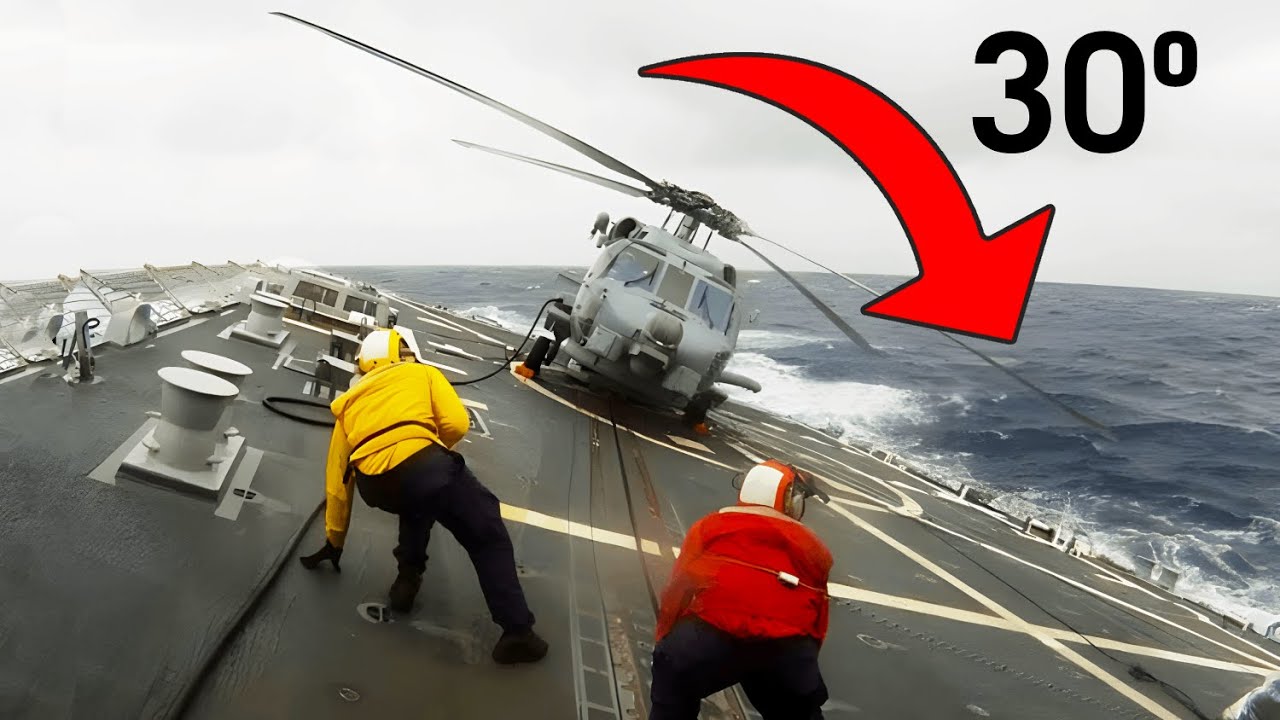
Landing on an aircraft carrier is dangerous, but even more so when things don't go according to plan. In this case, a test pilot named Captain George Duncan was testing an F9 F5 Panther as the airplane dropped below the correct line of approach and the fighter struck the edge of the flight deck and broke in half. You would think that was the end of it for the pilot, right?
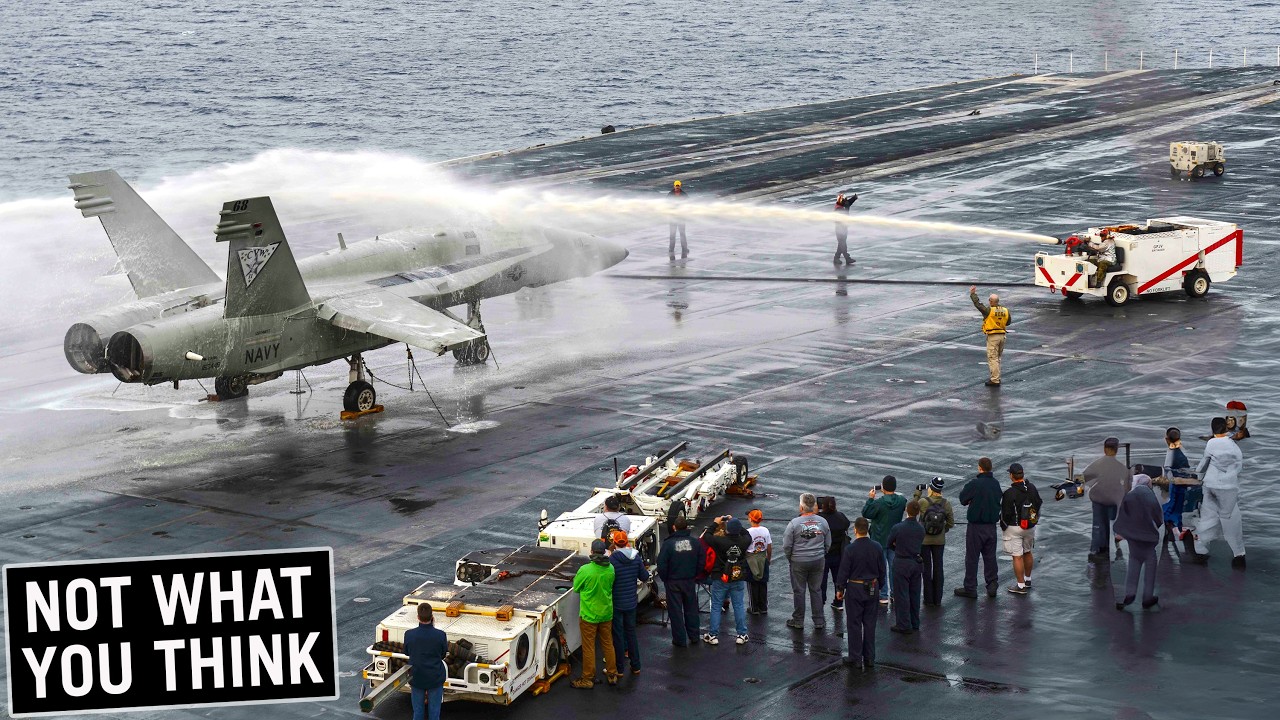
But it's not what you think. Thanks to the swift reaction of the flight deck crew, the pilot was pulled out alive and the fire was quickly extinguished. In six months, Captain Duncan was back at flying and later on became a lawyer.
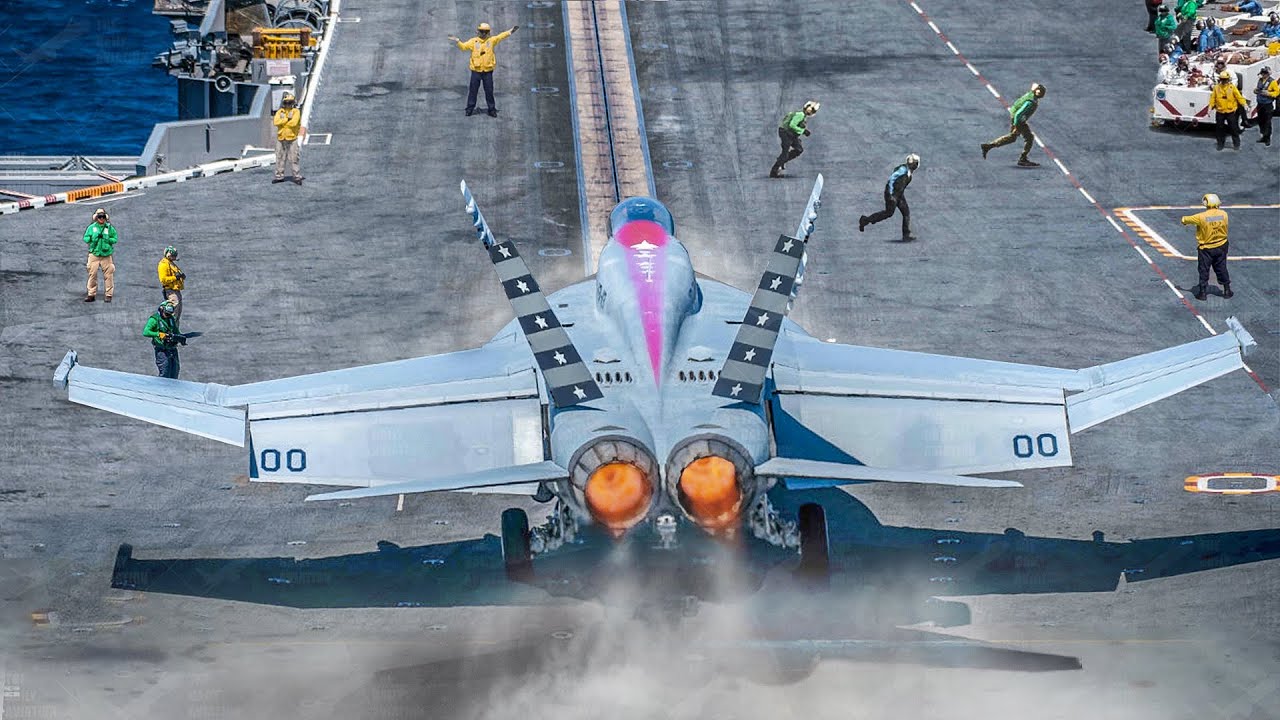
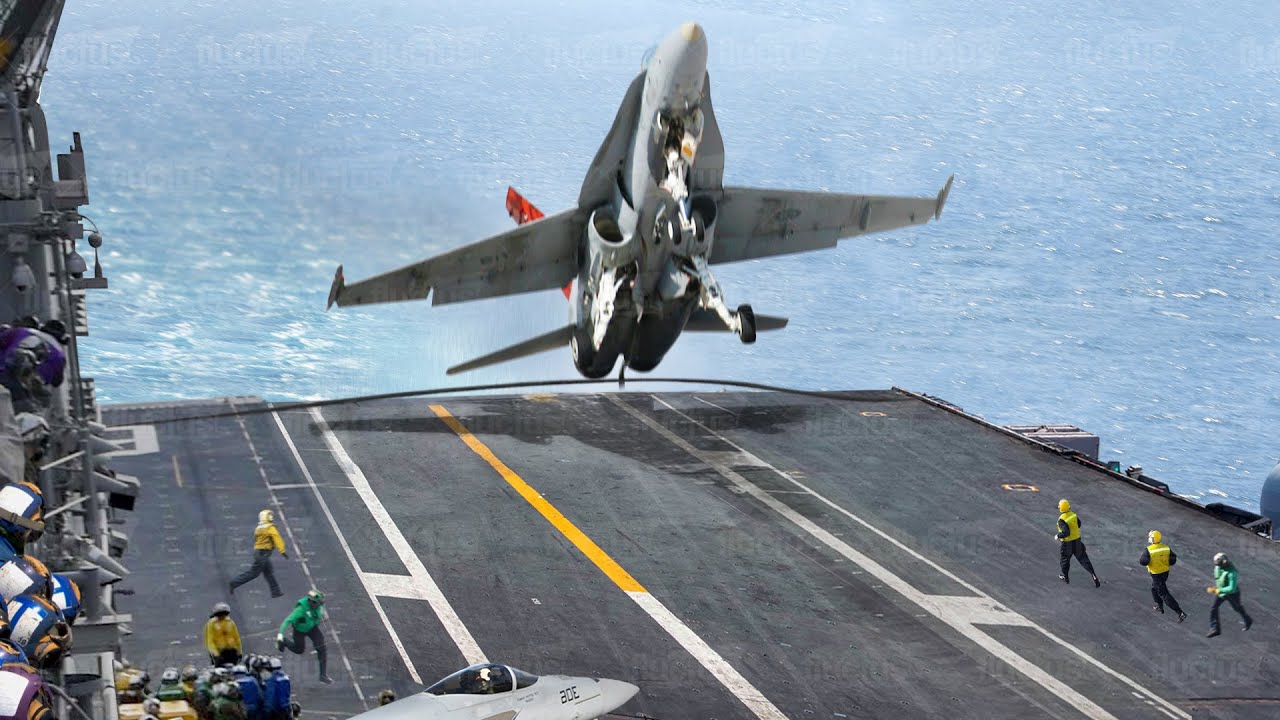
Today, under standard operating procedures, when landing on aircraft carriers, pilots apply full throttle at touchdown, if they catch one of the three or four arresting wires, they come to a full stop. Otherwise, the full throttle provides sufficient power to continue down the angled flight deck and become airborne again. This is known as Bolter.
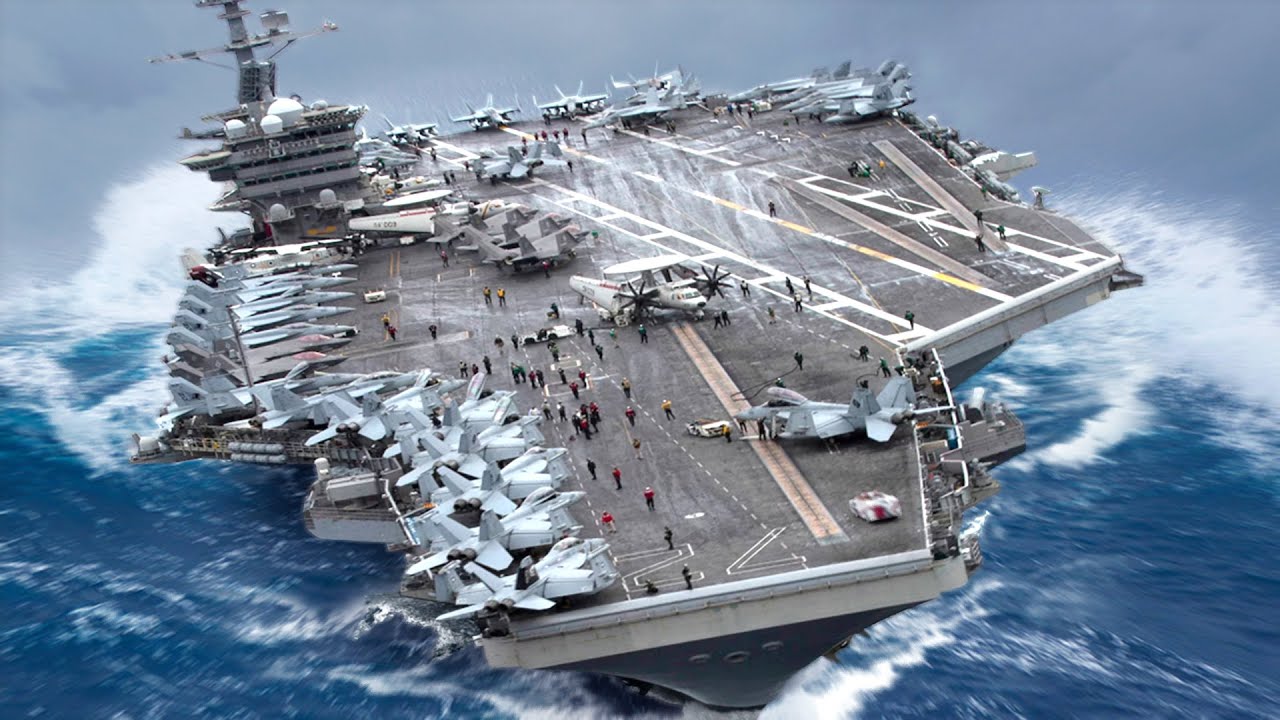
During the subsequent pass, the Bolter aircraft will attempt to land again. But in the early days of aircraft carriers, this was not always possible because carriers had traditional flat top designs instead of the modern angled flight deck. This meant that airplanes were landing right in front of the other parked airplanes, so there was very little room for error.
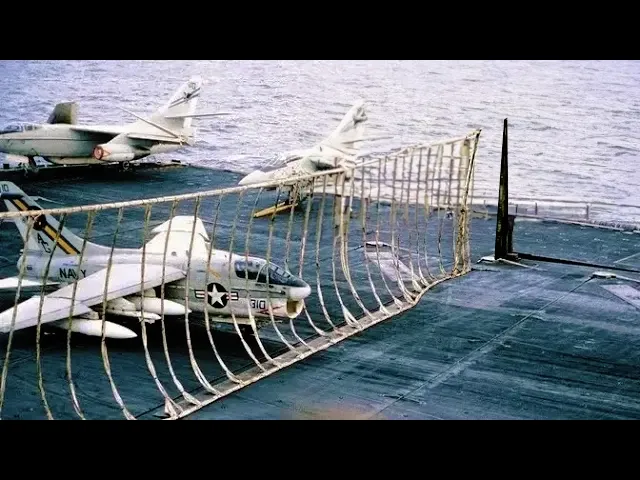
For this reason, emergency flight deck barriers were installed at the end of the landing area. The barriers were about 3ft tall and would be lowered after each successful landing in order to move the airplane to the parking area if something did go wrong, like a broken tail hook, the deck barriers were essential in stopping the aircraft from crashing into the flight deck crew or parked airplanes. After hitting the barrier wires, airplanes usually sustained heavy damage and sometimes even burst into flames.
. . The flight deck crew were also as likely to get injured as the pilots themselves due to the wires flying around the flight deck.
As you can see in this example, barrier wires were not always sufficient to fully stop an aircraft, so a better solution was needed. Don't worry, this airplane's pilot was successfully rescued by a helicopter. Presently, barrier wires are no longer used as they were replaced with barricade netting, which kind of resembles a tennis net.
The modern barricade emergency recovery system consists of multiple engagement straps approximately 20ft in height. As the airplane enters the barricade, the release straps break and the aircraft is caught by the engagement straps, which transfer the load to the barricade engine below the deck via a purchase cable. The barricade is normally stowed away and is only rigged in case of an emergency, such as tail hook or landing gear malfunction.
A well trained crew can set up a barricade in under three minutes after successful arrestment, the webbing and the deck cables are discarded and. Real good. Keep on going.
A little power on. A little more power. Little more power.
Just a little. Cut, cut, cut, cut! Drp your nose.
Drp your nose. Stay with it, stay with it, stay with it, stay with it, stay with it. Beautiful.
You're good. While barricade arrestments are rare, they still occur from time to time, and for this reason, all American aircraft carriers are equipped with them. While such landings are harsh on the pilots and often lead to major damage to the aircraft, this is still way better than the alternative.
Over the years, barricades have saved numerous lives, and because of that, they are an essential part of the carrier's toolkit. While you hope to never have to use it, when the situation arises, you're glad to have it!