The church reached down and grabbed men by the testicles um and and what he what he really meant is is here is jesus in matthew chapter 19 saying it's one man one woman for life you're not getting out of it and your only other option is be a eunuch for the kingdom to say that radical monogamy is good for women i think is uh really blind to the reality social realities of our World the big problem throughout the history of christianity is that women were not seen as equal to men and they were made to
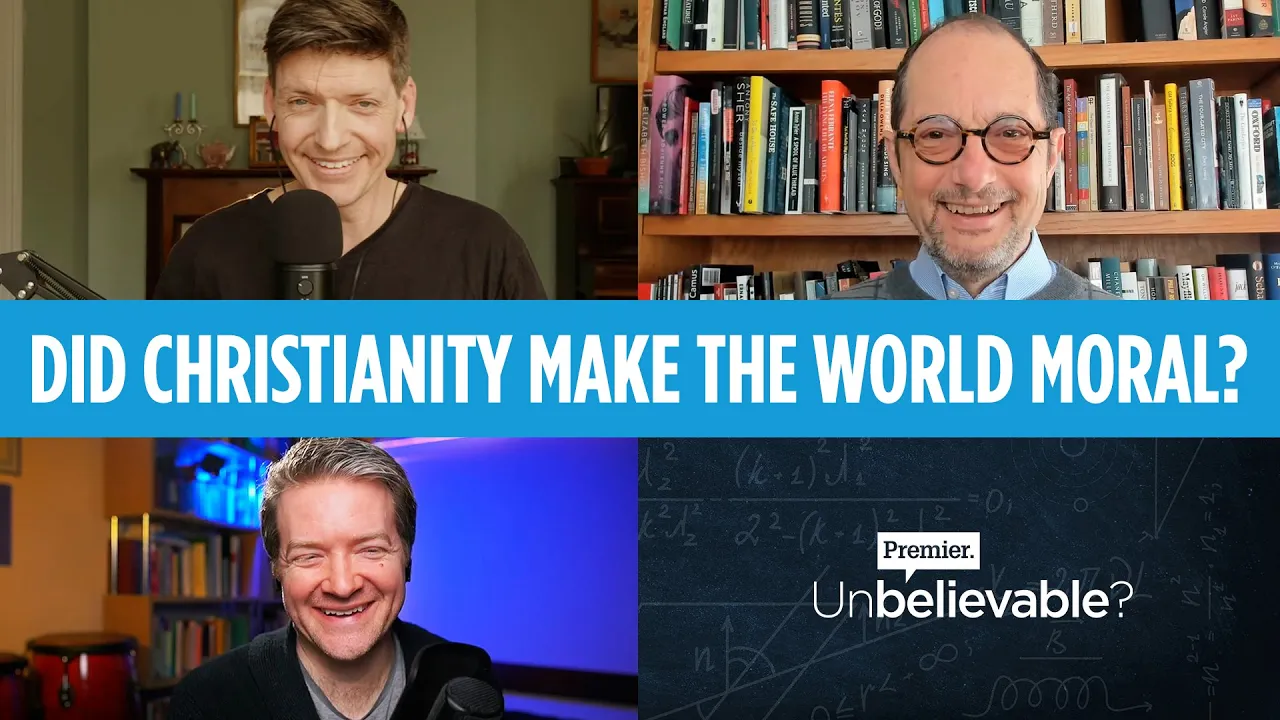
be submissive to men [Music] hello and welcome along to today's edition of the show if you're new here on the youtube channel why not like today's video and subscribe to the channel as well we'd love to bring you More of these conversations and debates you can also find our weekly podcast as well including our newsletter all the links are with today's show really excited about today's program did christianity give us our belief in equality compassion and consent we're asking in recent years a number of historians such as tom holland in his book dominion have made
the case that modern beliefs about human rights dignity and freedom Are not simply the result of a secular enlightenment but have their roots in the christian revolution that shaped the western world well christian thinker glenn scrivener has taken those big arguments and synthesized them into a very accessible new book called the air we breathe how we all came to believe in freedom kindness progress and equality glenn is also speaking at this year's unbelievable conference on the 14th of may and there's links to that from Today's show as well opposite glenn today is well-known new testament
historian and critic bart airman who's no stranger to this show either his own book the triumph of christianity told the story of how within a few hundred years a tiny jewish sect became the world's biggest religion so today we'll be asking did the triumph of christianity give us our beliefs in equality compassion and consent or did those concepts pre-exist jesus and if Christianity has been a major influence on our our moral beliefs does that mean we can believe in christianity itself really looking forward to today's show um so welcome bart and glenn to the program
thanks so much for having me great to have you both um let's start with you bart because i think it was uh last that you were with me was in the studio with peter j williams i think uh filming one of our big conversation Shows debating the story of jesus great program and do go and watch that anyone who's who's listening or watching uh if you haven't seen it yet but uh you you're busy as you ever have been um over locked down and in the last couple of years since we did that um tell
us about some of your most recent projects bart what you're working on at the moment yeah well i just i just had a book come out uh with yale university press it's An academic book about uh christian journeys to the afterlife uh sort of guided tours of heaven and hell with uh predecessors in greek and roman and uh and jewish traditions uh and i've just now finished a uh a trade book a pop a general book on on the book of revelation and what the book of revelation is about and uh and what it's uh
that is not about what's going to happen in our near Future uh but the uh what it's really about is rather disturbing and so it's uh it's a it's a book uh for a general audience on revelation well uh it still feels quite apocalyptic the times we're living in to be fair you know current world events uh unfolding around us at the time we're recording at least um but um i know you've got a really exciting discussion event coming up with someone You've been on the show with a few times before in the past as
well mike lacona it's called did the resurrection of jesus really happen very appropriate time of the year to be asking that um tell us about this it's happening i believe on saturday the 9th of april and it's a it's essentially a ticketed event people can turn up um and watch this can't they yeah and if they if they if they buy a ticket they can if they don't show up They can get a recording of it and it's it's an all-day event um mike and i have had a number of uh discussions and debates on
various topics on your show and in live debates uh but nothing quite like this this is a seven hour debate wow this is like council of trent kind of stuff is it it's a council trend but it's not you know it's not going to be kind of thing where we'll just go over the same stuff over and over and over again part of the frustration with A lot of these debates that uh that everyone does is that you they're so constricted in the time that you can't really get your argument out there and this covers
so many different important areas the reliability of the gospels the gospel the resurrection narratives themselves uh what you know what constitutes evidence for something like this is is there such a thing as evidence for a supernatural event i mean how do you have natural evidence for Supernatural insight and so there these are very big issues and uh mike of course has written a very big book on this and i completely disagree with him so we we're we're good friends but i mean this i just think he's completely wrong and he thinks i'm completely so this
is it'll be i think it's gonna be lively i've always enjoyed your interactions in the past and this will be a real treat for anyone who wants to turn up and Watch this live or indeed get the recording afterwards um so so i i will say if you want to book in for that if you want to be part of that bartairman.com is the website where there's a link to booking in for that event on the 9th of april um and the link is with today's show as well but maybe we'll we'll return to that
a bit later on but um uh glenn welcome along to the show um uh tell us a little bit about what you've been up to uh recently Specifically this book which i know is still in kind of pre-release phase at the moment but people can pre-order it and so on uh get a free chapter of it at the good book company but tell us tell us what this uh this whole project is about the air we breathe well first of all i'm just very much hoping that we've got a little less than seven hours i've
got to do some pick up for my children after school so how do you prepare for seven hours i Won't go joe rogan on either of you this won't be a three or four hour podcast don't worry yeah well um i'm very excited because today is the first day i've held in my hands uh a new copy of the air we breathe how we all came to believe in freedom kindness uh progress and equality and uh it's so cool a friend of mine just put um said to me it's a holy book because you've actually
got holes in the front i didn't realize that's what happens on this i Haven't seen that you've got perforations in the front cover and everything wow and that and that's then gives way to the title page that actually gives the core of the book and the core of the book is i go through equality compassion consent enlightenment science freedom and progress as the seven values that have become the air we breathe part of the jesus revolution but even if we've never set foot inside a church or Clapton eyes on a bible these are kind of
the moral intuitions that have shaped us where have they come from well we can trace them back to the jesus revolution and that's what the book does beginning in genesis and bring us bringing us up to the modern day yeah it's it's a big i mean i i read it um before it was published and and i i was amazed at how you managed to take these big issues and and do them in in such a uh you know tight way um But in a way i i thought kind of you'll forgive me for saying
this but dominion for dummies not that anyone who really writes will be a dummy but dominion by thomas i'm the dummy is this huge kind of tome that came out a couple of years ago now and i felt like what you're doing is kind of really taking that and kind of making it really accessible for people so it was that i assumed his book was a bit of an inspiration for this guy That's how i pitched it dominion for dummy and dummies and i'm the dummy i'm a poundland uh tom holland and well back in
2011 there was all sorts of stuff about the king james bible and the 400 year anniversary and i started doing all sorts of stuff about the bible is literature and how it had shaped our culture culture literarily and then i read a book in that year by vishal mangalwadi called the book that Made your world and that sort of was a gateway drug to david bentley hart he had um atheist revolution no atheist delusions how the christian the christian revolution and its fashionable enemies which is fascinating david bentley he doesn't know how to write an
uninteresting sentence and it's fashionable enemies and that sort of got me hooked and larry seidentop's book kind of Inventing the individual and larry hurtado and some of his stuff and um and obviously rodney stark and the rise of christianity and it got me very interested and so when tom holland came out i think it was 2019 was it that um dominion came out you know dominion it's it's a bit like you know google it's not the first mover in the in the market but um beautifully written by tom Holland and i was sort of excited
to get to meet him and and chat with him about a few things i guess my book i'm not a historian i i the reason why i choose those seven values is my background is more sort of philosophy and theology and so the history you have to go very very fast in a relatively short book and so let's get skated over it's more pressing into the ideas and those seven ideas are kind of little hooks that i hang things On uh to get you from genesis to george floyd wow well again um there's links to
the book um from today's show if you want to get hold of it but but i i think the book probably that you've written that most engages with this sort of area is the triumph of christianity it came out a few years ago now um i mean do you want to just give it in a nutshell kind of sketch the argument you made for why it Went from this tiny sect to the most successful religion in the history of the world um and and then maybe we could talk about some of the the actual influence
that it's had culturally and morally uh over the centuries yeah yeah and i do i do address the issue the kind of cultural influence a bit at the end of the book but my book is really about what made christianity uh successful because There are all sorts of theories about that and people have been entranced with the uh question for a very long time especially starting the 19th century and a lot of people have i think ideas that are simply not not right um a very common idea for example is that christians attracted people into
their movement because of their their um uh their kind of family values kind of the social uh their social agenda of of helping people And providing charity and things and um i i think it's right that christianity did uh invent a number of important areas of charity but there's no evidence that that led to any conversions and so what i looked at was evidence for convergence what it is that people talked about as being the thing that converted them or the christians talked about is the thing that converted others and in every case it's i
mean it may seem kind of weird for for me as a Historian to say this because i'm i am principally a historian not not a theologian but what all the records say is that people were convinced by miracles and that the the christian god was more powerful than the gods that they were worshiping and the reason people worshiped gods then and pretty much the same reason now is because the gods are powerful and can provide things that we can't provide for ourselves and so if You have one god who is superior to all the others
uh that makes a difference but it's in conjunction with the fact that christianity was the only religion insisting that it was the only right way and so it was an exclusivistic religion in a world that did not have any exclusivistic religions and so uh so whenever it converted somebody to believe in this one god it took that person away from any of the other pagan religions and so with Conversions all the pagan religions started diminishing as christianity was growing and over time uh you do that for a few hundred years and uh it takes over
yeah and so so that that was the argument yes and to to that extent i mean it i suppose it still leaves that question of of of why you know as a historian presumably you don't believe well as a as a secular person that say you don't believe that that there were Literally miracles that caused people so so what's your explanation for that that that is the testimony that exists historically yeah i would say that probably 99.9 of the people in the world who believe in miracles which is almost everybody in the world 99.9 of
them believe in miracles because they've heard about them um today most people most christians have heard about the miracles of jesus They didn't observe them and so that's why that's why people have always believed in miracles is because they've heard about them and so the stories and miracles are true i mean in the sense that there are stories about miracles uh whether the miracles happened or not yeah and so for me as a historian the whether they happened or not is not particularly relevant to this particular Question it's just that people heard about miracles and
so they and so they converted same reason for today people hear about the resurrection they believe it now i know you're not wanting to go toe-to-toe with bar on the history specifically glenn um but but i mean where do you come down in terms of the popularity of christianity do you see a similar kind of reasons uh historically or do you think there is more to the Kind of the fact that and i know many historians like stark and others have said that there was this kind of social influence the the you know the kind
of dignity that they say christianity gave slaves and women and so on was somehow significant in its in its rising it's very early years so what's your take on that glenn uh i guess i'd have a couple of questions one one might be um didn't the pagan religions also have miracle Stories and why were they not equally persuasive in the other direction and then another question i'd have is kind of the apostate um emperor julian uh is in in the year 362 is talking to a high priest of the pagan religions in galatia and says
to them the reason why we're losing out to the christians is because they they do have this ethic of care and compassion they look after the dead they look after strangers and that is what is leading to the rise Of atheism so you've got a key example of a pagan emperor there who did think that the ethic of care was was when you say atheism did you say atheism there glenn that's what's really yeah right so why why that's how many of the pagans because the christians didn't believe in the gods you know we believe
in the most high and so it's it's a little bit like You know you might think that the christian god is a little bit like oberon king of the fairies within the midsummer night's dream universe but no we don't believe that you know yahweh is the king of the fairies like oberon we believe god is like shakespeare and he is orders of magnitude more more different to oberon or park or any other member of of that universe and so when the romans Looked around and and saw that christians were not paying homage either to park
or to oberon or to any of the other characters within the play uh but instead paying homage to the author of life it seems to them indistinguishable from atheism do you agree with that assessment but that that was yeah well that's what i mean i mean that was one of the main charges against them by their uh learned Opponents were that they are atheists they reject the gods and so it seems weird to us because we think well the atheists the christians are the ones who are not the atheists but they're yeah in the ancient
world they're very few actual atheists people who there were a few philosophers but not very many so glenn those are those are two really great questions and um they're the right questions uh and so let me let me give you what i think is the answer to them Uh because i think there is a compelling answer to both of them one is uh what there were pagan miracle workers why weren't they converting people and the answer is they were but the deal is is the point i made about exclusivism and so an example that is
given by um um uh i'd give it in in my in my book but it's suppose you've Got if you suppose you have two um two uh alleged miracle workers talking to an audience or doing miracles in front of an audience the audience is entirely pagans because the whole world is basically pagan you've got a christian you've got a christian guy and you've got a uh you got a pagan guy so the pagan guy worships apollo say and christian guy worships christian god suppose they are equally convincing by the miracles they do So that you've
got a crowd of 100 pagans and the christian convinces 50 pagan convinces 50. suppose they're equally that means that that christianity wins 50 converts and paganism uh loses 50. paganism loses 50 and doesn't gain anyone because the christians are exclusive if apollo's priest convinces people did miracles the people remain pagan but if the christian they move to christianity so christianity is Destroying the other religion just by being equally effective and i don't think they were equally effective i think it's more not 50 out of 100 i think it's one out of a hundred two three
out of a hundred but over time what happens is the christianity then is gaining slowly and it's it's an exponential curve and what happens is like the numbers don't go up until all of a sudden it's like your investments if you have any Investments like all of a sudden boom like that and that's what happens and that's the problem that's the problem with do you understand that you understand what i mean it's because christianity is sorry we've lived through the exponential thing for the last two years you know nothing nothing nothing nothing what's that bang
you know boom yeah so so but the idea the thing is that Christian's the only one that's claiming that they are the only ones right the other the pagans you just remain pay you you join a new goal okay i worship zeus and athena and i think i'll work for pavalo too but you remain a pagan but if you accept the christian god you give everything else up which is a high cost oh it's a very high cost that's why it's not 50 50. it's like 2 out of 100. but it's not as high a
cost as people Always say the persecutions were not anywhere near as severe as people imagined it's not that people were hiding out in the catacombs in rome you know it's just not true uh mo there are very very few reports of actual persecutions but apart from that the point of the exponential curve and julian is that by the time you get to the 360. so he's the emperor between 361 and 363. he started out as a christian but then converted back to paganism By that time christianity is virtually taking over the empire so when i'm
talking about what's happening when people are converting it's before any of that and when you get to julian junior saying oh man look at all these christians they sure are helping out a lot you know boy why aren't we doing that but at that point you know it's not game over but it's it is completely heading that way and so it's A different situation from say the year 150 or some completely completely different situations any thoughts to add to that glenn before we sort of dive into some of the specifics from you from your own
book i i guess i i just want to return to whether the exclusivity is sure it is a high reward for christianity if you want to grow this movement it's a high reward to say you have to give up everything else It's also a high cost and i just i just wonder in a very crowded marketplace you know if i was going to start a streaming service and i'm going to say like move aside netflix move aside amazon prime move aside disney plus there's going to be glenflix okay and we've only got 20 subscribers right
now but but i reckon you know logarithmically by the end of the century we might have 200 subscribers and the one thing you need to know is if You join our subscription service you have to cancel every other subscription service at that point it's just it's just a high cost rather than the high rewards that comes that accrues the christian it's both because the high reward is you're going to go to heaven instead of going to hell and so people are convinced that if the christian god is this powerful it's not you're not going to
get you know half of your audience joining joining you but But you might get one or two and in the ancient world if you convert an adult man to your religion christians to convert the popular familias uh then his family has to come in and they may not like really believe it at first but you know after about 20 years when they've been going they're going to be believing it and so one man can be seven conversions and what i show in my book is all you need all you need for christianity to succeed is
a growth rate Of about 35 percent a decade from the beginning if you just start with 20 people by the time you get to the year uh your 300 you've got 3 million people if you convert thirty five percent a decade so that's like you know it's like three people a year three percent hundred percent people here yeah so so on that level but you you would say you can kind of just almost mathematically kind of account for uh You know and culturally the the growth of christianity but glenn presumably you're not discounting that that
that is part of the story but you obviously believe that there's there's more to the story than just a purely kind of mathematical extrapolation of i'm not saying i'm not saying it's because of math okay no no no yeah but you can kind of do the calculation once You've put your kind of you know the the elements in place in that way but glenn presumably you think it it you can't just it's not just accounted for on that basis sure and and i'm sure i'm sure but had the experience of actually encouraging christian hearts by
giving those statistics i remember when i first sort of read this sort of stuff From rodney stark i was incredibly encouraged to know that christianity took over the ancient world with a growth rate of 3.4 percent per annum and doesn't that i mean every struggling church leader in the world is actually encouraged by that and i was i was also encouraged by um by but in the um triumph of christianity just talking about the apostle paul in his workplace he's a leather worker Or tent maker and he is chatting about jesus and household by household
connection by connection we know this is how things do go viral um and and so that that that's actually not yeah that's actually a comforting thought to me i think you've then got to figure out why why are they choosing to you know switch to christianity and the miracle stories is is is interesting um yeah but um i i think what you are led to expect from jesus Himself is that like yeast working through dough or like a mustard seed which is the smallest of all seeds goes down into the ground rises up again and
becomes a plant that is the largest in the garden so much that the birds perch in its branches jesus says this in matthew chapter 13 i think we're led to expect a certain that's that sort of growth uh in the jesus movement and so that that doesn't Um doesn't take away from my faith at all it's consistent with it i suppose in that sense i mean let's let's move perhaps away from from the sort of the triumph of christianity to the air we breathe which is more about the way in which you believe that that
jesus revolution did shape uh modern western culture and particularly our beliefs around us as you say in the title freedom kindness Progress and equality well we're going to try and do three things in this show um and start perhaps with equality um do you do you want to kind of take us in on that then we'll go to a quick break and have have bart come back but but where why do you believe glenn that christianity was foundational to modern ideas of human equality more so i suppose than contemporary secular humanism or anything like that
that people may think oh well it's it's Really with the advent of that that we've we've come to appreciate the equality of humans why if for you as christianity that the center point of it all well i think i'd point to any number of uh secular sources including tom holland or including yuval noah harari who just says you know where do we get the idea for human rights and human equality you cannot cut open a human being and discover in their dna human equality um It's not the sort of thing that plato aristotle believed in
of course there are citizens and there are barbarians and there are males and there are females and there are slaves and there are free people and we we live within a hierarchy and as bart has already said about the patter familias there is a person at the top of that hierarchy who is in this priestly role who has incredible rights over the lives And bodies of everyone else you know within that structure and i guess i i begin the book with equality because i want to go back to genesis one and say on page one
we've got in the beginning we've got male and female in god's image to have dominion over the world and i think that's that's a radically different creation account to the Ancient near eastern accounts to the greek and roman myths to the egyptian myths in which there is there are chaotic forces at play and humanity are made as slaves for the gods and in genesis 1 you've got humanity as having dominion it's god's world but he puts humans in charge so you have this incredible dignity that is given to the human person and one of the
people i reference in the Book is celsius in the in the second century uh a great critic of christianity uh who talks about the radical error of jews and christians and radical error number one is this this hebrew idea that god uniquely blesses humans why why should that be the case but that radical error is compounded by the christians who come along and say not only does god uniquely bless humans god uniquely becomes human in the Person of jesus and so you've got this foundation for humanism in god the human and no wonder you can
get the apostle paul coming along later in galatians and saying there's no male the female slave not free june or gentile because we're all one in christ jesus modeled within the church you start to get this idea of a different kind of family in which everyone no matter their station is a brother or a sister and no One is lord except christ and obviously it takes a long time like yeast working through dough like the mustard seed growing um until we get modern ideas of equality but but i think very specifically these have come from
biblical and particularly christian foundations well that's a great starting point and we'll see what bart has to say in response on the other side of a short break um we're talking about christianity especially in its very Early years and asking did it give us our modern beliefs in equality compassion and consent we're going to get to those two as well in this conversation between my guest today glenn scrivener and bart airman we'll be back in just a moment can you hear me is this working we've all got used to muting and unmuting ourselves in recent
years but in our confused and divided culture when christians feel nervous about speaking Up it feels like god has been put on you too well this may premiere unbelievable the conference is coming live from the british library london as leading thinkers help the church and you to find your authentic voice again alistair mcgrath john wyatt lisa fields glenn scrivener sharon directs joseph de souza phil visher sky giutani and more guests will show how christians can speak with truth and grace in troubled Times plus they'll be the global launch of our brand new ministry helping skeptics
to explore faith and christians to share their faith with confidence not only that your ticket includes our live big conversation event with renowned brain psychologist ian mcgillcrist and christian neuroscientist sharon directs on whether there's a master who made our mind you can attend in person or online from anywhere in the world so join me justin braley on saturday the 14th of May for this year's conference find out more at unbelievable.live and let's take god off mute [Music] welcome back to the second part of today's show really exciting conversation for you today so glad to have
back with us bart airman uh after a couple of years since we've we last had bart on the show um in conversation with glenn scrivener today glenn's got a new book out called the air we breathe how We all came to believe in freedom kindness progress and equality in fact then speaking at this year's unbelievable conference on saturday the 14th of may we'll be picking up these themes then as well i'm really looking forward to that links are with today's show if you want to get yourself booked in and also to bart's special uh dialogue
event with mike licona which is coming up on the 9th of april so do make sure to check the show today for links To that but just just in that last segment um glenn making the case that he thinks this idea of human equality which has has not existed in in many cultures historically over time it has a unique root in the judeo-christian story genesis 1 and then kind of in the person of jesus himself becoming human and in the the way that would start to be modeled in the early church uh now's your opportunity
to obviously have a Conversation around this guy so bart where do you want to begin yeah well i want to thank you for giving me seven hours to respond it's a very it's a very interesting set of points you've got and um uh you know when you go back to the creation stories i think the most troubling thing is not genesis 1 but genesis 2. uh when you have the detailed description i i assume you're talking about the Equality of humans because genesis 1 is not about equality of living beings because the whole point is
humans have the entire creation be subject subordinate dominion and so the question is are men and women created equally and i i get i get your point from genesis 1. when you have the appoint account of genesis 2 about how it actually happens uh god first makes adam and Makes adam a living being and then adam needs a helper and so he creates all the animals and these are to be his helpers but it turns out there's no one suitable so he makes uh he makes a woman out of a out of the man and
isha out of the east in hebrew and she's to be his helper his help mate that's why she exists he is not He does not come into being to help her she comes into being to help him and to and and then she leads him astray uh according to the biblical record and this this is the consistent motif throughout the bible is that women are to be subordinate to man there are uh it is it is just it's massively evident when you read the hebrew bible the old testament and when paul when in the new
testament where you Have somebody pick up this story from genesis 2 it's in first timothy chapter 5 where uh the author claiming to be paul says that women are not to talk in church they're to exercise no authority over a man they're to be subject to men because eve was was misled not adam and this is what happens when women teach they get misled by the devil and they lead the man astray you get a similar thing in paul himself in first corinthians 14 about Women are not to talk in church so it's true that
galatians does say that in christ there's no male or female or slave or free and that's absolutely true and it's absolutely important uh that he says that but the the two key words are in christ what he means is that everybody equally gets salvation but paul does not think that there are equal in the church he tells the women in corinth that they are to be subject to their husbands They uh just as the husbands are subject to god and so the husband is their god and so this is not equality on any social level
and if you look at the history of christianity i don't think anyone would look at the history of christianity through late antiquity or the middle ages into the reformation and would think that christianity supported the equality for all human beings they simply didn't it's not until The enlightenment that that comes about and the the people who developed this in the enlightenment were not always christians in fact most of them weren't uh christian in any sense that you would recognize and so you have the kind i would agree you have kind of the roots there you
have the roots and also other forms of ancient thought though i don't know if you've looked into stoicism but in the stoic world also you have you have Various traces of this and so the enlightenment does have earlier traces but i don't think it's an exclusively christian concept and i don't think it's a particularly christian concept because in fact christianity supports um support subordination not equality okay glenn go ahead okay yeah we might leave the seven hours okay so the fact that adam comes first within The genesis narrative means that he is more primitive because
we go from very simple things in genesis to much more complex complex things and in terms of adam we go from dust to man to woman and she is if adam is the head of creation eve is the crown and and so i think if you just follow literarily what is going on in genesis one and two you don't get the sense of eve being a lesser but actually a more developed preacher than adam is and the Fact that she is the the helper the isaiah is is that you know god is most commonly spoken
of as our help um in that we cannot live without him we need help we desperately need help and so the helper does not mean it's a diminutive role at all i i would say and then it's interesting coming when where does the feminist impulse come from And you have said that galatians is very important in that i would say the treatment of of women by christ was radically counter-cultural in the day um that the marriage and family program as joseph hendrick has has put the sort of the early church sexual ethic of the day
was radically equalizing in terms of its expectations of men and women i get into this in my consent chapter that if The if the sexual revolution of the 1960s equalized the sexes by saying men by saying women can be as as freed as men have always been sexually the first century sexual revolution was basically men must be as restricted as women have always been and in a sense very very few things i would say have ever been as liberating for women and children Than that first century sexual revolution in which men are utterly restricted to
the levels of modesty and chastity that were always expected of women and i'm i'm not saying that in the first century we have a fully blown sense of the un declaration of human rights or or or of any of that but i am saying that exclusively and particularly it is a christian understanding that is developing and then when you get into The idea of did these ideas come from the enlightenment i tend to think that that's more a creationist narrative that sort of out of nowhere has come these ideas of equality without without a backstory
and i i would just encourage people to be to be more evolutionary in their in their thinking in a theistic sense that actually what was developed through the enlightenment and on into Into the modern world were foundationally christian views that i don't think you would get without those christian foundations i mean what do you just quickly say to to the bar saying these the concept of equality was also floating around in stoicism and other ancient forms of thought and philosophy um perhaps it was just christianity that kind of was the vehicle that really you know
took took it forward eventually Because of the triumph of christianity but do you think it was there otherwise glenn you can point to all sorts of things um that's uh we look back now through glasses and through a prism that that can point out things in all sorts of pre-christian and non-christian cultures that we can applaud Including you know any any traces of equality that we see in in stoicism i guess my question would be why are we looking for those particular things and i would say that the reason we're looking for those particular things
is we're coming from an irreducibly christian um mindset that is looking for those particular things can i respond to some of that justin please i mean i I don't think it's irreducibly christian because if you're going to do an evolutionary model of course christianity came out of other things too it's it's not really fair to isolate christianity for example apart from judaism and so you might as well you could just as well write the book saying that it's not a christian model it's a jewish model uh so i i think that the lens you're You're
looking at as a christian theologian is christianity but if you look at it historically i don't think it's i don't think it works when you look i don't think the enlightenment came out of nowhere at all at all i think there were definitely were roots and some of them were christians some weren't um as to adam and eve i've got to say i don't think the logic works i love the i love the idea that she the eve is the pinnacle uh you know that god Saved the best for last that's great but if you
follow that logic what you're saying is first god creates the other animals to help adam that and if he if he's more primitive than eve because he was first that means he's more primitive than the animals which means that spiders and snakes and aardvarks are superior to humans in that scheme the animal's already there he Just hadn't named them no god made them in order to help him that's why he made it brought the animals to him the animals are created at least in the in in in the first chapter of genesis the animals get
created on whatever it is this is another long issue but first genesis 1 and genesis 2 come from two are two different stories eve does not show up in genesis 1. adam And eve show up in genesis 2. and the reasons the re glenn is presupposing genesis 2 not genesis 1 when he says that eve came second so i'm talking about what he's talking about eve coming second she doesn't come second she comes after the animals and so she's superior to adam because she was made as his helper the animals are made as his helpers
they're not made they're not made they Were brought to him they were brought to him they weren't made no i'm sorry that god makes the animals in order to help adam he names them but they're only after they're made he's so uh yeah well i mean we'll leave that difference there you know obviously i suppose to something depends on the way you read read that chapter two genesis but but i mean i mean Let's let's keep talking i want to hit some of these other issues as well genesis 2 19 says it says that god
brought the animals out of the ground in order to help adam it's that 219 just read it okay i'll have a look yeah we'll we'll come back to that one um what about compass now the lord god had formed out of the ground all the wild animals and the birds in the sky translation And he brought them this is niv yeah right you know there's no perfect tense in hebrew well let's i'm going to leave that one for the for the for the biblical scholars to to debate um but but let let let's talk about
compassion okay we start these these these areas all kind of intermingle to a large degree but let's put put your case for that one then why Why is christianity or the judeo-christian tradition primarily responsible for the fact that i i mean and just talk to this about you you i think have literally just done a charity event for ukrainian refugees i think you raised a great deal of money and i suppose the question is why why do we exist in a modern culture where we will you know do that kind of thing we've got people
here our own church is Working to help to house ukrainian refugees here in the uk at the moment but why where did that instinct come from and did it exist in the ancient world to help complete strangers on the other side of the world i suppose um glenn you let's start with you here why why do you believe that that christianity did give us that sense and and then we'll see what bart has to say i think there is kindness and there's compassion in all sorts of uh Pre-christian and non-christian cultures so it's like i
don't want to be heard to say that christianity has a monopoly on kindness on tenderheartedness um on love but i think there's something there is something unique about the highest becoming the lowest on the cross in order that we the lowest might might be brought into his hospitality you know if if the way of all nature is the survival of The fittest and the sacrifice of the weakest the christian story is the sacrifice of the fittest christ so that we the weakest might survive and i think whereas in the realm of nature it is tit-for-tat
in the realm of nature it is nature red in tooth and claw there is something supernatural about the way of christ there's something against nature there is something that says I will protect the weakest and obviously it was something that a critic of the church like nature hated um he saw the cross as the trans valuation of all values because of course nature teaches us that the weak the low and the botched should perish and we shall help them to do so he says in the antichrist and therefore christians have always he thought stood in
the way of a proper humanitarian ideal and the proper Humanitarian ideal is we can all fly off to become ubermensch we can all fly off to greater heights of humanity if we let the poor the weak the low and the botched as he called them perish so that we can you know evolve to a higher degree i think the the revulsion that we feel at that sentiment is a particularly christian revulsion and it is it is born of some Particularly christian um intuitions i think we've been looking at a picture of the lord on the
cross for thousands of years and we have held that up as our image of what it is to be great and whoever whoever would be greatest among you must serve and the first shall be last and all that kind of stuff that jesus taught i think We have been formed whether we've been to church or not all of us have been formed by an image of greatness in sacrifice and and even even shameful sacrifice on the cross for the sake of the other which which i think gives a bite to a christian understanding of compassion
and and how just before we come back to bart was that in your view um shown in Practical ways by the early christian church hospitals for instance would be an interesting place to go now that you know the greeks had their you know manuals of of how you know galen's for humors and and how to be a physician and to help people and the romans had their sort of sick base for the for the slaves and the soldiers but that was to restore them to economic and military um fruitfulness Um the idea of hospitals for
for the weak and the poor and the sick who could not afford it um became became a very much a christian thing that happened and there was a cascade of hospitals that sort of happened for the from the fourth century onwards would be would be one kind of thing or standing against abortion and infanticide and not simply standing Against the abortion infanticide but taking the exposed infants and raising them and orphan care and that that sort of thing that would be another way of actually standing against the way of nature um i yeah i mean
it's interesting and i'm sure you're familiar with this but that in those yeah uh pagan cultures it was legal essentially to to abandon and expose as it was called infants who Were unwanted economically um or because they were malformed or whatever it was um and as i understand it christians were became to be known for people who would go to those places where they were traditionally left and and took them in and adopted them and so on um for this this is a part of a big picture that glenn believes goes back to this idea
of the god who was willing to be sacrificed and kind of upheld the poor and the Lowly and so on over the powerful what's your view on that that as being the kind of the linchpin for where this this central virtue of compassion as a value came from in western culture yeah i've got two things to say about one is i this is the one area of glenn's book that i completely agree with in in in most ways um i would i would put it differently um the way i uh not not contradictory really just
a different Way my different way of thinking about it is i i actually deal with this in this book that just came out with yale about my journeys to the afterlife because some of them deal with these issues of uh and it's the issue is that in in the roman world generally ancient the ancient world general the world generally um the the ideology was one of dominance um that a uh whoever was dominant there were no there were no ethical problems With the person who was dominant dominating somebody that's what they were supposed to do
and so a powerful village had there was no ethical problem with destroying the village next door few more and then you know killing all the men and enslaving all the women there wasn't an ethical problem with that and or empires and so you can read through the moral discourses of uh romans and greeks and uh they don't they Don't problematize that they don't problematize slavery of course i mean master is supposed to be master of the slave and so slavery is fine yeah of course they're usually prisoners of war in the ancient world wasn't a
race thing it's just you know you enslaved people and men were to dominate women uh economically socially culturally politically sexually um and so that so it was all domination And jesus preached service and it was just is completely contrary to what the the dominant the dominant paradigm was was the year to serve others and to live for and to help the poor that's when you know in the ancient world um if if you had a lot of money and you wanted if you had to give some away or you did give some way it was
always to somebody on your same socio-economic class or to build a public building or to put on a Gladiatorial show or something like it was it was for your own to promote your own status the idea of helping the poor was like unheard of it's like are you kidding me that's a joke no you're not gonna help the poor and so so i completely agree with that that that is a paradigm shift it's not it's not the case that everybody accepted the paradigm a lot of christians were going around saying yeah jesus said to sell
everything they Didn't really mean it and so you know a lot of that and people are people but you do get the shift in and how preachers preached it the other thing i would say though is that it doesn't originate with christianity it originates jesus is pulling on the old testament prophets it originates with judaism what christianity did is it took over the world and so this jewish idea of Love your neighbor as yourself became a dominant paradigm in the west at least theoretically uh because of christianity i i agree with that and it's true
you get uh hospitals and you get orphanages and you get the the uh the weird idea that you're concerned about the destitute um ancient pagans talk about it and they say what no we're not doing that Unless you've got something to add glenn given that there's a good leisure of agreement there we could we could move to the next point which is consent but did you want to add anything i i i think i i would agree that um yeah the jesus movement viewed from a christian point of view the jesus movement is israel going
global and so it's absolutely taking love your Neighbor to the nations one interesting issue is in the sermon on the mount jesus says you've heard that it was said love your neighbor and then he adds something that wasn't in the old testament and hate your enemy but i tell you love your enemy and i i find that an interesting way in which the absolutely good true and beautiful law from the old testament that says love your neighbor gets corrupted in human hearts to oh and hate the other Guy and and turns into a tribal thing
and what christ comes to restore is he comes to restore us back to that original kind of good old testament principle by then saying love your enemy which is an extraordinary way of extending the sort of the bounds of our compassion right to the very fringes of human society even the other guy even the guy who's trying to you know is trying to do you down um and so The absolute continuity between old and new testament i i believe um fully in that but what christ is coming to do is to take what could be
used as a love ethic that excludes and then he does the radical thing of then extending it to love for enemy which which is which is also in the old testament as as well um but but i i just find that dynamic interesting yeah talk about consent as well glenn because This is um something that has been obviously in our news feeds a lot in recent years the metoo movement and so on the idea that um a pushback against power dynamics where essentially people cannot make informed consent is is obviously another buzzword that's been going
around recently um to what why do you believe that this this particular idea has its roots in The christian story and then we'll we'll pass it to bart i think um kyle harper is a wonderful writer and a historian written very compellingly on slavery and on just recently on plagues but his book from shame to sin on sort of the sexual revolution of late antiquity was a real eye-opener for me because when i hear the the phrase sexual revolution i think of the 1960s and Again i think of a time when because of contraception and
other social movements um women are able to be as liberated as men had always been in the sexual domain and attained that that sort of equality in that sort of way and what he pointed out and also what joseph henrik has pointed out i think in his book the weirdest people in the world Is that um joseph hendrick uses a very um a very visceral phrase he says the church reached down and grabbed men by the testicles um and and what he what he really meant is is here is jesus in matthew 19 saying it's
one man one woman for life you're not getting out of it and your only other option is be a eunuch for the kingdom Um it's it's an incredible such that you know red-blooded peter one of jesus followers says if this is the way it is it'd be better not to be married and like we are not told what mrs peter thought peter saying that because he was a married guy saying that it would be better not to be married if if the jesus if jesus's marriage and family program is true and yet i am persuaded
and persuaded through Books like joseph henrik's the weirdest people in the world that that kind of radical monogamy um was incredibly liberating for women and children because men biologically are not tied to their sexual partners or the offspring from their sexual partners biologically there is no there is no binding of that the only binding that Comes is sort of societal and covenantal and jesus comes and he and he ties men to their women and to the and to their children in in bonds of love and coming up through that kind of uh paradigm to some
extent again i can imagine bart may say well that was there in the old testament as well judaism but i suppose the difference is glenn that the fact it caught on in pagan culture is is the fascinating thing because if You want to just quickly sketch out the kind of rights as you would say a man had you know in that culture sexually um that might help to give a sense of why this was so radical um once it went sort of expanded beyond israel in that sense right well as joseph henrik points out there
were 25 latin words for prostitute and there was and there was no natural way in latin to describe a male virgin right that's just not a thing virgin means female Right men were not adult men were not expected to be virgins in any way and there was a sexual economy that was based around prostitution and slavery obviously and it was it was not hidden away it was part of the moral economy of of society and and so for for jesus to bring about this kind of sexual revolution it really was absolutely revolutionary and it was
part of israel going global and it was part of um jesus is taking a side in matthew 19 in terms Of a debate about how how easy should divorce be and jesus is like no it should not be easy at all he takes the most sort of conservative he takes it he kind of supercharges the conservative view so not only does he take the old testament and supercharge it the same way he did back in matthew 5. it then somehow bursts the banks of israel and goes global to to the nations and and i i
happen to think it's it's Been for for the blessing especially of of women and children we'll come back to you for a response on this and on the other side of a quick break but because we're already pushing up against our final break here but um we're talking about consent compassion equality were they all values that were essentially birthed by the christian revolution um bar airmen and glenn scrivener join me here on unbelievable today we'll be back in just a moment Have you ever found yourself tongue-tied when someone asks you is there evidence for god
what about suffering did jesus really rise from the dead i'd like to introduce you to confident christianity our online apologetics course featuring video training from world-renowned thinkers such as william lane craig john lennox amy or ewing and gary habermas you'll learn how to understand defend and share your faith with confidence i'll also share lessons i've learned From over 15 years of hosting atheists and christians in dialogue you can enroll now at premiere.org uk forward slash course or click the link with this video really interesting conversation today asking did christianity give us our belief in equality
compassion and consent uh glenn scrivener's new book the air we breathe is is all about this glenn's speaking at uh unbelievable conference as well uh on saturday the 14th of may if you want to get involved um you can get get there online from anywhere in the world or be with us in person in london uh unbelievable.live is the address you can find links with today's show um but emin also here and and having a fascinating conversation with glenn today on on these historical aspects of this uh this question um i will link to bart's
um website where you can also find this uh upcoming discussion event that he's Doing with mike lacona did the resurrection of jesus really happen on the 9th of april that'll be a real treat for anyone in advance of easter um so yeah just in that last segment though glenn making the case there but that consent sexual equality really of sorts was really birthed by the christian revolution as much as many people think of christianity as having been this sort of morally conservative force that we kind Of shed the bonds of in the 1960s and everything
in glenn's view it was actually an incredible radical sort of a good thing for men for women and children and likewise men i suppose in in the first century when it sort of developed this this new idea of monogamy for both male and female um what's your perspective on that to what extent do you agree with his analysis of that well i don't agree with that one at all i think that's Completely wrong historically and and ethically personally i think it's completely wrong i think it's a christianization of what actually happened jesus didn't invent monogamy
in the jewish tradition of his day men were monogamous and so he didn't make up this and he's not in in the passage in matthew 19 the passage is not about whether you marry multiple people or not it's about Something else and he's taking he's stating something that is taken for granted in his environment radical monogamy to say that radical monogamy is good for women i think is uh really blind to the reality social realities of our world the big problem throughout the history of christianity is that women were not seen as equal to men
and they were made to be submissive to Men and uh in every way economically sexually um socially there's there's not there's not a debate about this i mean look look at how women are treated throughout the history of christianity i'm not talking about like in 1950s i'm talking about the 50s and the 150s and the 350s and the 850s just do look at the history In early christianity the most liberating thing for women as it turns out was the ascetic movement uh in in christian asceticism that started rising especially in the fourth and fifth centuries
women who were highly religious and who were women of means were able then not to get married and this was liberating for them because it meant they weren't under the control Of their husbands and so the church fathers encouraged women not rich women not to get married because they knew that if they got married then they were to be subject and that was and women didn't want that and so i think it's completely wrong to say that monogamy like where you cannot get a divorce uh that isn't liberating for women who are being abused And
the reality is i mean whether they're christian or not christian uh women back to domination women get dominated and abused sexually physically and there's no out now because you because g because you can't get a divorce that doesn't sound liberating to me at all and so i think that that is uh i i don't think it's it's actually right um and i want to point out you know a lot of christians today of course you know Typically want to emphasize that jesus stressed these kinds of stressed family values but going back to this conversation glenn
mentioned earlier between jesus and peter jesus told his men disciples to leave their families he to follow him and peter at one point says you know jesus tells this other guy look sell everything and follow me and you'll have Riches in heaven and peter says you know we've left everything we left a mother and father and children and wives and houses and to follow you and uh and peter praises him because now they're going to get hundred a hundredfold these men will what happened to their wives do you think wives did not could not work
outside the home except by doing things that were very Unpleasant to think about these jesus had his men followers leave their wives how are they supposed to survive exactly these are lower class people who don't have day jobs now they don't have jobs they have no so men should be bound to their women then what's that so men should be bound to their women then in in very strong bonds like like they shouldn't abandon their women then right because that because that's bad For the women they shouldn't abandon them no and but women but they
but if they're if women are being abused if women are being beaten up they should have the right to go back to their parents in that setting in that i agree i 100 agree well okay 100 percent of greatness it says you can't get a divorce okay let's have some response from glenn On this subject then go ahead glenn well i mean but in other contexts we'll i'm sure want us to compare mark chapter 10 and matthew chapter 19 and um matthew 19 is not the only thing that is said on divorce in the new
testament let alone in the gospels but the the other thing he also says in matthew 19 which was picked up by the ascetic tradition was that you can be a eunuch for the Kingdom which again is uh an amazingly supernatural thing because of course in the natural frame how are you going to guarantee your future how are you going to guarantee immortality beyond your death surely just through your offspring that's kind of the only thing in the natural frame and jesus says there's something even better than marriage which is singleness for the kingdom um and
so but it's absolutely right to pull me up on that and and say The ascetic movement is even better and jesus even says that in matthew chapter 19. that that is even better but in a world in a world that bart's just said is very very difficult for women especially if men abandon them then then surely it is better to have strong marriages in which men are commanded to and encouraged to stand by their women and stand by the children stand by the children and i would point people to Joseph henrik's book the weirdest people
in the world to show how that radical monogamy had incredible benefits to i mean he he is more of an evolutionary biologist and so sees everything in terms of survival and reproductions and so but he traces every benefit we've ever had in the west basically to that marriage and family project which which i think is a bit narrow but um it it certainly it certainly points to some of the goodness of monogamy Monogamy of course can be a very good thing of course it can it can be a very bad thing it's a mistake to
say it originated with jesus it didn't start with christianity monogamy was practiced widely in jesus world but in other parts of the world women could get a divorce if they were being abused and so i don't see that it's a good thing to require them to stay in a Marriage and i don't think it's correct that this goes back to christianity historically it's not true um i i i so this is part of a wider discussion so i i begin the book with equality and starting in genesis one um because for me the older new
testaments hang together that might that might seem like an appropriation of jewish um you know scriptures and and but when i when i talk about christianity i i don't simply Mean something that began in the first century id a d i think jesus is the jewish messiah i think he is the lord god of israel come in the flesh um so yeah yeah so i think you know i think you could so i i think the big thing about this is that women were not treated uh as as people who needed to give consent within
sexual relationships within christianity That didn't throughout the history of christianity that is not how women were viewed in a marriage the woman was to be submissive to the husband that's in the it's in the bible of course and it's in the jew christians and husbands what to be yeah what would you say to the lord they're supposed to be good the man's the man's body belongs to the woman just as the woman's body belongs to the man i mean that that is radical In in for a first century author to say that the man's body
belongs to a woman just as the woman's beloved is radical that verse is radical yeah it means that if women want to have sex men their husbands should have let them have sex yeah that's that is radical but throughout the entire new testament men are so to be uh to be over the woman just like paul says you know that the men the men are to to the woman as god is to the man or jesus is to man as god Is to jesus and so it's a hierarchy and so it's not equality and it
does not require consent women men who want to have sex throughout the history of christianity so 19 so you can't just say you know well since the 1960s it's been better and that actually goes back to jesus you're skipping 1900 years here um and so christianity has never supported the equality sexual equality of women within a marriage never But you you just said the first the first century do you know of any other author that would actually speak in such bold terms about the sexual equality within the marriage context of course paul's talking about uh
about the situation where there are people in corinth who think that the end is coming so soon that um that they shouldn't engage in sexual relationships they should because You know you should you should ignore all pledge bodily pleasure because jesus is coming back very very soon and you don't want to be have your head somewhere else and paul's simply saying look uh it is okay to have sexual pleasure if you're married already and so men if you want sexual pleasure yes women let alone if she wants to women only if she wants to yeah
that's right so women doesn't mean that women that's consensus for men it just means if women Want sex let them have sex yeah and and vice versa yes why is yeah you can't say though that that is what leads to the liberation of women in the modern period it just isn't i mean it's uh it's not okay i'm not making exactly that argument but but i am making certainly the marriage and family program about marriage and the preference even For for for singleness um is a radical way of ordering society yes but jesus profoundly talked
about singleness only for the men eunuchs he's talking about people who get castrated which is the radical thing he doesn't say that women yeah he's talking about men again it's all about them because he's yes because he's grabbing down he's he's reaching down and grabbing men yeah because it's men who Are pretty it's men who are presumed to be the licentious ones that's men who are presumed they're in control you could play away from home and and do all the things that we know jesus is not worried about women he never says that women can
be uh actually ascetic but you right but women have that because only the men are allowed to become Eunuchs well there are physiological reasons for why you use that language what's the point why doesn't he say you women also you also can abstain from marriage because the the because the greatest need was to constrain male sexuality which is precisely what jesus does modesty modesty for men meant something totally different from what modesty meant for women for women It meant virginity before marriage and chastity within marriage but no in the roman world modesty for men just
meant not going to the prostitute too often because that would open to the charge of softness and feminism right so total double standards how do you attack the double standard well you're talking about it absolutely okay in in early christian in the new testament who is told to be modest the women Read first peter women are going to be subject to men and to be modest because you know you have to put them where they belong they're below us count up the verses count up the verses though on on on those sorts of issues it's
men who are taught not to look with lust upon a woman yes exactly women it's because adultery in christianity meant that the uh that you were taking Somebody else's spouse the woman was the man's property you're not supposed to take your neighbor's property the woman is not told about adultery because she's not the man that she's having sex with is not somebody else's property these are property laws it's the same thing in the old testament coveting and you know and when you're not supposed to covet in the old testament You're not supposed to covet your
neighbor's uh his house his donkey or his wife what does that say the wife is right up there with the house and the donkey as property you're not supposed to want from from the other person and that's replicated in the new testament and so so in the yeah go ahead glenn So in in in the roman world that was the case in in the pre-christian and non-christian cultures we're discussing that was the case where where do we get feminism from well you don't get feminism until the modern period feminism is a completely modern construction yes
based on people being wanting to be liberated From standard morality that emerged from the christian tradition of women having to be subject to men this is it is that the debated point i mean when you look at his histories of feminism i mean just read histories of feminism the problem is not in liberation from a morality christian that was that forced women to be submissive and women rebelled yes on on the basis of a vision for Human equality and i'm just asking where the basis is that vision for humanity most of the enlightenment philosophers i
mean the enlightenment philosophers were not like they're not evangelical christians and so no but i think that's a creationist account of history i think that's saying i think that's saying there was a whole dark ages and then let there be let there be enlightenment and and all of a sudden Those those those values come there and i just don't think that's the way it's worked i have a more evolutionary view invented by christian historians yes well protestants yeah yeah yeah so yeah so i yeah well it came the alignment came from somewhere because it wasn't
there before and in the early 17th century things started changing there are reasons where it's changing but the reason it changed had nothing to Do with christianity that is that that's a creationist that is a creationist accountability christian i can tell you how it happened it happened yeah in six days later started realizing that the christianity should not affect their empirical observations and once that happened they had bracketed their christianity from their science and that's why the scientific revolution took place and once the scientific Revolution took place then you had a revolution in historiography and
you had an evolution in ethics and you start getting rationalism based not on revelation but i'm looking at the world it's not based on christianity that's why my enlightenment chapter which is all about the middle ages is followed by my science chapter in which the scientific revolution is really an evolution from those those christian presuppositions people read the book I'll tell you what that is that is i don't know how much you've read about the philosophy of science but i can tell you that it's not isaac newton if you just look there are biographies of
isaac newton you just read him and tell him how much his christianity was affecting his law of gravity the whole point is he bracketed he wrote he wrote more bible study than he did physically he absolutely did he was a Bible he loved the bible and he studied as much as he studied science but when he did the science which brought about the science revolution he he explicitly says in the principia that he brackets his any of his religious and philosophical assumptions because they don't help you do the science he says oh they totally yes
well he says then why does it come in christian civilization from christian universities By christians explicitly talking about their christian presuppositions they don't the scientists don't you don't have scientists they talk about the christian presuppositions who are real oh that you do you get newton talking about it and you can read quotes in my book it's called the how we breathe but it's it's okay look if we want to we want to do competing biblio justin i'm happy to send some billy over this for people who really want to know About it because we're not
telling you nicely because the francis bacon and isaac newton these early 17th century they bracketed the religious views in order to do the science and that's what led to it just as we come to the end of the show and i appreciate you've had lots of differences in some respects for some of glenn's stuff some agreement as well especially on that that piece on compassion um but i think overall you you don't have Any id problem with the idea that the christian revolution the triumph of christianity has had a huge cultural and moral impact obviously
across the western world that goes probably without saying that the details obviously uh can be debated but um given that you know if if you were to kind of accept that to some degree our modern conceptions of equality compassion Uh and progress and so on do go back to this this christian story is there anything in that box that tells you that that should be taken seriously then as a story you know because i i i'm wondering kind of does does this actually suggest in any way that christianity itself is true if it's if it
has been the vehicle by which we have received some truly true kind of views of what it means to be human and to be compassionate and everything else So my view so i this is actually the topic of my my next book is uh on the contribution that christianity made to culture especially the compassion dealing especially with charity and and the distribution of wealth um uh so it depends what you mean by is christianity true um i uh you know i'm not i'm not a christian i'm an atheist but i i try to follow the
principles That i see as the guiding principles of the new testament and the teachings of jesus about issues of uh helping others uh dealing with those who are in need um it does jesus does get this of course from judaism and so i don't think but but in our culture people get it from jesus and so i i think that that part of christianity is true i think that in the sense that it's a true way of living it it's what it really means to be human uh More than a uh the ideology that most
people have which continues to be an ideology of dominance people want to control others this works on the international level as we're seeing right now internationally it works within national politics it works within families it works that you know you're supposed to control others and jesus had a very different paradigm that's a life of service and if you've got means you should help those who Don't and i completely agree with that and i think this is i think it's a major revolution in understanding our civilization glenn any thoughts on on the way you connect what
you believe obviously is the extraordinary moral kind of force that christianity brought into the world and and whether that actually ties back to a man called jesus rising from the dead ultimately i think it goes back to the idea of what is the supernatural um so in my chapter On compassion i i talk about macrina the great saints who toured the rubbish dumps to collect children and raise them in her community and to and the question is what was she looking for on the garbage dump and the deepest answer is she was looking for god
on a garbage dump because her vision of god was that god is the kind of god who descends to the garbage dump i mean Typically crucifixion sort of happened outside the the the city in the place where you you dumped all your refuse and and the god that macrina believed in was a gutter level gods who actually says in in matthew 25 whatever you do for the least of these you do for me such that what is she discovering as she pours herself out for the least and the last and the last is is the
way of jesus but also somehow she's encountering jesus in In those who nature would describe as the the weak the low and the botched and i think i think people are very close to faith when they recognize the glory of service when they recognize the the absolute wonder of being poured out for the other um because i think that is the the supreme christian vision of who god is the the fact that the cross is the the most recognizable christian symbol is because We believe you keep looking there and you keep looking until you say
whatever else god is or whatever else the ultimate is that's the ultimate and i would i would say the button i would say to many people to get in touch with that is to be very very close to what christians mean by faith what's your take on that but um Yeah i um i think that i i mean i don't i i don't treat it as a uh as an actual reality that uh that christ died for sins and was raised from the dead i i don't i don't think that that's his you know historically
is what really happened but i do think that that story is is for me is the most powerful story that's ever been told and it's it's i don't think it's one that any of us Really emulate i don't know anybody who actually does what jesus tells them to i mean but it's it is something that should really impact our lives and affect how how we live i agree with that absolutely that's fascinating final thoughts glenn and we'll we'll cap it off i think we we all tend to think that we need that there are those
people who walk Along the ground just living by reasoned evidence and then there are those other weird people over there who take a leap of faith and they leap up towards these beliefs in gods and angels and fairies and that sort of thing whereas i think jesus brings all that down to to ground level such that to treat others not according to the survival of the Fittest but according to the sacrifice of the fittest for the survival of the weakest as you start to do that you're getting in touch with something that is supernatural it
is not natural um and and so i hope my my book does something to say to people look you might not think you're a believer but if something like compassion grips you in in the pit of your stomach and you start to say this is ultimate well i would say just keep on following that Feeling because because i think that that's where jesus can meet you uh been super conversation thank you so much for for all the back and forth and all the interest um just want to say again if you want to get hold
of um glenn's new book uh the air we breathe uh links with today's show you can also find him at speaklife.org dot uk he's speaking at this year's unbelievable conference and there's links to that as well from today's show a fantastic Discussion event coming up very soon between bart airman and mike licona asking did the resurrection of jesus really happen you can be part of that again the link is with today's show or at bartiman.com but for now bart and glenn thanks for being with me thank you so much thank you for more conversations between
christians and skeptics subscribe to the unbelievable podcast and for more Updates and bonus content sign up to the unbelievable newsletter you