We are ready to turn to our next major topic in contract law, the agreement. Unlike many areas of law, contracts aren't typically imposed on you automatically, right? Like in a field like criminal law or tors, it's not like you get to decide, hey, I think I'll be subject to criminal law today or I think, you know, I'll follow the tort regime.
You just are part of that, right? By by virtue of where you where you are, where you live. Contract law, as we've talked about, is not like that.
And typically, in order to enter into a legally binding contract with somebody else, you have to enter into an agreement. And we'll usually break down the agreement into the offer and the acceptance, right? That's pretty logical.
You might have an offer. Hey, will you pay me $1,000 to paint your house? And then there might be an acceptance.
Sure, sounds good. Now, sometimes there can be more negotiation. There could be more back and forth.
Maybe someone will say, "Well, how about 950 instead, but at some point you're going to reach the agreement and then assuming that there's not some other type of problem. " That's the starting point for how you enter into a contractual obligation. However, there can be some nuances in how the agreement process works, which brings us to the really important case of Lucy v.
Zemer. Is Colleen Sullivan here? Colleen, um, let me get you started.
Let's talk a little bit about what's going on in Lucy V. Zemer. Um, Lucy had long coveted the Ferguson farm, which was owned by Mr and Mr.
Zemer. Uh, the farm was located about a 100 miles to the southwest of here, southeast of here. Um, but every time Lucy tried to make an offer to buy the farm from the zemer, they said, "No, we're not selling the farm.
We don't want to sell the farm. " Well, late one night, Lucy decided to try again. Drve up to Y old Virginia.
Here it is. Passed through the gas station and into the diner, you know, a little bit further back where Lucy decided that he was going to try to track down Mr Zemer. Can you tell us a little bit about what happened next?
>> Lucy goes to the Zemer's restaurant, brings a bottle of whiskey, uh pours a glass for both of them, and asks if Zemer has sold the farm. He says that he hasn't. And uh Lucy asks uh would he take 50k for it?
Zemer then says, "Well, you don't have $50,000 to give me for that. " Lucy responds by saying, "Put it down in writing. Sign it on a note for $50,000.
" which then Zemer decides to do. There's debate over whether or not this was the gest of, oh, let me just get this guy to admit that he doesn't have $50,000. But then at the same time, he writes down, you know, the key terms.
Uh, he writes down a condition for there needing to be title transferred, and he has his wife also sign the document. Uh, and so then there's contention over whether or not this was actually a binding contract when later Lucy emails saying, "Hey, I I the title's clear. I have the money.
Let's go. " Uh, and then after that, Zemer emails back saying, "Oh, I was never planning on selling the property. I can't sell this to you.
" >> Okay, that's great. I'm not sure about email since we're in the 1950s, but other than that, right, I think we're good. Um, there's some negotiation about whether or not they're going to sell the farm for $50,000.
Um, there's a couple of other things that happened, right? We can talk about that maybe a little bit later. Uh, it looks like Lucy tried to pay $5 to seal the deal and then Zemer said, "No, no, forget it.
" Um, but at the end of the day, why are we in court? What is Zemer saying here? What are the Zemer claiming?
>> The Zemer are trying to say that this wasn't a binding contract versus Lucy's trying to get specific performance, which is saying the court has to make Zemer transfer over the land to them because he's arguing it is a binding contract. >> Lucy wants the land. Lucy doesn't want money damages.
Lucy actually wants this farm and wants a court order compelling the Zemer to sell the farm. and the zemer are saying no we're not in a contract I don't legally have to do that why do the zemer think there have there hasn't been a contract created what's what's the problem according to the zemer >> the zemer have a few different arguments first they talk about the actual delivery of the note saying well Lucy kind of snatched the paper from me and put it away versus Lucy saying well you wrote it down and put it on the table for me to take so there's kind of did they actually deliver the offer to Lucy then they also talk about incapacity. Uh I was too I was I was drinking.
He says I was higher than a Georgia pine. >> Um and whether or not he was in the right state of mind to be able to understand that he was entering into a legally binding contract. And so that would void it as well is their argument.
>> There's one other big thing though that the Zemer claiming, right? Even beyond incapacity, beyond the delivery problem, what do they think is wrong with the agreement process? Why do they think there's not a real agreement?
>> Oh, to them this was all a big joke. >> It's a big joke. Right.
Right? So the zemers are saying we're not in a contract at all. Right?
This was a joke. Now there might be some other problems. Right?
We were high as a Georgia pine. Right? We were too drunk to enter into a contract.
But fundamentally, I think they're saying this wasn't a real agreement. We were just joking with you. And that's going to be the central issue of the case, right?
Was there enough of an offer and acceptance to count in the eyes of the law? Or are the right that there was something else happening like a joke that was preventing this from being a real agreement? Um, and you're right, Lucy wants specific performance.
They want the land. Let's cut to the chase. What did the court ultimately decide here on appeal?
Is there a legally binding contract here or not? >> According to the appellet court, yes, >> there is. Why?
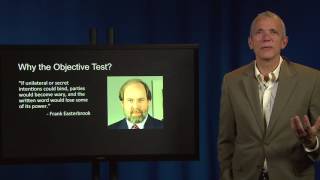
>> Um, multiple reasons. First, the big part of contracts, contract law in general means that we have to have an objective test looking at your manifestation of your actions. So instead of it being subjective, even if Zemer did think that this was a joke, all of his actions conveyed that he was trying to transfer a sale of land.
He wrote it down. He signed it, which statute of frauds, this is also a sale of land counts under the statute of frauds. Um he claims, Emer claims to have whispered to his wife that this was a joke, but Lucy didn't hear that.
Uh so to him, it was still having his wife sign a legally binding document and proceeding from there. Um, and so the court saying, and then even on the little nuances, uh, the lawyer conceded that he wasn't drunk enough to not be in his right mind or any of those little other issues, but the big one being your actions manifested, that you wanted to enter into a binding contract, and that you did. >> The court says the argument that you were joking, Zemer, is a weird one, and we're going to evaluate this as any reasonable person would understand your actions.
And I think you listed out a variety of actions that specifically would have led the judge to conclude that objectively this wasn't a joke. It was real, right? They wrote it out.
They negotiated for a long time. They went back and they rewrote the contract. I'll show you the contract.
Here it is. We can look at the evidence, right? It's on the back of a bar bill.
They sort of wrote on their side. We can flip it a little bit if we want. Maybe that's a little bit easier to see it, but we can see they rewrote it.
It's unclear whether there was an I here and they made it into a Wii or if they actually revealed the whole thing. They both signed it and they wrote out the agreement. Anything else that might lead the court to conclude that this was a real agreement and not just a joke?
>> Maybe my friend Cassidy can help me on that one. >> Cassidy Benz, are you here? >> Yes, I'm here.
Oh, goodness gracious. Um, another thing that they were talking about was the fact that later, uh, Mr Lucy wrote a letter to the Zemer and said, "I'm ready to go. I've got all my money together.
I am prepared. I checked out the title. That's all good.
" And he that's when he initially said, "Actually, >> it looked like there were some follow-on conversations that confirmed maybe it was real, at least from Lucy's perspective. Even the fact that they thought about including the title provisions, right? We're going to sell everything here.
We're going to include a title satisfaction condition in there. Those are all things that led the court to think that, hey, objectively, this was a real contract. Okay, Cassidy, while I'm with you, >> let me ask how you would think about this case if you were representing the defendants, the zemer.
>> Sure. Let's imagine that they come to you, they hire you, they say, you know, we won initially and there was no contract and now Lucy's have appealed and we need some help making sure that we are not going to have a court say this is a real contract. >> Sure.
>> What types of arguments would you raise? How would you approach arguing for the zemer? >> Uh, my first argument for the zemer would be the fact that Mr Lucy had tried to buy the farm a number of times before and every time the zemer said no.
Now, was that for less money than $50,000? Yes. But it really he was very clear all of those previous times, not only to Mr Lucy, but to everybody else.
He'd gotten a lot of offers for the farm. And every time he said, "I have no intention to sell the farm. " >> But doesn't does that prevent them from making a contract later?
Like, couldn't I say, "I'll buy your car for $5,000. " And you say, "No. " And then the next day I say, "I buy your car for $7,500.
" And you say, "No. " And then the next day I say, "I buy your car for $10,000. " and you say yes, we'd still be in a contract, right?
No matter what happened before, >> right? But I mean, if I'm making the argument that he didn't that this was all a big joke and he never intended to sell the farm, that's a route that I would go. Also, Mr Lucy brought alcohol to the restaurant and seemed to be in a sort of drinking match with Mr Zemer.
Really matching drinks and going toe-to-toe. And that maybe indicated a lack of good faith on Mr Lucy's part that he was maybe trying to induce a state of drunkenness in order to make this sale a reality. >> All right, let's take a closer look at both of those arguments.
Well, we'll hold off for a minute on the intoxication argument. Let's focus in on the joke argument because I think you do want to try to make out the claim that this wasn't a real serious intent to be bound, right? It was just a joke.
What kind of a joke is this? How is it funny? I mean, >> what's going on here?
Like, if you had to tell a story about what's happening, >> it seemed to be funny to the zemer at first. It was a >> ah, we're going to sell the farm for 50,000. Let's write it out.
I don't get it. >> It seemed like it could have maybe been an attempt to, I don't know, embarrass Mr Lucy. And because Mr Lucy's point was, I have $50,000 cash to give you for this.
And Mr Zemer really did not believe that Mr Lucy had $50,000 cash and so was kind of going along with this as a bit because he thought there was no way he could pay up and even told his wife, I really don't think that this is a real thing, so you can just sign this and everything will be fine. >> So maybe it wasn't a haha joke as much as a teasing joke, right? I don't think you really have the $50,000.
We could imagine a situation where, you know, two people who had been drinking a little bit were kind of going back and forth for 40 minutes, you know, jesting each other about whether or not they really had the money to buy the farm. Any thoughts, Colleen? >> I think also since Lucy's previous offer was only $20,000 and the Zemer bought this farm for $11,000, it was almost like, oh, this this outrageously high price also fostered the the joke element of it.
>> You'd never even pay so much for it and you don't have the money. So we could imagine a joke situation. Ultimately the court doesn't buy that, at least the appellet court, but that might be one argument that the zemer would try to press.
Colleen, let me come back over to you. Let's talk a little bit about the results of this case. Let's talk about this, you know, use of what we've called the objective test.
Um, I want to imagine that we're actually back at the scene of the negotiations and we're kind of looking down from above. You know, I know this would never really happen, but let's imagine that we can really determine what is actually happening at the time this conversation is taking place. I would argue that it's probably one of three things that are really happening.
Possibility number one, Zemer might be lying after the fact to try to get out of a deal that he no longer wants to be in. Right? They sort of knew that they were entering in a deal.
Zemer all of a sudden realized a little bit later, whoa, Lucy really thinks this is a contract. I don't want to be in it anymore. Let me lie after the fact and say it was never mind.
It was just a joke. That's possibility number one. Possibility number two, Zemer might really have been joking the whole time.
Maybe Zemer was goating Lucy or maybe there was just some joshing going around. Um, and then later Lucy was trying to seal the deal to turn that joke into something that was really a serious contract. Possibility number three, both parties had inconsistent versions of what was happening.
Lucy thought it was real. Zemer might have thought it was a joke. Um, in the eyes of the law, do we care which of those versions of reality was was occurring?
No, >> we don't. Why not? >> Because once we start getting into the subjective mindset, a it's it's going to back up the court system because we're having to now do extensive amounts of digging.
It also then might promote a lack of faith in contracts as a whole. Because if we can make a contract and then I could later say, "Ah, I was actually feeling this way or whatever," then we're not going to believe that the institution of contracting is actually valid and that it will be fulfilled. We see a really clear statement of what the court thinks the law needs to be right near the end of the case.
This is four paragraphs up from the end. Whether the writing signed by the defendants and now sought to be enforced by the complaintants was a result of a serious offer by Lucy and a serious acceptance by the defendants or was a serious offer by Lucy and an acceptance in secret just by the defendants. In either event, it constituted a biding contract of sale between the parties.
Now, this is a little weird, right? Why do we have a weird rule of law like this where we're not going to try to figure out what was happening, what the truth was? Instead, we're just going to say objectively someone should understand Lucy as being serious.
Therefore, or sorry, Zemer is being serious, therefore it is serious. >> I feel like you have to draw the line somewhere because of that l ability for dishonesty and and people to be able to manipulate and change the story. You have to be able to draw the line to say your actions are showing one thing.
And while the jury does look for the factual elements of did he write something down, did he sign it, it's the judge's job to uphold the rule of law, and I think the law element of being of looking at those objective manifestations of actions is easier to apply. Uh, and then also more likely to give you something to be able to follow because if you know that certain actions are going to lead to a certain result, then that can apply to the entire population. >> Sometimes you hear contract law being described as needing a meeting of the minds.
we need a meeting of the minds in order to enter into a binding contract. I think that's a little bit misleading. If you needed a meeting of the minds, then we might care subjectively about what Zemer was really thinking and try to figure that out.
But as you just said, we don't. Cassie, should we change the law? Should we use a subjective understanding?
Let's not try to impose an objective standard here. Let's try to figure out what Zemer really was thinking. Is that better?
>> If I am defending Mr Zemer, I absolutely think it's better. us a good rule of law. Now, take off your advocacy hat.
>> Sure. I I mean, I'm on the kind of team objective truth, reasonable standard of how to interpret contracts and that we should really just be focusing on objectively what a reasonable person would agree was intended by the parties. >> What's wrong with using a subjective standard where we're actually going to try to figure out what Zemer was thinking?
>> Zemer might have been joking. Zemer might not have been joking. As we just read, we don't care.
What's wrong with trying to figure it out? >> There's really no great reliable way to figure out what somebody's thinking at at any given time. Mr Zemer has reason after the fact to say that everything was a joke.
And so we don't know if this is coming up after the fact because Mr Zemer does not want to sell his farm or if in the moment Mr Zemer really truly was just kidding around and that Mr Lucy had reason to believe that he was just kidding around. We're probably going to worry a little bit about the sanctity of contract law if anyone can get out of a deal later on by saying, "Hey, I know it looked like I was entering a real contract, but I was just joking in my mind. So therefore, it's not binding.
Sorry, you're out of luck. " Right? That doesn't seem like a great system.
That's what the court is trying to avoid. And that's why the starting place for offering acceptance is often, you know, with this notion of an objective test. I want to come back to the administration of that in a minute.
Um but first, um Cassidy, let's turn to your other defense, right? You can put on your advocacy hat or let me, you know, if if you want, we can just sort of try to evaluate this straight. Um the other thing that you were going to have the Zemer argue was we were high as a Georgia pine.
We were intoxicated. At least Mr Zemer was too intoxicated to be bound by a contract. Before we turn to the facts of the case, let me ask about that defense generally.
Can you ever become too drunk to form a real contract? >> Yes, you can. If you are so extremely incapacitated either through intoxication or other means, um you it can prevent what is the manifestation of ascent.
Okay? And it can prevent you from being able to reasonably agree to a contract if you are just so absolutely drunk that you reasonably cannot agree to what's happening. >> That's totally right.
We'll study that defense of intoxication a little bit later on in the semester. Now, let's apply that defense. It's a real defense.
Let's apply that to the facts of this case. Does that mean that Zemer doesn't have to be bound to the contract because Zemer had had some whiskey? >> Not in this case.
No. As Mr Zemer's lawyer even conceded here. He wasn't too drunk to understand what was going on.
He even knew to get in there and correct the singular to the plural and go over and have his wife sign the contract. So, he formed a contract, knew to have his wife sign it. So, he clearly had at least some idea of what was going on.
>> Defense is real. Facts don't support the defense here. There are a lot of reasons why it doesn't look like Zemer was too intoxicated to be bound to the deal.
You know, as as you said, um he discussed with pretty clear recollection what exactly had happened during that 40-minute period. Um you know, the lawyer ultimately conceded it. You know, there's also this funny interaction where Zemer's wife said, "Hey, Zemer, Lucy's really drunk.
You better drive him home. " Right? That's not a great argument to make if you're trying to say you're too intoxicated.
Now, let me ask you this question. It's not really talked about in the case, but it interacts a little bit with the objective test. Um, do you think it matters whether the other party knows that the defendant drank a lot?
>> I It does matter. Okay. Yes, >> it does matter.
So, if Zemer was really, really drunk, but Lucy didn't know it and Zemer, you know, sort of seems kind of normal, that defense might not work. But if Lucy went in and saw Zemer drinking 10 shots of whiskey and Zemer was stumbling around, then maybe the defense would work. Why do we care about what Lucy knew?
Zmer was either drunk or not. It kind of all goes back to that idea of I guess good faith of especially considering in the facts of this case Lucy's the one that brought the whiskey to the restaurant. If it seems like uh the intoxication of Zemer was purposeful by Lucy in order to get him to make this deal, then it matters that Lucy knew that he was really drunk and knew that he was maybe either joking or unable to form a very serious contract.
>> So, if you want to make out a defense using intoxication and saying, "I don't want to be bound by this contract. " As you said, it's not an impossible defense to make out. The case gives us some specific language, right?
You have to be so drunk that you don't understand the nature and consequences of your actions. But we also need the other side to know or should know that you were that intoxicated. That's the standard there.
I'll tell you a quick aside. I had a um a student come up to me after uh class a couple years ago. They said, "Hey, Professor G, uh I want to tell you about uh something that happened to a friend of mine.
" I'm like, "Okay, this is going to be good, right? This is when you really get the good stories. " Uh, and he said, um, well, one time this friend of mine was, um, up late at home surfing on his computer, uh, uh, drinking some vodka and, um, messing around on eBay, as people are, uh, want to do, uh, in in these in these days.
Um, and he woke up the next morning uh with an email saying, "Congratulations, your $48,000 bid on the Mercedes has been accepted. " It's an interesting question as to whether the defense of intoxication would work there because under eBay, as you've said, it's kind of hard to imagine the other side would know or have reason to know that you were intoxicated. They just saw the bid.
So, the defense might not work in a situation along those lines. All right. So intoxication's not going to work.
There's a couple of other weird things that happen here. These are again sort of minor events of the case, but we can take a minute or two and talk about them. Um why do you think Lucy tried to pay $5 to bind the deal?
>> That's a form of what's called consideration. And if he pays kind of $5 to Zemer, it's kind of, I guess, locking in the deal and saying, "I've now given you something in order to kind of confirm that we're both entering into this contract. " Because in theory, if he had just signed the piece of paper and taken it and given it and they'd all just had the paper contract, that's a little bit less clear in some cases versus Lucy definitively gave $5 as I guess a down payment sort of thing.
>> So, we talked earlier in the semester about consideration. In order to have a contract, you need to have both, you know, something you're getting and something you're giving. Was the $5 relevant to the determination of consideration?
Did he need to actually pay him $5 or were they trading things of value? >> He didn't need to pay him $5 and he didn't pay him $5. It was more of a form of confirming that they were both entering into this deal by giving something for something which would then be the farm.
>> Who knows why Lucy did it, but Lucy did not have to do it in the eyes of the law. Right. There was already a deal, Colleen, wasn't there?
Yeah, they're already reciprocally or mutually induced, meaning that one person was giving in order to get something. So technically the $5, it's like Zemer wasn't giving Lucy the farm, saying there was a contract. He wasn't giving the farm just so that he could get those $5.
>> He had a trade. You know, Lucy maybe knows just enough of the law to get himself in trouble, right? He thinks he has to give the money, but you know, as we now know, he doesn't.
What about this argument? Zemer says, "Well, I didn't hand over the bar bill contract to lose. He just snapped it up.
" Is that relevant? >> That goes to the offer of whether or not Zemer actually extended the offer of the contract to him. And so technically, I guess now since I love email so much, if I were to draw up a contract between you and me to sell land, but then it just sat in my inbox and I never sent that to you, then I wouldn't actually be initiating and extending the offer to you.
So theoretically, if Lucy did snatch that, that's like you hacking into my system, getting my my contract from my drafts, and then assuming now that we have a binding agreement. >> But even if he snatched it, right, wasn't the offer still made, still signed? Like, who cares if you picked it up or not?
>> I mean, it goes back to you could technically still like Zemer could resend the offer um if there wasn't before there was acceptance. So, by not giving it to Lucy, he still is in that like period where he could rethink it and decide not to extend the offer. Once it's then been accepted by Lucy in whatever form, now that's when we're getting into the binding contract.
>> Write this all out and sign it and all of a sudden say, "Never mind. I'm not I'm not making you an offer. " >> Hey, we all change our minds.
I mean, >> maybe I mean it would it would maybe call more to question about whether or not that offer had actually been accepted. What was the moment of offer and what was the moment of acceptance? But again, I think it's a little bit of a sideeshow.
I think if you have an offer and you have an acceptance, assuming it wasn't contingent upon the actual delivery of what it was when the communications were initially made, that's probably enough to count as an agreement. Okay, let's try to wrap up by coming back to the main lesson of the case, the main theme of the case. I think we can see this.
I'll try to read a quick quote here. It's about um the bottom of page five. So I don't know maybe 10 or 12 paragraphs up from the last part of the case end of the case I'll just quickly you know read you this.
I think it's a nice synthesis of what we need to take away from this case. In the field of contracts as generally elsewhere we must look to the outward expression of a person as manifesting their intention rather than to their secret and unexpressed intention. The law imputes to a person an intention corresponding to the reasonable meaning of their words and acts.
Right? as you've told us, as we've talked about, that's the objective test. Now, I want to talk a little bit about administration of this rule because if that's the rule we're going to be using, and we now know it's a sensible rule, right?
Subjective standard is hard. But if that's the rule we're going to be using, that means that a court has to determine what's objectively true and what's objectively false. Can a judge do that?
I think I mean it gets tricky. You have the jury is the factfinder and so they are trying to figure out what those actual objective manifestations were. Meaning did he actually write the contract?
Did he sign it? What did he say to this person? Things like that.
The judge though is using all the information that was found to then help make that reasonleness obje uh reasonleness determination. So for example, the lawyer conceding that Zemer wasn't actually that drunk. his own lawyer conceding that that's now a fact that we have to determine in like the big reasonleness examination.
So, it's it's both playing a part, but the judge is what is administering the objective standard using the facts that the jury has then >> say you're the judge. You know that the law tells you you have to use the objective standard to figure out what a reasonable person would think was going on here and you have to decide this was a joke as the lower court decided or this was a serious transaction as the appellet court decided. The objective test gives you the power to divine objectively truth.
How are you going to do that? Can you do that? >> I think that's why we have the needed offer, acceptance, consideration, like all of those elements that can be manifested in different ways, but there's only so many ways that you can extend an offer, you can accept an offer, you can offer consideration.
So, I think having that kind of framework is what guides us to be able to make an objective. >> But at the end of the day, you got to say objectively this is real or objectively this was a joke. Both court courts in this case went different directions.
Cassie, can a judge do this? We asked them to, but can a judge really divine objective truth in a metaphysical way? >> A judge can certainly try.
>> Okay. >> I don't know if they they can really just work with the facts they have, apply the law, and say, I think this is as close to the objective truth as we are going to know. >> This is kind of a tough question, and it's something for us to keep in mind throughout the semester.
It really calls out two different schools of thought on how the law works and what the law is and how we should understand the results of the law. On the one hand, we might have an approach like legal realism. Judges are going to make the law according to what they think the right answer is.
Judges are people, too. And maybe the results going to differ a little bit on a day-to-day basis according to what the judge thinks or how the judge feels that day or what the judge ate for breakfast. Right?
I think this is a very realistic perspective on the law and how the law is made. I'll give you a quote to emphasize this. This is by uh professor Arthur Corbin.
A sufficient reason for comparative historical studies of cases in great number is the fact that such study frees the teacher and the lawyer and the judge from the illusions of certainty and from the delusion that law is absolute and eternal. It's a very relativist view. You might keep this in mind.
If you look at two cases that are almost identical on the facts, but they have different legal outcomes. Maybe you take a realistic perspective. This judge ate this for breakfast and this judge ate that for breakfast.
Right? There's, you know, different approaches there. Now, we need to contrast that with a different view of how the law works.
And that's an approach uh that's a more formalist approach. A more formalist approach. Someone who espouses formalism, maybe someone like Dean Langal at Harvard who wrote the first contract case book would say nonsense.
Nonsense. This is nonsense. Law is science.
There are right answers and there are wrong answers and the judge just needs to figure out what is really happening. Maybe this was really a transaction and the lower court judge got it wrong and now the appellet court is reinstating the truth, the scientific truth here. Um, I'm not going to leave you with any conclusions, right?
You're going to have to keep this in mind and make up your own mind as to what, you know, what framework serves you a little bit better or what you think is more realistic to to explain what's going on in the law. But it's something to keep in the back of your mind. I think this case sort of calls it out.
All right, Cassidy, one last hypothetical and then we'll wrap for the day. Let's imagine that we make an agreement. Um, I promise to sell you my Toyota for $10,000 and you say, "Okay.
" Um, next day comes by, we meet outside in the parking lot, you bring an envelope with $100, $100 bills in cash, hand it over to me, and I give you my Toyota. Objectively, am I okay in handing you over this Toyota? Is that our contract under the objective test?
I think that that's when we get to what is the reasonable person standard, which unless I love Star Wars and that is the only Toyota left in the universe. Um, I don't know that a reasonable person would have thought that when I gave you $10,000 for a Toyota, I meant the little green guy and not the car. >> 100% with you.
Right. This is an easy one. If we were to apply the objective standard, 99.
999% of us would think it's this. Although you raised some interesting points, right? It might matter whether we think you're a collector, right?
Or whether it's rare. But putting that aside, this is an easy, you know, um application of the objective test. It's worth keeping in the back of our mind, however, how do we know this?
And whatever leads us to know this is that something that judges can use to know objectively what's really happening in much more complex transactional settings like Lucy B. Zemer and a lot of the other cases we'll be studying. All right, that's enough contract law for today.
Thank you everyone. I'll see you tomorrow.