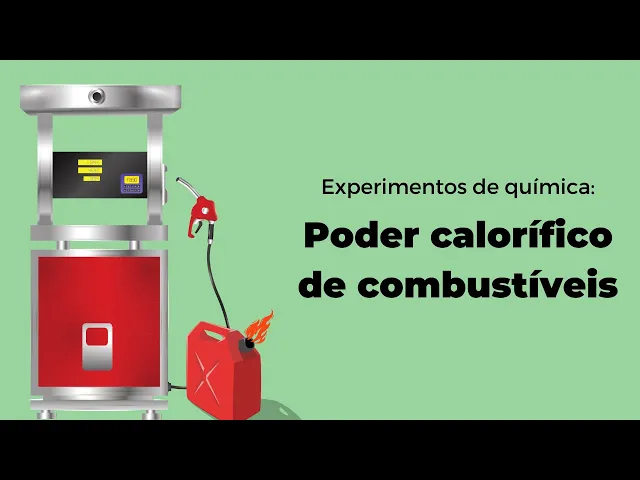
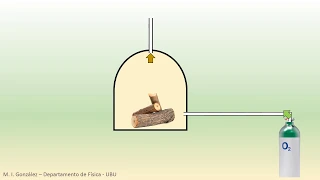
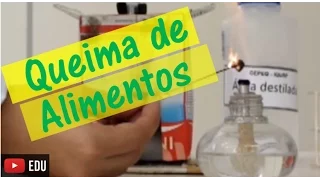
We know that when we burn Fuel it produces energy in the form of light and heat. But did you know that different materials produce different amounts of energy? For example, if you supply a car with gasoline or ethanol, engine performance will be different.
To cooking is the same. It will not be equal to use coal, firewood and cooking gas. And you will have difference using a candle or a lighter.
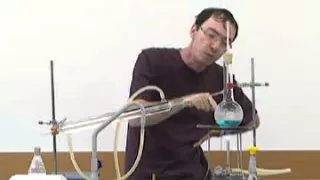
That amount of thermal energy produced by burning 1 kg or 1 L of fuel is called calorific value and is what we are going to determine in this experiment. For this experiment, we will use: two aluminum cans, ring stand with a test tube clamp and an iron ring, a wire to support the can on the ring, a lamp with alcohol, in our case, ethanol, and another with kerosene, graduated cylinder, matches, thermometer with range from -10 to 110 ° C and digital scale Add 100 mL of water in the graduated cylinder. It may be potable water and transfer such water to aluminum can.
We adjust the thermometer position to it be dipped in water and do not touch the bottom of the can. After a few seconds, we registered the initial water temperature. Now we measure the initial lamp mass with ethanol inside it.
Our goal now is to heat the can water using the lamp flame. The lamp should be just below the can and adjust its height to be near to the flame. We need to adjust the height of the thermometer also so that it is dipped in water, but without touching the bottom, or the temperature reading may exceed the maximum range.
Now, just light the lamp and wait until the water temperature reaches 90 ° C. Once the temperature was reached, we have to put out the fire and weigh it again. The final mass of the lamp with ethanol was 102.
81 g . Now that we measured the final mass of the lamp with ethanol, we'll repeat the same experiment, but this time, burning kerosene. With 100 mL of water in another aluminum can, we measured the initial water temperature.
And we also weigh the initial mass of the lamp with kerosene. Always carefully, adjust the height of the can and the thermometer. The lamp with kerosene produces a more intense flame and produces soot.
With water at 90 ºC, we put out the fire and weigh the lamp. 106. 17 g.
In order to compare calorific value of fuel, we need to calculate the "delta T", which is the final temperature minus the initial temperature. The variation of water temperature was very close to the two samples. To calculate the mass of fuel consumed, just subtracting the final mass of the initial mass.
Did you see? ! These results show that we need burning a greater mass of ethanol than kerosene for heating the same amount of water.
Consulting a calorific value table, we see that the burning of 1 kg of kerosene produces 10800 kcal of energy. With ethanol, 7090 kcal of energy are produced, i. e.
the kerosene calorific value is greater than the ethanol calorific value. We already could stop the experiment now, but we can also calculate the amount of energy absorbed by the water when each fuel was burned. ATTENTION HERE!
As the energy produced in burning fuel is dissipated in different ways, warming air, can, lamp and water, we can calculate just the amount of energy had been absorbed by water and not the exact calorific value of each fuel. The amount of energy absorbed by water is equal to the mass of heated water multiplicated by the specific heat of water and by the change in temperature. In our case, the mass is 100 g, whereas that the density of water 1 g/cm3 and the specific heat of water 1 cal / g.
ºC. In the case of alcohol, the equation becomes like that: This result is the amount of thermal energy produced in the burning of alcohol that was absorbed by water. In the case of kerosene, water absorbed 6900 cal.
If you want to compare the ability of energy production of these two fuels, we need to consider equal masses alcohol and kerosene. Based on our experiments, we need only make a proportional reasoning: if the burning of 2. 4 g of ethanol produces 6800 cal, what is the energy produced from burning 1 g of ethanol?
And the same idea for kerosene. Very well! With these results we can see that in the burning of 1 g of ethanol were transferred 2830 cal to water, and in the burning of 1 g of kerosene were transferred 4310 cal.
It is so much more easier to learn when you do an experiment, right? I hope we had contributed for your chemistry knowledge and shown how it is present in our daily lives.