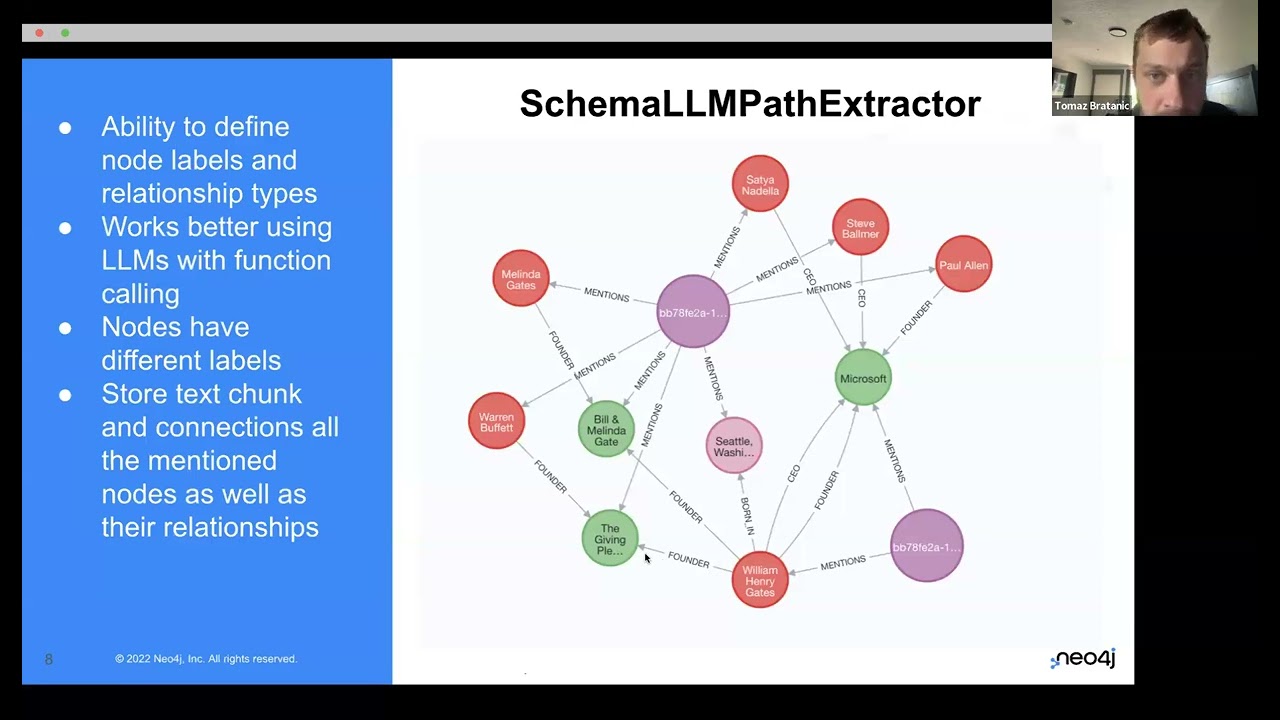
Perhaps you're unfamiliar with the term of knowledge graph, but I suspect you have benefited from one, maybe even today. Take your favorite virtual assistant. Did you know that when you ask a question like what is the capital of Canada?
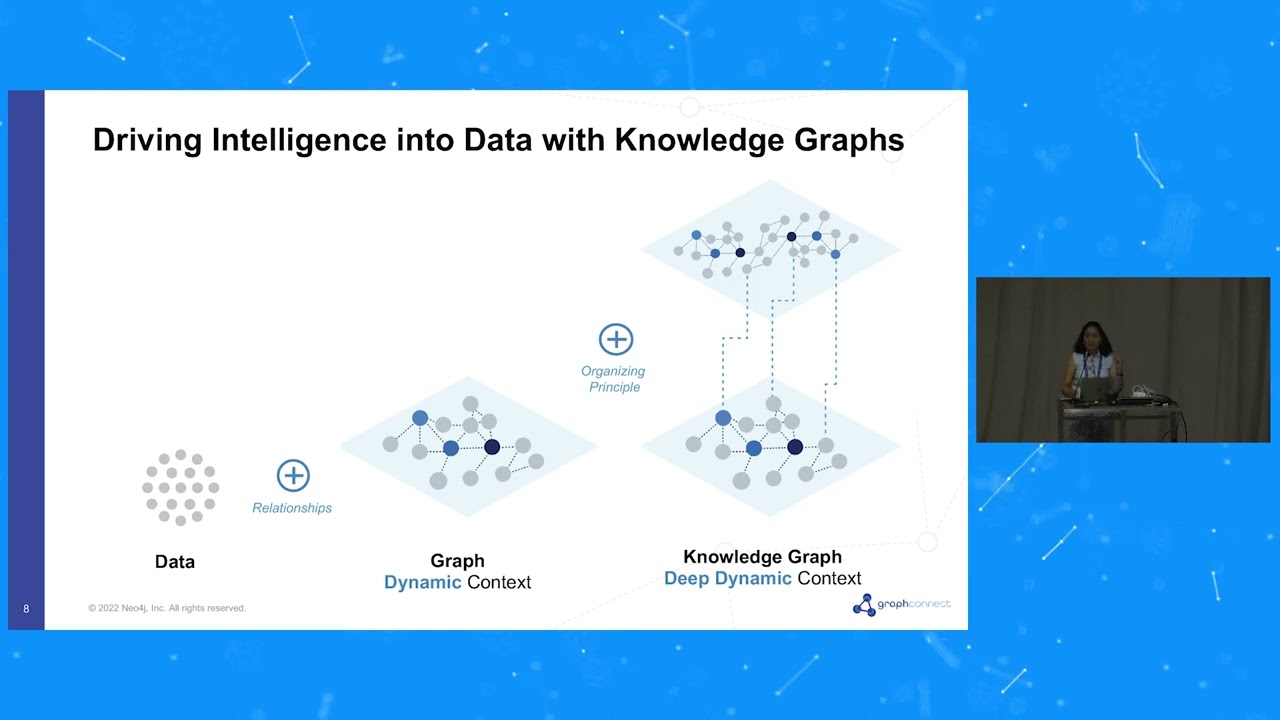
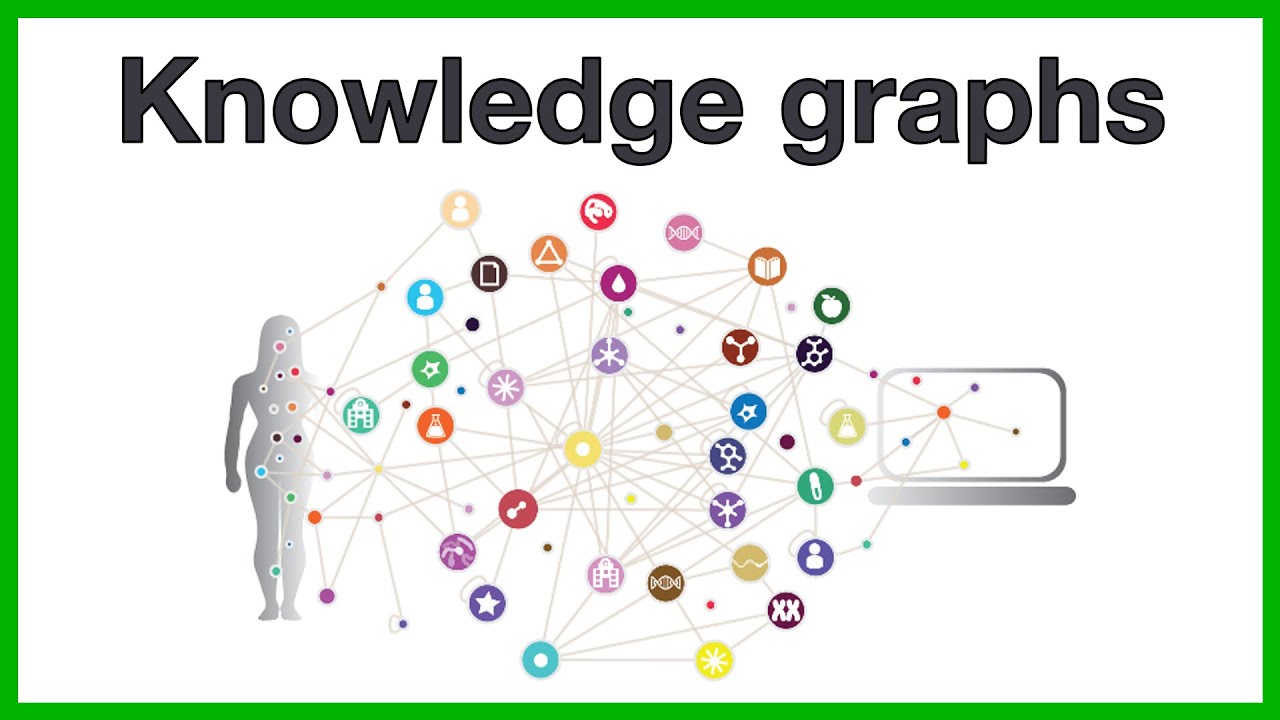
The assistant is pulling the response. Ottawa in this case from information in a knowledge graph and not as graphs can be seen as a way of representing semantic information between two entities. And what's really cool about them is that modern applications allow almost any entity you could imagine to be described with anyone.
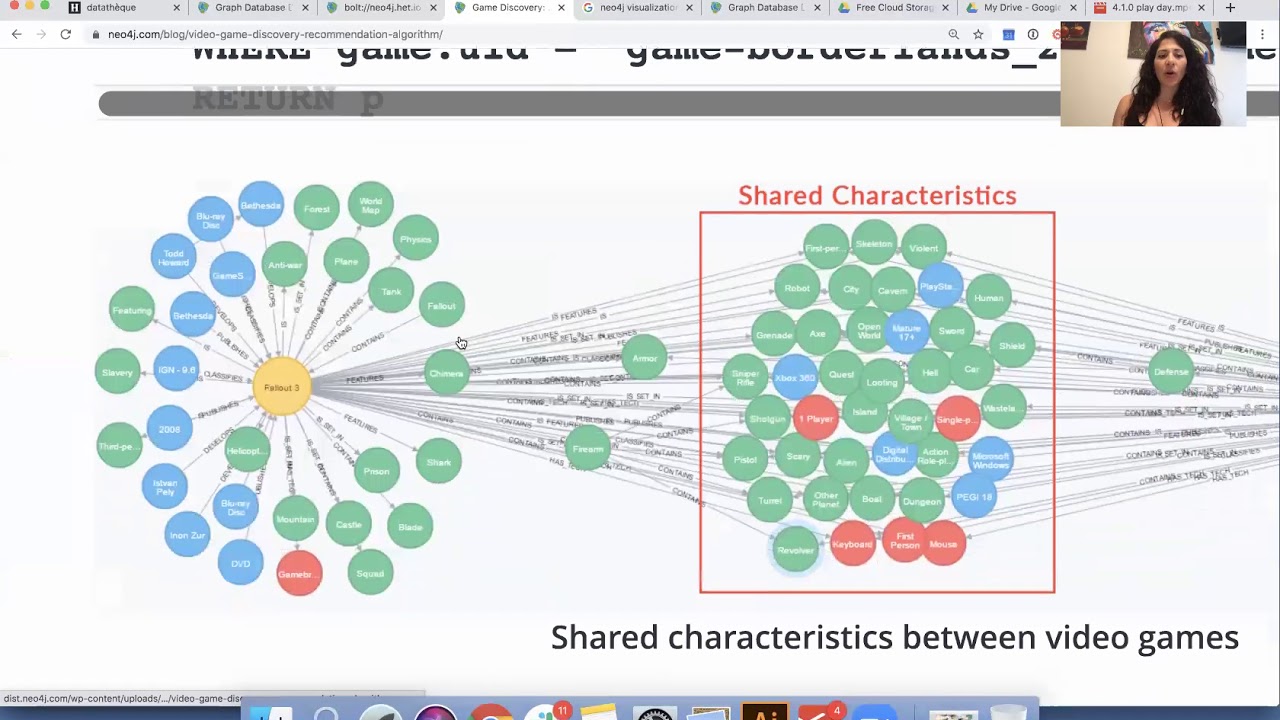
For example, we could have a knowledge graph of movies and actors, or we can describe ingredients or recipes, as well as the steps required to cook them. And this means machines are able to understand how these entities relate to each other, along with a shared attributes, and this allows us to draw connections between different things in the world around us. Now, a knowledge graph is made up of nodes, and connected by edges.
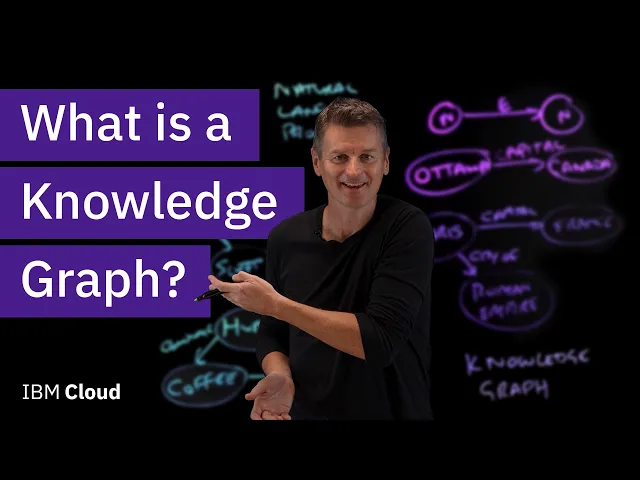
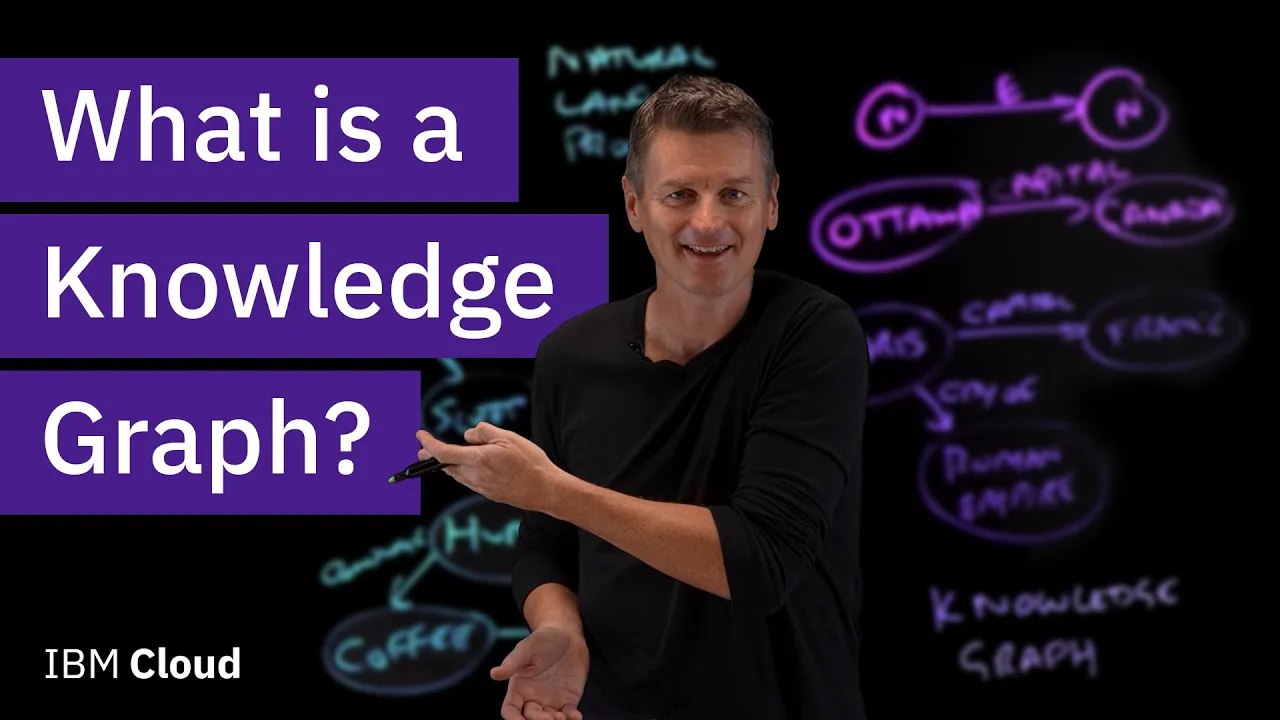
Nodes describe any object or person or place, and an edge defines the relationship between the nodes. So, for example, a node of Ottawa. .
and a node of Canada. . might be connected by the edge of capital.
And the thing here is that the pair of nodes, they can be connected by more than one relation. If the two are related in multiple ways. So for example, let's take another city.
Let's take Paris. Now, Paris is the capital of France, but it is also part of the Roman Empire. Or it did used to be.
So in this case, the edges are Paris to France is capital. And then Paris to Roman Empire is city of. And we can see then how that these nodes can be connected with multiple edges as we expand this.
And knowledge graphs can sort of build different data sources and bind them together to infer missing facts. So let's say you're trying to predict the number of Chinese restaurants in New York City. You could use one data source, let's say census data, but that might not tell you the whole story.
It might be out of date. It might not classify everything correctly and so forth. So if we had a second data source like, say, online reviews about all the different restaurants and put them all in a knowledge graph, then we can use statistical methods to infer that actually there are two thousand nine hundred restaurants serving Chinese food in New York City, which may be a lot different than what was reported in the census data alone.
Now, knowledge graphs utilize something called natural language processing. Or abbreviated to NLP to construct a view of nodes and edges through a process called semantic enrichment. I can take some unstructured text, say a white paper, and classify that text using natural language processing to really sort of create datasets which are correlated and related to that information.
And one that builds me is a knowledge graph. And beyond sort of helping with question and answer queries, there are a lot of other commercial applications for knowledge graphs. So, for example, the recommended videos that are probably appearing alongside this one in YouTube right now.
Well, they leverage a knowledge graph based on queries people are searching for and other videos that they might enjoy. In insurance you can use knowledge graphs to sort of and make sure that a given claim for damage is actually a true claim, or whether it's been one that's reported by a policyholder for fraud. And in retail, knowledge graphs can assist understanding the relationship between products so that companies can recommend different pairings that might be of interest to customers.
And I'll leave you here with some wisdom that I was acutely aware of last night and I'll share in knowledge graph form. It consists of three nodes. There's human.
Then there is coffee. And then there is sleep. And these note connected, of course, by edges.
The edge between human and coffee is consumed. The edge between human and sleep is needs. And what I learned last night, the edge between coffee and sleep, is prevents.
Avoid caffeine after five p. m. folks.
If you have any questions, please drop us a line below, and if you want to see more videos like this in the future, please like and subscribe. Thanks for watching.