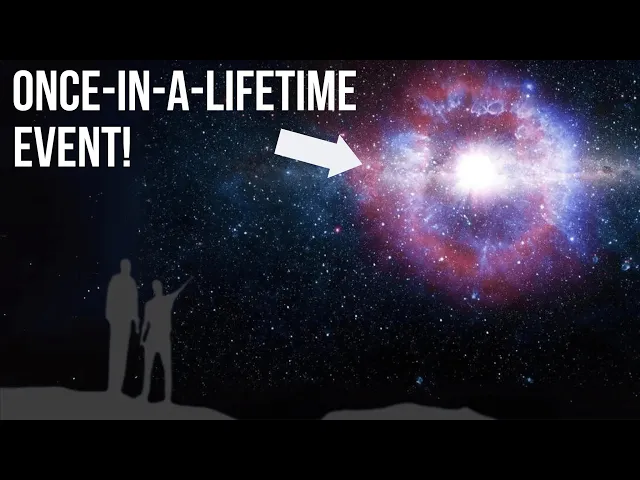
Mark your calendar : A star Explosion will be visible to naked eye in 2024! Great anticipation around the world for what might appear in the sky at any moment, from now until next autumn. The much-awaited event is the reappearance of T Coronae Borealis, or T CrB, a star that periodically, over decades, increases its brightness by nearly two thousand times, transforming from a speck of light a hundred times fainter than the faintest star visible to the naked eye into a star as bright as Polaris!
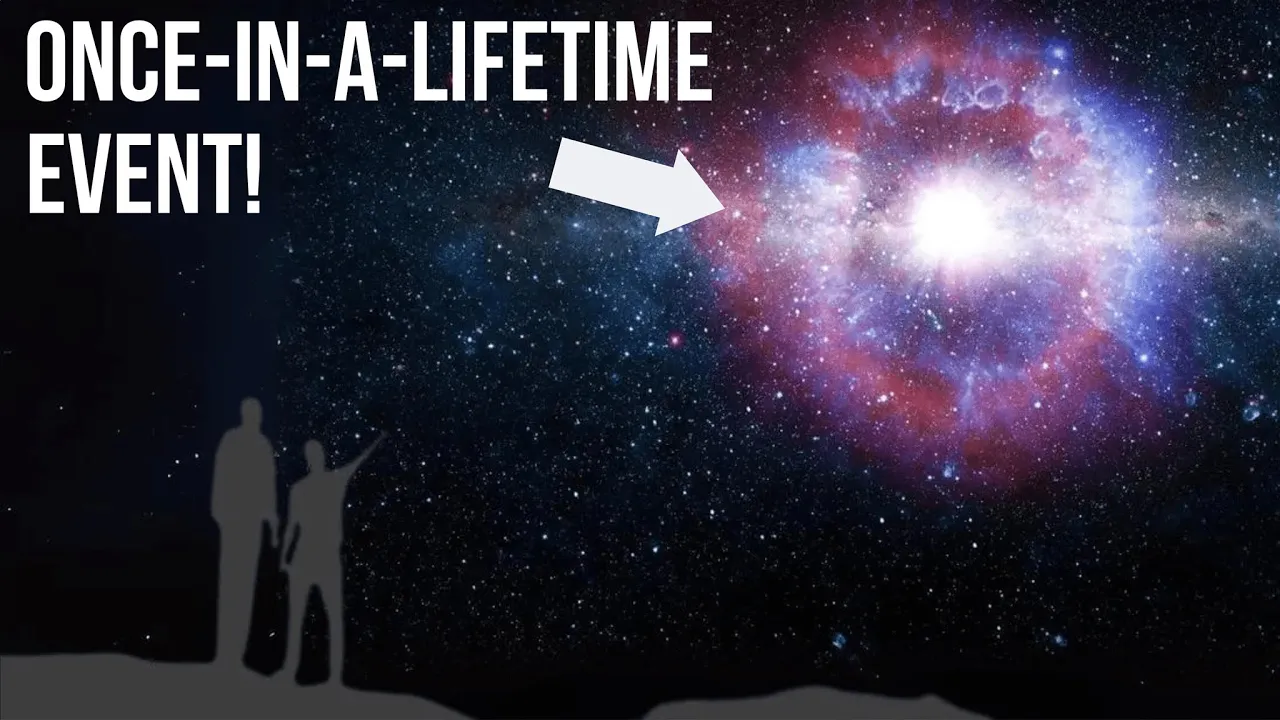
Located about 3,000 light-years from Earth, the last time this star shone in the sky was in 1946, and before that in 1866, with reports dating back to much earlier times. Rebekah Hounsell from NASA's Goddard Center commented, "It's a once-in-a-lifetime event that I believe will inspire many new young astronomers. " This rare type of variable star could awaken in the coming months after an 80-year slumber, becoming easily visible to the naked eye.
The signs are already there, and it might be just around the corner! With this extraordinary video, we will try to answer all the questions that may arise around such a precious and evocative cosmic event. “ In astronomy, there are several phenomena that are said to "happen only once in a human lifetime.
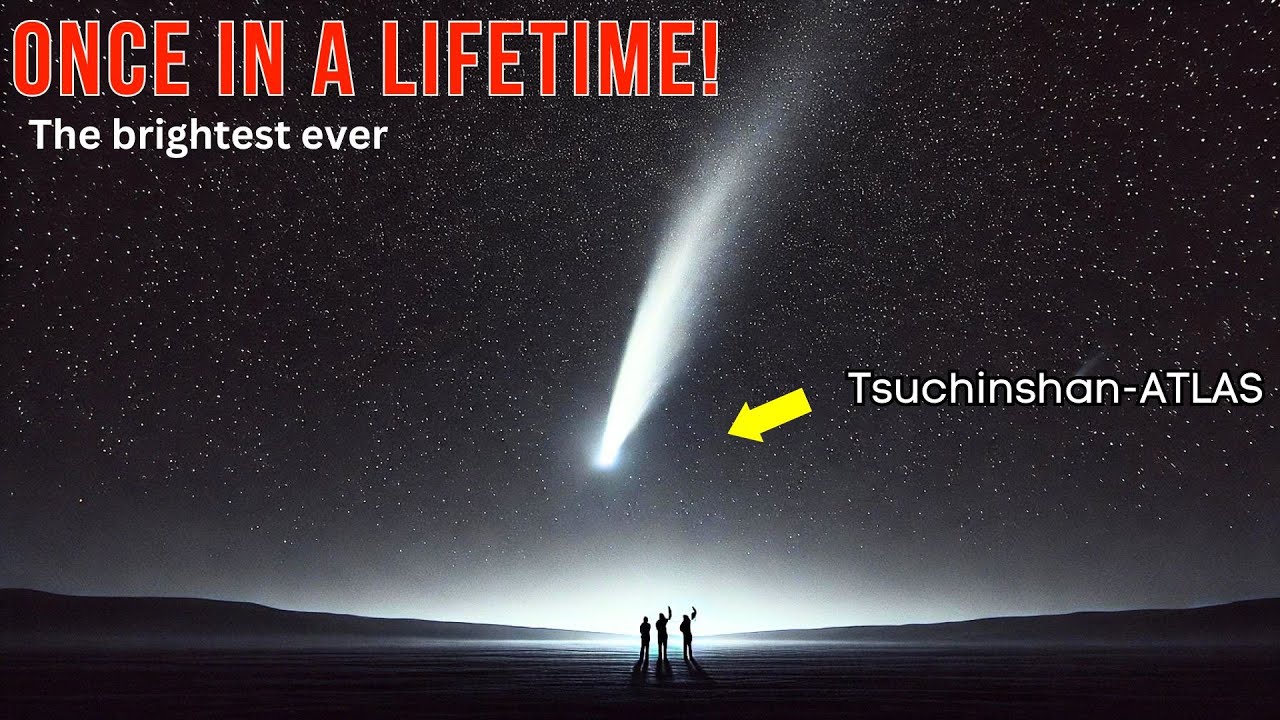
" The most famous is undoubtedly the appearance of Halley's Comet, which returns to shine in Earth's sky every 76 years. . .
so few can say they have observed its return more than once in their lifetime. For total solar eclipses, it's somewhat the same. .
. it's unlikely that someone who has always lived in the same place will have the chance to witness such a rare event twice. Then there's a third category of phenomena, the so-called "recurring novae".
. . stars that can suddenly increase their brightness, giving the impression of appearing out of nowhere.
Like a "new" star (hence the name "nova," Latin for "new"). Among the few stars of this type in our cosmic neighborhood, each recurring at different intervals, there is one, the most precious and well-known, called "the blazing star," which, almost like clockwork, reappears every 80 years or so. .
. also the span of a normal human life. All very fascinating.
. . but not everyone is an astronomer or an astronomy enthusiast, so it becomes necessary (even if a bit tedious) to explain all the terms involved.
For example, what exactly is a "nova"? It is defined as an astronomical event that causes the sudden appearance of a star, seemingly "new," where there was nothing visible before. A star, more or less bright, that slowly fades away over weeks or months.
All observed novae involve white dwarfs in close binary systems, but the causes of the dramatic appearance of a nova vary depending on the nature of the two progenitor stars. This leads to a classification that distinguishes between three subclasses of novae: classical, recurrent, and dwarf novae. Classical novae are the most common type, formed by a white dwarf and a main sequence star, subgiant, or red giant.
The latter, more massive, burns its fuel faster and reaches the end of its life cycle sooner, coinciding with the expulsion of its outer layers and the formation of a planetary nebula. If the orbital period of the system is a few days or less, the white dwarf is close enough to its companion star to attract accreted matter onto its surface, creating a dense but shallow atmosphere. This atmosphere, mainly composed of hydrogen, is heated by the hot white dwarf and eventually reaches a critical temperature, causing a rapid, uncontrolled fusion.
The sudden increase in energy expels the atmosphere into interstellar space, creating the envelope seen as visible light during the nova event. A recurrent nova involves the same processes as a classical nova, except that the nova event repeats in cycles of a few decades or less, as the companion star refuels the dense atmosphere of the white dwarf after each ignition, as in the case of T Coronae Borealis. Astronomers theorize, however, that all novae are actually recurrent, although most ignite on timescales ranging from 1,000 to 100,000 years.
Truly rare are those that return at intervals of a few decades and become visible to the naked eye. Under certain conditions, mass accretion can eventually trigger an uncontrolled fusion that destroys the white dwarf instead of simply expelling its atmosphere. In this case, the phenomenon is usually classified as a Type Ia Supernova, which, as we will see later, is an event thousands of times more energetic.
Novae stars appear more often along the path of the Milky Way, especially near the Galactic Center, where the stellar density is higher. However, they can manifest anywhere in the sky. They occur much more frequently than supernovae, with an average of about ten per year in our galaxy.
Most, even though the increase in magnitude is significant, remain observable only with a telescope, and on average, only one every 12-18 months reaches naked-eye visibility. Novas that reach first or second magnitude can be counted on one hand. The last bright nova was V1369 Centauri, which reached magnitude 3.
3 in December 2013. Personally, I still remember witnessing the exceptional and unexpected explosion of Nova Cygni 1975 as a young man, which at the end of August 1975 shone at magnitude 1. 7, becoming the second brightest star in the constellation Cygnus, after Deneb.
In the following days, it quickly dimmed, dropping 7 magnitudes in the 45 days following its peak. It was the nova with the fastest known brightness variation; in photographic plates taken two days before its discovery, it was at magnitude 9, while it was not present in photos taken from Mount Palomar in previous years, which included stars up to magnitude 21! In short, it was just a speck in the cosmos, and in a few days, it became one of the brightest stars in our sky!
However, neither V1369 Centauri nor Nova Cygni has ever repeated. Probably because their explosive cycle is much longer; and this is what makes the difference with a recurrent nova like T Coronae Borealis. The recurrence interval for a nova depends mainly on its mass; with their powerful gravity, massive white dwarfs require less accretion to fuel an eruption than those of lower mass.
Consequently, the interval is shorter for high-mass white dwarfs. "before moving on, don't forget to subscribe to our channel if you haven't already . .
. make sure to hit the notification bell so you don't miss out on our daily videos! " Well, so far we have talked about novae in general, but what do we know specifically about the T Coronae Borealis system?
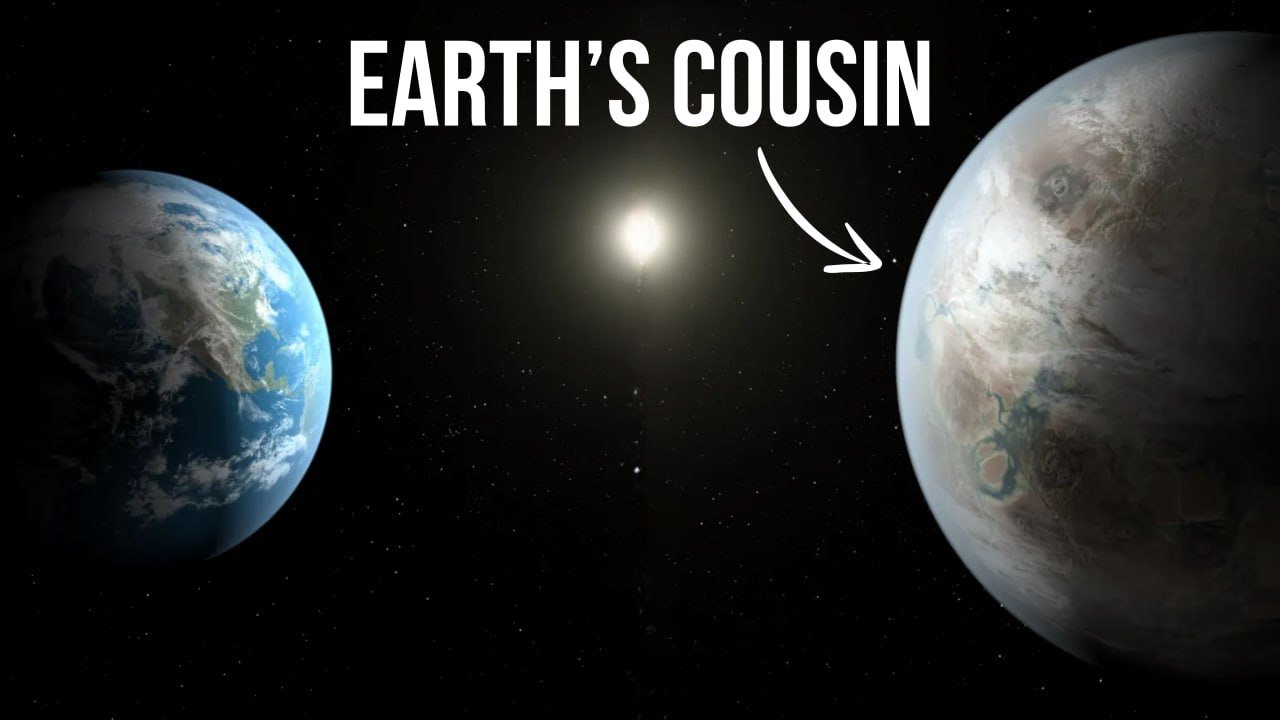
T Coronae Borealis is also a binary system, meaning it consists of two gravitationally bound stars. A system located about 2,600 light-years from Earth (a light-year, it is almost unnecessary to remind, is the distance traveled by light in one year, about 9,461 billion kilometers), in the direction of the constellation Corona Borealis. The two stars in the system have very different characteristics.
One of them is an expanding red giant, a star that has exhausted all the hydrogen in its core and now sustains itself only with the fusion of hydrogen in its outer shell. The star has a mass that is 0. 7 times that of the Sun, but with a larger radius and luminosity, respectively 66 times and 620 times the radius and luminosity of the Sun.
Its surface temperature is about 3,500°C, which makes it appear reddish in color. The other component of the binary system is a white dwarf, the final stage of the life of stars with a mass similar to our Sun. The white dwarf of T Coronae Borealis has an estimated mass of about 1.
2 times that of the Sun. The mass of a white dwarf has an extremely high density, typically one ton per cubic centimeter. To give an idea of this density, a teaspoon of white dwarf material would weigh 5.
5 tons on Earth, roughly the weight of an elephant! This is related to the radius of these objects, which is typically about 7,000 km, roughly the same as Earth's radius. Hence the high density: a mass like that of the Sun (which has a radius of about 700,000 kilometers) compressed into a sphere about the size of Earth.
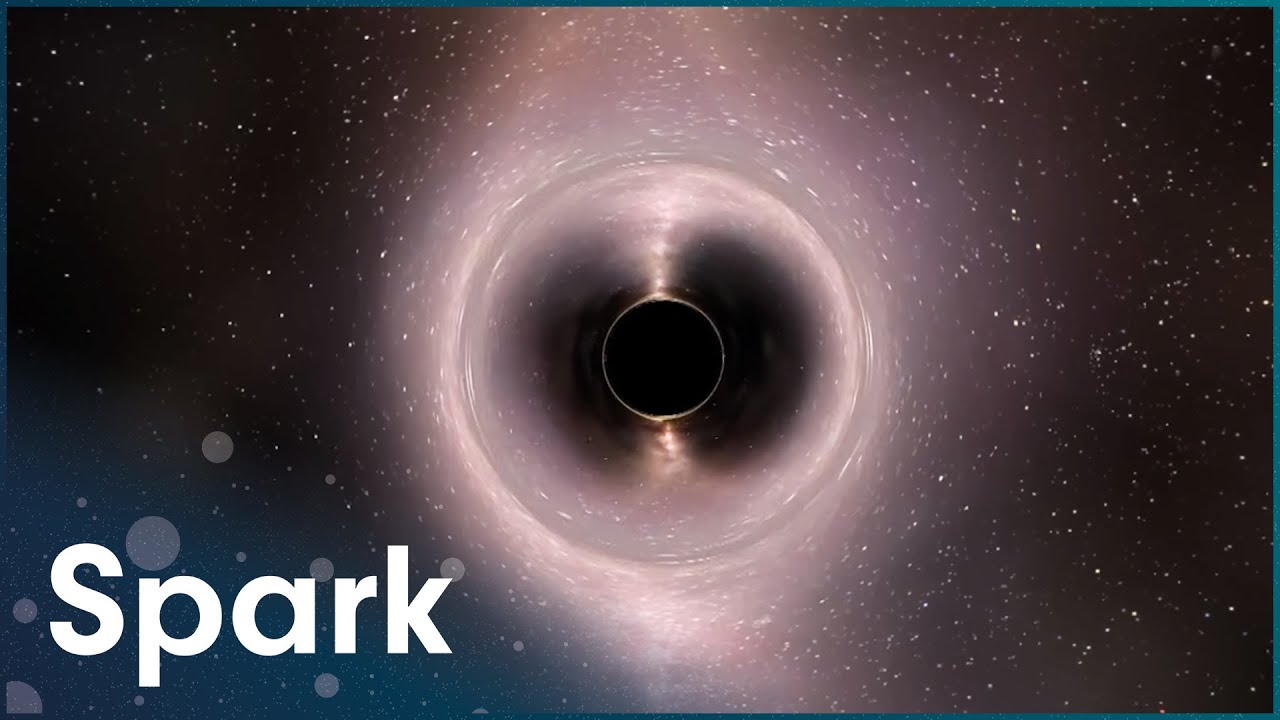
So, on one hand, we have a small-radius object made of compact and very dense material, and on the other, a very large star. In the binary system of T CrB, there is also a third element, called the "accretion disk," with a radius of about 100 AU (astronomical units, the distance from Earth to the Sun, equal to 150 million km) and a thickness of about 10 AU, positioned around the white dwarf. As the name suggests, the material within the accretion disk will accrete onto the white dwarf.
And who provides this material? The red giant, of course! The material is literally stripped from the red giant by the intense gravitational field generated by the white dwarf and deposited onto it, increasing its mass.
The red giant loses gas from its outer layers at a rate of about a million billion billion kilograms per year. The gases spiral onto the surface of the white dwarf, where they are compressed and heated to extremely high temperatures by the star's gravity. This material forms an accretion disk that spirals towards the white dwarf's surface.
The stripped material, composed of hydrogen and helium, envelops the white dwarf, creating a dense and hot atmosphere around the stellar remnant. The feeding continues until a critical mass is reached, at which point nuclear fusion reactions can reignite, this time only on the star's surface and not in the core, leading to a great and sudden increase in the star's brightness. Over time, more and more material accumulates until the pressure and temperature are sufficient to trigger a nuclear fusion reaction, rapidly converting a large portion of the hydrogen into heavier elements.
The enormous energy released by this process literally blows away the remaining gas from the white dwarf's surface, producing the very bright "flash" that we on Earth define as a nova, destined to fade in a few days. At this point, someone might ask: are we talking about a supernova then? No, T Corona Borealis is not a supernova.
The main difference between a nova and a supernova is that a nova is a phenomenon that involves only the expulsion of a star's outer layer, following thermonuclear reactions occurring on its surface. This means that the star continues to exist, is not completely destroyed, and can give rise to other explosions once the accretion disk is refueled. In the case of a supernova, however, the entire star explodes following thermonuclear reactions occurring within it.
After the explosion, a nebula can form, and a compact object like a neutron star or a stellar black hole may remain at the center. Anyway, back to our topic, at some point the brightness of T CrB's white dwarf will increase by about 10,000 times, becoming as bright as our current North Star, Polaris, for a few weeks and thus visible to the naked eye. This is not a one-time phenomenon but a periodic one.
And this is where the fascination of this event lies: the ability to determine the period when the star will reappear. . .
This certainty is mainly based on two well-documented historical observations: The first was on May 12, 1866, when Irishman John Birmingham noticed a point of light that significantly altered the classic appearance of the constellation, rivaling in brightness with Gemma, the alpha star of the Corona Borealis. The new star remained visible to the naked eye for a very short period (no more than 8 days) before returning to its pre-outburst brightness (+10. 8).
The second occurred on February 9, 1948, when American astronomer Armin Joseph Deutsch of the Yerkes Observatory observed the explosion again, with the star reaching an apparent magnitude of 3. 2. So the question of the moment is, "When will T CrB erupt?
" This question is difficult to answer with certainty. Professor Bradley E. Schaefer (Department of Physics and Astronomy, Louisiana State University) studied the light curve of T CrB from 1842 to 2022, and comparing the brightness trend, he is convinced that the next eruption will occur by September of this year.
However, it should be noted that although the last two eruptions were identical, it does not mean that the one we are waiting for will be the same! Professor Schaefer has managed to identify two previous eruptions in historical records: one in 1217 and another in 1787. Considering these four eruptions, he estimated the interval between eruptions and reiterated his prediction for the appearance by this autumn.
OK, for the timing, we will have to trust the experts' predictions. . .
But where and how will it be possible to observe this miraculous event? The explosion of the nova star T Coronae Borealis, as we have already said, will appear as a star bright enough to be seen with the naked eye, with a brightness comparable to that of the North Star. It will be as if there is an extra star in the sky!
Therefore, no telescopes or binoculars will be needed to observe it: just find yourself in an area without excessive light pollution. If it really explodes, it will be impossible to have any doubts about it. .
. Its presence will be very evident! As for the location.
. . well.
. . here there might be a problem, because to know the position of a small constellation like Corona Borealis, some practice in astronomy would be needed.
. . However, you just need to know that this delightful asterism, with its unmistakable semicircular shape, is located just to the right of the much better-known constellation Hercules.
A good astronomy book or a simple internet search will still enable you to easily identify the Corona. Unfortunately - and this could indeed be a problem - for observers in the northern hemisphere of Earth, in autumn it will already be quite low on the western horizon. So, folks, if you are really interested in trying to join the exclusive club of those who have been the first to observe the reappearance of the brightest and most famous recurrent nova in the sky, well.
. . from now on, you will have to resign yourself to casting at least a glance every evening at the small, charming, and fascinating constellation of Corona Borealis!
From there, starting about 3,000 years ago, the proof that something monstrously violent must have happened in that remote binary system is about to arrive. And it will be information brought by a ray of light. Isn't that magnificent?