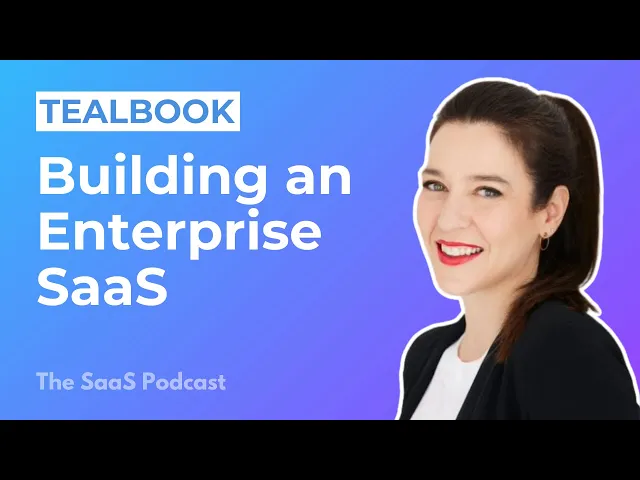
Stephanie welcome to the show yeah thank you for having me my pleasure do you have a favorite quote something that inspires or motivates you they can share with us what it's funny because when I saw the question I was looking up it just happened that I was talking to a few uh VCS of early stage companies and we talked about resiliency and so I know it's cliche it is you know Steve job but I like this where he says whenever the answer has been no for too many days in row I know I need to
change something I'm convinced that about half of what separates successful entrepreneurs from the non-successful ones is pure perseverance and I cannot I could not you know attest to this you know more because it's it's true it's so much about resiliency yeah yeah I love that too and I I think that's a really good one with your story in particular we'll talk about this you know as we go but it applies not just to NOS you get from other people it's also when you're saying no or the voice inside in your head is saying no every
Monday morning still today every Monday morning it's like what am I doing so tell us about tealbook what does the product do who's it for and what's the main problem you're helping to solve yeah so our platform focuses on using technology including AI to uh collect data on every B2B company in the world and so what we want to know is any suppliers or any any business that sells products and services to an Enterprise uh we want to know as much as possible about them and we want to deliver to the Enterprise quality information about
who they do business with that's relevant typically to the buy side of a digital Enterprise uh simplifying it it's sort of where the zoom info you know to the buy side all the attributes that we're looking for is to service the sort of the source to pay in the life cycle of a supplier today most of our customers actually every company in the world does um really struggle with quality data because most of them especially if they have in the thousands to tens of thousands to hundreds of thousands of suppliers globally there's one each supplier
requires an enormous investment from sourcing them to on boarding them to paying them to maintaining their records and a lot of information does change and there's a lot of different needs across the organization so often you have multiple functions collecting the same information and that information is highly dependent on suppliers to maintain different portals and so what happens is that you have a lot of desparate Solutions with you know incomplete stale data that don't really connect and you know for companies who spend hundreds of millions to billions of dollars in their supply base you know
to exchange products and services but also maintain those relationship we're talking about a significant investment and very little knowledge about who they do business with and no real opportunity to tap into that investment it could be enormous levers for savings for improving margin for tapping into Innovation to hitting their ESG targets Etc and so um that's the problem we're solving it's a big problem it's a systemic problem in every single organization in the world and there's more and more disruption as we're all wearing supply chain there's more and more regulations uh that are asking for
more transparency on sustainability on risk on cyber security and things like that and so that's what we're helping um navigate for customers in a way that's automated and a lot more intelligent and a lot more focused on business outcome and less of the doing of the data great that was a question I was going to ask you to help educate us on this whole you know business of procurement and suppliers and because un you know if you're if you're a small startup it's not really an issue but when you're talking about the scale of some
of these businesses that you serve it's a completely different ball game so you know thank you thank you for uh uh answering the question that I didn't ask yeah it happens actually really fast because you know we have early stage customers who have to you know have a big dependency on suppliers so there's markets like biotech for example which a lot of their goods and services are outsourced and suddenly you know you're launching your first drug and you've got you know 2,000 suppliers globally and so there's already quite a bit of disparity and then you
lack transparency and scale and enablement um and for a startup I'd say we're probably better positioned so if you're in a startup that has a Marketplace or you're in the in the space where you need data maybe you have built um in you know a niche solution or you're focus on a data problem that's maybe on ESG because there's a lot of those companies right now or you're building workflow to enable supply chain procurement or any of those functions that required quality data for your customers to maximize the value of your product that's where we
integrate our data into those systems that we can accelerate you know commercial value and then ensure that there's a better faster experience for those customers that are using their you know those products can you give us a sense of the size of the business where you in terms of Revenue number of customers size of Team yeah so we're above a 100 customers they're all large brand names so the majority it's Fortune 1,000 uh companies we're in the seven figures we have raised about 72 million in capital so we did a series B at the height
of the market two years ago uh and the size of the the team has changed quite a bit and so we've resized recently as we're uh releasing a brand new platform focus on our future and it required quite a bit of change in the past year and so uh from a size perspective we're about 60 people right now and the business was founded 2014 is that right yeah the first couple of years was bootstrap from my living room I didn't raise Capital until until 2017 and so depending you know how you count the first the
first few years of hustle was self-funded and you know everything is hard but those years I kind of Forgotten as pure survival I but those were were hard years and at the beginning I generated a million dollars in selling memberships to suppliers which is a completely different business now but I was selling a subscription for about $5,000 and I needed five suppliers to pay $5,000 a month to be able to pay for my engineers and so that was the early days of you know being able to self fund um that so 2017 is when the
company became more real we're able to get her First Institutional uh round before that was self-funded I did get an angel investor in about 2016 and so that gave me a little bit more time to then raise a proper realm well we love those early days here and those hustles and those struggles and so when like where did the idea in for the initial business come from and and what were you doing at the time so I started this is not this is my third company uh my second company was focused on helping initially was
large companies to find Innovation and so if you're sitting in a business and you have you know a pretty competitive market and you want to differentiate your business um it's hard to find real Innovation and so I came up with this concept it was called matchbook and helping businesses find Innovation through typically it's third-party providers who have innovated uh with other customers or Sol solve similar problems or are coming up with ideas that could really differentiate a business and that really quickly morphed into sourcing because my customers start recognizing a process that they had implemented
within procurement and they really liked their process process it was 6 weeks from requirements to outcome which is you know speed light when you're thinking procurement processes and so uh my customers had asked if we could help uh bridge the gap between what procurement was trying to achieve and what the business needed which is a pretty big gap with a lot of processes in between and so we started building strategic sourcing function for Fairly established companies who had systems like sap Reba Etc uh and then you know sort of fortunate at the time a lot
of my contacts went and start raising Capital to launch their first commercial assets at the beginning we're now in 16 sectors but at the beginning was really focused in healthcare and so start helping biotech companies launch their first commercial asset and really building an Outsourcing function that would be more transparent that would be more scalable and enabling employees to make faster better decisions and that's where I saw that every systems we would Implement to you know automate payment invoice contract sourcing quality risk required quality data into that system to be implemented and then to actually
deliver on the promise value and achieving quality data was really hard and it depended on employees it depended on suppliers to come to portals uh and I started really quickly we're running into the same issues that my larger customers had where if you don't have quality data how can you make better faster decision and I started seeing all these processes and all these roadblocks achieving outcomes and it was really a data problem not a software process or people to me just became you know if you had quality data that could power these systems and power
workflow and decisions you know we could deliver significant outcome and maximize the investment made on this on this pretty big and growing supplier base it took me nine years realistically like I try to fight the idea for nine years I had a very successful Consulting business 40% margin you know I reinvested in the business and grew it naturally and organically um never raised a dime for that company um but this idea kept you know L lurking and I I try to kill it in every possible way but every time I work with a new company
no matter the maturity level that they were at they were struggling with data and then it became clear to me at some point especially as Cloud technology became more you know sort of massively adopted by our customers they I kept hearing very similar to the sales and marketing side you know if you're going to get cloud-based software it will solve your data problem and I didn't see Salesforce in solve our data problem and made it easier to enter information and a cloud technology it didn't mean that the data was going to be good because it
depended on humans and humans are not typically really good at updating data uh and then so I saw I started seeing the parallels you know between what had happened in the sales and marketing side to what was really far behind on the buy side and so seeing the adoption of cloud uh start seeing you know also the the um the start the start of big data and machine learning was also very eye openening that we can maybe do this a bit differently and sort of you know take a step to the the cold start problem
which is you know how do you build a data set um without having critical mass and so lots of lots of inspiration in the beginning with nine years of trying to killed the idea to finally decide to do something about it and turn my life upside down okay so so after nine years of resistance you finally C in and say I'm going to go and pursue this idea uh how how did you get started like did you did you kind of go out and do the kind of The Lean Startup thing and kind of validate
this idea or did you feel like the nine years of seeing this over and over again was the validation you needed and yeah it was definitely the validation I needed what I did not know is how to do it right because it's a very complex puzzle uh what I you know the problem that I saw is how do you uncouple this problem and why it's happening how do you build it and so the first version of tail book it was really deciding to create more of an interface for suppliers to come into a profile and
populate their information uh the thesis was that if they came to one profile we could distribute data across multiple customers and so that's what I sold the $5,000 membership for uh the reality is we didn't have enough customers to satisfy the demand um and then when I start Landing bigger customers they asked for more data and then we didn't have the critical mass to offer more data so sort of the the marketplace challenge um anyway so but when I decided I I literally came back from working with a customer in San Francisco it was a
big company they sat across from Salesforce LinkedIn Facebook uh sap was across the street and they were facing this data problem and my Consulting business took 6 weeks just to get Baseline and sure it was great for my Consulting business but I thought if this company that sits in San Francisco across all these other tech companies facing this problem and I saw this to be like we're talking about a hundred million to billion dollar problem for one company this was a massive opportunity and so my husband took money from his own business and gave me
a $50,000 check to get me started asked a couple of things one don't ever put our personal finances you know at in Jeopardy so make it work and if you you run out of money you're not putting the house you know on a lean and uh I would really like to stay married because you know I think you know probably being a bit wiser than I am being six six years older sort of saw you know the possibility of me being really consumed um by this business and so ask you know it'd be great to
stay married through this um journey and so I always keep this in the back of my mind when he's asking me on a date for Valentine's Day and I have to leave my team for a team dinner to meet him you know those are some of my priorities cool okay great so you've got you've got the check and like this subscription that you were selling this membership how long how long did you keep running with that and and at what point did you you pivot to kind of what tealbook sort of evolved into has become
now yeah so I mean it's kind of a fun story but um well at the time I don't know if I was I was making was just much fun but so I was selling these memberships and and and suppliers could put their credit card through the platform and I was giving these teal coins and so they would get 10 teal coins worth $100 and so when they got an opportunity that was fed through the platform because it was more sourcing at the time they could apply these teal coins anyway but one day I landed this
big company was a $60 billion doll market cap clients with a big in every way Chief procurement officer and he says I I like your LinkedIn thing but you know uh let me know when you're ready for prime time and I was like what do you mean what does it mean being ready for prime time he says well I need you know I need 500,000 suppliers not like hundreds or a thousand suppliers and so um you know I I didn't know how to get 500,000 suppliers because we had to sell this membership to each supplier
so over a weekend we flipped the model upside down we made it free for suppliers that would get basically invited by this client and then I needed to find data on 500,000 suppliers and so I contacted you know so many different data source one kind of a funny story in Full Circle I went to zoom info in the early days and met a a guy there that is now our president that I hired four months ago to to to run the day-to-day operations um I went to Dun and Brad street that which I ended up
buying D&B data and you know use my own money I think it was $120,000 to get the DNB data in our platform so we could deliver on this client so we we flipped the model upside down and then uh shortly after I met our first CTO who had worked at arba for 10 years so he had the context of the business uh and then went back to school to do a second Masters and big data and machine learning and I'd worked at Google and shanga and so we had you know all the pieces that we
needed and when we hadn't yet ingested the D&B data when he looked at it it's like the data is not good enough for us to be able to use and so we ended up getting out of that contract and the decision was that we should build our own data we we have the opportunity to build data that is you know better quality get more of it more Dynamic and better integrated into customers processes and so that was a big decision for us to you know decide to basically build on gcp and we've completely rebuilt the
platform in 2017 so wait so you you you talk to this potential customer who tells you tell me when you're ready for prime time you kind of basically flip things upside down over the weekend to try and get ready for prime time and then um how long did it take after that to the point where you just said this this DNB data doesn't work we need to be creating our own data like I'm just trying to think of the timeline was that yeah so I mean he told me he was not ready for Prime Time
on say Thursday or Friday I managed to sign D&B over the weekend and Monday morning I flew to Boston I met him in person and I had 1.8 million records and I told them what's you know what's that for prime time he's like oh you rockar and so you know the reality in between it was months before we even discovered that we could get the data and so luckily those customers were moving really slowly uh so by the time we kind of re revamp the platform at the time to enable this data to come in
then we needed capital I had six customers including this big one and so I I started fundraising and that's where you know I I I really stepped away from the business for a few months and met you know hundreds of investors trying to sell you know we had six clients including the $60 billion market cap company and so I you know and that's that's when I met an investor that said you need you need a team you can't like so like Long Ranger you can't do this on your own and that's when I met the
CTO that had the big data machine learning background and he's the one so it's probably took about seven eight maybe even nine months before we were able to close a round of funding and then finally um get him on board and then build a team that would buil the second generation basically which we now is our Legacy platform but the concept of it was blew my mind because at the time you know AI is pretty mainstream right now compared to what it was but I didn't know you could just you know built on on we
built on gcp start leveraging some of their machine learning models hired some data scientists and start tackling this problem ourself which was pretty like it was magic like incredible lots of work right Lots like now it's you know the Technologies Advanced so much but back then it was pretty pretty amazing that we could do this now no one understood it right so the problem we had now is like explain this to a customer we you know we go on the web and we collect information and we put in the cloud and we match it with
your vendor master that was really hard to explain uh to investors as well because you're not you're SAS but you're really the values in the data and then the data mode it's not traditional SAS and so you know Finding who we are and what's our n star and how do we build a moe around you know our technology was not as simple for us to understand or to be able to explain you know to investors and the big click I think for investors is when one of our investor or seed plus uh round that's Tim
chigle at refiner ventures said you know can you find an analogy uh to your business that people could understand and that's really when the zoom info analogy came in into play I had an executive at the time that sort of look at the markets like I think that's the closest thing it's not perfect but it's pretty close if you think of you know Zoom info being being focused on enriching customer data and then be able to integrate that customer data into sales force so that sales and marketing can deliver better faster outcome it was a
very synergistic analogy that investors understood luckily for us Zoom info went public shortly after and so you know when went the second round you know and zoom info did very well in the public market so that sort of you know got people pretty excited so let's talk about the fundraising like you this is your third company at the time that you're building you have spent many years in in this space you understand procurement you have spent several years bootstrapping and you know getting the foundation of this business you've signed some deals and some customers and
you know so everything looks great you've done a lot of the hard work you know in terms of like getting that initial traction it seems like fundraising should have been fairly easy was it no it wasn't maybe something for Founders you you know you always think like oh once I get that check or once I get that customer once I get that employee the world will be amazing there's always it always comes with you know know another baggage uh no fundraising was not easy um I mean it got easier as we you know build momentum
and got more customers so series A and B were actually both preemptive term sheets so completely different story but in the early days um yeah it was definitely challenging so I'd say the the first one was not a a real representation of reality and we didn't talk about this but my first first Angel check I got uh when I was watching my one of my daughters play a soccer and and you know I had a mom next to me who asked me she goes what do you do you're always you know running around and your
high heels and with your babies and uh so I told her what I was doing and I said well I'm going to be traveling even more because I'm starting to fundraise and she goes well what's your business and we start chatting and she goes I'd love to put money in and so she ended up giving me a million dollars that doesn't happen in reality but what I would have to say is that what she saw me as hustle consistently and this is was someone who had wealth who who needed to invest and it was either
she was going to go on Angel you know websites and look for deals or she could invest in someone that she had seen working hard at at building a business and so once she understood the business she got pretty excited about uh what I was doing um and so I think you know just make sure that you leverage your network that was really important for my angel rounds initially as well but you know when I I I look for institutional capital I had delusion because of the first round like that it was going to be
easy and it really wasn't um it took me to speak to hundreds of investors for one to be really honest and I owe him if he ever listens he knows but I owe him he didn't invest but he was you know his his honesty which at the time took me back uh but he's the one who said you know you loan Ranger you'll never be able to raise capital on your own like you can't build this business on your own like you know you got three kids you get a funny accent I'm French Canadian um
you've never build a tech company you have no pedigree uh you got no Tech background like who are you and kind of entertained by my passion for solving this massive problem and so but at the time I said well I need Capital to hire the team he's like you're not going to be able to raise Capital without the team and I remember leaving this meeting first of all so defeated like he highlighted all my problems all my gaps I to say my problems all my gaps and I thought how can I hire people like what
he was asking is you need to build a team I was like how can I build a team if I have no money to build a team and I had like three months of Runway maybe even less and so but it did change my mindset on how I had to think about myself and my was not my gender my accent or my lack of tech experience it was my risk profile me on my own like what happens if my kids got sick or you know I or whatever my my risk profile was too big for
someone to write you know a multi-million dollar check and so that's when I started looking for you know at the time I I wasn't sure if it was co-founder or Executives but I had built already two three years and so I was more focused on finding Executives where I could give you know significant options but as employees and bring in the company and I was you know the Stars aligned there's a lot of magic dust that follows you when you build a company and so that was one moment where someone said hey I I I
know someone that may be interested you just exited from a company maybe he'll come with money and a team and I think he's got experience in your space and that's when I met Jeff our first CTO and then he did come with the CEO of the company that exited which I then turned into our coo um and they both put money in and then we went back to the investors that had already shown interest say hey we now have a team they put money in the round you know they have a lot of experience building
this type of company and a lot of context in their space and so that got us the First Institutional round so again it was not not all these other things it was just how do I look at myself in the mirror from the lens of an investor and how can I you know reduce my risk profile to increase my chance of raising Capital because the business needed that what a great story it's like you know having a conversation like that is almost like thanks for the pep talk I'm like totally depressed now right but I
remember this guy that you know was in his maybe his late 20s or early 30s is like you know Steph you just have to be cocky when you're talking to investors you know like you're looking at it with his baseball hat and this young you know cocky look and I was like well I'm you know I'm older than you I'm a woman a mom of three kids like how but then what I need to do is reflect on what does that mean for me it's not the Cockiness it was the confidence and it shifted from
which I hear a lot from early Founders well I need money to grow my business well investors don't care about that they care about making money like if they take a bed on you and why would they invest on you versus invest in another company they they need to believe they need to have the confidence and most importantly they don't want to regret they don't want to regret down the line saying like I I had the opportunity to invest in that company and I didn't and so how do you turn that confidence to to so
that they feel like they're going to miss out and that's when I did the switch to in fundraising I changed my narrative and it became really powerful and you know recently is I was at a dinner and an investor like oh this is you know introduce me she goes she raises like a man like I was like I don't know if it's a compliment or an insult but what she meant is I had the confidence right to be able to raise capital and that confidence came because one I believe in my business but I changed
my narrative and so it became you know why would I want you as an investor like what strategic value or you know why giving you the opportunity when I have you know other people that want to put a check in and so suddenly it's sort of and then you know what I've done I think W that I could have done better in the early days is I created ated uh one the investment thesis like why this problem what's happening in the market that's that we can attach ourselves to something that's growing really fast for us
was sort of the bi Market that was growing really quickly the adoption of cloud um the growing source to pay software Market uh why us you know all the years of experience as you pointed out and the deep understanding of the space uh and then the analogy it's not the headline but to say we're the zoom info to the buy side that's became investment thesis that made it easier for investors to understand and sort of get excited about and how biger Tam was and then the other thing that I did is put Milestones that were
achievable that I knew we could achieve but they were impressive enough and I put you know four or five mileston we wanted to achieve say next quarter this quarter and then I would let investors know what we set out to do and then every time we reach that Milestone I would send a note hey we got you know we got covered by an analyst we closed this partnership we cles these two customers I told you were going to close so every time it's kind of a boom you know and then and then they get excited
and so then you create a little bit of excitement around your company and and all they care about well you have what it takes because it's so hard well you have what it takes to stick through it right and deliver on what you say you're going to deliver and that's the most important thing for investors so I I got to ask where where does that where do you find that next level of confidence like you go in and you you kind of heard this lesson and you start to think about okay what does this mean
to me what do I need to do differently uh how do I reduce this risk profile all that stuff but you know we are who we are and and to suddenly to change like that and to kind of bring in this kind of new found confidence is it's like how did you do that well if you're going to be a founder of a successful company one you have to be incredibly self-aware of Who You Are are you got to be able to listen right feedback is super important in every aspect of your business and you
can be so firm on your believe that you you're not willing to listen to feedback and then you you have to reflect on the feedback based on your situation and these two cases I had to apply it to my situation and you got to find it like if your company needs money like it's that or death you know so better find the confidence nobody's going to invest in a company where the founders is not you know 100% confident and doesn't have the conviction now what I said to early investors I said don't put your life
saving in my company right because we have 1% chance of making this a success but what I'll tell you is if we win we win really big and I will do whatever it takes to make this company a success and so and as soon as I had an angel investor kept texting me and calling me how's it going and he had put $100,000 in the company and I was like Hey I'm going to give you your check back like what do you mean I was like I can't like I can't be answering your text and
your if you're nervous about your $100,000 which I totally understand it's a lot of money but if that $100,000 you're not willing to lose it i' rather give it back to you I don't want to have that sense of responsibility now obviously the accountability to my investors have grown and you know and it was really important to do right on my early investors and so I did secondary and gave a lot of my early investor chance at least cash some out even double or triple their investment and my my purpose with that is that if
I were to knock on their door again that you know I had I had made them successful no matter the outcome and so I did that for them and then you know and then I have you know very happy investors who still have an upside in the company and are still you know supportive and cheering on um but any you have to find it there's there's just no your company needs money you need money so go get it yeah it's it's it's funny what what we can find in those situations where you realize it's like
you know if you don't do something you know the company's going to die or whatever right and and you have to be optimistic like I I had someone recently she goes I have a hard time she work for me she go I have a really hard time balancing your optimism which was like a total Fair comment but I was like holy if I was not this optimistic there'd be no company right you have to be through the good and the bad you have to you know you have to have conviction and there's always a way
you just have you have to find the way and sometimes it's a hard set on reality on where you're at and the changes that you need to make and some of those changes are really really hard especially when it comes to people if people be it becomes emotional changes hard and so but you know you have to be adaptable as well to those changes and um again sometimes stepping away from the business and see what does the business really need if I was an investor in that business what would I tell my founder CEO that
they would need to do to get things back on track or what where they should be focusing their effort or how they should be balancing themselves you know sometimes I sort of take that lens because I think it's important to step outside of my own head and you know give myself advice yeah yeah let's talk about some of those early customers and I know that you're doing a lot of thought leadership as as a way to to you know connect with these customers but you know we've just talked about everything that was going on you're
you're trying to build this company as a solo founder you don't have a tech background uh you're trying to raise money you've got your three girls who are pretty young at the time and then someone said to you hey you should start writing on LinkedIn because you have a lot of time to do this right can you tell us about that what happened yeah no that's exactly it a friend of mine in PR said you know you should start writing a Blog and it doesn't matter the the frequen what matters is the consistency and so
if you choose once a month write once a month month consistently if you choose once a week do that once a week so I picked once a week and as a you know English is my second language it's better now than it was back then but it was still pretty daunting to write in a second language and once a week but what it did is it forced me to pay attention to things I want to write about uh read more content I could repurpose and that became back then I was traveling a lot more um
and I remember on tarmac I would write you know it could be I met someone and it you know the opportunity to put your phone down and have a conversation with your neighbor like stuff right but it it forced me to write uh and that create more of a presence and it started building more of a sense of community I think within the function which is procurement I also spent hours and hours and hours connecting with people on LinkedIn back in the days when you know it was not as crowded so that gave me a
bit of an edge and I would send notes to Chief procurement officers saying hey I'm you know I'm thinking about building this company I I'm in the early stage of building this company solve this problem is it something that you're seeing in your business would you mind spending half an hour of your time to connect just to better understand you know what challenges you're facing making sure that and so and the wor that people are going to do is not get back to you or say no which rarely actually happen like people are pretty open
to sharing their uh insight and especially in procurement you're you're in a function that doesn't get a lot of recognition and time and so someone's asking for your opinion and your views on the world and so um I was really fortunate that people were very generous with their time I think it would be harder now just because it's so crowded and there's a lot of you know optionality in Tech and a lot of startups but back then there's only you know five startups I think that were focus in the procurement space and so that was
pretty novel and exciting um but that all contributed to thought leadership and building a followship and then taking any speaking opportunities that it's a podcast that it's a you know an opportunity to present on stage and I Bartered I Bartered so much in the early days to get an opportunity to speak on stages you know now now I can't do you raise Capital now they want money from you but in the early days like being Scrappy and finding topics that conferences were really keen and AI was very new data was very new being a tech
founder was very new in their space and so it gave me a bit of a you know an edge to be able to position myself to do speaking engagement and got more comfortable I was not comt able doing podcasts or you know being on camera and you know go live I was like that was that was hard for me especially being my second language but I got better and the more I did it the more comfortable I became being on stage and so yeah I mean I've done now countless speaking engagement and I I find
a lot of energy in them now but it you know we're talking about eight nine years of building that thought leadership I I want to you mentioned the the the tech platform earlier and how you couple of years ago you set out on this reset and to kind of rebuild the the platform what what happened there what was some of the problems that the business was starting to experience that led you to do this in terms of I mean it sounds like a pretty dramatic kind of thing to do well the so that one was
actually fairly easy we just switched we just rebuild the database rebuild the application and customer just switch on to the new one lately and and what we did you know you're Scrappy in the early days you make sacrifices we used older Tech we built with we had a lot of Co-op students in the early version of tailb book I think we had like six engineers and nine Co-op students nothing was documented but what we're trying to get is an MVP like what we and we didn't know the use case we're going to go after so
once we got to learn the use cases what data our customers need the expectation on quality of our data and so you know we built a lot of stuff in the early days that became irrelevant so we had collected quite a bit of technical debt a lot of it was was uh application software based because their customers only understood software at the time and the big problem for us is in the second generation we grew 350% in 2021 and a lot of that was because of covid and when we started getting a lot of vendor
masters from customers that were closing really fast and then we were getting customers to want to refresh their data for reporting purposes faster and then we're trying to refresh large data set that we had ingested uh the whole thing you know was unscalable and then it became uh almost a company killer because we we we had no real processes around it and so so it's like the the company outgrew the tech and then we had to take a hard look at the technology and know take all the learnings take the the advancement in technology we
now had Capital to hire you know different type of talent and so we decided to rep platform a couple of years ago so the first rep platform was easier than the second one the second one you know there's a lot of complexity in what we built and you know it's it definitely something that in hindsight I think we could have upgraded without having to do a full rebuild I think that would have been an easier faster path super happy now that we are sort of we've delivered a new platform and it's performing and now we're
building on it uh but the the you know the challenges and the stress on the company and the change management required to bring this new platform to Market was you know I completely underestimate so from an early stage perspective I don't know there's a other way around it when you're Scrappy and you've got you know not a ton of capital to build a tech especially if it's a complex Tech I think it's easier now because there's so many things you can just grab and Implement versus us we built ml models we don't we don't really
do that anymore more so it's easier to build better Tech faster than it was back in the days for sure and you know I think if someone suggests you to completely rep platform if there's any other alternative any ways to you know upgrade it over time or parts of it I strongly suggest that you do that it it would avoid a lot of pains and since then when I've told another founder we've rep platformed it usually follows with it o how did that go it's usually yeah I wish someone had told me did not do
that um anyway so yeah there's there's there's reasons obviously you do it for us it was scale we needed to operate more efficiently we need to scale scale we need to injust a lot more data faster more automated we need to give our customers more confidence and transparency in the qualer data we need more flexibility in how our data was going to be distributed so there's a lot of reasons we did it but um you know I think it's a yeah o yeah it's yeah all right um we we should um wrap up so I'm
going to go into the the lightning round I've got uh seven quick fire questions for you just for you try to answer them as quickly as you can what's one of the best pieces of business advice you've received I don't know if that's a good advice but I took it so don't build a plan the plan will come with the business what book would you recommend to our audience and why uh The Four Agreements it's a little tiny little book it puts things in perspective I try to read it once a year if I can
to just re reenter myself on things that are really important matters love that book I think I got on my bookshelf there somewhere just like 5T away what's one attribute or characteristic in your mind of a successful founder resilience what's your favorite personal productivity tool or habit I love chat GPT I use it for my travels I use it for writing content I I'm a big fan what's a new or crazy business idea you'd love to pursue if you had the time oh I would probably do a tail book for uh saving parents having to
register their kids to the thousands of activities in camps and school I will not solve this problem but that's my biggest pet peas when you have three kids with different interests the amount of time you have to redo the same things in different forms and none of it connects oh Ai and there would be fantastic it it's funny you say that my my daughter and my wife were arguing yesterday because she was saying you need to register me for softball and my wife wife was saying I can never log into that thing and like you
know it it's like yeah it's it happens like every every few weeks it was like three camps times three kids times like nine different forms I'm telling you like that problem someone needs to so I will not solve this problem but if someone wants to solve it I will buy that product what's uh an interesting or fun fact about you that most people don't know uh I'm a photographer I don't know if that's fun fact I love photography see the world in pictures um I think a lot of pictures I have I don't know maybe
a million pictures on my phone most of my kids and finally what's one of your most important passions outside of your work uh my family and I'm a big skier and so my whole family yeah we ski a lot I've grown up skiing I was a ski instructor and Whistler back a million years ago and uh it's definitely a priority for our kids love it Stephanie thank you so much for joining me it's been a pleasure just kind of I know it's always hard to kind of unpack a 10e journey and and kind of you
know have all the answers so appreciate you kind of taking us through that uh if people want to find out about tealbook they can go to tealbook domcom and if folks want to get in touch with you what's the best way for them to do that yeah I mean you can always email me it's Stephanie withy tail.com I'm on LinkedIn I'm very active as you heard today so just be careful if you follow me make sure you care about supply chain data digital trans procurement but you can find me on LinkedIn I'm always happy to
respond if you want to exchange ideas yeah that's probably the best way to to get in touch awesome thank you it's been a pleasure and uh I wish you and the team the best of success yeah thank you so much for having me my pleasure cheers