People have notions of what billionaires are like. They're selfish or they're disconnected. They don't understand. [music] I've lived my whole life trying to do things that really help other people. >> Rick [music] Caruso, philanthropist and billionaire developer of landmarks like the Grove, says he's running for mayor of Los Angeles because [music] current leadership has failed. >> I ran for office because I saw massive [music] negligence on part of the leadership in the city. What's your advice [music] to young people watching this who have seen your success in business and want to recreate that today? >>
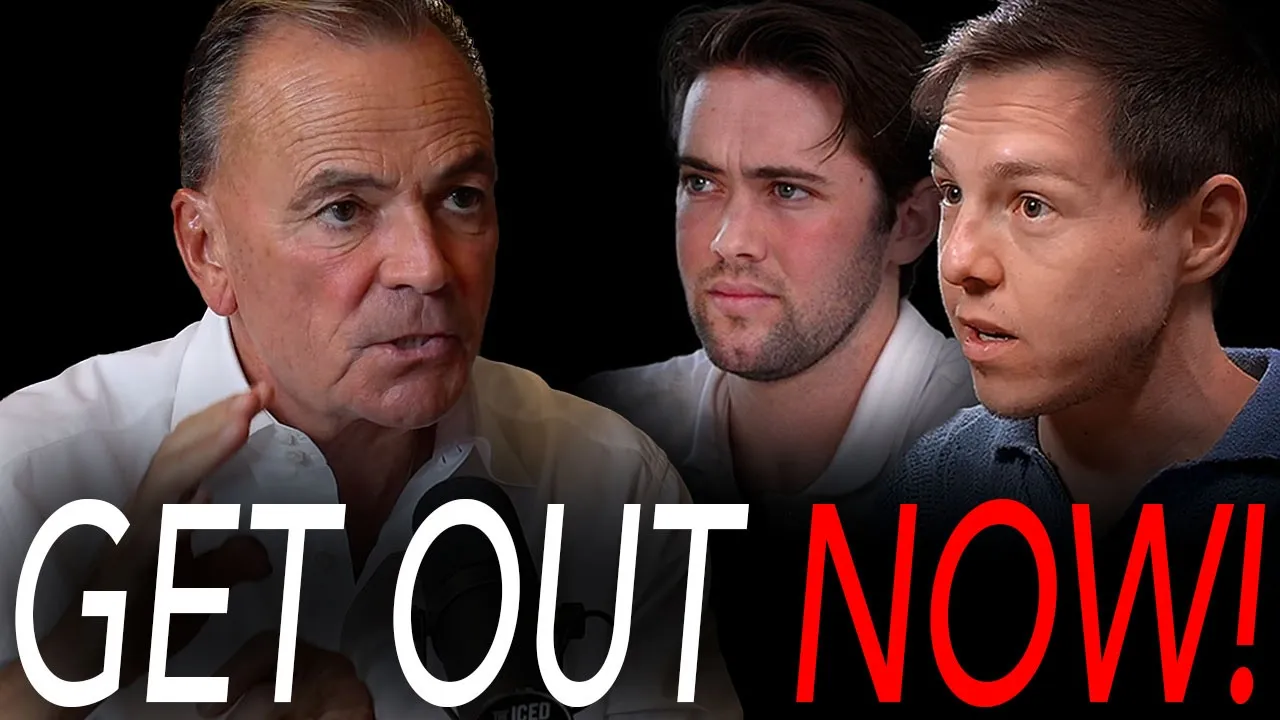
There's something very powerful [music] in business that I think most people don't fully understand. Go do what you're passionate about. I think that's the worst advice you [music] can give Somebody. You've got to go do what you're good at. And one of the things I'm really good at is surrounding myself with really smart people. >> What do you think is the formula to becoming wealthy? >> I think you have to have three things. [music] I think you have to be >> Rick Caruso. Thank you so much for coming on the iced coffee hour podcast. Really
means a lot. You've built some of the nicest parts of LA from the Grove, Americana, Palisades Village. You've also spent over $100 million of your own money running for LA Mayor. You lost against Karen Bass back in 2022. Some see you as a visionary who makes LA feel safe and beautiful. Others see you as another billionaire just trying to buy political power. >> Well, first of all, thank you both for having me on your show. This is uh exciting for me. Well, let me go back for a second. Uh I I'm not somebody that Was
trying to buy political power and and let me just respond to that because I think some people do think that, right? And it's an easy sort of tag to put on somebody. I ran for office because I saw working for three different mayors. Uh Tom Bradley, I worked for him, he appointed me as a commissioner when I was 25 years old. And I worked for him for about eight years. Dick Reen and Jim Han. And I saw that good leadership, good management Skills within the city can make incredible changes to benefit the city and the
people of the city and lift everybody up. And 3 years ago where I saw the city going to me was a clear opportunity that it needed to have a change. It needed to have a different view of how it gets managed and there was an opportunity to solve a whole bunch of problems that would make everybody's life better. And I spent a lot of money on it because I believed in Myself. And I also was running against four career politicians that were in the business of being elected officials most of their life. And I had
very low visibility and identity and I had to get my name out there. So um I put resources behind what I believe in and I did believe that I could change the city. I still do today. Uh, and I do that I say that with humility because it comes from creating the right team and managing the team well and having a really clear Vision of who you're serving, which are the residents of the city. So, um, that's why I did that and I'm happy I did. It was a great experience. >> What are your thoughts
on the California housing market and am I making a mistake selling off all of my real estate in Los Angeles? >> The housing market, I would not bet against LA. I would lean into this time. I think LA is uh the greatest city in the country. Uh I think it's great Because it has the most diversity. Uh it has industries that are incredible. It has universities and research universities like no other city has. Um we're sitting here in December and we've got 70° weather and it's sunny. Uh we've got a climate that is impeccable uh
99% of the time and there is a spirit of innovation in this city like no other city. So um I believe in the city and I believe in the greatness of the city. We're going through a tough time now. Uh But that doesn't mean it can't turn around and get better. So I'd lean into it and take advantage of the rebound. >> And what would you say to investors who feel like they cannot run a business here because of rent control policies? They recently passed I think it's 90% of CPI. >> Yeah. >> Which just
means that over time your expenses are going to be going up beyond inflation and there's going to be a Tipping point where all of a sudden it costs more to maintain the property than what they're able to receive back. >> Yeah. It's a problem for sure. Um running a business in this city, it's overregulated. It's very expensive. It's unpredictable. The timelines are unreasonable. And so it's very difficult to run. I I mean I do it so I live it every day. and I watch all of our retailers and restaurant tours struggling with it. So, It
is tough. There's no doubt about that. And that's why cities adjacent to Los Angeles are basically eating our lunch. >> Culver City, Glendale, Long Beach, you know, cuz they're better managed. And then we've got cities like Santa Monica that are imploding. Uh, and like LA's having a a tough time. So I I look at it the question is in my mind can you operate a city can you operate a business effectively in Los Angeles? Yes. Complicated. Not for the faint of heart. Small businesses are suffering which I think is terrible. We have to support small
businesses. Tough for them to grow. Tough for them to hire. Tough for them to cover expenses. investing in real estate in Los Angeles, I would say yes all day long in the right areas, the right product type. Um, obviously at the right price for sure cuz at some point soon there is going to be a rebound to this region and I think You're going to be getting into it at probably depending again on where you're investing getting into it at the right time. >> What do you think is going to be required to see change
in that though? Because my impression just from what I've seen Yeah. >> seems as though You have most people on city council who push these policies. They outnumber the people who look at the math and they say this doesn't add Up. And so no matter what policies you put in front of them, they're going to vote them down. And it seems like more restrictive policies. >> They are going to villainize landlords. They're going to disincentivize any investment in the city. What would it take to see a change in that? >> Well, they're doing that now.
You're absolutely right. They're disincentivizing investment. And I I think investment I would imagine is Probably at an all-time low in the city of Los Angeles. And many people have told me LA is redlined for a lot of banks uh and investors. And that saddens me uh that that's happened. And personally, we haven't made a new investment in LA in terms of a groundup development for 6 years since Palisades Village. Um it's been all LA adjacent uh for all the obvious reasons. >> What will it take to change it? Um, it's going to take a change
of leadership. Um, and that's why I reference back to guys like Tom Bradley and uh, Dick Reen and uh, Jim Han. The mayor has got to be able to have a real clarity on what's needed for businesses to grow, for people to get hired, to create wealth in this city for everyone, not just the few, for everyone. And you do that by allowing your economy to grow, by encouraging capital to come in. And when you have people on the council or crazy ideas on the council that hurt the city, Hurt the people, you got to
use your veto power. >> But why is there still so much support for those ideas? What would you say is the biggest lie that Californians still believe about real estate? >> Why is there support for ideas like rent control? >> Yeah. Or other policies. Yeah. It seemed like there's enough people really pushing for this that there's got to be a reason why. >> I think what's happened though, we got to acknowledge the cost of living in LA and the cost of living in California is too high and it's out of control. And so you have
a lot of people that they believe they've done all the right things. They've gone to college, they've worked hard, they've got a job, they're making a good amount of money, and they still can't afford to buy a house, let alone rent a nice apartment. Maybe it's going to be two or three of them sharing It. You've got families that are very moderate, hardworking, bluecollar families that are really struggling to pay their rent, to put food on the table. So, you've got to reverse the cost of living, which you can do in the state, and you
got to reverse the cost of housing, which you can do. And it's not just by or only uh rent control. You've got to build more product. So in the city of Los Angeles, it is the lowest in 10 years for housing starts. Lowest for 10 years. It's a really simple supply and demand problem. If you only have, you know, three cartons of milk on the shelf, the carton of milk is going to go for a lot of money and we don't have enough apartments and we don't have enough houses and we're so overregulated, capital is
not coming in here to buy to build them. If you could reverse one California law immediately to make the biggest impact on the housing market, which one would it be? >> I would either reverse or completely modify SQA. SQA was designed, you know, it's the California Environmental Quality Act. It was designed to be a shield to protect communities from developments that were inconsistent with the community in some form or fashion. Right? And what it turned out to become and used by many is a sword to kill projects and many times by the unions to kill
projects. And there's a there's a move of foot now and I've met with the California Chamber of Commerce that's proposing a whole bunch of changes to SQA that would make it more balanced and and that would be a gamecher. And I also think the California Coastal Commission needs to be completely revamped uh and and take the authority of the Coastal Commission >> back to the local agencies that their communities are along the water and not have one state agency with mandates over the whole shoreline of California. >> Help me understand SQA for like the lay
man out there. How is SQA affecting real estate prices so much? My understanding from a very like surface level is that it's essentially some law, some some organization that you could use as grounds for a lawsuit to stop development or at least pause development on any construction and you get to sue them saying it affects the environment. It affects bird flight patterns. It affects you know this tree. You can say for any environmental reason you can possibly come up with and then you have you have the ability to drain the legal funds that any developer
has essentially. >> Okay, so that's one way to say it. Uh SQUA and every project I've built, I obviously had to comply with SQA. It's the law. SQA says two things. They say if you're going to build basically anything, you have to comply with this law. And there's a checklist that you Have to check all these boxes and you have to be able to say that your project will not significantly impact the following things. Traffic, water, storm runoff, whatever the case may be, right? Shade, shadow, it's a whole bunch of things. There's some projects that
you could say are exempt and you can get a mitigated negative declaration. Very difficult to do, but we actually built Palisades Village under a mitigated declaration, which is almost impossible Because we worked so closely with the community in designing the project that we knew we had a lot of support and it really reflected what the community wanted. That's always our goal when we're building a project. Reflect what the community wants cuz we intentionally are building in areas with high barriers to entry that have very difficult entitlement process because it creates value and it's much more
difficult for a competing project To be built, right? So it creates scarcity which creates value. In the SQL world, what happens is people will challenge the boxes you checked and that's what creates the lawsuit. They'll say, "Well, you didn't really study traffic enough. You got to go back and study it again." And so what happens is then the developer or the owner goes back and they restudy it. There could be another challenge, whatever the case is, and it creates delay. and the governing Agency won't accept and start processing your project until your SEC has been
complied with. So that's what creates cost. Your holding cost of the land goes up. Your cost of legal fees is going up. Your cost of consultants is going up. The figure that I have heard and used is in California it's so overregulated and part of it is because of SQA that the housing cost about 30% of the cost of housing is regulations. Now think about it. If you could knock 20% off the cost of housing because you still protected communities with fair and balanced laws but you weren't overregulated, you'd have a housing boom. It would
be fantastic. you'd have people that wouldn't otherwise have the ability to to buy a house now being able to buy a house. So, there's a way to solve this. >> The whole building process has been so frustrating to me and I've spoken at This so much over the last few months and it's actually the reason I'm selling off all of my real estate. I built an ADU and I had the potential to build up to seven ADUs and each one was going to cost about $200,000. So, I would gladly invest $1.5 million in this city.
And I built one as a test. And it took a few months to get the permits. Great. Easy. Built it. Went in for the final inspection. I had a tenant lined up ready to move in. A few weeks later, the In uh the inspector failed it over an AC condenser drain line. And then a new inspector came back a week later, requested all of these other things. So, we fixed all of the other things. a new inspector, a third one came back the final time and says, "Oh, that this looks good, but what about the
sewer line?" So, now we have to do a sewer line inspection. Then they said, "Oh, now you have to repair the entire sewer line because there's a crack leading to The city." >> That was $22,000. And then they said, "Oh, but to give that permit, you have to give your tenant 75 days notice because it's a rent controlled property." 75 days. And then they say, "Oh, well actually before we give you that permit, you have to remove the tree roots, which requires a permit from urban forestry." >> And then keeps going. Urban Forestry said, "Actually,
we sent our guy out Here." And it turns out the tree is diseased. And so you actually have to take down the whole tree and apply for another permit to plant a new tree in its place. But because you take down one tree, you have to plant two new trees, >> right? >> This is delayed $40,000. It's delayed 5 months. I never want to do it again. It's so frustrating that at this point I just want to say I'm out. >> No. And you're right. And your Frustration is actually right. And that's why people aren't
investing. >> And that's why you got to change it. But that goes back to the right management. Right. The the the right leadership, whether it's the governor or the mayor, calls in their team and says, "Okay, new sheriff in town. I'm going to give you a week. come back to me with a plan that identifies everything that is slowing down development or increasing the cost of development in the state of California, the city of Los Angeles, and give me a solution attached to it, right? And then we're going to sit down and we're going to
go over your plans. And then the right leader, the right mayor, the right governor would have a group of people who are independent, who are experts in every different area looking over those plans, also assessing whether or not the person that's in charge is the right person in charge to make change, right? And you start Systematically making changes in either adopting policies that are different or making changes in department heads that aren't maybe well equipped to do the job that you need to get done. That's the way you would do it from a business standpoint.
>> Yeah. Now, in terms of management, I am curious because vacancy has been quite an issue throughout Los Angeles. How do you manage your properties so effectively? How are they so nice? I've Heard you say in the past, you run it like Disneyland. >> Well, we learned a lot from Disneyland from the standpoint and Disneyland learned a lot from us. We've we've had this very congenial cordial relationship which I love that Disney studies us and we study Disney and we work a lot with the Imagineering folks and they work with us. Um so we've learned
a lot from each other which is great. >> Listen, I have very high standards and The company obviously has very high standards. You know, every plant, every tree, every bush, everything has to look perfect. It's showtime when that property opens. And by the way, our properties never closed cuz we don't have gates. But when it sort of officially opens in the morning at 8:00, whatever it is, it's got to be pristine. It's got to be perfect. And here's the reason. The reason is that when a customer comes onto our property, Our philosophy, our business mission
isn't that we're in the business of building retail centers or resorts or apartments. We're in the business of enriching lives. Now, why is that important? Depending on how you describe your business mission either limits or expands your opportunity of what you do. If I describe my business mission as we're going to build retail centers, I'd be Building retail centers that look like every other retail center. And I certainly wouldn't have a trolley running down the middle >> because you don't do that. If I've got a business that says I'm enriching lives, now all of a
sudden the trolley makes logical sense because that's going to make kids happy and mom and dad's happy to bring the kids. What also has to happen is we want to transport people to a better place in time. They feel safe. They feel happy. They want to meet their friends and family there. If you're going to do that, you've got to be wickedly clean. You've got to be very safe. The music has to be right. You have to have outdoor spaces. You have to Why do we give away blankets for people to lay on the grass?
Right? So, if we're in that business of the guest experience and so we've just got criteria of how every property looks and I've got a management team that's exceptional that Executes every single day and I walk the properties most every property every few weeks. Now, really quick, every business right now is asking themselves the question, how do we get AI to work for us? Because the possibilities are endless. It's just guessing is too risky and sitting on the sidelines is not an option, especially when your competitors are for sure making their move. That's where our
sponsor Netswuite by Oracle comes in. It's the number one AI cloud ERP trusted by over 43,000 businesses to manage everything from financials, inventory, commerce, HR, and CRM all in one unified system. And when all of your data is in one place, your AI gets way smarter. It doesn't just guess, it knows. Netswuite intelligently automates routine tasks, delivers real-time insights, and helps you make fast, confident decisions that actually drive growth. And this isn't some bolt-on tool. It's AI built directly into the System that runs your business, helping you cut costs, improve accuracy, and stay way ahead
of the competition. So whether your company is earning millions or hundreds of millions, Netswuite gives you the visibility and control you need to keep moving forward. And right now you could get their free business guide, Demystifying AI, at netswuite.com/istic. Again, the guide is completely free for you at netswuite.com/ic with the link down below in the Description. Go ahead and visit netswuite.com/ic. From an ROI perspective though, does it make sense to do stuff like that? Give out blankets to people that go and visit the properties. I imagine there's something >> I love that question. some line
that you draw that you're like, "Okay, it's not worth it to build a $2 million gazebo over on the side." >> Okay, I love that question. And here's Why I love that question. Two things. One is you can't run a business where everything is connected to a cash register. The second thing is, and there was a a young um intern, and I suggesting you're a young intern, who said to me, "We can't we can't put the blankets out there. People are going to steal the blankets." And I said, "Engrave on the blankets the Grove, and
then when they take the blanket home and Enjoy the blanket at home, they're going to see the name The Grove. It will be our cheapest advertisement you could have." And that's what we did. I I don't mind at all if somebody steals that blanket. That means that they are probably also going to come back and use it, but they're going to certain remember where they got it from. But I also believe if I attached everything to a cash register, I wouldn't build a trolley. I wouldn't have fountains. I Wouldn't have a park. I mean, people
criticize the Grove, any of all of our property since I started. This guy's crazy. He's got all this open space. He didn't maximize the building footprints. We make an enormous amount of revenue on what we call the negative space, the space outside the buildings. We have a whole team of people that is monetizing that space. Advertising revenue, sponsorship revenue, event revenue. It's it's massively significant revenue. So, Not only are we using that space to give people enjoyment, we're also using that space because it creates a lot of revenue for us. >> So, if someone gave
you a dead mall tomorrow, do you think you could save it? >> It it depends where it is. Let's say the Santa Monica place >> cuz my understanding they're underwater on that building. >> Oh, they'll give it to you. The bank has It. It was offered to us. >> Really? >> Yeah. >> And what are your thoughts on that? Could you Could you save it? >> Knock it down. >> Knock it down. You have to tear the whole thing down. >> Yeah. It It was bad when it was built. >> Why? >> It just it's
it's not customerfriendly. It just fundamentally can't function. Um A third uh story mall doesn't work. would you put on the third floor? The second floor is always 80% less effective. If if you go into our properties, there is no entrance to a store on a second floor. People just don't shop that way, right? So, be the customer, you know, and uh it just was never right. And then it's attached to a parking structure that is historically significant because of the architect, but the parking structure is so old and Terrible, it's so frustrating to park there,
you don't want to go. I think it would make great residential, but I would tear it down. >> And most most malls will get torn down. >> You said you walk your properties once every two weeks. >> Couple weeks. Yeah. >> What's something that you spot that 99% of investors would miss? >> You know, I walk them because I really want to see what our property managers Are telling me as long when I'm going for a walk. as we're going forward. Now, I'll I'll I'll say, you know, that that plant over there, you know, we
should get rid of that and get it replaced. It's not right. You know, things like that. Uh we'll look at the buildings and whatnot. But I'm walking with them because I want to hear them talking about the business, what's generating the business, how our customers are feeling, what's working, what's not Working, what retailers are doing well, what retailers maybe we need to change out. We run uh with a waiting list to get into every one of our properties. So we have zero vacancy. We've got about a million square feet more than we can satisfy. >>
So what we're doing is if a retailer isn't doing well, isn't connecting, for some reason has gotten tired, which it happens in retailer restaurants, we want that space back immediately and we want To be able to release it. Um, very different than what malls do because malls are really in the business of filling space and we're not in the business of filling space. We're in the business of selecting the right retailers and restaurant tours that create a synergy that work together and where they're placed and how they're placed is really important to us. There's an
art and a science to it. Um, and we're busy and we have a waiting List because we generate higher revenue for the retailers. It's simple as that. They make more money being on our properties. They pay us higher rent because of that. So, you know, our kager has been 18% over the last 30 years, which is pretty strong. >> Um, and our our revenue growth is significant. >> Speaking of investments, what's been your best and worst investment? >> It's been my best and worst investment. Well, the the best investment you always make in business is
your team for sure. Hiring the right people uh is the most important thing you can do to build a business in terms of a financial return on a cash investments. I don't know our properties. I mean the the Grove is exceptional. I mean the you know the Grove is the number one or two quote unquote mall in the country in terms of sales per square foot. It's just it's a powerhouse. Um, But so is the Americana and and so was Palisades Village when it was operating. You know, we were the number one, two, and three
mall in the country. Um, they're spectacular. The the Myiramar, I don't know if you've been up to the Rosewood Myar, our resort that we built in Monaceto. I'm so proud of that. I'm proud of all of our properties, but we never built a hotel. And um my dad who was my best friend when he was alive, I I bought the Property up there. It's right on the beach in Monosto. >> And uh he literally drove over to my house and said, "What the hell are you thinking? You've never built a hotel." >> And I said,
"Pop, I'll figure it out." And he said, "And Rick, there's a train that runs through it. There is literally not a trolley like at the Grove. There is Amtrak that runs through it six times a day. Uh there's the beach, there's the train, And there's the rest of the property. And we have rooms on the beach. And one of the basic premises of our company is every piece of property has something that you can either isolate or celebrate. I can't isolate a train. So, I got to go celebrate a train coming through the property. And
I'm I'm saying all of this because there's something very powerful in business that I think most people that Are starting in business think just the opposite. That they have to know all the rules to be successful. What I would tell people is you're going to really benefit greatly from not knowing all the rules or breaking a whole bunch of the rules. I didn't know how to build a hotel and I wanted to build it to look like a home where I was welcoming people home and the hotel management people that we were dealing with just
thought we were Crazy. that property right now which is designed as a home patterned after one of my actually my favorite uh architect um is now the number one rosewood in the world. Um it has three Forbes five stars and two Michelin stars and it's the only hotel in the world that has that. This is from a group that never built a resort. M so if you were inexperienced going into that investment, how were you successful when I feel like the main Thing that causes people to fail is inexperience? >> You have to know what
you know, right? It's like when somebody says, uh, you know, to people in college or whatnot, go do what you're passionate about. I think that's the worst advice you can give somebody. You've got to go do what you're good at. And one of the things I'm really good at is surrounding myself with really smart people >> that know a lot more things than I know. And then I sort of have a way of saying I like that idea, but I don't like that idea. Right? And I can set a vision and then surround a bunch
of people that can know that can really execute to it. But I learned something a long time ago which I just said, but I learned it from Steve W who I actually just walked up and met like 20 years ago. >> I think Bellagio was maybe built what 20 years ago, 30 years ago >> probably >> when it opened up. I was up there cuz I was curious to see it cuz we travel a lot to see what works, what doesn't work, and get inspired by people. And I walked in and there was the front
bar and Steve Wyn and his wife were sitting there with another couple. So, I just walked up and introduced myself, but what really hit me was he's sitting in his property enjoying it. And I thought to myself, how cool is that? And uh I Said to him sort of as we got to know each other over the years, give me your number one rule. And he said, be the customer. Follow your gut. If it doesn't feel right, don't do it. If it does feel right, do it. >> That's interesting. I feel like what helps out
a lot with building this business of the podcast is Graham and I are pretty obsessed with just listening to podcasts. >> And so it'd be really difficult to run a Podcast if you're not just constantly in it and watching what the competitors are doing. >> Yeah, you're smart. That's why you've got to I think the one of the worst things that happens in a company is when executives or anybody gets siloed and then they start staying in the office more. You got to get out. You got to experience it. You got to talk to people.
You got to see things, you know, see what works. see what doesn't work And and challenge those things. >> So, what's been your worst investment? >> We did a project down in uh Carl'sbad and um we got it approved and then the local mall which is typical what happens has happened to us many times owned by Westfield uh created a referendum to overturn the improvements approvals and uh they won the referendum. We lost it. that another group tried to do that to us at Americana. We won that referendum. This One we lost. We lost it
because we outsmarted ourselves, meaning we didn't follow what we knew worked and um we just didn't follow our playbook, which was really staying close and listening to the community and it was just a massive mistake and I had to write it off. How much did you lose in that? Uh >> about 10 million. >> Oh, >> that's not that bad. All things Considered. Yeah. I mean, >> at the time it was. >> How did it feel to How did it feel to just lose $10 million like that? >> It didn't feel It felt terrible. >>
Was it a big portion of your >> I don't have part I don't have partners. Yeah, it was a big portion of my net worth. >> What did you learn from it? >> When you have a playbook that works, follow it. I mean, you'll always have Things where you need to adjust and pivot. But our team, including me, didn't follow what we knew worked. And we didn't stay as connected and as close to the community as we would normally do because when you take a look at every one of our projects that we built, they're
in areas that are very, very tough to build projects. You're not going to have another hotel built on the beach in Santa Barbara or Monaceto. It's just not going to happen. It's just so Difficult to get those entitlements. The fact that we got it done is pretty remarkable and we created a lot of value and it's been a it's been a great investment and people enjoy it. So, it's great, but we did it by really staying close to the community and listening to them and and making changes that the community really wanted to have made.
So consequently, if you have a playbook that doesn't work, such as the governance of California, The city of Los Angeles, and you need change, if California went allin to fix the state's problems, realistically, how long would it take to fix it? >> I don't think that long. >> Now, I run really optimistic in life, but I don't think that long. And I tell you why. I think if you change the narrative to start is the most important thing. The next governor says, "We're open for business. We welcome you here. We're Actually going to have your
back. We're going to drop the h the cost of housing. We're going to help you get uh housing. We're going to build a lot more housing. We're going to have clean and safe streets." But nobody headed west to fail. We're going to go be that state again where you're going to come here and your dreams are going to come true. When I when I started my business, I knew nothing about the development business. I'm as a lawyer, but I I felt So strongly that Los Angeles was a place where I could dream big, work hard,
and one rung at a time, I could pull myself up and build a business. I just really believe that. I don't know if people now believe that. >> And we that's what you got to bring back. That's what that's all Graham and I ever wanted was to build a business, scale, have employees, have staff, get a warehouse, do all of, you know, pay ideally lower taxes to reinvest back in The business. We were both residents of California. We left to Las Vegas. I was able to buy my first house ever in Las Vegas, which I
would not have been able to do in California. Because of that, I got in when rates were really low, and that was great. Right? I built equity in that house and I just got a new place with a warehouse in the back and that's our new headquarters for this entire operation. But that would have been impossible to do in Los Angeles. I would Not have been able to get that warehouse. >> I understand that over here. >> Yeah. The the other thing is when I announced that I was leaving and that was in 2020. I
got an email from the business administration of Las Vegas saying, "Hi Graham, I saw your video. I want to welcome you to Las Vegas. If there's anything you need, here's my cell phone. We're happy to have you." >> How about that? >> Los Angeles. Instead, you get this like 1% tax that if you forget to file this like online form, they assume you make 500, you know, some certain amount of money and then they they send you a bill of like $5,000. >> But and you're absolutely right. And every one of those principles though is
a basic good business principle, right? In business, you want to be welcoming your customer and thanking your customer. It's just so simple. You send A note, you pick up the phone, you call, you talk to people. Like I look at, this is crazy. Every morning I look at the guest check-in list at the Myar Hotel and I identify if there's somebody there I know that's checking in or if there's somebody that is some kind of special person that I either want to get to know or whatever the case may be to make sure they have
a welcome note from me with my cell phone on it saying, "Please give me a call if You need anything." Right? That's just basic good business. The state and the city should operate the same way to your point. >> Yeah. >> And the and the city should have said, "Please don't leave. What can we do to keep you here?" >> As you might imagine, we're running out of time for Christmas gifts. But the one gift you could never go wrong with is sleep. And our sponsor, Cozy Earth, Makes the best of it. Their bedding and
loungewear feel, I'm not kidding, insane. Like, I literally look forward to it every single night. For hours before I go to bed, I'm like, I can't wait to get into my Cozy Earth sheets, my Cozy Earth comforter. It is so nice. And also, it's one of those gifts where if you just get it for someone, they'll think of you every single time they use it. Their bamboo sheet set, by the way, is absolutely incredible. Like, I kid You not. You know, when you go to a really, really nice hotel and you think to yourself, "Oh,
I wish I had those bed sheets." Well, imagine that times 10. They're that much better. They're made from viscos from bamboo, which keeps you really cozy without overheating. And these sheets are so good, by the way, that we actually bought them for our family for the holiday season. I kid you not, they are that good. I recommend you try them out for yourself. If you don't Believe me, I think you're going to be just as impressed as I was. And everything comes with a 100 night sleep trial and a 10-year warranty, 10 years. So, gifting
it is basically risk-f free. So, give the gift of everyday luxury and make every moment so so comfortable. All you have to do is head to cozyear.com and use code at checkout for 20% off sitewide. Once again, go to cozyearth.com and use code to get 20% off sitewide. I seriously could not Recommend these products more. It is phenomenal. So, highly recommend it. And if you get a post-purchase survey, be sure to mention you heard about them right here because I want to keep working with them because I love them that much. So, give the gift
of comfort that lasts way beyond the holidays and past the new year today with Cozy Earth. The link is down below in the description. Enjoy. >> So, you ran for mayor back in 2022 as a Non-career politician, but as a career entrepreneur, business person. What would you say is the strongest argument for and against career entrepreneurs running for political office? >> Well, I think the strongest argument against it is that they don't understand how government works, which is nuanced. It's it's different than how business works to some extent. A lot of the same principles in
business that are smart and are important can certainly apply And should apply to government. What I would say as the pro is having somebody that's got good managerial skills, that understands how to manage an organization, that understands how to build a team, that understands how to set goals and have KPIs around those goals to judge whether you're successful and on the right track and to constantly be reassessing those things like you would do in business. Applying that to government would be amazing. It would Just be amazing. like we're spending billions and billions of dollars on
getting people off the street, our homeless off the street. It's not working. But we continue to do the same thing. We should be putting measurements of success around that and saying the goal is the right goal. Let's get people off the street and give them a better path to a better life, but let's not keep doing the same thing. We're we we're not successful. And so having that Managerial mind and business mind I think would be incredibly now for me I felt that I had uh which I do. I felt I could do both. I
had the experience of being in government. I was a young commissioner and I ran department of water and power when I was 25 years old. I had to learn everything. I had had no idea what I was doing. Uh but Tom Bradley gave me a chance and he gave me some very tough assignments and he trusted that I was Going to be able to pull them off and with his help and others we did. Um when there was energy deregulation, Department of Water and Power was being threatened and from a business standpoint almost went into
bankruptcy because of the Enrons of the world. Dick Rearen asked me to come back and turn the business around which I did. And then Jim Han asked me to be the police commissioner of LA to turn around the problems that LA was having after a Rodney King beating. We had crime going out of control, new management systems, new managers, new chief of police. I changed everything up. And so I've seen what works in government and I see what hasn't worked in government. So, um, I liked my resume running for mayor, but obviously not enough people
did. >> What surprised you the most about the pace of politics? We've we've had a few people on and they say it's been dirtier than they expected. >> Yeah, it is dirty. It's a it's a mean business. It's a cutthroat business. And uh the thing the advantage that I have is I'm not looking for a career in it. And I've got a really great life. I got a wife that I love. I got four kids that are fantastic and I love. For me, I really wanted to give back. I believe in higher purposes. I believe
your business should have a higher purpose. I believe your life should have a higher purpose. And I've lived my whole life trying to do things that really help other people. It's just the way I'm I'm wired. And so I looked at it as I want to go do that. And and so the meanness and all of that, you know, it gets to you a little bit, but I would just brush it off. I mean, when just tell you a quick story if I can, >> please. >> At the time that Jim Han asked me to
be the president of the police commission. So in Los Angeles, you have the mayor of Los Angeles and then you have the police commissioner reports to the mayor and they have the chief of police reports to the commissioner different and the commission different than New York. So that's the way it works. We had a very very popular chief of police in Los Angeles named Bernie Parks. He looks like he came out of Central Casting. Good-looking guy, wore the uniform Better than anybody. Had been in LAPD for many, many years. black gentlemen, hugely popular across the
city. Rodney King beating happens, terrible riots, all this kind of stuff happens. There was a whole bunch of things that happened within the department that needed to be changed. And it was so bad, this is before Bernie became chief, but it was so bad that there was a federal consent decree and there was a federal judge actually Overseeing the department and crime was spiking out of control and there were more officers leaving than coming into the academy. So the rank and file were dwindling. That's the problem Jim Han presented to me. You got to go
fix that. Massive issue. One of the things I identified is I got to get rid of Bernie Parks. Politically absolutely incorrect thing to do, especially in Los Angeles. I had to go. There was no choice. And then I made the second really politically incorrect thing. I hired a white guy from Boston with a funny little accent, guy named Bill Braden, but the smartest cop in the country to come in. Right. What I what I learned from that process was if you're not worried about getting reelected or reappointed, but just doing the right thing in government,
incredible change can happen. And we got Crime down to levels not seen since 1950. It was it was just incredible. And that can happen again. And during that process, it was so mean that they were burning me an effigy to try to intimidate me. And we were under construction at the Grove and they would march on the construction site to shut down the project, which we'd had to shut down. Every time there'd be a march on the project, so it was costing me a lot Of money. >> But I saw through it because what I
knew I was doing was right. It was for the greater good in the city. Everyone was going to benefit from it. And everybody did benefit from it. We need to have that clarity whether it's in your business or whether it's in government. You have to have clarity. You have to have a higher purpose and then you just have to lean in. >> Why do you think Karen Bass won? >> I think there's a lot of reasons. Listen, I think Karen is a likable person. Um she was well known. She was in Congress for many, many
years. She was in the state legislature for many, many years. um you know I was new and um you know I think you know obviously there was a liking to Karen so um you know I think Karen is a nice person that just doesn't have the right experience to do what needs to be done she was the legislative Branch is very different if you're in Congress you're drafting a bill you're modifying a bill you're getting an amendment to a bill. You're going to hearings. You're getting a bill passed. The bill's passed. We're done. Well, let's
go back to our offices. If you're in the executive branch, a mayor, a governor, a president, you need executive skills. You need management skills. And to translate that over is very Difficult. >> What do you think is the biggest misconception people had about your campaign? >> That I was doing it just for my own power, that I wanted to gain power is the farthest thing from the truth. Did people think that maybe you could push these projects through if you had like mayor power of Los Angeles? Was what what do you think was going through
their mind? >> Yeah, there may have been, but you know, I was I stepped away from the business. There was a management team, separate board that was operating the business. So, the conflict rules are very very strict in the city of LA. So, I wouldn't have been able to do that and I wouldn't have wanted to do any of that. And I certainly wouldn't have done any more business in the city of LA when I was when I was mayor. But you know I think that there's you know honestly that um You know being a
I even hate saying it but being a billionaire gets used against you and and >> you know uh people have notions of what billionaires are like. I think we everybody gets bundled into like they're selfish or they're they're disconnected. They don't understand what the real world is about. Um, I couldn't be any more different than that, you know. >> But how much does a gallon of milk cost? >> A gallon of milk cost? I I know Basically what a carton of milk costs, which is about three and a half bucks. But I don't know what
a gallon >> What about a dozen [laughter] eggs? How much dozens you buy a dozen eggs lately? >> Let's just say on the lower end you're going to Arowan. Well, I'm a lawan, [laughter] but I love I actually ran into the founder of Arowan last night. You know, we have an Arowan at our property, >> and I think, listen, that's a great Business model. You You want to talk >> what is their business model? >> But think about what they did. He's created a culture around the market and he's able to price things like nobody's
ever seen before. I couldn't even tell you what eggs cost at Arowan because we wouldn't buy >> probably about 12 to 15. >> You would buy your eggs at Arowan. >> I I wouldn't buy my eggs at Arowan because you can buy really great eggs at Trader Joe's. >> Yeah, that's true. That's true. >> I mean, I think Trader Joe's is an incredible business model. They're a tenant of ours also, >> right? But uh I think what he created there is a culture there. This goes back to what I said is depending on how you
describe your business, you get permission to do things and expand your business. There's a culture there. It's not a grocery store. This is an Experience and it's about your health and it's about everything that's important to you. >> See, my initial impression of arowana, I remember the first one that opened up and I just remember seeing the prices and it was a spectacle to be able to go there and see, oh my gosh, this is a $20 strawberry. Oh my gosh, these almonds are $25. Everything is so expensive. And then it seems like it just
created this barrier Where you walk in there because you know that other people in that same league, so to speak, could shop there and then it why do people shop there then? Why do they do the volume that they do? >> I think it's no different than why people buy designer clothing or they drive a really expensive car as a status symbol. I think it it they want to send a message to people that they could afford it. >> I would also I think there's truth to That. A lot of truth to that. I would
also say his product is really good. It is. I mean, the soups are exceptional. Uh the the food bar is exceptional and the quality of the ingredients are really good. >> Yeah. >> But he's pricing it up and God go God bless him. He's got a huge customer base. >> So, what do you say to people that argue it's unethical to be a billionaire? >> How is it unethical? I mean, >> they say that you don't need that amount of money that how could you have billions of dollars when there are people that are struggling
to, I don't know, put food on their table. >> I don't think one thing has to do with the other. Uh, I mean, I started a business from scratch and I built it up over the last 35 years. And along the way, I've hired thousands of people and created thousands and thousands of jobs And um created uh little economies within the cities that I built in that have benefited thousands and thousands of people. So, I don't feel bad about my success at all. I'm very proud of my success and have given back to the community
in a huge way in terms of our philanthropy. So, I'm I'm I'm very proud of that. So why do you think that's such a common or popular thought that people have then? >> Because I think people and rightfully For most of it feel unheard. They feel left behind. They feel like there isn't somebody fighting for them helping them out. Um and we do need to be doing more because we've created cities like Los Angeles, like New York, um that are so expensive to live in. It creates a resentment and I can understand that. And and
if you work hard and you're doing all the right things and you still can't afford to live close to work and you have to drive an hour and a half to Get to your apartment or to your house, you start resenting that and you'll resent somebody that got a lot of money. >> So whose fault is it then that there are places like this that exist that are extremely unaffordable for the average person? Who does who where does the buck stop? the it's the policy makers, you know, policy makers have made a whole bunch of
policy and laws that have worked against us. We've talked about a few of them here. U we've got policy and Laws in this city that make it so difficult to build, people aren't building, so the cost of housing goes up. Go change those policies. And I think that there's been an ideology that has been pushed and although it's proven not to work, people still are somehow loyal to it. Um, you know, you look at the DSA, you look at the Democrat Socialist group, those policies don't make any sense. They're great sound bites. You know, have
no cops, get Rid of the jails, um, you know, uh, free grocery stores. I mean, that doesn't work. It's never worked anywhere. Go find a place that that works, a governmentrun grocery store. I've seen them. I've seen them in Cuba. Not a lot on the shelf. and everything is rationed. So, you know, but people are hurting for solutions and that group has tapped into the hurt and the pain. And what mainstream elected officials need to be doing is sitting Back and saying these policies aren't working and we're going to change them and give everybody an
opportunity to do better. Give everybody an opportunity to make money and have a and have success. That's the way it should be. That's what our country was founded on. >> Now, when you were running, could you explain? You were Republican and then switched to run as a Democrat. What was your mindset behind that? >> Well, I was a Republican like 12 years Ago and I left the Republican party 12 years ago and I became I was just independent. Um, and then right before, well, during the Trump first thing, uh, when he ran, uh, there was
a guy named John Kasich. And I really like John Kasich. Uh, and John Kasich because he was the only person we felt could stop Trump from winning California. And so I wanted to support John to be sort of a barrier to Trump. So, I became a Republican to support John so I could Vote because in California you can't vote for the party that you're not a part of. >> It's a screwy law. Um, and then after he uh failed, John failed, then I became an independent again. And then I didn't want to go back to
the Republican party, but I wanted to have a party, so I went to the Democratic party. >> But why is there that law that says that you can only vote for the party you're registered for? Why >> the primary? But why can't you vote for someone you just agree with regardless of their affiliation? You should. >> It could be because let's say there's only one Republican front runner and so you know that they're going to win the primaries and then there are two people on the Democrat side and you could be a Republican registered voter
and then vote for, you know, the person that you think would mo most likely lose against the Republican primary winner. >> It could be. I I don't know. You could be right. I just never understood why it has to be left or right. Why it can't just be that this person is running and you like what they have to say a little more than the other guy and why it has to be because it just seems like politics has become so divided that it's far right or very far left and the middle completely gets ignored.
>> 100%. You're absolutely right. And that's really one of the biggest Challenges I think we have as a state, a city, a country is to move back to the middle and be middle right, be middle left, but be in the middle and find common ground and move things forward. That's my philosophy at least. And what about forgetting and encouraging businesses to start up in California? There were recently two posts that went somewhat viral. One of them was a story of a 30-year business in California. The employee was fired for not showing up on Time, so
she sued for gender discrimination. She won. She had free legal resources and the business owner decided he couldn't afford that loss and ended up selling. There was another story on Twitter about a demolition business. The employee didn't like apparently allegedly his Christmas bonus. He sued for a back injury. He got five others to join the suit for the same injury. the insurance went up by $700,000 a year for the business and They had to settle for $30,000 each and what I'm told or my understanding is that the state will sometimes offer free legal services and
partner with the employees to launch the suit. >> I don't doubt it. I mean, tort reform is so critically important in California because I was talking to two CEOs, separate conversations yesterday. They were complaining about the same thing. It's so easy to sue these large judgments come down against companies. You know, the lawyers uh love these laws. Um you know, we deal with it obviously all the time. We have millions and millions of people on our property. Um and we have to have to reform so there's some balance. And there are actually also bankrupting cities.
The amount of money the city of LA is spending on settlements is insane. Um, and I think most cities are the same way. >> What's surprising to me is that the Mansion tax, we could look back now and see, is a is a failure. It raised only a fraction of the money they promised. But that money funds lawyers for tenants to be able to file lawsuits against their landlords. And what I've seen just anecdotally talking to a lot of landlords out there, >> they're getting hit with habitability lawsuits and being forced to settle because it's
so expensive to fight it. So even if the landlord is in the right, The tenant could just claim this and they know it's going to cost $50,000 to fight. The tenant doesn't have anything at risk and the landlord is forced to settle. >> And so a lot of people are leaving the business because of that. >> Well, the mansion tax needs to be changed for sure. And not only has it resulted in not raising a lot of revenue, but it's put a cold blanket on investing in LA. Um because You have an extra tax now.
So when you're going to buy in LA, you have to build into the fact that when you sell or if you're going to develop in LA, if you're going to sell, you have to build into your proforma now that five or six percent. So it's increasing everybody's cost. And there there we go again. Increasing the cost of apartments or condos or homes because the mansion tax makes it more expensive. >> Do you think it's possible for a Republican to win California? >> Um, numerically I think it's very difficult. Almost impossible. >> What about an independent?
>> Probably more likely depending on, you know, the independent. >> Do you plan on running for mayor or governor? >> I plan on doing one or the other. I I have really honestly had a a very tough time for a good reason on which path. Um I have many people that are really Encouraging me to run for governor. I have many people really encouraging me to stay local and help the city. And the question for me is where can I go to do the most good the quickest? I don't I don't want a career. I
want to go I want to serve and then I want to end my service and go be a private citizen again. And um I'm going to I'm going to land a decision within the next I don't know 30 days or so, but I'm coming down to the End end of the road. >> The reason I ask that is because January 7th is going to be the one-year anniversary of the Palisades fire, >> right? And so you got the Palisades fire and the Aladina fire and the Malibu fire. So you had over 14,000 homes, structures burned
down, um businesses destroyed, tens of thousands of jobs. I mean, just think about in the Palisades alone when you have 7,000 homes that burn down, how Many jobs are lost, how much revenue is lost to the city of Los Angeles that's going to impact everybody in Los Angeles. I think a lot of people may think about it and say, you know what, the Palisades is a wealthy community. They can go f for themselves. Well, I'm sorry everybody. Everybody in Los Angeles is impacted by that because there's less revenue coming into the city. Um, you don't
have homes uh paying the same taxes. You don't have Businesses paying in business taxes. All of these kind of things. And revenue in the city of Los Angeles is already going down and they're increasing the cost of services. So, it's a it's a bad intersection what's happening. But the 7th is going to be a very sad day in this region because you know people died, communities were wiped out, schools burned down, churches, synagogues, just the extent of the devastation. And I I just hope that everybody, as corny as this sounds, says a prayer, give some
thoughts to the people that were impacted because the far far majority of the people that are impacted have very few choices will ever be able to come back to their community that they loved or rebuild the home that they lost. And the city should be doing more, the county should be doing more, the state should be doing more, and the federal government should be here with Funding because it has to be the largest urban natural disaster. Just has to be the largest. And there's been zero federal funding. >> Whose fault do you think that would
be? Is that on California for not clearing the brush and putting out the fire in time? Did they catch the >> we we know that where the fault is. I mean the after action report now that came out is clear that the fire would have been put out had they done their Job. >> Right. There was a fire on January 1st that was not sufficiently put out. The fire department the firefighters said it's not properly out. We need to remain here. They were called off of it and said go back to your station. The seventh
comes up. the winds come up, that fire reignited. It wasn't a new fire. Had that fire been put out properly on the 1st, the 2nd, the 3rd, the fourth, or the fifth, or the sixth, No fire on the seventh. And one more thing, >> even if they hadn't put it out, had they pre-eployed a fire truck to that area, it would have been put out. So, massive negligence on part of the leadership in the city. >> Who called it off and why did they call it off? It was called off by some uh supervisor. Don't
know why. Um you know, it's being investigated and it should be Investigated because like I said, put aside the homes. I think was in the Palisades alone, I think it was 12 people died. They were stuck in their homes. >> I heard that you were able to save your entire uh development in the Palisades with what was equivalent to a swimming pool of water. Is that true? That's an interesting I don't know how much water, but we did save it. We not only saved our property, we saved all the Properties on our side of the
block and across the street. So, we mobilized. So, when you go up to the Palisades now, you're going to see one block of the downtown that still remains. And that's because we had private firefighters that we hired. We had our own water and we had retardant. And we put that plan together years ago. Um, and we also built the Palisades Village um, with non-combustible materials knowing that we're in a fire region. Um, but you Know, this gets back, you know, what's predictable is preventable. We had a plan and we pulled the plan off the shelf
and our team mobilized and we had the people there and had the city had a plan um, you wouldn't have had the Palisades fire. Did you have many neighbors reaching out to you thanking you for saving their properties? Did you have the city reaching out to you saying, "How did you do this? What did you do Right? And what did we do wrong?" >> No, not one call from the city. >> Not one call. >> Not one call. We had our neighbors very grateful. We had individual merchants merchants incredibly grateful. Not one call from the
city. No. I'm very grateful that we were able to save the village because that village and we're going to see it this Saturday. Every year we have a manora lighting. We have a Christmas tree lighting and we're Having our Christmas tree lighting this Saturday. There's no homes around us. Uh we rebuilt our little open space park. It's pristine. The Christmas tree is there. It's fully decorated. >> And we're going to have the full ceremony, no different than we had last year before the fire. >> And I'm sure it's going to be filled with tens of
thousands of people, which is going to be great. And it's going to be a mix of joy and sorrow, but it's Going to be fantastic. And I really believe that that village as we reopen in August is going to be giving people hope that their town's going to come back and give them enough hope that they're going to have, you know, the determination to rebuild their house and come back to that community. So, I'm very grateful that we have it. Now, financially, we are going to take a hit by reopening. We would do better not
reopening and continuing collecting Insurance for loss of income. We lose that when we reopen, >> right? >> Are the businesses worried about reopening and not having so many customers as they did before? How does that work? What are the logistics? >> It's a good question. The interesting thing is, you know, we we use um um a a lot of systems that monitor who our customers are and where our customers come from. Um and so we know How many customers we have left. So we lost about 30% of our trade area, but that also means we
have 70% of our trade area, right? So it's not bad. And what I've done with every one of our retailers, including new retailers or restaurants that we want to have come, I call them myself and I say, uh, would you partner with me to rebuild Los Angeles? And they'll inevitably say, Rick, are you talking about rebuilding the village? And I said, no, no, no. I'm Talking about rebuilding Los Angeles because the way we come out of this, the way we come back will have a positive domino effect over the whole region and it will show
that this region is resilient and we're coming back and it's going to get people's attention. Will you partner with me to do that? And so far I've gotten everybody to say yes. And the people that I love the most are the ones that will say, "And you know what? It really doesn't matter what our Revenue is going to be. We want to be part of this mission. This goes back to the higher purpose. But I believe they're going to do very well, very well. We have a lot of customers. That little center had a big
trade area. We were pulling from Homie Hills, Beverly Hills, Santa Monica, Brentwood. So, I think we're all going to do great and we've got great restaurants and I'm very excited about the reopening. >> Let's be honest, most days it feels like Your computer is running you, not the other way around. You've got 20 tabs open, five different apps all fighting for your attention. And at the end of the day, you still get way less done than you planned. Well, if that's you, cuz it's definitely me, I've got good news because I'm about to tell you
about today's sponsor, Superhum. Superhum is an all-in-one AI productivity suite that combines Grammarly, KOD, and Superhuman Mail. It puts powerful AI right into the Tools that you already use, so you could write, plan, and communicate without bouncing between apps. And it's not just a chatbot. It's AI that actually works where you work. When I'm writing an email, it helps me tighten up my tone. When I'm working on a doc, it helps me organize ideas or finish the section I've been stuck on. And the best part is that it's proactive. It jumps in right as needed.
No prompts, no setup, no friction. It's like having an AI Co-worker who knows exactly what you want to get done and then it helps push you through the finish line. Unleash your superhuman potential with AI that actually meets you where you work. Learn more at superhum.com/mpodcast. Once again, that is superhum.com/mpodcast. When Jack and I first started the Ice Coffee Hour almost six years ago, we had to figure out everything ourselves. From the best cameras to use, the best Editing equipment, how to get guests, every day presented a brand new challenge. That's why if you're starting
or growing your own business, you know how valuable today's sponsor is, and that would be Shopify. Shopify is basically your all-in-one business partner. They power millions of businesses worldwide, from major brands like Mattel and Gym Shark to entrepreneurs just getting started. And here's a fun fact. If you've shopped Online in the US, there's a really good chance it was through Shopify because they power about 10% of all American e-commerce. What's great about Shopify is that they give you access to a complete design studio with hundreds of readytouse templates to build a beautiful online store that
perfectly matches your brand. There's no coding needed, and their AI tools even help you write product descriptions and enhance your product photos. Shopify also makes Marketing extremely easy with simple email and social campaigns that reach customers wherever they're scrolling. Plus, they handle everything from inventory to shipping to returns. Literally, just all of the complicated stuff you do not want to deal with. So, if you're ready to sell, you're ready for Shopify. This is your chance to turn your big business ideas into. So, sign up for a $1 per month trial at shopify.com/ic. If you have
a business idea, you can create an online store for $1 per month. What are you waiting for? Try it out. I couldn't recommend it more. I've had a Shopify store. Graham's Coffee Company was hosted on Shopify. We all know it. We all use it. Check it out. We all know it. We all use it. Check it out at shopify.com/ic for their $1 per month trial or there's a link down below in the description. You can just click it right there. Thank You again to Shopify for sponsoring this episode. Do you think the entire situation would
have been different had the Palisades been a low-inccome area? >> No, I don't think it had anything to do with that. I think this is all about incompetence, bad judgment. Uh, that's what it's all about. It has nothing to do with income or lifestyle. It does appear as though LA is set to profit though off of the rebuilds with the permits and everything. >> No, I think they're going to take a massive financial hit for a long >> with the with the way that they haven't like been incentivizing the or expediting the permits and waving
the fees. >> Well, they should be waving the fees. I mean, shame on them. The other day they postponed it. It's been a year and they still haven't waved fees. A year? What are you waiting for? these people lost everything and you're not waving fees. And to your point, the city should be saying, what incentives can we put in place to get you to build quicker, to get you back in, to get that business reopen, to get those jobs to rehired? We're we're giving out, you know, I've formed this group called Steadfast LA. We're giving
out million dollars in business grants so small businesses can reopen and stay open because you want the job creation, you know, to happen. The city should be doing that, right? It's crazy. No, I agree. >> So, what does California do with all of the money? [laughter] >> I don't know. If you were if you were if you were governor, >> are you able to see exactly line by line where the money goes and and be able to audit California and how much control does the governor actually have in terms of the state's budget? >> He's
got veto power. He or she has veto Power. So, a lot of control. I I think what you have in the state and what you have in the city is you you have to re you have to break it apart and rebuild it. It is fundamentally not working from a budget standpoint and you you just can't be wasting the money that's getting wasted and you have an enormous amount of money. I think the state budget is what $300 billion or something. I mean it's just a massive amount of money >> and like any other business
would do say okay we got $300 billion but that's all we're going to spend and let's prioritize what we're going to spend our money on. And um the same in the city. I mean the city was a billion dollars over budget last year. They don't have a billion dollars to be over budget. >> What did we learn about the federal government? They spend is it like >> Oh man, it was okay. Guess how much the federal government spends to run the United States every second? >> Oh my god. >> It's well every second or every
minute. I thought was every minute. >> Yeah. Every idea. What is it? >> $13.2 million a minute. >> Wow. >> A minute. But imagine if the federal government every minute spun a wheel or something and maybe one person, one US citizen got a million dollars and they had $12.2 million to build a new Development, to build a new park and they could do that every single minute. >> You're right. Be a game changer. >> What upsets me is that it seems like there's a bunch of I don't want to call it money laundering. It seems
like a lot of handshake deals of, hey, uh, we're going to raise sales taxes by 3 cents on this thing and we're going to have all this money and then you and I are going to make an agreement that, you know, some of that money is going to go to you Because you own this property and you could run it as so and so and now, you know, you get a kickback on this. We could say we're doing good and we're running this thing. It just seems like a lot of that is going on. >>
It's being investigated. You're right. It's being investigated now. And the other thing that's being investigated is the fact that this a afteraction report never had the facts that the original fire was not put out. And so that's like A cover up. >> Yeah. >> Right. And the cover up, as we learned from Nixon, is always worse than the actual act. >> So I I think there's some really naughty stuff that happened that is going to get >> Yeah. See, I think the private sector should really be in charge of most of these things in California.
And instead of getting grants that cover 100%. The grants should be able to cover 30 to 40%. So that every dollar you spend is still more money out of pocket than you get back, but you are at least reimbured and have an incentive to be able to do something affordably. Because otherwise it just seems like if you get a blanket budget of $100,000 to build a bathroom, you're going to spend $100,000 to build the bathroom. >> You're absolutely right. And there's no accountability on top of it. >> Correct. >> Yeah. No, it's a it's a
massive problem. And we've created a system that has no accountability. So that's why we have so much waste. >> How would you recommend solving the homeless issue, which has seemingly only gotten a lot worse? >> Yeah. Well, unfortunately, you know, California has the most homeless of any state in the country and LA has the most homeless of any city in the country. So, those aren't uh awards that we want to Have. Um I think it's completely solvable and and you do it at first, and I said this for many, many years. There's organizations that do
an incredible job. um Downtown Women's Center, um Union Rescue Mission, Common Concern, they have a 90% effective rate of taking people in from the street, giving them housing, giving them the services that they need, whether it's drug addiction, care, treatment, mental health care, Whatever the case is. 90% effective rate, meaning they're not going back onto the streets. Okay? Let's empower them. Let's fund them. Let's scale organizations that have a track record of success of dealing with it and dealing with it at a fraction of the cost that the city's dealing with it. The city is
c it's costing the city almost a million dollars a person to house them. It's ridiculous. We have some organizations in Los Angeles. Hope the mission is doing it for $100 a day, right? So, let's scale those up. We can get a lot of people off the streets and we need to build a lot of housing for them. But we can do that. Los Angeles alone has over 300 parcels of excess land. Let's use it for housing and create decent housing for homeless. They give them a sense of pride and respect and the services that they
need. Absolutely solvable. Other states have done it. Other countries have done it. We haven't done it because we haven't had the courage, the backbone, or the right policies to make it work. >> Why is it not a federal issue? Because it seems like a lot of homeless come from other states and it seems like they really migrate towards California versus other coastal states like Florida, let's just say. Why isn't this a federal policies in Florida, they don't allow it? I mean, we're we're allowing in the city of Los Angeles open sale of drugs And so
that brings a lot of people on the streets and keeps people on the streets. It keeps them addicted. Why are we allowing that to happen? I mean, those are the policies of our elected officials. And so, you go down to Miami. I talked to the mayor of Miami and she was telling me I think they almost have no homeless now because they built enough housing and they don't allow people to stay on the street because they have the Housing for them. >> Newport Beach in California has no homeless. They did. They built the housing. LA
can do it. It's it's a it's a massive problem, but it is solvable. >> Is it incorrect to say that those cities that you mentioned enforce no camping on the streets? And it's not necessarily that those people are in housing, but they're just pushed out and then they go to Los Angeles. >> Well, the the mayors that I've talked to Are providing the housing. They are providing the housing. So, they're not pushing people. Now, there's there's going to be some portion of the population that's not going to want to live in a shelter, live in
a house, whatever the case is that wants to live on the street. I guess I don't think most people want that for themselves, but um so you're going to have some of that, but let's assume that we can get 50% of the people off the street. Wow, That would be great. So, let's just start there. >> I think we can do it. I know we can. >> But what amount of it is the actual housing itself as opposed to the drugs that you know that the drug problem >> and mental health? They're all kind of
just like >> a lot of the people that Yeah. A lot of people I've seen in Santa Monica do not appear down on their lock. They truly appear as though they have severe mental Illness, severe drug addiction to the point where they cannot function on their own. That putting them in a home would do nothing. >> No, you have to do it with services. And that's been the big mistake in LA. um what LA's done because they've had this program where they've taken over hotels and they put uh a homeless person in the hotel room.
Well, you're just creating a bigger problem and they're not going to stay there and they're just Going to use drugs or whatever the case is. So, that's why these organizations that I named bundle everything with the services and that's why they've been so effective. You have to have the services of mental health care and drug addiction. And by the way, it's just the right thing to do. >> I mean, it's inhumane. you know, we've got this um massively wealthy country, massively wealthy state, a massively wealthy city. We shouldn't have people living and dying on our
streets. It always reminds me, this is like the first time I ever heard this being said by a rather mainstream person. But Elon Musk, oddly enough, said it's not compassionate to call these people unhoused when in actuality they're more like I mean, this is kind of abrasive, but like homeless like drug zombies. It's like it's people that are walking on the street that are clearly suffering to a very very deep Level and we're just letting them exist. >> Well, I I I think it is not compassionate. I mean, I've said that during my campaign that
we have to have a sense of humanity. These are people. They're human beings. And what you have growing I mean, I'll give you a statistic that should scare the hell out of you. One is one of the largest growing populations right now are families. We have more kids on the street than ever before. And shame on us For allowing that to happen. There should not be a child living on the street. Period. End of story. 18,000 women tonight are going to go to sleep on the street in the city of Los Angeles. 18,000. The majority
of those women will be abused in some form or fashion, taken advantage up on the streets tonight when it gets dark. It just shouldn't be happening. You just This is where leadership matters and you have to say We're not doing this anymore. Period. We're going to give these people a better path of life and help them out. Can you save everybody? There's going to be some people that won't want the help. Whatever the case is, you will save the far majority of them. Moving on from that, I want to ask you just a few other
questions about your career and life in general. What do you think is one misconception about money that holds people back? Are people held back by a Misconception of money? There's a premise to the question that >> they believe that either you have to do bad to make money that they can't be wealthy that them earning money takes away from someone else's ability to earn. >> I mean, uh I couldn't disagree with that more. I think the pie grows. Uh I know the pie grows, right? So the better an economy does, more people have more opportunity
to do better. Um that's just The way life works. Um, and you know, listen, uh, there's people that make money that maybe have bad intent and people make money that are good people with good intent. Um, I I think money is something that I've never sat down and said, because somebody asked me this the other day, did you sit down and say to yourself, I want to be worth x amount of money one day? Ne, it never crossed my mind. Did I want to work hard and be successful and Have a successful business and whatnot,
be able to buy a home and all these things? Absolutely. But I do think it's really important when you're starting a business, just focus on building your business, focused on being the best, being the most innovative, having a high level of integrity because I believe that's so strongly in business. and the money will come, the success will come um if you work hard enough at it and if you're good enough at it and And not worry about what you're making or what your net worth is going to be. >> How do you instill that in
your kids because they would grow up in a different environment than you did? >> Yeah. And they grew up also watching me build a business, right? So they saw my work and I' I've been I'm a big believer in this saying that more is caught than taught. Um children see what you do as a parent. They see what you do uh going to work and how hard you work. Um and you Instill values. Uh and yes, we have a very nice lifestyle, but they're very humble. They're very generous. And every one of them works very
hard. So I'm very proud of them. But you have to instill those values in your children. What do you think is the formula to becoming wealthy? >> I think it's being good at what you do and um integrity. I think you have to have three things. I think you have to be a skill set that's very good. Um you have to be able to work hard and sacrifice. Uh and you have to have integrity. If you have the first two without the last one, you'll be successful, but ultimately you'll be miserable and fail. You you
want to be able to build an enterprise, build a business that's built on virtues. And what I tell people in my company, and and we do it to this day, we operate on a handshake. And uh and don't do business with bad people. You'll never Make a good deal. >> And how would you say that wealthy and poor people see money differently? You know, my grandparents were poor both sides. They were immigrants. My grandfather was a gardener in Los Angeles. I rode around LA in a gardening truck with him um on his route. They were
poor. Um they never thought about being poor. Uh my grandmother and my grandfather would tell you they're rich. They had a family. They had food on the Table. They worked hard. Um and they wanted their kids to get educated and do well. Um, my other grandparent, my other grandfather was an elevator operator in Chicago at the Roosevelt Hotel. I don't think he ever considered himself to be poor. So, I think there's so many hardworking I I I deal with so many people in Los Angeles that are poor from a numerical standpoint, but are so incredibly
rich. Um, my wife and I and My kids were so involved in South LA, Watts, Skid Row. We work down there. We support these organizations. We're physically there. We know the families. They're at or below the poverty line. Most of them that we know, they are struggling financially, but they are rich in spirit and they are rich in their lives. And they just want an opportunity to work hard and do well. That's really what they want. And they're inspiring us. That was the Greatest thing on the campaign is meeting people that weren't complaining. They just
said, "We we want to be able to work hard and have an equal opportunity to do well and we want our kids to be able to walk to school without worrying about, you know, going around an encampment or whatnot." You know, just basic things that we all care about. I think we're all pretty much the same what we care about. >> Was there anybody that you met on the Campaign trail that really surprised you? >> Oh, so many people. Yeah, I loved it because I saw parts of LA. I mean, I've grown up here and
everything and um I saw parts of LA though that I would have never seen and communities that are so rich in diversity and culture. Like Filipino Town is phenomenal. I never spent time in Filipino Town. Shame on me. But the food, the culture, the music, the people, um you know, the Ethic of hard work, it was just great. You know, the Latino community, Boil Heights, and there's just so many great communities in LA. There's great diversity here and that's the strength of the city. >> Do you think there's a dark side of success too that
you've experienced? >> Well, I think the dark side maybe is I'm sure there's a you know there's a positive side and negative side to everything. That's life. Uh I think you Could become complacent. You can become arrogant. You could use lose your humility. Uh you could lose gratitude. You know, one of my favorite sayings uh passages out of the Bible is, "Dear Lord, you've given me so much. Please give me a grateful heart." And I I think waking up grateful every day is really critically important. And you know, sometimes uh maybe when you have too
much, you can forget that, but for the Grace of God, you know, you wouldn't have what you have. And that's the way I try to live my life. >> What do you practice gratitude for? >> For everything that I have. I mean, I I'm so incredibly lucky. Um, I was given a great education. I was given a great family, great parents, grandparents. Um, opportunity to build a business, have a successful business, have an incredible team of people I love going to work with and being around every day. I have Projects that I get to enjoy
myself and walk around and actually see people. The the greatest people say to me is like, "What's the greatest income you make?" And I said, "It's the psychic income tonight. Come to the grove and watch the snowfall at 6 and 7:00. The fountain goes off and it starts playing." I'm dreaming of a white Christmas. The whole place is decorated. It's just gorgeous. And snow starts falling. It's fake snow. Go convince Somebody at that moment it's fake snow. And you see couples hugging. You see children dancing. You see families together. That is my income. My psychic
income. It's I feel so grateful that I'm in a business that I can be financially successful and give people joy. You should go out there and watch it. >> What's your advice to young people watching this who see what you did and Want to recreate that today? >> Work really hard and follow your dream as long as you're really good at it. figure out what you're really good at and then just work your ass off. >> What made you so good at doing this? >> I was so lucky that I found Listen, I practice law.
>> I was probably an okay lawyer at best. It wasn't I wasn't wired for it and I wasn't into it, but I did it. Uh, and probably the best thing that happened to Me is the law firm that I was with at the time was the largest law firm in the United States and went bankrupt. I was out of a job. I was forced to make a decision. And it was my wife when I went home that night and said, "Congratulations. You just married a guy that's out of work now. I'm going to go put
my resume up for other law firms." She said, "No, we literally went down to the McDonald's at Santa Monica and Beverly Glenn and had dinner and she Said, we were living in an apartment near there. She said, "You've always wanted to be in real estate. Do it now. Just go do it." And that's what and I started the company. So just but I I knew I loved real estate. I knew I loved building. I just felt that. And when I was practicing law, I learned enough about it that I knew I could be good at
it. I had to learn more, but I knew I could be good at the fundamentals of it. I wasn't really great in like running a Proforma. >> I still do everything on the back of an envelope. You know, my team will come in with reams of spreadsheets. I look at them, whatever. if it doesn't make sense in in simple math for me, I don't do it. Um, and I don't know, I just had the confidence that I could do it. And I love people. And so I got into the retail business not because I knew
anything about retail. I got into the retail business because that's where I Could create these places for people to go. And when I was a young kid going to Italy and visiting family, I was always taken by the piazas, you know. People come out, the sun's getting a little low, they're sitting at a table, the kids are running around, there's a little music in the background, a bottle of wine opens up, you're having it. I mean, it's just this you're celebrating life right in this common square. And I just thought to myself, how great is
This? I grew up that way. So, I said, can I duplicate that? That's that's what was driving me because I just love that feeling and I love watching people um out there. I still do to this day, like I said. And so I think if you can find that and and maybe maybe that is creating a new AI model, you know, whatever just excites the hell out of you, but you got to have the discipline and you got to have the talent. >> Well, I think people are now ready for a Change and I do
hope that you run for something. >> Thank you. I hope so, too. I appreciate that. >> That was super fun. I will say extremely impressed and also you're just a normal person which is very refreshing because I mean as normal people ourselves or at least maybe just me I don't know about this [laughter] >> you hear about people that are running for public office or just politicians Being just weird polish normal like unnormal people but you seem very >> just grounded down to earth and I wish you success >> appreciate that very much thank you
thanks for having me on I really appreciate you guys are great >> if I was in California or LA he'd have my vote% There we go. So, for anyone watching this in California or Los Angeles, I hope uh you take a look. [laughter] >> Thank you guys so much for watching. Thank you for coming. >> Congratulations on your guys success. >> Thank you very much. Appreciate it. Well done. Till next time.