Recorded the answer but whatever cool okay I see the recording sign so just for those watching at home I've been sharing a house with my housemates for quite a while it's about 200 years old and zero sound insulation which means that in order for me to give this lecture will help you shout it out after whisper so if you're watching this and wondering why I sound like I'm losing my voice it's because I'm trying To talk as quietly as possible okay so general introductions my name's Ron I'm a debater from Bristol achieved some success at
debating there's a couple of topics that I was interested in even before I started painting and I think I've done quite well at when they've come up and international trade and monetary theory it's awesome nitrous on the channel about international relations the caveat is I didn't study this stuff I'm a chemistry student and If you think I've gotten something wrong there's a probably good chance they did so feel free to correct me during this course of this talk feel free to ask questions when you think I've inadequately explain something and if you want correct me
Beaumont's don't be embarrassed no this is sorry I need to stop showing one second sorry the presentation has not synced with onedrive so I'm looking staring at an old version Of it bear with me one second should be quite easy to fix okay so just quickly outline one we talked about in this lecture I'm gonna talk about the fundamentals of international trade economics if you want a really deep explanation of stuff like trade agreements like different mechanisms or trade areas or the benefits of trade that's not going to be covered in this talk per se
we'll touch on our stuff but this is more focusing on the interaction And monetary policy in trade but obviously we need a fundamental understanding of trade to get there so that's gonna be part the talk the next things we talked about the balance of trade and trade policy and what those things mean if you don't know what they mean talk about currency valuation so what it means when you you hear the turkeys currency dropped in valuable the US dollars gone up in value we're gonna Kind of try and clarify what that means both you know
definitionally but also what consequences and then really the end the point of all of this which is what motivates me to give these two talks at the eurozone and hopefully making debates about the euro or are the currency unions slightly less torturous to watch cool alright so international trade all countries engage in some formal international trade and ignore all the economic benefits of it the Reasoning is quite simple which is that for a lot of countries the goods that they need is simply not available in that domestic economies so Singapore just couldn't function without imports
very tiny little non island it's in Aisle the doesn't matter doing that much farmland right it's all developed Hong Kong's the same other countries though maybe food but there's other things they need so if you want batteries you need cobalt 75% of the cobalt in the world It's mined at the Democratic Republic of Congo France gets sixty percent of its energy from nuclear power but it has no uranium so you have to trade it's not an option it's not something you can back out of there's other instances where it's not the you can't physically access
certain Goods it's just that presently they're not made when you are to class example of this it's just been a huge problem European Union is that China is the sole Producer in the entire world of certain class of hospital gowns the protect against droplets so if you if you wanted to buy those things you have to trade with China and basically absorb all this is if you wanna have a modern standard of living even in the importing some stuff but even in even in instances where you could theoretically produce the good or service in your
own country you may still want to trade you may just want to import it for other reasons and We simply firstly obviously it might just be cheaper often is the case is that it's about environmental damage so the picture here of the bagger 288 is as an example of that this is actually a Chinese one but the basically the China is able to be overwhelming majority of this my 80% of rare earth minerals used to produce things like telecommunications devices solar panels or basically all sorts of technology right relies on rare earth minerals China produces
80% of the world's rare earth minerals the reason is they're basically just willing to strip-mine mountain ranges they will crunch through hundreds of millions of tons of arguably beautiful scenery just to like extract a few kilograms of indium or whatever other countries Canada for example could be doing this and they're just not politically socially or environmentally comfortable with doing that to a country so there's reasons like that it may also Just be that your work is just better employed in other sectors so a good example this is that the UK um it could produce more
of its own food do you take probably be food independent if they wanted to but the workers that would be required to work in agriculture are just more profitable in financial services or in IT and so it's it's better for the UK to simply have its work force do things like develop software and then use some of them money that we make from selling The software to buy the other things that you need that's kind of why trade is necessary probably this is not to Revelation for anyone I thought cover the long-term consequence of this
is that the global economy gradually optimize this to become more and more efficient so countries specialize in different goods to sell for example China used to just produce very cheap like so sort of low skill manufacturing Things like raw steel plastic Goods stuff at at as the country is evolved that stuff started moving to other countries like Cambodia like Vietnam yo Pia and they've started moving to middle school manufacturing and oh just over time kind of the global economy through trade reshapes so the countries that are efficient and producing things that competitive proper ice end
up producing those things in other countries specialize in the things that they're Bats rap now obviously for this to work it relies on trade always being possible and that's not in fact the case but by the way that syria i just described is comparative advantage since the idea in a well-functioning economy where the parent country or on the global scale should have people doing the things that they're good at and in providing those things to other people now this requires straight to work and throughout most of human History global trade has been a small portion
of global economy because countries for a variety of reasons refused to trade with one another now the important thing to understand here is ends I'm gonna cover concept hit by the way some of this stuff is gonna seem like it's kind of out of order and it's because I couldn't find a way to like stew many of these contact concepts mesh together so thoroughly that I found it nearly impossible to find a sort of Logical way of explaining this step-by-step so instead of pieces theory and we're gonna try and bring them together at the end
so it's important and that trade doesn't occur through bartering so it's not like when China is trading in the USA they're not like swapping a ship and steel for a shipment of iPhones when they're made in China - what does the USA produce these days missiles I don't know the book the point Is right it's happening through the medium and the medium is money and money obviously becomes more complicated than the last talk which folks from a single country because now we're talking about different countries so it's going important to understand how different currencies are
different countries the verb goods but the key thing then is because bartering is not an option if you want to purchase someone else's foreign goods if you want to import Something you will need some money and you can critically we need to be some money that they're willing to accept overwhelming majority at the time this is their domestic currency so if you want to buy goods from the USA you will need US dollars this requires you to exchange some of your currency for it and this functions in a somewhat similar manner to you know if
you have gone to come holiday exchange money this is basically how it works just on grand Scale you go and say here's some of my pounds my slotty whatever country you're in and they give you whatever currency is the one right and this is what's happening basically you can trade now the issue is of course is if you don't engage in trade if you don't export anything your country's money is useless to people there's no reason for them to accept your currency unless they can spend on something and that requires you to have Something be
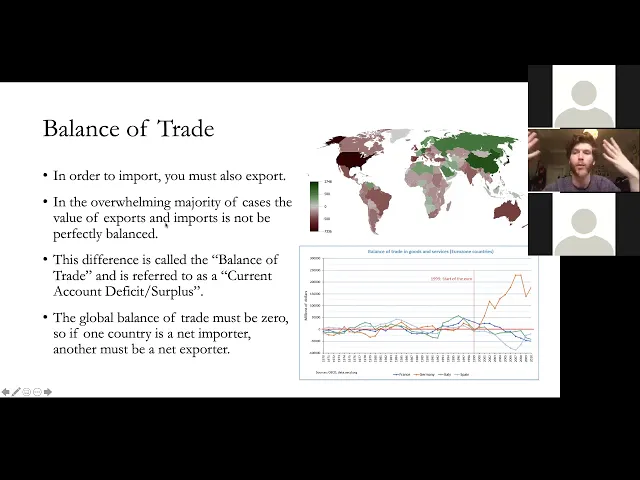
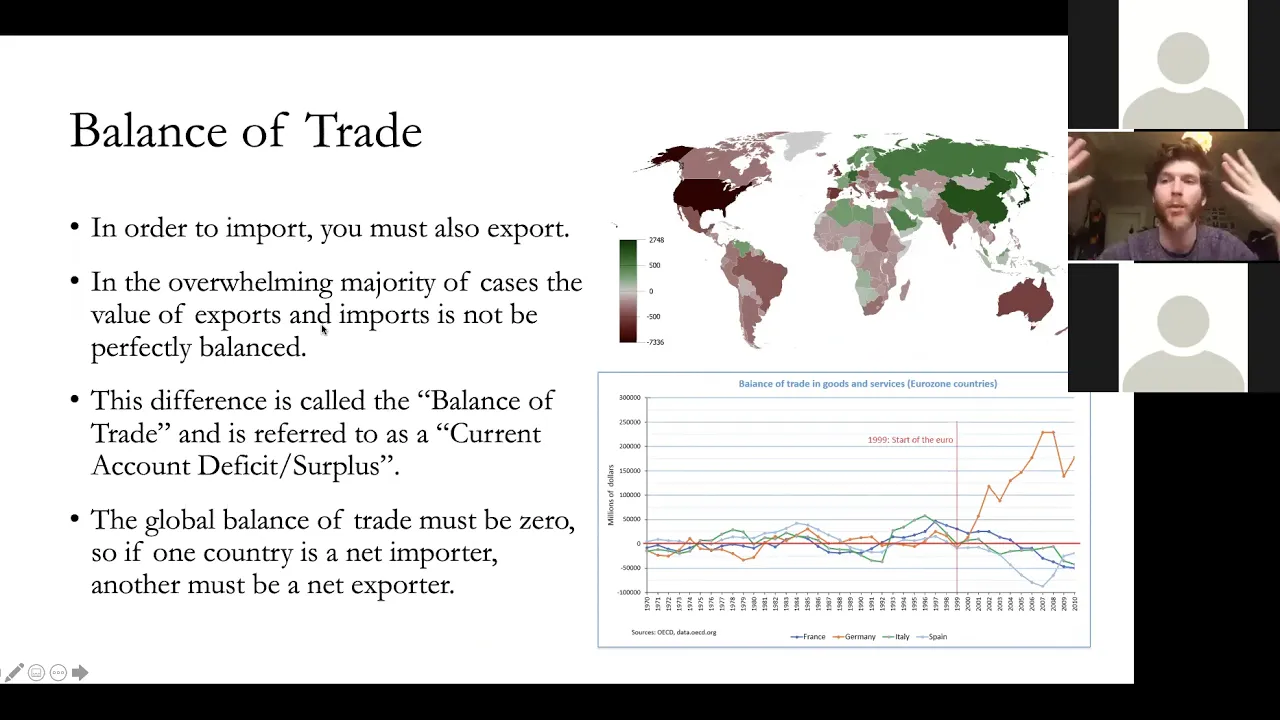
willing to sell so if you don't explore anything your currency is functionally worthless on the global market and as a consequence you also content or anything so the balance the two need to be balanced at some respect so yeah in order to import muscle and in the overwhelm invasive in places the balance of exports and imports is not is not perfect so this is a little bit strange to think about but it's it's real phenomenon and well it's will sort Of explain how it's compensated for and is that sometimes countries in terms of the value
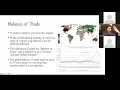
of the stuff they export or import the two are not matched so they maybe sell more goods in in monetary terms than the import or vice versa so this graph up here shows you the green countries are net exporters so the value of their the goods they export is more than the value of the goods they pour and the general trend I would say that you should pay attention to is that rich Countries tend to be net importers and poor countries or developing countries tend to be net exporters this is obviously not universally true as
you can see a lot of poor regions of Central and West Africa are also net import there can be reasons for this for example if your country simply doesn't produce a lot of essential goods like pharmaceuticals heavy machinery etc you may be in a situation where you're Buying up essential goods in order to prepare for economic development so for example if you wanted to begin manufacturing in a country you would the first thing you need to do is importance of steel concrete heavy machinery etc and that would register as a trade deficit you'd be buying
more than you'd be selling but in the long run this stuff sort of has to stay below and critically at any given moment the global balance of trade obviously is Zero people are giving stuff away right so so everything that is beef one country's net exporter another country must be a net importer the global average has to balance out this graph down here is interesting it's going to give you some idea of where we're going in this talk and what you are hopefully paid notice is France Italy Spain historically sort of relatively stable sometimes it
goes up sometimes it goes down this is also balanced out at the Time euro gets introduced which is the trajectory of these lines particularly Germany so the important thing to take away from this slide is that when we talk about the balance of trade which one that is the balance of monetary value of goods that flows in and out of the country and if we sell more than we so if we export more than we import we would say we have a current account surplus or trade surplus right and the investor that Sedessa okay so
in the same way in the monetary policy talk we kind of discussed how central bank's coordinate the supply of money in price levels fire policy tools interest rates printing money in quantitative easing stuff like that so they in order to understand trade economics also understand the tools that countries use when it comes to trade so wallah um the simplest one is just trade restrictions so you do literally for example tell businesses in Your country you are not allowed to sell this to another country or you tell people in your country you're not allowed to buy
this from that country so the most obvious instances where this gets applied are not necessarily as a form of economic policy but more as a form of foreign policy so you've heard for example Iran was under heavy heavy sanctions Venezuela as she has not true Venezuelans not under any sanctions about example Russia has Been under a lot of sanctions from from EU and USA as a result of aggression in Crimea many countries place sanctions on Israel for example this who did the point is a tariffs are these soft touch version hard restrictions on trade tend
to be something that you don't do to your allies they tend to be something you do to you those phone enemies but the majority of trade barriers are tariffs so if you don't not familiar with the word tariff is simply attacks On imports so like a lorry from one country arrives that you look at the shipment web damage is worth say Ron you're going to pay this percentage of it as to us as tax in exchange for being on to sell it in the country so to give you an example made if this is maybe
too abstract for you if the USA has a 25% tariff and communion cheese that means a truck comes from the US a Canadian border they open it up if they see 20 million dollars worth cheese inside Spencer cheese I don't know the company the Canadian company boom they shouldn't come whoever is responsible and we'd have to basically pay the US government five million dollars before they would be allowed to sell the cheese now contrary to what some politicians would have you believe tariffs are not and tax my exporters so it may be that the Canadian
company is the one that pays the tariff but like they're not absorb then I hit They're not taking a comment because they will simply raise the price of the things they sell in order to offset that tax they have no reason to willingly eat a profit loss for the benefit of yeah the American government right so in this instance for example probably the most likely outcome is that the Canadian cheese suppliers would raise their prices by twenty five percent this might have a couple of consequences and hopefully you'll see now why tariffs Become a tool
of trade policy because the tariffs only applies at the border so any place when stuff comes into your country that means this is not a twenty five percent tax on cheese this is a 25 cent tax on communion cheese so maybe consumers start buying American cheese or maybe the Canadian farms decide they don't want to pay tariffs they just don't think it's worth their time and they just stop exporting entirely or maybe customs in the USA decide that we Eat less cheese save money so no matter what the point is less Canadian cheese gets bought
and that means Canadian exports into the US a decrease and so the USA's trade deficit with Canada goes down and you might imagine if you had a huge trade des in you starts replying lots of tariffs to lots of different goods you could massively reduce the amount of imports that you have now the issue is is that there's no logical reason to do this in some sense because Tariffs only make Goods more expensive or potentially inaccessible for your domestic consumers so why are tariffs a thing and why has historically most of human history being characterized
by very high tariffs on almost all countries and as consequence very little trade the obvious one and the one that probably most people are familiar with is they took courage Arabs foreign imports obviously if they are coming in they are competing with something that Existed before them that is their cheaper the foreign in the domestic industries die it's a classic example of this was Japanese car exports to the USA when they dropped tariffs following 70s something Nana would be just cheaper they were better quality they they crushed a lot of car manufacturing jobs that existed
in the Midwest a lot of people became unemployed so the politicians may respond by putting tariffs on a certain good in order to Protect jobs basically so protecting from competition there's really interesting case study where the US Congress passed tariffs on a coat hangers wire coat hangers because they were being completed with Commerce South Africa I think I don't remember exactly but some of the country was producing cheaper coat hangers and the economists did an analysis of this policy which was intended to save the jobs of coat hanger manufacturers in the USA and they worked
Out something like over the course of like 40 years the extra amount that the US customers had paid for Co hangers I mean that the US government had basically spent like 10 million dollars per job they could have instead of passing this policy they could have simply just taken ten million dollars out of the Treasury and given it to each person that lost their job as a result correct so a terrace to protect jobs are a political reality they're very rarely He economic reality I appreciate that probably someone at least new audience is thinking that
I'm just a huge neoliberal and lemon 10% of one side of the argument and to some extent that's true you the response or maybe crushing huge sectors of your economy by making tens of thousands of people in the Midwest of the USA lose their jobs might have ramifications those local economies collapse and this is all true also political risk here is Quite severe you know if you make a lot of people do you pays for this in the 80s they make a lot of manufacturing jobs disappear her and job a lot of pissed people will
do better today look at them so yeah the other thing is as men should touch from briefly before another reason we do tax is to harm another country so you you put in tariffs on is effectively sanction on their economy and it makes them or a good tool foreign policy given Adapt fire bullet hold you be the consequences of no damaging people lose their jobs or the country can't import critical supplies like medicine manufacturing whatever like people can die from other reasons in some sense it's not all that different actually to you know can actually
go into war and it tends to be politically less toxic you made less enemies on the international stage if you section your enemies instead of dropping bombs on them and Another reason you might use not necessary tariffs actually but regulatory controls on thoughts simply because you don't approve of the health standards or environmental standards of another country so we've had a big debate in the UK but not today actually journalists shouting random upon another in Twitter about chlorinated chicken so in the US a health standards allow you to wash chicken and chlorine to kill the
bacteria in the UK this is Illegal and so in European Union misses of evil so if the UK does a trade deal with the USA one of the requirements will be that they have to accept for any - chicken and this is scared a lot of people probably because we're chlorine sounds scary in reality it's because it doesn't we're not open is that another reason is reciprocation so if another nation has Tara put tariffs on your exports and sanctions you do in a lot of instances It makes sense to sanction them back so you have
leverage in the new future negotiation otherwise you just letting them harm your economy for no real purpose so a long tariffs tend to be retaliatory at the USA puts tariffs on China China the tariffs on the US a trade war that's what it means they study giving examples you know what this actually means for people and so as I said it's Tory from those countries had very high tariffs on almost all goods to Try and protect domestic businesses and you can add the corn laws which are very high tariffs as well as import quotas maximum
amount you could import unfallen corn and other grains and stuff in that and this was basically to protect the rich British land owners who you know did all the farming but we're not particularly interested in being efficient investing in new technologies or just you know really doing any hard work they just wanted to Be rich basically and so what this meant is over time the price of corn and grains in the UK gradually went up enough not relative to France Spain other countries so they put these laws in basically to protect the British farmers but
the consequence of this is that the effective price bread has massively been increased to the poor or everyone actually in the UK because they could be buying bread flake ten percent of the price whatever I Don't remember how big the discrepancy or it became quite enormous at one point but they're just basically priced out of doing so by the government policies and this famously contributed to the Great Famine in Ireland because there were lots of time that the time was part of Britain or British Empire space trading they were subjected same and trade law and
so France was had tons of cheap bread that they were effectively willing to sell orderly whirlwind sell whose There was no shortage of food in Europe but he couldn't sell it in the UK at prices that people in I'm right he turns out an island at prices Irish people could afford because of the tariffs so as a consequence there was food that was just going waste well people died this led to eventually a sort of bit of a political revolution within the British government and they repealed the Corn Laws huge drop in food prices correspondingly
large farms went out of Business because they just weren't efficient compared to foreign competitors but it's a good illustration of what poor trade policy looks like this was a good thing but repealing the Corn Laws unambiguously good I will defend that to my death what does this look like so listen since the the tariffs were um unilateral so the UK was sanctioning everyone else basically um but not there was no reciprocation other countries didn't really care they didn't Need to protect themselves from British grain exports because the British won you know telling a competitive right
anyway in a lot of instances though country countries will retire will respond with tabs on things that other countries are gonna so in the Chinese us a trade war the USA put tariffs and stuff like washing machines and solar panels and spun stuff and China responded by big tariffs on soybeans and not sure Elsa forget the specific if There's a lot of stuff there's like documents like huge documents like this where they're just like fifteen percent more on this and five cent more on that fifty percent more on that they just like basically trying other
that was it I remember a good example and trying to put tariffs on whiskey because Mitch McConnell the Republican Senate leader is from Kentucky and Kentucky is famously the place where a lot of whiskey is made it's the China but Massive tariffs like fifty percent tariffs on whiskey so the people would lose jobs specifically in Mitch McConnell's stay and I would I did incentivize him to do something about the trade war we'll save the word cool so what that is so to assume when you start from a point whether it's the height house on both
sides how do you get rid of them you engaged in a trade negotiation so these tend to be quid quid pro quo so the USA in Japan for Example might say fine agree the USA agrees to lower tariffs on cars and they work out say if Japan is exporting a billion dollars worth of cars a year we drop tariffs by ten percent that's saving that means you get one million dollars more trade so in return we want 100 million dollars of tyrant reduction in pharmaceutical that's something like that so they very these finger shoes and
be very technical surprising amount maths involved and and They also tend to be very earth-like they can get quite heated there's also all sorts of dirty tricks that experienced negotiators will use such as like making ridiculous offer there's none good trap if there's a lot of like psychology that goes into this they're trying to force them to stay in one room for as long as possible so the negotiators get tired and start agreeing to things they haven't thought through this is not like it's probably it's Usually not nearly as nice as this photo in place
yeah so the as a result they can take decades most trade agreements minimum several years to be negotiated evens importance comprehensive trade agreements can take very very long period of time one way to miss Kay this is to engage in multilateral trade agreements this isn't centrist having 200 come together at reform trade and you get a whole group of countries come together and the Paradoxically this actually often makes it simpler because if like five nations want a tariff reduction of 10% on the export of cars and one nation just really dependent on cars they now
basically get outvoted so we sort of by coming to a comprehensive middle ground that satisfies as many of the participants in the between agreement as possible you didn't end up with overall lower tariffs and also you know it means that smaller countries don't get just Out competed in a one-to-one negotiation by a big country so but just because they knew the way then we've got charge so make sure it's any questions as we go along to make sure exports cheaper and more competitive very good question it's gonna be in a second second half this talk
so anonymous boilie called and you just in case because whenever it's like trade people always like what is the WTO the WTO debates people like I don't know What the WTO is okay it's a global organization which would almost all countries are a member of which sets minimum standards on trade so they were done here will say things like if you want to export steel anywhere in the world you have to take these precautions to ensure that your steel is safe it's not just going to crumble if use for food you have to make sure
that it's free of parasites or viruses or whatever but it also sets minimum tariffs so Maximum tax rate maximum times so if you remember the WTO though can certain things they are not allowed to exceed tariffs on typically essential things food medicine steel so the idea is that by keeping everyone a common trading level it prevents this kind of like trade war beggar-thy-neighbor style policies it sort of binds everyone to a minimum standard which is not to free trade if that makes sense an adjective but this was a not yet too restricted You can of
course go below the WTO requirements so the WTO tariffs maximum tariffs on grain my today might be like 10 percent there's nothing stopping you having a trade agreement that you drop that five-cent it's just a minimum base open with a maximum in some sense and they also arbitrate trade disputes so if one country is for example doing something to improve their economic standing or improve their trading situation against another country in a Way that is shady they'll take that WTO I'm not gonna cover examples of that if you go rumi about this trade disputes there's
lots of good examples the WTO is global but as I said it's just the starting point there's lots of more comprehensive free trade areas that exist so famous one probably irrelevant for most of us is costs the European Common Market and which includes all the EU members actually introduced in nineteen members it includes Norway Iceland and Switzerland NAFTA that's he actually is called something different now they renegotiated it recently but that's Canada had the USA and Mexico I'm Marissa which is the South American trade area except Venezuela they got boost outs this pitch is actually
update because yeah as a trade often to land foreign policy ASEAN also trade area TPP was supposed to have the USA in it trans-pacific partnership is called it basically is I hope you can see these Countries in I sorry the countries in brown asked in the TPP countries aren't listed on this but yeah so what is what free trade areas do is they oh and and the African Union is in the process negotiating though serious regional trade agreements West African trade agreement South African trade agreement I'm feed they're aiming by I think 2023 to have
a continental wide your African trade agreements that would basically have tariff free trade across all of Africa I think it would become the largest common market in the world by the time it's implemented yeah go alright now let's get on to sorry I mean my participants list is blocking my view okay cool let me just check comments our rich countries basically getting poorer because you said they have a negative you've written be a PS Union VOT balance of trade so well this was some of the stuff hopefully become clearer because I own some you're saying
It sounds like if you I'm importing more than you're exporting eventually you're gonna run out of money winnings we uncover why that's often not case okay so at this point then hopefully as then the questions indicate this is where people are thinking you might be wondering or what happens if you do run a trade deficit of surplus what is that difference go so really the important thing and the thing that binds these two natures from together just remember that Money is the buffer it's the middle ground that happens the mixed trade possible and it also
means that you can defer consumptions you could put off buying stuff for later or you can hold money or you can run gets lots of things like there's lots of mechanisms that money allows you to sort of massage the gaps in between perfect exchange so as I said when a country imports they swap some of their currency goods and services but if they import more than we Export they're running a trade deficit and that what the consequence that means is that more of your currency is now flowing out into the world and you're getting goods
in return so in some sense if you could perpetually run a trade deficit so you could run if you could have a trade deficit with zero consequences that'd be great you're just basically handing out worthless pieces of paper so companies all around the world didn't Return your gaming actual good stuff in practice that's obviously impossible to keep going forever but that's the consequence of a trade deficit more of your currency ends up in the global market and money currencies obey the rules of supply and demand just like everything else so if there's a surplus of
your currency elsewhere in the world on currency markets that means that the value of the currency goes down because it's easier to acquire so that makes Sense hopefully it does it's really important if it doesn't and if you haven't seen the monetary Theory lecture maybe this will be a little bit too much of a leap for you so yeah so then again oops let's press on here so that his case study the UK has historically had a reasonably tight trade balance so the blue line here is the net trade balance of trade at various points
though this is dipped so these two are still perfectly line up Unfortunately but you can see here for example that the the value of the British Pound which is a key right at the point in the 1980s when the balance of trade is positive so just as British exporting is really starting to grow quite rapidly correspondingly the value of the British currency goes up because if the currency can buy more useful stuff there's more of an incentive to acquire that currency in consequence the value of the currency goes up supply and Demand again put in
the comments if this is not making perfect sense to you yeah there was some other ones so we can see here though that as through the 1980s the 1990s as the trade deficit begins to grow the value of the currency been sliding down and in the 2000s something interesting happens which is that a huge current account deficit huge trade deficit in begins to appear like minus 6% lately it's not good and but the currency doesn't really move until 2008 When suddenly investors so basically I think the sentiment in global markets was like it will recover
at some point year they'll start exporting more and so they kept holding the currency waiting for the British because it was assumed that kind of the UK's famous historical country surely at some point they'll get my together and fix the economy and they didn't and then eventually in 2008 or the financial crisis investors were like oh oh ok this is this is a Permanent and then the currency crashes so remember markets are not just perfect transmission mechanisms people sentiments feed them and if people believe that the trade to deficit will recover they'll hold the currency
waiting for it to recover so yeah currency shifts are tied to the UK's trade balance although as you can see obviously this is not one-to-one correspondence there's imperfections You'll notice for example there was a big crash in 2016 and the value of the British Pound that's not really connected to any change in the current account deficit as the brexit vote and that's again because brexit obviously means the UK is leaving the free trade area of the EU and as a result they won't be able to sell as my export as much stuff all right transy
evaluation so said that markets exist and they trade currencies and they The relative value of currencies is known as currency valuation so it's like how many euros can I get for a pound how many dollars can I get for a yen stuff like that and much like a stock market the foreign exchange market is largely driven by speculation so investors don't wait for the economy of a country to change before they you know sell buy the currency they try make predictions so if you expect a country's economy to grow very fast in the future And
that means they're going to be exporting more and there's gonna be more demand that stuff that selling is very logical view to buy up the currency preemptively so that you can then sell that currency to people at the point at which they need to buy stuff from that country similarly if you think that country's economy is going to slump or go into recession you know that means there's gonna be less demand for that goods and that means the currency is Gonna be worth less so for the common net oil exporters outlook right now probably doesn't
look great so sure currency investor you maybe don't want to be holding money wherever the Saudi currency is for example or Russian currency because it's not going to be useful to you now conversely powerful economies like the USA can sustain very large trade deficits for very long periods of time in fact the USA is probably the not the Only big economy that can do this other countries like Switzerland can also get away with this new UK has somewhat done this in the past but basically in the USA you can run a huge trade deficit and
not devalue their currency because people will always want US dollars because it's seen as like a reliable currency and that means if you're like if you're like a Ethiopian businessman doing trade in Myanmar you can probably use the US dollar like it's not either Your country's currency but you both recognize that it's a good currency and will buy stuff that is valuable on the global market so that's why you despite the fact that USA runs trade deficit speculators keep the currency level high because they think that that money will still useful in the future so
at this point now we move into and this is going to answer in question with the relationship between money and trade more more directly I guess so this is Just a quick recap of some of the stuff we talked about last time so firstly money is an accounting device makes a way of keeping track of supply and demand and the ratio of the two and sets price levels so if you increase the amount of money but you don't change the amount of production the cost of things goes up conversely if you decrease the amount of
money that but you maintain the same amount of supply the price levels the price things you'd see in the Shelf would begin to go down or inflation is more commonly the case so as I explained in my lecture central banks tend to keep inflation as like a small amount of inflation and they do this fire variety of complex mechanisms that we're not going to go over again but they all center around the same core principle which is if you want to cause inflation you increase the money supply when it goes deflation not that you would
ever want to cause deflation but If you want to produce the level of inflation you would shrink the money supply okay so one of the things I didn't talk about last time is the consideration that central bankers have ie people who conduct monetary policy when they think of foreign exchange so bearing in mind that the money supply of a country doesn't stay within it's kind of the country itself some of it leaks into the global economy I guess two condyles two versions one what I think My expansion monetary policy I mean increasing the money supply
have all of that relative value of your nation's currency and also I guess as a second question how does my leak into the global economy so let's take a minute and see your answers people can come up with if you haven't answer to I the question feel free to unmute yourself and we'll start chatting be a bit less lonely than me talking to The voiceover with regards to the expansionary monetary policy so an expansionary ultimately no one knows or if I explain the question poorly so if the central bank works to increase the money supply
what do you think wouldn't like let's use an example let's say be the Federal Reserve the central bank of USA increases the money supply in the USA of dollar one how does that leak out into the global economy and to what effect might not have on the Value of the dollar against the euro for example yeah so I guess I guess if I understand what you mean I guess the way that it would leak out into the global economy is that essentially people or business is doomed exercise wait yeah ken can you hear me oh
yeah I just saw a flash up saying when I was talking but I didn't hear anything so don't try again yeah can you hear me I much what to do here ya can see a flashing yellow guy can't hear you are You sure your mic okay can you cure anyone wrong if you feel earn with your zoom settings so if you open at the bar at the bottom there's an arrow next to new you can probably adjust the audio settings just make sure that your oh the problems are mine this is that would explain a
lot okay enjoy talking now hello hello okay gaje technology I mean can anyone hear me now I can hear you can you hear me [Music] we can hear you okay yeah I know I know you guys could hear me but because hoping they fix the problem why I can't hear anyone else is it cuz so I don't you can try one thing in the most minute okay so it's just assumed I can everything else my computer is working fine let's try one laughing someone try speaking one last time and then hello can you hear me
no type out your answer Then why hide I'm gonna have a last stab and see if I can fix it yep so when that is the correct so if not just by the way I've now hooked up my speakers to the to my bluetooth sorry that's a new sound system and so that's it's can someone try saying something again one more time hello what about now yes we have to restart doing something okay yeah so us consumers get more money start buying stuff from outside the USA Dollars flow out in terms of how this our
expansion in monetary policy effects currency valuation increasing your monetary supply some of that leak sounds global markets more of your currency in global markets your currency becomes worth less so you from the last like to remember everything I talked about and it's stimulating your economy via monetary policy bear in mind one of the things that's can do it's going to devalue your currency but that might be A good thing as we're about to cover so the first thing I'm gonna cover is how central banks actually coordinate monetary policy but when they want when they're not
interested in changing the money's find their own country but they want to affect the the value of their currency on the global marketplace so sometimes you want to deliberately control it so the way you do this is if your currency is overvalued you think it's your currency is too expensive now That might not seem like a problem and I'm going to explain in a minute when there is a problem but if your currency is overvalued you just print more of it and go on to currency markets and basically swap your currency for other people's currency
so what that does is pulls other countries out of currency market other countries currencies out of circulation so you you listen you're Switzerland right and you're you're buying up what is the Russian currency by the way I don't know why I don't know this can someone if someone's typed out its kind of bugging me later can't remember it yeah so you'll Switzerland ruble okay great that means Bell if you say you're Switzerland you prints and francs by some rubles less rubles on the currency market ruble value goes up Swiss franc goes down hopefully this makes
sense trap put in the comic put in the chat is that David if you're not hundred check Out on this in the process of doing this so obviously you start to accumulate foreign reserves so you've the central bank is you in this case you're now sitting on piles of currency from other countries it's called foreign reserves and this is useful and you generally want to maintain some foreign reserves because you want to be able to you want to have the money on hand ready when you want to trade alternatively there may be you think your
currency is undervalued We want to push it up the way you do that is you sell your foreign reserves so that means you are buying up your own currency off currency markets and then pulling it back into your country no the prerequisite for that of course is that you need to have foreign reserves in the first place either any situation where your currency is cleaned of value you don't have foreign reserves and you want to increase its value you're out of luck and bite the bullet okay so you're Probably wondering now why does Chinese evaluation
matter and this was this is now going to address the question I got earlier which is a read out question because we're answered directly why do valuing your currency makes your exports cheaper and more competitive okay let's cover this now because trade occurs across currencies the relative value of two currencies directly translates to the cost of the goods and services so what this means is if I have It you've experienced this if you've gone on holiday and your currencies changed before you got to the airport or whatever if your current value if your country's currency
goes up in value along that means it's gone up relative to another countries and that means that your one pound or one dollar or one blue ball and euros worth of income is now perhaps worth 10% more in that country that means you can buy 10% more of their stuff so if the value of Currency goes down that the inverse supplies your income now buys less stuff from that country so as a result a high value currency means that you can import more but it also means do you export less because your exports become more
expensive for people other countries does that make sense like hopefully I've explained this in a way that illustrates an SRE the key distinction is type out if you want me to go over that in more detail if you have specific questions on That but the key thing to note here is that the change is always relative to the global economy so if the US dollar there's often value or down in value per attempt so that is nothing to people in the USA it does nothing to change the flow of trade within the USA a dollar
will still buy a dollars worth of stuff your local supermarket same with the Euro whatever right all it changes is imports and exports alright so this is so these fluctuations in exchange rates Of currencies affect trade but they don't affect the internal economy oil is not immediately right so that's fine for example currency manipulation which is the next thing we're going to talk about is important but it's also why the monetary policy of central bank always has to be coordinated not just with respect to your own economy but ways back to other economies so if
for example you're in a recession and the central bank engages an expansion area Money retreat policy they print lots of money or create money in some other mechanism quantitative easing and that devalue is your currency suddenly for everyone in that country imports just became more expensive that matters law when you consider that for example you might be importing stuff like essential supplies for your industry you might be important medicine you might be importing food lots of considerations that if you Devalue your currency in pursuit of more exports whatever you also have to consider what that's
doing to your imports right so monetary policy and trade literally go hand in hand because people will always buy the cheapest thing and the change in a currency even despite nothing change from that the actual economic output country just the change in the currency can translate into changes in trade so no one's type to any comment so I assume that Explanation was sufficiently clear so given therefore why I just explained which is the currency and currency valuation has a massive impact on trade need the obvious conclusion to this is there's also an incentive to manipulate
currency valuation so China's you may have heard Trump claimed that China is engaging an illegal currency manipulation and then to be fair it is in fact illegal had to do this the World Trade Organization specifically bans Currency manipulation because and this is good example of why in the twentieth century as the Chinese economy starts to grow and grow you can see the value of the currency starts going up and up now why is this because investors see either Chinese economy and they see it's increasingly see is growing and it's like okay cool they're going to
be producing twice as much stuff in ten years I can buy currency now in ten years it's gonna be worth a lot in terms Of Chinese goods so I see no no the coin is the propensity and country's internal prices economy changing dependent on the sort of industries for the country relies on a devaluation for a first world exporter might not affect them directly yes yes the perfect and when we talk about Germany is gonna be a good case example for this the changes in currency valuation affect different countries in different ways yeah okay so
you see here the Chinese Currency is like just absolutely shooting up and I'm exactly what happened in 95 but basically it was like bunch of investors we're placing what functionally equivalent in financial markets to bets on Chinese currency that go up and pushed up the value a lot and the Chinese central bank stepped in and just went no and notice here that it's almost artificially well there's artificial bids almost I hate just over gives 8.1 For a very long period of time 10 years it's a very unnatural graph to see when it comes to anything
in economics and that's because the central bank was doing exactly what I described previously whereas the currency if they noticed that over the course of months the currency was going down in value they would buy up yen from abroad using foreign reserves and inversely if they notice that the currency was increasing in value they would sell yen print yen On it so they built up huge foreign reserves doing this and they were able to keep thee so you know imagine this trajectory continues going up maybe by 2005 the yen is actually worth something like 15
and sorry sorry just also train yeah anyway um go so why this is actually legal to manipulate currency badly like this ah because you think of the extreme case I could do I could basically pump up the value of my currency for like a month Buying clothes of stuff that I needed and then allow the currency to drop I kind of value afterwards having already bought everything I wanted because that the key reason why this is illegal is because the country that's doing the currency manipulation is the one that knows where the direction of the
value of their currency is going and that means that they can basically give themselves an advantage another way this might work for example if you want to Export more you can basically keep it as well I'm trying to did right they keep keep their the value their currency low and then as a result they get their exports become cheaper relative to their competitors countries like Vietnam Cambodia salmon that China is without actually being more efficient economic production is able to make that goods cheaper and like crowd out other countries okay so in the absence of
and now it now and we've been in accountants That's that's really like directly relevant to the eurozone this is coming this is gonna cover what should happen in the absence of currency manipulation currency value accesses stabilizer for a country's economy can even figure out what I mean by this and unfortunately the answer is and we let you think about 30 seconds but because I can't have you talk then I really have a QA about this but take a second think about how the currency valuation given the last couple Of slides how am i stabilizing economy
perfect very good when when you study economics or you just like going understanding this stuff okay I really don't study economics okay just well-read good or I'm explaining it well complete what you will have no defense Kaela Mason all right so yeah his his hat goes country experiences economic shock goes into recession markets elephants can't see because Senate recession can produce less why Would we why would we you know this currencies not gonna be useful this decreases the value of the currency lower value currency exports cheaper more competitive people buy more exports when we've invest
for but up real estate in the country something and then that increases the money flowing into the economy it means people more people will buy that starts this revitalized since businesses they get people get money from exporting stalking brings lap the Recession revitalize is the economy the economic recovery now means that the currency there is a demand for the currency value recovers stabilizes obviously this is as much of a mechanism for instability as it is for stability because it means if your because it's not one way or sponsored by it might also mean that for
example a people see you have a like some sort of civil unrest or some people in in your an election ends up very being very tense So investors go don't look at that and they start selling off the currency that can hot like that can affect the current country's economy just on the basis of the sentiment of the global community this is also white and explicit currency manipulation is not allowed but you're allowed to stabilize your currency so central banks will typically try and Matt massage out big creeks and trucks in currency valuation because you
generally want a stable currency level So that if you do a deal with someone you say that I'm gonna buy hundred crates of and carrots from you next month you kind of want to know how much that's going to cost you in a month's time if the currency is zigzagging all over the place um it could be very hard to do trade you may just decide to trade with someone else rather than risk you know supply chain falling through because the currency devalued because Politicians had something stupid on Twitter or something like that so yeah
currency unions and the Europe so for the reason I just outlined is stable currency between two countries is good for trade it kind of makes sense that you think that for a big trade area like the EU where there will in the common market together why don't was bypassed currency markets entirely why not just have the same currency and then you don't have to be Wasting effort or you know trying to manage your currency price level you're also not reliant on the sentiments of global currency investors for whether or not your economies 5s or not
kind of make sense to be the currency union right so there's a couple of ways to do this so one is an informal currency union it's like is it in Zimbabwe where the Zimbabwe dollar became worth less than the paper it was printed on so people who started trading in the US Dollar I mean the bar boy it was in a functional currency union with the USA just kind of wait to think about that happens more often than you think it could be a formal currency union but without policy coordination this is what a peg
this is where for example one country will say we're gonna just embark on currency at this level relative to another country so this might make sense for example if Canada in the USA the majority of trade between one another Make sense for Canada to be like we're just gonna peg our currency value the same not necessarily that one to one with the US dollar but it may be like two to one whatever makes sense for them right and that way you can be sure that the price levels stay constant and they do that by forever
changing these flat foreign reserves like I explained previously and the lastly the common policy is when you share monetary policy that's when you do all stuff I talked About in the last lecture together so the the European Central Bank conducts monetary policy interest rates quantitative easing all this stuff for the entire monetary union entire eurozone in some sense also the US dollar is also a currency union think about it because each u.s. state is the size of a normal country and um has an akan similar size and diversity into a normal account of the country
so in some sense The u.s. dollar is also and also all the other informal countries that use the US dollar which is a lot of countries believe or not a lot of trade across the world is done in the US dollar because people don't trust other currencies to stay stable so the one of the advantages so I mean I've covered all that stuff so I'm gonna race through it quite quickly but the first one is you eliminate exchange rate risk so it's because there's time delays in trade you don't Be disrupted by fluctuations in currency
so joining monetary policy that's a massive benefit there first it was a speeds up transactions so if you said to someone oh this is really good like solo tu Katy Perry the European Union economy is based on like high tech manufacturing and just in time so things like you'll get an order for I don't know sometime we'll be like we need a we need an airplane part by Friday and you're like I mean divided by 637 components from 18 Different countries by tomorrow evening and get them assembled if you've got to swap tons of currencies
and deal with lots of different financial systems it's going to slow you down lock price so so fast fast transactions can be a big deal for economies price transparency as well if you are looking for somewhere to open up factory it's much easier to compare euros in Spain euros in Netherlands than it is to try and figure out what those relative currencies mean and how much It's going to cost you a lot more importantly because if you're a foreign company and the price level of those countries changes then you may end up paying your workers
more or less right you also is less risk of financial and monetary crises sharing or some sort of risk I'm not going to go into that in too much detail it's also just done obviously more border trade but tourism like it's not it's a non-negligible Thing terrorism it forms 20% to the economy of Croatia for example I do see that there's questions I'm going to come in the end because I want to keep this from being too long and I want to get through to this stuff about southern Europe in the eurozone so downsides quite
obviously one-size-fits-all doesn't work if you're not all the same size the country a Italy right now maybe is in a recession Country B - I don't know Germany growing how do you get monetary policy that fits both of them right on one you're trying you want you want to be increasing the money supply on the other one you want to be decreasing it yeah the other thing is that a lot of the stuff by the way this was intended to be on the end of the last lecture and I moved into here at the last
minute so it's a lot of the stuffs going to talk about mechanisms that were covered in the first lecture So if you this is not making sense maybe you're on YouTube pause it get watch the other one come back this stuff will make more sense I'll do my best to explain as we go along for those who you're watching live today um so the interconnectedness of financial systems also increases the risk because banks will try and invest in lots of different countries try and spread their risk but that means that one country going bust a
couple of countries going bust can Affect the economies in other countries in ways that they wouldn't necessarily normally and also means for the exact reason I described earlier just that you get to compare prices across different regions means if one region is as less productive and they're less efficient producing certain things all the caps will just flies away from that area okay so yeah so you may have heard and actually I mean this is an argument and I use argument looses possible sense by The way if you think I'm referring to you here I'm probably
not but I've watched a lot of bad debates on the Euro so you hear things like ah or just a normal conversation right it's like kind of a monetary union without a fiscal Union why is that well it's because if countries in a recession and the con use monetary policy to fix their economy that means they're forced to use fiscal policy borrowing money basically so I imagine there's gonna be a bunch of Debates coming up on corona bond and stuff like this right well the problem is normally what actually in Spain France would do right
now is that they would cut interest rates boost money supply by law the policy mechanisms last time the calm they the the European Central Bank controls the monetary policy and it has to take into account however many members of the euro there are right now right now can't set them that looking away the pool just benefit Italy in Spain because they're all showing the same currency and that currency flows across borders so in the USA this works because I'm rich us eight states find out the poor ones so California basically pays trial Obama to keep
functioning but that means that Alabama is stabilized figure into recession they don't necessarily drag down California because the money flows from one to the other there's lots of Complicated build laws basically that ensure that this money is fairly distributed fairly and swinging by fair right but so yeah the euro is not fantastic it has a lot of benefits so this is gonna be very negative there's a lot of benefit this is glossing over all of the benefits that I've talked about earlier Chatham have been absolutely massive for a lot of countries and we don't know
the counterfactual maybe these countries would have struggled Anyway the consensus and amongst most monetary economic economists is that the euro has not been great for southern Europe and it's been very good for northern Europe so why is this the case well when they joined they were already different economic circumstances northern Europe was industrialized well-developed was producing lots of goods that ended up being very important for the globe economy in the future so UK for example Was leading the world basically legal and financial services in really important as the world global economy got more interconnected Germany
was doing like a Technical High School manufacturing came really important as things like aviation became more common core in it went up etcetera the stuff that southern Europe was doing no no they've got less valuable so a relatively less valuable so sudden Europe was producing a lot of like Lowest skilled manufacturing a lot of farming stuff like that a lot of that stuff either and culture very stable like the demand food grows with population it doesn't economic grow faster than that right whereas a lot of the other stuff they were producing textiles for example or
went to Bangladesh so on the monetary policy can't now account for the two differences between these two countries those stabilizers I thought For conch again because the euro is pegged a single price level so what should be happening should have happened basically the last decade of arguably 15 years is that the currencies of southern European economies should have been decreasing and making their exports cheaper to compensate it for the you know the relative efficiency but instead they've been locked at the level of the sort of average of the euro which is I think I've duplicated
that slide yeah so I'm but in the same way that southern European economies have suffered because they've been able to they've had to export less because their exports become more expensive northern Europe has benefited immensely because they can basically export more and no this is the key thing I pointed out earlier if your're goes down in value undervalued relative to what it should be that has nothing to effect German citizens who buying stuff from Shops and particularly doesn't do anything to affect German citizens when a lot of the stuff they're buying is from southern Europe
and it's prices are being depressed by the poor economic situation so I'm gonna please ask like in chat some of this hasn't made sense but hopefully with the context of sort of all the explanation I gave before the euro has effectively functioned as a way of making Northern Europe's economies more export competitive globally and Within the euro at the eurozone and it done the exact inverse the sudden European economies now the only way for these countries so anyway the sudden you're being economies to like keep stay afloat basically then is to spend more to boost
their economies through fiscal policy which is the other arm of economics and that's tax and spend and borrow money and spend stuff like that right so you can't inject money into your economy through monetary policy You just have to borrow as or you know massive cuts in spending which have their own problems not least that they're politically toxic for context Greek pensions at the start of the Greek crisis which is the next thing we won't talk about were in real monetary terms almost equivalent to German pensions despite the fact that the GDP chapter of Greece
was more than 50% lower and then they shouldn't cut them because the only party that went stood Up and said yeah we have to cut pensions because the euro has made our exports uncompetitive it's not really gonna fly on the flip side of this coin Germany has been making Bank so Germany has the largest trade surplus in the world means they've added the relative value of their exports competitor imports is the biggest in the world and that includes China a country with 17 times the population three and a half times GDP by so and the
way Germany is able to do This and I know by the way that export surplus it's effectively just money being funneled into the German economy that normally would be compensated by a rise in the value of German currency making their exports less competitive but instead that's not happening because it's capped by the southern European economies so Germany has been able to run a huge budget set up as well the government borrows but spends less something they borrow ends paying down Their debts and this is the exact inverse of southern Europe who've seen their deaths just
grow and grow because they have to spend money to keep their economies afloat and yeah I'm repeating myself but I'm hoping that this is can be really clear okay so the Greece has talked about it a bit but it's a good case study because it illustrates some of the mechanisms of what happens when it when this stuff goes really wrong so they kept pouring money to keep the Economy afloat for as long as possible and eventually and look I will be honest right like the reality is there was also a lot of fiscal mismanagement as
I pointed out earlier the pensions is a good example of the way in which Greece was genuinely overspending right and then and you know that they were not great at tax closure and there's a lot of corruption but the scale of the economic harm and also the fact that's affected a lot of other countries even Countries that you wouldn't think of as being southern European countries like Ireland also suffered as a result of the this sort of mismatch of monetary policy without financial compensation through the EU like you would get in the USA so yeah
but so like Greece has did some stuff wrong but the scale of economic harm completely disproportionate see how eventually they couldn't service their debts they just no one was willing to lend money basically do you nor your Government goes to investors and says hey can we borrow some money and we'll give you back in ten years with like 5-10 interest whatever and if the investors think it's risky they'll be like mother of attempts and interest in this instance the investors like only willing to lend Greece like 15% a year interest at this point because they
were like the risk is too high this country is didn't go bust unless Something something radically changes and it didn't seem like it was going to so no one would lend Greece money basically so they they were in a bit of a hole and the EU was like well we're not just gonna hand your money because you've also I guess I said there's a lack of willingness to address the extent to which the euro has been a mechanism of wealth redistribution in Europe because it's benefiting the rich northern European economies as much as It's harming
the poor southern ones and the way the EU works is by consensus so as long as half the EU doesn't want to change the status quo not going to really be fixed until a big enough crisis forces them to do something about it so the EU wasn't willing to give Greece money and they also weren't willing to lend them money unless they agreed to radically overhaul our economy in terms of how much they were spending and stuff like that so Greece eventually Came together with a group of different actors and just like agreed to a
bailout package but it was very strict in terms of austerity and requirement cut spending and so this led to the political crisis as well and the whole thing became a huge mess so his what normally would happen if we weren't in a currency with Greece wasn't in the currency union so normally what you would do is I'm using the word print money here but if you watch the monetary Theory lecture you'll see this bit more complicated than literally just money print ago but it's you know it's analogous right so what you do is you print
money use that to fund day to day spending government employees wages unemployment stuff like that this gives you inflation but as long as you do it with sensibly ending up in hyperinflation inflation can be a good thing because inflation not good but good to get out of a recession because Higher inflation means that people's debts go down so things like people's car loans their mortgage loans etc inflation makes those loans smaller relative to their income and so as a consequence it's a way of sort of erasing your debt obviously if you do this too much
as Argentina has Argentina is now defaulted more than any other country in human history I think just in the last 50 years or something so now it's almost impossible for them to Borrow money from anyone because people are just like well you're just gonna default in inflate where your debt again but normally you know sort of one-off crisis kind of like greedy hug that's what you would do but obviously the ECB wasn't wanting to do that because it's the easy be printed or printed not literally printed again but metaphorically printed enough money to boost the
money supply in Greece in order to inflate away their debts well The rest of the EU now all has to deal with enormous amounts of inflation and it's not even any guarantee that the money that you pump into groups stays in groups more likely it just flows out into those other countries so you probably don't even get in like inflation or boost of the money supply in Greece um but you definitely harm the rest of the this is why the ECB was not the European Central Bank was blamed for the crisis but in some sense
There wasn't really anything they could do that they were basically like in a catch-22 and only the EU Parliament could do anything about this in terms of what they needed basically was fiscal redress can use it money should be taken out of richer than European economies and put into Greece so what I might have an increase defaulted and why was that something that the II was even still eventually willing to come to a deal with them on and to avoid so the first Thing is Greek banks would be if Greece defaults this is you know
there's ways to manage it's like going bankrupt but it's one of the things that you do is basically a man refuses to lend you money or you know stops engaging in finance with you and so Greek banks would have all catastrophic Lee failed without Greek pigs to provide all it's now so when food makes noise just not from Zune so yeah without credit a lot of Greek businesses would have failed And in turn that would have haunt the green banks more and then because of what I said earlier which is that the EU connects the
financial system of all these countries well these are euros I can connects the financial system of all these countries I mean you have like German and Italian and Spanish and British Irish just like financial institutions and banks and all different countries who had investments in Greece so Greece collapsing also over a Lot of other current what have also over at other countries and this will basically spread so the recession could've ended up calming the whole of the EU while I wouldn't have harmed the rest that you as much that harmed Greece the risk was that
if the EU allowed one country to fail there was no reason to believe they wouldn't allow future countries to fail and that meant people were not looking at Greece and the eurozone saying how is that you gonna Manage this because if they this wrong Italy's next and when if Li you are down Spain goes down and when Spain goes down that by that point like fully 1/3 of the eurozone economy is gonna you know grief lost something like 30 percent of GDP drinks crisis right if you if if this is spread to the whole of
the EU we're talking about like 40 years worth of economic growth in Europe wiped out so that's whether well they couldn't Just let it default and also wide if you if you were a year Athens euros I think that the final was not balanced because so what could Greece have done if they weren't shackled or what could they have done within context what they were allowed to do so one thing that was being floated around was that they would ditch the euro and go back to the drachma but that would be quite completely swapping over
their currency and it would also make that would also Destroy a global faith in new Europe so remember I said currency is not sure you need exchange so how much people think is any worth in the future if you're holding a part of euros metaphorically you're an investor and you've just seen what is three point five ish percent of the eurozone leave the euro that's 3.5 cent less exports and suddenly your euros can buy that's maybe not such a big deal but if you think that this is likely to spread and Italy's about to Also
swap the other pants of the euro Spain as that swap out of your own Portugal spot swap out a euro you're facing a situation when the euros you hold are worth very little ten years down the road so you sell them now so if the euro zone crisis had persisted the the the crisis would have basically devalued the the euro for the rest of the eurozone no that has less of a harm for Germany maybe because they're a net exporter but they still import some Stuff they still had to buy pharmaceuticals from Britain and they
still had by you know manufacturing equipment from the USA or software from USA or stuff like you know a lot steel from China right but it would also have hond the other countries that were net importers because now that country is worth even less than it already was which is too late sorry what which was it's basically like you got a idea Imports become more expensive so I'm getting tired his talk has gone on for a long time so start to wrap up now as you having this one of the last slides so yeah in
the end it was in he was situation the night side could afford it for Greek people oh yeah the other thing is they could have so there's branch with ECB in each country because if Greece suddenly needs you know Greek banks only need an extra 10 million euros to cover people's just Withdrawing money your transactions whatever it's insane to think that you said you ring up Frankfurt get them to send over crate full of euros in a lorry each time so those branches of the ECB in each country that control my nitrous we must apply
it in terms of printing currency I'm barn in principle I don't know how realistic this is but this is one in scenarios its float around if the Greek government was facing max on a 50-ton And people unemployed people just starving you to economic crisis maybe they turn to the the Greek branch the ECB which is staffed by Greek people and say purpose operating euros like we gotta go pay people people need to eat so that's another mechanism that could have triggered financial instability within the EU so yeah ultimately compromise was reached and that isn't that
the end of my slide show I was right that was the last slide so Hopefully you know have an understanding of why parent not paradoxically looking perhaps confusingly monetary policy how we manipulate the flows of money and stuff also affects international trade in a very concrete way and when those two things do not align in a in an effective manner they can bring down and otherwise healthy economy and that's basically as I said this talk is mostly focused on the cons of the currency union there are enormous positives that I have glanced over which is
unclear for example how much southern European economies would have suffered given that partly as a consequence of this their imports have also been watching but for a very long time so maybe you know maybe their economy trajectory would have been the growth would've been higher but in an interim period of 20-30 years that's just less goods that they can consume us less medicine less materials for construction Less equipments less you know and all the stuff that you need to buy from other countries you know so maybe with the more costly imports they would have done
even worse maybe the problems were more systemic maybe it was aging population corruption stuff like this right we don't know a counterfactual we never lived in a world where the Euro didn't exist also it's worth pointing out a lot of other countries are pushing towards currency unions so like the African Union I mentioned earlier wants to set up the currency union that curves all of Africa and for them the big incentive is an antral stability so an individual African country may not be particularly stable I mean actually a lot of them are a lot of
what you know that Africa is about 15 years outdated for most people I mean if you read up on it you understand after at this point is about 75 percent functioning democracies with fast growing economies but um still There's a lot of political risks you know elections don't always go smoothly sometimes sectarian violence breaks out stuff like this this stuff tends to fluctuate currency value valuation which means that investors are all scared of invest in African countries not because there isn't productive capacity there there's immense amounts of talent and ingenuity and resources just like Africa
is right for investment at this point people are just waiting for it to become Less financially risky in terms of currency fluctuations stuff like that so if they entre being union for them it's situational well we can get a currency union going across the whole of there a whole of Africa and that's like but for the old mechanisms I just outlined that's a much more stable country gamba has another election where the incumbent won't leave power find 1% fluctuation in the African Union currency instead of the status quo which Is the Gambian currencies falls through
the fore and suddenly people can't buy food and medicine so yeah that's there's a lot of benefits to currency unions I've made many focus on the negatives because I think in some sense that's the the more analytically rich stuff and it's the stuff perhaps people understand less I think most people understand why being able to trade between two countries is probably a good thing super hard to understand the connection of Monetary policy and trade and why those two things not working spatting ah at this point I guess it's time to go now I can't hear
you I'm sorry yes questions I think I've answered these questions now I think I like I think these questions both covered oh no sorry no meters question is unique I do want to address this actually if the recording still going although ala Tommy for need to become do I think that or there's no answer on my behalf skip an answer based on white bread and academics Wars and stuff but do you think LD cease being forced to devalue their own currencies because the dependency on the verb market can be viewed as a form of manipulation
by countries stronger currencies um yes so is complicated right because it's only what the counterfactual is the currencies are typically weak because their economies have historically or Recently been weak what tends to happen actually for a lot of obvious ease is that as their economies grow these currencies start to go cops it's not necessarily that way but what tends to push them down actually in a lot of instances particularly face South American countries a lot of Africa is white mentioned very briefly earlier which is that a lot of trade happens in the US dollar can
mean the currencies and the bean devalued not necessarily Due to the traditional mechanisms but because people are opting into using the US dollar instead um it's a very complicated system but there is some truth to the statement that a lot of countries have been had ended up with artificially low currency valuations relative to the US dollar and this is basically allowed the u.s. to purchase like massive amounts of stuff from other countries in reality what this has meant is for the u.s. it has basically Purchased a lot of things they don't want to produce in
their own country so you may have heard of like banana or a button yeah like like South American countries becoming massively and on selling bananas to the USA more tangible on of this and one I think the Lord's been read about this tea and the idea of like exporting illogical damage so by having competitive exports from one of these LD seeds means selling your natural Resources basically and as a consequence the the West has been a basically able to outsource a lot of its necessary environmental damage often manatorian damaged Congo as I said it's 75%
of the world's cobalt and it's also a war zone in some parts of the country and a lot of the cobalt mines of leave to basically run on child slave labor and that's what powers our phones and electric cars and everything else with the battery it's been a bit dodgy and Basically this is enabled by the fact that it's artificially cheap because these currents these countries currencies devalued by often geopolitical turbulence there's a lot of conspiracy theories about this stuff so it says take what you read with a pinch of salt this these systems of
international trade and monetary policy and stuff are far too complicated for a couple of men in suits in a shady room in the Federal Reserve to be Manipulating the global economy that's not really how this stuff works but it's definitely systemic forces that have benefited people even if they weren't intentional cool and I'm little and so I'm going to read out the question because I don't know Sheldon recording I'm a little hazy on how Spain has a weaker hold on the euro [Music] what you mean by weaker hold how does it translate into x1 guests
I'm not sure we even buy you a weaker hold on the euro so do you think you could rephrase that box I'm not sure I understand the question other ways you okay we can jab by this I think I have you on Facebook yeah let's let's try this on Facebook I wouldn't keep this recording from being at her too long so yeah hello if you want to cut the recording there