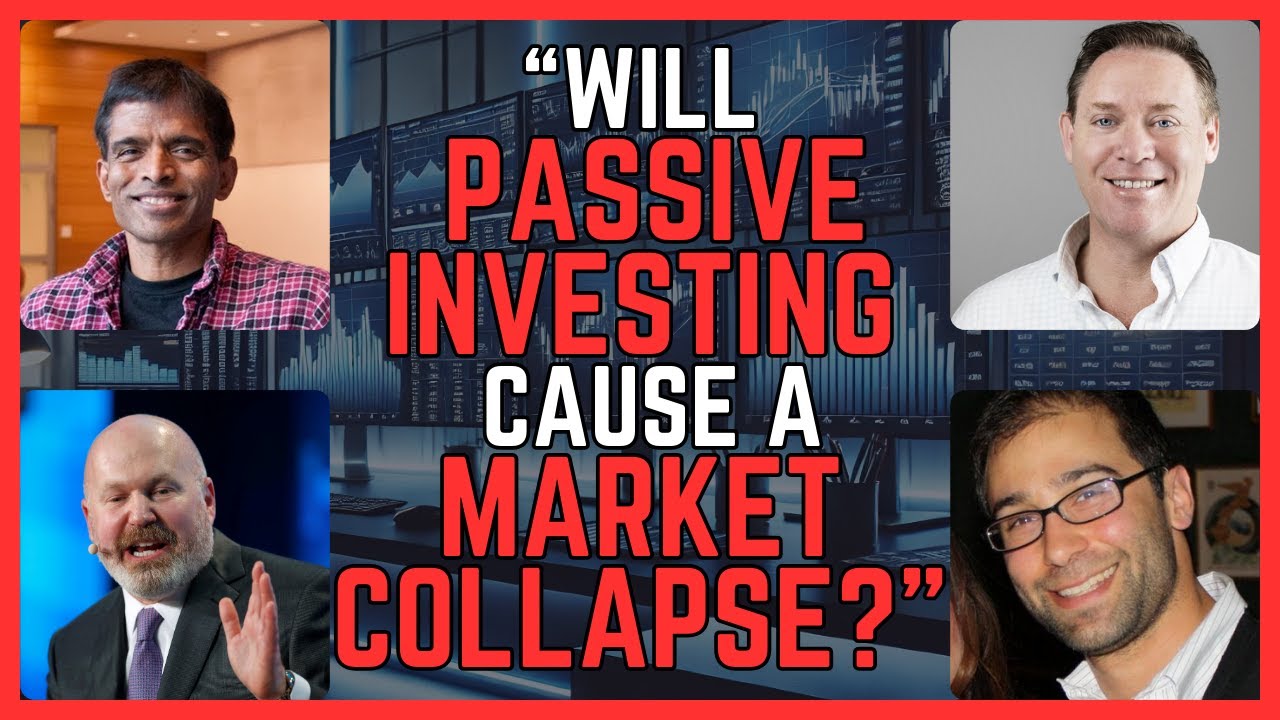
And so the passive exposure in the market on my calculations has gone from less than one percent in the early 1990s to today it's somewhere in excess of 45 is the math that i come to right and what that means is that now basically half the market in terms of its allocation is truly mindless in its mimicry of the supposed insights that are happening in Capital allocation for the rest of the market again doesn't necessarily sound like a terrible thing right imagine the world where half of it is mimes right and half of it is
really thoughtful people right so like that doesn't seem like it's certainly would be an annoying world right filled with lots of people with white makeup but we we don't necessarily see that as a huge problem until you recognize that that Near 50 50 split camouflages something far more dangerous which is that all of the money that is going into the market is now passive right so to go from that less than two percent that less than one percent i'm sorry to today's 45 or so means that every single year we're seeing the active discretionary managers
on net get fired in size last year even with the huge performance in the year we saw somewhere around 300 billion dollars Worth of redemptions from active managers and somewhere in the neighborhood of a trillion dollars worth of inflows into passive vehicles so all the money that's coming in is trying to mimic and all the money that is leaving is trying to be thoughtful that's a really bad outcome welcome to excess returns where we focus on what works over the long term in the markets Join us as we talk about the strategies and tactics that
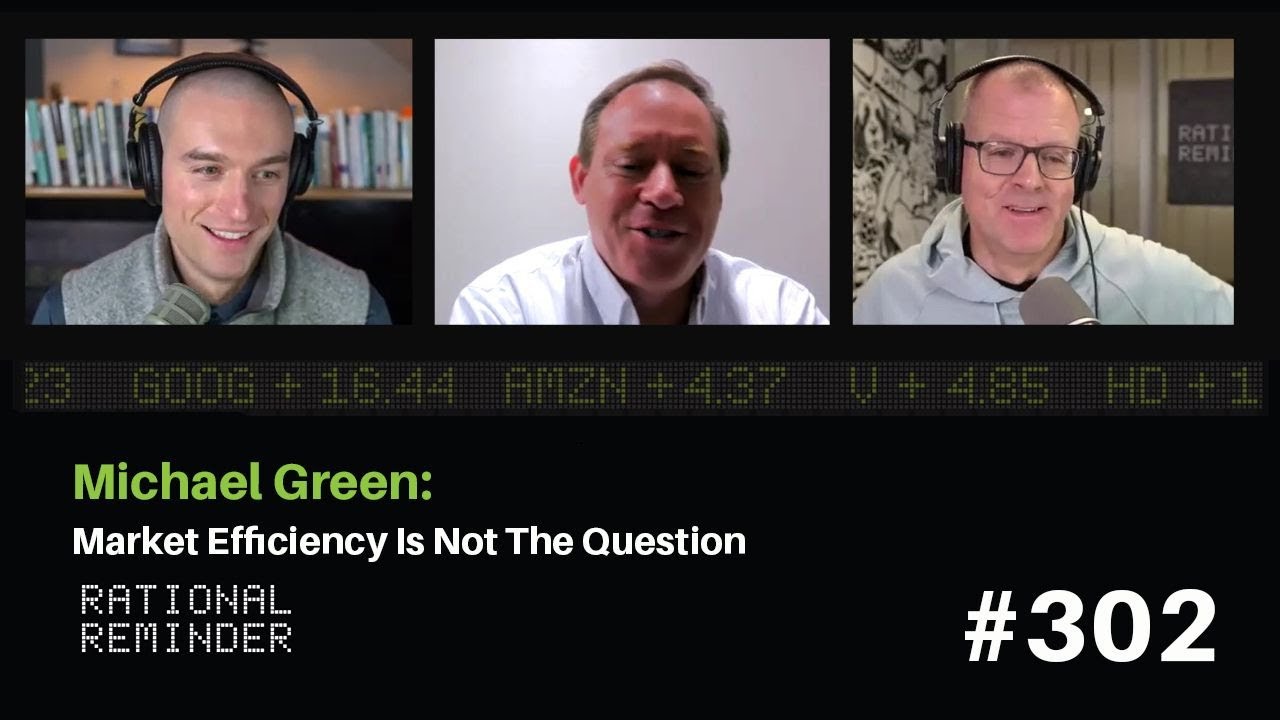
can help you become a better long-term investor justin carbino and jack forehand are principals at valydia capital management the opinions expressed in this podcast do not necessarily reflect the opinions of the lydia capital no information on this podcast should be construed as investment advice securities discussed in the podcast may be holdings of clients of lydia capital Hey guys this is justin in this episode of excess returns jack and i talk with mike green portfolio manager and chief strategist that simplify asset management a rapidly growing investment firm with a number of uniquely positioned ets we talked
to mike about the rise of passive investing and the implications for markets and investors we then worked into some of the strategies simplify has developed and get some of mike's thoughts on inflation The fed value stocks and more as you'll quickly see mike is a deep thinker with comprehensive views on many different areas of the markets that investors can learn from as always thank you for listening please enjoy this discussion with simplify's mike green hi mike thank you for joining us today oh it's pleasure to be here justin thanks for having me one of the
things that you've been talking about for some time is the rise of passive Investing and the impact that it has on the markets um so that's where we want to spend i think the first part of the conversation with you today is understanding how we got here with passive and the investment implications that it has um now and in the future um i think on the second part of the podcast i think we want to kind of get an understanding and hear from you some of the investment strategies you're Working on at simplify and also
some of your perspective on the current market environment and how investors should be thinking about sort of the times we're in and how they're positioned um today so clearly we have a lot of ground to cover so you ready absolutely all right so the first thing we wanted to just to frame this up i think is to hear how you first started really doing this deep dive research on passive Investing how did you come up with the initial idea what brought you here in the first place well so to be entirely honest i had not
given that much thought to the dynamics of passive until roughly 2016. and i was aware of the growth of passive i was aware of the arguments behind it i was you know more than aware obviously you know extraordinarily familiar with the arguments behind it um and In 2016 a couple of interesting papers came out one was from enig frazier jenkins at um alliance bernstein and this was this idea that passive investing is worse than marxism right that at least in marxism there's a central planner who is theoretically allocating capital or allocating resources to some directed
objective inigo's point was that in passive investing you've removed even that Degree of thoughtfulness and you've basically left it up to a pure market force now i i had less concern about that but i was aware that there were definitely some concerns that existed in that framework this idea that passive investing removes effectively the activist manager or the value manager from being able to influence the behavior of a corporate entity And by extension improve the allocation of capital in a really fundamental sense across the economy it that same year a much less celebrated paper came
out um by lassie peterson at aqr and it was called sharpening the arithmetic of active management and this paper took a totally different approach to evaluating the dynamics of active versus passive it was focused on the question of can active outperform Passive and so lasse introduced a thought experiment in which he framed the original paper by bill sharp written in 1991 called the arithmetic of active management that laid out the case that if passive managers return the same as active managers in aggregate which they theoretically are supposed to because they're both the market right so
all the active managers together make up the market and then passive is Theoretically just mimicking that so lasse's point was that the definition of passive embedded within sharp's paper is that a passive manager never transacts right and an active manager is any manager who transacts and he pointed out that on index reconstitution events so a new inclusion in the s p or a russell rebalancing that the indices themselves change and Therefore a passive index investor has to enter the market and has to transact and therefore they cease being active for that time period that creates
the conditions under which active managers could theoretically outperform them right what i recognized with lasse's paper was that he had understated the magnitude of the issue which is that active managers transact every single day And every single day that they receive flows passive managers transact and so it wasn't just index reconstitution under which active passive managers became active managers but it's literally anytime they receive a an inflow or an outflow or redemption they by definition have to be passive since that's happening every single day they by definition have to be active since that's happening every
single day there is no such thing as a passive Investor and so i was able to reframe the question and effectively attack it from a very different angle of saying i know they're not passive i know they are influencing the market so now how can i identify and prove this point how can i identify what their impact is and so that's when i became really really interested in it in 2017 as i was pushing on this index dynamic one of the the Really interesting developments was the explosion of the inverse volatility etfs in particular something
called xiv and this was basically just a mechanism for shorting the vix right and taking advantage of certain characteristics but it was the definition of systematic passive investing they had a built-in algorithm that said this is exactly what we're going to do based on this type of behavior in the market and as i began to dig in and focus on this dynamics or These dynamics around passive i realized that this strategy had become so large that it was actually influencing the underlying behavior in the market right that it was having a very clear effect and
and this was demonstrated i could actually send you a slide you can show this in the beta right so the response the linear response of the volatility indices two changes in the s p which are supposed to be basically Linear in their response right so a predictable relationship had begun to decouple as this strategy became too crowded and so the beta of the vix began to rise and more accurately the ux futures began to rise they became riskier and riskier and riskier twitchier and twitchier responding more and more to relatively small moves in the s
p 500 and i constructed my first trades around The passive thesis in that volatility space betting that the xiv would blow up there were options that allowed me to do that a lot in a non-linear very convex fashion and in a weird twist of fate was actually delivering a uh a speech at a conference in which i highlighted some of these dynamics and In the audience was the founder of this product who proceeded to get into an argument with me and tell me that i had no idea what i was talking about i didn't understand
the product etc it was such a colorful argument that somebody decided to record it and so this was actually after the xiv blew up which i had predicted would happen a four percent decline in the s p it happened on a 3.9 percent decline in the s p Um this was released out into the wild and you know created some of the notoriety around this this type of thesis that then allowed me to push much further in terms of the exploration so so so that's the very long-winded story of the background can you help us
understand how big passive where we've come from with passive in terms of the percentage growth over time yeah so this is one of these things that is Actually really um it's actually really fascinating because i can present it as being a relatively small problem or passive being a relatively small component of the market and i can also explain that it's giant right and so on a small argument if i look at things like mutual funds and etfs the share that vanguard holds quote unquote openly for example right it appears that passive strategies are Somewhere around
15 to 20 percent of the market that's basically the retail ownership through etfs and mutual funds there's an entirely separate component of the market though that is actually much more passive than the retail side so the retail side has become increasingly passive as 401ks and iras and registered investment advisors have been encouraged to guide their clients towards low-cost indexing Products but this happened a long time before and has reached much greater penetration in the institutional space so if you think about your college that you attended i almost guarantee you that if you call up the
cio of that endowment they will tell you that they have a passive allocation for u.s equities that's held in the form of either a total return swap or in the form of what's called a cit a co-mingled investment trust Basically an unregistered mutual fund or in the form of a separate account etc right so so all of these strategies incorporate passive components to them that'll then extend further into all the variable annuity products and most insurance products most structured products are using passive references futures products etc and so the passive exposure in the market on
my Calculations has gone from less than one percent in the early 1990s to today it's somewhere in excess of 45 percent is the math that i come to right and what that means is that now basically half the market in terms of its allocation is truly mindless in its mimicry of the supposed insights that are happening in capital allocation for the rest of the market again Doesn't necessarily sound like a terrible thing right imagine the world where half of it is mimes right and half of it is really thoughtful people right so like that doesn't
seem like it's certainly would be an annoying world right filled with lots of people with white makeup but we we don't necessarily see that as a huge problem until you recognize that that near 50 50 split Camouflages something far more dangerous which is that all of the money that is going into the market is now passive right so to go from that less than two percent that less than one percent i'm sorry to today's 45 or so means that every single year we're seeing the active discretionary managers on net get fired in size last year
even with the huge performance in the year we saw somewhere around 300 billion dollars worth of Redemptions from active managers and somewhere in the neighborhood of a trillion dollars worth of inflows into passive vehicles so all the money that's coming in is trying to mimic and all the money that is leaving is trying to be thoughtful that's a really bad outcome one of the things that you've pointed out is the changes that have been made in the 401k space with i think these automatic Opt-ins and the vehicles that they are putting the investors or putting
forward as the best vehicles for investors so can you just talk to that a little bit so one of the one of the dynamics that exists within passive right is that when you decide to buy the s p 500 there are two reasons why you could decide to buy it you could decide to buy the s p 500 and all of the stocks that are in the s p 500 all 505 stocks that Are in the s p 500 in proportion to their market capitalization and you could decide to do that because you think that
stocks are a really good thing to buy right because it's march 2009 and stocks are really cheap that's less of a concern right that discretionary thought process where you're actually applying some allocation schema that says i think this is a good idea Right that's not such a huge deal although it does contribute to things like increased correlation of securities etcetera for very obvious reasons if i decide to buy everything altogether or sell everything altogether then they're going to behave more like each other than if i was deciding to just buy one and buy another one
or sell one etc right so you're seeing a rise in Correlation associated with that but at least it's somewhat thoughtful in its capital allocation process the thing that really changed is in 2006 and then in 2012 as you highlight the 401k space changed significantly and it shifted from what used to be an opt-in system where if you were employed you had to make a decision to allocate to a 401k and then you had to choose what you were going to allocate to and then on top of that you had to be an Investment expert because
you were expected to maintain a certain allocation or change your allocation over time and the data was fairly straightforward that the vast majority of people just did nothing right so when they went in initially they were getting things like cash right they'd get a money market mutual fund and only after several years on the job would they wake up and be like i wonder how my investments are Doing wait i'm selling cash i didn't change anything so in 2006 that changed with the introduction of what's called a qualified default investment alternative that qualified default investment
alternative is the product that you automatically default into when you go into your corporate 401k and likewise the 401ks themselves changed from opt in in other words i had to make an active choice to participate To opt out i had to make an active choice not to participate right so that dramatically increased the amount of capital that flowed into the markets initially they went in through things like balanced funds like the the the um uh pimco's you know total return type products right where it's a mixture of bonds and equities and then in 2012 that
default change to what's called a target date fund and a target date fund Is a systematic allocation process that literally asks one question when do you plan to retire right and with that one piece of information then chooses how to allocate all of your capital right so everybody who plans to retire at the same time gets basically the same underlying allocation schema that now has changed something radically because instead of me thoughtfully saying hey i want to buy the s p 500 Because i think stocks are cheap it literally now is a every two weeks
i buy the s p 500 not because i think stocks are cheap but because i have a job right that's changed the character of the market quite significantly and turned it into a very pro cyclical dynamic as long as people are getting more jobs as long as more money is flowing in you're seeing the dynamics of the s p 500 or other risk exposures being bought on a continuous basis simply because people are employed so we we have this setup of more flows coming into passive um and obviously passive is becoming more of the market
and you've talked about some of the other impacts i mean you mentioned the increased correlation in securities um but actually i and i was watching a um a Really great presentation you gave in november of last year which will put um some of the slides in as you already mentioned but i think there was this core slide that you worked off for the entire presentation and it was passive investing impacts the markets and you had five different um areas where passive investing was impacting the first is increased correlation to securities And i'll let you comment
on these i don't want to have to just list them out for you but i'm sure you remember what they are but can you kind of work through what the major impacts are here for passive sure so so the increase in correlation is the first one and it's it's very simply saying if everybody decides to end mass by the s p 500 or everybody decides in mass to buy the vanguard total market index or The blackrock total market index which are the same then you would expect the buying pressure and selling pressure to be coordinated
in a similar fashion and the slide that you'll post up shows the history of correlation holding volatility constant all the way back into the 1920s you know there's some tricks around how to calculate that data set back over a very long period of time But when your viewers see that chart they'll see that we have entered into an unprecedented regime of extraordinarily high volatility that we've just never seen before right so the the evidence for that is quite compelling the second big impact is is that as passive investing grows it actually drives higher and higher
valuations and that happens for two Reasons one is because passive indices are constructed on a market cap weighted basis and there's some wrinkles around that but by and large it's a market cap weighted basis when that happens what it means is that you are allocating more capital and by more i mean m-o-r-e not the firm more capital but you know you're adding higher levels of capital to stuff that goes up More right so the momentum stocks receive more capital than the value stocks on just a structural basis and this happens over time in a somewhat
predictable fashion when you reinforce momentum when you buy more of stuff that has gone up more in price you're almost inevitably contributing to a rise in valuation and the data supports this very very clearly There is some proprietary analysis that i've done around this that effectively tries to build you know what an account what in economic terms you think of as supply and demand curves for equities the behavior of passive strategies is what's referred to as perfectly inelastic if you give them money they will buy regardless of valuations what will they buy the most of
whatever went up most in The past right and so this drives dynamics of increased concentration in markets as well as an increase in valuations the second thing that happens is because passive strategies don't try to time the market they don't or or aren't looking for opportunities to deploy cash on a discretionary basis they don't carry any cash and this is one of these things that people tend not to think about in terms Of the structure of the market your typical active discretionary manager will carry about five percent in cash your typical passive vehicle will carry
around 10 basis points in cash the world's largest passive index fund the vanguard total market index is about 1.6 trillion dollars in total market cap and it carries no cash it actually had negative 100 million dollars in cash at one point last year because it utilizes a line of credit In order to facilitate redemptions now that doesn't necessarily seem that it should lead to a huge change in the market structure but if you just mechanically think about what would happen if somebody came up to you and pointed a gun in your face and said buy
equities or i'm going to shoot you right what is the what is the price that you will pay for equities well guess what it's higher right and so this is actually the mechanical impact of that Loss of cash it drives it's it's the equivalent of basically placing the entire market under duress and say no put this cash to work right and so that is another contributor to this increase in valuations and one of the things that you'll see is you guys i'm sure we'll share is this pattern of rising valuations as passive gains share and
that's one of the things that i just want to emphasize over and Over again is the key difference in my work versus a lot of the work that was done earlier and the academic community is now catching up and a lot of the papers that are coming out are very supportive of the analysis that i've done it's not so much the share of passive that matters is the flow dynamics associated with passive so when passive is gaining share that means all the money that is coming In effectively is behaving in this new manner and changing
the structure of the market quite dramatically another so as we're running through the the five factors that you highlighted increasing correlation between securities increase in valuation of securities regardless of fundamentals the next one is an increase in market concentration again this is that feedback loop the stuff that goes up gets more capital allocated to it and Therefore it goes up more in the next move right and so this contributes to the dynamics that we've seen the rise of these extraordinary giants another way that passive influences markets is reduced ability for new companies to become public
so the traditional ipo has buy-in we remember from 99 2000 has by and large gone away and that's actually a really important recognition because what a company going public means is a Discretionary manager says i'm going to take a risk and deviate from my benchmark because i i value and i think this company has the potential to outperform and help me achieve my objective of outperforming the benchmark well if you take all the money away from the discretionary managers there's nobody left right there's nobody left to take the risk on that ipo when you look
at behaviors that we saw In 2020 and 2021 things like special purpose acquisition companies or specs those are actually explainable under my theories because specs have a unique feature to them they if done in sufficient size become almost immediately eligible for index providers to buy into them and so if you look at the largest holders of what i would argue are broadly outright frauds things like a nicola or You know many of these specs clover health for example many of these facts that went public too much fanfare with very poor business fundamentals if any business
fundamentals lordstown motors i mean we can go on and on if you look at the largest holders in many situations they're the passive vehicles that have bought in mechanically once these things became part of the indices and then the last point that i make is Is this dynamic of what's referred to as reduced market elasticity so elasticity is basically how much does supply and demand change on the basis of price you know when you reduce elasticity or increase inelasticity you raise the risk of extraordinary price movements and again i would point to the dynamics of
passive there's a academic paper that came out just in the last year by valentin haddad at ucla i'll provide you with a link to it and his direct quote Is index investors are perfectly inelastic right as we grow them the market is becoming increasingly inelastic and i would put i would point to things like amc or gamestop again if you look at who the largest buyers were of these once they explode in price the largest buyers have to be vanguard blackrock et cetera that's exactly what We saw on your point about the the melt ups
and the meltdowns i mean one of this is maybe the most eye opening thing of all your research for me because you're not talking about you know a 20 decline or a 30 decline or a 20 increase or a 30 increase i mean you're talking about the market could go up 5x or down like great depression levels right isn't that the degree of what you think could happen if this keeps growing Yes and and and i understand that that is incredibly distressing to people but the way i describe it is we are in a car
that is driving uphill with no brakes right doesn't matter as long as you're going uphill once you start going downhill that's when you really miss those breaks right so you know the warnings were largely Ignored on the way up and now as we're going down i would would argue that a lot of people are like what in the world is going on well you're starting to see some of the dynamics of a market that is extraordinarily exposed to market participants who only buy if they receive cash right there is no cash held in reserve there
is no hey i think palantir is really cheap now that it's fallen from 35 or 40 dollars to nine Dollars or seven dollars whatever the number is right now or i really think that microsoft having fallen 20 or apple haven't fallen 20 or any number of energy companies like there's just no analysis that's actually being done on that vanguard is not that's not entirely true they do have active funds but there's nobody sitting there at the vanguard index fund who's like wow did you see that apple earnings report That's a really great earnings report we
should buy more apple they don't care they just don't care is there this might be a question that could be its own podcasting of itself but is is there any way to fix this so the challenge i would think is from the perspective of the individual investor passive makes a lot of sense you know you have the whole argument about what 80 percent of active funds underperform or something like that so from with each one of those Individual decisions the decision to go passive makes sense but as each one of those individual decisions get made
this rises up and up to being a major problem so it seems like you know if you think about those individual decisions it's very hard to fix this as it's growing is that an accurate way to look at it it's a fantastically accurate way to look at it and there's all sorts of feedback loops associated with what you're referring to Among other things i talk about in the presentation is if my theories are right part of the reason why those active managers are underperforming more and more is because of the growth of passive it actually
creates a what's referred to as a non-linear feedback system where we've effectively created an active manager killing machine um you know you're you're constantly Picking up pennies in front of a steamroller as an active manager where one mistake versus the market can wipe out your career um that feels like the world's smallest violin is playing until you understand that actually the narrative that exists for most participants is the exact opposite right which is passive is really good for the markets because it forces the active managers to be more Efficient it forces them to be better
at their jobs well i i'm going to lay it out there and just be entirely honest with you like nobody gets better at their jobs when they're operating under duress right like this is this is this is a fundamentally flawed dynamic and i would actually point to those statistics to tell you that something is wrong right because the simple reality is is if your kid comes home and tells you hey Dad i failed my math test and you're like wow okay we should probably get you a tutor like that's unacceptable you know or let's sit
down at the kitchen table and we'll we'll figure out what you got wrong or did you talk to your your teacher etc right like that's our immediate reaction to it but if your son then says yeah 98 of the kids failed the test your reaction suddenly shifts to like well there's something wrong with the Test then or the teacher's not doing a good job right and so that's the world that we inhabit is people have basically come to the conclusion that that and this may be totally unrelated right i mean i might be an idiot
and i might be you know incapable of doing my job well but if everybody's failing there's something wrong with the way we've constructed the test i want to ask you before we move i want to ask you About simplify some of the strategies you've built for this sort of type of environment but before you do as a quant i'm always thinking about factors and i'm wondering if there's a factor here so one thing you could obviously do if you wanted to take advantage of this as an investor is you could just buy the passive funds
that are continuing to drive up this prices of these stocks and you you probably would do pretty well with that but another thing i thought About is is there some sort of factor where you think about maybe the float adjusted market cap as the measure of how much is flowing in and then some measure of liquidity on the other side in terms of each stock and how much it could take in terms of the flows i mean do you think there's like strategies that could be built around this that could take advantage of this yes
and so that's that's part of what we've tried to do right so Um the dynamic that you just articulated right the mismatch between effectively the flows and liquidity is extraordinarily well documented in another paper that came out in 2021 by a gentleman bouchot who's a hedge fund and somewhat of an academic out of europe he highlights the the reality that almost all market participants know which is that liquidity does not scale With market cap liquidity scales with the volume that is traded and the volatility of the security because the liquidity of let's just take apple
for example right so apple has roughly a 2 trillion dollar market cap the smallest stock in the s p 500 it used to be delta airlines i don't know what it is today but you know it's roughly 20 billion dollars in market cap The relative liquidity between those two is not 100 x more for apple right but vanguard when they try to deploy into the s p 500 or blackrock i don't mean to pick on vanguard in particular or any index fund for that matter when they try to deploy they're trying to buy a hundred
times as much apple in dollar value as they are delta right because of that liquidity mismatch That liquidity does not scale it actually means that there's more impact happening on apple than on delta now the unfortunate implications of this is all else being equal the largest stocks are going to continue to outperform under this framework all right and so traditional factors that we've thought of things like small and value Become extraordinarily challenged except for brief periods of recovery after you know when passive is gaining share in this way so part of what i would argue
is the relative underperformance of value and small has not been a function of the fed or inflation or anything else it's actually been a function of the dynamics of passive um in terms of what you can do around That you know one of the very obvious things and this is you know where my strategies kick in if my theories are correct then the market is actually increasingly inefficient and there is a drift component associated with markets that is not properly priced into option structures and the reason that that becomes very powerful is option structures allow
you to do What you should do if these theories are right which is lever your exposure to the top side while minimizing your exposure to the downside effectively put seat belts in that car that's driving uphill with no brakes but you got to stay in the car right and that's that that that's it you know it's it's an unfortunate reality that most of us would like to avoid But if these theories are correct you know then we actually could enter into an environment in which valuations rise to levels that we never imagined just never imagined
hopefully there's airbags airbags too if we want airbag right as well as a ramp and you know all sorts of you know wouldn't be bad to have a parachute because maybe they're cliffs you know who knows right but we want a james bond Car it's basically what we want in these conditions and you know one of the interesting things you guys have done is you know we've found that a lot of times in terms of behavior it's really good to sort of give investors what everybody else has which is kind of the s p 500
but then you've coupled that with things that might do well you know in this type of scenario so you know tail protection on both the up and the downside can you Just talk about a little bit about the products you've built um that might work in this kind of environment sure so so the the general idea behind what we're trying to do is taking advantage of a a regulatory change that was introduced and you'll hear this a lot as you hear me talk that you know i believe that regulators play a much larger role than
people fully understand right so things like the dol fiduciary rule Things like the qualified default investment alternatives associated with target date funds etc those it should be very clear that i think those things really do matter in a very meaningful way um the the the strategies that were deploying are the traditional beta exposures things like the s p 500 or u.s equities as we refer to it And then we're using derivative strategies to modify those exposures and so in the case of our flagship product spd the us equities with downside protection we are actively buying
a portfolio that is composed of the s p roughly 97 and then give or take two or three percent deployed in various forms of tail risk protection with the objective being not to protect you against the first five Percent down or even 10 down but to really protect you against the potentially catastrophic outcomes that could occur in a 2008 for example other strategies that we have involved similar construction within credit so our high yield product cdx offers a equity long short overlay that is designed to go long higher quality equities with strong balance sheets and
short companies that are heavily exposed to refinancing Cycles that's actually working today would be a perfect example where the higher quality equities as the s p is down give or take two and a half percent you know the higher quality equities in my portfolio are are down only one and a half percent while the junk related stuff the stuff that needs to tap the capital markets for refinancing they're down in foreign change today right so so what we're seeing right now is a very clear articulation Articulation coming through the market saying wait a second guys
like we could very realistically run into a true credit crisis here the high-yield markets have by and large been shut for two to three months now as most corporations that have borrowed in the high-yield space are increasingly finding themselves incapable of actually affording the increase in interest rates right they're like the subprime Borrowers of 2006 and 2007. um you know other products that we offer um we actually have uh income products that flip a lot of these arguments on their head and basically say in an environment of very elevated volatility um products like s vol
allow you to take advantage of the short volatility trade as a yield enhancement product um and and by and large like you should just think about what simplify is Trying to do is offer the exposures that you're traditionally used to taking advantage of some of these theories to modify the payouts to protect downside enhance upside increase yield etc all while being very cognizant that the underlying structure of the market is more fragile than it has been historically i want to ask you about the idea of fundamental investing in general you know one of things i
try to do is Put together the ideas of different guests we've had on here and you know you're talking about the fact that we have these flows that don't care about fundamentals you know we had ben hunt on here and he he talked about how he thinks narrative is driving the market a lot more than fundamentals these days and then when you have the options guys on they'll talk about how much you know option dealer flows are driving the market and i'm wondering and this seems Like a ridiculous question when i ask it but is
is there any point in analyzing companies fundamentals anymore and deciding to invest you know based on that or i mean is this really a market where you really just have to look at flows and things like that and you know fundamental investing is kind of dying well so so here's the point that i would make about fundamental investing which is is that the market has always been about flows It's always been the keynesian beauty contest of figuring out what other people are going to find valuable in the future right because when i buy you sell
when i look to sell and monetize i have to find somebody who is suddenly convinced that something is worth more than i paid for it initially right now fundamentals can be super super powerful in a Phil fisher common stocks uncommon profits type framework where i can identify a company that is growing that is likely to offer significantly increased income that the dividends that are paid out over time are going to dwarf what i've contributed to this company etc right and so this would be the apples this would be the microsofts etc of the world the
vast majority of time you know There's very few companies where the fundamentals matter in that way right and you know this rese the research that's out there basically points out things like if you take away four or five stocks from the u.s equity markets like all of the gains basically disappear right um if you get those names right and you do that fundamental analysis right you're gonna win and i would just i i can't Encourage people that's by the way that's my background i came out of that space like read phil fisher's common stocks on
uncommon profits it's probably available in a used paperback you know being discarded in somebody's garage sale it's one of the greatest books you can ever read on investing i cannot emphasize that enough but for the vast majority of people who are you know kind of casually looking at This and saying you know wow i really think that energy stocks are going to go up where i really think the financials are going to outperform given the steepness or flatness of the yield curve or the fact that interest rates are going up whatever you inevitably are entering
into a trade in which you're assuming somebody else doesn't have the right information right doesn't know what they're doing and so it becomes really hard to actually argue That fundamental investing works in that framework like if you're seth clarman and you can analyze these companies and you can figure out what their future cash flows are going to be and you can identify like man you're going to crush it but guess what seth clarkman's already crushed it and already crushing it and even he was struggling into an extraordinary fashion over the past several years right so
it's a really Tough environment and the next thing that i would point out is you know anytime anyone's choosing to change their allocation or buy a new stock sell a new stock based on fundamentals what they're actually doing is driving flows right they're taking information and then driving flows and you expect the price behavior to change on the basis of that um So i like i i wish i could turn around and say like all we should be doing is fundamental analysis but that's actually then highlighting a point that i also make which is i
actually don't think that passive is the you know it's not the end of the world it's not the worst thing that's ever happened it's just the worst thing that's ever happened because we're allowing it to grow and And giving it advantages to the point that we can't actually reverse this process right so so my research actually says that passive share gain up to about 20 to 25 percent was actually an unmitigated good for the market it forced asset management fees lower it actually reduces volatility in markets because i increase the heterogeneity the diversity of investment
types it's extraordinarily Valuable to introduce into a you know experiment an investor who basically has the world's simplest rules did you give me cash if so then buy did you ask for cash if so then sell like that type of diversity can actually be really helpful in the provision of liquidity and reducing volatility in a market but when it becomes the dominant vehicle when it becomes the only game in town to the extent that it has today where Everything is about it doesn't really matter you can't find a skilled manager they don't exist simply by
the indices because they're lower costs and you're going to outperform over time that the system starts to break down as we shift to the end of the interview here i wanted to ask you about the current market a little bit and about inflation in the fed and a few other things around what's going on the Economy um the first thing i would ask you about is sort of the comparison that a lot of fundamental guys like me are making which is when we look back to the 2000 to 2002 period we're basically seeing the same
thing here so we're seeing a market you know that may be in for an extended bear market we're seeing high you know valuation companies getting killed and maybe having a long way to go and then we're seeing you know we hope at least we're seeing a period Where small cap value might outperform for an extended period of time and i was wondering if you could just talk a little bit about what you see in terms of the similarities and the differences between what happened in 2000 and what's going on now so i think there's actually
a lot more similarities than people actually want to accept um You know my analysis of what transpired in 2000 is that the dot-com cycle perversely was actually kicked off by what i call indexing 1.0 right and so if you go back and you look at the construction of the indices prior to 2004 indices like the s p 500 or um even the you know the wilshire 5000 sort of thing they were constructed where the market Capitalizations included shares that were held by insiders right so low float stocks and perversely if you think about the growth
of passive investing that allocates on the basis of market capitalization what that meant was in the mid 1990s you had companies like microsoft and cisco and dell where they had relatively high market caps but only about half the shares were actually publicly traded So what that meant was when vanguard went out to try to buy the market cap weight of microsoft they were actually buying twice as many shares as were actually available to trade that causes microsoft to outperform that causes those who are allocated to microsoft to outperform we call those people technology funds right
in in that structure and so their outperformance attracted additional Flows and facilitated the dynamics of the dot-com cycle where that became clear to me was in the behavior of the i certainly didn't figure that out in 2000 if i had i'd you know be far far far far wealthier today but the the simple reality is is that i didn't figure that out until 2015 when i was watching the behavior of the shanghai stock market which basically Between november of 2014 and june of 2015 rose 500 and the the narrative was that this was you know
the equitization of china that china was going to rule the world that everything was going great and actually what was happening was something far more prosaic which is western devel you know developed market managers were trying to allocate to china because they basically figured that china was the growth market of the Future they would try to allocate through futures that were traded in singapore the futures brokers in singapore would then go on shore into china and try to replicate the index because they're not taking a directional exposure against it they want to hedge out their
exposure and then they were running into the challenge that the construction of the chinese stock market indices was functionally identical to what we Saw in the u.s in 1999 where you had a number of companies that had very low floats relative to their market caps the most extreme version of this was a single company that we were tracking that had only five percent of its shares outstanding and because it was part of the index every single day the index arbitrage yours those who are creating the index shares in the futures in Singapore the brokers would
effectively go and try to buy exposure to this to replicate the index replicate the futures positioning and what was actually happening is because there was so little liquidity in this name they would go in they'd try to buy it would immediately go limit up and no transactions would happen and then the next day they tried to do it again it would go limit up no transactions would Happen well in this one stock which is the most extreme for 32 days in a row with zero transactions it went limit up so up 10 every single day
so 1.1 to the 32nd power with zero transactions right that's i think the technical term is a big number right and that was actually what was driving the chinese stock market is the exact same behavior that we saw in the u.s stock market in 1999 where the thin Liquid illiquid ipos et cetera were propelling the indices and the market and the technology sector higher even as they were functionally sucking cash out of the rest of the market um at one point by the way something like 15 to 20 percent of the shanghai market was experiencing
these sort of limit up dynamics with no transactions right so like nothing was actually happening it was just purely an artifact that same dynamic in 2000 Drove the dot-com cycle and when indices went or when allocators went to rebalance basically saying oh okay our technology names have gotten so out of whack we need to now reduce our allocation that's what caused the crash in the nasdaq the exact same thing that caused the crash on the shanghai where it fell you know give or take 80 percent over the next couple of months So this has been
with us for a very long time it's just the structure of the market matters significantly and do you think so you've talked about how you really don't see the opportunity in small cap value right now that you saw back in 2000 is a lot of that a function of passive and the fact that the more money is going to the bigger companies well no so a lot so there's two components to it one is we change the Structure of the markets so they actually are now receiving basically their proportion the problem is as as we
talked about early on the liquidity doesn't scale in the same fashion so ironically the smaller stuff you have less impact from passive than the larger stuff the second issue that i that i highlight is you know ben hunt brings up this dynamic of narrative and i think that's a brilliant observation because what is Ultimately happening and we saw this in spades in the 2016 election of donald trump and again with the 2020 election of biden we decide to construct a narrative right so so rethink the elections in both situations as various people in different political
camps face uncertainty trump supporters are like oh you know if biden is elected oh my gosh we're going to have terrible taxes and and the Economy is going to go into free fall right on the flip side you have justin wolfers a professor from the university of michigan who does a study and announces if donald trump is elected the stock market is going to crash because i've tracked the behavior during the debates and this is this is its reaction function right well neither of those was actually correct right and the reason why was very straightforward
it resolved uncertainty And so all that was required was the active managers to decide okay the narrative has now been resolved the uncertainty is finished therefore i'm going to go buy x and it actually doesn't even matter what x is right the process of going to buy it into this illiquid market in which the passive investors are not willing to increase their supply of securities and sell you stuff that you're trying to bid up Causes the market to behave in this way so you get this dynamic with small cap value which is exactly what's played
out it explodes upward following the election of biden in a completely unpredictable way or quote unquote unpredictable way where i was like wow well that was bizarre what just happened and now it's gone sideways for you know basically since uh february of 2021 right like there's been no returns Associated with it even as the s p marched to a new all-time high in in december and january of 2021 2022 right so that's the point that i'm making it's not that i criticize small cap value as a strategy it's just it's a strategy that is uniquely
subject to this dynamic of narrative where the active managers wake up they're like oh i got it figured out and they haven't figured it out it's just They're choosing to allocate capital that gives them momentary positive feedback and then at the end of the day you're trapped because the people that have chosen to invest alongside you the thoughtful discretionary investor who says the election of biden means x well they're still getting fired right so they now become the weak hands and all the money goes to vanguard and blackrock and it's coming out of the Active
managers again meaning that small cap value gets sold as a large cap gets growth large cap gets bought just a couple economic questions before i hand it back to justin for the end um i want to ask you about inflation um there seem to be two camps right now one camp is sort of we've reached peak inflation and we're going to start to see a decline here the other camp seems to be this is going to be with us for a very very long time and I'm just wondering where you fall on that so i
i think this is one of these really really unfortunate situations where the language that has been used um is is is damaging to the actual underlying phenomenon right so the fed i think correctly adopted the language that inflation would prove to be transitory that the underlying Characteristics that contributed to the inflation of the 1970s and a significant outward shift in the aggregate demand curve created by a sustainable demographic shift just more people showing up all of whom need more stuff right women suddenly being able to form their own households minorities being able to participate in
a formal economy with far greater purchasing power access to credit etc Those were the things that drove the 1970s inflation that durable dynamic to it those are not in place today and so my expectation is is that what we're seeing is a restructuring of supply chains away from the traditionally low-cost oversupplied regions of places like china and increasingly into higher cost regions that require effectively prices to rise on a one-off basis but i'm not Seeing that sustainable framework right that says this is an accelerating phenomenon it's much more like the 1940s than it is like
the 1970s and i would argue it's tame relative to the 1940s because we again even the 1940s you had significant population growth and destruction of capacity that you just don't really have this time around except for places like ukraine to a lesser extent russia And that could change i just want to emphasize that but what it what it leads me to believe is is that the inflation rate the eight and a half percent that you just saw that is likely to fall even as prices don't retreat back to the level that were you that we
were used to beforehand right so chicken doesn't go back to you know a dollar a pound it stays at two dollars or four dollars a pound But it's not going to eat next year right this is not a massive currency debasement risk and the other unfortunate thing is is that this because central banks took this politically unpopular stance of saying inflation is transitory it made them appear out of touch with the reality that the average american or average person was experiencing around the world and as a result they're now being forced Into a rear guard
action to try to fight inflation at the exact same time that the inflation rate does actually appear to be retreating right and the underlying conditions of demand destruction are creating the conditions under which prices will at least stop going up and potentially could retreat you know you're hearing the same intransigence from the fed that they talked about inflation last year now You're hearing them talk about growth that way as well right well we see no signs growth is slowing and meanwhile the rest of us are looking around going what are you talking about growth is
slowing everywhere right um but they're kind of trapped and that's that's not a good situation to be in you don't want your you know policy makers being forced to make decisions or stick to a narrative for example Zero covid tolerance because it just leads to bad policy we're seeing that in china i would argue we're starting to see that in the united states do you think so do you think the risk here is that the fed hikes too much and they cause a recession do you think that's the biggest risk i think we've already done
that okay oh wow it's funny because i was i was josh wolfe actually on twitter had something very similar to that um recently and his Take was basically that he didn't think the fed would ever hike again or after like the cycle would end with this current hike um because basically the economic conditions would be deteriorating and you know whatever it was um he thought this there was a potential this would be the last hike yeah i i so i actually i so i the only thing i disagree with josh is i think we have
one more hike right because i think the fed basically doesn't have the chops To back away and say um you know we're we're gonna be discretionary about this after all right i think they actually feel themselves as trapped they need to show that they're going to go through this but the unfortunate reality is the discussion that we use is what's called the neutral rate in the economy right we need to go to the neutral rate you know like there's like some light switch right you know we get to that Level and like okay now we
can turn off inflation or we can do this what i think both josh and i would argue is that that model is fundamentally flawed so so instead of thinking of a neutral rate think of that neutral rate is basically the center of a distribution that looks somewhat normal right which means that when you get to that level half the people are already dead Right and so like that's the core of the problem is that the fed is going to this quote-unquote aggregate level where it's like okay well what point does microsoft begin to suffer distress
microsoft will never suffer distrust they have way too much cash they have a complete monopolistic franchise in some areas of it apple not dissimilar at all right so you have these these criteria under which they have no need for or no concerns about higher interest Rates in fact their treasury would probably benefit from higher interest rates but there's a ton of companies out there that people work for that people rely on to supply stuff etc that have zero capacity to handle higher rates and we're seeing that in the high-yield market which has shut down its
refinancing conveyor belt right it's just done europe has not had had a high yield Refinancing in over two months the united states has basically seen one deal get done in the past two months one significant deal get done and that turned into a complete disaster and it's destroyed the appetite to do anything else right so like we're already breaking stuff all over the place and that's in the developed world if i extend that to the emerging markets it's out like it's really out of control They cannot handle a higher dollar and higher commodity prices because
what we see is oil prices going to give or take 110 they see as oil prices going to 150 or 200. just um two more sort of questions here as we um wrap this up and you've been really generous with your time so we very much appreciate it but um is there anything else your think like big picture stuff sort of like the Passive i mean you've obviously spent a lot of time thinking about the implications of that and developing that um theory with the data and the research but are there other areas that you're
sort of thinking about within the markets right now that you're spending time sort of developing a similar type theory or where are your Interests right now as you look sort of in the market and what's going on um i mean the area that i'm most focused on right now is is what i think is is the fed being backed into a mistake right um you know everything that you've heard me talk about in equity markets is also true in fixed income markets it ranges from derivative exposures that contribute to outsized movements Um that unfortunately fed
policy makers or policy makers in general misinterpret as information so i just give as a really simple example the cr the dynamics that i was just highlighting on the true stress that exists around the world in terms of sourcing us dollars in order to pay for commodities i would argue is contributing to the Sell-off that we're seeing in interest rates in the long end right so one way to think about a 30-year bond is it is a commitment to return a small fraction of dollars in the interim and a large fraction of dollars 30 years
from now right that's a potentially valuable instrument until you enter into a regime where you are right now where japan for example has shifted from being an export a trade surplus country To a trade deficit country needs to import things like energy at the same time that it's selling and i'm not gonna i'm gonna be somewhat dismissive and understand i obviously don't think this is true but they're selling you know semi-useless trinkets right um you know like do i really need a tv no do i really need to eat yes right what japan needs Has
gone up in price far more than their capacity to supply and sell stuff that is nice to have that's creating conditions under which japan has a relative shortage of dollars today with which to buy the stuff that it needs food imports fertilizer natural gas in lng form right gasoline from refinery operations etc all of those are in short supply they're scrambling to obtain dollars and one of the ways that you do that perversely is I sell the claim on dollars that i have 30 years into the future for a pile of dollars today right that
sends the signal that interest rates are going up and that the fed is potentially behind the curve and we're facing inflationary conditions even as what i just described to you is a fantastically deflationary condition in which you're basically burning the furniture to keep warm today we um tend to ask our guests a standard Closing question and you can relate it to i maybe this you know what you're sort of what what you just talked about or anything you want really but um what we like to ask is based on your experience in the market in
the research that you're doing if you can impart one piece of wisdom or teach one lesson to your average investor what would that be well the the one thing that i would highlight to people and and it's a phrase that i use all the time is why Are you reading this now right it's a variant of ben hunt's narrative dynamics right which is why are you suddenly being treated to this information today because it's not being you know the the news is not being sold to you for your benefit it's being sold to you for
the benefit of somebody else right whether it's to sell advertising dollars whether it's to place propaganda whether it's to engender loyalty to a particular news organization etc Why are you receiving this information now and i would by and large highlight that a lot of the information that we're receiving right now is designed to effectively cause people to go into a frantic type of behavior where they're saying oh my god abortion rights are going away or oh my god you know all the kids are gonna die or oh my god like i have to do what
my party what my tribal affiliation Tells me i have to do the more effective you are at removing the emotional component and the the panic that is associated with the narrative that is being thrown at you right ben hunt very successfully uses things like bitcoin and you know exclamation points right the more effective you are at saying why am i being told this why am i being sold this piece of information The better you're going to be at critically evaluating that information that's presented to you and i i would just encourage people that much of
the information that we're being provided with today is designed to engender a response it's designed to engender tribal loyalty you have to do this otherwise you can't be part of the tribe because clearly people who don't do this are part of another tribe we're all members of the human race we're all Here to benefit in a collective sense as well at the same time that we're trying to succeed on the individual sense and so just try to take a little bit of a deep breath and look at what's going on around you and be maybe
more calm in the assessment of what your response should be good stuff thank you mike we'll put links to simplify in the show notes we'll drop The slides in um in the places that it's appropriate if uh is there any place else if people want to learn more about you um and follow your research they can um go to learn more yeah if i didn't bore the hell out of you in that hour um you can find me on twitter at profplum99 totally random um character looks like vasini from the princess bride but p-r-o-f-p-l-u-m-99 you
can also find me on the simplify Website where you can find some of my writings some of the analysis that we've done presentations media appearances etc and then we have our own podcast that's distributed on a monthly basis called keeping it simple you can sign up for it on our youtube channel or again access it through our website and i like to think that's actually pretty good we try to bring in super high quality guests that have interesting things to say about either Particular components of the market or strategies as it relates to equities fixed
income etc or discussions around topics like inflation cryptocurrencies etc and i do that with my my business partner and long-term friend harley bassman who is the genius behind some of our interest rate products great thank you mike appreciate it thank you mike Absolutely a pleasure guys hi guys this is justin again thanks so much for tuning in to this episode of xs returns you can follow jack on twitter at practical quant and follow me on twitter at jj carbeno if you found this discussion interesting and valuable please subscribe in either itunes or on youtube or
leave a review or a comment we appreciate it