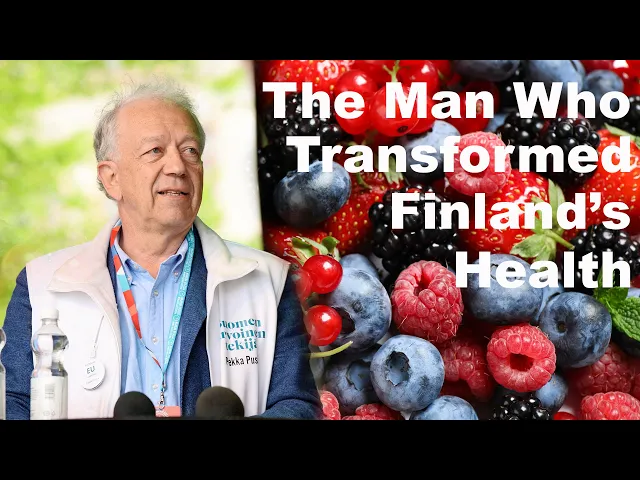
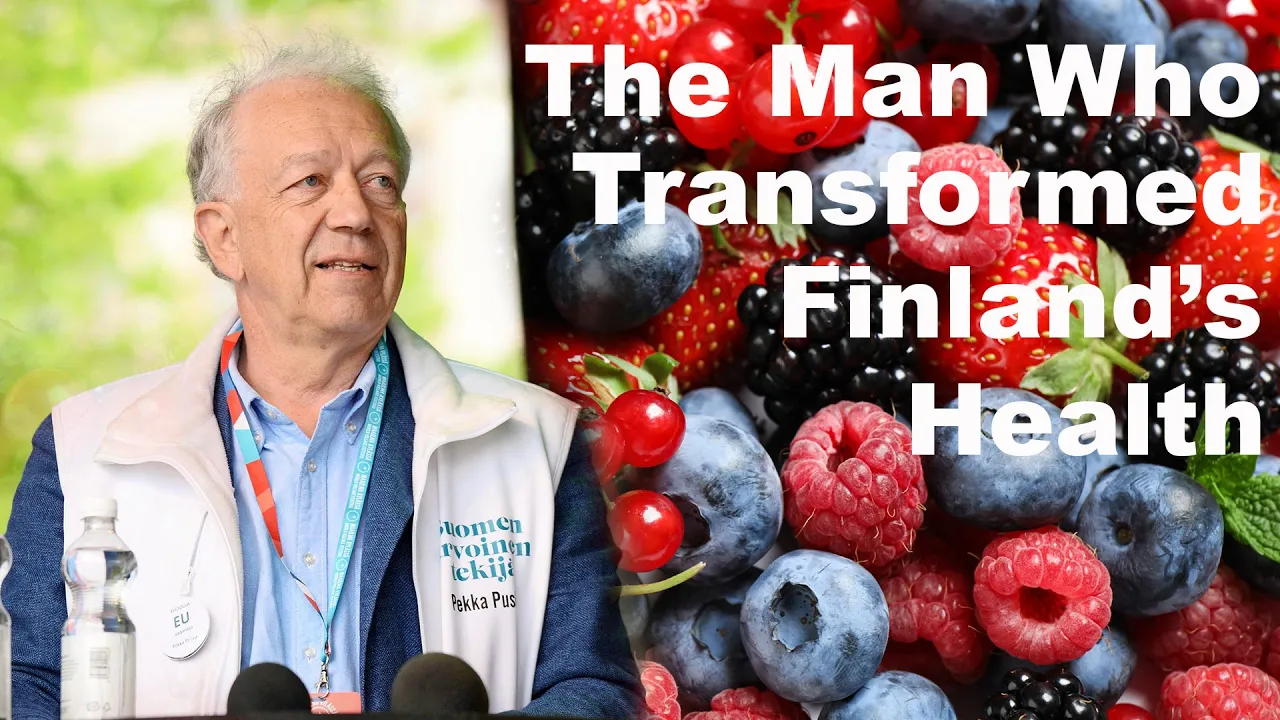
hey sorry for the distraction of the bandage believe me you don't want to see it until i heal i got fascinated by the transformation of finland from the lowest life expectancy of any country in europe to sneaking up on some of the best one of the key doctors behind that transformation is peck up who's virtually unheard of in the us except among nutritional scientists where he's revered but very well known in europe it's good for me a good evening for you yeah good evening for me good morning for you sorry about the distraction with the
band-aid i had a big ouchie on my nose and uh it even included a skin graft from my ear so my uh one of my granddaughters said well you can't just wear a normal band-aid that would be too boring you got to wear it good she she had various different choices and and one of them was um unicorns okay okay yeah i watched i watched the video that just hit me very interesting oh good so how much of how much of the stuff about you did i get wrong no i think it was okay perfect
oh good no problem i thought you might jolt a little bit when i i put the photo of you getting your honorary doctorate from university of lisbon i think where i where i said you were the chancellor of a university but you know to try and explain all that i just wanted to keep it moving so you look like you were dressed like a chancellor it was a nice ceremony lisbon but even better ceremony was many years earlier when i got the honorary doctorate from uh saint andrews university scotland oh you did that that was
quite a ceremony for three days wow you know you know andrews is the third oldest university in britain after oxford yeah wow quite a ceremony my family is from scotland my name is scottish mccaskill and uh okay so i've been over there a bunch of times and and uh love it can you give just a 30 second thumbnail of what the north korea project is just for listeners who are turning in i want them to get some sense of what's going to happen over the next however long we're on the north carolina project was started
in 1972 in eastern province of north carolina finland and the background was that finland had the highest coronary heart disease mortality in the world particularly in eastern finland and there was a petition by local people do something and we as a young research team started to think what to do and we realized that there is a pretty good evidence on a number of risk factors particularly smoking cholesterol and blood pressure and those factors were very common in the population and we realized that we need prevention we need to tackle these factors we need to influence
these lifestyles in the whole population and after 25 years of intensive comprehensive work we could see extremely good results all these risk factors had reduced smoking had reduced blood cholesterol levels had gone down and the best thing was that the annual mortality of heart disease among working age population had reduced by more than 80 percent so it was big success i could never ever have believed in the beginning that we can receive such a huge success with chronic disease it's amazing and you wrote this book what 20 years in something like that yeah we wrote
a number we did a number of uh reports and that is the latest comprehensive report although just uh fairly recently this uh journal global heart are to make a special issue so this is the most latest report of the north korea project than offspring studies oh wow i'd love to get a copy of that the it's just the most amazing story and nobody in the u.s has ever heard of it i hadn't heard of it until i was doing that episode on the seven country study and then i emailed henry blackburn and said why hasn't
anybody heard of this guy in this study and he said the knowing know about him yeah henry had been henry blackburn has been so much involved in the project from the very very beginning because after the petition from the local people in north carolina finnish heart association conveyed an international expert group with wh experts and henry blackburn was among them and that planning meeting really outlined the strategy that we then took on he's just such a wonderful guy you know i i was emailing him two or three times a day to ask him questions make
sure i was fact checked and everything for this last episode and then one day he didn't respond like quickly like he usually does and i was wondering where he was i was hoping nothing happened to him he's 96 and at the end of the day he sends me this wonderful photo of himself out on his ski boat with his daughter and great grandson just having a great time on a minnesota lake so he's a great guy we had so much uh contact with him uh during the uh the years of the project and he always
uh really helped us yeah he's a true jewel of guy tell us a little bit about your educational background it looks like you have an md and a phd and a master's in political science yeah after my college in my hometown vasa i went to university of turku to study medicine because that was that was very popular at that time i have always been also interested in kind of societal issues so during my medical studies i also i also signed in at the department of political sciences and then i made a master's degree in political
sciences and then later on i graduated as a medical doctor and with this background being a medical doctor and also mastering political sciences it was pretty natural that i became an affiliated with the department of public health of the university i must also say something that has influenced my career and also the people in the project team that i was quite active in the student organization which was pretty radical at that time and i was then president of the student union of the university and later on in 1970 i was the president of finnish national
student union and that also took me to some of the planning activities of the government and so when the old boys decided to ask me to be the director of this new project i think it was this combination of the medical doctor master of social sciences and also having some planning experience you also as part of your education there was epidemiology in there too yes yes not very much at that time but there were some years was epidemiology in the day was it mainly for infectious diseases was it used much for this kind of commun
you know lifestyle disease yes it was mainly many infectious diseases and actually the term epidemiology was not very much used it was mainly questionable epidemics so so that's how they chose you and you were 27 years old when you started right i think you have a calculated idea yeah you were 27 and those fours you looked very dashing with that full head of hair and everything yeah i was pretty young and of course i collected my friends at the turkey university and the whole team was very young and we had a kind of radical optimism
uh because uh during the student movement which was very active as you know at that time also in in central europe we we wanted to change the world but with the north carolina petition we just wanted to change the public health did you ever imagine it could turn into transforming the health of a nation you know i'm still gobsmacked by the story but anyway so you're 27 you get asked to do this thing can you explain why they chose a 27 year old to do this for the planning meeting in yeon so uh the department
of public health of turku university was in whitefield with professor steve sivers and as part of that team they asked me to be the secretary of the planning meeting so that made me more involved i was still in the army then during my during my military service but then the the old boys convened and then they decided to ask me to be the director of this new project and i think the background was really that they thought that i have this kind of a suitable background but it was very risky because i was quite young
the whole team was very young a few years before he died professor marti carbon and much much later on he told me jokingly of course a bit that one of his best decisions was to invite me to be the director not because you are you were good but because you were young i saw that it has to be a long-term project for chronic disease control and i think he it was his wisdom after they had appointed me i went to his office uh at the institute in helsinki and i said murphy i don't know too
much about heart disease you must help me and he said becca i've had my project this is your project but of course he helped us he helped us a lot but i think it was really i think what is important was that that we had a young team radical team that was not just almost stuck with old ideas but we really wanted to make a radical change and uh so uh the the two main innovations came from this thinking and one was that for this kind of chronic disease like heart disease the big potential is
in prevention of course we need hospitals to treat the patients they may save lives but to change public health in the population you need prevention and the second thing was that although at that time we knew much less about heart disease than we know now they were already these pretty good uh results from framingham seven countries study about the very likely cause for risk factors at that time the three classical risk factors serum cholesterol blood pressure and smoking and we said okay there is solid information let's try to see how much it helps to try
to try to uh reduce those risk factors but in the population not among patients and the second big innovation was that we realized that they really relate to lifestyles and lifestyles are features of community so that led us to the first which is called nowadays community-based program of course because we were a very young team scientifically not very uh experienced so there was a lot of criticism old cardiologists what the hell are you doing what are you saying community-based prevention we don't know how to prevent and now you are speaking about community-based prevention so it
was pretty radical but now it is common science and north korea can you describe it it's near the russian border or it's up yeah north korea is the easternmost province of finland at the russian border at that time there were about 180 000 inhabitants fairly large area semi-rural area beautiful area forests hills lakes at that time people were pretty much farmers lumberjacks of course some other some services because the war had been very bad second world war for north korea because there had been these huge battles for five years but economy had started to recover
at that time when we started north korea were still fairly poor the infectious diseases were bad before world war ii and even after world war ii there were still an epidemic of tuberculosis but then gradually the level income level started to increase standards of living and there was less infectious disease but these new diseases heart disease stroke cancer started to to grow even in the 70s when we started north korea was still quite poor later on when i have been speaking about the project all over the world many people say that yes it was so
easy for you in finland because finland is so rich you have nokia and everything and i told you you know north korea was extremely poor there were a lot of small villages without even electricity so it was pretty pretty poor area to change the subject a little bit at this kind of meeting people say it is so easy to work in finland because people are so nice it was so easy we have so many difficulties for prevention and i told you that you should have seen they were poor people smoking were their only pleasure they
were producing the fat themselves their effect and we asked them not to use them clinicians were suspicious what are you doing so it wasn't easy it isn't easy anyway graduating as a doctor i would have thought your aspiration would be to work on patients but you were mainly doing it sounded like community organizing you had you in another interview you said it was boots deep in the mud just on your community projects yes but you also say that at that time at the same time in eastern finland a new medical school was established at the
university of scorpio so when i got the task of being the director of the project i moved the coordinating center to the university of corpor close to north korea and so so that helped i think i have always been interested in in public health and the project really was uh something that was very uh tempting to me of course i could never ever believe that the future that will come but i realized that the team we realized that we have really to move around with the people who have to move around the population nowadays when
i am at the meetings and deal with this kind of preventive project and preventive strategies around the world i see very much good paperwork there's mushrooming of all kind of evidence-based strategies and programs very good ones but where is the problem it's the implementation gap implementation needs really hard work and part of the success of north korea where it was that we really did a lot of work among the people as you said boots deep in the mud so can you describe some of the projects how did you get like i think you mentioned in
the book that most people in in the day learned about nutrition from either the radio or the newspaper yes it is not easy to tell what we did because we did so many things afterwards when i looked at some of the old papers i realized oh we did that and that and that of course we started with some information campaign but that is only the beginning leaflets publications and so on and that is where many projects stop they think that just giving information to people helps for change we start here then to work with the
health centers particularly with the public of nurses who work close with the people but also with doctor general practitioners then we started to work with non-governmental organizations not just the health related organizations but like housewives organizations labor organizations farmers organizations we gradually we started to make contact with the business local groceries local food industry we started to work with schools with projects with young people because also the when pupils learned to drink skim milk at school then they demanded the same skin milk at home so that changed their parents also and from the very beginning
we had very good contact with the media the media were very interested it was not so much giving health information but reporting of all kind of activities and then gradually also about how the results start to be good how people are changing uh later on when we became more on national level of course the political contacts for national public health decisions became important we contributed to the tobacco law in 76 and to a number of dietary policy changes talk about your initiative with the housewives i i have this vision of finnish men who love their
cheese and butter they're lumberjacks and farmers they're they're macho men right there were farmers lumberjacks hard-working people and interesting for today's epidemiology is that they were not obese and they were physically active and this is what henry blackburn wrote in the book that it was amazing to see those obviously very treat people but the coronary arteries full of cholesterol and having the highest heart attack rates in the world actually i'm taking a side issue that reminds me during the years particularly in the 1780s we had a number of uh famous uh us and british tv
groups coming over and i remember very vividly i think it was abc's with peter jenkins he came home yeah jennings we were standing in a beautiful place by the lake and he said here i am in north carolina this is like paradise russian border is over there and you will think that everybody is happy and healthy here but no this is an area with highest heart disease mortality in the world so it was a bit kind of uh surprised but if you looked at the results of framingham and seven countries it is really cholesterol blood
pressure and smoking i was going to say you had an opportunity to talk to peter jennings he was a smoker he died of lung cancer yeah yeah of course obesity is bad but that's not the only risk factor really blood lipids cholesterol are very important sorry i forgot your original question oh uh i was asking about um finnish housewives the housewife organizations and how and how they influenced the men well very outcome oriented we tried to think of everything that we could do and the finnish men those men they were nice people hard-working but they
loved their smoking they loved the fat they hate their vegetables and so we were thinking how can we change the diet and we realized that in that culture and pretty much normally these housewives are quite important and in that culture and still in finland there is a very strong housewife organization called marta organization that had a club but nearly in every village and we contacted the martial organization that they should couldn't be collaborated and it was really the housewife they were very worried about they saw that the young husbands around them died of heart attack
so they were very worried and they were very much interested in working with us helping to prevent heart attack from their husbands and so we had all kind of parties we changed the traditional dietary recipes to more heart healthy recipes we had all kind of evenings evenings for long life with them and they did a great job and even in spite of the resistance of their husbands i hear a lot of stories when the husband say i want to have the red full fatty milk but the housewife gradually put in the can milk which had
less or less fat and so the husband didn't even know or then they they made all kind of tricks the harsh parts to get their their men to eat healthier that that was extremely important so and you also you worked uh somehow you worked with the dairy industry there was a finnish guy on in our comment section who said you were treated pretty roughly by the dairy industry but you had this initiative of dairies to berries yes of course the farmers were very suspicious because we must realize that butter was still inside very deep in
the culture and during the world war bad warriors people were suffering there was no butter and so the farmers and it was their livelihood they were very suspicious and of course the local big dairy was very suspicious but i think in that area we could pretty well deal with them because the people also also saw that this question of extremely bad problem of heart disease and probably there's something true in what the scientists say but when the water consumption even nationally started to decline then the big national dairy industry became involved and there was a
big war against us in the late late 80s but at that time the medical community had already bought our message and that really was detrimental to the dairy industry and butter consumption even went more down and gradually we have had even with the dairy industry more and more uh collaboration they've changed they've started to do more work for low fat products working with products with vegetable oil and so on so so and so there's been contact with them but i must say that that other part of finnish food industry have been much more responsive when
they've seen the how people are following our messages so so somehow big food industry companies have considerably reduced saturated fat reduced the salt and also a new product with more fiber and you said that in the late 70s some restaurants started introducing salads and that was revolutionary oh yes at that time really salad and vegetable consumption was pretty pretty low the housewives in north carolina started uh to serve to their husband much more because they could grow in their garden but uh in the restaurants only later on and i think something that was very important
this was a national thing that as part of the labor agreement uh work site lunch programs came in and in finland for a long time their worksite canteens they have a salad bar and the salad includes in the lunch you don't have to pay separate and that has been extremely important speaking of old times i don't know whether you want to ask but from the hospice work i would also like to mention another practical work that became very important that was the late leader program during my sabbatical stanford i had good contact with the stanford
leaders including professor ev rogers who is the father of the innovation diffusion theory and the theory says that in the population there are some people that are much more influential than the other the opinion leader that work site or whatever not formal opinion leaders and we realized that okay we could use the theory so uh from village to village we picked up two three four opinion leaders in that village we invited them to a seminar gave them nice food and told them about the project and we asked them please in your normal work not any
special in the normal world you should pay attention to these risk factors these risk-related behaviors and try to influence your surrounding your neighbors and also your local grocery and so on and so we had up to 1 000 leaders all over north korea for a number of years and we of course provided the material and and we have also published the evaluation together with rogers he has been contributing and it shows that this was a very important part of our success so you were a visiting scholar at stanford in 1983 and did i read that
you were involved in some projects like north korea but in california to for prevention yes uh a little after we started in stanford professor jack farquhar started the work there a smaller project but then partly associated with the information from north carolina three u.s big projects community-based prevention project were started with nih money and that was the stanford five city project by jack farquhar and then the minnesota heart health program where henry blackburn was the leader and then paul tucker's program in rhode island where the carlton was the leader so there were the four big
community projects you'll probably have a picture of the meeting of the four leaders and what was the success like was it harder or easier than in finland my standard answer all over the world is that prevention is difficult every community every population there are advantages and disadvantages we had a lot of disadvantages but we had also advantages and the same concerns us the american project they had much more money than we had they produced much more eloquent health education programs uh tv programs and so on but i think what their problem was that was there
was much less community organization much less work in the community year after year hard work that i explained and that is why i think that the results of the american produce were more migrant so you've you've served in the finnish parliament in fact you've had all kinds of positions you were the director general of whatever finland's equivalent of the national institute of health is were you not yes after university of kuwait five original years the government decided to transform the finnish national public health laboratory to a more comprehensive public health institute like cdc and to
to be much more active in chronic diseases the new department was established and i was asked to be the director so from that on the coordinating center and the national center for the north korean project was at the national public health institute where i served originally as a director department and much later i became the director general of the whole institute and uh about 10 years ago the another institute was merged and now it's the finnish institute for health and welfare but i i served as first director general i became member of finnish parliament representing
north carolina in 87 when i thought that the project was already had been doing much work and i could do this but at the same time i think it was the governor the the strong governor who originally was very instrumental in starting the project he was a very strong political leader a friend of president kekkonen and he always told me becca these are political decisions for prevention and you should be involved with politics so so uh i became a member of parliament representing north korea for a period of time but then i came back to
the institute and i was then invited to to geneva to work as a director for chronic trees prevention at wh headquarters in geneva and then after that the government asked me to come back to the institute to become director general which i did and when i retired i then i said also once more in the national parliament but then representing helsinki and i've i've always thought that my career is not a political career but it is something that is really between our science and then using the scientific evidence for uh public good and you were
you also president of the world heart federation or what is that i've been i've been involved in so many international things i was a president of a world heart federation very important organization and then my good friend uh jeff copeland who was at that time director of cdc and myself we decided we were discussing why is there so little contact between national public health institutes and we established an international association of national public health institutes jeff was the first president and i was the second president and now there are about more than 100 national public
health institutes in that organization very influential speaking of chronic diseases i could also add that i was for a number of years chair of the governing council of the who cancer research institute in lyon so i've been involved in many many international things and that has always been of interest to me because uh i mean my car let me say my career has really been first north carolina and then expanding to national level and then later on with wh and all these international activities it's been extremely interesting to be involved in this global public health
work where this control of this epidemic of chronic diseases is the second public health revolution the first was control of infectious diseases now it's quite some control of chronic diseases this time it's not the bacteria or viruses although we have it across this comed problem and there will be infected problems also in the future but most people in the world are dying of chronic diseases more than 70 of deaths in the world are due to chronic diseases every third in the world is cardiovascular so contemporary public health is so much depending on how well we
can prevent and control these chronic diseases and that means application of the solid science so the solid science that raises a question you started based on the results of the seven countries study ansel keys the mediterranean diet and did you did you ever waver because there's been this wave after wave after wave of popular low-carb diets back in your day there would have been atkins and now there's paleo and keto and carnivore and primal and everything else but did you stay the course with the mediterranean diet yes over the years year after year there's been
all kinds of discussions uh all kind of criticism to this kind of principles uh theories of ansel keys and this whole fat cholesterol heart is hypothesis but i have felt that the scientific community i think that we're always solid that this information stays of course we learn more and more about the theology of heart disease but i think no doubt that this this is a very solid information and i must go back and repeat that when we started the north korea project we did never say that this is the only answer but we said that
this is a huge problem there is very solid information that the cholesterol diet blood pressure so smoking are very influential causal factors let's reduce these factors and see how much it helped and that's what we've done and it's helped enormously it's been a revolution it's been amazing ansel keys in the day was a household name in america and it was in a day when scientists were highly respected these were time men of the year the same year that ansel was on the cover of time and now he's vilified on the internet how is he thought
of in europe is he remembered or is he is he a hero or a villain i think in the scientific circles he is very respected but of course in the internet there's the same kind of critics are around even in finland but i think the the mainline thinking among scientific community is very very positive uh because there's enormous amount of evidence from different kind of study stories showing always the same thing uh diet cholesterol heart disease of course there are many other factors in person speaking of iso cases we must remember that during the time
when ansel keyes and martin carmona started their work in eastern finland and also also directed a study that received a lot of criticism but which was influential even for our project that was the mental hospital study they started in 1960 in two mental hospitals in finland where the patients stay for years they simply changed milk from fatty milk to milk to skim milk with soya bean oil and then they change the butter to vegetable oil fat spread and artists in one hospital and up in that hospital compared with the comparison hospital cholesterol levels went down
and heart attacks went down and after six years they switched over the hospitals and in the new hospital in the other hospital that now had the experimental diet cholesterol levels went down and heart disease went down and that was a striking demonstration although of course there are a lot of scientific flaws you can criticize that there had been a lot of criticism for that study but i think it was a powerful demonstration yeah so ansel keys has the reputation of starting the low-fat craze in america which doesn't check out but even the keys equations which
i think he created way back in 1965 he showed that saturated fat raised cholesterol about twice as much as liquid vegetable oils reduced it but he did say that vegetable oils reduced it now in america there's this you know concern about seed oils and where do you stand on that well uh when we speak of fact of course it is not the question of uh fat as a whole it's question what kind of fat are we talking about and you know there is saturated fat they are such unsaturated polyunsaturated and the problem of course in
finland was that there was enormous amount of fat and that was nearly completely saturated fat so we start dealing with the message reduce the fact because that meant reducing saturated fat of course over the years we have paid much more attention to the unsaturated so much more to the quality of fact so that it's no more into another question of total amount of fat it is very much about the quality of fat of course there is a more scientific discussion what kind of unsaturated but what kind of vegetable oil but and it is quite clear
that there are differences between different kind of vegetable oils but i think that is still a minor thing compared with the the original idea i think bs ratio is still very important concerning uh vegetable oils one thing which was very helpful to us in north carolina was that originally when we said to people that you should switch to to using vegetable oil that was imported sunflower oil soya bean oil but then the finnish scientists were able to develop a rape plant that grew well in the north and now we as in that we've had a
lot of rapeseed oil or the canola oil as you call it and that has become extremely important and i think also that the composition of canola oil is is extremely good but still the big thing for me is reducing saturated fat and moderate increase in or let's say moderate increase in polyunsaturated and that is changing the ps ratio and i think what has happened here and do you have an opinion on coconut and palm oil oh yes i think palm oil and coconut oil are not as good when i was the director of the chronic
treat prevention in geneva we published a pretty famous report on diet and prevention chronic diseases by the way which recommended reducing sugar to below 10 percent which created a lot of uh opposition from the sugar industry but also as part of that we said that the particular palm oil is not a very good oil and i had a number of ambassadors from those countries uh opposing that but i still think that they are not particularly good oils do you think politics in finland is a little less vicious than in the us because we have these
big food conglomerates in the u.s we have a bigger population so it's a bigger market we have less regulations so lobbyists go nuts or is that just my imagination and i don't know enough about finland well in every democracy these kind of things are complicated the finland is a western economy so we have pretty much the same kind of things we have waves from international uh big industrial years back we had a tobacco industry here now now it's more or less gone still we have the same kind of waves but on the other hand i
think to a certain extent perhaps in the finnish sculpture it is a little bit easier to get things through friends are rather straightforward people and uh this is a smaller nation we know each other much better when uh why was the students leader the my fellow student leaders they are now important decision makers in finland and so it is easy to make this kind of contact center and i think probably it's a bit easier to get these kind of things through like in the tobacco legislation we have a very strict tobacco legislation ever since the
19th late 1970s do you think you have as big a problem with misinformation about diet as we do in the united states well we have the same kind of problems of course with internet all kinds of groups information is more fragmented but i'm i've always been optimistic and i think the mainstream thinking is still pretty strong we have medical community we have the nurses we have the scientists basically people still in finland they there is trust there is no trust to scientists even greater trust to politicians than in u.s according to studies but of course
the normal thing is that people say we believe in what you are saying but it's not always so easy to behave like that it's not so easy to follow this advice speaking of trust and science my impression is i don't have numbers but my impression is it's fallen off quite a bit in the united states now over the years and in i was talking to marion nessel the other day and she said she didn't know why ansel ansel keys his last days he didn't get all these awards he didn't get a nobel prize he didn't
get lavished with all these awards and and you are getting lavish with quite a few you're getting honorary doctorates from prestigious universities all these high-level positions and so on why do you think ansel was treated like he was at the end of his career i don't know i think he deserves all glory but it is probably because public health is not so what you say so sexy as uh g working with genes or or molecular biology and you make enemies in public health too with the food companies oh yeah yeah yes you can make strong
enemies strong enemies but it's also rewarding i think i have received all this kind of criticism that you mentioned in the internet and and in the minority scientific circles but i think it is very rewarding not only in finland where i see i still meet a lot of people in the street whom i don't know who come and thank you say thank you for for what you've done uh without you i wouldn't be alive so it's very rewarding and also the international work we've been doing also a lot of work in russia where the problems
have been very big and it's been also very rewarding you didn't mention that i'm also an academician of russian russian academy of natural sciences and we've been working particularly behind the border in the russian terrain where and also in russia now we start to see that the heart is immortality has been reducing for the last 10 years no i didn't know about you being an academic working in russia um but i'm surprised that russia didn't have poorer health than you i you know we just hear all these rumors about vodka and cigarettes and stress when
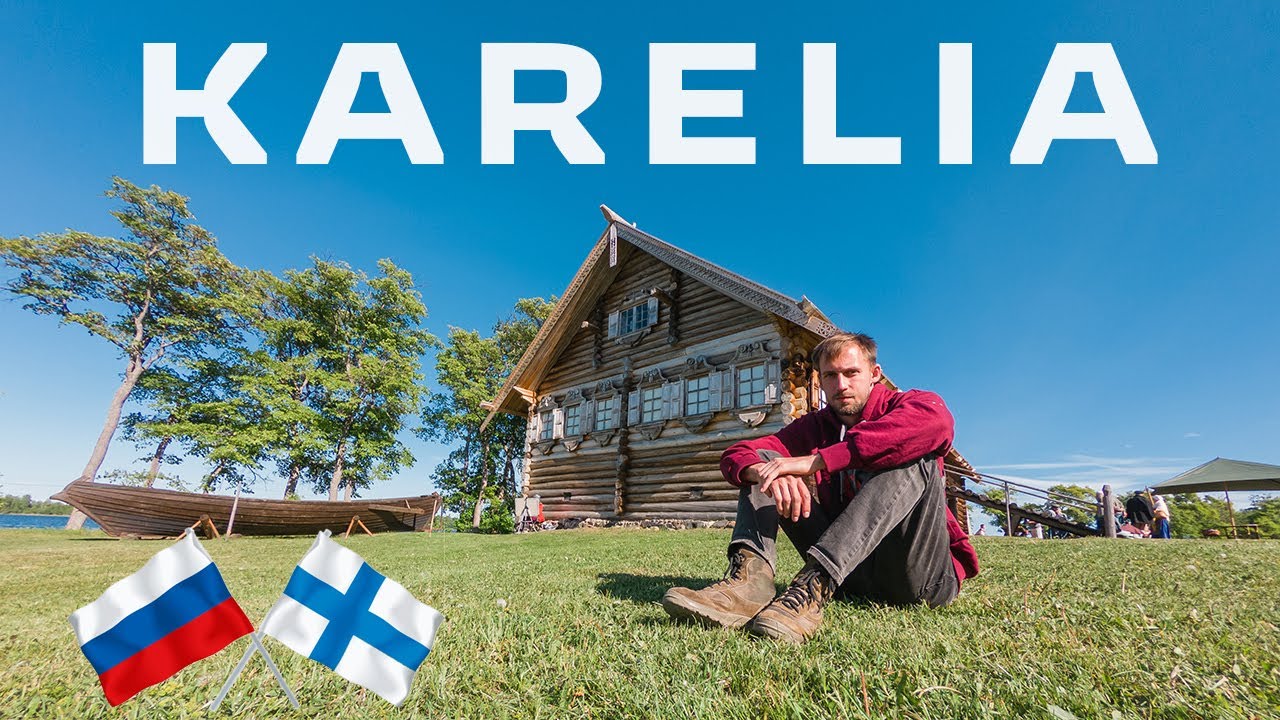
north korea project was started russia russia had better heart disease situation than we had we had the highest mortality in the world but gradually our mortality heart disease cardiovascular has started to go down and in the russia in russia and in soviet union it started to go up so that about 10 20 years ago there was enormous actually we started the work in russian karelia because in my understanding the health divide between finnish karelia and russian karelia was the greatest in the world i think in the life expectancy of men it was something like 15
years and uh with the gra it was pretty much the same thing that has happened in so many countries that when the standard of living a bit starts to increase they had more financial resources for butter they had more money for tobacco and cars and so on and of course in russia it's also alcohol mortality so the situation was very bad in the in the 90s but gradually the diffusion of this new health information is spreading and during the last 10 years lifestyles i think particularly among other social economic classes have started to change health
is becoming more popular and mortality is going down but there's still a big difference between between russia and finland what's the nordic diet well nordic diet is just a variation of what we know i mean we've had different kind of names for the recommendations and i think nordic diet is a very very fancy name of the of the diet that we have been recommending for years always small we refine the message a bit not so much because science is changing but because environment and diet environment is changing so you need to change the emphasis i
think the basic scientific the scientific basis for our recommendation is going to change i think it is surprising and very rewarding to people when people say that your recommendations change all the time no the scientific base has been surprisingly same for half a century yeah that's the amazing thing is it seemed to me that what came out of the seven country study even after 10 years was pretty clear i think you've said that and then it just kept staying the same the study's gone on 50 years and the conclusion at the end is keep your
cholesterol down keep your blood pressure down don't smoke and move yeah yeah we know we know very much about these things but the basis is just the same i think one of the problem is that in the public discussion you always need something new and and somebody coming criticizing this or developing some magic cure is uh tempting for the media but i'm optimistic that in the long run it's the highest hard science and i've seen that you know after after some years then again some new journal young journalists who have invented hey it's cholesterol what
tell me about cholesterol or about smoking how dangerous smoking is there come new generations and in the long run it is the solid science that is important although development goes in curves that's funny having said that one one of our important strategy has been this monitoring of risk factors in the population uh because when things go well like it started to go well in north carolina we could give feedback that things are going well people are changing and i think in usa you call this bandwagon principle that people start to change but then at certain
periods we've seen also leveling off and then we come to the media with very warning measures a good development has stopped and that promotes new progress interesting you've been very gracious uh we've gone on for almost an hour i'm just looking at my phone to make sure i didn't forget anything i wanted to to end on two more questions one is are you taking into account environmental concerns now for the food plate food recommendations of course yeah of course are we and in my talk during the last few years i pay a lot of attention
to the question sustainable development because the principles for sustainable development and principles for public health college prevention they go hand in hand and think of all kind of problems that tobacco tobacco growing in africa foreign in the western countries think of all these uh cigarette butts of the environmental problems that cigarette butts cause and even more containing diet i mean the more we have vegetable-based diet the better it is for sustainable development so uh this has been something new to our message not changing the message but supporting the basic message it seems like it's a
good thing that the basic message of what's good for you is also good for the environment fewer cows for example yeah it is a message for sustainable development and good public health really go very much in hand in hand of course there are all kinds of or smaller details that we have to consider but the big thing is there so my last question what does pekka eat it's like we discussed my wife uh serves pretty healthy meal uh i i'm not i don't eat any extremes like i remember i met nathan pritikin he was very
extreme eating and he was pretty yellow himself because of the carrots that he was eating all the time but no i i we eat a lot of vegetables we eat a lot of berries finnish berries because that is something that we develop we don't have we cannot grow very much fruit here but we have these fantastic berries so we eat a lot of berries we eat a lot of fish as well and uh yeah i more or less follow the north korea project advice well thank you so much you're one of my heroes i'm so
glad that you're getting some recognition and you you get to be in these influential positions it's just such a pleasure to meet you i think i i you know i searched the internet for interviews with you and i could only find one in any length or any depth yeah i've been looking for the old tv spots from the late 70s and earl 80s with the abc and cbs and bbc and all yazera i at that time we didn't get any copies so i have not be able to to have available it would be nice to
see them you know i wonder if i could find those i'm glad you mentioned that i wonder if i could find those through a stock agency sometimes you can find those old programs i'd love to include it in this one because i just feel like yeah i'll look for him you know i just search for clips and i found quite a few of them peck has been in the media a lot but they're owned by getty images and i don't mind paying the 800 per clip to include in this episode i don't make any money
off this channel anyway but i couldn't stand the one year licensing term that was a real killer anyway this one from a british television station showed the school lunch program which was fascinating kids are eating lentils and whole grain bread and fruit right in their own classroom and learning to love that stuff crisp bread and low-fat spread it's all eaten at their desks the teacher re-educating their palates removing high-fat food from the equation because i just feel like you're very under-reported this whole it's just such an amazing turnaround as you saw from my previous video
when i turned on the bbc the first time i ever came to london in 1980 they were talking about finnish health they're talking about european health in general but uh you know they were saying that finnish men used to have the lowest life expectancy of all european men and and in 19 by 1980 you had already overtaken the scots and you were creeping up on some of the others so pretty good yeah well i feel that in at least in the in the public international public community and chronic disease epidemiology and prevention communities our work
is well known so but i've enjoyed this discussion it was great great discussion yeah i i've thoroughly enjoyed it too i've enjoyed it too it's been a great honor for me and and uh you know to i come from earth science and so i have this perspective of we've we've got to stop clearing land and we can't be eating the animals like we even the fish you probably get better fish but we've burned so much coal there's so much methyl mercury in the water now that the fish are getting contaminated and the oceans are getting
depleted and so on and i thought ansel keyes was very smart when he said that the asian diets are just as healthy as the mediterranean diets if not even a little more but but the sensibility of americans they would adapt he was wise enough to see that they would adapt to a mediterranean diet and lifestyle more than they could an asian one and i feel the same way i you know i like that the world there's a higher percentage of vegans the more vegans the better i think and uh but if people just followed your
diet and and what you've promoted in finland it would revolutionize the world yeah you've mentioned china i've been doing a lot of work in china even very recently with the chinese ministry of health and the china cdc and i always say that you can have a very healthy diet based on different cultural patterns as long as you follow the principle that pencil key is developed they had a professor who died not too long ago at 110. he worked until he's 110 zhang ji he went by two dames in china he was american educated got his
phd over here in the 30s and then moved to china and um was their most popular professor and and very famous for living so and working for so long and he wrote some books and and they were all in chinese you can buy them on amazon so i bought one and had it translated and read it and he said you know what uh the diet i recommend is 10 protein 20 fat from unsaturated sources and 70 percent whole plant foods and we in china put vegetables at the center of every meal you americans put meat
at the center of every meal we put vegetables at the center of every meal and you know i mean it's hard to beat that it's just you know the sensibility of americans is probably leans towards mediterranean more but they're very similar yeah they have the same problem uh particularly in the big cities that people are changing their diet for the western diet there's a lot of smoking and in the big cities also the air pollution is bad so they have more and more chronic diseases and that's why they're being very active i was sharing actually
a task group of them of the chinese authorities for for prevention of chronic disease because they they see that this is their big big problem but there's a lot of good research there as well yeah okay all right thank you so much have a great rest of the day in beautiful finland okay and have a good night there thank you thanks for watching i hope you'll like and subscribe so we can get more guests like dr puska one of my heroes is david attenborough and i dream of having him on the channel also leave comments
i read them all and answer a lot of them and some of them have asked me to do specific episodes and i did