Hello! So cool! – You'll wear that today.
All day? – Yes. Wow!
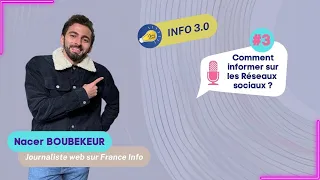
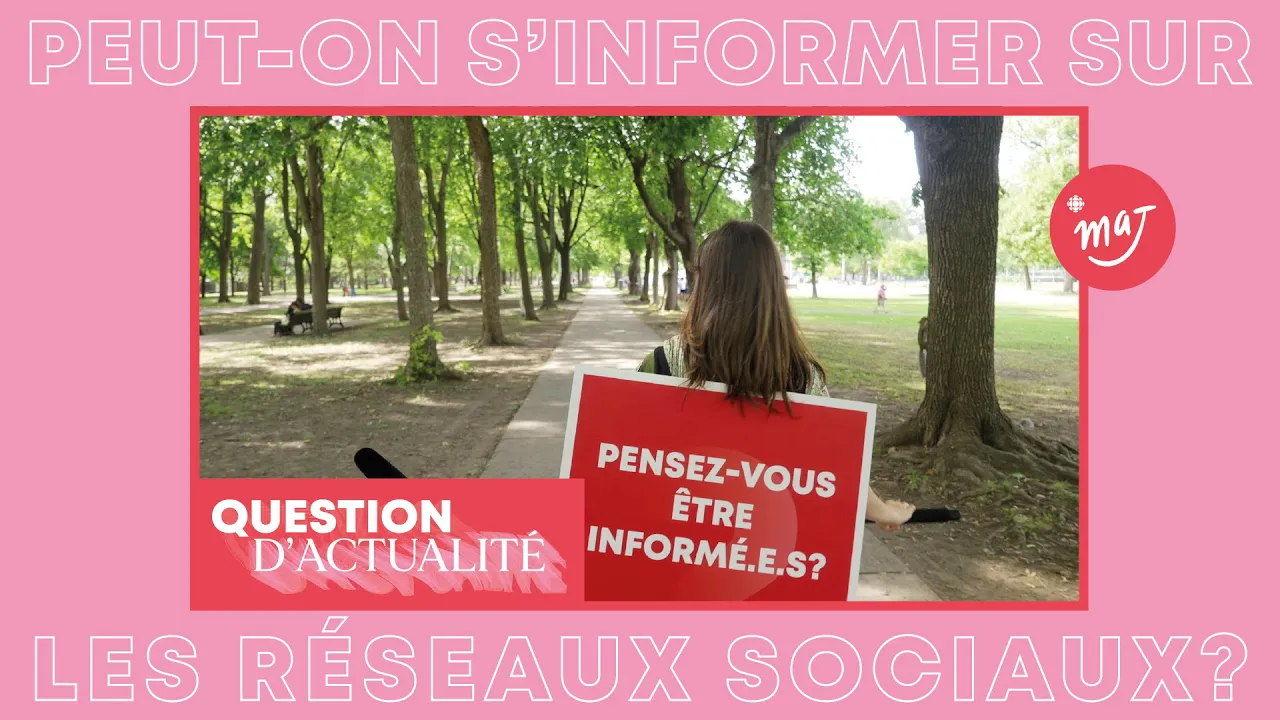
Will you answer my questions? THINK YOU'RE INFORMED? In Canada, 60% of young people get their news on social media.
Today we'll do impromptu interviews to find out where people get their news. CAN YOU INFORM YOURSELF VIA SOCIAL MEDIA? CURRENT ISSUES Where do you get your news?
– Internet. That's about it. Do you read things on social media?
Yes, but I'm more skeptical, there are lots of lies. You mean fake news? – Yes.
There! No more volleyball for me! I go on Facebook a lot.
You can get news stories and things like that. That's how I read the papers these days instead of the real thing. Hello, Jean-Hugues!
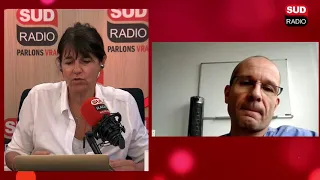
Hi, Estelle! Is it OK if I get my news from social media! Absolutely, it's the way news reaches people nowadays, through social media.
We have to use the current technology. It used to be paper at first, a technology invented 2,000 years ago. It still works fine.
Then radio, TV and Internet. . .
And now social media is another channel through which the news can reach people. How much news is there on social media? On Facebook pages, in French, about 25% of content published on Facebook pages comes from news organizations.
If we take that away, there's not much left. Hello! Not interested?
Have a nice day. No? I don't speak French.
– OK. No? Hello!
No? Not interested? Want to answer a few questions?
No? Do you read the news? No?
Answer my questions! With respect to social media, my newsfeed is targeting me. They sort of know what I need.
I find that kind of worrying. No! We're going to interrupt their date!
Oh, little poster problem! Poor you! – Seems comfortable.
. . Where do you get your news?
Social media, TV, radio? Facebook, because it suggests many videos about octopuses because they know I love them. Ask me anything!
I'll know if it's true or fake! How many. .
. ? – Eight.
I didn’t need to finish my question! Its scientific name? – Roger.
How many hearts? – Three. All octopuses?
Is that a problem with social media, showing you only what interests you? That's true, it creates an echo chamber, because it only gives you what you like. Hi, Joannie!
– Hi, Estelle! Thanks for agreeing to answer my questions. You're welcome!
I get my news from social media like most people my age. Are there things I should keep in mind to avoid getting fooled by fake news. Ask who produced the information.
Is it an expert or an authority on the subject. Are they presenting facts or opinions? Is it old news or is it recent?
We have recent data that show that children between the ages of 11 and 13 don't have a critical eye. They'll get their news online and presume it's reliable. Sometimes they go by instinct.
They intuit that it's true. So is getting the news on social media OK? Yes, it is, but keep your eyes open.
Be vigilant, check the information being proposed, and don't automatically believe everything you hear. I just finished my impromptu interviews. I really enjoyed asking people tons of questions.
Many of them stood out. Like the guy who went on about octopuses. .
. But also those who talked about their algorithms. And how they only saw what interested them.
I wonder how much our algorithm controls the news we get. NEXT EPISODE. .
. Welcome! No idea why you're here?
– No. We need algorithms because there's too much content. Oh wow!
Oh my god!