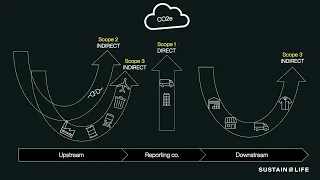
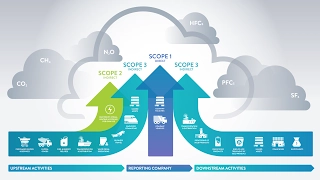
if you're involved in environmental social and governance esg reporting you may have come across the term scope 1 2 and 3. the term first appeared in the greenhouse gas protocol 2001 and now forms a critical sometimes mandatory requirement for esg related reporting scope one two and three is a way of categorizing the different kinds of carbon emissions a company creates in its own operations and across its wider value chain scope one covers greenhouse gas emissions that a company makes directly for example fuels burnt while running its boilers power generators and company vehicles as well as
fugitive emissions such as leakage of refrigerants scope 2 but for the emissions the company makes indirectly lights heating and cooling offices running computers they all require electricity the emissions that are produced by your power company to make your electricity account for your scope 2 emissions [Music] scope 1 and 2 are largely in your organization's control scope 3 is where it starts to become more complex this category covers all the emissions associated indirectly to your company up and down your entire value chain for example the way your suppliers may source materials to how a customer uses
your product eighty to ninety percent of your carbon footprint may be scope three emissions scope 1 and 2 reporting is becoming mandatory but businesses are now committing to tackling scope 3 emissions as part of their plans mapping the full scale of your emissions and identifying how much control you have is the best way to start improving your scope one two and three emissions identifying the emissions hotspots you need to focus on sets you on the path to net zero esg bases specialized knowledged and advanced tools can help your organization navigate the complex world of emissions
and become esg compliant more at esgbase.com [Music]