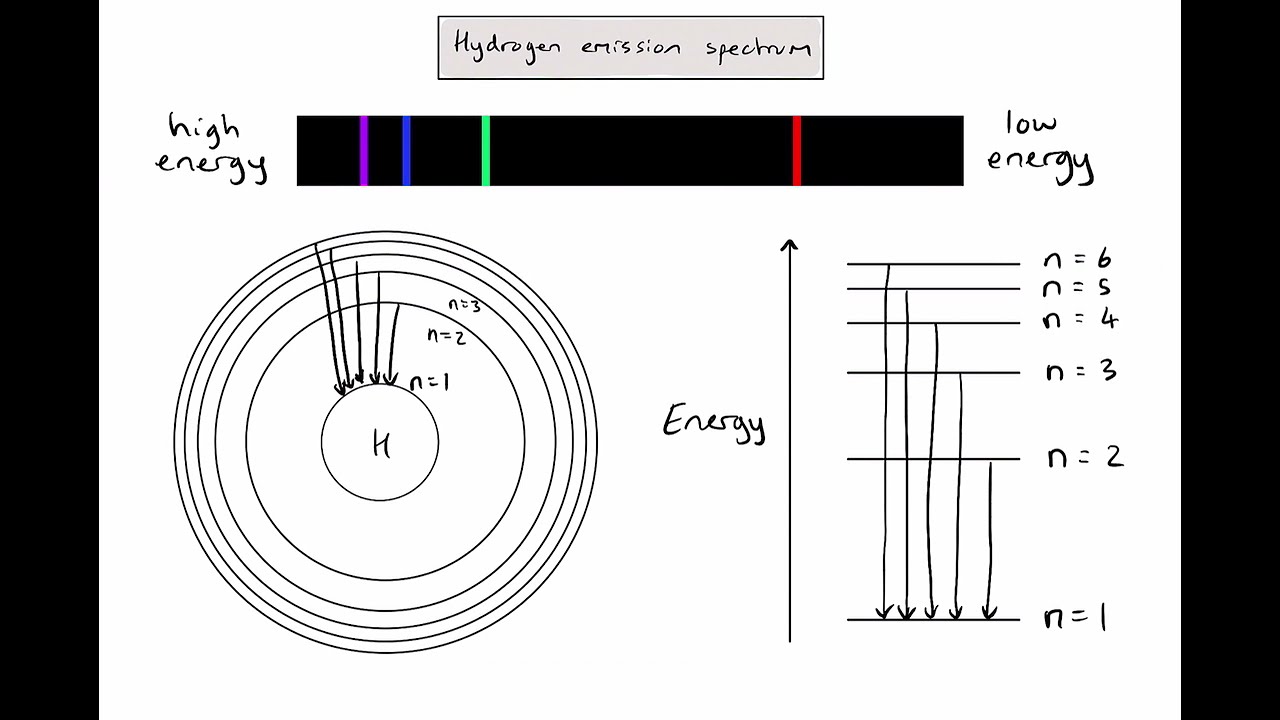
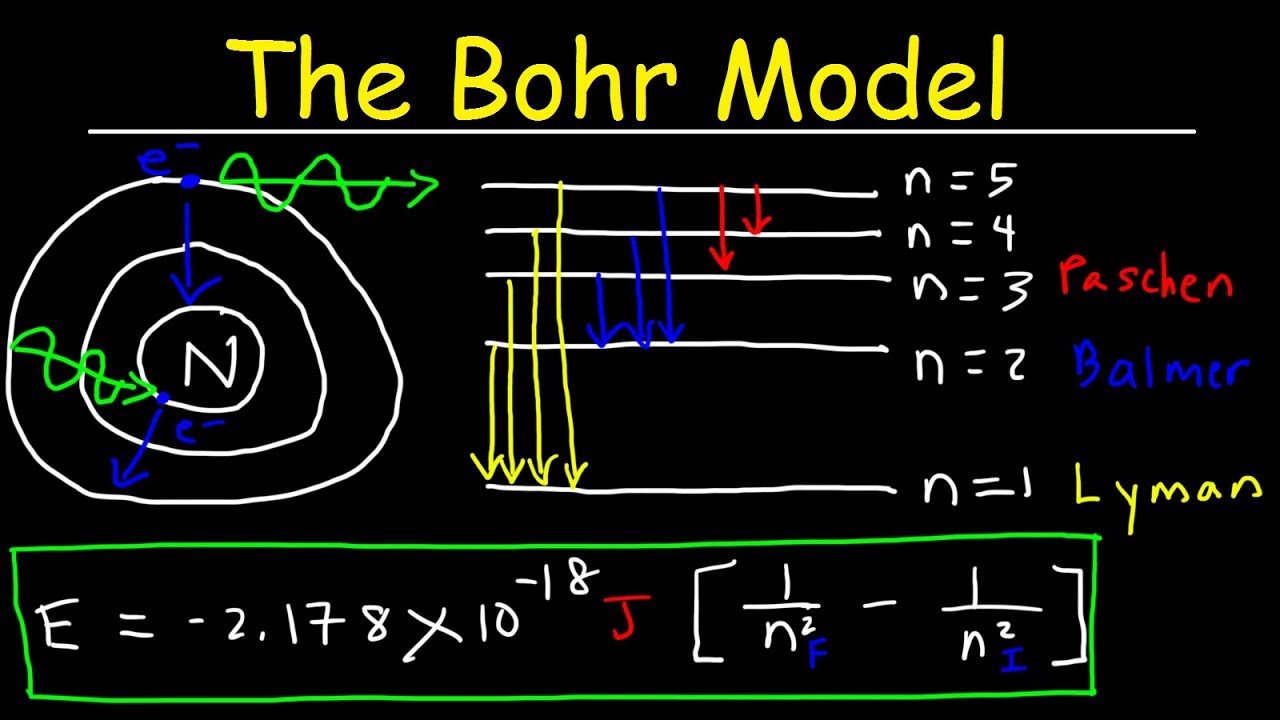
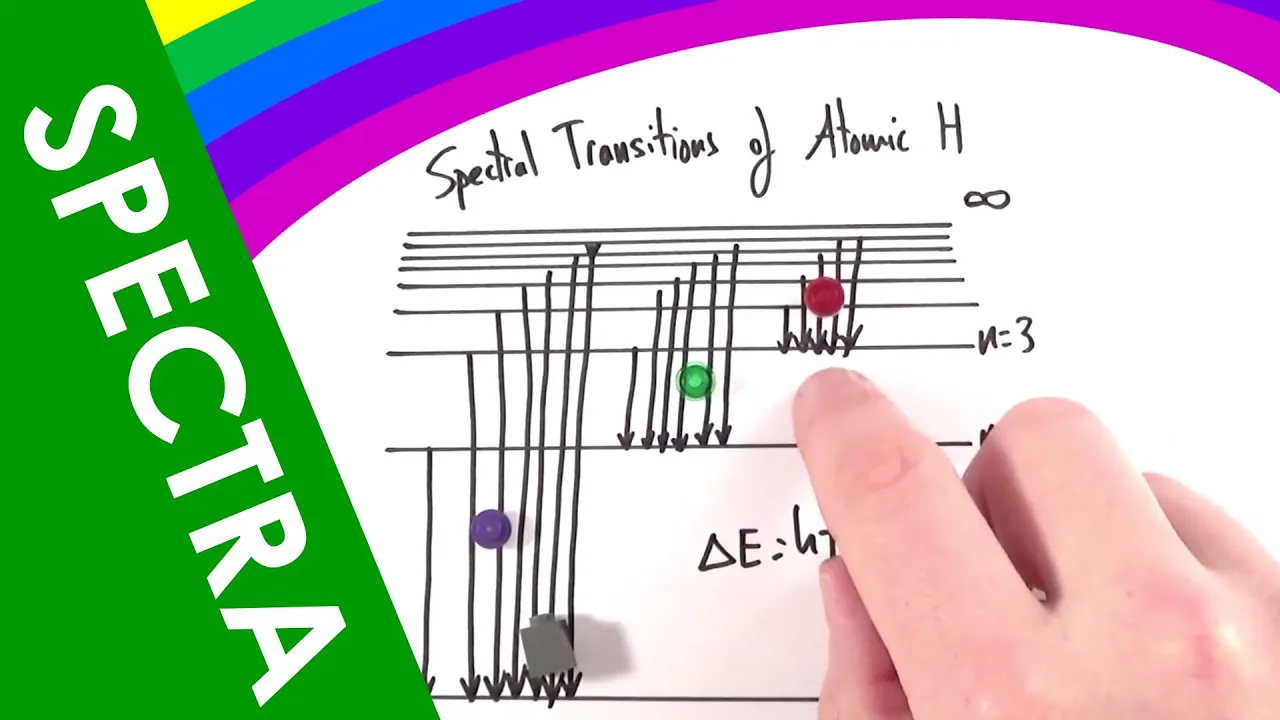
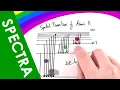
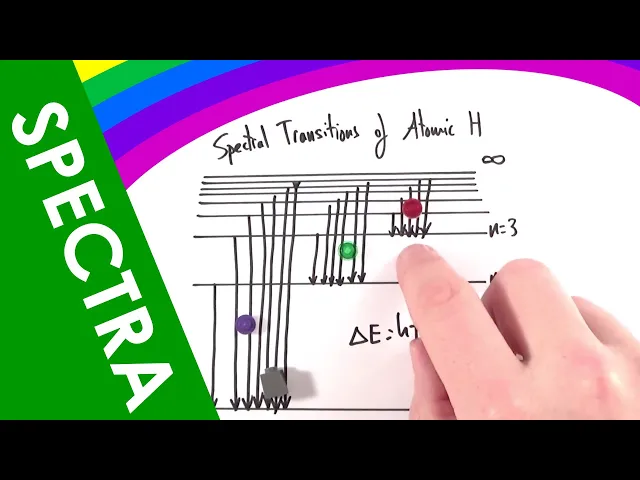
in the last video we looked at how electrons can only exist at certain discrete energy levels within the atom they can't really exist any anything beneath that they just fall down to the Shell uh below that uh and what we have here is the spectral transitions for Atomic hydrogen and we can go from the ground state where n equal 1 right up to uh the the electrons basically escaping the atom and making it an ion uh and as we look at all the things that could uh maybe drop down to the uh the ground state
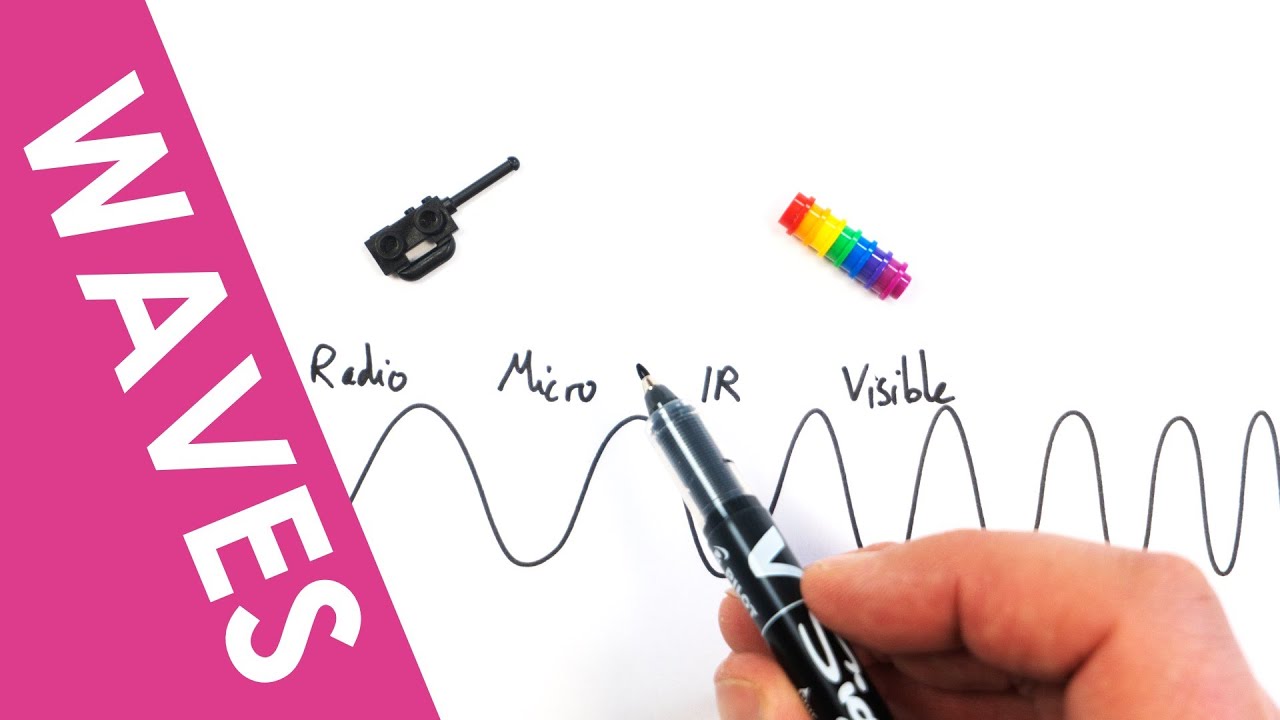
we can have things that move from this uh Nal 2 uh down to the ground state or perhaps Nal 3 or four or five we can also look at the various energy uh changes that we might have down to the Nal 2 and also the various energy changes for Nal 3 and because every time we have an energy change uh we have an Associated frequency or therefore wavelength of light emitted and effectively um what we have is when the uh electrons move down by a huge amount we get ultraviolet light given off so there's some
ultra light there some ultraviolet photons being given off at this part of the Spectrum in the middle part they aren't as energetic the energy changes aren't as big so the frequency isn't as big and therefore we maybe have visible light given off at this part of the spectrum uh and finally these are fairly small energy changes over here so we might have infrared uh light or infrared photons which are given off um and effectively uh you can only have certain values of photons given off and therefore certain values of wavelengths of Light which are emitted
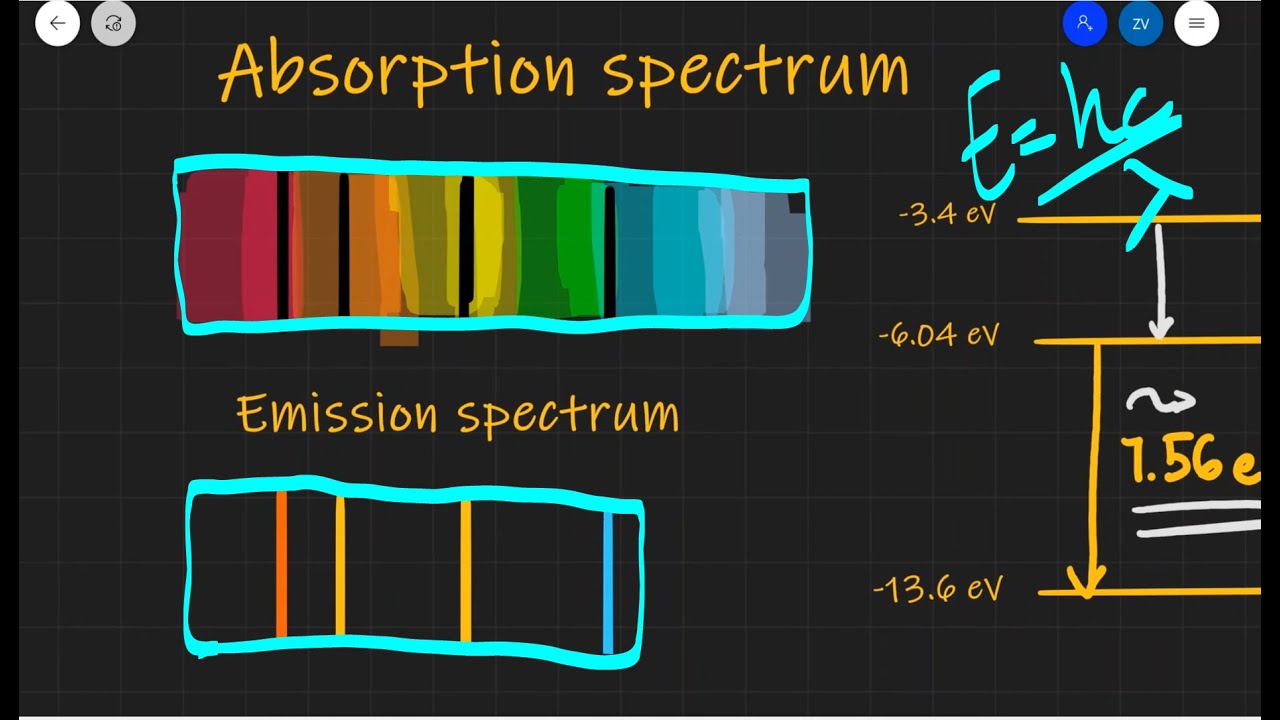
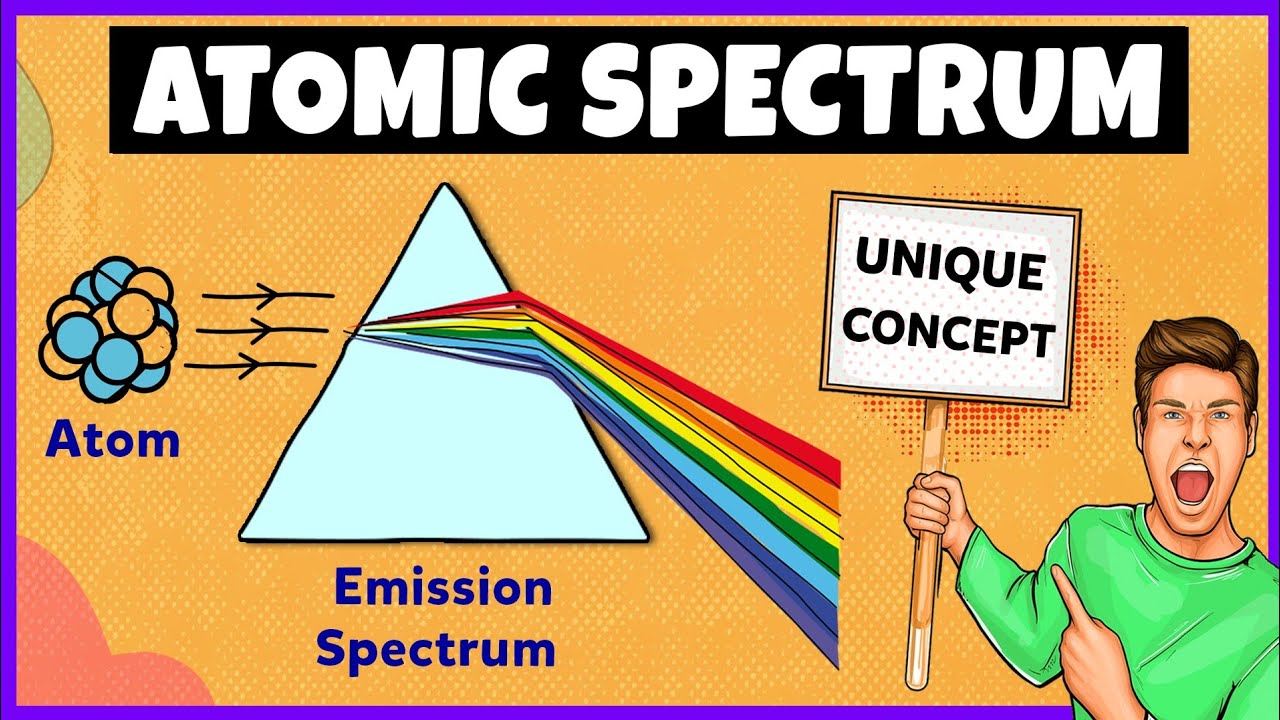
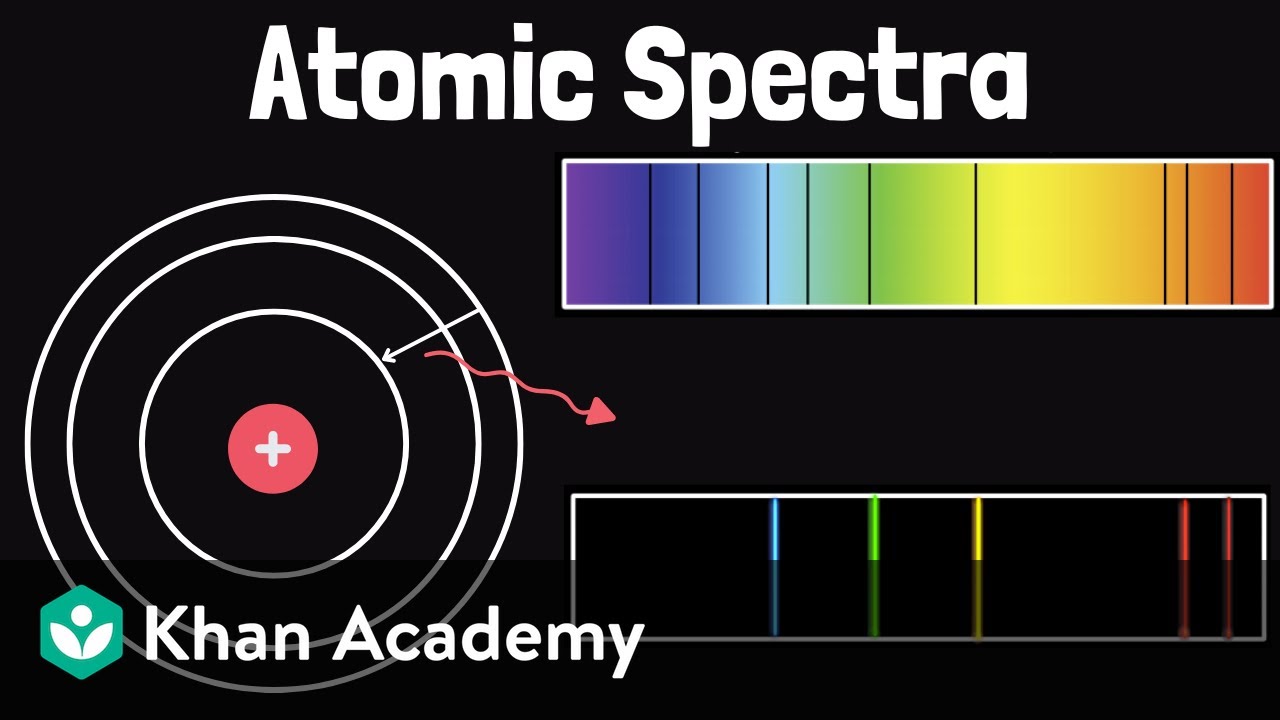
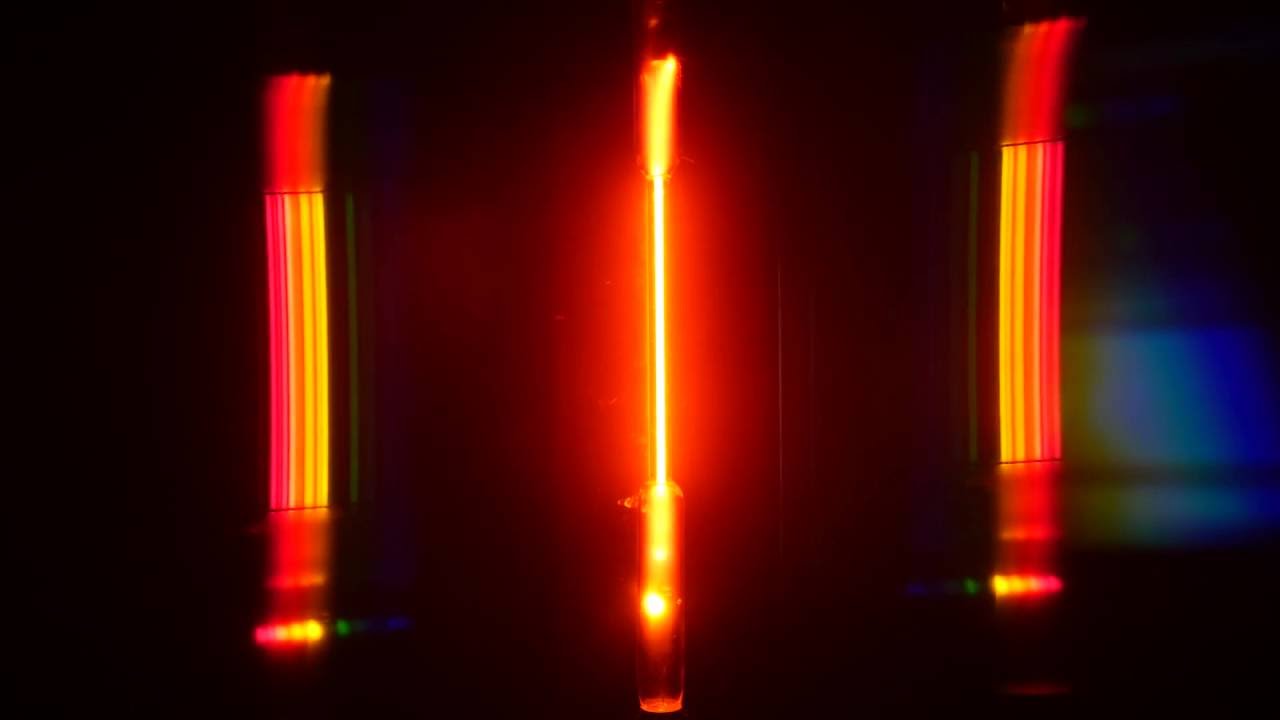
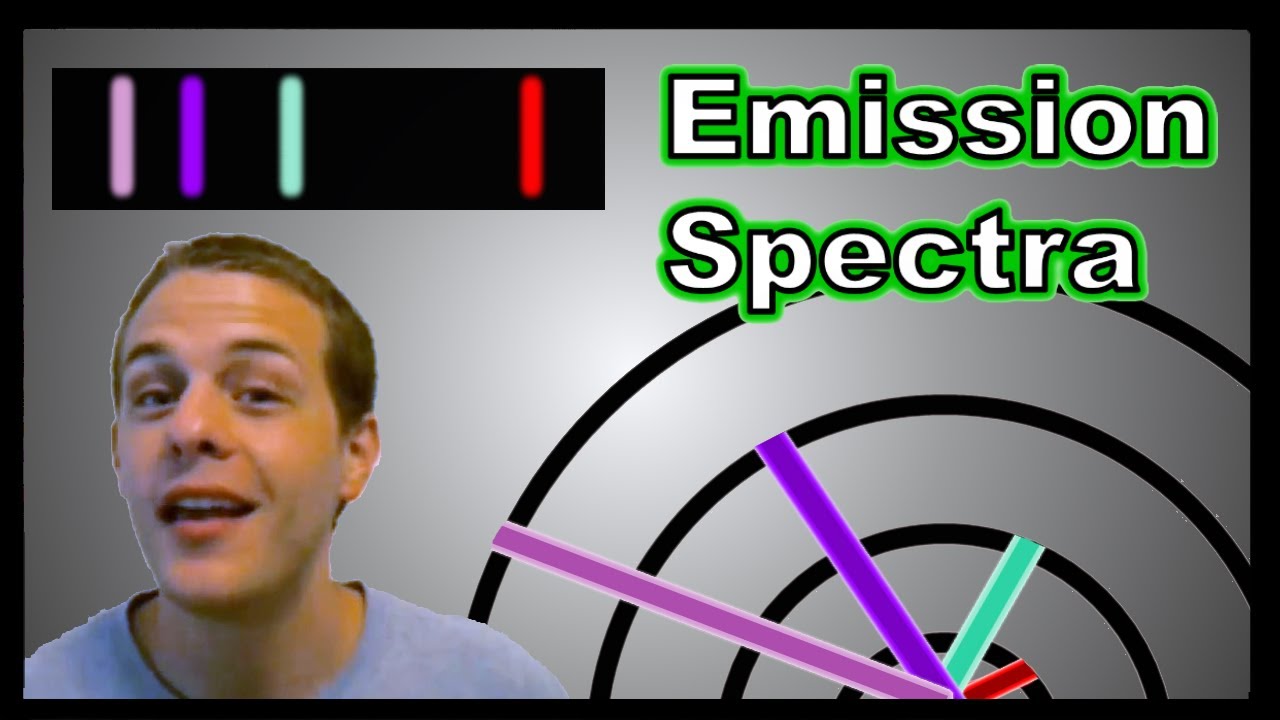
by hydrogen what we can actually do is look at the various colors of this uh these emitted photons and what I have here isn't actually hydrogen this is helium uh and what we can look at are the various wavelengths of Light which are emitted and effectively we have the visible spectrum here going from The Violet end right through to the red uh and what we call this is an emission spectrum so this emission Spectra shows a certain wavelength of photons uh which are given off by helium as it's excited we might have a load of
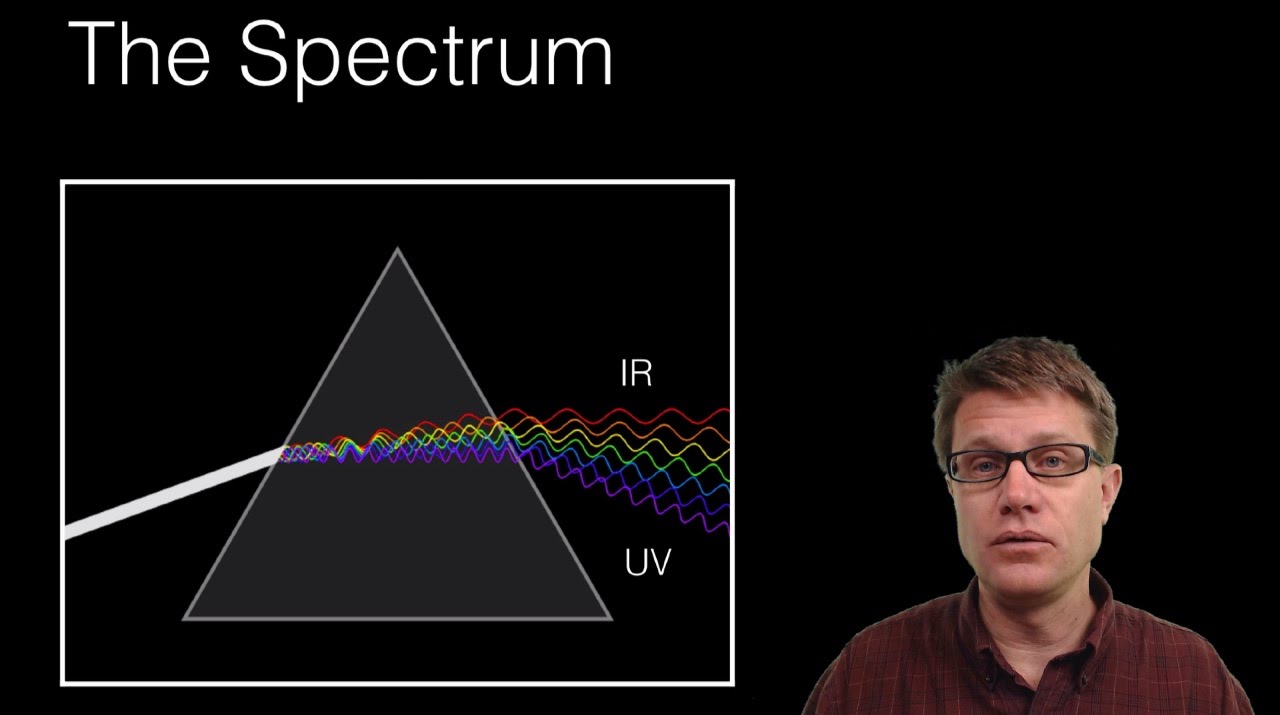
helium gas which is really hot full of lots of energy and as the electrons drop back down to the various sort of ground States and the lower energy levels they emit certain wavelengths of light uh and for every single element it has its own particular emission Spectra how do we see this well we see all the kind of color s mixed together so we might see the the yellow adding to the red to the green to the blue and the Violet and what we might see is white light so how do we actually get the
spectr what we have to do is we need to shine that white light through a defraction grating and what this does is it splits up that rainbow of color and really shows us the the certain frequencies of light that make it up however this emission Spectra also has its kind of twin brother uh and this isn't so much things being emitted but this is things being absorbed now we've already seen on the model that um when an electron drops down it emits a certain Photon of a certain frequency well in actual fact when this goes
up to the next level it only admits or only absorbs certain frequencies of radiation so this one here maybe might emit a a photon with a blue wavelength which goes out but in order for it to get up to the next level it has toit a blue Photon a red Photon a green Photon these don't have quite the right energy it's very very picky about who it chooses so this Photon comes in it excites the electron and it moves up an energy level uh and therefore what we have is not just an emission Spectra but
we also can see an absorption spectra an emission Spectra is given out by something but an absorption spectra is when you maybe have a cool gas and you shine a load of white light through it uh so white light being made up of all of the colors of the rainbow and what we find is that only certain uh colors or only certain uh photons are actually absorbed by whatever we've got and and what we see is like kind of I guess like an anti emission spectrum and we see a black line where no light kind
of gets through so we find that actually um certain frequencies of green light are absorbed and therefore there's like a basic a bit of a gap in the Spectra and uh this is really really important okay this some this gives us evidence for the fact that um what's inside stars there is actually helium inside Stars it gives us evidence for the fact that the Galaxy uh and the universe in fact so not the Galaxy but the whole universe is expanding and it's because what we can do is by looking at Starlight we can start to
see the various chemical elements that make up the kind of the outer atmosphere of those Stars so an absorption spectra is where uh certain frequencies of light are missing because they're being absorbed by the that element so we know that helium absorbs certain yellow red and green and sort of different frequencies like that whereas when it emits stuff it only emits the same things and this is because the frequencies which are absorbed by the electrons to move up the levels are the same as the photons given out when these things drop back down to their
ground state so that's what quantum physics really leads on to basically work on stars and rainbows and how by knowing about what's inside the atom on a very very smallest scale we can then start to investigate things on the very largest scale in our universe



![C3 Absorption, Line, Emission and Continuous Spectra [SL IB Chemistry]](https://img.youtube.com/vi/oFwTPMVYfpo/maxresdefault.jpg)