It's a pleasure to be here uh it certainly is different down here so then I tell people a few years ago I spoke at a potato conference in Wisconsin I'm a dairy nutritionist I was the only guy that wasn't into potatoes and but I had no bad habits see I don't know what the farmer I did go to school at Oklahoma State so I don't hold that against me just for one semester and then of course Hawaii gave me a better deal so I went To Hawaii but I'm a dairy nutritionist any Dairy Farmers in
the crowd ah no you didn't hear my question oh so we won't talk about cows but I got into soils to create better quality feed for dairy cows I've got a lot of pictures I talk fairly fast I'm trying to get a few points across I want to present some other systems in farming see I think farming ought to be as hard to look at research finds because they got their soils their conditions and they don't Necessarily have your system of farming so I'm really promoting like Acres USA and different groups so let's have people
talk about systems our farm in Wisconsin we're an organic farm and we Farm 1500 acres and we Farm in a 45 mile circle we're in the hills and John was trying to say you know he's got some land up in Wisconsin and uh we're on 14 different properties and so my son and one other guy if I'm in 1500 acre certified organic in a 45 mile circle You're not going to fool around hauling things around it's a different kind of a farm labor is hard to get and uh it's like my son said you want
me to hire someone with no skills and stick them in my 300 000 tractor are you sure about this and so he just does it himself with one other guy and so that's our farming system and we we have the climate issues are for real for us and you'll see some pictures you see years ago uh we got into these five years of really wet Weather my son's pretty convinced that these climate changes are here to stay these are real extreme weather pattern we've had a mild winter I was in Illinois last week you want
to talk about issues these guys are out there feeding cattle on corn stalks and they're sinking in the ground of mud in mud about a foot and so it normally would freeze we got issues out here and so anyway we're convinced that the climate changes when I was a kid a ninja Rain a day or two inches was it six inch rain events are not uncommon they're normal now we kind of had old circle gets going around it's just dumps Irena so how do we Farm around it how do we build up resilience how do
we manage with it and so we developed a completely unique different farming system not that you have to be organic how many organic farmers in the room a few of you and I tell people I'm not trying to promote organic because we Like the markets to ourself and uh organic farming is really hard and really challenging and I say 15 10 of the land in North America suited to be Farm organically if it doesn't drain it's sand it's poor soul you can't farm that organically but only 15 to 10 of the land as soon as
we Farm 100 no-till no-tail is another system that's got limitations now it's successful some people know till a crop but they have a whole farming no-tail system and I say Why would you do that and we'll talk more about that as we go so uh yes I have written a few books I was an educator and I was teaching at a Tech College in Minnesota and then I got involved in in Consulting then I got involved in a fertilizer business because I couldn't kind of couldn't find the fertilizers we wanted and so my first book
came out in 2000 and I've been whipped around this planet about 10 times and I've been I had Partners in South Africa I've been to Australia I got Partners in Eastern Europe right now they Farm 200 000 acres and it's kind of interesting because uh it's from the company from Austria and they want to focus their whole 200 000 Acres on regenerative biological farming we're having a conference in Poland next summer we're talking about that so in my second book called advancing biological farming my daughter Leilani helped right and it really shouldn't be called that
It should be called practical if you want to start out with an easier reading book and a little kind of a thing to do that that's a good place to start and then my last book that came out three years ago is it just an updated version of the first book and I took out chapters and now it's 500 pages not 350 pages and I probably should write the next book which takes me 10 years to write a book and I'm probably not going to do that because I keep learning new Things you're never done
and I now the farming system we have and I understand a lot of things different what's in this book that wasn't in them first books was the fact that we um it's a lot more on carbon and biology a lot more on compost a lot more in cover crops and so yeah I wasn't trained and brought up that way but our farm is certainly in the middle of that uh Acres USA that's a magazine used to be published here in Texas and uh Chuck Walters and I got involved they published my books this is the
last issue that came out this last month I'm on the front cover and it was kind of a fun article to write it was on management and I realized if I thought about management what do big farmers I talk about this they want to attract more large Farmers what a large farmers and what's the definition of a large farm when you're no longer in control you don't even drive a tractor anymore You don't even get involved but the issue is on management most Farmers nowadays don't really manage their land they go to the co-op there's
a huge amount of peer pressure keeps them farming like they've been farming where they go uptown to their agronomists and he keeps getting well what did you do last year here's what I did like oh okay well let's do the same thing this year that's not Consulting that's not moving you forward that's not Moving the needle that's not trying to make your land better this year than it was last year and so uh anyway this article was on management and I about regenerative I'm not opposed to the word regenerative I actually kind of like it
but it's going to get really watered down it'll be a word of no value eventually unless someone comes up with some standards and there maybe shouldn't be a one standard for everybody you're different than we are in Wisconsin So the only two reasons you're ever going to change fear or desire I hope you're not afraid of the fact that the government's going to shut you down I hope you're not afraid of the fact that consumer is going to quit buying what you go I hope it's a desire you have a huge responsibility and I tell
Farmers they're not out here deliberately trying to hurt the planet or anything I work with a very large farm in Michigan 220 000 Acres of potatoes and uh he's got His own garden he eats his own potatoes in his own garden doesn't eat what he grows when he goes it gives you rubber gloves to put on when you go out in the fields and he says to me neighbors are mad at me we're drinking bottled water everybody's screaming and hollering at me but I want to let you know I didn't invent any of that stuff
I just took the advice from the best smartest people and now it's my fault so we got to realize that what's going To drive your form you have a huge responsibility I think we've got to get this needle moved I'm not so sure how that fits with you all locally come on all right here's what I got my start I've been at this long before most of you were born in 1972 or three I was teaching at a Tech College in Southeastern Minnesota and there was a two-year post-high program and I'm a dairy nutritionist I
had to teach soils Agronomy Farm finance and I had my Students on a Motley bunch of probably the ones that been farming the land for numbers a year something you were probably from that era you'd be in your 60s now and this was way back in the mid 70s and uh I'm the guy driving the truck and so I got involved in this a long long time ago the students nailed an outhouse on the back of my pickup truck I had a wooden box on the back and they and they said a sign was on
the back and I said put your organic fertilizer here So I was already questioning things way back in the 70s and I got introduced to biological farming and said is about after that period of time and I'm a real strong believer in this right here we're not going to cram a new system of farming down your throat so I hope you came here to get some new ideas and Advance forward you never change things by fighting the existing reality more rules more regulations more never never we got to Create a model that makes what we're
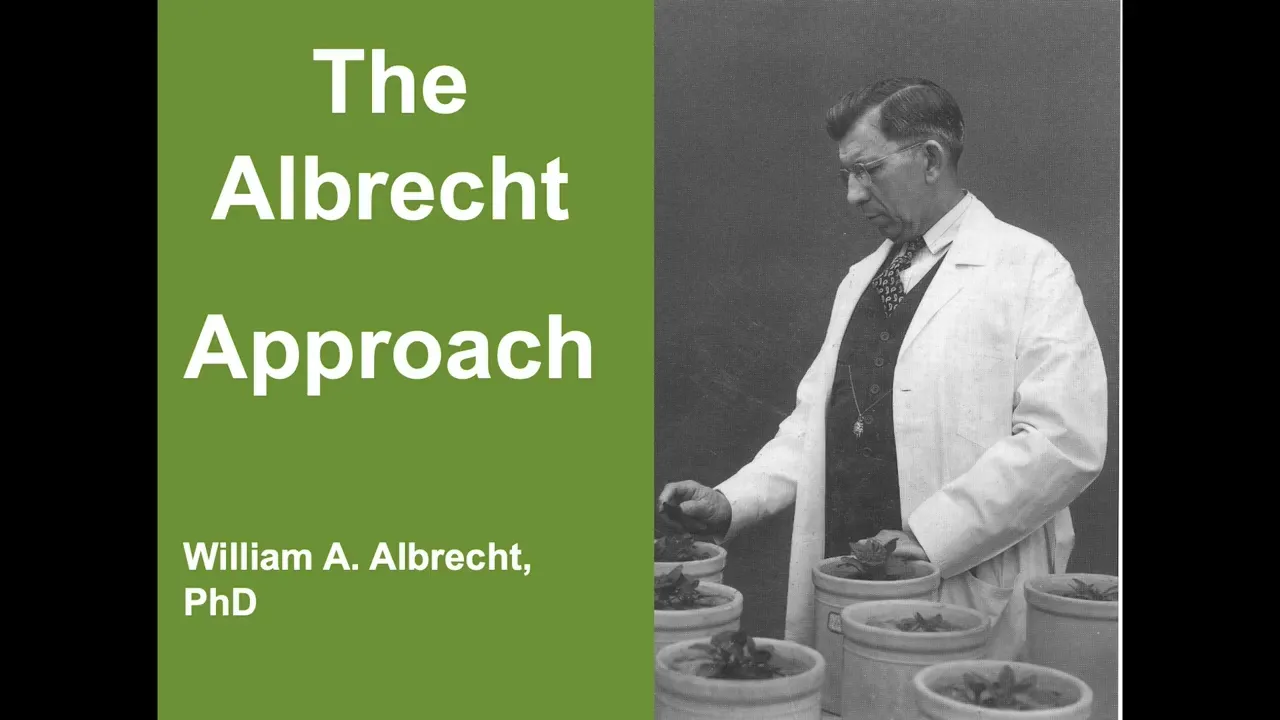
doing obsolete Mr Fuller Obsolete and I think we've got that model and now we've got to improve upon that model we got to get that model spread to others out here but we can make that model move on forward that's a picture from Australia that's 20 000 chickens in a pasture chicken operation now they're not that thick they're just hungry for eating what's on my boots so I got my start with Dr albrecha this Balanced concept and Albert got attacked by more people than you can shake a stick at but I hope because it's it's
no different what he said we took a soil test was and every lab is exactly the same you don't have to believe in this concept if you're taking the saltish the only thing you're going to be missing that he said that you're missing is he take a salt test every lab agrees with one thing we have to have a certain sufficiency level of minerals in your Soil that's why a soil test is a value if something's really short you want to add it what the conventional conventional wisdom and normal labs are doing they ignore the
excesses what if something's way higher what if magnesium is really high all they did was take a look at make sure you're above a certain sufficient all right then watch the excesses as well as the deficiency if you follow any Lab and take any soil test in any mineral short you add up to the lab where they recommend it you'll have balance the soils exactly like all brick said but you can't ignore the excesses you got to deal with the excesses and ask where the labs fall short so then I'm a dairy Guy and um
besides organic we're statistic when I started my business in in the 1980s in Wisconsin called Midwestern bioeg there was 32 000 dairy farms in Wisconsin and Now there are six and they're dropping like flies and the ones that are going out really fast right now are the organic ice 20 years ago we sold organic milk for thirty four dollars a hundred now it's twenty eight dollars a hundred and the cost of quadrupled people aren't making it and so I don't know what all the answers are and it's just really hard to do we I thought
we'd never get out of it we're Dairy people we're purebreds that Dairy but the daring Industry is just falling apart just like the I don't have 10 chickens in the backyard or four showers either this is what I really got involved with out here this is my uh I tell people that 360 these aren't extreme numbers I got a point here on here it doesn't seem to be working I just want to point out a couple of things see I got into creating ideal feed for Derek house Midwestern biowag deserves the credit to taking Dairy
nutrition to the soils I spent Nine years at the University whatever your feed test said I took the samples I would add what's missing and try to dilute it down and corn salad's just a deluder nobody ever told me I could change the feed so I was teaching at the tech college and I had the students do summer projects and they put some drips in and some Trace moves on a hay field and the feed test changed 1975 and I said oh my gosh what would ideal feed for a dairy cow look like it's the
same Nutrient density this feed desk is about as good as it gets and I want to point out some things because we talked about a little bit yesterday on that column over here the third number down says phosphorus at 0.56 we have not used commercial phosphorus in our Dairy hurt in 15 years the state average on phosphorus uptake is under 0.3 we doubled the phosphorus uptake on our farm the reason I'm bringing that up is got something to do with a lot of soils See because phosphorus is a biological mineral I think Dr Zach talked
about it yesterday from the standpoint that if if you're destroying the mycorrhiza you're gonna have a hard time getting phosphorus uptake and I point that out because I've been we are not a note we're organic and we can't be 100 no-till although we have a real radical farming system we have doubled our phosphorus so what kind of ever your farming is if you're taking tissue Tester plant tests and whatever your crop is and it's got a really high phosphorus reading you have mycorrhizae I was at a conference and some Professor yelled out to me you're
destroying your mycorrhizae and I said and how do you know and he says I said if I have children my test and I showed him my phosphorus levels are really high would I have to have mycorrhiza he said absolutely so we doubled the levels of phosphorus and we Double manganese and both those are biological minerals if you want some indicators of what's going on on your farm whoops I went too far now no it went really too far it doesn't quite go back like I want it to go back can I go back a couple
I can't figure out how to get it to go back and one more back yeah not one I mean I know why this Isn't working there I wanted to stop right there because luminant nutrition and soils are almost identical like I'm a dairy nutritious and going back to the soils I brought in speakers to my classroom and somebody came in and talked about mineral balance and talked about biologics and soils and earthworms in life and we'd evaluate the speakers after they left and they said what do you think as it makes perfect sense to me
I'm a dairy guy but if we go Back 40 years ago on a cow on the soils what did we do the cheapest sources of NPK and lime to a certain pH much different today what did we do with dairy cows I worked with the highest losing herd in Southeastern Minnesota when I was Consulting in 1977-78 and there were 45 pounds in the bulk tank that same Farm is over 100 today it's tmrs and mixed rations and chelated trace minerals and what's just interesting All Tech has a company out Here does ruminant nutrition they just
figured out that the stones that we add to the cow's stomach are interfering with that yesterday what about the stones you add to your soil these are interfering with the biology I think there's such a perfect link between these two systems it's unbelievable the whole question is getting the animals healthy but that was uh so that's why Dairy nutrition people you're struggling with you're agronomists get a hold of a Dairy nutrition guy and say I want some help on my soils whatever your IDs you take to the cow take to my sauce because they've doubled
their production off that land and we have gone nowhere where soils where we should be yet I started a company called Midwestern bioway because I started I was Consulting with Brookside in 1970s late 70s couldn't get anything I wanted I'm really surprised right now in the midwest there's competition everybody's Handling maps and ammonium sulfates and potassium sulfates and trace minerals and and gypsum and calcium sources they have none of that available in 1985 when I started Midwestern Buy Lake so we started doing fertilizer Blends and and I ended up if I sold my business 10
years ago and we ended up working about 4 000 farms at its peak and so it's still in operation but I just don't run it I still work there I just don't run it anymore In my career and this got me in a lot of trouble I was asked to speak at a conference at a university and they dropped me off the list because of this they don't want to think that we got it all figured out what am I talking about is we got our base figured out now you might need to foliar you
might need to use plant protective compounds you might need to use starters you might use something else as a crop fertilizer but we Understand the base of minerals we understand the base of biology and we understand the base of tillage if you get all those in place and that's why I said I went to what happened at the University I was saying but your research Farm is a black prairie soils and you got 5 000 cows what farm in this room does that fit and I said your souls are not in Balance you're missing some
tracement of soil unless I have that kind of farm how does your research help Me if every research Landing in the same base every research operation wouldn't be able to learn something from research but see they all got limitations and then they ignore the projects of the past and so I think we got it all figured out the bases are all figured out wow when I called Midwestern buyer we called it biological farming and I got I'm considered the father of biological farming I don't know how I got that old We wanted Farmers to focus
on biology not chemistry this is 1980 and so then anybody called it biological farmer now the theory of constraints from South Africa remember the old barrel with the staves and the size in they're looking for your limiting factor theory of constraints and of course regenerative I don't mind the word uh the NRC soil Health spot on and so there's different farming systems sustainable I always told everybody for years why do you want To sustain a mess first you better regenerate it and then sustain it see I own the fertilizer company for all those years and
we don't buy fertilizer anymore on our farm now I bought a here's to put on 200 pounds of potassium sulfate tracement whatever you put on calcium sources we fixed our soils and now regenerative I don't know what we have to regenerate anymore most people have to regenerate biology but it's not the same everybody's got a different Regeneration they need to look at so sustainable is a really dumb word I said why do you want to sustain a mess can't we move on from the mess and then sustain it and then no-till and organic are not
farming systems their methods are not doing I didn't tell that's not a farming system I'm organic I didn't use any prohibitive substances you can be certified again because you did nothing and I'm trying to change that rule Because the day is going to come we're going to measure nutrient density the consumer is going to demand more and there's tools being made to measure nutrient quality and nutrients and and chemical residuals in the food and hand in the world a change in agriculture so no-till and organic are not farming systems their systems are not doing and
then of course that's what they are biological farming I won't go through all these there's look at my books get a Hold of one of those there's I got my rules to biological farming and they deal with the three properties chemical physical and biological first I want to take a soil test I want to measure all 13 different elements that we look at I look at ratios I look at sufficiency levels then I want to choose materials not based on solubility but based on performance that fit the soil like there's several different calcium sources where
would I use gypsum where Would I use a high calcium lime where would I use we use a burnt hydrated lime we make fertilizer out of calcium sources from cement Kilns it's pretty incredible fertilizer should we take Rock phosphane Treat it with ammonia to make monomial phosphates we take lime and burn it to make fertilizer calcium oxide and calcium oxide hydroxides to make fertilizer online soluble calcium is very valuable so I got the minerals up there and I got to choose my Materials and then I got to say insecticides herbicides pesticides and nitrogen and minimals
are only absolutely necessary I know everybody's talking about no-till and Roundup but ah I get I mean if there's all these conferences and and there's different people out here talking about different things and glyphosate was first patented as a chelating agent it binds Tradesman those folks and the second patent that's on Roundup if I get my stories right I Didn't read these myself as things that keep been told is that rolling up glyphosates are patented also as a fungicide you want to have fungal populations and you're spraying on five doses of fungicides a year our
farmers are using fungicides they say that the humans are becoming more resistant to chemical fungicide treatments so they get a fungal disease because of what we're doing in farming so anyway there was a Minimum amount that only absolutely necessary I spoke in um Washington D.C I had a conference on it's called environmental law and policy now I'm helping you make the policy to make your farm a little more difficult fear or desire remember and so they asked me how I would change agriculture I said it's really simple first we're going to tax nitrogen really high
well they said how much I said enough it's like you did cigarettes to get people to Quit using it so last year with the price and then you went they all thought I did that Heidi had nothing to do with that I didn't have any it wasn't my deal on that thing but then they said and I said we're going to subsidize something besides corn and beans and I'm talking about the Midwest because that's where everybody grows corn and beans I said let's subsidize the cover crop let's subsidize something besides corn and beans and I
said oh and there's just one More thing I said we're gonna take all your fertilizers fresh in colors fresh and orange on phosphorus freshen or green on nitrogen freshen blue on potassium because I want to know when the rain comes along I'm gonna drive down the road I want to know who's losing the nutrients on their Farm let's call them fluorescent colors now wouldn't that be fun every time there's a major rain you're driving down the road and see stuff is running off and What color it is it'll change agriculture now that's not in place
yet because I'm not the secretary of agriculture yet so anyway and the last one is I got to control air and water and I had a diversity and I got to feed my biology I'm a real believer in strip till instead of farming like this let's Farm like this and I think in the midwest that works really well no tale is not going to take over it's too cold too wet and too much residue out there You know what a 250 corn Bush bushel corn crop looks like for residence about six inches of residence it
won't dry out or warm up it's every other year farming if you don't do some kind of tillage but you don't have to plow you don't have to run the Chisel pot there's other methods so biological farming is doing everything you can to get your cells healthy and mineralized and this is a theory of constraints all these things on this chart affect Your farming every last thing up there now if you think you're good enough to find the one thing that you're limiting factor on your farm can you imagine trying to figure that out well
that's stable they went through a few things but you can even bee pollination and there's npks there's sources or soil amendments there's everything the different kinds of nutrients calcium magnesium trace minerals including silicones and now it's here of the Mineral nutrients out there if you follow the circuits out here a silica is now the flavor of the month everybody's talking silica now that's really a big mineral maybe even down here is people using silica down here because I think you need to take a look at something but in the midwest where I am our soils
are in the ice box six months of the year we have not aged like you have on your sauce we got young sauce because they're frozen half the time that's when I was We got twice as long before we destroy them as you do and so anyway all those things affect your crop and so the theory of constraints really nice I used to have Partners in South Africa we had a fertilizer company in South Africa the government shut us down but anyway I worked with dairy farms it was a fun Farm had a thousand cows
on 70 Farms we had 70 000 cows what we changed was our soils and cut down under nitrogen applications and cut the grain using Cows in half on 70 000 cows and the government shut us down so anyway regenerative agriculture no kill cover crops livestock I'm sorry the Midwest is not going to put fences back up the ice states are not bringing back in livestock it's not going to happen if that's if that's just has to be a rule for regenerative regenerative will never take place in the Midwest We're going to have we got all
kinds of lives all the cattle will be off our farm come may all we'll have is the livestock under our feet and we have tons of livestock under our feet we have to take care of so I don't think livestock if that's that fits somebody somewhere maybe if it's in North Dakota it does not fit the Midwest it's too muddy too awful and there's no fences and nobody's going to bring Catalan back into the eye States and even in our State of Wisconsin it's going to be really challenging no one wants to make the fences
anymore and so livestock can't be a part of and compost what about minerals I've been attacked fairly hard on some regenerative groups because I say how can you have a regeneration when you don't study minerals some minerals are really short and you want to regenerate it's not always regenerating biology what if your calciums are short what if your Phosphorus is low let's we've got to get it regenerated out there so anyway the other thing is they never talk about which I get in trouble over fighting it is the fact that if you're a no-till that
means you're a chemical farmer it can't be no telling organic can you it can't be no deal without using a lot of chemistries and chemicals are no longer working there's some new tools coming out for the herbicide resistant weeds there's tools they're going to Look they're organic organic people laid the path for a lot of people to follow we got compost we got cover crops we got different tillage systems and we got all that we don't have herbicide resistant weeds in our world we just got weeds without being herbicide resistant so anyway so what is
regenerative I actually like this is in a magazine last week some Professor wrote up a story out there is the fact that regeneration means optimizing inputs And regeneration means that you shouldn't have to spend all your money on biotechnology and second herbicides fungicides and pesticides the crop ought to get healthier we ought to have healthy Salsas healthy crops and so there's a climate difference your regeneration down here is not mind regeneration no tail for you having a blanket on top of the ground is absolutely essential but up in our climate I got to have some
bare grounds Because it won't dry out and warm up so what is your regeneration is going to have to be climate related that's on one of our Farms we're looking at there but this whole thing is what's the common ground on on regenerative agriculture soil cover I have a blanket on top of the ground so a life wants a blanket on top counter wants his food on top and wants to be left alone and you see the other thing is why there's some issues I'll talk about that we can make some Changes so cover crops
make a lot of sense it took me a long long time to learn this because you see my teacher was books installing and following Farms I worked at a lot of farms I put a lot of miles on in my lifetime traveling around this Countryside and it was following around and looking at Farmers out here and so uh we didn't you know it took me a long time to come up with the fact that the plants determine the soil life it's not that the soil life Determines the plants so the plants with their extra days
they control a certain population of organisms and they also with their root system they bring up certain levels of minerals and so now we have this diversity of soil like because we have a diversity of plants it's it's the soil life diversity it's just like yourself every last one you got E coli in your system you don't see me running to the John here quite yet it's because you got good guys too you got the Lactobacillusis and the good guys it's not just the bad guys and I think that's what makes soils healthy you can't
have single diversity type things and everybody's talking about multi-crops out here you got to manage those residues residue is not breaking down residences around his measures and then carbon sequestering is going to be where your future lies and the day is coming they're going to be able to measure Whether you're a user a Carver or a builder a carbon and I think you'll be rewarded greatly for that otherwise we won't be able to get Tim here on an airplane oh so my country University of Illinois what do you notice look at the look at the
wheel look at the stuff flying out the back end of that road over here it's called Mud if you're not familiar with it You see this is how we have to fire now you say oh my gosh that guy's running a tillage tool through mud a tillage tool does not destroy sauce unless you're on bare ground I went through a sorghum sedan grass with a rotavator we used to use rotavators on our organic farm now we got these high-speed discs in the circumstances of Ingress is this tall and I'm going through it with my rotavator
and I look back at the grass That's moving in front and I look back in a raccoon run right through my rotavator and ran away I didn't say he ran fast I said he ran away if Adam and bare ground that have been meat and blood and bone meal they see that buffered them just like your souls are buffered if that blade's not cutting and smearing hitting Blair bare ground it's bare ground tillage that gets you in trouble and deep tillage this is our farm Aren't you glad my son likes droughts by the way we're
from Wisconsin he's tired of rain he'd rather have a drought than any you you're trying to farm organic you're trying to cultivate that I want to see how good you are you got flotation tires oh what about this one this is one of our Fields now what are you going to do see if you don't think that we have compaction problems on these kind of Years you're absolutely wrong that's why we have to have Run Deep behind rippers women shallow incorporating residues and running rippers to get water to soak in and I got to control
air and water I might have to have a little lifting effect on my soils now this one's not my farm we don't have John Deere's we run new Hollands but this is amazing I can see one guy driving in the puddle the two more followed him I don't know what that was all about what did they think they were going to do I think that big excavator came in again I think they wanted to get out of there as fast as they could before anybody saw him and took a picture but I was there first
this is that this is not called farmer intelligence by the way there's a little bit missing here on the farmer intelligence well anyway let's get down to my topic Soil fertility and soil Health if I write another book I find I heard those words for 40 years and now I understand those words what is soil health and what is soil fertility I think I wanted to say do you really understand what they are so soil health and soil fertility it's all hell there's a capacity to function organic matter looking at permeability and structure chocolate cake
water infiltration all about soil health So fertility is the maximum level of exchangeable minerals when you dump fertilizer on the ground does that really increase soil fertility I went to a conventional farmer and I said uh I said can we raise your soil fertility how do you think we ought to do this well I said we just put on more P's and K's and I said really I said let's just double them and double your yields well no one doesn't quite work that way dumping on soluble nutrients doesn't Increase your salt fertility getting those nutrients
in a carbon biological cycle and the land that you want to regenerate the farm that you want to take over is a guy that went flat Ash broke by infertilizer that farm is the one I want I got neighbors right now there'll be some coming up for sale oh I don't want to take that run down old CRP lab if you think you can regenerate really bad land without putting minerals on it you're absolutely wrong I told Gabe Brown I said I got some Fields you need to look at it couldn't even 25 years in
the CRP and the soil test is still absolutely awful and it's been no-till for 25 years nothing got fixed nothing in 25 years of just sitting idle it didn't extract minnows in the soil because there weren't any we fixed it with heaps and heaps of manures and minerals and fertilizer to fix it out here so then the soft fertility is those exchange and nutrients out here and There's things that will affect that so soil health nrcs I give them a lot of credit get this sucker in your head this is spotter now you got to
recognize you nrcs people in the room I altered just a little bit you were missing just a few things but you did a really good job so all this capacity to function I added the other word without intervention so I don't know are you guys healthy am I healthy I'm 78 years old I feel pretty Good if I had to have 25 pills this morning to get out of bed would that be healthy if you have to use insectus Fungicide and present would you be really healthy if you have taken a lot of pills that's
without intervention now I don't take anything nutritional something I'm a nutritional kind of a nut guy I'd be careful it goes into my body I don't take anything but part of the reason is if you don't go to the doctor you don't have to take anything Because you don't know what's wrong with you so if you don't go to the doctor you never have to take medicine I figured that out a long time ago my wife's back she thinks I'm irresponsible that could be but anyway water infiltration in other words when it rains an Asian
ring that means through biology which I talked about we got a minimum disturbance doesn't say No Deal minimum disturbance And we got to have no crust on the ground and the reason why if you go to the Midwest or get a no-till magazine and most of the ads are tillage tools vertical tillage machines are something to use all the time got slots in the ground and of course corn and beans are in rows it sticks slots in the ground and sticks residues will have a wicking effect so I break that crust and salt can't breathe
with a crust on top of the Ground and so I gotta have a blanket on top of the ground is really essential but even a blanket on top of the ground in the ground is how does the floor here on my feet you got to travel around this Countryside there's some guys that leave a lot of residues on the ground it's as hard as concrete and the rain runs off and it's all can't breathe and it's kind of not an issue I have a huge amount of plant diversity living roots so for us I'm not
growing all winter and I was disappointed to come here but then I realized I'm here one point in time and I realized you've been in a drought but I expected a lot of green fields I saw people out tilling already wow wow I don't know maybe that's not you that's your neighbors but living roots in the song say is something that we can we achieve all the time we don't want to see ourselves ever be bare and then I got to deal with minerals so the things that I added to the nscs list I added
The word minerals and I added the word without intervention minerals if you think you can ignore minerals and have healthy sauce you missed the point what are the two major minerals to make cells healthy phosphorus calcium is a trucker of all minerals borons a steering wheel phosphorus levels are energy transcycle and translocation the two biggest battles I face in agriculture as everybody wants To use the word no-till and I say why don't we talk about sensible intelligence tell us with a purpose and then you'll say oh you got to get your phosphorus level down my
story on phosphorus is not go over really well to everybody because I say if you were from another planet and you showed up on Earth and you look down on Earth and you saw every time there was a fire there's always firemen there at some point in time you're going to blame the firemen For the fire we blame phosphorus because of erosion his erosion is the problem not phosphorus is not the problem erosion it's easy to measure it's like the firemen it's not their fault it's not phosphorus's fault and we got to manage residue decay
so if you teach a farmer why they'll figure out hi why are you doing those practices why are you doing that and then you'll figure out most Farmers I've Got a neighbor who live in a watershed district and it's really simple we have the DNR going by your farm and measuring the water going past your farm so you get really nervous remember fear or desire and so he started growing cover crops so he stands up at the meeting so well that was added 40 an acre expense for me to plant Rye in the fall and
I said didn't you take advantage of it didn't you cut your Chemistry down didn't you cut down your fertilizer Inputs didn't you see there's some positive things took effect you took no advantage that you did everything you did last year and you grew a cover cop wouldn't that be kind of silly wouldn't you take advantage of it well now if you talk to him he completely changed his tune and now he's he's now he's really into this thing but in the beginning all he saw was an added expense so we got to help these guys
get through that little hurdle so now once he knows why then They'll figure out how beautiful little Wisconsin folks I did it again I don't know how to get this thing to go backward oh now I'm on my way back Whoa stop foreign I should only hit it just once can we have too much saw how that is soil on our farm why would a soil look like a chocolate cake I asked my description of a healthy salt looks like a chocolate cake did those organisms do that because they like you and they want the
water to Flint no they want to breathe now I think someone brought up the fact that the fungal population does this I was at a conference two weeks ago they said the bacteria population does this there's some real interesting thinking taking place but that loose crumbling ground is what Saul's ought to look like water can Infiltrate and the reason for it is we have to have a gas exchange it needs to be air there are aerobic organisms they need to breathe and when they take an air they give off carbon dioxide and carbon dioxide leaving
a soil is ideal as long as there's a plant there to catch it and I'll talk more about that see if I don't point it that way it doesn't really work my question was can we have too much soil Health this soil right here is really an interesting Farmers up there in Monticello Iowa I've been a customer for 30 years and uh he I started out with him 30 years of 140 units knives 140 bushel corn and he came to the winter meeting and he said I stalled out I'm up over 200 bushel corn but
I'm not going any further he said I've never changed my nitrogen levels I still use 140 units and but now I'm over 200 Bush of corn you think I'm short of nitrogen I kept saying well you can figure that out your side dress and Hydrogen that need my high corn add another 10 gallons see what it does for you and then we got to talk and this man has never grown a cover crop it's nothing but corn beans corn beans and everything you're seeing those little round dots are earthworm castings and look at those beautiful
soils and look at this here he's he's a strip tail farmer look at those beautiful salt that was all done by using different sources of minerals no cover crops no Nothing so I said oh my gosh if you want to go to the next level hit the 300 bushel corn Mark now let's start doing cover crops and let's play around with nitrogen but you got to get more diversity on your sauce that's almond and that was I was taught that's what Oliver taught us you get those things going and you'll have that beautiful nice salt
and I want to talk about the you know of course the the strip till thing out there uh a soil Warrior wasn't Invented by a customer friend of mine from Faribault Minnesota John Deere just bought the rights to soil Warrior now they're going to be no longer yellow they're going to be green and they're starting to come up with someone this year so I said to the farmer you designed it and built it you sold it to environmental Technologies and John Deere now bought it I said you could have been Rich if you'd have kept
on it holding on to it he couldn't afford to Build them so he said I still have some shares so anyway my little pointer doesn't work like I wanted to but you see out here is that no-till guy taught us you can't power digging disc every year you'll destroy sauce what did the strip I teach us to put a flower pot on every plant the strip till conference is in Iowa City Iowa next year just go to it it's like going to an AAA meeting alcoholics they're all recovering no-till Farmers They failed at no-till but
I didn't weren't suited for it didn't fit their farm and now they got into strip tail it's really fun to sit around a bar and see how well they're doing strip till is going to take over in agriculture I no doubt about in my mind well why would we tear up middle Zone but see what the strip deal guy said you they put these flower pots under every plant they ran big Dippers the Rippers they placed their United Jeep they want to grow a Massive root system so if you look at the top three inches
on top that soil you can do anything you want it's the middle Zone you got to leave alone if you tear up and chisel power more power know anything to tear up middle Zone you've made the decision to start over if you keep middle Zone in place those decaying root systems and earthworm channels the next Roots can follow it that's the most fertile thought on your farm and the more massive roots to get In there the more effect you're going to have on soil double your root system cut your water and fertilizer in half you
gotta figure out how to double it so that's what the strip deal guys are all about I'm a strip till guy and then soil fertility is the level of nutrients that are exchangeable now this is really interesting so if you go up there it says nitrogen this is uptake efficiency of the day in that Chart my little pointer doesn't work that chart is going back into the 1990s all the way up to the day fertilizer efficiency went downhill this is late latest data and that of the nitrogen you buy 30 to 70 percent of it
is used of the phosphorus you buy five to thirty percent and then someone comes along has the courage to tell you they know how many nutrients takes to grow the crop if you know how many nutrients to go to crap then what's all that stuff down Doing in the Gulf of Mexico in the dead ocean you might not have needed that so this is what regenerative is really about this is what fertility is about getting those nutrient levels higher now if you've been dumping on a lot of first phosphorus for years and years and years
now nitrogen will lead child can cause you troubles but phosphorus is kind of still there it's a triple negative charge it's you got high levels and now you can pull it back out with plants you Can start to recycle that potassium is 30 to 60 Trace Metals zero to seventy percent available so we don't know how much nutrient takes to grow a crop depends upon the health and the size of your roots and the plants and the balance and the ratios and on and on it goes but that in nutrient use efficiency is the hottest
topic Works in agriculture how do I get my nutrient use efficiency up this is a Midwestern bio egg my company In Blue Mountains Wisconsin when I started the business 45 50 years ago going on dap urea and potassium chloride was what the fertilizer choices were maybe different nitrogen sources what's today oh it's the same it's the same and so I got involved and this is what we use for fertilizers today I got introduced to Australia about putting carbon with fertilizer why would you put what do you think you do when you grow your cover Crops
you're sucking minerals up into plant and getting them in a carbon biological cycle that's exactly where they belong if you're going to add a mineral to the soil why don't you add a carbon source to it and so we actually started a process I sold the company 10 years ago and they first group lost it and now there's another group got involved but I started something that's going to revolutionize agriculture as you know it we allowed all those big Farms to happen and we got a manure management problem it's all concentrated on big farms and
so we made a fertilizer facility on the back of an anaerobic digester and as I speak there's at least three more of those under construction and Northeast Wisconsin is huge highest concentration the dairy cattle in the United States and it leads rocks and there's a manure get down those little rocks and and the trouble is right now in those little things out here there People got brown water in the springtime well there's 18 anaerobic digestives being built some are going to pipe their manure and some gonna haul the manure in and when the anterior digestive
sell enough they'll make as much money selling energy as they milk in cows and then we're going to take the byproduct out of the anaerobic digester precipitate the minerals out and add some other minerals and make fertilizer out of it and that's what Terra new is Now it got we retooled it twice the first Mouse never gets the cheese and don't ever forget that if you start something you're first you're gonna the second mouse gets the cheese and maybe the third one gets a bite you don't get any and so we were the first Mouse
and we all the equipment came from sewage treatment plants and it was 16 million dollars to build the facility that it was supposed to produce 80 000 tons a year you'd be out to produce over 10. You can see why they went broke you see because first Mouse never gets the cheese but now we got a lot of that stuff out of the way we perfected it retooled it a couple times but the most interesting thing is the fertilizer performs we took it to a Precision Aid group in Illinois on black Rich heavy ground and
raise their corn yields 12 bushel acre but the biggest increase came to North Dakota North Dakota Wheat Farmers 30 to 60 Bushel wheat wrestlers are big farmers up to everybody up there farms 10 to 15 000 Acres probably like around here and so Masters took that dry land farming and put 25 pounds an acre of a blenty they got real high PHS and and John we talked about that a little bit yesterday see at high pH the mycorrhizae does not survive under our opinion ph's are eight but now you can get mycorrhizae anymore so they've
been trying to get enough phosphorus to grow their crop we added Phosphorus to this biological mineral and lo and behold phosphorus that we had our first year on 10 Farms we had a 17 bushel average increase across those 10 farms and messers themselves average over 60 bushel wheat in North Dakota never been heard of when they heard our facilities were shot down they were in a panic they paid 1200 a ton for the fertilizer Hall cleared in North Dakota on dry land farming those are the biggest customers of this whole process That we did but
see we got trace minerals we got a calcium source for the potato people we got a natural one out here and then of course these are fertilizers we now handle everything's hooked with a carbon and then along with that that lcbf Liquid Fertilizer I've always been a dry blender because you get a lot more for your dollar if you're dry but the liquids out here we add molasses qlf quality liquid feeds they feed molasses to cattle all over the Plant they do two million tons of molasses fed the cattle and yet other energy sources are
cheaper they use molasses because it improves digestion in the cow's gut system and the ruminant animals we got teamed up with them 10 years ago and started adding molasses to fertility remember cows and soils are the same and so now we add molasses now molasses doesn't chelate the minerals that you add it to but it feeds the biology and It buffers them out so we're on about 2 million Acres right now putting molasses in with your nitrogen putting molasses with your chemicals putting several different products I think qlf is in in Texas doing business quality
liquid Feeds out so we got teamed up and then we got our different calcium sauces so Tara Knew by the way is a biological now it's really kind of interesting because there's all kinds of other things in here it's a humate it's got Plant growth Regulators in it and it's got some enzymes in it and it's got uh if this thing works we've got plant protective compounds and uh we also got in there when I can get it to work biology minerals such as selenium selenium is fed to cattle and you know right now the
average Farmers on these big farms are feeding a pound of minerals holiday how much you think ends up in the manure selenium is a hard mineral to get into the cow's Bloodstream system that's why they're using they're using selenium yeast which is a form of putting minerals with carbon it makes it much more efficient much faster use but all these things take place out there and it's really interesting is the first biological that was ever developed developed by shallow Oil Company in Texas Medina Hondo Texas I heard of Medina Honda Texas we used to Market
it years ago and the government Shut us down because they thought it was snake oil developed by Shell Oil Company I said can't be a snake oil can it what it is if you look online check something out there's an article in the 1990s called The Old Man and the secret you can still find it online written in the 1990s about how they made the first by a lot you know what it was cattle punch material yeast sea salts it was the first biological ever developed by Medina Hondo Texas they're Still in business today and
there's nothing live in it it's a biological statement but the dead bugs what we have here it feeds in the cow for 24 to 48 hours is in that digester for three weeks so Energy's all gone they made methane out of us there's a bunch of dead bodies of bugs and the hormones ends and all that stuff came from the dead bodies of bugs and those are your biological stimulants and then we got things I like to divide Out here got two kind of avenues out here we got soul Corrections and crop fertilizer I separated
those if you get a salt test back and you need to make adjustments we just took on a new piece of land we spent a thousand dollars an acre re-mineralizing it before we start farming it now the good news is I used to buy farms for A Thousand Acre now they're 15 so it's easier to spend a thousand when the land is 15. but for us If we don't re-mineralize it we fail we got to have minerals in this organic system where I get diseases and insects and everything else so we just pour the old
minerals to her get a re-mineralized start growing cover crops see organic's got a wonderful thing it takes 36 months since your last prohibited Southern Ford certified Organics you've got two years in transition so we spent those two years building soils you will not recognize what we started with and we Spent a thousand dollars acre getting there but in two years we have changed those soil everything cover crops upon cover crops nutrients compost minerals you add it we put back into the soils and then the crop fertilizer is what you're using your nitrogen your starters your
liquids your foliers things that you might need to do and I'm not saying you shouldn't or couldn't do them our farm doesn't do those anymore we got the kind of soils that make it work and we Fix soils but humans are another one they're a huge exchange capacity when you add liquid humans there's a outfit in Illinois I see Farms 2 000 Acres all non-GMO and he makes soil biotics as his company he's a humid guy mixing those with your fertilizers there's a huge exchange capacity pH is a three four your low PH just means
you're missing minerals so you add a humate it's got a three four pH and you add minerals to it it'll attract to that carbon now they Can't lead to Candy Road and they can't tie up and that's how you get more efficient with nutrients another one is sheet composting now we're in on the one side over here you can see we had rye as a cover crop in the middle we spread liquid Dairy when we planted oats oats is the feed that killed More Cows than any other feed we ever fed them not as a
grain as a forage oats grows on real low fertility ground it sucks it's got a real buckwheat note It's got the most acidic roots of any plant and they'll suck minerals out of the saw and both of them got credit for bringing up phosphorus and magnesium hard minerals to get in activity out of but oats you dump all that manure on there in your plant oh it's now I got the nutrients from the manure in the oats I can't Leach in a candy Road they can't get away and they get released based on digestibility and
that word we got to throw into here So I call that sheet company and this one here is just putting lime down if you got to put liquid manure on now you might not be in a situation you got this a lot of these Farms I got a neighbor we live in area a lot of big farms and you got a hose line out here by the government says we're supposed to put on 10 000 gallons of manure but the manure is running over the drag line holes going through the field it's at least six
inches thick now I'm sorry ten ten Thousand gallons is what the rule says what they really put on wasn't that but they put down lime first so now this one here is a starter fertilizer I really misunderstood this our University of Wisconsin did research on starter fertilizers something down the road and they said no Advantage they used dap at 0060 they use commercial fertilizer dumped on top of the seed when the soils are already high in phosphorus and potassium why would Adding something more what you already got too much of and adding it as a
salt and pneumonia why would that help you well what belongs to that this took me a long time to figure out is that ought to be your colostrum I think John you mentioned yesterday about putting mycorrhizae in here I'm on your side let's put some kelp root stimulants let's put some food let's put biology we use a product called cx1 it's a compost extract from vegetable made Compost there's other Biologicals you could add uh fish kelp uh mycorrhizae you come up with what you like or what fits for you and you can try it out
what Midwestern bio egg is now doing we're going to be on 150 Farms we're going to become the product tester 150 Farms all with all the technology GPS today three year projects we're going to test out you see you've got a good biological bring it on we'll test it out and put it on 150 Farms let's see how well it Doesn't all those different conditions where it work where it didn't work we want to test things out but this right here has really been successful in the Upper Midwest I'm not saying they want to be
a successful you but this in your mind is the colustrum that a calf has to have to survive that's what you're putting down that Furrow it's the biology the root stimulants you want to get it off to a good start you want to get it off uniform dribble a couple of Gallons of something right down there say it should be about it cannot you don't need fertilizer now they do add a little that 721 3. if you're not familiar with that mkp monopotassium phosphate is the best way to deliver phosphorus read all the research that
so we like to use mkp as a little bit of a starter but we don't put very much on it but if you're going to put something down that road you got to put phosphorus because phosphorus is the guy that gets The root stimulating the biology going cx1 is that biological and you can see the root development faster growth and that's a that's a complete compost extract now we're going to work on a lot of people are working with this thing called it used to be called Blue n and then cortiva bought it and now
and and Vita is another source out here that's a bacteria that produces nitrogen lives symbiotic with the plants we had a lot Of guys really happy with invita last year so maybe that's something I need to look at someone with their hazelnuts or telling me how do I get more nitrogen they want to know what kind of cover crop I said why not spray it with invita it's a symbiotic organisms and Spain is the first ones that had them out there in blew in and then uh cortiva bought them you know who they are and
they changed the name and but nvida is another one and then this is the Molasses we like to add but humates molasses fish meal I don't care what kind of a food energy source sugars I work with a farm in Eastern Europe they Farm 200 000 acres and I was there years ago and then it got sold out and the guy retired here was my age and now they got it back again because then the guys didn't just like my company got sold and now we got it back again the guys did stupid things but
the practice that they copied they grow a lot of sugar beets in Poland and Germany and Eastern Germany at least 25 pounds of sugar gets put on every acre every year if you don't grow your cover crop and don't have sugars out there why not add the sugars now they got sugar beetles they use their sugars out here hi hi I went too far one time again sorry about that if I hit it twice it goes twice well I was just showing you after that's Growth thing someone else showed you had all the all the
stickiness all the stuff hanging onto the roots and you're doubling your root system is really a big part of it this is really interesting I had a field days I do it with two acres I do a two-day training on my farm I've done it for the last couple years we do it in August and uh I dug up I had a field days and the people came out to look at our farming system I'm at the Upper Midwest organic Conference which used to be called Moses and now it's called marble seed next weekend presenting
our farm system and the economics we're sharing all our costs and boy have I been a tactile I forgot this you forgot that you didn't add that and some are real and some are you know it's impossible to get exact numbers nobody wants to share their numbers but we're my son doesn't want to but I do anyway at the field days I dug up one of our corn the one you see on Your right then I went down to the neighbor exact same Soul Tape no-till corn and beans no Corner beans and there's Collies through
his field it was soybeans on a Hillside and it rained oh my gosh there were Gully so I dug up a corn plant they both have similar ears and I'm mad about that if your soil is that bad in that poor those genetic people did a really good job of breeding corn to grow under bad conditions that's not fair you shouldn't have a near at All oh five days later look at the two soils they're exactly same Solitaire now that's called resilience look at the moisture look at the salt structure and the one on our
farm and look at the other and turn into rocks and Bricks unbelievable this is a calcium pile named Hayfield calcium produces pectins and pectins that would protect your plant from insects and diseases everybody so we'll Get the refract time we're reading about 12 no no get the pectin reading high in section disease won't bother your crap and this here is a calcium as a secondary messenger this was a a guy that uh in under the middle of a drought corn was this big you know what that is we dumped this pile of gypsum he dumped
the pile of gypsum right there and calcium is a secondary messenger and that research has been done at the University of Wisconsin that triggers Your plants to let them know there's a drought just because you saw calcium says you're high enough if you saw phosphorus is high enough you still keep adding more calcium needs to be added as a soluble source that could be burnt lime hydrated lime calcium nitrate calcium chloride gypsum all kinds of different sources but that was the gypsum Pond look at the difference under a middle drought in a drought I got
to go back one time again I do this all this here is in Chatham Ontario and this is a these guys wanted them there's an organic farmer if I'm 1700 Acres a certified organic land next to Lake Erie the high humidity this is conventional Gerber's baby food squash and he wanted curf arms to grow it this is certified organic you know what this is you spray compost tea on it and milk Milk is so cheap you can go to the grocery store and buy it for a buck and a half a gallon come on a
couple of gallons of milk out there you should get raw milk because the milk forms a film on top of the layer and it's probably mildew and all those are gone and this is but there's been a ton of work done on this Farm they put on compost they're the biggest asparagus grower for uh whole foods that there's out here so This is uh I got to bring in grazing because you guys got cattle this is New Zealand first of all I see they got these big rain storms you know what's that background picture they're
probably down that Hill oh they said it never rains much here well they got six inches of Rainier than I think the better change their plowing methods don't you think that's ridiculous plowing up and down that Hill well it never used to rain six inches in a day but now it does But see that poor cow right there what are they grazing you cannot fix your bottom without fixing your top and uh see this is in Virginia my daughter was there it's set stop grazing Kentucky 31 fesco notice how deep it's rooted my daughter says
it was on a hillside every time it rains we got waterfalls going by our house it's all pasture oh that was as hard as a brick and the roots are two inches deep but the Topson were bigger than the bottoms and that's why I said If you get into cattle I'm a kind of believer in high density tall grazing if you don't rotate graze and you said I'm going to go grazing out if you don't rotate it let your plants recover they should never get grains below four inches you should have enough cattle no longer
than four days in a pasture then move them on to the next one and uh and and so anyway that gets I'm moving on so anyway this tall grass grazing I said one then it can't be selective out there And I see I got Dwayne back in South Dakota and I gotten some arguments out there and he said oh he's all no-till and I said no the Prairies were never till and I said yes they were the Wolves tell them the Wolves heard the bison and the Bison stumped and he peed and they pooped in
a shallow Incorporated residues so the Bison actually kills the prairies and I'll get rid of the Wolves now that doesn't work so well anymore so I said It's not that's the thing about the no-till Avenue South this is a if you're going to have cattle out here can you imagine this is a really good organic farm in Idaho and it's a the density one bite cow can only take so many bites a day see us Dairy guys can't fool around we got cows I need to eat a lot to get milk production up there look
at if you have to take a bite in that look at the diversity we can't even find the soil they can't find it if you look down you Shouldn't be able to see your ground I just spoke at the Indiana grazing Conference of forages and things so I think mineralization white cows will need it one guy says my cows don't eat my hay anymore it's bitter too much potassium and nitrogen are the two elements that not only in fact cows negatively but your soils negatively corn my whole story on no-till is no tale has nothing
to do with tillich Well it does I can shallow incorporate all day long we're defense post rats off what no-till is there's a farm in Nebraska 40 000 dead of cattle and four thousand acres of cornstarch and they finally decided they couldn't farm that way anymore they went out to put a cover crop in and dropped the drill on the ground and the wheels came up it is as hard as concrete it gave me a block of salt that looked like a brick and he went out there and They put a big Ripper between a
500 horsepower tractor seven Shanks and a 500 horsepower tractor trying to rip deep so what corn salads is the most destroying crop there is on the planet because there's no protection on the ground now it's so easy to put a cover Cropper you can see we seeded a cover crop this on our farm we seated down in between there but the corn is so big and shaded it didn't really grow but having a cover crop interceding doesn't really Work if you want to grow 200 bushel corn I don't know where it works wide rule planting
but right now to have this opportunity you see my Wheel tracks from chopping we sunk in so work that up plant Rye plant a cover card Rye is our big one in Wisconsin because it gets cold really quick but corn silage destroys Farms our us day forage Research Center at Sauk four years corn cells and four years hey there's three new researchers that came In there and they refused to research on the farm the ground is so dead and so out of balance four years Gordon cells will destroy any Farm without a cover crop so
soil aggregation that's what this is all about that's the number one thing about soil health this is a farm I got involved with and you got to give them credit you can see the residues aren't breaking down they're still there from two years ago He went out and flew on some tiller radish and I got out there oh my gosh it was like a brick and I'm out there we're having a digging in the ground and I said you know what I think you got an iron deficiency really yeah get some steel and some iron
and stick it in the ground and rip this ground back open again it was like concrete that tiller radish would never get over three inches tall the ground was so hard nothing would grow on but it's amazing He had a corn crop this is a research Farm in Iowa we were going to do research here I walked around the farm and said oh we're leaving if that's your soil so that's what you find I'm not doing research on your farm fix them first wow can you imagine it was a little dry how about this one
here the guy in the right is an organic farmer and customer mine he's building an organic strip till system St Cloud Minnesota and the guy on The left those corn stalks there was a heavy rain in here and he drives down that road and he's the conventional farmer now you think he noticed the guy on the other side of the road and say you know my soul is not even the same color never once asked him I think he probably thought it rained more on his side the road than the other side I don't know
what he thought or he didn't look that's kind of interesting so infiltration of water is huge and that's Soil structure and then this is the University of Illinois at Champaign Illinois this is their research Farm I'm sorry doesn't pertain to me wow look how lumpy and blocky that thing is I don't know what are you think you're going to believe their research on your farm all right now my farming system this is how I got started you're a vegetable farmer and got small Acres out here one Year soil building and one year farming this is
in Virginia and this is a Potomac Gardens Farms they Farm 50 acres but only 25 in bedrooms a million dollar CSA they sell in Washington DC at the farmers markets but this is even the year that they're actually producing the next year they put on compost and cover crops they spend the whole year getting it ready because vegetables are really tough on the farm you got four or five different crops you're working till it All up and so I looked at that and said to my son aha why don't we do one-year soil building in
one year farming a lot of people laugh at us thought we were crazy that's what I'm sharing my economics this year is Brendan Rocky of center Colorado if you guys want to get an interesting speaker why don't you bring him in sometime he's a really interesting guy he used to do I said he's going backwards now but he'll have to answer that himself he said one year Soul building one-year potatoes used to have potatoes every fourth year I work the guys in Michigan we tightened up every other year one year small building one year potatoes
and then he grows the mustard in there because the mustard in there is a biofuming it and what is really interesting I think Chris talked about it yesterday that the tiller radish really stink these are Sandy light soils but look at the sulfur levels are over one percent and the Phosphorus levels are really high at that cover all these minerals are now a part of your soft fertility they're in the carbon biological cycle and you got to remember if you went into that crap and took a soil sample you're not going to measure the minerals
that are in these plants that's a huge biomass crop and those minerals are now Time released based on digestibility of that crop oh now I went twice again it doesn't go right away and I'm very impatient We grow one year Rye in one year corn and Rise our soil building here so we started a group called rye Revival Rye is a plant that's here to save the planet in Latvia seventy percent of the bread consumed is rye bread if you go to Gerson clinic in Mexico because you got cancer they're going to put you on
a restricted diet and Rye is the only flower you're going to get to consume if you go to Denmark they took the antibiotics out of hogs and if they feed 25 of the hog rashes with Rye the need for antibiotics has gone in Hawks but chickens don't like crying the dumb things but US size humans and pigs we got similar digestive systems well I'd be a 70 of the bread consumed as Rye in this country it's point seven percent how do we get you to eat more Rye most people are associated rye bread with with
caraway seeds I hate Caraway Dubai good old pure rice flour rye bread is really a health food kind of a thing so Anyway we got a ride out there that's Taliesin the Frank Lloyd Wright foundation in the background we Farm a Nerf arm for 20 years we're now going to make whiskey next summer because we got they're want to ride if you want to feed the world these are the two crops rye and corn now the corn crop that and Walton Goldstein bread of corn that's high in nutrition high in protein high in beta glucanes
high in Carotenoids it's got a high nutritional level they've got 50 acres they're going to be planted this year we are making tortillas using High nutritional corn and 20 rye and 80 corn that's the same ratio as the yields on our land and then I can have a complete no input no put no input system I have one half my fireman corn and half my farm in Rye and under the rye as my salt rise my soul building here so now I can feed the world with no inputs once I fix soils and I got
food You I forgot to calculate last night I it's millions of people that can eat off of our 1500 Acres every year if I fed them all corn and rye so anyway that's our corn that's some of our cover crops this is how we take our cover crops down we're real Believers and shallow incorporating residues and now I got to point something else and I don't want to pick on other people that presented but see uh our Dairy nutrition people got Something in mind we want to feed if you want to grow a crop that
needs nitrogen raw wheat crap that needs nitrogen for I know about cotton where that fits in them us corn you got to feed it like you're going to feed a cow to give 100 pounds of milk if you've got beef cattle and you turn them into that field right there what would the manure look like it's highly digestible if you want to get a hundred pounds of milk out of a cow you take that kind of feed and give Them some corn sauce you got 100 pounds of milk a cow a day if you want
to grow 200 bushel corn crop on an organic farm you gotta feed the soil and I know like Zach was talking about that yesterday ah I said I'm a little different than a lot of people and this thing is that we want to control the diet for the crop we're going to grow I want to be bacteria dominated when I go into corn production because bacteria got that five to one carbon the nitrogen ratio I was taught Years Ago by Richard Stuckey he's a professor of Michigan and he said I'm doing this project I'm Brown
carbon and boom and hit me we got green carbon Brown carbon and black cover brown carbon is fungal food green carbon is bacteria food now it's not 100 bacteria and the roots are maybe more complex but you see I want to use green carbon if I need a high soluble level of nutrients out here and I'll show you how this works one step further bacteria got a Five to one I think the exact mentioned that yesterday five to one carbonate so now the bacteria only live 20 minutes and then what the fungus and the and
the manure coming out of the fungus is what's high in protein that's where we get our netting for our corn crops it might just be a cute story it might not even be true but it sure works I don't know what makes it work our soil organic matters are going up so I don't know what makes that work 15 more minutes I Guess so this is Penn State University on the right hand side you can see a young green ground on the left-hand side was Harry vetch and the professor out of field days I just
couldn't keep my hand down they said we don't understand had the most nitrogen credits it was all headed out hairy vetch it's unadjustable it took forever to grab so you can't give that to a cow and get 100 pounds of milk the other side he said we got a lot less nitrogens but he said if the corn Crop is green and second I said because the cover crop was digestible and so I say you got to add the word digestibility if you need a crop that needs a lot of sodium noodles now if you're growing
soybeans like in our country you want to feed it the more complex carbons tie up all the nutrients so the weeds can't be fed get Rye get all headed out and then that's where you grow a legume crop if you want to grow a crop that needs a lot of nitrogen then You feed it bacteria food now the music the things that are out there some new research coming out yeah it's really worth reading there'll be two more projects Dr Jared Hatfield and this uh walk of and Phil Allen Philo it was a customer he
worked for me for 10 years he's a very intelligent young guy and he works with Hatfield in here he said energy and energy out they're going to Be able to measure your carbon sequestering with global positioning by measuring how much energy goes like a checkbook balance if you're photosynthesizing the energy they're going to measure see is the liquid energy it's the carbon from the liquid stuff out here it isn't the complex carbons adding complex carbon to your soil just means it's fungal food and they got to break it down but they still eat it The
liquid carbon and Christine Jones a whole bunch of others look the liquid carbon goes into the soil as the excess half of the juice the photosynthes juice that the plant produces or a third goes into salt to feed the salt the plant controls the solid those exudates make the complex carbons they're the ones that sequester your carbon the sugars from the roots from the liquids and that article right there a unifying framework to qualify cell functionality there'll Be two more articles coming out it's online you can find that article very worth reading about where the
future is going to take you and what liquid chirin does for your farm and that's your cover crops well our corn and beans this is we're growing corn and after corn is planted this is a new piece of equipment we gotta we run vertical tillage machines this is a cross Interceptor and uh as you can see at least a lot of Residues on top of just cutting slots and ding it and we've got an arrow shooter we're seating right and uh until after the corners harvested we seed right we got Shredder heads on the combine
and then this is what a field would look like in the fall or afterwards the Rye has been planted now we used to drill the Rye in and we got rid of the drill and now we both spread it and put it on with an air machine out here so that Used to be drilled into there so that's what it looks like in the fall and now next week my son will be out there planting Clover on Frost City he's got a bigger Hopper now we got a 500 pound Hopper on the back of that
you know we got 750 Acres of frost seating at 15 pounds an acre of a three-way Clover mix red clover Sweet Clover and lenino clover half of its red clover you saw my pictures is dominant we frosted that right on top of the frozen ground he Likes going out there he starts at two in the morning and he can do 200 Acres before lunch 25 miles an hour going across the field someone said why a side by side because you've got shock absorbers you can go really fast on Frozen Ground so as to get muddy
you got to quit you have no idea what I'm talking about do here down here I forgot don't do what we do he'll be planted in Christmas time when is your ground Frozen after you can Frosty it I don't Know so we put our Frost settings out there now this one's really interesting two years ago the field on the left hand side your left hand side two years ago that was uh soybeans and the one on the right side was my Clover cover cover crop under eye the year after that these were Seed corn we
used to grow a lot of seed corn and we decided it was too much money and we got out no all these stories our farm they make seven trips over the farm Where there's good to be out there or not would get tired of having the seed corn companies destroy our farm but anyway so that side that was two years ago Clover and now then we planted Rye on the whole thing and look at that where the soybeans were two years ago it starved a nitrogen but where the Clover was two years ago the carryover
someone said word oh you only get to use 50 of it but it's not gone is it it shows up two years later so after we're on some Farms now for eight years one year saw building one year corn we don't have we don't have a ride market we go 25 000 bushel of Ryan I sell it for cover crop seed and I don't tell anybody that's organic because they don't want to buy it they think it's organic it must be bad I don't know what their deal is so we don't tell them see now
we have Frosty and cold this is a hybrid Ryan and see we just combine the Rye seed uh we don't make Any money on rye if there's any weeds we just move them down but see we're interested in the Clover that's under it then we just batwing more flail mow everything down this was two years ago in the fall it was a really nice morning fall the Clover got chest High we left them we didn't we we didn't read more if there were no weeds in it and then it killed itself that Clover killed itself
there was such a biomass out There then I went down through the Clover and you see all the rice straw everything's down there everything's still on that ground how much biomass oh so we have one year of building soil and one year of destroying soil you know Jill clapperton is she's Montana Wyoming she's the cover crop I've traveled across Australia with her she's got a seed company that has seeds out here she said major crops are grown after major kill-offs and that's why plowing is hard To beat you're killing the worms you kill the roots
you kill the life and the next crap gets to use all the worms are dead the bottles he's dead you're killing a lot of stuff and so I guess we can say we're not aggressive tillagers but if we I want to kill off the nutrients to grow my corn I can't have them all stay there and I'll show you that so I had some ride at lodge you know what That crop right there is forage oats oh my gosh it was three tons of biomass he had that little Loop down below I measure what's in
the cover crop I didn't measure the straw I didn't measure what's under the straw I don't measure what's in the ground I measure what's above the ground and just that forage ocean there's peas in there oats and peas that are crap we like to see it in the fall because they winter kill and they can do reading wait till they Almost make it to Thanksgiving in our part of the country that forage oats was still green yet at Christmas it didn't completely turn brown but then I look at the nutrients when I measured that's three
tons of biomass someone said you could have grazed it and I said yeah I could have but we don't have cattle anymore but if you look at that it was 2.9 176 units and just from the above ground crop and that's just the fall one there's 127 Phosphorus and 278 of potassium and 670 pounds of sugar in that oats that I just put back into the well we didn't put it back in the ground yet it's still there I cut it and measured it because now comes spring well and then we grazed some of it
I did graze some but then we ran a ripper inline Ripper see our rippers are 20 some inches apart cutting a slot in the ground so the water soaks in and it's got a shovel on the bottom that kind of picks things up I want Water to infiltrate into the ground and so we'll run that Ripper see we when the Rye is harvested in July I got from July to November to put the fertilizer on the compost on we do everything so it comes spring now to plant corn all we do is till the ground
and plant and I got I can got three months to decide what the best conditions are to run that inline River it can't be too dry it can't be too wet three months to me now do we do that every year no only if we do damage Once we do this now we're not going to do this again but the camera out here they didn't make it better by the way and it needed it was wet for a few years and so we needed to run the Ripper anyway so that's the inline Ripper see that's
not this in two weeks it's all been growing over you won't know I did it that's not destroying your roots that's not destroying under the ground now in the springtime I showed you a fall but here's what it looks like in The springtime now see the Wheel tracks through there we spread a ton of compost on the land our salt tests are really high we don't need to put anything on WE spreading compost that's what looks like in the springtime then compost out here we put a ton of compost per acre what are the two
minerals we're never done with in Wisconsin sulfur and I did my graduate work on sulfur I need sulfur to get my nitrogen to sulfur Ratio right or I'll have disease and insect problems nitrogen by itself without sulfur can't make complete proteins I did my graduate work on methionine I sulfur containing amino acids I became really big on sulfur use and if you want to get more magnesium in your plant and magnesium is middle of the chloroplast that drives photosynthesis you need sulfur and so anyway now this is the compost the nitrogen percent is wrong it's
only one Percent I don't know how the 3.29 got there but 24 pounds of nitrogen 51 of phosphorus 57 of potassium and 43 has sulfur and a pound and a half of see I added the sulfur that's what's missing on our farm so our compost outer we're not exactly making perfect compost but that's how that fits in line so composting we add chicken manure to our bedding pack and now we're going to Bale up the straw or the half and the pastures that we used to be cow pastures We're going to Bale up all the
hay that was out there for 25 years to all the manure got dumped on the pastures now we're going to take that back that's the base for our composting and we can get potent manure because we got it fills organic eggs down the road and we sell them corn and we get the manure back we cut the nitrogen level in the chicken mirror from five percent four percent down to one see composting didn't give me more Nitrogen at last night and now I want to add things we're going to add some gypsum probably to it
I don't need any I don't need nutrients anymore is the trouble then I went and this is what it looks like again in the springtime this grew back is on another pasture grasses or in a cocktail mixer and by the way on our farm I didn't mention that before there's a real Advantage about being organic they said a 16-way mix We Counted over 20 species in our Fields us organic guys got an advantage we have weeds we don't have to buy those seeds we have 20 different plants growing out in our Rye field in the
fall from Pennsylvania smart weed to Foxtail to grasses to Lamb's quarters to pigweed we had them all good thing I can't see oh so anyway I guess just got a few more to go I just want to point out so in the springtime we measured that and then That was 3.29 190 units and just in that cover crop I showed you above ground just that we just measured there 76 of phosphorus 350 a potash and 277 pounds of sugar then here's my soil test how I did them 10 years later I really want to point
out see how organic matters was 2.4 and it's 2.9 whatever we're doing our organic matter is going up someone said I can raise organic around one percent in a year do you realize two million Pounds and one percent is 20 000 pounds that's 10 pounds of dry matter and doesn't all turn into organic matter it's a mathematically impossible to raise organic matter one percent a year mathematically impossible you can get a third of a percent you've done a really good job because that organic Matter's got to turn into stable carbon to become uh organic matter
and it's not when it added in so our soil test there's nothing you need to add I just want to Point out that uh what's really dropped down see our sulfur levels have dropped our manganese levels have dropped and uh our pH is a little higher right now Boron we've added so I I struggle to get enough sulfur and so we got to always add Boron and sulfur see Boron is uptake of calcium and Boron is sugar translocation and Boron is pollination see the seed corn companies wanted to plant corn and three days later plant
more and I talked them out of it I said Look boy extends your pollination by five to seven days instead of planting three days later why don't you just add some Boron morons pretty one of those wonderful Miracle things I don't know if you guys need dry land people don't need it as much but hey an assaultists can't tell you what the lamb will do some people attack soils do you realize that was the Bailey series that's 1897 I read antique books you realize those guys 100 years ago weren't as dumb as you think They
were yeah a lot of good and so this is way back in 1897. they knew a soil test and you're measuring what it contains not what it'll produce because there's biology there's physical there's root systems there's all kinds of other things that are going to affect your yield now our soil test said if I believe those numbers I had 70 parts per million of phosphorus and by the way I like my Phosphorus really high see we I see our University is 25 on phosphorus then you can still put on the crop fertilizer a lot of
our phosphoruses will be over a hundred P1 readily available phosphorus and yet without mycorrhizae as Dr Zach was saying you still don't necessarily get phosphorus uptake but I wanted to show you we get really high phosphorus uptake in our plants and so anyway from my soil test it says I have my P1 is 70. uh that comes out to 322 pounds of Phosphorus that's all available something that might only be 50 available the soil test is supposed to tell me what's available in potassium that's at 300 or 238 pounds 199 Parts million of potassium these
are 10 CEC soils the latest soils so then I didn't count the earthworms either 25 earthworms in the cubic foots is is that they're 72 protein 11 nitrogen in a real high in phosphorus and potassium there's 80 25 worms in a Cubic foot and zero soil loss is my Definition of sustainability and 25 worms in a cubic foot it's 80 pounds a night in just small dead nine worms but they got to die off to get that that's why you move word Palm under no I'm not saying that so I didn't count those and look
at our sauce I didn't count that said I went out here's what I crossed we get 170 bushel coin we think we can drive that to 200. I just measured what's in the green that left our farm Not what it took to grow it and that was 120 units of 1963 if Oster is totally down here with my rye and corn combined this is a two-year program 163 a 1973 at Fosters and 60 at POTUS how much do you think I have made available to those plants and what I would call Soil fertility 390 units
a hand we're certified organic and if you think we need to buy nitrogen you're absolutely wrong if you're in a house only half of it's available that's Enough of my 200 bushel corn I got 576 pounds of phosphorus oh my gosh oh my gosh in a carbon biological site can't Leach candy Road can't be tied up it's already tied up to carbon and I got 930 pounds of potash and almost 950 pounds of sugar in above ground only kind of crops so my last section is on tillage tillage is called thoughtful disturbance Of the land
your tractors I heard the word recreational tillage no it feels too expensive why are you doing it thoughtful disturbance of the land I might have to run a ripper if it's tight and compacted if I don't get root development down here I might have to do I want to do shallow incorporating a residuous what lays on top the ground we went to a conference in Iowa last year they were all in the Rye no-till and I wanted to know how they run their Farm They increased their nitrogen levels because they let the Rye get too
mature in front of corn they up their nitrogen but they drop their glyphosates from 60 ounces down to 15 or 16 and they cut their adapter biotechnology because of Bio Mexico wants all these non-GMO crops and they drop their fungicides and insecticides by growing the right cover crops but then the professor that was speaking and I asked somebody else I stacked the crowd I said does was laying On top of the ground do they sequester carbon in my soil he said no they oxidize up oh okay I said then I said what about the chemistry
and the nitrogen all the things you're adding and said that the name what are they doing well they're certainly negatives he said but that's just part of what we got to do I said why don't we just shallow incorporate them our thoughtful disturbance now what's shallow this is a cover crop We grew you see there's a lot of wrestlers on the ground can you farm with all those residues we might have to make another pass that's our limpkin we got a high speed limitkin disc they got their disc at another angle I won't replace that
when we bought it years ago there was no other option in North America now everybody's got one Internationals is actually K line out of Australia foreign countries made these high-speed dish long before we did and So that works fairly well it's got a basket on but it lays out speed bumps across your field it pukes out piles there's so many residues here and Crouse said they fixed that problem they didn't fix the one we bought they just fixed it for the future so it was supposed to move this is what we plant in we got
rule cleaners on the planter and so we we rode her whole and we cultivate But that's what we plant into and so now all that residency is what it looks like in the springtime so I was oh my gosh oh my gosh I said we got equipment that can do this we cultivate we don't we try to we cultivate twice we rode our hole twice but that's what we plant into that's what our farm looks like and now my picture on mycorrhizae so I did just kind of just to show you that see Mike Horizon
is not three inches deep if you're gonna it sounds almost I Showed you that big cover crop how deep do you till well if the cover crop is this big and you're going to shallow incorporate it you see we had to get it in full we might go four or five inches but we never till bare ground and we're always our blades are always cutting on dressers or never cutting on bare ground you can't till bear power and you see pounds below root masses and you're flipping over bare ground and see we refuse to do
that but see if I kill that Top three or four inches the mycorrhizae I showed you my feed test we have doubled our phosphorus uptake these cover crops were talking about were real high in phosphorus uptake and you can't get that out of chemistry that must be mycorrhizae but you see we're not destroying deep it's when you chisel power mobile power that you get the mass mycorrhizae it's not the shallow and corporate doesn't kill it because we're not going deep enough to Cause that problem my opinion and then there's rise over in the mycorrhizae and
the fence post rights off right there you know anything you want to the top two or three inches depends most routes right there we need to get more air in there and I think people lose sight of this the number one year limiting factor on your crops is carbon dioxide and your yields are going to go up because the environment is getting warmer and we're getting more Carbon dioxide released aren't you excited now you're supposed to sequester it but the stomata around if the carbon dioxide release that took place because someone was killing two days
ago the carbon dioxide is boiling out of the ground because they release the carbon dioxide the stomata are on the bottom of the leaf the soil organisms are aerobic and they need to reduce carbon dioxide you go into a cornfield in the midwest in The middle of summer where the carbon dioxide meter is going to give me a hand down here I got you I get a couple more and you're going to the carbon dioxide meter reading is almost zero the ground is hard and tight and sealed over when us organic guys cultivate our corn
the corn jumps it almost turns green behind us because we're putting air in the ground and the air is releasing carbon dioxide but we got a crap to absorb it it's not escaping in the atmosphere Carbon dioxide management is a huge thing on your farm don't let your carbon dioxide carbon get away from you when you've got a plant growing out there you want to make sure you got we work it out and plant that crop yeah we're going to have some losses but then the biology is going to eat all that stuff down we
put in so I should have a carbon dioxide release all summer long or a lot of the summer my last ones are this this is in the Midwest this was a seed corn farm tree lace and they planted Rye after Seed corn and then the seed corn got big and I'm watching watch and I couldn't get a picture of it but they no-tilled soybeans in here there's no tail green planting in the cover crops is making a Big Splash in the midwest so the green planting soybeans into there and then they sprayed it and of
course the Rye turned dead and brown this is sad this irrigated sand they never turned that Irrigation well on to August and we live is really dry in July I kept waiting for him to turn it on turn it on and this is their Bean crop unbelievable incredible Bean crop and the only water didn't start watering to August they might have put a little bit of water on there and they had a wonderful Bean crowd under that ride I think that's the methods you're going to see happening look at all the residue on the ground
look at all the soil protection you got from a Rye crop in front of soybeans now where does that fit to you I think the concept is what fix not necessarily the practice remember to tell you why you're doing you'll figure out how to do it but Ryan for us is the wonderful crop whoops where do you start oh you got to have some knowledge you got to look at removing some negatives whether that's because excess nitrogen raw material salts but Under your ground move some of those calcium sulfur needs to be in almost every
program of everybody out there they're the good guys not the bad guys for us and then a balanced fertilizer and then I want to deal with carbon and biology and I got to go back just a couple I had one side I got missed back here this one pretty interesting you see that Foundation there the town hall sat on our farm for 99 Years it was leased and we now there's a big grain set up where the town hall used to be we moved the town hall it sat on that foundation and look at the
weeds those weed seeds are 100 years old if you think you can weed flush them up they're not weeds I don't even know what they are I regret the fact that any people come in here and identify they're not on our farm anymore we don't have those weeds anymore but those seeds have been in that building under that Building for a hundred years and the rain came and away they went isn't that amazing so