hello Heroes here we are at the beginning of series three of three the Renaissance and morning stars of the Reformation today is lecture one of series three where we look at the Renaissance and the church in the 15th and 16th centuries you can see the required or guideline reading and the supplemental reading the devot I'm talking about the expression let us eat drink and be merry for tomorrow we die you might think that is unusual for a devotional but it is found indirectly once and directly twice or maybe all three times directly in the Bible
it certainly sounds fatalistic and it is used used by some who do not have hope in Christ I don't know if you have ever done a funeral service and if so if you've ever had one where you could not see anyone who had hope in Christ I see the difference in the faces there is just no hope and I try with the help of the Holy Spirit to share the hope that is available in Christ some believe the phrase was first written by the Greek philosopher epicurus from whom we get the word epicurian epicurius talked
about living life to the fullest but that is the fullest without God you and I both know that the closer we get to the true God the more we become the true selves God has created us to be with purpose for his kingdom as Rick Warren says in the first lines of his Purpose Driven Life Book it's not about you it's all about God but the Bible uses phrases that people use to show the futility of life without God and to point people to God in the areas of belief and behavior the phrase is found
in Isaiah 2213 the prophet is both speaking to the current situation and the reality of hell if one does not turn to God in Repentance the phrase is also found in 1 Corinthians 15:32 Paul indicates that people should not be fooled by basing their life on this phrase 1 Corinthians 15 is all about the reality of the bodily Resurrection Jesus's and ultimately everyone else and even Jesus talks about this phrase in Luke 12:19 he tells a story about a wealthy man who sits back and is content with his life Jesus says you fool tonight you
die again the focus is on the need for repentance in following Jesus an Old Testament Prophet a letter from Paul Jesus in a gospel written by a non-jew all of them add up to one thing as the CT stud hymn says only only one life will T be soon be passed only What's Done For Christ will last and with that I come to the introduction of today's lecture we turn from the Middle Ages to the Renaissance while the Middle Ages can be seen to continue through the 15th century the Renaissance overlaps into the century of
the Protestant Reformation the 16th century we will look at various factors all of which tie in with the church this period starts out with the focus on Europe but then moves to a time of exploration conquest and colonization so let's look at the Renaissance and the church first let's ask what does the word renaissance mean here is what Colin Brown has to say quote the idea of rebirth of literature and the Arts originated in the 14th century eventually the French word renaissance became the accepted designation for the cultural movement that began in Italy and spread
to the rest of Europe in the 15th and 16th centuries and here I pause to share a little bit about pronunciation in the history of Christianity in Asia I had uh Chinese and other words this time I will have Italian and other words and I will do my best to pronounce them correctly but I'll I'm not that good at it britannica.com says Renaissance is a French word meaning rebirth in our time the phrase continues by saying he or she is a renaissance man or a Renaissance woman what is meant by that is some individ uals
who have interests in various areas for instance my father was a medical doctor who also wrote poetry another example is Titus con I wrote a biography about him he became a missionary to Hawaii Not only was he a revivalist he also was a renaissance man with his attention to science including the weather tsunamis volcanoes and other matters with his volcanic eruption writings leading the Hawaii us Geological Society to proudly connect to Titus con Memoirs which have a chapter on each major eruption over a 40-year period so he was both a revivalist and a renaissance man
Brown continues with his discussion of the word renaissance quote the term carries with it and implies negative verdict on the Middle Ages which were seen by Renaissance writers as a kind of interlude between the glories of the classical past and the renewed appreciation of them in their own age one of the features which marked off the Renaissance from the Middle Ages was a rebirth of interest and philosophy of Greece and Rome Works which had been neglected for centuries were made accessible to a wider public by the invention of printing in the 1450s among the most
important from a philosophical point of view were lucretius's on the nature of things and ciceros on the nature of gods the main philosophical stream during the Renaissance continued to be aristotelianism but in the field of science aristotelianism began to be challenged though not replaced interesting inly enough when Francis Bacon became dissatisfied with Aristotelian science and looked for new ways of exploring nature he did not altogether abandon Aristotle he turned instead to the rhetorical method derived from Aristotle in order to question nature however in Italy platinised neglect during which it was known chiefly through Aristotle's critique
of it major factors in this revival were marcelio ficino's translations of Plato into Latin and the academy he founded on the model of Plato's Academy neop platinised platinised renewed interest partly due to the fact that ficino's translations of Plato also included translations of the neop platinus procus and porfiry Florentine platinised natural religion that's close quote on the on Brown what were the approximate years of the Renaissance most Scholars put the Renaissance period at roughly the 1400s and 1500s Wikipedia says some have a long period for the Renaissance in addition to the standard periodization proponents of
a long Renaissance may put its Beginnings in the 14th century and its end in the 17th century I'm going to take an extended look now at a family called the medicis and their household for Generations is synonymous with the Renaissance as was noted earlier the Renaissance began on the Italian Peninsula it was not a unified country as it is today there were various families but the most famous Renaissance Italian family was the medich family they were involved in all areas Financial power patrons of the Arts their power in the church and so on and they
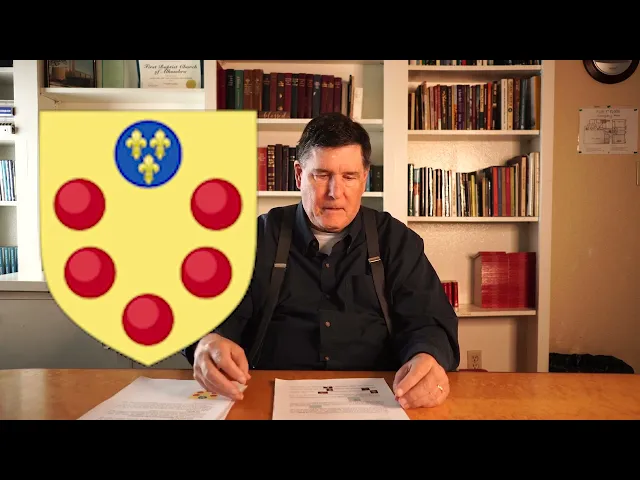
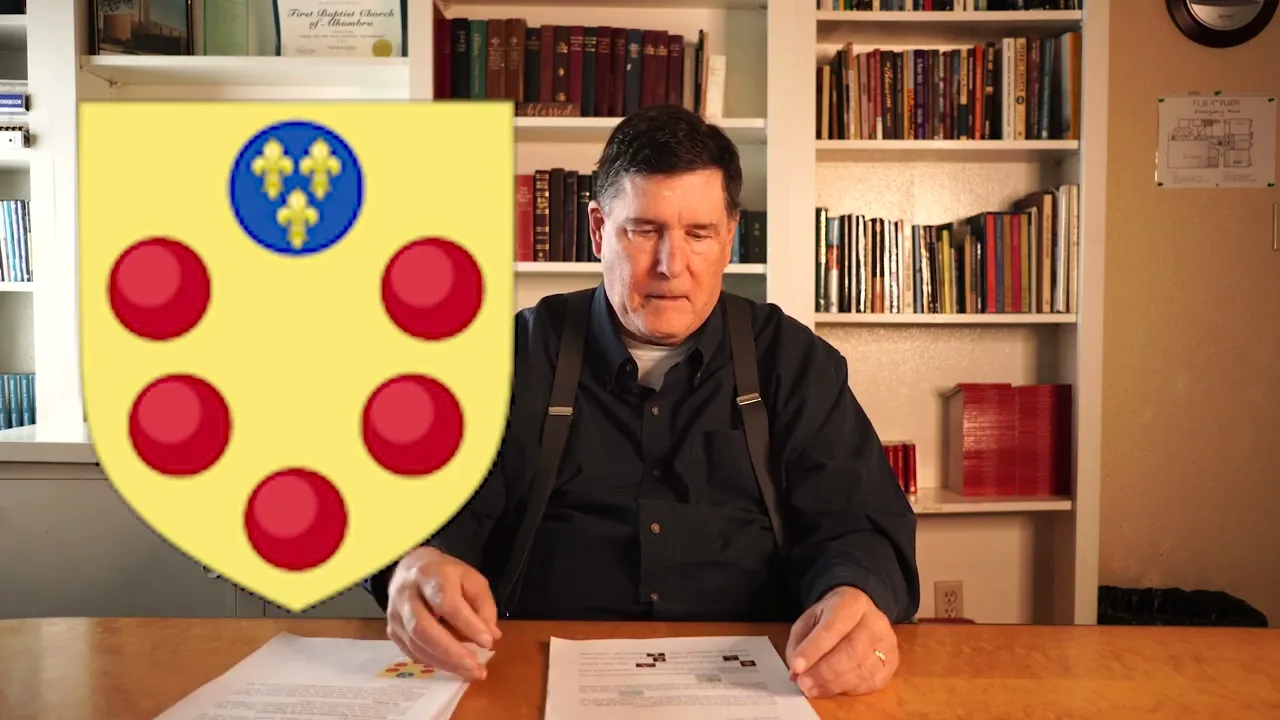
all interacted with each other you it's hard to separate them out including with the church uh you'll hear various names and various aspects of how the medich were involved in the Renaissance for almost 400 years the house of Medi held sway in so many areas here is the code of arms here is what Wikipedia has to say about the house of Medi it was an Italian banking family and political Dynasty that first Consolidated power in the Republic of Florence under Kimo deedi during the first half of the 15th century here's a map that has the
red pin where Florence is H relatively far to the north of what is today Italy the family originated in the mugan mugelo region of Tuscany and prospered gradually until it was able to fund the medich bank this bank was the largest in Europe during the 15th century and facilitated the medich rise to political power in Florence and here's a map of different parts of Italy and the names of each section they did officially remain citizen rather than monarchs until the 16th century the menichi produced four popes of the Catholic church and here's a picture of
each of them Pope Leo I 10th served as pope from 1513 to 1521 Pope Clement I 7th from 1523 to 1534 Pope Pas i4th 1559 until 1565 and Pope Leo VI 11th in 1605 two queens of France Katherine dedich 1547 to 1559 and Marie dedich 1600 to 1610 in 1532 the family acquired the hereditary title Duke of Florence in 1569 the duchi was duchi was elevated to the Grand DUI of Tuscany after territorial expansion the medich ruled the grand DUI from its Inception until 1737 with the death of Gian gastone de medich the grand DUI
witnessed degrees of economic growth under the early Grand Dukes but was bankrupt by the time of Kimo III dedich between 1670 and 1723 the medic's wealth and influence was initially derived from the textile trade Guided by the wool Guild of Florence the Arta de la lana like other families ruling in Italian sori the medi dominated the city's government they were able to bring Florence under their fam's power and created an environment in which art and humanism flourished the Italian Renaissance was in inspired by the medi along with other families of Italy such as the visanti
and sorza in Milan the Estee in Ferrara the Borgia andela R in Rome and the gona in Mantua the medich bank from when it was created in 1397 to its fall in 1494 was one of the most prosperous and respected instit tions in Europe and the medi family was considered the wealthiest in Europe for a time from this base they acquired political power initially in Florence and later in wider Italy and Europe they were among the earliest businesses to use the general ledger system of accounting through the development of the double entry bookkeeping system for
tracking credits and debits what is basic today is what they developed back then the mediche family have claimed to have funded the invention of the piano though it would have been more of the harpsicord because the piano as we know it did not come into existence until the late 1700s they were involved very much with the beginnings of Opera and they helped to finance the construction of St Peter's Basilica in Rome here's an image looking up and also Santa Maria Del Fior let me tell you about St Peter's Basilica you will hear more about it
Lord willing in a lecture on the Reformation it was constructed with people buying indulgences Believing by doing that by their donations they would get dead family members out of purgatory which is not taught in the Protestant Bible and is really stretch in the Catholic Bible but anyway that was part of what led to uh Luther challenging the Catholic church but I had the privilege of visiting St Peters many decades ago and when I walked in I looked to the right and there was the Piata the statue of Mary holding the dead Jesus in her arms
and it's the only place I've ever been in or one the first at least where I felt like I was outside when I was inside you can see the sunlight coming in through the upper windows in this image but it does not do it justice the medes also were patrons of the artist brunoli belli Leonardo da Vinci there's an image and Michaelangelo you may have seen this image of gods and Adam's fingers reaching out to each other at the Split Second of creation but when I walked into the cine Chapel the roof the ceiling was
being renovated touched up and so there was scaffolding and I couldn't see it but I looked to my right and I saw the incredible last judgment of Christ by Christ behind the Altar and it is amazing uh work of art I encourage you to research it on your own here's a image of a painting by Raphael you might have heard of makavelli who wrote The Prince he was supported by the mediche Galileo Galileo's telescope and Francesco ready among many others in the Arts and Sciences the medes were also protagonists of The Counter Reformation in opposition
to the Reformation through the Council of Trent and the French Wars of religion here are the beginnings of the family of medich according to Wikipedia the mediche family came from the agricultural mugelo region north of Florence and they are first mentioned in a document in 1230 the origin of the name is uncertain medich is the plural of Medico meaning medical doctor the dynasty began with the founding of the mediche bank in Florence in 1397 Wikipedia writes about the rise to power of the mediche family here's an image of Giovani deichi De medich founder of the
medich bank and here is an image of the confirmation of the rule by Dominico gandio for most of the 13th century the leading banking center in Italy was Sienna but in 1298 one of the leading banking families of Europe the Bon senores went bankrupt and the City of Sienna lost its status as the banking center of Italy lost its status to Florence until the late 14th century the leading family of Florence was the house of alizy in 1293 the ordinances of Justice were enacted effectively they became the constitution of the Republic of Florence throughout the
Italian Renaissance the city's numerous luxurious pazi or palaces were becoming surrounded by tow houses built by the prospering merchant class the main Challengers to the Ali family were the Michi first under Giovani deichi deichi later under his son Koso de Giovani deichi and great grandson Lorenzo de medich the medi controlled the medich bank then Europe's largest bank and an array of other Enterprises in Florence and elsewhere so they invested in many areas in 1433 the alesi managed to have kasimo exiled the next year however a pro Medi senority Civic government led by Tomaso sodini Odo
altoviti and Luca PTI was elected and kosimo returned the medi became the city's leading family a position they would hold for the next three centuries Florence remained a republic until 1537 traditionally marking the end of the high end of the high Renaissance in Florence but the the instruments of Republican government were firmly under the control of the medich and their allies except for the intervals after 1494 and 1527 kosim Mo and Lorenzo rarely held official posts but were the unquestioned leaders you might call them the leaders behind the throne the medich family was connected to
most other Elite families of the time through marriage of convenience Partnerships or employment so the family had a central position in the social network several families had systematic access to the rest of the elite families only through the mediche perhaps similar to banking relationships some examples of these families include the B Altoid redoli kavalan and the turnab buoni this has been suggested as a reason for the rise of the medich family the inter relationships the social relationships members of the family Rose to some prominence in the early 14th century in the wool trade especially with
France and Spain despite the presence of some medich in the city's government institution they were still far less notable than other outstanding families such as alzy or the stroy one salvestro dedich was speaker of the wool makers Guild during the kumpi Revolt of 1378 to 82 and one Antonio deedi was exiled from Florence in 1396 involvement in another plot in 1400 caused all branches of the family to be banned from Florentine politics for 20 years with the exception of two so you might say that they followed through on the teachings of makavelli before he wrote
his book The Prince here is what Wikipedia says about the 15th century and the family Giovani De Bei de medich 1360 to 1429 was the son of averardo deidi 1320 to 1363 increased the wealth of the family through his creation of the medich bank and became one of the richest men in the City of Florence he had popular support for the family through his support for the introduction of a proportional system of Taxation giovan's son kasimo the Elder pter patri father of the country As Americans called George Washington took over in 1434 as Grand Maestro
The Unofficial head of the Florentine Republic here is an image of a statue of Kimo P patrii the medich family additionally benefited from the discovery of vast deposits of Alum and tofa in 1461 Alum is essential as a Morant in the dying of certain cloths and was used extensively in Florence where the main industry was textile manufacturing clothing on the high end was very expensive because of the cost of some dyes before the medich the Turks were the only exporters of Alum so Europe was forced to buy from them until the discovery in Tula Pope
pasus II granted the medi family a monopoly on the mining there making them the primary producers of alum in Europe so there you have the interaction of the church and the family and business three success of generations of the medich kosimo Piero and Lorenzo ruled over Florence through the greater part of the 15th century they clearly dominated Florentine representative government without abolishing it altogether these three members of the mediche family had great skills in the management of so restive and independent Aid as Florence when Lorenzo died in 1492 however his son Pierro proved quite incapable
of responding successfully to challenges caused by the French invasion of Italy in 1492 and within two years he and his supporters were forced into Exile and replaced with a Republican government Pierro deichi 1416 to 69 kosimos son was only in power for 5 years 1464 until 14 1969 he was called Pierro the gouty because of the gout that his pain foot had and led to his death I guess I shouldn't laugh because I know gout is very painful unlike his father Pierro had little interest in the Arts due to his illness he mostly stayed at
home bedridden and therefore he did little to further the medi control of Florence while in power as such medii rule stagnated until the next generated when pierro's son Lorenzo took over Lorenzo dedich 1449 to 1492 he was called The Magnificent I guess by comparison was more capable of leading and ruling a city but he neglected the family banking business which led to its ultimate ruin so he ran the political side of things but apparently eventually would be responsible for running the Bank into the ground to ensure the continuance of his family success Lorenzo planned his
children's future careers for them we've seen that often on over the centuries haven't we he groomed the headstrong Pio II to follow as his successor in civil leadership Giovani the future pop Leo the 10th was placed in the church at an early age and his daughter madalena was provided with a Sumptuous meaning very large dowy to make a politically advantageous marriage to a son of Pope Innocent theith and yes popes did have children at times back then that cemented the alliance between the medich and the Roman branches of the sibo and altoviti family so you
can see the inter relationship of various families the potsy conspiracy of 14 1998 was an attempt to depose the mediche family by killing Lorenzo with his younger brother gianino during Easter services the assassination attempt ended with the death of Giuliano and an injured Lorenzo the conspiracy involved the PSI and salviati families both rival banking families seeking to end the influence of the mediche as well as the priest presiding over the church services the Archbishop of Pisa and even Pope 6us I 4th to a degree the conspirators approached Pope 6us I4 in the hopes of gaining
his approval as he and the Michi had a long rivalry themselves but the pope gave no official sanction to the plan despite his refusal of official approval the Pope nonetheless allowed the plot to proceed without interfering and after the failed assassination of Lorenzo also gave dispensation for crimes done in the service of the church after this Lorenzo adopted his brother's illegitimate son Gio de medich 1478 to 1535 the future Pope Clement II so you see it gets rather messy but you can think back to the Roman Empire Ires how um Augustus was Julius Caesar's adopted
son I believe Lorenzo's son Pierro II took over as the head of Florence after Lorenzo's death the medich were expelled from Florence from 1492 to 1512 after Pierro exceeded to all gave in to all of the demands of the Invader Charles VII of France let's look briefly at the 16th century the Exile of the medich lasted until 1512 after which the so-called senior branch of the family those descended from casimo the Elder were able to rule until the assassination of alesandro De Medi first Duke of Florence in 1537 this Century long rule was interrupted only
on two occasions between 1494 and 15 1512 and 1527 and 1530 when anti- medich factions took control of Florence following the assassination of Duke alesandro power passed to the junior mediche Branch those descended from Lorenzo the Elder the youngest son of Giovani dichi starting with his great great grandson kmo first called the Great kmo the Elder in his father started the mediche foundations in banking and Manufacturing including a form of franchises the family's influence grew with its patronage of wealth art and culture ultimately it reached its Zenith and the papacy and continued to flourish for
centuries afterward as Dukes of Florence and Tuscany at least half probably more of Florence's people were employed by the family by the medich and their foundational branches in business so that's quite a family business I now turn to the Age of Exploration conquest and colonization here is what Wikipedia says about this period the age of Discovery also known as the Age of Exploration was part of the early modern period and largely overlapped with the age of Sale s a i l it was a period from from approximately the late 15th century to the 17th century
during which seafarers on oceans from a number of European countries explored colonized and conquered regions across the globe the age of Discovery was a transformative period in world history when previously isolated parts of the world became connected to form the world system and laid the groundwork for Global ization the extensive overseas exploration particularly the opening of Maritime roots to the Indies and the European colonization of the Americas by the Spanish and Portuguese later joined by the English French and Dutch spurred in the international global trade the interconnected global economy of the 21st century has its
expansion has its origins in the expansion of trade networks during this era the exploration also created colonial empires and marked an increased adoption of colonialism as a government policy in several European States as such is it sometimes synonymous with the first wave of European colonization the colonization reshaped power dynamics causing geopolitical shifts in Europe and creating new centers of power beyond Europe having set human history on the global common course the legacy of the age still shapes the world today European Oceanic exploration started with the maritime Expeditions of Portugal to the Canary Islands in 1336
and later with the Portuguese discoveries of the Atlantic archipelagos of Madera and azors the coast of West Africa in 1434 and the establishment of the sea route to India in 1498 by vosco de Gama which initiated the Portuguese Maritime and trade presence in carala and the Indian Ocean during the age of Discovery Spain sponsored and financed the transatlantic Voyages of the Italian Navigator Christopher Columbus here's an image of the N along with the Pinta and the Santa Maria which joined it which from 1492 to 1504 marked the start of colonization in the Americas and the
expedition of the Portuguese explorer Ferdinand mellan here is a stylized image of him with the large ship in the background mellin was to open a route from the Atlantic Ocean to the Pacific which later achieved the first circumnavigation of the globe between 1519 and 1522 these Spanish Expeditions also significantly impacted the European perceptions of the world these discoveries led to numerous Naval Expeditions across the Atlantic Indian and Pacific Oceans and land Expeditions in the Americas Asia Africa and Australia that continued into the late 19th century followed by the exploration of the polar regions in the
20th century European exploration initiated the Colombian Exchange between the Old World Europe Asia and Africa and the new world the Americas and Australia The Exchange involved the transfer of plants animals human populations very regrettably and wrongfully including slaves communicable diseases and culture across the eastern and western hemispheres the age of Discovery and European exploration involved mapping of the world shaping a new worldview and facilitating contact with distant civilizations all of this would come to involve the Church the continents drawn by European mapmakers of the age develop from abstract blobs into the outlines more recognizable to
us today simultaneously the spread of new diseases especially affecting American Indians led to Rapid population declines the era saw widespread enslavement exploitation and military conquest of native populations along with the growing economic influence and spread in of Western and European culture Science and Technology leading to a faster than exponential population growth worldwide I will note that Europeans themselves got diseases in other lands and I would encourage you to take a look at the book with the cover that you see there with the title Guns Germs and Steel while I am opposed to the advancement of
Christianity by Force of Arms it is a fact that European civilization inexorably moved around the world in forms of conquest and colonization some Christian leaders helped mitigate the worst of these developments by serving the indigenous people one example would be Hawaii some people said that uh everybody came and took what they wanted from the Hawaiian islands and the Hawaiians but the missionaries came and stayed and loved the Hawaiians gave them an alphabet gave them the translated Bible gave them the gospel they became Christians there were Hawaiian pastors there still are so uh the church the
the colonization and everything is a fact that happened and the church at its Best Made A Difference among those people and I return to Wikipedia and here's what it says about the Spanish missions in the Americas there were catholic missions established by the Spanish Empire during the 16th to the 19th centuries in the period of the Spanish colonization of the Americas many hundreds of missions durable meaning longlasting and ephemeral meaning did not last very long created by numerous Catholic religious orders were scattered throughout the entirety of the Spanish colonies which extended Southward from the United
States and Mexico to Argentina and Chile the relationship between Spanish colonization and the uh Church in the Americas is inextricable the conversion of the indigenous people of the Americas was viewed as crucial for colonization Wikipedia says the missions created by members of the Catholic orders were often located on the outermost borders of the colonies such as California the missions facilitated the expansion of the Spanish Empire through the religious conversion of the indigenous people occupying those areas while the Spanish Crown dominated the political economic and social Realms of the Americas and people indigenous to the region
the Catholic Church dominated the religious and spiritual realm in some regions missionaries attempted to create settlements of indigenous people ruled by the Catholic missionaries and beholden to the crown but independent of secular Colonial authorities many missions raised their own food and provided other services to the indigenous people the California missions did not begin until the late 18th century which is well beyond the scope of this lecture and the time frame of church history 1 church history too among other things would look at the conqu Quest and colonization in the Catholic Church of Brazil I return
now to Colin Brown for a final word on the Renaissance we read what he has to say about how it fits in with the Protestant Reformation quote in one sense the Reformation was an outgrowth of the Renaissance the critical study of ancient texts helped to facilitate the study of the scriptures and the church fathers the printing presses which produce classical literature were also used to print Bibles and Theological works but in another sense the spirit of the Reformation was more akin to that of the Middle Ages and I in a bracket would encourage you to
see what Dr Richard Mueller said about Luther on the Middle Ages and his being part of it though it was characterized by a different focus of Interest medieval thought had viewed all life in relation to God but the intense debates caused by the reformers understanding of justification by faith shifted by shifted the focus away from the metaphysical analysis and speculation and onto personal experience and the role of scripture and the believer's knowledge of God so in conclusion as I said and that's close quote on Brown as I said near the beginning of this lecture there
is overlap between the Renaissance and the times of the Reformation which would be talked about in the start of church history to three lectures remain for church history 1 the history of Christianity in Asia part three morning in stars of the Reformation as well as wrap up in trajectories for the course which we'll look back retrospectively and we'll look ahead prospectively we'll look at patterns of the past and trajectories of the future but for now I bid you Farewell My Heroes until we meet again may the Lord bless you and keep you the Lord make
his face to shine upon you the Lord be gracious unto you you and give you peace amen