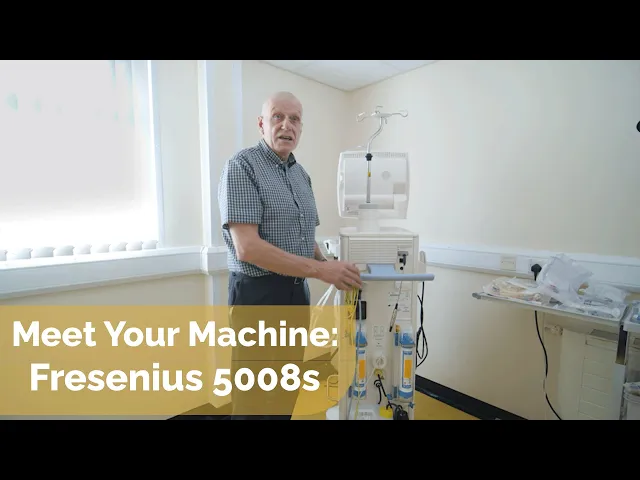
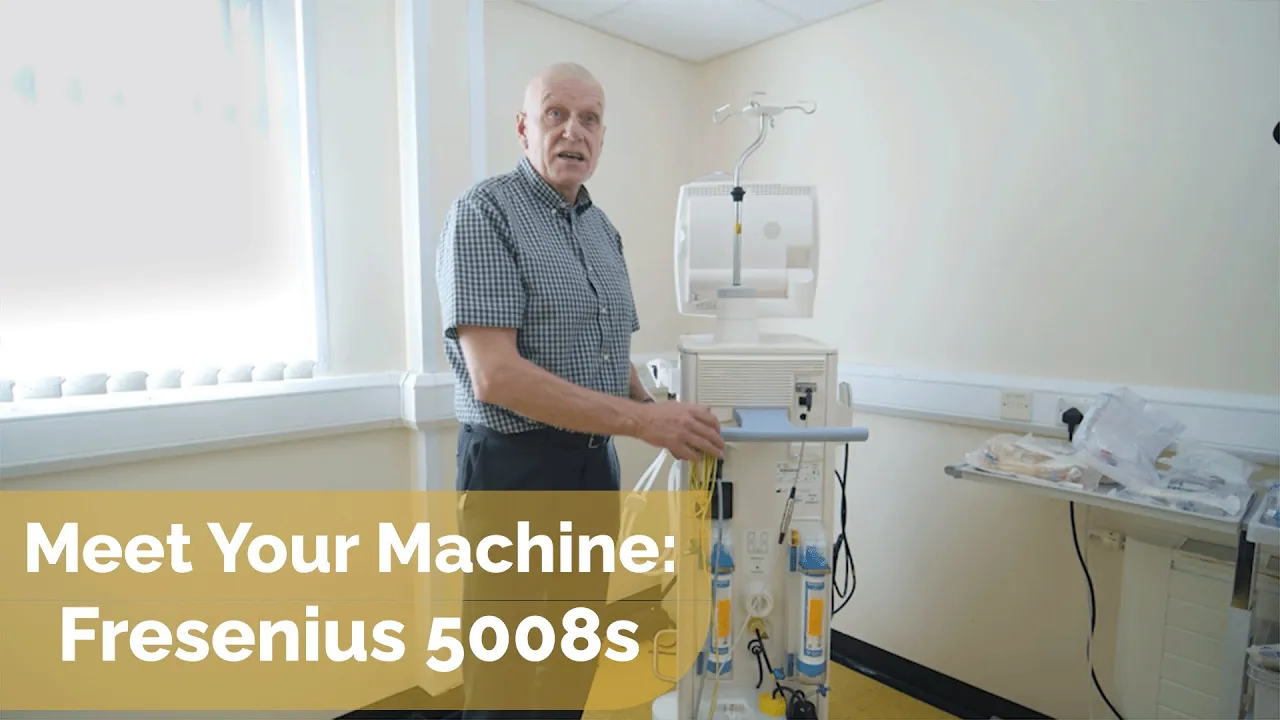
[Music] hello today we're going to talk about the Fresenius 5008s hemodialysis machine this is the dialysis machine that you will be using at home for your hemodialysis I'm going to look at the various components and parts of the dialysis machine and hopefully give you a brief explanation of what each component is and what it does foreign [Music] so there are three three main parts to the Fresenius 5008 s machine there's the control monitor this is where you control the machine and you look at what the machine is doing and it gives you all the readings
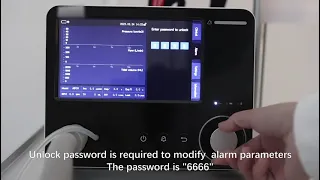
for your blood pump speed your venous pressure your arterial pressure everything that's going on in the machine comes through this screen here you have your on off button here you have your mute button here your blood pumps start and your blood pump stop the blood section is where your blood gets taken out of the out of your fistula and pumped to the dialyzer where your dialysis takes place the hydraulic section of the machine is the lower part here on the lower part you have the brake which allows you to break the machine to stop and
moving to release the brake just put your foot in that and the Machine will move you have this shelf here which is where your a concentrate sits you use the red probe from here to get your egg concentrate into the machine open the flap put the probe in the can close the flap you open this flap and you put the bike by bag on there and then close the flap like that you do not use the blue probe that's not used on this machine [Music] foreign [Music] [Music] [Music] on this side of the machine you
can see the monitor tilts backwards until it's forward it has a movement like that so you can view the monitor when you're dialyzing you can also access the drip stand your bags of Salem will go to move the drip stand up and down hold that bottom section there and push that ring upwards and it allows you to push the dialyzer drip stand up and down to bring it back down you do the same thing hold the bottom push that ring upwards and it allows you to bring that back down the side of the machine this
is the holder for the blood pressure cuff this is what you use to get your blood pressure readings here we have the remote control this is what what you would use at home on home dialysis when the machine is not in use and you are not dialyzing this remote control needs to sit in the holder because this is where it gets its charge it's a bit like like an electric toothbrush that you use at home there's no wires connecting to it you just put it in and it will charge at that point there if you
happen to leave it out the charge will go through the day and when you come to use it that evening it won't connect to the dialysis machine and you won't be able to use it foreign [Music] you have the dialyzer holder which moves like that and that rotates through 360 degrees you then have what we call the shunt interlock this is where the dialysis lines sit when they're not in use or when the machine is disinfecting or rinse in you have a red connector and a blue connector be aware that you have to follow the
color code here put the blue one where the blue indicator is and the red one where the red one is make sure they're clipped on properly the machine will not disinfect correctly if they're not clipped on and also at the end of your dialysis when you want to drain the dialyzer the blue one needs to be on the blue connector the red one still stays on the dialyzer within the Bloodlines this is a sample port for taking dialysis samples within the Morrison unit we don't use this for taking dialysis samples but it is in the
bloodline so just be aware that it is for sampling um the dialysis lines and sometimes if you if you should press that when you're dialyzing you will get fluid coming up to that connector [Music] foreign [Music] [Music] bloodline components can sit if need be you then have the handle for moving the machine around this is where you push it pull it this connector here connects the dialysis machine to your reverse osmosis machine so when the dialysis machine switches on it'll switch the RO machine on at the same time here we have what's known as the
equipotential bonding cable it's an extra Earth on the dialysis machine the machine does have its own Earth as you would in any electrical Appliance this is just an extra Earth to make sure the machine is doubly safe going down the machine this is the mains cable coming in into the back of the machine this is the cooling fan air is sucked in here to cool the electronics within the machine these are the diocy filters you will be shown how to change these um they're changed when the machine tells you to change them after so many
treatments the machine will ask you to change the dioc filters to get access to them you take the cover off like that and you lift that flap there and lift that flap there between the two dialysis machines we have the blood leak detector that's within the machine if you need to get access to it you will turn that open that flap there however you should not need to do this if you do have a blood leak alarm you will stop dialysis and come off and call for technical support foreign these points here that point there
allows you to open the arterial pressure measuring holder Dome holder manually if it doesn't open electrically you can put a syringe on there and use a physical Force to push the holder open however to do that you need to put this white connector there which is a non-return valve onto that Port there and put a large 50mm syringe on there and push it in and you will see the clamp opening at the front it'll might take more than one push on the syringe you may have to disconnect the syringe from that white connector and give
a second push on it when not in use that Port that non-return valve needs to sit on that holder there to that side right there further down the machine we have the can of citrostero because this will get used every time you do a disinfect on the machine it will suck up a certain amount of this fluid to disinfect the machine it'll come up through this connector and into the machine there the machine will also tell you when that needs changing and you will be trained on how to change that can next to the Citrus
cereal you have this the Sporto that sport hole is does the weekly disinfect is a degreasing of the lines we normally program the machines for that to happen on a Sunday the machine will come on automatically and do its own disinfection with that sport all on Sunday and that gets pulled up into the machine so this hose there to the bottom of the machine you have the water connector from the RO you have the drain connector this is the drain of the from the dialysis machine taking the fluid back to the drive the drain point
on your wall the potential bonding cable is connected at that point there these two ports are not used you may get fluid in Hydraulics alarm on the machine sometimes that could indicate that there is a leak within the hydraulic section of the dialysis machine and that is shown by this little pot on the back here filling up with fluid there's a leak sensor in there that will give the alarm however often you could we have had problems in the past with bags of saline that are leaked at the top of the machine the fluid runs
down the back of the machine and fills up this sensor pot here the way to clear that alarm is to get a syringe in here and draw the fluid out and then wipe it clean with a paper towel close the flap and the Machine should be able to reset to clear that alarm it's very difficult it's sometimes difficult to find this this flap but if you look located next to the drain under this point here that little flap there will just lift up and you can clean the fluid out looking at the blood circuit you
have your Bloodlines which are connected to your fistula and your arm this particular setup is for double pump single needle which is what we use for nocturnal dialysis the arterial line takes the blood from your fistula through this bloodline all the way into the dialysis machine it comes in at this side over here so the blood temperature module which we don't use but we root the line through there so it's connected a tidy root in through the arterial line clamp which clamps the line in event of a problem with the machine it'll close the bloodline
to stop any blood coming from your body if there's an alarm on the machine arterial pressure is measured at this point here from here the blood is taken through the arterial blood pump into the expansion chamber here that pump will stop and then this pump will start and push the blood through this tube line here and out to your dilator the blood passes through the dialyzer where dialysis takes place you have on the dialyzer the arterial line blood in and then the blood out through the venous line and you have the dialysis fluid lines dialysis
fluid in dialysis fluid out in opposite directions it's called contraflow from the top of the day laser the blood comes back in to the machine to the air detector this has a level of blood within it you can saline at the moment but normally there would be blood in there when you're dialyze in this detects if there is any air in that blood if there is air in the blood the machine will alarm and stop and you will have to correct that air get rid of it on that chamber as well you also measure the
venous pressure that's that Port there ensure that that is screwed on nice and tightly when you line the machine that's tells you how good your axis is going back into your fistula if you have a problem there you will get a high venous pressure alarm or if the blood should start clotting you will also get a high venous pressure alarm below the air detector you have a primary detector that tells you if there's blood or saline in the lines and then just below that you have the venous line clamp if you should have air in
there or any problems with the machine the venous line clamp will close and stop the blood going back into the fistula from there the line bloodline comes back through the blood temperature module the BTM which needs to be connected in there just for tidiness and from there it'll come all the way back to the to your fistula that's the blood circuit [Music] [Music]