does the cosmos go on forever is an age-old question in philosophy and science the observable universe is finite in that it hasn't existed forever it extends 46 billion light years in every direction from us but what lies beyond the observable universe what we know for certain is that the universe is bigger than we observe it to be essentially because the farthest edges of the universe we can see don't look like edges at all the observable universe is still huge but of course it has limits that's because we know the universe isn't infinitely old we know
the big bang occurred some 13.8 billion years ago we have a thing called the sloan digital sky survey which maps the positions of galaxies so you know how much of the sky you've surveyed and you know how many galaxies you've counted and then you can spread that across the wider universe and you get this picture of a vast and possibly infinite universe we know that the universe are very strongly suspect the universe is much bigger than the piece we can see so we have good reason to think that's the case whether it's infinite or not
is another question can you pitch your infinity well no one can pitch your infinity we say the universe began 13.8 billion years ago so that's a measurement because we can measure the speed that all the galaxies are flying away from us essentially it's that you can run time backwards if you like so to find out when they're all on top of each other it's quite a simple measurement and we've done that so we say the universe began 13.8 billion years ago but actually all we know really was the universe was very hot and very dense
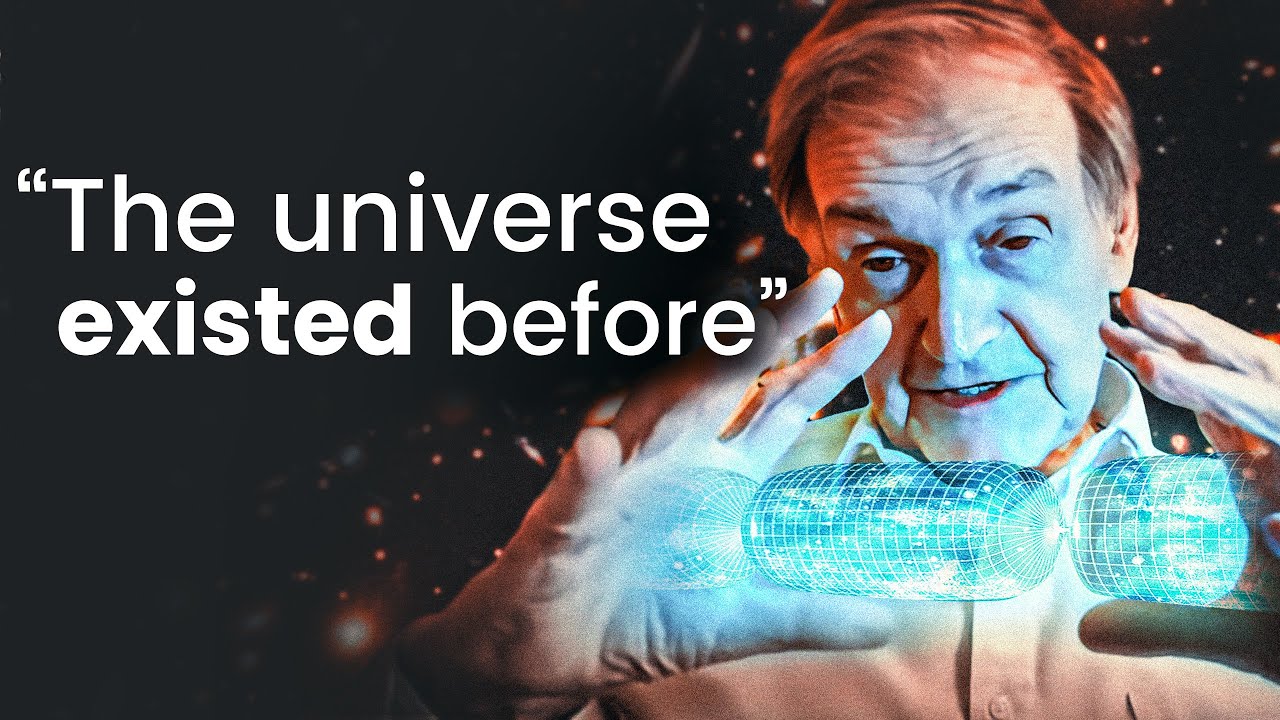
at that time and we have some theories that the universe was in existence before that and perhaps some sort of circumstantial evidence and that means that actually the universe could have always been there eternal when i talk to people sometimes they get a bit some people get upset about that some people would rather it had a beginning the idea that it might have been around forever is more frightening somehow than the fact that it began now it's interesting the way that people's minds work the universe is huge but it is only with recent discoveries that
we can realize how inconceivably immense the universe or even multiple universes may actually be eternal chaotic inflation which generates multiple universes builds from the theory of cosmic inflation although inflation is generally eternal into the future it is not eternal into the past alan guff detailed in a paper published in 2007 new inflation does not produce a perfectly symmetric universe due to quantum fluctuations during inflation the fluctuations may cause the energy and matter density to be different at different points in space quantum fluctuations in the hypothetical inflation field produce changes in the rate of expansion that
are responsible for eternal inflation those regions with a higher rate of inflation expand faster and dominate the universe despite the natural tendency of inflation to end in other regions this allows inflation to continue forever modern physics has radically changed our picture of the gnome cosmos it has offered us not only glimpses of what the future of the universe may look like but it has also offered us a view for the overall shape of the universe itself from the theory of inflation the best way to explain the universe the properties that we see is that it's
very much bigger than the piece we can see so for example we measure space to be what's called flat so if you imagine slices of space let's imagine slices of them at different times so you just slice the universe and it can have a geometry right it can be flat like a table top or it could be curved like a sphere or it could be curved in the opposite direction sort of like a saddle or a bowl and we can measure that and when we measure it we see it's absolutely flat and that's a very
unusual thing for it to be like because what einstein's theory says is that the shape of space that the curvature is basically determined by the stuff that's in it that's basically einstein's theory of general relativity puts stuff in space and it curves it and bends it and warps it and stretches it and so on and what we find is that there's precisely the right amount of stuff in the universe to have a completely flat universe the explanation the most favored explanation for that is the universe is way bigger than the piece we can see [Music]
because we cannot observe space beyond the edge of the observable universe it is unknown whether the size of the universe in its totality is finite or infinite estimates suggest that the whole universe if finite must be more than 250 times larger than the observable universe astronomers calculate the age of the universe by assuming that the lambda-cdm model accurately describes the evolution of the universe from a very uniform hot dense primordial state to its present state and measuring the cosmological parameters which constitute the model over time the universe and its contents have evolved for example the
relative population of quasars and galaxies have changed and space itself has expanded due to this expansion scientists on earth can observe the light from a galaxy 30 billion light years away even though that light has traveled for only 13 billion years the energy from the big bang drove the universe's early expansion since then gravity and dark energy have engaged in a cosmic tug of war gravity pulls galaxies closer together dark energy pushes them apart whether the universe is expanding or contracting depends on which force dominates gravity or dark energy besides dark energy there is also
dark mysterious stuff that fills the universe that no one has ever seen this hypothetical form of matter thought to account for approximately 85 percent of the matter in the universe is also known as dark matter but we have yet to understand what it actually is so we look into the universe and we see that there's a lot of stuff there that's interacting gravitationally but is not interacting strongly with the matter out of which we are made and the stars are made so it's almost certain that that's some form of particle that fits beautifully and we
see lots of different observations the way galaxies rotate and interact and even the oldest light in the universe the so-called cosmic microwave background radiation we see the signature of that stuff in that light as well so we think that there's some other particle out there and to be honest we thought we would have detected it i think at lhc we have lots of theories called supersymmetric theories that make predictions for all sorts of different particles that would interact weakly with normal matter and yeah i think it's broadly seen as a surprise that we haven't seen
them at lhc so that just may well mean that either they're a bit too massive so we need more energy to make them and we just haven't quite got enough are we not making enough of them often enough to see them which is one of the reasons we're upgrading the lhc we may never have the answer to the question is the universe infinite or if it does have an actual boundary what we do know however is that the observable universe is stupendously large in volume the vast amounts of space includes anywhere from 200 billion to
a trillion galaxies according to varying estimates and each galaxy has on average about 100 billion stars these gargantuan numbers boggle the mind and are all inspiring when we look into the night sky and try to grasp the ungraspable volume of the universe this is the picture that hubble took and you see that it's anything but empty it's called the hubble deep field image it's one of the most important and fascinating images in the recent history of astronomy it's not empty it's got lots of structure lots of points of light in and virtually every one of
them over 10 000 of them are actually galaxies distant galaxies so they're not stars they're galaxies now those galaxies on average have 100 000 million stars like our sun in them at least so a hundred thousand million stars in each one of those ten thousand blobs the most distant object in that image is 13.2 000 million light years away now light travels at 300 000 kilometers per second 186 000 miles a second and at that speed it's taken over 13 billion years to travel from the most distant objects in that image to earth to the
hubble space telescope now when you think that the earth is only just under 5 billion years old it means that most of the light from most of the galaxies in that image began their journey began its journey to earth before there was an earth and for some of the most distant galaxies there they were over halfway here when the solar system was just a cloud of gas and dust it hadn't yet coalesced into the sun and planets and moons of the solar system so imagine what that looks like imagine what that looks like when you
extend it over the entire sky well this is a beautiful map of the observable universe every dot on that map is a galaxy with 100 billion stars like our sun in it at least there you see that the structure in there they're not randomly distributed it's very interesting we're beginning to understand where that structure came from just to get some sense of scale that little line up there that's the 1 billion light year line so light takes a billion years to travel from one end of that line to the other this is the observable universe
this is the number of stars we know from observation are in the observable universe at the moment 30 000 million million stars just like our sun some big s and smaller 350 billion large galaxies 7 000 billion smaller dwarf galaxies that's the observable bit of the universe thanks for watching did you like this video then show your support by subscribing and ringing the bell to never miss videos like this [Music] you