you you you welcome back to understanding adapt OSI in the last episode we took a look at three different categories three models of approaching the question of what is creation and what is humanity's role in relationship to or within the rest of creation we took a look at the Dominion model the stewardship model and the kinship or community of creation model in this episode of understanding without OSI we're going to look at the text itself first by taking a look back at these three models and trying to understand in a kind of an anticipatory way
a way of sort of framing our approach to reading the text how we might classify Pope Francis's encyclical letter does it fit under the Dominion model or the stewardship model or the kinship model of creation then we'll take a look at what Pope Francis says at the outset of the encyclical how he lays out his audience how he introduces his mission his appeal his theme and kind of sets the tone for what's to follow so about this question which of the three models that we've looked at in terms of the Christian understanding of creation does
Pope Francis's encyclical laudato see fit it's definitely not the Dominion model Pope Francis is clear and writes in the text itself that this is not an authentic or accurate way from the Christian vantage point from the Catholic Church's perspective to read the book of Genesis or to understand our relationship to the rest of creation so Pope Francis's encyclical is not a iteration or an example of the Dominion model of creation but there's an interesting kind of juxtaposition we have here as we'll see when we go more deeply into the text itself there are times in
which Pope Francis uses the language of the kingship model of creation that Third Way or view you know or category for understanding creation and humanity's relationship to it language like sister earth or mother earth language like the intrinsic value of all of creation pardon from humanity that God has a relationship to the rest of the created order these kinds of things appear periodically yet on the other hand will also see how he uses and adopts the language of the stewardship model of creation he reinterprets what is oftentimes seen in the Dominion approach as kind of
this absolute sovereignty bestowed to you and me in the book of Genesis in terms of Dominion and some doing the earth and that sort of thing and he says no no what Genesis is really calling for is our care for creation that we are entrusted with this vocation this calling to take care of this earth to till it to cultivate it to protect it and so on so what I'm going to suggest is that Pope Francis in fact isn't doesn't fit comfortably in terms of the encyclical in either the stewardship model or the kinship model
of creation instead what Pope Francis is teaching on the environment and humanity's relationship within it where that really falls is somewhere in between it's kind of a liminal or a intermediary position it is both we might say if he had two legs standing would be one in the stewardship camp one in the kinship camp and I think there's a very practical reason for that and I'll give it to you right off the bat right from the get-go and that's just like with st. Francis of Assisi the way in which he's been placed in the garden
is in a birdbath depicted that way or been overly romanticized in terms of paintings and poetry and music I think that Pope Francis and his advisors realized that if he were to embrace fully or to talk in language that is very evocative of the kinship model of creation and that means emphasizing our shared relationship with the rest of creation our creativeness as the kind of starting point for our reflection then he runs the risk of people dismissing him he runs the risk of people dismissing laudato si in whole and not actually heeding the call for
actual concrete practical change so it's a practical move at least that's my interpretation that's my suspicion because if didn't understand our relationship to the rest of creation in terms of kinship then he wouldn't hold up francis of assisi as often as he does and he wouldn't adopt the language from the Franciscan tradition of kinship of relationality of intrinsic value for all of creation so there is a both/and going on here which is a great Catholic theme you know we're both and people it's not either/or Jesus Christ is not either God or human but fully divine
and fully human in the same way the encyclical laudato si is not either in the stewardship camp or the kinship camp but is sort of a both and a little bit of each at the end of the encyclical itself if we look at what Pope Francis calls for in terms of concrete action political engagement in the language that he adopts to articulate that we have to say that he probably would feel most comfortable identifying his his approach as relating to the stewardship model that's the primary language that's adopted but we see these glimpses of kinship
throughout nonetheless what does he do how does he open this text what's important about that well in the preface material or introduction he says first and foremost that st. Francis of Assisi is his guide he says that he is the paradigmatic he is the model for what it means to have a healthy relationship to the rest of creation how human beings are to relate to the earth if we were to look throughout all of Christian history at the best example of somebody who does this it is Francis of Assisi and it's from Francis of Assisi
that as we already saw he takes the name Lord out Oh see from his canticle of the creatures but he also points to other ways in which Francis of Assisi identifies aspects of creation in a kinship sort of mode or a model he says for example that our earth is as Francis of Assisi puts it like our sister and mother our sister who cares for us our mother who looks over us and provides for us and one of the things that's very startling right from the get-go right in the first paragraphs is that Pope Francis
says that this earth our sister and mother is crying out crying out for our attention crying out for relief crying out because she is being victimized by the human family we human beings have been exploiting the earth and he says at one point in the introduction in the opening that the planet this planet earth our sister and mother is really counted among the poorest of the poor in our universe in this world because we just keep taking and taking and taking with absolutely no regard for the Earth's dignity for the care that's Oded it cries
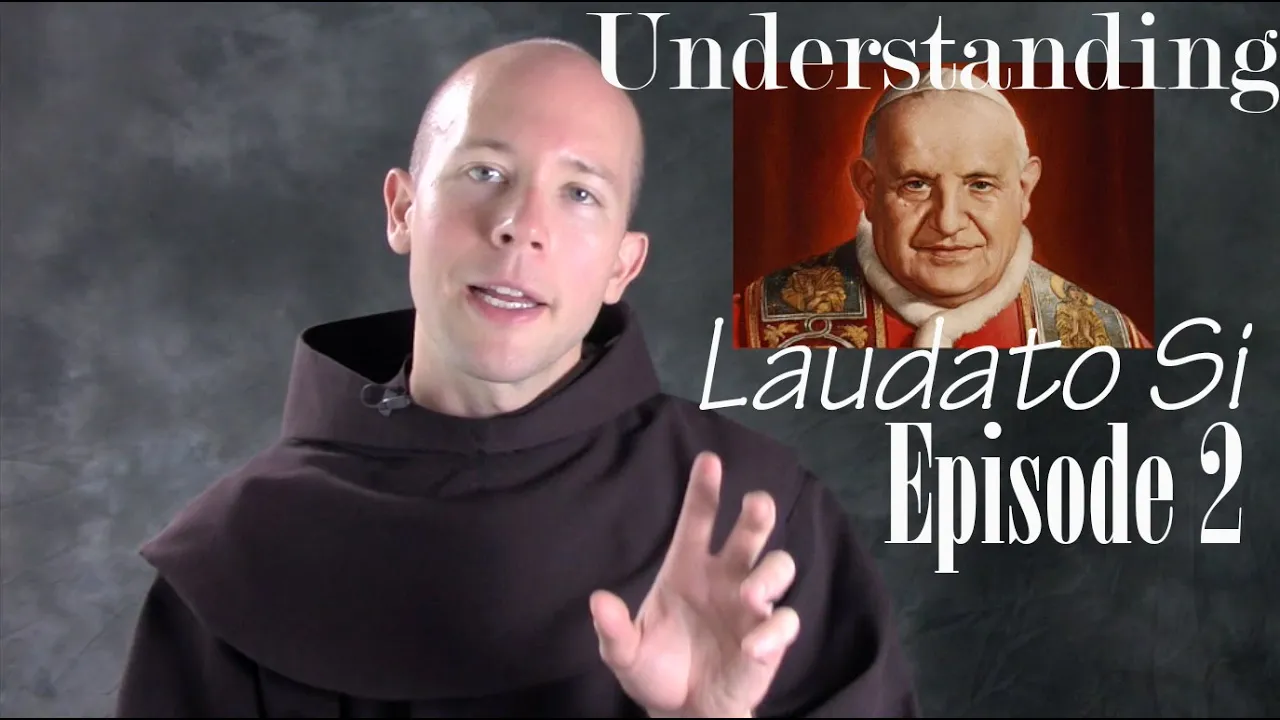
out and is counted among the poor very strong very indicted language he then situates the encyclical within the broader history of Catholic social teaching particularly within the last century he begins by looking at pope john xxiii now st. john xxiii the same pope who called the second vatican council he points to that is Pope Francis points to John the 23rd encyclical letter parchment eros which means peace on and this text was released in 1963 it was a teaching that addressed violence addressed the issue of the Cold War in the increase of nuclear weapons in this
world and the threat that that posed to our safety and one of the things that's very interesting about that encyclical letter is that unlike all the texts that have come previously from other Pope's other official teaching of the church pope john xxiii addressed this encyclical not just the Catholics not just the Christians but he said to people of goodwill to all people of goodwill we should all be concerned about this global crisis of violence and of really atomic annihilation now one of the reasons that Pope Francis points to this encyclical is to draw from john
xxiii this idea that in encyclical teaching this letter that's meant to be authoritative for Catholic Christians shouldn't just be limited to Catholics but rather is addressed not just to the Christian community those brothers and sisters of ours who are also baptized not just the people of goodwill as pope john xxiii ponent but rather to all people in fact that's why pope francis uses in the title of the encyclical care for our common home and he says that this teaching this letter is addressed to all people who share this common home that means everybody there isn't
a person on this earth a person who is lived or will come after us it seems who will not share this common home so that's a very important you know thing to take note of that this is not just for Catholics Pope Francis is trying to engage in dialogue with people who have different faiths people who espouse no faith whatsoever people who recognize Christianity Jesus Christ as God those of other religious traditions it is to include everybody no one is excluded from the audience in this case Pope Francis then points to his predecessors following John
the 23rd he points out blessed Pope Paul the sixth john paul ii benedict xvi and he identifies some of the ways in which each of these popes in their own teaching and in their own writing have also focused on care for creation have focused on environmental concerns in other words what Pope Francis is doing in naming his predecessors pointing out particular documents here and there along the way over the last century especially over the last 50 years what Pope Francis is doing is saying that what I am about to teach and what I am placing
here in this authoritative text which sits among all the other documents and teachings of the social tradition in the church that this is in continuity with what has come before I'm not doing something new this isn't radical in a novel sense but radical in the true sense meaning going back to the roots of our tradition going back to the roots of Christian understanding of creation now one of the other interesting things he does in addition to naming these Pope's who have come before him and who have taught about creation and care for creation in their
own way is point out patriarch bartholomew the ecumenical patriarch who this is sort of a reach out and an olive branch of sorts to our Eastern brothers and sisters the Orthodox Church and to celebrate the good work that patriarch bartholomew has done over the decades he has some been somebody who has been especially vocal about the need that we have to care for creation in fact he is the one who most stridently has said that our harming of the earth our pollution our overuse of resources our decimation of forests and destruction of waterways in mountains
and landscapes the extinction of animals and their endangerment these things are not just bad and some sort of practical or instrumental way these things are in fact ecological sin he calls them out by name as being sinful and Pope Francis here says I see what patriarch bartholomew has done I echo what he's saying we are brothers together expressing this need that we have to be more concerned about sister our mother of the earth and all that share this common home human and other than human alike as I've mentioned he then goes on to reiterate his
own audience pointing back to John the 23rd but also pointing forward to say that this is for all people who inhabit this planet he then points out something that's very interesting and something that's really difficult and challenging in some ways and that's we are all responsible in addition to the fact this is addressed to all of us we all have a responsibility in responding to this call and returning to the sources and recognizing what it is that God has entrusted us with again this language of stewardship that makes an appearance he says that yeah there
are some people who have in explicit ways we might say committed this ecological sin that patriarch bartholomew talks about in other words those who are directly are approximately responsible for pollution or for overuse or overconsumption for the you know all the practices that lead to you know these devastating effects and ecological crises he says but it's not just people who go out there and rev their engines and pollute waterways he says it's also the responsibility and you know call for us all of us to acknowledge our own complicity in different ways and one of the
themes that will read that he will repeat throughout the encyclical and it's been something that's been a keystone of his teaching from his daily homilies to his audiences and public lectures and so on in terms of the traveling that he's done and interviews that he's given is this idea that we are culpable for our for our indifference that we can't just sit by and let things continue as they are that there is as we say and profess every Sunday and confessing our sins we are responsible not just for the things that we have done but
for the things that we have failed to do and in a way Pope Francis is calling all of us who are willfully ignorant who desire not to be concerned about issues with the environment or with other creatures the way that we care for the earth or don't care for he says that is not acceptable and that there is responsibility that's needed here and we are all in some way complicit that's really important and it leads to his primary call or move to her conversion and that's toward a new solidarity later on he'll talk about solidarity
not just with those who suffer the most immediate consequences of environmental crises not just solidarity with our other than human fellow creatures animals and plants and those that inhabit this common home as well but solidarity with future generations he'll talk about an intergenerational solidarity that we need to begin to think about what what we're leaving or what we aren't leaving for those people who have yet to be born those that we believe we're connected to in terms of the communion of saints those who are going to come after us so for the time being what
he does in this opening section is very brief preparatory introduction is just lay out these themes emphasizing the need that we have to acknowledge our own complicity and sinfulness our culpability for our indifference if not for our active sinning against creation and this need that all of us have and indeed all of us all who share this common home to convert to turn in the spirit of Metanoia the Greek for turning which cut you know it becomes in Latin this word converse EO to turn around for us to turn around in move away from our
own selfishness and our own self-centeredness our own immediate gratification toward a solidarity with those who suffer the most today to those who are not necessarily part of the human family but also inhabit our common home and for those who are yet to be born yet to come the future generations that will share this home with us even if we don't share it in the same time so stay tuned for more as we go more deeply into the encyclical laudato si may the Lord give you peace