hey, welcome to 12tone building blocks, a new series we're making about the fundamentals of music theory, and you can't get much more fundamental than today's topic: notes. they're the atoms of harmony, but what are they, really? well, basically, a note is a specific frequency.
you see, sound travels through the air as a wave, and the pitch we hear depends on how quickly the wave is vibrating. a fast wave gives us a high, squeaky sound (bang) while a slow wave gives us a deep, low one. (bang) we measure these in hertz, which is how many times the wave hits your eardrum per second, and humans can hear from around 20 hertz (bang) all the way up to twenty thousand (bang), at least when we're young.
when we hear two different notes, what our ears are actually measuring is the ratio of their frequencies. the most important ratio, at least to music theorists, is doubling. when we hear a doubled frequency (bang) it sounds almost like the same note.
(bang) if you're interested in why, we've covered that before, but for now, all that matters is that it does. we call this ratio an octave, and it's the basis for our entire understanding of music. how we divide up the space between octaves is somewhat arbitrary, but in western music we tend to divide it up into twelve evenly-spaced intervals, called half steps, each with its own name.
odds are you're already familiar with the idea of labeling musical notes using letters. specifically, we use the first seven letters of the alphabet, A, B, C, D, E, F, and G. (play notes in background) after that, we've reached the octave, which we call A again and the cycle repeats.
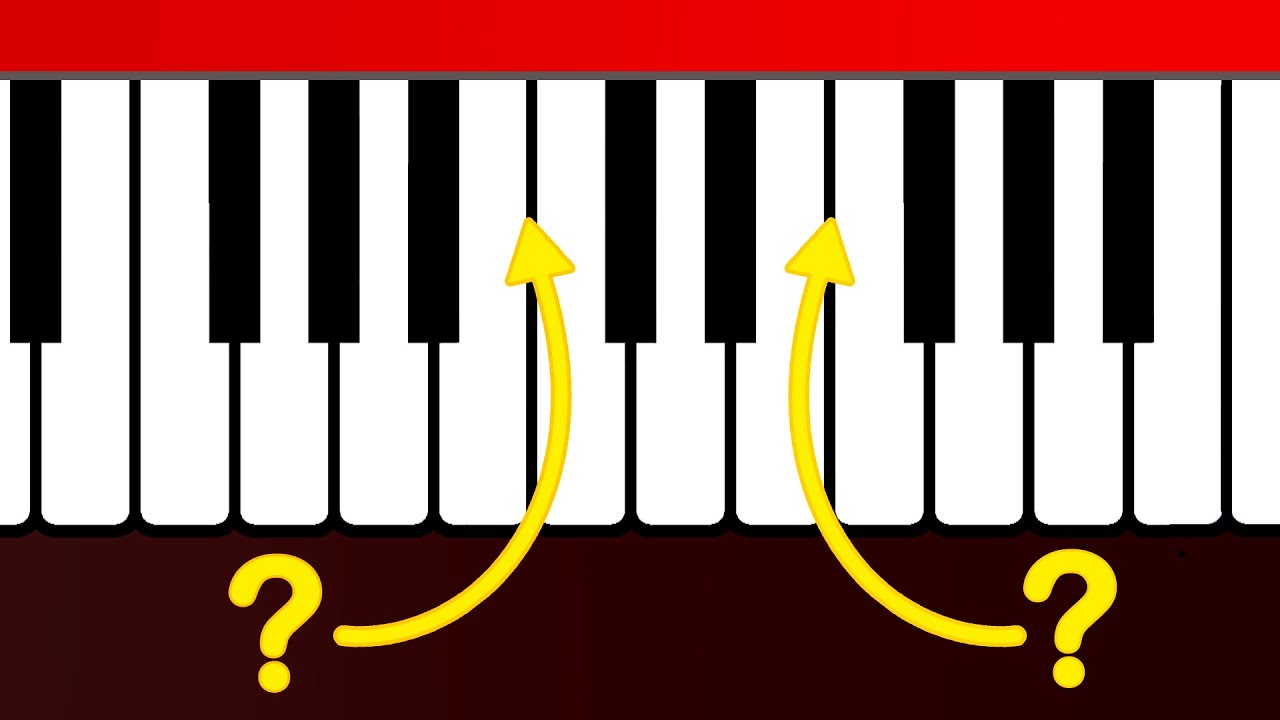
but hang on, I said there were 12 notes, and we've only named 7. what about the others? this is where accidentals come in.
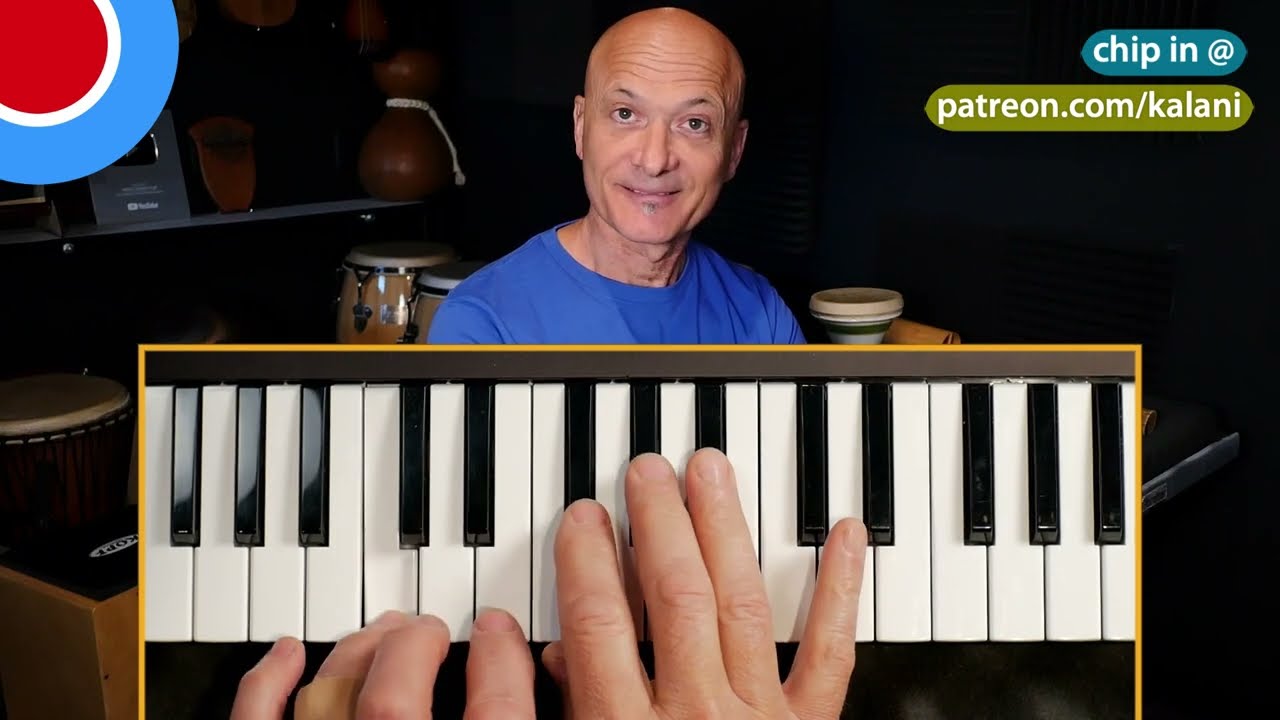
these are the sharps and flats you may have heard of, and they represent notes in between our main letters. for instance, there's a note in between A and B. (bang) we can call it A#, meaning it's a half step above A, (bang) or Bb, a half step below B.
(bang) either way, it's the same note. there's also accidental notes in between C and D (bang), D and E (bang), F and G (bang), and G and A (bang) but, for various reasons, there's no note in between B and C or E and F. those two pairs are a half step apart already.
there's good reasons for that, trust me, but for now, again, it just matters that it's true. but if every sharp is also a flat, why even have both? why not just always use one?
well, it's a bit confusing at first, but this system is actually really helpful. sometimes it helps to think of this note as a kind of C, whereas other times it's serving as some form of D. being able to think of it as two different notes that just happen to sound the same lets you pick whichever name is more useful for whatever task you're trying to accomplish.
this gives rise to what are called enharmonics, which is just a fancy way of saying different names for the same sound. that'll definitely come up again later. until then, thanks for watching!
Building Blocks was made possible thanks to our Patrons on Patreon, so if you want to see more stuff like this please consider supporting. you can also join our mailing list for scans of all our episodes, like, share, comment, subscribe, and keep on rockin'.