hey everybody Welcome to talking scripture a podcast where we illustrate relevance and application of the scriptures in come follow me we also dive into the history and cultures of the text thanks for taking the time to share and subscribe to this podcast for show notes head over to our website talking scpt [Music] second ending isn't it Bryce yeah he first he ended when he thought he was going to end and then he he lives much longer chapter one he clearly says I did not expect to have this amount of time to write and I'm hiding
from the lamanites I love the line they put to death every nephite that will not deny the Christ and I love this next line and I Moroni will not deny the Christ meaning if they find me I know they're going to kill me but they haven't found me yet and so I continue to write which is interesting because now what does he put in I wonder if he wrote chapter one before he wrote the book of ether and I know Mike's going to talk about that in a bit I wonder if he says oh let's
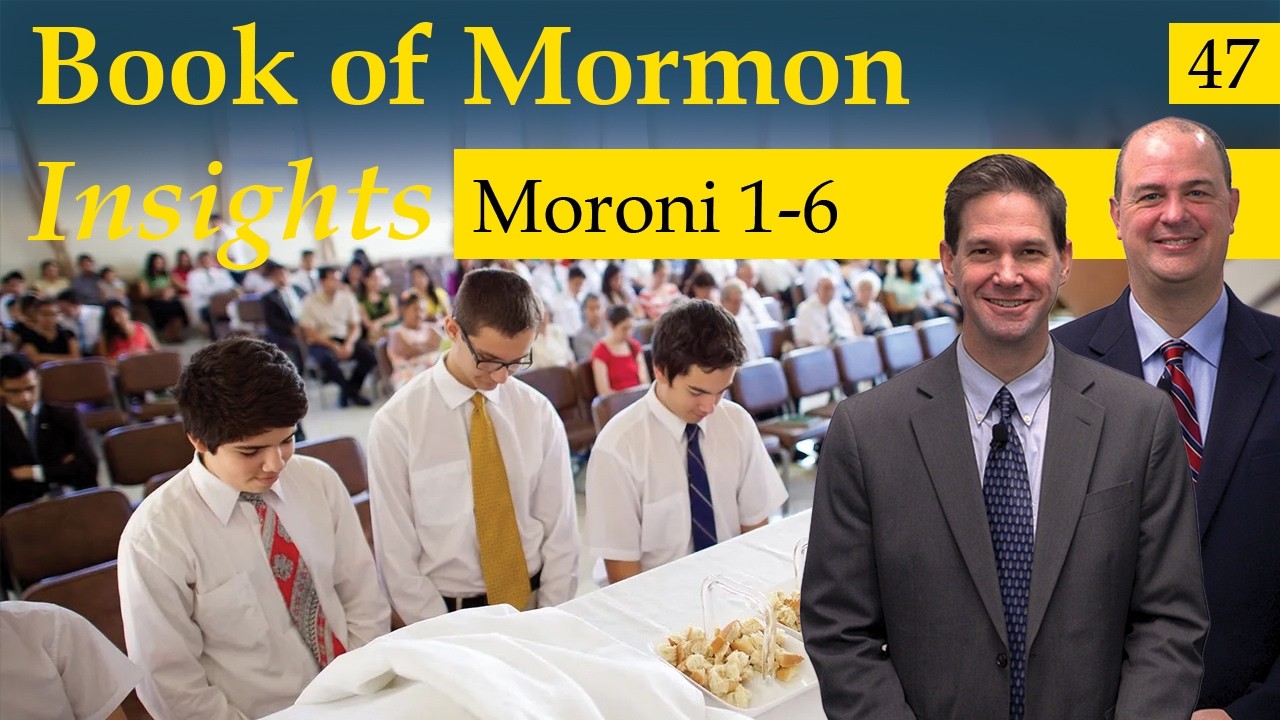
throw in the book of ether and then after the book of ether his question is what is missing what does the book not yet have looking back over the whole history of the Book of Mormon what are some of the small little cracks in the wall that I can f and so chapters 2 through six seem to focus on on the role of the church because if you think about the Book of Mormon nowhere in the Book of Mormon do ever get to look into the church and see what church is like especially post law
of Moses so when Jesus fulfills the law of Moses and institutes a whole new system with Sacrament and all of that what does sacrament meeting look like what does church services look like and so Moroni must have looked back and said you know what that's nowhere in the text and so he begins to throw in the fun of the church now latterday Saints will read these chapters and say well of course but that's not so common knowledge among Christianity for example chapter 2 chapter 3 laying on of hands now that's something the Latter-Day Saints know
well Authority is passed on by the laying on of hands we clearly know that and yet here we see Moroni pointing out that they received Authority by the laying on of hands the whole point of the apostasy is that there was a break in that chain and you cannot read the scriptures and all of a sudden have authority you can't go to school and all of a sudden have authority from God but that's kind of how it becomes isn't it because they they part from Catholicism kind yeah they just you know I'm I'm I'm educated
I went to college I don't mean to point the finger at anyone but the Bible if you read it and then this end of the Book of Mormon makes it very clear that the passage of authority from one to another is by the laying on of hands and lost yeah and hence our fifth Article of Faith that was a big deal when Joseph Smith made that deal is we believe that Authority is passed on by the lay on of hands and hence we see an unbroken chain from Joseph to Holders of the priesthood today every
you know every one of them can hold up a piece of paper that says here is my unbroken chain with hands being laid on head so that's kind of cool to see uh we we see baptism we see Sacrament there really wasn't a whole lot of we saw Jesus instituting the sacrament and then there's not a whole lot of howtos how do you hold this what are the what what's the doctrine for holding the sacrament so it's really nice to see that the Nephites did this that they met what I would like to focus on
and some of the things that are significant for latterday Saints a lot of this is well of course we meet once a week to partake of bread and water of course there's baptism and of course there's Sacrament and of course the priests and teachers were ordained by the lon of hands that's second nature to us but one of the concepts that President Nelson is really helping us understand is the difference between Authority and power and I find it fascinating in Chapter 2 Moroni chapter 2 that Moroni says look one of the things that I feel
like I need to include is what Jesus said when he ordained the 12 way back in third Nephi now that's a fascinating addition that Moroni would say I think you need to know the words that he uttered when he ordained the 12 and gave them the authority to bestow the Holy Ghost upon people because the very Act of him laying his hands upon them gave them Authority but in the prayer Jesus told them what they would need to do to receive power those two words are not the same now let me take you back to
the April General Conference 2018 this is the solemn assembly for president Nelson he is being set apart and ordained and sustained as the president of the church he doesn't speak during the Saturday morning session he doesn't really give a talk he mentions a few things he welcomes and then there's some changes that he introduces but his first real talk is in the priesthood session Saturday night and he does oh he he he pays tribute to president Monson and then as soon as he's done talking about his love for president Monson now the mantle is on
his shoulders and the very first thing out of his mouth to the the church I know it's through a priesthood meaning but he's speaking as the prophet he says now may I voice a concern it is this too many of our brothers and sisters do not fully understand the concept of priesthood power and authority he brings up those same two words to any of our brothers and sisters do not fully understand the difference between power and authority and the full concept of power and authority he goes on to say I fear that too many of
our brothers and sisters do not grasp the Privileges that could be theirs some for ex some of our brethren for example act like they do not understand what the priesthood is and what it enables them to do do so here we have our modern prophet in a significant talk and he says I have a concern that we as a church do not understand fully the concept of priesthood power and priesthood Authority and then Moroni in Chapter 2 quotes Jesus as saying let me tell you how to have power so the very fact that Jesus is
laying his hands upon them means he is giving them authority authority comes when you have been given permission from a key holder to do something people who believe that women don't exercise their priesthood don't understand their priesthood because every single woman who performs a calling in this church under the direction of a keyholder is exercising priesthood Authority every sister missionary is exercising prood Authority every primary teacher every young women's leader everyone that is called and set apart under the direction of a key holder and given permission to perform some task in the church has priesthood
Authority and so president Nelson says we're not claiming those PR privileges when you have been called and set apart you are exercising the priesthood and you have every right to expect Heaven's help because you have that Authority you are an authorized representative and you should speak with confidence knowing that God has authorized you to do whatever it is even if it's just give a talk in church or preach the gospel or be a teacher or a leader you are exercising authority authority we get when you get the assignment but listen very carefully to what Jesus
said said to the 12 according to Moroni 2:2 he called them by name saying ye shall call upon the father in my name in Mighty prayer and after ye have done this ye shall have power Authority he was giving them at that moment when he laid his hands upon them but whether or not they have power is up to them and I really think this is what president Nelson is saying Authority we exercise simply by fulfilling our responsibilities in the church but whether or not you have power is a different matter I would turn everyone's
attention to Doctrine Covenant section 121 this is Joseph Smith in Liberty Jail Doctrine covenants 121 in Liberty Jail the prophet wrote many are called but few are chosen I think that's a fancy way of saying many have author in this church but not many have power there are many missionaries who go out there and are authorized but they don't have power everyone who gives a talk in sacrament meaning under Authority is exercising priesthood Authority but not all Sacrament speakers speak with power speaking with power is if it's convincing if it's persuading and I think if
I'm using and he's going to go into this right where he says if you're using coercion or Force you may have the authority but you're not persuading yeah you don't have any power so let's go to that verse 34 many are called but few are chosen and why are they not chosen because their hearts are set so much upon the things of this world and they aspire to the honors of man that they do not learn this one lesson and it seems to me that this is what president Nelson is saying that this church has
not yet fully learned this lesson so those of you listening I would invite you to learn this lesson and the lesson is this that the rights of the priesthood are inseparably connected with the powers of Heaven if I could say that a little differently I think it means when you exercise Authority you can have power the rights of the priesthood because the priesthood is on Earth we can access power of heaven but here's the lesson the powers of Heaven are not controlled by office or even by Authority they are controlled and handled upon principles of
righteousness and I've often wondered when Elders are called to give a blessing to a baby they are authorized to give that blessing but I wonder if the power that heals the child is the mom's I wonder if it comes from Mom we should exercise priesthood blessings we should seek priesthood blessings but whether or not you have power comes from your own connection to heaven your own righteousness you cannot assume to have power if you are not obeying the principles of righteousness that the Lord has set out but if you are if you are living the
gospel you have more power than you realize you have you have the power of God to convince and to protect and to bless now don't get me wrong I am not saying that we should forego priesthood blessings when hands are laid Upon Our Heads and we perform the ordinance of a blessing that that is a tremendous thing but the lesson we need to learn in this church is that power comes from righteousness so going back to Moroni chapter 2 notice what he's saying I am authorizing you to give the gift of the Holy Ghost the
laying on of hands me laying you my hands on you is authorizing you but whether or not you have power power depends on what you do from here on out so he says call upon the father in Mighty prayer and if you do that you'll have power there there's some other wonderful places in the scriptures where we see how to unlock that power turn with me to section 11 of the doctrine covenants hyam Smith wants to be a powerful missionary so the Lord says in verse 21 seek not to declare my word but first seek
to obtain my word and then shall your tongue be Lo loosed and then if you desire you shall have my spirit and my word yeay the power of God unto the convincing of men when your life is worthy of his Spirit when you have filled your life with the Holy Ghost because of your righteousness and you are a student of the scriptures and the word of God and you attend the temple and you do the things that bring the word of God into your life according to the scriptures you will have power unto the convincing
of men even if those are your children you can control the powers of heaven but it requires Mighty prayer it requires filling your life with the Holy Ghost the things that we've been taught from the our youth if you live the gospel to the best of your ability if you seek the spirit if you pray if you seek out and reach towards the rod of iron you will have power power when you give a talk in church power when you pray power when you speak to your children power when you fulfill your calling there is
an added measure of power that comes through our righteousness and I think that's what Jesus was trying to say to the disciples and that's why Moroni threw this chapter in a simple way to teach us to a teenager is ask your teenager this question tell me about your gym teacher and the first thing they'll say is man he or she is so fit or man they're so out of shape I had this gym teacher in high school and she was just like a little He-Man doll she was ripped right and everyone was like I want
to run you know fast like teacher so and so and we've all had the gym teacher that sits behind the desk and hasn't picked up weights in 20 years and you've you lose your power influence right or the math teacher I love math because of a very very powerful math teacher who paid that same price of math like Jesus is inviting that we pay spiritually and he had power and he convinced and he we fell in love with math imagine doing that with your children when you prayed or when you read the scriptures or talked
to them about the scriptures you can have that same convincing power because your life is your example and that's where we gain our power I really liked one of the first podcast we did where we talked about how to read your scriptures and one of the things you said was essentially when you pick up the scriptures and you start reading it ask yourself okay what is the problem it's addressing the the text and then what's the Lord's solution and then go and apply it so if you're a teacher that's a good pattern we have to
answer the so what question and if we can't answer that question then we got to go back and reread it and ask ourself okay why is this in here so what and then how is it relevant and if we can live that relevance if they not only hear our words but if they see in our lives and acceptance a dedication that those principles live in our hearts there's a power ful teacher someone who sees relevance and application is living and striving I think another thing that they're talking about too is this idea that priest of
power is not a gender priest of power is God's power yeah and so when we use God's power now offices are to the men men hold offices and keys but PRI of power is God's power and it's it's to all of his children yep if if they've had hands laid on their heads and Authority is non you know you don't necessarily need to be of a specific gender if you've re received an assignment and if you think about how priesthood is exercised in this church very little of it is exercised by virtue of office or
by Keys the vast majority of priesthood is exercised by Authority I am fulfilling an assignment and you don't have to be male you just have to receive an authorized assignment and fulfill it and then whether or not you have power is up to you not who called you or not the calling that you have that's good so that's chapter two I think that's significant I like that chapter three again it's this idea that we pass the priesthood on by the lay on of hands that Elders priests teachers whatever the office was it happened by the
laying on of hands and I just think that was very significant to establish and then in chapters 4 and five we have the sacrament prayers which you won't find anywhere else in the Book of Mormon we knew they performed the sacrament but nowhere does it say here's what we said and just I know we've talked Sacrament in the past and this isn't necessarily the time or place to have a long Sacrament discussion but it just impresses me so much that between these two chapters four and five you find the concept of remembering him repeated four
times now what I love is in the prayer on the bread we partake of in remembrance of and then promise to do three things so we partake of the bread in remembrance of Jesus and witness three things one of which is to remember the other two are to take upon us the name of Christ and keep his commandments so when we partake of the bread we promise three things his take upon us his name remember him and then keep his Commandments now and the prayer on the water if you've never noticed this let me draw
your attention that we drink in remembrance like we did the bread we drink in remembrance but this time we only witness one thing the bread has three the water has one and the one that's repeated isn't take upon us his name that isn't repeated it's not keep his Commandments the one and only thing we witness when we partake of the sacrament and we drink that cup of water is to always remember him it's fascinating that three covenants under the bread and if we're going to copy if we're going to move one of them into the
water which one do we repeat and the one we repeat is to remember many years years ago Elder Lund shared a story about a guy who was rock climbing and this guy basically is on ble and he's climbing a rock and he says that there was an accident and he fell and the guy who was baying him saved his life and it's a pretty cool story he says this he says when a climber gets into a safe position they fasten the rope in a fixed position they call to their companion you're on ble meaning I've
got you the director of the climbing School Allan described his experience with Bain he says Bain has brought him his best and worst moments and climbing once he fell from a high precipice yanking out three mechanical supports and pulling his Bayer off a ledge he was stopped his life was saved upside down 10 ft from the ground when his spread eagled B arrested the fall with the strength of his outstretched arms and then says Dawn saved my life and he recalls this story how his Blair literally saved him from certain death and he said how
do you respond to a guy like that that saves your life do you give him a used climbing rope for a Christmas present no you remember him you always remember him and that story's been shared by Elder Lund and he said I was reading this in a in a rock climbing magazine and he says right when I read that I thought of Christ and obviously right because because that's who he is he thinks of Christ sometimes when I read a book or watch a movie or something I'll think oh my goodness that reminds me of
this circumstance in the gospel and I think that's what it means to always remember him we can never pay back Jesus and he has he's saved our life and the thing that he wants us to do is to remember him and so it's a beautiful parable about that idea of just remembering who he is and Bryce I love the promise in there where he says if we remember him then we'll have his Spirit to be with us um my mom she passed away a few years ago and I think about her all the time and
sometimes I like to think when I think about her that she's there I love the verses where it says where two or three are gathered in my name there am I in your midst also and I really do believe that I I'm sure you've had these experiences where you're talking about the Savior and all of a sudden Everything Changes in the room and it's like he's there it's pretty cool and one of the most significant ways to invite that is to remember him I choose what I fill my mind with yes and I choose to
fill it with Christ and I remember him and I love that it's remember him always we Covenant to remember him always to always remember him not just on Sundays not in sacrament meeting to always remember him and that's the invitation president Spencer W Kimble said that remember might be the most important word in the English language that we must remember Jesus and if we do we invite that Spirit to be in our lives so very significant to throw those prayers in and to again see that that pattern in our modern day Sacrament prayers that we
we partake in remembrance and we Covenant to remembrance that means four times in any given sacrament meeting you will hear remember or remembrance it's got to be significant I like and I think it was John by the way who once said this he says it's got to be Jesus's favorite scripture cuz it's in every church meeting except for conference right but in every church meeting we read those verses it's probably the most repeated scripture in the church are the sacrament prayers um I think it's not by coincidence I think that's on purpose and so and
another thing about this is you don't have to be a scholar like you can hear this prayer in your own language and you can think of Jesus and if you think about this historically over the course of 2,000 years many people weren't literate in fact probably most weren't but you go to these really old churches and in their stained glass windows they would have depictions of the stories out of the Bible from Jesus's life and the prophet's life and so for many people they weren't people of the book in the sense that they could read
it but they could feel it and so I think yeah we should read and study and I love to be a nerd but really it's about how we treat treat people and remembering Jesus it's really that simple and here we find it at the end of The Book of Mormon yeah so that leads us to chapter six which is a beautiful look at how the church functioned in the days of the Nephites and how it should function today that we do gather of to partake of Bread and Wine in the remembrance of the Lord and
there's a bar that has to be met and if you want to join the church you meet that bar we've got to stay above that bar and so they would in verse 7 they were strict to observe that there was no iniquity among them and there was church discipline if they if it needed to be and there was repentance and if they if you sought for forgiveness you were granted forgiveness so all of those things very similar to our day but I think the gem here in chapter 6 is verse 4 that once people were
baptized their names were taken that they might be two things this is the function of the church in kind of two words we take down the names of people who have been baptized so that we can remember them and nourish them I can't think of a better description of what your job in your calling is no matter what your calling is your job is to remember and nourish so if I'm a primary teacher we've taken the names of the primary kids that are assigned to me I have the list of their names and my job
is to remember and nourish them you know what I see there I see an awesome mom I just see mom who's like I'm going to make this awesome meal and by the way who remembers your birthday yeah isn't it Mom it's it no wonder that the church is called the bride of Christ like she's this beautiful woman it's motherhood right there that's a beautiful description she remembers and she nourishes I just it's that concept that we go to church to be nourished and to nourish others and that's why we go we go to nourish others
some people say well I don't get much out of church and I get that you know it's legitimate to say I'm not being nourished and we need to work on that but whenever my children say that I'm not being nourished I turn it around and say are you remembering and nourishing others is that why you're going to church you have a an opportunity every time we go to church to remember and nourish other people my wife would say that about the Tuesday night activities not every young man wants to go to everyone and I get
that but she would always say if you go you're going to make it better you're going to make it cool to go and so I think sometimes as especially as teenagers we're like ah I don't want to go to this activity but I think you're on to something here in other words what am I bringing and who am I nourishing yeah if I focus on who can I nourish again we go to church to remember and to nourish those are beautiful words and I know we can focus on ourselves but those two words demand that
we focus on other people we remember them and we nourish them there's this is a side note but there's this wonderful family in our Ward where her name is Sister Jensen and she makes a Sacrament bread and she's famous in our Ward people come back and they're like I remember this Ward because the sacrament bread and I think about her a lot when when I take the sacrament because I'm thinking she doesn't have to do this right but she just goes and she makes this bread and in a way I mean we don't do it
anymore but in the early Christian Church it was a big meal that we would have the Thanksgiving feast originally in Israelite religion was at the temple it was this big Fall Festival where you would eat and you would remember Jesus that he was going to come and die and you would make these new covenants and you've gathered in the Harvest and the pilgrims when they got here they wanted to carry this on and so today that's what Thanksgiving is and and we've kind of modified this Feast right and we have the sacrament where we just
have bread and and water and it's very simple but we're practicing this and so I think this is a type of coming to our Heavenly home and that heavenly father wants us to feel remembered and nourished I really appreciate you drawing out those two words because yes going to church what am I getting out of it is a question but I love how you ask what am I putting into it right ask not what your church can do for you but what you can do for your church and see it in terms of how can
I help nourish them I remember reading from Spencer W Kimble the following he once wrote I fear that all too often many of our members come to church sit through a class or meeting and then they return home having been largely uninspired it is especially unfortunate when this happens at a time when they may be entering a period of stress Temptation or crisis we all need to be touched and nourished by the spirit and effective teaching is one of the most important ways this can happen we often do vigorous enrollment work to get members to
come to church but then we do not adequately watch over what they receive when they do come and I think the Lord is pleading with all of us teachers to say make your teaching a feast that fills them and I know the Lord will help you and again back to our discussion on power whatever you're called to teach if you will live righteously and plead with heavenly father and do do your very best I am convinced he can take five small Loaves and two small fishes and he can feel the multitude he can even give
them more than they can fit in their mouths and they'll have to use baskets to carry the rest home he can multiply what you say but your job is to go with as much nourishment as I possibly can I just love moronai 6 that's I think that whole chapter of boil down to those two words that anyone who joins the church we took your name so that we could remember and nourish now notice the ne how that sentence finishes out if they are remembered and nourished by the good word of God it will keep them
in the right way it will keep them continually watchful unto prayer and they will rely upon the merits of Christ who is the author and finisher of their faith they need to be fed when they come to your class or in your home so that they reach out to the Savior that's really what the profits do is they keep the doctrine pure they make sure that we're on the right way the right path so it's not going to change your life but there's some good stuff in early Christianity that we didn't know in Joseph Smith
day so in the 1870s they found this Christian document called the D Decay and it's essentially Moroni 45 and six and we'll link it to the show notes and you can go and you can read it yourself it doesn't even take that long to read but essentially it says some of the stuff that morona is talking about um it was this early text and it was also called The Lord's teaching through the twel apostles to the Nations and it's this text that doesn't pop up in the Bible because we don't really have the establishment of
the church right in the first while um it kind of happens over time but essentially what this text is is it's a written text on Emanual on like how do we run church and so in the very first chapter it talks about the parable of the two ways there's the ways of life and there's the ways of death and that's really what ether ends with ether ends with there's two paths you can go on the way of life or death and it's second ephi 9 right the parable of the two ways and then it just
goes down some different roads one of the roads is it talks about baptism and it says after you're baptized then you take the sacrament that's chapter 7 the the eighth chapter talks about fasting um and emphasizes that those that eat the sacrament be baptized first so a lot of the stuff that like I said is in Moroni chapter 6 it also talks about this idea of someone's going around and they're preaching the gospel they need to be living the gospel and so early Christians read it and it's their way of systematizing the Gospel how do
we how do we run a church how do we do the sacrament I really like that idea that that was taught and that was in there when Nephi has the vision of first Nephi 13 and he sees the many plain and precious things taken out and then he drops this line and he says and many many of the covenants do they take away and I think about as big as the Bible is I mean you pick it up it's a pretty big book The Sacrament prayers and the baptismal Covenant like a foundational Central thing it's
not in there and I think maybe moronai got to the bottom of this and he was like you know what we better put this in there it's significant that the early Christian Church in Europe in Asia and the early Christian Church in America are found to be doing the same things after Christ yeah same stuff one of the fights they have over in in Asia about the same time is what do we do with babies how do we conceptualize the concept of salvation and babies and sin and we'll get into that later when we get
to chapter 8 of Moroni but about the same time they're having that now we don't know this for sure but if you read the title page to the Book of Mormon there's two chunks you can almost see two natural divisions the first ending and the second ending and Sydney sper did some work on this where he essentially says that Moroni finishes the record and in in Mormon 8 he's like I'm done look in verse 13 it says behold I make an end of speaking concerning this people I am the son of Mormon and my father
was a descendant of Nephi so Sydney sper talks about this where he says that's probably the first ending and then he puts the plates somewhere maybe he puts them in the hill and then time passes he thinks about 16 years and during this course of time he decides I'm going to put in the record of ether so after verse 13 of Mormon 8 he writes the title page with just that first paragraph and the first paragraph doesn't talk about the book of ether so then later he picks up the text again and then verse 14
he writes Morman 8:14 where he says I the same who hideth up the records um and then he says for he truly saith that no one shall have them to get gain the rest of Mormon 8 kind of has a different tone and tenure than the beginning of the chapter in other words Mormon 8 kind of has this natural division with moroni's first ending and so then Moroni picks up ether and look what he says ether chapter 1 verse 2 I take my account from the 20 and4 plates which were found by the people of
limhi which is called the book of ether and then he gets into the narrative and he says here's the book of ether after he puts that in the book of ether and then after he writes a little bit more then he writes the second part of the title page and so if you read the title page and you take a minute and you look at it you can almost see two natural divisions the first ending and the second ending now like I said this isn't going to change your life but it's good to just kind
of see what Moroni is doing that he's adding to this and in a way it's kind of like our story we just we don't know when our story's finished and certainly From maron's perspective he thought he was done but he wasn't he's like you know what I got to put more in here morona wants to finish what his father did with thi 18 in thi 18 verse 37 Mormon says this talking about the disciples getting the authority as we've talked about the multitude heard not The Words which he spake therefore they did not bear record
but the disciples bear record that he gave them power to give the Holy Ghost and I will show unto you Hereafter that this record is true and morona is going through the record and he's like well he really didn't explain that so what am I going to do I'm going to add that in there and so that's where we get Moroni chapter 2 so some good stuff I think the main takeaway that I get out of this Bryce I really like the idea of remembering and nourishing the purpose of why we have church and then
also the idea of there's a difference between power and authority and authority is given but power is this invitation to participate with God if you call in his name in Mighty prayer I think that's a really applicable stuff and if we put those together that when I receive a church calling I am authorized to remember and nourish and it's going to be good because I'm do I'm doing it with authority but if I will then yearn for that connection with God if I can unlock the power of heaven then I can nourish with power and
we've all seen the difference between someone who can nourish with authority only and someone who nourishes us with power and that comes from right rightousness it doesn't come from holding an office in the priesthood it doesn't come from having keys not all key holders have power and it doesn't necessarily even limited to those who have authority it's because of God's priesthood you can access power in that priesthood by Your Righteous Deeds may we all reach out to Heaven may we understand that the closer we are connected to heaven the more powerful we will be in
our church assignments as we reach out and try and nourish other people because we remember them and we love them and that's my prayer as we come to the end of this podcast and we thank you for listening and have a wonderful week talking scripture is not an official production of the Church of Jesus Christ of latterday saints the opinions expressed in this podcast are Mike and Bryce's opinions only we refer you to official Church sources and the church website to clarify any doctrinal questions