hi everybody and welcome back to miss angler's biology class i am miss angler in today's video we are going to look at geotropism this is the follow-on lesson from phototropism i have linked the phototropic video above so i suggest you go and watch that one first before you watch this one so that makes a little bit more sense when you see them together now if you are new here don't forget to give this video a thumbs up and make sure you are subscribed because i post new video content every tuesday and thursday for grades 10
to 12 life sciences and if you are in metric and you are thinking about getting a distinction at the end of the year you should think about joining my youtube membership there are so many perks in there like live lessons extra video content in terms of preparing you for exams and most importantly you get access to my cheat sheet study guide which is one of the most exclusive perks or you can buy my study guide on my website which is miss angler.co.a so let's get into the video geotropism is a follow-on from what we've done
and geo is referring to you know like the ground land and gravity entropyism is referring to the movement caused by it now what we know already is that plants come in two basic sections we know that there is a shoot which is pretty much everything above ground and everything below is the root now shoots are negatively geotropic which means they grow away from gravity and they don't want to be near it that's why they grow up and away whereas roots are positively geotropic and so they are attracted to it and a great way to illustrate
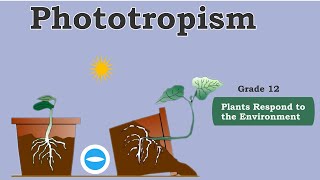
this is if we turn a pot plant sideways as you can see in the picture alongside here you'll notice that even though we're growing it sideways the stem still grows up and then out and away from gravity and the roots bend down and curve towards gravity as well imagining if this was the table that you had rested the pot plant on now what's governing this is geotropism an important note i want to make now is geotropism works uh in the opposite to phototropism when it comes to auxins you'll see now what i mean by that
when i explain how it actually works now let's go into how does this actually work and i just want to recap what happens in the stem and the root because they are different and we need to build upon what we've learned in phototropism so we'll start with the stem now the stem has auxins in it the hormone but it responds differently to what happens in the root we know in the stem auxins stimulate cell growth which means that we take a regular sized cell and over time it elongates which literally means it gets longer and
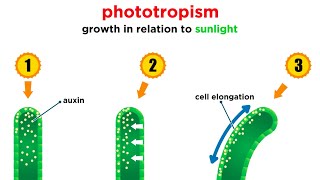
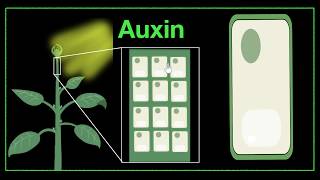
therefore you know bigger now it's important to know that in the stem auxins um are always going to collect on the side that creates cell elongation and we see that here in this picture because you can see if there is a zoomed up little image over here the cells on the side where the auxins are collecting is where uh cell elongation takes place and we also saw this in the stem with phototropism and light the auxins collect on the dark side they create cell elongation and then the stem leans or bends towards the light so
the rule for the stem is the side that the auxins collect on they stimulate growth for the stem okay only for the stem in this instance because this plant is lying down they say that it collects on the lower side which is true because auxins will sink down because of gravity and what it causes then is the plant to turn up towards the light as we can see here it's making a very sharp turn upwards in the root however auxins have the opposite effect number one auxins in the root inhibit cell growth which means it
stops cell growth literally that means if a cell began as a square it will stay a square it doesn't elongate it doesn't get bigger over time that's what it means because it doesn't elongate it's going to then cause the auxins to sink to the bottom as we can see in this picture they sank to the bottom on the stem as well except in the stem it stimulates growth in the root it inhibits growth so they sink to the bottom because remember auxins are attracted to gravity so they'll sink towards the bottom and in doing so
they stop the growth on the underside or in this case the lower cell layer but you'll see how on the top layer of the root it continues to elongate look how long the cells are and that then means that bending or turning down away from the light or towards the gravity happens as you can see in the picture here we can see the roots going down a nice easy way to explain this and i've planned it out for you really easy of how you can explain this in an exam or test is you must mention
four things okay so when you are explaining geotropism or or for that matter phototropism you can use this as well you need to explain the first thing is what is the auxin doing is it inhibiting or is it stimulating okay the second thing is what is happening on the lower side in other words the lower side towards gravity you could substitute that in for what happens on the dark side of the plant for phototropism and what happens on the light side my one here is just for geotropism where we say what happens on the lower
side of the of the root what happens on the upper side of the root then you say what is the result is it going to bend up or is it going to bend down and so your focus must always be what are the auxins doing and these pictures these two little like zoomed in images are perfect for what i'm trying to explain or get you to explain in an exam you have to say what's happening on the under layer so this is the underlayer and you need to say what's happening on the upper layer you'll
notice that they're different in the stem and the root they respond differently to gravity and the same can be said for roots and stems with light in phototropism as well you can use the same outline answer and how to explain it the next important step is to look at examples of possible exam questions i like to do this because it's very abstract if i just teach you geotropism but i don't really show you how they possibly could ask this and they generally ask these questions as investigative ones now i always tell my students when they
do geotropism and phototropism to look out for key pieces of equipment because that'll tell you what we're testing if there is light involved whether it be light coming from one direction coming from all around you need to know that we're doing phototropism but when you start to see something called a clinostat and i'm going to just bring your attention to at the picture on the left hand side where it says clinostat i want you to know that it is often associated with geotropism and i'll explain now why soon a clinostat as you can see in
the picture here it's like a device that rotates and at the end over here we have a plant that is attached to the clinostat and the clinostats like a rotating platform so it slowly rotates and what they've done is they've attached a pot plant sideways to it and if you rotate the clinostat in other words you make it go round and round and round and round as we can see here the plant will continue to grow straight and the reason for that is when it rotates the auxins are evenly distributed and because they're not sinking
down anyway as we just learned now the cells won't elongate unevenly so they'll continue to grow straight however if you put a pot plant just on its side like the second picture over here with no clinostat you see that the stem bends up and away from the ground and that's because stems are negatively geotropic they're moving away from gravity and so what you have here is two different experiments and if the clinostat were to stop rotating this would be the before when it was rotating and this would be the after when it stopped rotating and
that's because it lets the auxin sink down to the bottom of the stem which then stimulates the auxins in the stem and makes it grow upwards the other way that they like to ask this is when we compare it in the roots now the roots are a very different situation because they are positively geotropic but they remember are inhibited by auxins which if you remember means that there is no cell elongation and what happens is their roots then bend downwards instead of up and what they do is they normally set up like a petri dish
like this on its side and they've got three seeds here with a little root growing out of them you'll notice that the roots all start straight in whatever direction they're growing whether they're growing up down or to the side they're growing straight right but if you leave this in its position as is the petri dish on its side you will notice in the after the roots grow downwards they're curved downwards this one that was going sideways goes down this one that was going up now curls around and wants to go down and this guy over
here he's already going down so he's going to keep going that way but what's interesting is if i took this same petri dish this one over here or if i started off with this one actually let's start off with this one rather let's start off with that one if i took the before one and i put it on a clanostat in other words i took this petri dish and i stuck it on the petri just sideways and it rotated the roots would continue to grow straight why because the auxins are evenly distributed when the clanostat
is not rotating or if it's still like in the second picture where the petri disc is still they're not evenly distributed and they collect on the underside and their causes bending so those are two ways when we talk about clinostats another way that a clinostat and i'm just going to mention this even though this is not a phototropism i want to mention it this is a plant on a uh clinostat so this is the kleiner stat at the bottom here you can see that they've placed it on there and the curvature of each of these
plants tells us whether or not the clinostat was rotating so let me give you a perfect example this central one was rotating permanently how do i know that well this plant has been put inside of a box with a hole and so the sunlight has been coming in from this direction now if the sun comes from that direction only you would think it should bend over but this one's not bending that's because the clinostat is rotating which means the auxins are evenly distributed so it grows straight however if we look to the right hand side
picture sunlight still coming from this direction you'll see that it is bending over now did it rotate is the question is that one rotating so c is not rotating this clanostat is still but what about a a looks like the stem is bendy do you see how it goes from the left to the right and from the left to the right so what happened here well what happened here was every time the plant leaned into the light we rotated it slightly away from the light so then bent over a little bit more towards the light
and then we rotated it and then it bent over back the opposite way again and so it made the sort of windy bendy shape so if i draw it for you again towards the light we rotate it it's on the other side then it goes back towards the light then we rotate it and that's back the side then it grows towards the light and so on and so on as it goes that's why we got it so bendy so that's just like a little extra tip that for you to use with phototropism and a clinostat
now as always i like to end off my sections with the terminology recap there was a lot of terms in this section and that's because the majority of the section is application you really have to practice application questions the best thing to do everybody is to do past paper exam questions on this topic and i've got a few of these in my exam paper playlist that you should go and watch where i walk you through how to answer them now looking at geotropism remember that's the way in which plants respond to gravity stems and shoots
they are negatively geotropic so they grow away from gravity whereas roots are positively geotropic and they grow towards the gravity we then looked at the auxin which is the hormone that's responsible for plant growth remember auxins in the stem stimulate the growth whereas auxins in the root inhibit the growth and because of this difference it causes bending either up towards the sunlight or down towards the ground and that whole growing is called cell elongation which is when cells elongate they get longer and bigger and that's what ultimately creates the bend where the top layer of
cells bend and the bottom layer of cells don't or the top layer elongates and the bottom doesn't elongate and vice versa the bottom elongates and the top doesn't just remember it's different in the chute and the stem and lastly we looked at a common piece of equipment in a lab called a clinostat which is a rotating stage or disc that you can put things on top of it and we use it to evenly distribute auxins that's its purpose now if you enjoyed this video don't forget to give it a thumbs up make sure you are
subscribed your notifications are turned on and i will see you all again soon bye