This Strange Stories in History video is made possible by Alliance: Heroes of the Spire. Alliance: Heroes of the Spire is climbing the charts as the latest action-packed RPG game on mobile. There are 400 unique heroes that you can combine in thousands of combinations on the battlefield.
You can fight against giant bosses, or-- our favorite-- battle against real people! You can support Simple History by downloading Alliance: Heroes of the Spire via the link in the description below, and get a bonus of 50,000 gold and 50 gems. Ice Carrier - Project Habakkuk Secret Weapon of World War II During the early 1940s, German u-boats were sinking Allied ships delivering vital supplies from the United States to Britain in the Atlantic Ocean.
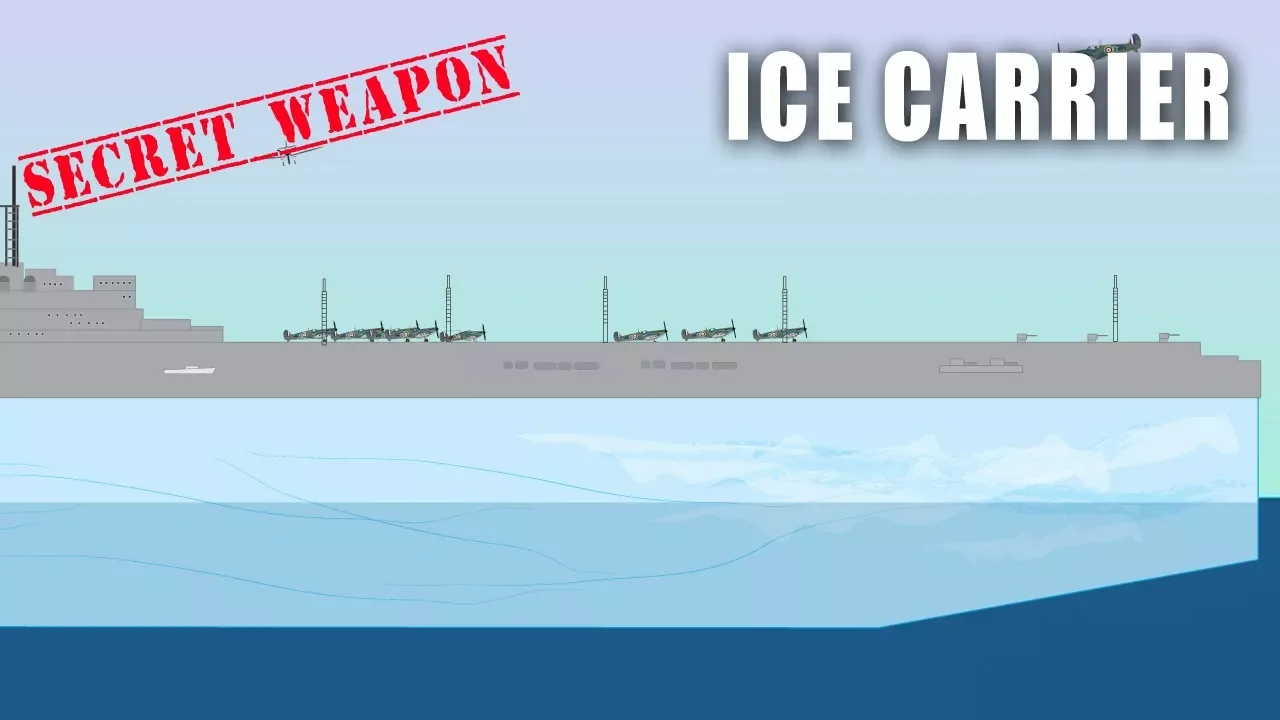
An inventor called Jeffrey Pike, working under the Combined Operations Headquarters, came up with the concept of a floating unsinkable platform to launch aircraft from to defend these convoys His solution was an indestructible aircraft carrier made from ice. While it sounded too far-fetched to become a reality, Winston Churchill enthusiastically approved the idea. Pike identified ice as the material because of shortages in steel and aluminium.
It would also take less energy to manufacture. He drew up plans for the bergship. The iceberg would be leveled to provide a runway and a bridge.
It would then be hollowed out inside to shelter up to 150 aircraft, fuel tanks, and living accommodation. It would be powered by an electric generator driving 20 propellers. The sheer scale of the vehicle and the thickness of its ice hull-- at 40 feet, or 12 metres thick-- would make it unsinkable.
In 1943 a scale model prototype measuring 60 by 30 feet, or 18 metres by 9 meters, and weighing 1,000 tonnes was constructed to test the concept at Patricia Lake, Alberta, Canada where the climate was suitable. The prototype, powered by a single-horsepower motor, worked-- surviving throughout winter and summer. However, ice as a building material could be brittle.
So, pykrete-- named after Geoffrey Pike-- was developed, which was a mixture of 14% wood pulp and 86% ice. This made it easy to work with, and it melted slower and was a stronger material. Winston Churchill, excited by the results of the prototype, ordered a full-scale ice ship to be constructed, named Habakkuk.
And the Canadians confidently planned to make this happen by 1944. The project was eventually abandoned due to several reasons: rising costs and material demands on the war effort, its slow speed of just 6 knots, and the fact that Portugal had also given permission to use airfields in the Azores, a group of islands in the Atlantic. But overall the idea was perhaps just too far-fetched.
Subscribe for more World War II videos. Get your copy of Simple History: World War II today.