[Music] imagine that reality may not be exactly what you think it is. Maybe the world around you, all the atoms you see, all the material world and yourself, maybe is part of something bigger, something different, something you don't necessarily experience every moment of your life. Maybe the vacuum or the space around it is not just empty, but full of energy, full of information.
And actually the material world, the reality you call real is actually part of this space. Today I'm going to talk to you about this. I'm going to talk to you about how space is actually not empty and that it's full of energy and that the energy in space is not trivial.
There's a lot of it. And we can actually calculate how much energy there is in that space. And that reality might actually come out of it.
That everything we see is actually emerging from that space. When I was younger, it was really difficult for me. I was extremely dyslexic and at school I didn't fit in at all.
So I was feeling very separate, very isolated. I had a strange name, a strange color of skin and so on. And it was really hard.
But when I went in nature, I felt that connectivity. When I went in nature, I felt that communion with nature. I felt like when I looked at nature, that there was some kind of pattern that connected all the things together like the branches of a tree, the root of a tree, the flowers, the petals, and all the different details that you can see on a flower.
I felt like there must be some fundamental pattern at the root of creation that was present to produce all of this organization. And I was determined I was going to find it. And so I wanted to feel this unification with the world.
The unification I felt with nature. I felt like we should be able to understand it to express it. But when I started to study physics and mathematics and all this stuff, I realized that our physics are not unified.
That we have physics for the big stuff, cosmology for like stars and galaxy and all this stuff that describes the gravitational field in a certain way very smoothly. And on the other side, we have quantum theory that actually describe the very small stuff, the molecules and the atoms and the subatomic particles. And that describes it as very distinct little quantas of energy, very distinct discrete quantities that is not smooth and the two don't agree.
But we know that the big stuff is made out of the small stuff. So there must be something that connects the two. There must be a way to understand the whole thing with one fundamental theory.
And I start to drill into the physics to try to find this. And so I I looked at galaxies and of course they're made out of stars and and uh molecules are made out of atoms. And so I kept on drilling and sure you know stars and black holes exist in galaxies, stellar black holes and so on and supergalactic black hole and at the quantum level there's the nucle atom and subatomic particle.
And when we drill really down to it, we find that all this is baiting at the quantum level into a field that we call the quantum vacuum fluctuation. That is an electromagnetic field that's fluctuating extremely intensely at the very very fine grain. And when I looked at black holes, I realized that when we solve the equations for black holes, they actually are going towards infinity within the center part that's called a singularity.
And the two look really similar. That is the vacuum energy density at the quantum level goes towards infinity and so is the middle of a black hole. And I thought, oh, maybe that's the connective length.
Maybe that's how they connect. The plon density, the plunk length. The plunk length is the smallest oscillation of the electromagnetic field and it's present in both.
So I thought maybe that's the connecting length. How small is that plunk length? How small is this electromagnetic fluctuation?
Well, let me say that you're made out of a 100 trillion cell. Okay, 50 to 100 trillion cell. So that gives you an idea of scales right away, right?
So that's the amount of cells in your body. And each one of these cell is made of about 100 trillion atoms. Okay?
So already it's pretty tiny at the atomic level, right? And then if I took one of these atom and I made it the dome of the raw uh I'm sorry the dome of the Vatican. Well the nucle of that atom the proton in the middle would be the size of the head of a pin.
Okay. So that's really teeny. If I grew the plunk little oscillator so that it was the size of a grain of sand, then the proton would be the size from our sun to Alpha Centuri, which is about 40 trillion kilometer.
Okay? So that's how small the plunk is. So of course you're not experiencing it when you're moving around when you're, you know, even in ex, you know, in laboratory and so on.
We're not detecting it directly, right? In fact, when we talk about the plunk energy or the plank, we talk about it in terms of vacuum density, vacuum fluctuation. We call it space.
So the space that we call space is actually full of this energy. And when we actually talk about the stuff in the space, the material world, the atoms, we find that those things are 99. 99999% space themselves.
So your reality, all the chairs you're sitting on and you know your body even is made out of mostly space and just a little bit of electromagnetic fluctuation that we call the material world in it. So maybe it's not the material world that defines the space, but the space that defines the material world. Think about that.
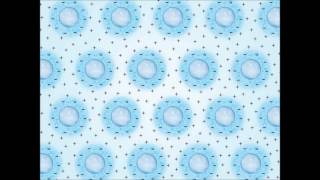
Imagine if you think of how much of these teeny little plunk fit in a centime cube of space, you're going to get the plunk density. So if you calculate that, you find that you can put a lot of little plunks in there. So the result is 10 to the 93 g per cm cubed.
That's a huge number. 10 with 93 zeros. It's big.
To give you an idea, if I took all the stars in the universe and I stuck them into a centimeter cube of space, the density of that cube would be 10^ the 55 gram. I would be 39 orders of magnitude still shy of the vacuum density at the quantum level. How incredible is that?
Right? And that's the stuff we call space, right? That we think of it as empty.
So if that's true, I mean it's significant. And certainly many of the greatest scientists in history thought it was. Wheeler, a collaborator to Einstein, for instance, said no point is more central than this.
That empty space is not empty. It's the seat of some the most violent physics. Of course, you got all that incredible density of energy.
Einstein said physical objects are not in space, but these object are spatially extended. An object being the result of space. In this way, the concept of empty space loses its meaning.
So some of the greatest thinkers thought that this discovery of this energy in the vacuum was really really significant. But in general it was ignored for almost a hundred and some years because the number is so massive that it was intimidating to the to the physics community. Well, is this just a bunch of physicists losing their mind and you know like getting lost in equations and all this?
Actually not. Can we measure this stuff? We can.
The Casmir effect has been demonstrated now. We can show that the vacuum density in laboratory is really there that the that plates can be pushed together by using the vacuum. In fact, we are now able with the dynamical kasmir effect to extract photons directly out of the vacuum.
We're able to extract energy directly out of what we thought of as empty. So, it's really really there. So, I start to use this and this took me like 25 years or 30 years.
So, it took a little while, but I started and and I can't believe how simple the solution is, but I started to realize what if I could just um take this uh plunk energy and describe cosmological objects with it. So, I took a black hole, Signis X1 is a well-known black hole, and I tiled the whole surface with plunks. This is called a holographic principle in physics.
It's an accepted concept in current physics. But the difference is that I thought what about the volume? What about how much information?
Because you can think of the little plunks as little bits of information. How much information is inside that volume? And I counted how many plunks are inside that volume.
There's a lot of them. 10 to the 18 you 118. It's a big number.
All right. And then I made a ratio surface to volume ratio between the two to express the energy of the system. And the result was the exact mass of the black hole.
The exact gravitation of that black hole. It was the exact same solution that I could get from Einstein field equation describing gravity. But I was doing it with little plunk fluctuation of the quantum world.
So all of a sudden had quantum gravity. I had the quantum world expressing gravitation at the cosmological level. And the equation was beautiful and elegant.
It was very simple. And so I thought, oh well, can I apply that to the atomic structure? Can I apply that to the nucle of an atom?
So I took a proton and I started to count how many of these little plunks are inside the volume of that proton. And I found that it was the exact mass of the universe. That is there's enough information in terms of plunk inside a teeny proton for all the other protons to be expressed in one of them.
A truly holographic world in which the proton is entangled with all the other protons. The whole thing is talking. And we know in laboratories that particles can be entangled that you can move this particle over here and it changes a particle on the other side of the universe.
So it wasn't that outrageous to think. And so I was like blown away. Think about this.
Think about all the protons that makes up your body. You know, some of the masters said that look within and you will have all the information. Maybe they meant it, right?
And so in any case, I took this solution and I did the same thing. I did a surface to volume ratio of the little proton and sure enough the solution the result was exactly the mass the proton or very very very close to the mass the proton that we measure in laboratory I was within 012 but I thought why isn't it not exact I mean it was it was already remarkable like I I was using numbers like the mass the universe and I was outputting a number for a teeny proton at 10us4 four grams, but I wasn't exact where for black holes it was exact. And then I realized that the ra the radius of a proton is not so well measured.
The mass is well measured but not the radius. And so I flipped the equations around and I was able to make a prediction of the radius of the proton. And so I published this in a paper in 2012.
And a few months later, um, in 2013, an experiment, an accelerator in Switzerland was able to measure the radius of the proton more precisely than ever before. And the result was now within 0. 0036 of my predicted value.
I was so close. In fact, my predicted value is inside the margin of error of the experiment or one standard deviation from the experiment. So actually my theoretical value might be exact and the experiment is actually getting close to it.
But this but the standard model is off by 4%. And although the 4% might not sound like much, it creates a lot of problem in quantum theory. And so that's why you've seen like maybe the the magazine covers, you know, talking about the proton teeny particle big problem.
The humble proton is nothing like we expected. No kidding. If I'm correct, it's like completely different, right?
And um you know the problem with the proton could scientists be seeing signs of a whole new realm of physics maybe. And these physics may have to do with this vacuum energy that produces our reality. I mean it's really remarkable.
And so you know this leads to really incredible technological developments. It's not just a whole bunch of theory. If we understand that gravity is actually emerging from that field at the foundation of quantum theory, we can start using electromagnetic field to like interact with that energy.
For instance, this um technology that just came out a few years ago, actually it's been there for 10 years, but finally NASA anal did an analysis a few um a few months ago on it and showed that the this drive is actually not expulsing anything. is just bouncing electromagnetic fields in a conic can and it's producing thrust. It's pushing literally against the vacuum structure.
Um we have uh experiments in Finlands where the uh we're able to get uh gravitational pulse to occur, gravitational beam to occur so that we can beam a gravitational wave across a kilometer. two of distance and calculate how fast it propagates and it propagates at 64 times the speed of light. Okay, this is the kind of stuff that's emerging.
Um the physics of our world is changing and we are starting to be able to understand gravity as a whole new level. Imagine how much change has happened in our society over the years as a result of us ma mastering the electromagnetic field. Right?
We got electricity and we've ran our whole civilization out of that. Now imagine that all of a sudden we understand gravity at its most fundamental level and master the use of it, the control of it. All of a sudden our civilization changes fundamentally.
It changes at a very very profound level. Uh we'll be able to go to space. Our civilization will be able to get off the surface of our planet.
We'll be able to be spacebound, have colonies, have access to almost an infinite amount of resources. Everything is going to change dramatically if we understand gravity at that level and we start to understand how to control it so that we can transcend the limitation of our civilization today and actually resolve some of the largest ecological problems that we face. Imagine if we could extract just a few billionth of a percent of the energy that's there.
We could run our civilization for thousands and thousands of years. So, thank you very much for your attention. Thank you.