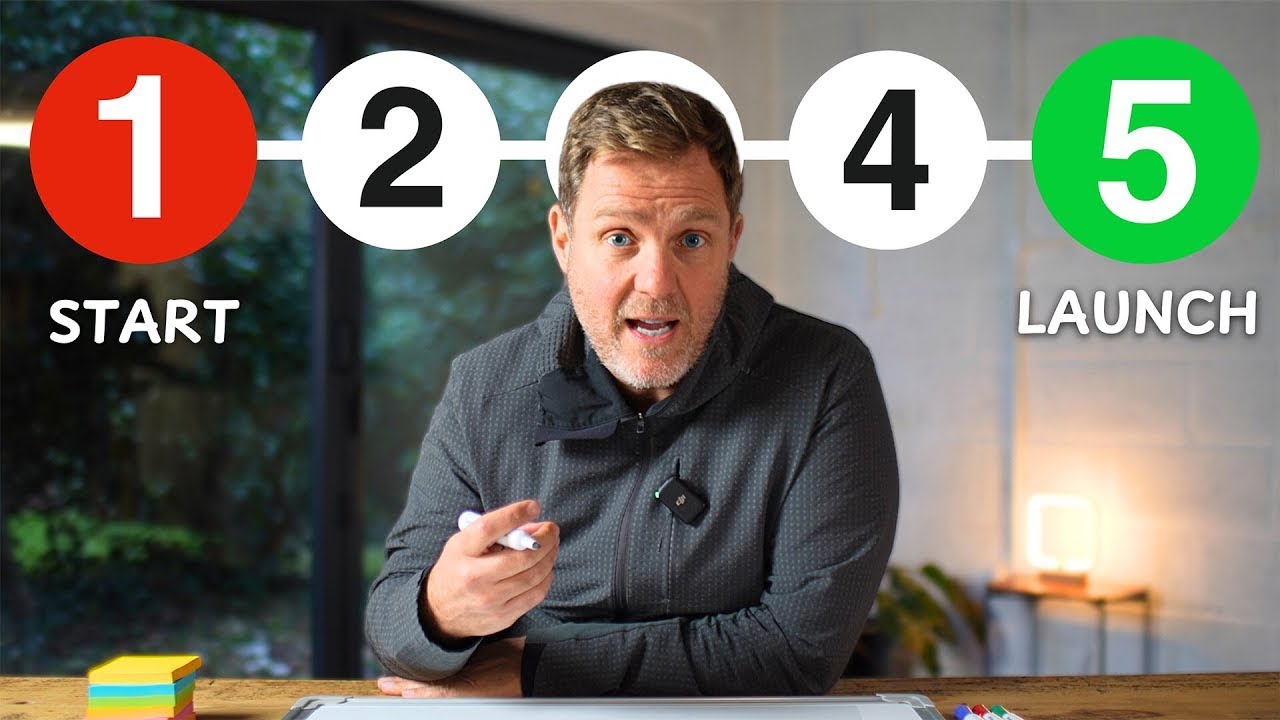
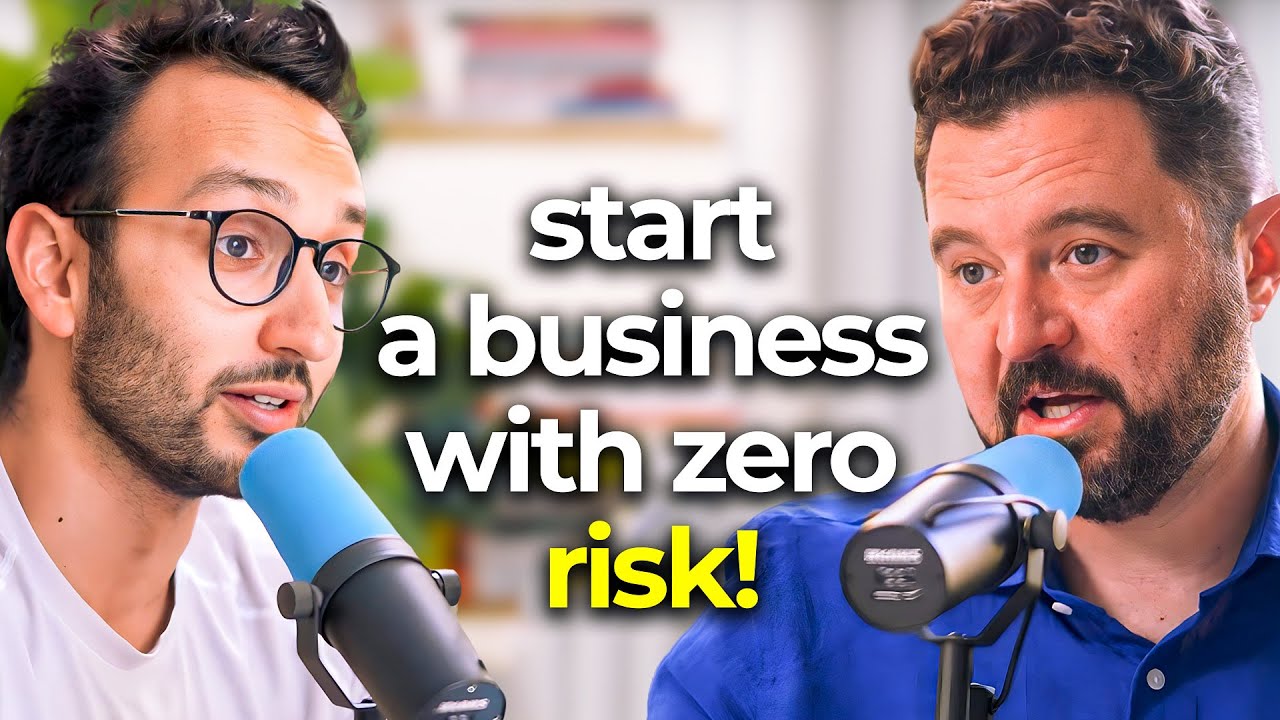
- If you ever wanted to start a business you came to the right place. Why? Because we've got a successful business owner, Mike Andes, who's here to guide us on how to start a successful business, step-by-step.
(upbeat music) And trust me, Mike is not new to the business world because he started his first business. when he was just 12 years old. He owns multiple successful businesses.
And today he's here to teach us on how to start your own business from scratch. - If this is the market and is it a place that I'm actually gonna sell my product or service. (upbeat music) Will your return on your assets be greater than the percent that you pay on the debt?
Everyone's always wanting to save time. Everyone's always wanting to save money. Let's go start making some money.
(upbeat music) - You guys, we are here once again with Mike Andes, a successful business owner. Who's got his hands in a lot of cookie jars but today we're gonna talk about how to build a business from scratch. Mike, for those that don't know you a little bit, tell us a little bit about you and your business background.
- Yeah, so I started mowing lawns when I was 11 years old and we've grown that into Augusta Lawn Care which now has 40 locations around North America. And I'm interested in stocks and real estate and all that fun stuff. Went to school for my MBA.
And, you know just trying to grow the business from here on out. - So Mike, for those looking to get into a business, start a business from scratch. What's the first step?
- I think it's really to be self-aware and know what your strengths are and what your weaknesses are. And I think that can be done by just asking yourself some really deep questions. Like, what am I good at?
What do I love to do? And what can I get paid for? I think the intersection between those three is where your sweet spot is for starting a business.
So I kind of look at as like a Venn diagram, you know, usually there's two circles, but if you had a third one in there, the intersection of those three things is what's really important. What can I get paid for? What am I good at?
And what do I love to do? - Interesting. So what would be personally one thing that I should work on before I get into a business?
Anything else you can add to that? - I think just knowing, well what are the challenges of running that specific business? Like I found the sweet spot.
I know exactly what I want to do but what are the challenges involved with that? I might be super passionate about baseball. I might be really good at baseball but what can I do to make money around baseball?
And I think understanding the challenges of that specific industry and that business is really important before you get started in that specific industry. - Okay. (upbeat music) All right.
So we talked about first step in general, what would be the second step? Well, next you gotta figure out what business you're gonna start. And a lot of times to do that, you're gonna find a problem and then you're gonna try to create the solution to that problem.
- All right. Can you give us an example? - Yeah, let's go check it out.
- Guys we're gonna go find a problem outside. So follow us. I'm sure there are a ton of problems out there where we can build a business around, right?
- [Mike] Yes, sir. - All right. - So here we got this hedge, this evergreen hedge that if potentially there was snow or even the wind that we're kind of experiencing now, they could eventually topple over.
If I can take it like three or four feet off the top of those, it would really create a solution for this, not homeowner in this case, the landlord to get those trimmed back. - So what's next. We offer that solution to him and that's essentially the start of a business.
- Find the problem, offer the solution. And that's when price. And we start figuring out the terms of solving that problem.
(upbeat music) - So Mike we just showed our audience how to identify a problem, create a solution for that client customer. What's the next step in terms of continuing to build a business. - And the next thing is market research.
So let me write this down here. (upbeat music) So market research can come in a whole bunch of different forms whether it be focus groups, a peer to peer. You can do a poll via phone or on Facebook poll, for example.
But what's really great about market research and starting a business today is the fact that we have the internet. It's very cheap to get market research in comparison in the old days. You know, even 20, 30 years ago you'd have to get a whole bunch of people together and do focus groups and all the rest of it.
So market research is great because I can go online. I can literally search the demographics. Another important part of your market research is demographics.
That's really include things like, how old are the people of age? What about the average number of people in a household? So average household, as well as the income of those households, income.
Just so many different things when it comes to the different demographics there are in a specific market. So if I'm trying to market or go after one city, I'm gonna look at different demographics of like, "Okay how old are people? " 'Cause guess what, landscaping, trimming bushes, people that are older, typically want those things.
How many people own houses, home ownership, a very important part to know and be able to know is this a good market? And is it a place that I'm actually gonna sell my product or service. (upbeat music) - Just wanna follow up on what we did outside, looking for a problem.
What's the best way to identifying a problem that needs a solution? And then on top of that, should you be getting into a business that you're interested in yourself? - Great question.
So I think the big thing is when you're looking for problems, if you're actually diligent about looking at your daily life, like where are your pain points? What are you annoyed by? What takes you more time in the day?
Like everyone's always wanting to save time. Everyone's always willing to save money. These are the things that are like universal.
So looking for those every single day interactions with your environment, the products, and services that you use and how can I make those better is a great place to get started. And a lot of times it's gonna have to do with things that you enjoy because you're around those things all the time anyway. (upbeat music) - Quiz time with Mike.
Let's dive into it my 10 seconds, no more. Number one reason why businesses fail. - Honestly, I think lack to prepare for what's needed for the next stage of the business and failing to adapt to the changing environments around us.
- Sounds like shortsightedness, maybe. - Yup. - Number one reason why they succeed?
- I think the ability, the opposite. The ability to foresee what's gonna happen in the marketplace, what's gonna happen in the labor market and then exploring those opportunities as they come. - Three books, every business owner should read?
"E-Myth," "Rich Dad Poor Dad," and ooh, that's tough. - Ah, got it. Two more, three seconds.
- Let's say "Multipliers. " - Multipliers. Best form of marketing for any business?
- It really comes down to what type of business. Where is your market? Where are your customers?
If it's online, if it is print, if it's digital. I think COVID really pushed a lot of our target market to digital and people in general. And that's where a lot of customers are at.
- What's a business you can start without any money? I think it's basic labor, selling your time. So literally for example, I wouldn't need sheers to trim the bushes if I wanted to start a bush trimming business but I could've very well pulled weeds and started weeding, that's service for no cost whatsoever.
- Okay. How much hours a day should someone put in when starting a business? - I think there's no right answer on that.
I think it's being self-aware enough to know what's right for you. I think that's a problem in this community is comparing ourselves to other people and like, "Oh, they work more. I should work more.
" No, you might break yourself mentally or physically. And that's the wrong thing to do. - Why would someone wanna get into their own business?
- I think there's several things like the flexibility. A lot of times people wanna make more money. They see like there's no glass ceiling that they might see at a corporate job.
Those are all pros to starting your own business and having that flexibility and controlling your own destiny. - What's the biggest con for starting your own business? - Stress tolerance.
Whether you're just getting started and you don't have any sales or whether you have a massive organization, and you have people problems and bigger money problems. It's definitely stressful. (upbeat music) - So we're looking at market research.
What is the next step in terms of continuing to build a successful business? - A lot of times people wanna see this market research in a business plan. And so I know we have another video for our viewers that actually went in more detail on this very topic.
- Yeah, you guys make sure you check it out. The link is gonna be in the description below. We dove in depth with Mike in terms of step-by-step on how to build a awesome business plan.
So let's continue on with maybe a few couple of different questions in terms of a business plan. How often do you look at your business plan and then does it evolve as we get into it and actually start that business. - Yeah for myself, like, because I'm not really pitching it to an investor or I don't have the banker that I gotta keep giving my business plan and projections to.
I don't do it as like every month or anything like that. But at least once a year, you do wanna update your projections. Whether we looking at a year, three years and five years down the road.
How much capital am I going to need to actually grow the business to those points? What are my hiring requirements? What kind of capital investment do I need?
Do I need to buy land? Do I need to buy more equipment? Those are really important things to know so you don't run out of cash as you're even growing the business and being successful.
Profitable businesses run out of cash sometimes. And that's something that can be avoided through good projections and planning ahead. - Awesome.
You guys make sure you do check out that episode. We dive into much, much deeper questions in terms of writing an actual business plan. So check it out.
(upbeat music) - So know we've found a problem and we've even found a solution but now we have to ask ourselves is there enough people to actually create a business out of this where I create the solution for this problem? How you can do that is asking yourself what is the Total Addressable Market or the TAM So what you can do is ask people, do they have this problem? And would you be able to provide them a solution?
Let's go check it out. So, first thing I'm actually trying to start this bush trimming business. I'm gonna ask people first of all, do they own a house?
And secondly, do they have bushes and trees that we could trim for them? So let me go up to here. Brady.
Brady I just had a couple of questions for you. First of all, do you own a house? - Yes, I do.
- Okay so do you have any bushes or trees or things that you need trimmed at all? Unfortunately, I don't sorry. - Nothing at all, no bushes, nothing?
Just grass or- - Just mostly grass no bushes. - Okay, well thank you. I appreciate your time.
One thing to keep in mind when you're taking feedback is don't worry about the people who say no or can't use your services. There are people who have physical limitations that cannot use your service. You can't service them when they are way on the other side of the world for example, don't worry about them, focus on the people that could use your service and then tailor your product and service to them.
So, Zack, do you own a house by the way? - Yeah, I have a house. Cool, do you have any bushes or trees at your house that you trim and use your time?
- Yeah, I have a few trees and some bushes as well. - Cool, do you usually trim them or do you have someone else trim them for you? - Yeah, I usually trim them.
- Okay, and then how big are they? Are they like 25, 30 feet or just like small shrubs mostly? - There are just small shrubs mainly.
- Awesome, well, I appreciate your feedback. So that is one of the things that is so important to get when you have a solution for a problem is what is the Total Addressable Market? Get feedback from those customers and how can I tailor my service to meet their needs.
(upbeat music) - All right, Mike so now that we've gotten feedback from prospects, right on terms of the solution to a problem that we have. What's next? - So we gotta fund this whole operation whether you gotta build the product like a prototype, whether you gotta order your first inventory or whether you gotta go buy some trucks to go prune the bushes and the shrubs.
Whatever you got to get get the business start, you got to fund the operation. - Do I use a credit card. I don't have any money?
- Yeah, no. So like in terms of using a credit card, the bottom line when you're getting any sort of debt, like obviously with the credit cards it's short-term debt. It's high interest rate, right?
What you're trying to really determine the of the day is will your return on your assets be greater than the percent that you pay on the debt? So if I can make 20% return on the truck that I buy and I only have to borrow say 15% on a credit card it actually makes sense, but it's very high risk 'cause that's a high percentage to try to beat when it comes to return on assets. That's a little more in depth, but let's look over the several different options for funding.
The most common way, honestly is bootstrapping. This is gonna be when you use your own savings. And a lot of times this is what people call the friends and family round.
This is when you get money from your friends and family, you don't go into debt. You bootstrap it, you fund this yourself. The next way is gonna be through debt.
And this could be technically, you could say through credit cards, but more importantly it's gonna be, or more commonly it's gonna be like an SBA Small Business Administration loan or through a bank, a commercial loan, for example. And then the third way is kind of more glamorizing, like Silicon Valley and more tech startups. A lot of times is going to be funding, sorry, through investment.
All right. So this investment is going to be through people like angel investors or potentially even VC or venture capitalists when it comes to investing in a business. And they're going to get equity typically.
- I mean, I know we're just touching the tip of the iceberg here but these are really the main points that we wanna share. - Most businesses will start with this one. The bottom line is when you get an investor involved.
They're gonna usually take equity whereas this you retain the equity, but you also take on the risk of either debt or your own savings. - So what if I don't have any money? Zero.
- I think it goes back to creating your MVP, your Minimum Viable Product. Can you really strip everything down in the business to a point where you don't need a big truck, you don't need a big facility. You don't need a bunch of employees.
What can you do today to just start generating revenue and generating profits that grows to the point where you can then bootstrap into growing the business. - So it sounds like to me, not having money is never, should be a reason for not starting a business. - I don't think so.
I think it goes back to your why, like your passion, like you knowing you have to do something. Money's not going to get in the way of someone that's really determined to do it, regardless of whether or not they have the funds in their bank account. - That's awesome.
You guys repeat that to yourself over and over. So I think a lot of people get stuck in that. No money can't do anything.
Yeah, not true. (upbeat music) - Now comes the fun part. We get to figure out what is the business's name?
Check it out. You can use a business generator online completely for free to at least get the brain engine going and figure out some creative solutions to create a business name. So all I'm going to do is go to Google here, go to business name generator and literally they're all over the place.
Google is a great resource for this. I'm going to go to the business name generator provided by Shopify and find a business name. I'm gonna put in bush trimming.
And maybe I'll put Mike in. I put that in. It gives me all sorts of names.
For example, fresh start bush trimming mike or you know what let's take Mike out. Forget Mike. Bush trimming, as I'm moving here.
Spring bush trimming, seasoned bush trimming, vitamin bush trimming. All these different ideas, axiom bush trimming. These are great ways to get your brain going on different ways to name the business in a creative manner that you can later create a brand around.
(upbeat music) - All right, let's move on and carry on. We've chosen the business name. We've looked at that process.
What's next? How do we structure the business? What's the best form to do that?
- The entity structures, a lot of people people trip over, like what type of entity, they're like LLC, or S Corporate. All these different things. Honestly there's really three major ones you need to look at.
The first one is what you mentioned, a sole proprietorship. Let's call it sole prop. That's gonna be very, very simple to set up.
Literally, almost every state you can set this up for a few dollars, like 10, 15, $20 as a sole proprietor. And what's really cool is it's going to be ran through your social security number. So you don't need a separate tax return.
Nothing gets fancy, very, very simple and very cheap to get started. The next form is what we call the LLC or limited liability company, which is going to say make a separate EIN or employer identification number and allow you to keep some liability in the business. Which means if something goes bad in the business, you go bankrupt.
You damage something. There's an event like someone gets hurt. You are not personally liable anymore.
There's a separate entity that keeps you away from some of the insured liability from the business. The next most common is the S-corp. All right, so this is not a C Corp.
You don't want to get that confused. A C-corp is typically has more than 500 shareholders. It's like stocks that are traded on the public stock exchange.
But S-corp is a way to be able to have a corporation that is even further removed from you personally and even less liability on you personally. And now you actually give yourself a W2 or you become an employee of the corporation. Now, a lot of times you're gonna wanna talk to an account and a lawyer to really figure out which one's best for you.
But for most people that starting, sole proprietor's just fine. I will start with LLC 'cause it's a couple hundred dollars usually. You can do it online and it prevents you being super liable if the business does go bad.
The debtors can not come after your personal your personal assets. - In terms of gross revenue, Mike. How would you break this down?
I mean, some businesses like say, well, if you get to, if you're 60 and under, probably not worth doing an LLC, an S-Corp. Would you have your opinion on these three? - Yeah, like in my opinion, this again goes back to having professional advice on what you should be doing from a legal standpoint.
And then from a taxation standpoint. That's the biggest differentiator. But for me- The revenue standpoint.
Yeah, from a revenue standpoint, I would say start with this one. If you have two or $300 to go get your LLC set up. If you're at zero, I'd start here.
All right, if you have no money, just start a sole proprietorship. Very cheap, very simple. Now, when it gets here, your S-corp is probably gonna be when you're making like a hundred, $200,000 in annual profits, right?
The reason that that is gonna come down to taxes because here you have self-employment taxes, you can get really convoluted, talk to an accountant. They'll be able to point you in the right direction. So after you secured your funding, set up your entity structure and got all your market research done and you're ready to roll, let's go get some work done now.
Let's go start making some money. (upbeat music) - That was a lot of hard work you guys, as you saw us on the field doing the job that we're actually building a business around. So to wrap things up with, I'm wondering how do I market what we just did on a bigger scale?
What's the most effective way when you just get started? - Yeah, I think it's why it's so important when you're planning the business to figure out what channels I'm gonna test when it comes to marketing. So there's so many different ways.
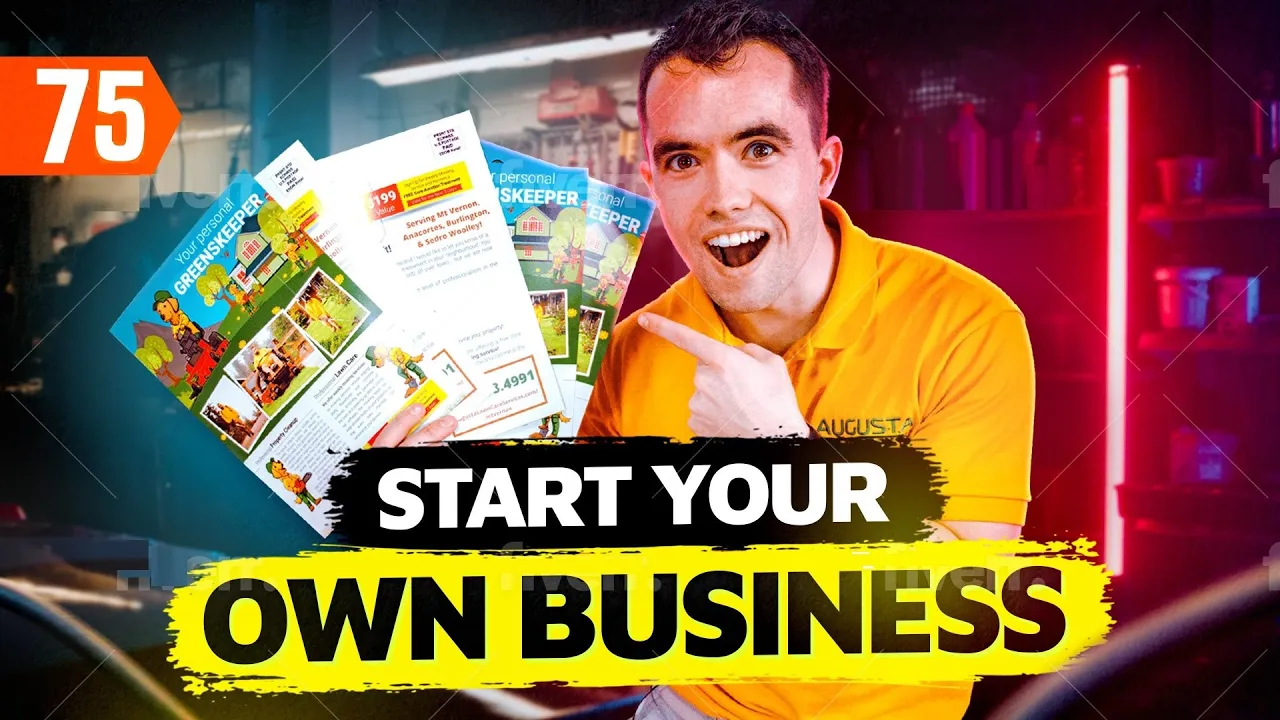
Like for example, I'll grab my my printer here. Some of these flyers and pass these out to you. I'll pass it out the person at the restaurant, at the grocery store, my barber.
Again you just get the word out about your business. And so this just has contact information, shares why we're different, what services we offer. You can do this via print, like this, a postcard, a flyer, door hangers, all great print strategies but also online, Facebook, Google.
All these are platforms that allow you to share your message with your potential markets. - This just seems like the most expensive way to market though. I mean, print advertising.
- Every single market's different and what industry you're in is different. So for example, I can deliver this for 18 cents via Every Door Direct mail through the USPS. Whereas maybe on YouTube or on Facebook, I can get a view or click for just a few cents.
It really depends on the market. Who you're targeting, and guess what, an 80 year old might not be on Facebook. They might not be on Instagram.
You might need to target them with what they're looking at. And that's the key thing is meeting your customer where their attention is at. If their attention is on a newspaper, on a flyer or on a phone book, let's meet them there.
Do I think we're moving away from those medias? Absolutely. But it's all about meeting your potential customer where their attention's at.
- Gotcha. And the way in the time that you find out those things is probably in the business plan process in our other episode that we talked about - Market research. Absolutely.
And the bottom line is day one starts, you might be wrong. Maybe print works better than Facebook in your market. It's about testing things, taking that data and then recalibrating.
That is what business is all about. And like in closing here, the biggest thing is recalibrate. Make a plan, test, take that data and collect that data and then recalibrate from day one in your business.
- Coming from someone who's super successful and it's been great, Mike. Thank you so much. Tell people how they can find you and any last words of wisdom.
- I think the most important thing is that you surround yourself with great people. At the end of the day, you can get your business started. You can plan it.
You have an organization chart, all the rest of them. You're going to grow a big business. If that your goal, you've got to have great people and trust them with everything in the business.
Don't hold anything back. Be a great leader. And if you wanna follow more of my stuff just check out Mike Andes on YouTube or Facebook or Instagram or wherever.
- Awesome. Thank you, Mike. You guys make sure you take a second to subscribe to our channel.
We read all the comments. Comment below, tell us what other businesses you want us to interview. What other things we should talk about?
This is all for you. Thank you for liking subscribing and watching our videos. Have a good day.