One of the biggest mistakes a person who is struggling with mental illness can make is to try to be normal and to confuse normal behavior for healthy behavior. When your mind is prone to going rogue sometimes and blowing up your own life, it can make you feel like you don't know how to live, like you are missing some skill or some crucial piece of information that was handed out to everyone except you. And when you feel this way, it is very natural to turn to other people for guidance in some way, shape, or form.
That might involve like directly asking people for help. Or you might try my bizarro strategy of spending a significant portion of your life as basically like a non-participating observer of humanity, watching people go about their business and trying to figure out what they're doing differently from you that makes them work and be functional when you can barely get out of bed. Well, we can absolutely learn from one another.
Using social norms for a guideline on how to live or how to behave if you are an individual living with one or more chronic mental health conditions is a terrible idea. It is a mistake that can absolutely destroy your mental health. Unfortunately, you cannot solve your mental health challenges by simply acting like a person who does not have mental health challenges.
I know because I tried it. So, please consider listening to me rather than having to learn this the hard way as I did. People who aren't struggling with their mental health can afford to take major liberties with their habits and their routines and their lifestyle and their self-care practices that those of us with substantial mental health needs cannot afford to take.
So, like just like a person who doesn't have diabetes has no real reason to need to constantly monitor their blood sugar levels, a person who does not have a mood disorder or an anxiety disorder or PTSD does not need to keep their mental health at the forefront of every single decision they make. We do. Not only that, but at the risk of sounding cynical, our society is not built to support our mental health or to help us thrive.
It is built, at least here in the United States, in my opinion, to make the rich richer and grind everyone else's soul into dust. You cannot turn to social norms for guidance because many social norms are very, very bad for your mental health. I'm going to talk about the worst of the worst today and give you some strategies for what to do instead.
Before I do that, I want to give a brief disclaimer. You may feel very called out by some of the things I share today, and I want you to know that that comes from a place of love. I'm I'm not always mindful of my tone when I'm recording content because I am very passionate about these topics and I know how much this stuff can ruin a person's life.
So, please know and remember that this comes from the heart. I want you to win this battle. I care about you and I might get a little worked up while we're talking about it.
The first culturally normal behavior that will destroy your mental health is not listening to your body. This one starts so early in life. Like remember when you were in elementary school and you had to raise your hand to go to the bathroom?
We are trained from a very young age that our bodies are not valuable objects to love and protect, but basically just tools used to accomplish tasks. And when our needs are inconvenient, we are generally taught to ignore those needs. If you're skeptical of this, how many times have you stayed up late to work on a paper or worked through lunch at your job?
This world treats us like disposable labor drones and encourages us to do the same to ourselves. If you have one or more chronic mental health conditions, you absolutely should not do this. Remember that your body is your brain's home.
And just as a child cannot feel safe and secure in a chaotic and abusive household, your brain cannot function well inside of a body that is not well cared for. There's nothing you can do to just directly improve your mental health. You can't just want to be healthy and make it happen.
But you can at least create conditions in which good mental health is possible. And one of those conditions is a body without any major points of resource constraint. Sleep when you're tired, eat when you're hungry, drink water when you're thirsty, stretch when you're sore, exercise when you're restless.
Build your schedule around these needs to make sure that you have the ability to meet them consistently instead of treating them like afterthoughts or inconveniences. Because most adults are so good at ignoring their body cues for various needs that they don't even realize they're doing it. The second is using substances to fill the gaps.
And you know what I'm talking about with this one. If you're tired, you have a coffee or an energy drink. If you're stressed, you have a beer or a vape.
If you're nutrient deficient, you take a vitamin or a supplement. Substances are like the duct tape of the mental health world. There's a role for them, just as there is a role for duct tape.
There's nothing wrong with in in in occasionally using some of these things for like a quick fix, but they are not meant to be something that holds you together indefinitely. And unfortunately that is how most people are using them. So many people are completely dependent on substances multiple substances in many cases to maintain even a baseline level of human functioning.
And this vicious cycle is typically an outcome to the first problem not listening to your body. Because when we aren't meeting our basic physiological needs, we are not meeting our basic mental health needs. They are one and the same.
And when we don't have appropriate self-care practices, we end up seeking out quick fixes instead. These quick fixes work in the short term. And so, because they're convenient and they're easy, it's very, very common to just become dependent on them.
But what you get from the substance is never the same as what you would get from actually fulfilling that need. The experience of getting enough sleep and being well rested is not the same experience as being tired and having caffeine in your system. The former is pleasant and can last indefinitely or at least till the end of the day.
The latter is acute and creates a delicate balancing act and a cognitive and emotional roller coaster. And I know you know what I'm talking about because I'm sure every single one of you has had those days where you overshot it a little bit. You had a little bit too much caffeine in your system and you did not have a good time.
The feeling of having a sustainable, manageable level of stress in your life is not the same thing as knowing your life is going horribly off the rails every day and only feeling relief in the evening when you have two or three drinks in you. Living well with a mental illness requires the creation and maintenance of sustainable systems. Requiring multiple substances to fill in the gaps where your self-care should be is not sustainable.
It is stressful. is expensive. It can get dangerous.
Again, I'm not convincing you to try to avoid these things entirely, although I do think that's worth considering. I'm just trying to convince you to work on your actual problems instead of just relying on quick fixes to get you through every every single day so that you don't have to navigate this life with a brain that is metaphorically held together with duct tape. The third is excessive screen time.
Now, at the risk of sounding like I am an 80-year-old man, I am very concerned with the emerging trends on how people spend their free time. The average daily screen time for an adult in the US is 7 hours. The average adult in the US sleeps 6 and 1/2 hours.
So, we're on screens more than we're sleeping. Now, obviously, some of that screen time for many of us, myself included, like is probably workrelated. Like, this is technically screen time for me right now as I'm recording a piece of content.
But the screen to sleep ratio isn't my real concern here. It is the screen to real life ratio. I sincerely believe that the correlation between the rise in screen time and the rise in mood disorders and anxiety disorders is not coincidental.
I don't think it's a direct relationship. I think there's a moderating variable in between screen time and mental illness. And that moderating variable is lack of meaningful life experience.
For many people, myself included, one of the biggest triggers for a depressive episode and one of the most common thoughts that I have during a depressive episode is the idea that basically my life sucks and I don't do anything of value. Do you know what's probably going to make me think that thought more frequently? Not doing anything of value.
And when I try to counter those thoughts, I rely pretty heavily on either good things I have done or pleasant experiences I have had. That's what creates sort of this checks and balances system in my head. When I spend all day staring at a screen, I don't really have a compelling counterargument to the hateful thoughts that my own mind attacks me with.
Like, how many of those seven hours do you actually remember? How much of it is meaningful to you? In my experience, most of it is the metaphorical equivalent of just flushing huge chunks of my life down the toilet.
Because of my depression, I need a higher than average amount of either positive experiences or meaningful experiences to not hate myself and my life. And I cannot achieve that if I am functionally addicted to a screen. And it's the same with anxiety.
Like one of my biggest sources of anxiety is feelings of inadequacy or inferiority. Sometimes I just feel like I'm not good at anything. My counter to this is developing skills and having real life experiences that demonstrate my abilities.
Excess screen time is great at making you a master of things in your own mind, but often when you try to actually put that skill into action, you freeze and you don't know what to do. And lastly on this point, there's absolutely no way you're going to be able to take proper care of yourself if you are on a screen for seven hours a day. Think of it as like budgeting from the top down.
You probably work on average at least eight hours a day, probably closer to nine if you count your commute, which you should. You're supposed to be sleeping eight hours a day. If you're getting 30 minutes of physical activity in a day and spending 30 minutes a day on hygiene, showering and stuff, that's another hour.
You also probably spend about an hour preparing food, eating food, and cleaning up after the preparation of food on average. So, with just those basics, we've used 19 hours. We only have five left and we haven't spent any time with friends or family which we need.
We have not spent any time on hobbies or passions which we need and we're at five. We're already we already don't have seven hours left for screens. Prioritizing screens in your allocation of time would be like making a financial budget and starting with your discretionary spending.
Figuring out like, well, how much fun do I want to have this month and then I just hope I have enough leftover to like pay my mortgage. It's not going to work. You will crash and burn.
Number four, and this is a fairly short one, engaging in self-deprecating humor. Most people can joke about their lack of achievements and their weight and how all their relationships are screwed up and how their hair is stupid and whatever else they find unsatisfactory about themselves and still feel okay about who they are. I don't understand those people.
I can't do that. If I jokingly insult myself, I have about a 50% chance of entering an existential crisis. My mind takes everything entirely too seriously.
I don't know if this is the outcome of experiencing a lot of like bullying and rejection when I was younger or if it's just my natural disposition or maybe a hybrid of the two, but I take everything directly into my heart whether it comes from me or someone else. If someone teases me, even in like a goodnatured way, my brain basically interprets that as you hate me and you want me to die. And yes, I do my cognitive behavioral thought challenges, and yes, they help sometimes, but I cannot fight those battles all day every day and expect to be winning them because I have a deep network of self-loathing that can be triggered by the most benign of comments.
And while I cannot control what other people say or do, I can control what I say or do. And I can make sure that I don't spiral myself. So, I try to say things that are accurate and kind about myself.
and I avoid sensitive subjects that I'm insecure about because that just doesn't work for me. The fifth and final thing that I want to talk to you about today is making your career the primary aspect of your identity. If somebody asks you, "What do you do?
" How do you respond? You probably tell them what your job is, right? Or if you're unemployed right now, maybe you say, "Nothing.
I don't do anything. " This is wrong. Your job is not who you are.
It is not the most important part of your life. If you have a mood disorder or an anxiety disorder, there is immense danger in entangling your self-worth with your career. Almost everyone's career has major ups and downs, especially those of us living with mental illness.
Most of us will face periods of unemployment. We will be rejected from so many jobs. We'll be put on performance improvement plans.
We'll probably get fired. Working while mentally ill is not an easy thing to do. And if you can't feel good about yourself unless your career is on an upward trajectory, then your self-worth is basically in the hands of other people's appraisal of you.
Often managers and CEOs who don't really give a crap about you. That's a bad idea. Now, I know how this might sound.
So, like, I have a cool job, right? And so, this part might sound a little bit like those multi-millionaires on social media who try to tell you that money isn't the answer. Like I know it's easy for me to tell you that the thing I have isn't actually all that important because I already have it and I don't have to worry about getting it and I don't feel the pain of not having it.
But that's me right now. I have not always had the professional status that I currently do. This is just me today.
There have been plenty of times in my life when I didn't think I'd ever be able to handle regular work of any kind, let alone the kind of work I do now. I am actually of the opinion that the way we treat other people particularly people who we are in any kind of like position of authority or power over or people who cannot offer us anything in return where it's not like a transactional exchange is far more important than what we do for a living. I know this because I always I haven't always been consistently kind or patient or respectful with people in my inner circle, people who I have influence over.
And even during periods of professional success, if I'm not that kind of person who I need to be to others, I'm miserable. Like a great career in and of itself, if you have nothing else is a fairly hollow and empty thing. Also, the way you treat other people has so much you have so much more control over that than your career.
Like your career is kind of in the hands of how other people appraise you. And many of those people are jerks. In conclusion, do not get wrapped up in patterns of normaly.
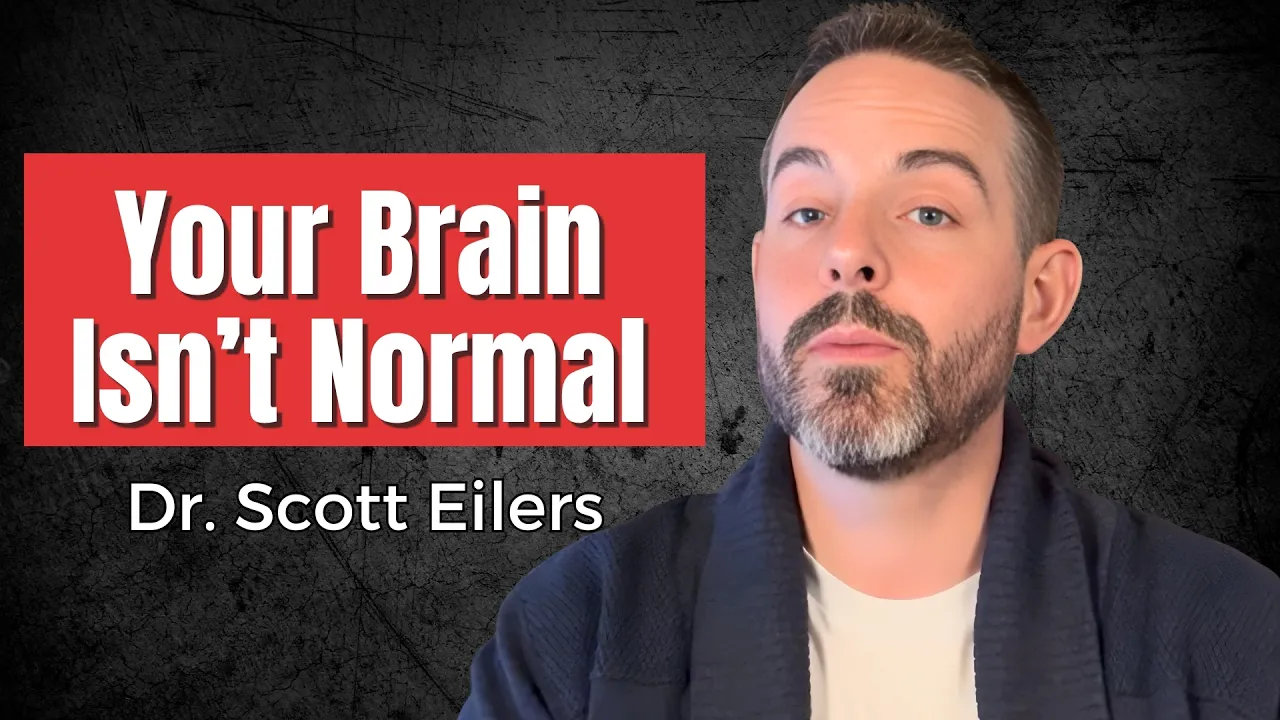
Do not assume that just because most people live some certain way that it's the right way to live. Your brain isn't normal and mine isn't either. So, if we try to live a normal life, that's not going to go well for us.
I am generally of the opinion that what's going on out there, and if you're listening to this on a podcast, I'm gesturing to the world in general, is not supportive of our mental health. It It's not for us. And so, we have to find our own ways and our own paths through this mess.
Whatever other people are doing isn't necessarily our path. I hope you'll consider that on your own mental health journey.