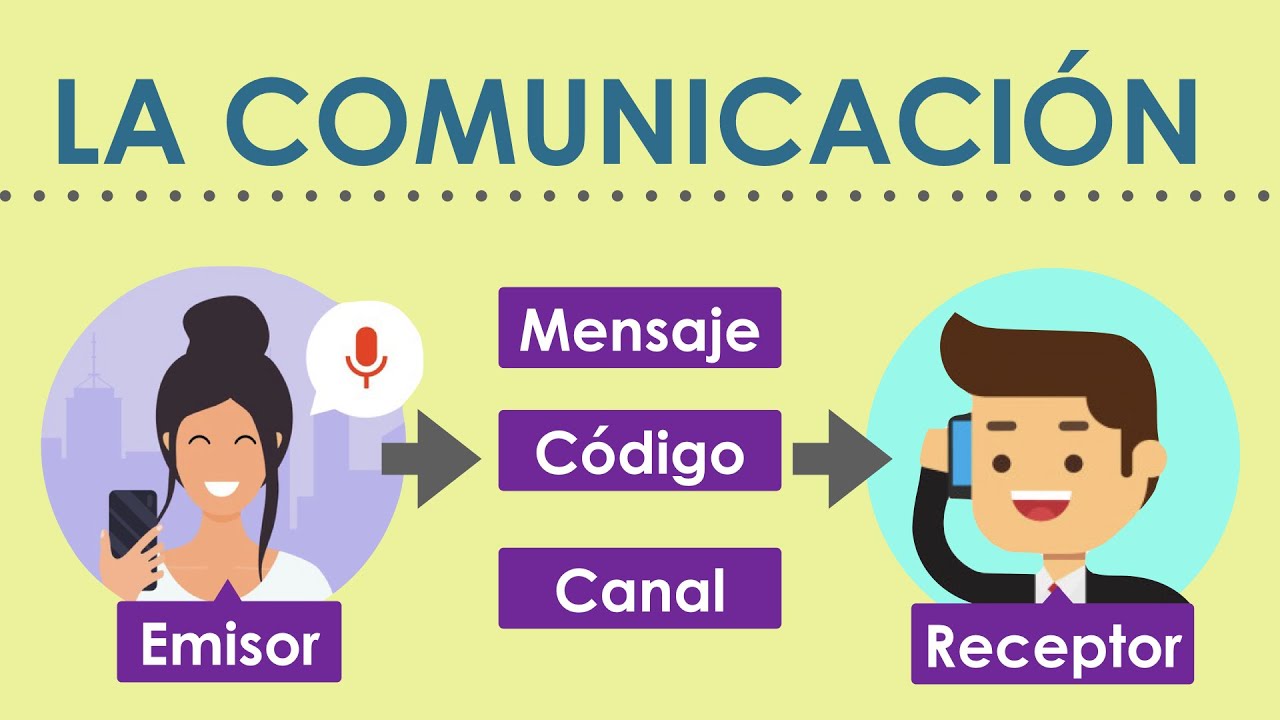
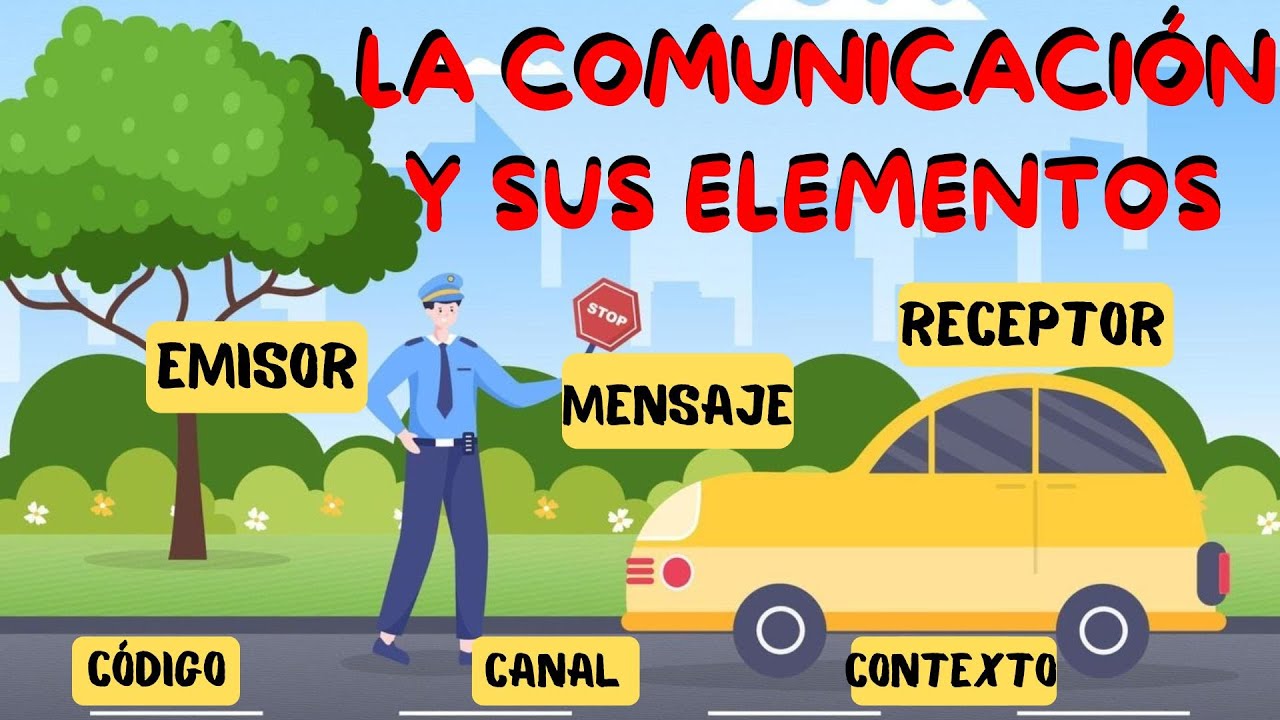
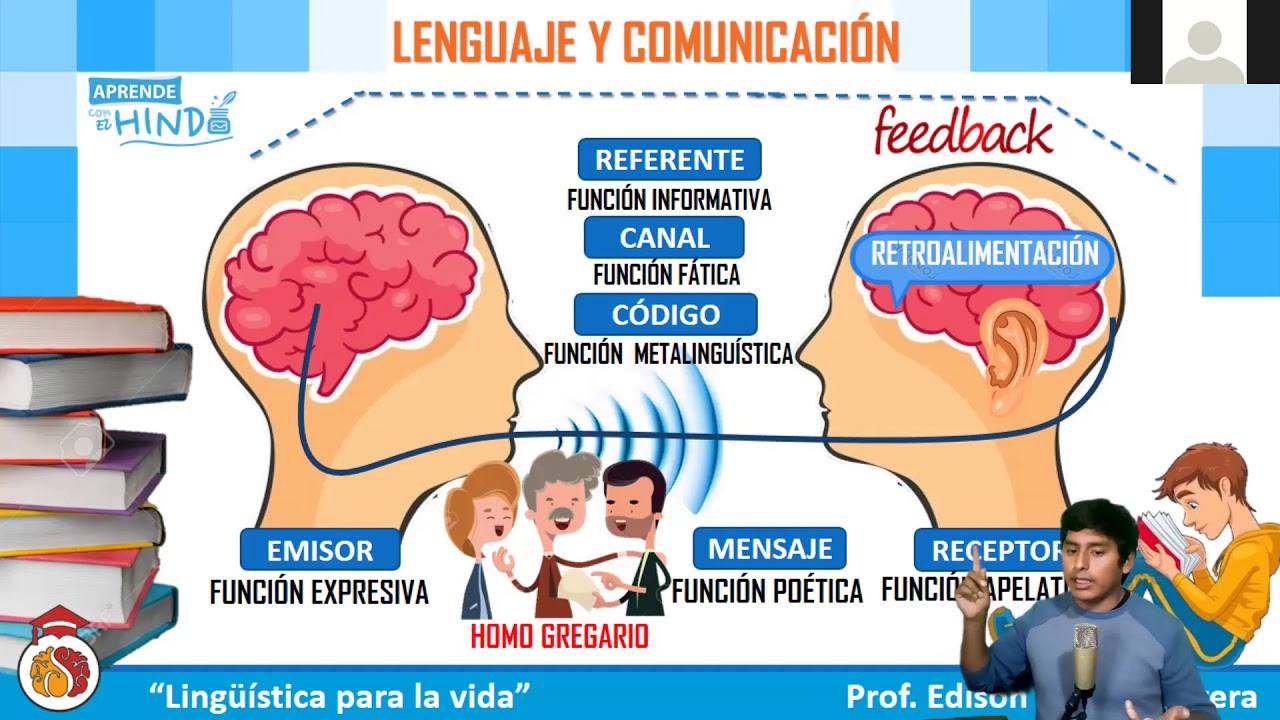
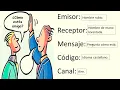
The elements of communication are the receiver, sender, message, context, code and channel. In addition, it must be taken into account that a "noise" can occur in communication, which is why some authors add this seventh element. Noise is any factor that prevents the message from reaching its receiver correctly.
That is, anything that hinders the reception, interpretation and response to the message. Noise can be internal or external. The communication process is dynamic, continuous, irreversible and contextual.
It is not possible to participate in any element of the process without acknowledging the existence and functioning of the other elements. The word communication comes from the Latin “communicare”, which means “to share something or place it in common”. Communicating is sharing information between people to exchange meanings that are common between them and in turn to be able to share it with others and thus be able to relate.
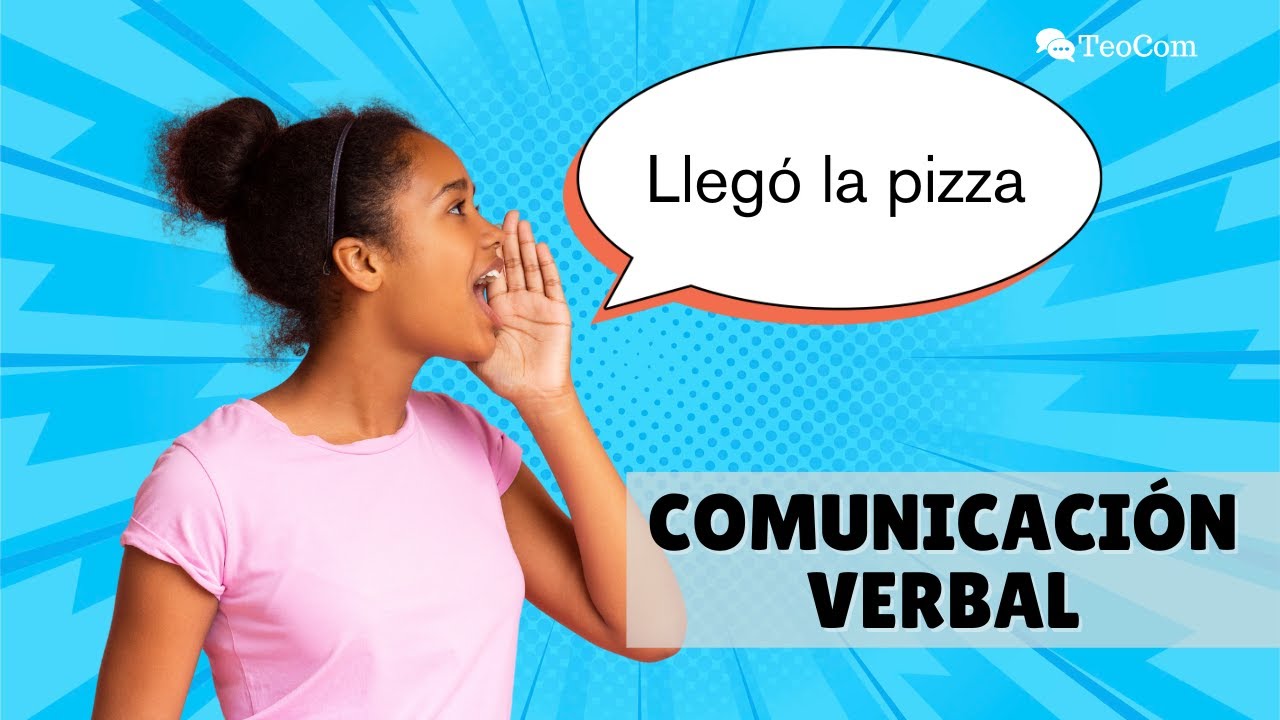
If communication occurs through spoken or written language, it is verbal. If it occurs through symbols, signs, gestures, sounds, etc. , it is non-verbal.
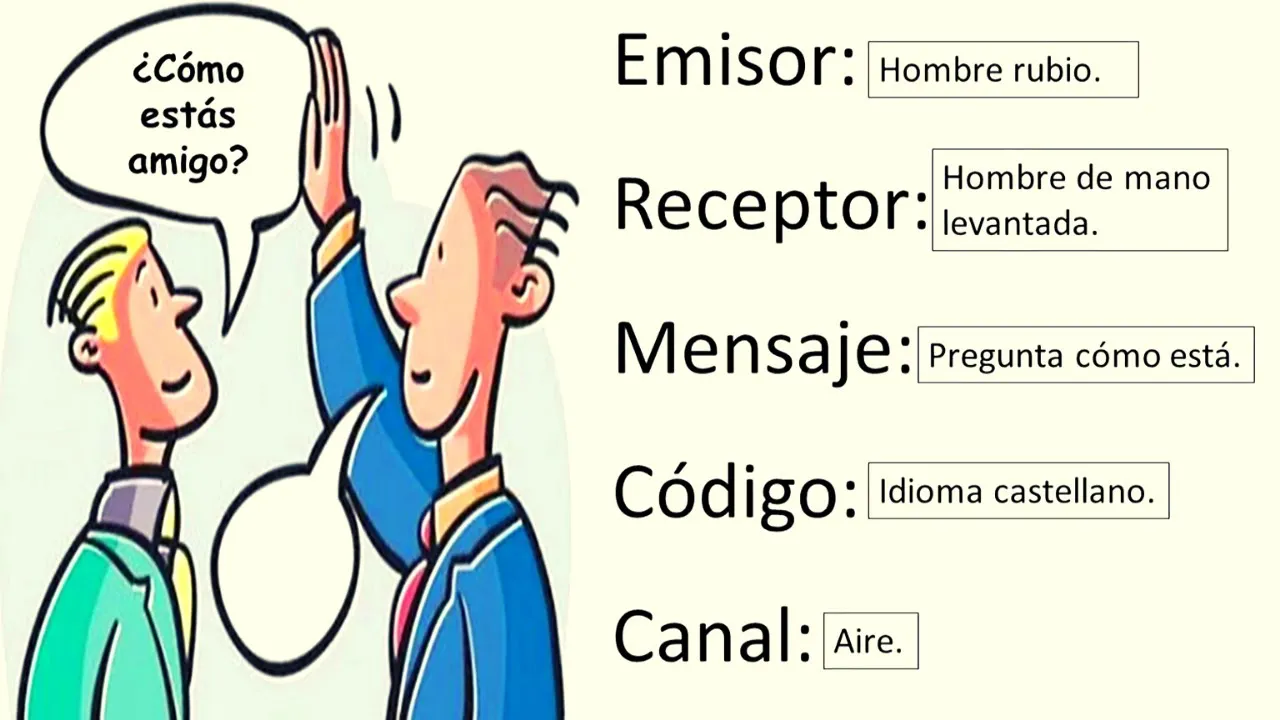
These interactions are carried out through a series of steps to transmit a message so that it can be understood. Thus, the sender encodes a message, to transmit it to a receiver through a channel, surrounded by a context that helps to understand the information. Let us now review each element of communication and its characteristics: During the communication process, several factors intervene that must fulfill certain functions for the exchange of information to be successful.
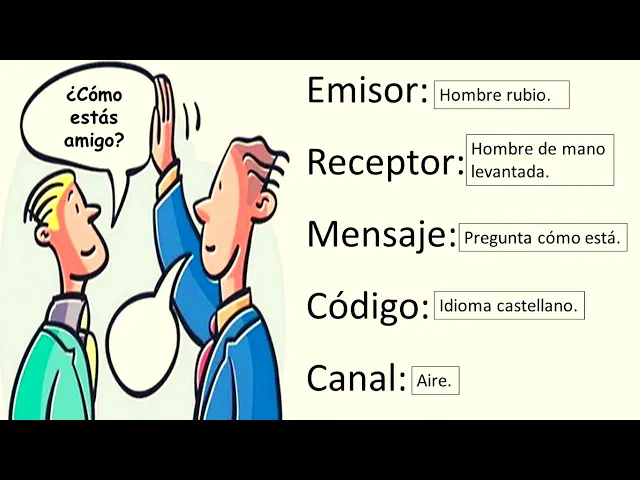
These elements are: Issuer The issuer is defined as the subject or source that shares the information or message. This subject can be an animate or inanimate entity, since the only quality it needs to transmit a message is the ability to supply some type of information to the receiver through the use of a channel. Receiver The receiver is understood as the individual or device in charge of receiving the message shared by the sender.
It is the person, being or machine that decodes or receives the message. The receiver is responsible for decoding the message sent by the sender. This message can only be understood if the sender and receiver share the same frame of reference, context or codes.
Message The message is defined as the information that is intended to be communicated between the sender and the receiver. It presents ideas, feelings or data that the sender encodes and the receiver must decode for the communication process to be successful. Context It is the environment that surrounds the sender and the receiver, that is, the environment where the exchange of information takes place.
The context can be any place common to the sender and receiver. The conditions of the same will make the communication process easier or more difficult. Code They are the signs and norms that, when combined , structure the message; spoken or written language, sounds, symbols, signs, warnings, etc.
The code is created from a coding process. During this process, the message is constructed, taking into account the common elements for sender and receiver that make the communication process possible. The code must go through a decoding process to be understood.
During this process, the receiver must extract the code of the message delivered by the sender, interpreting its meaning. The communication process can only be successful when the sender and receiver share the same code. This is how it is understood that people will be more successful in the communication process, to the extent that they can understand the code inscribed in a message.
Channel The channel is defined as the medium by which a message is transmitted. Information always requires traveling through a channel to be issued or received. There are different types of channels: personal, impersonal, verbal, non-verbal, written, among others.
The most commonly used channels are print, television, digital media, and radio, among others. Noise Noise is understood as any signal that interferes with the regular transmission of a message between sender and receiver. As explained at the beginning of the article, noise is any factor that prevents the message from reaching the receiver correctly.
Noise can be caused by various factors. The most common are failures in electronic components and signal interference coming from outside. In this sense, a person who interferes in a conversation between two people can be considered as noise, since it is an external agent that is interrupting the transmission process of a message.
Noise greatly increases the chances that a message will not be successfully transmitted. It is the reason why many channels have been perfected over time, with the aim of guaranteeing that messages can be transmitted between the sender and the receiver. Feedback Feedback is the response that the receiver gives to the sender after successfully receiving a message .
It is the element that allows a conversation to be fluid between two or more parties. The sender will always change the message according to the feedback received from the receiver. Examples of elements of communication Example 1 The teacher enters the classroom , greets the students and tells them: -Today there will be an evaluation on communication, so take out a sheet to write down the questions, I hope you have studied!
The students are amazed. Issuer: the teacher; Receiver: the students; Message: there will be evaluation on communication; Code: words, verbal language; Channel: air; Context: a classroom. Example 2 Three friends are lost in the countryside on the shores of a lake and suddenly they see in the sky that a helicopter is coming to rescue them, they begin to jump, make gestures with their hands so that they can see them and attract their attention.
Issuer: the three friends; Receiver: rescuers; Message: Help! here we are; Code: gestures, non-verbal language; Channel: light; Context: the field. Example 3 In a soccer game by the sea, a play is made and a player falls, the referee whistles and points to the opposite field.
Issuer: the arbitrator; Receiver: the players; Message: foul, free kick to the other court; Code: whistle, gestures, non-verbal language; Channel: air, light; Context: the soccer field. Example 4 A man makes a payment in a restaurant with his credit card, the cashier processes the payment through a point of sale or electronic equipment; later the gentleman has received a confirmation of the payment made to his cell phone. Issuer: point of sale or electronic equipment of the restaurant; Receiver: bank computer; Message: payment confirmation; Code: writing, data, verbal language; Channel: point of sale, computer; Context: restaurant.
Example 5 The institute, to welcome the new students, asks the guide teachers to project a presentation with the standards, subjects, schedules and evaluation plans. Issuer: the technological; Receiver: new students; Message: the norms, subjects, schedules and evaluation plans; Code: writing, verbal language; Channel: the computer, the screen; Context: classroom. Example 6 A girl living in poverty is on the streets begging for money, for which she made a poster.
Issuer: the girl; Receiver: group of people who read the poster; Message: without money I have no right to dream; Code: writing, verbal language; Channel: paper; Context: the streets of the city. Example 7 A young student is buying some books, she picks up the phone to check the balance of her savings account at the bank and check if she has enough money to pay with her card. Issuer: the young student; Receiver: bank; Message: check available balance in savings account; Code: writing, data, verbal language; Channel: cell phone, computer; Context: a bookstore.
Example 8 A girl is sitting with her mother in the park, when suddenly the girl starts to cry and screams very loudly. Her mother gets up and looks for her bottle, the girl takes it quickly and stops crying. Issuer: the girl; Receiver: the mother; Message: I am very hungry, hurry up; Code: gestures and noise, non-verbal language; Channel: air, light; Context: the park.
Example 9 A vehicle is traveling at high speed and before reaching a corner the traffic light changes light, so the vehicle stops. Issuer: semaphore (machine); Receiver: the driver of the vehicle; Message: stop; Code: signal (red light) non-verbal language; Channel: light; Context: Avenue. Example 10 A driver traveling on a highway suddenly hears a siren behind his vehicle, it is an ambulance, and he immediately gives way.
Sender: the ambulance Receiver: the driver of the vehicle Message: give way; Code: sound (siren) non-verbal language; Channel: air; Context: highway. Example 11 A businessman is in his office reading the economic news in an international newspaper. Issuer: the newspaper; Receiver: the employer; Message: economy news; Code: writing, verbal language; Channel: paper; Context: office.