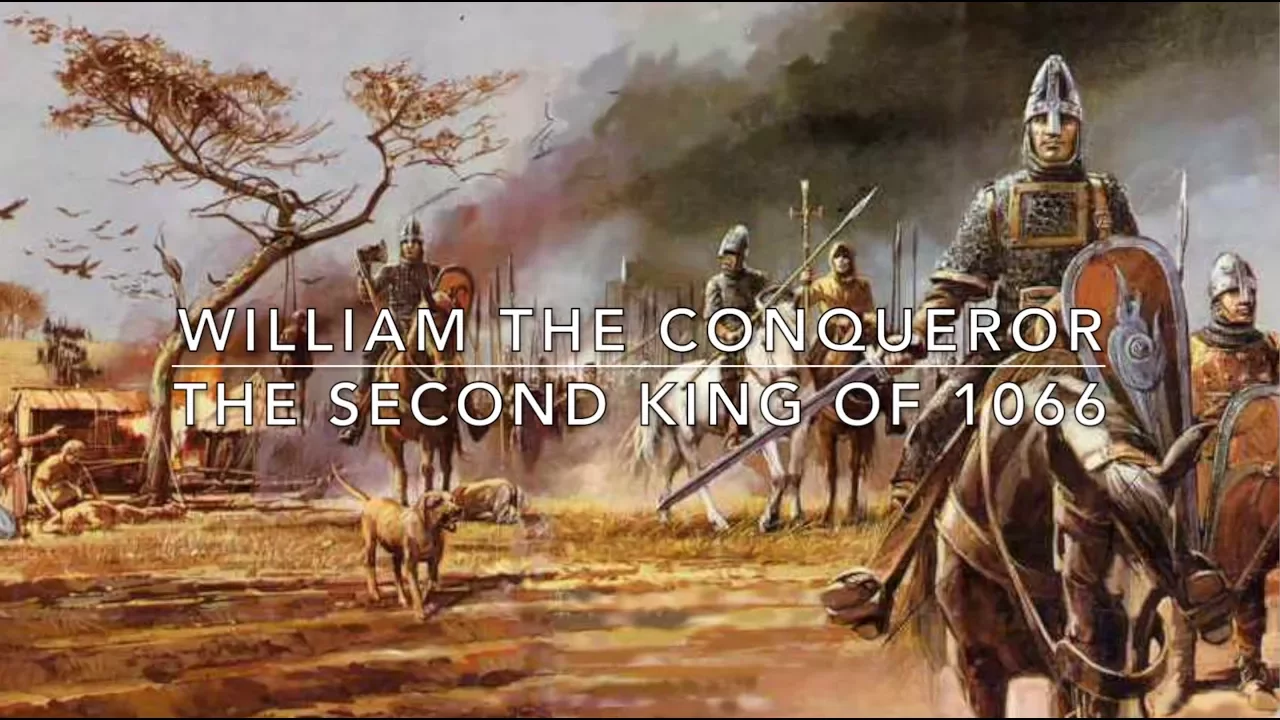
in the early 1050 s King Henry the first of France increasingly alarmed by the rising militarism of his vassal Duchy of Normandy to the north of his realm decided to march his army to war to crush the Normans once and for all accompanied by a large number of other vassal lords and a substantial host of men the French army devastated eastern Normandy putting crops to the talk and harrying the local population at will the northern Lords meanwhile descended from Norseman and masters of warfare to a man bided their time in their fortified Citadel's waiting for
the perfect moment to strike once the French forces were suitably spread out into the countryside many of them preoccupying themselves with looting and raiding the Norman barons finally rode forth on masks from their castles to strike a decisive and crippling blow devastating Henry's forces with a unique and deadly proficiency on horseback expert fighters yet precariously placed upon the borders of numerous hostile powers the Normans had been busy over the previous decades drilling of fighting and training the slightest opportunity to make war more often than not amongst themselves chief amongst these Normans was the Duke ruthless
warrior Lord who'd been consistently forced to fight for his life amongst a sea of backstabbing pretenders and ruthless usurpers since he had first become duke at the age of just seven and 1035 he also happens to be one of the most famous figures in all of history we known today as William the Conqueror a bastard son of the previous duke of normandy robert the first it also his only living heir William had been forced to fight for everything that he now had since he had become Duke while still a child controversially his mother had apparently
been a commoner and not Roberts wife thus when Robert died in 1035 Normandy became awash with rival political factions vying for power quite miraculously William managed to successfully navigate through the assassins blades during the first few years of his rule although the situation in Normandy would be best described as panicking during this time the contemporary chronicler William of Schumi Ashe wrote that by the time the Duke was a teenager not only his guardian but also his teacher and his Stuart had all been murdered by rebels amidst repeated attempts by members of his own families to
unseat him from power despite all the odds William weathered the storm yet in 1046 then aged just 18 he faced the most difficult episode of his life when he was ambushed by a vast force of around 25,000 men on the Cotentin Peninsula raised by a coalition of opposing Norman barons William evaded capture and rode hard directly to King Henry's court he reminded the king of France that any revolt against his vassal was a direct fault against himself even though Normandy had always been an independent-minded area of France since it had first been settled by Vikings
in the early 10th century in a deliberate effort by the then king of France Charles the simple to stave off further Viking raids it was still technically a vassal state and thus under the Kings protection henry decided to act and he raised an army of his own to support william and reinstate him as june the two armies met in the summer of 10:47 mainly engaging in a series of highly orchestrated cavalry skirmishes characteristically William led from the front throwing himself into the combat wherever the fighting was fiercest and despite being heavily outnumbered the rebel army
soon broke apart and a great massacre of the fleeing men followed William still faced opposition in the aftermath of the battle yet he was able to retain his title and solidify control over the western half of his Duchy elements of the eastern portion remained in outright rebellion until the early 1050 s william presided over a Duchy in a state of almost perpetual warfare but only the strongest survived it was within this brutal and chaotic landscape that his mounted horsemen became the most effective in all of Europe and very possibly some of the best mounted warriors
in history in around 1051 William made a powerful ally in the neighboring County of Flanders when he married Matilda the daughter of count Baldwin v between 10:47 and 1054 Normandy was racked by almost continuous warfare and William continued to militarize his province to such an extent that his one-time Ally King Henry decided to put an end to his power once and for all in the aftermath of William's decisive victory at the Battle of Mortimer his power only grew and grew even extending across the channel to England the king of England at the time Edward the
Confessor was childless yet one of his closest living relatives was none other than Duke William they shared the same Norman lineage through Edwards mother Emma a daughter of the previous Duke Richard the first The Fearless is therefore entirely possible that in 1051 Edward did indeed name William as his successor according to some sources such as the Bayeux Tapestry even Harold Godwinson the most powerful nobleman in England at the time had agreed to support William's succession after he was shipwrecked in Normandy the two men apparently fought together in battle whilst Harald was in Normandy in a
unique precursor to the monumental events that would follow over a decade later by around 1060 William had fully solidified his hold over Normandy and he began to extend his influence into the adjacent areas by 1064 Brittany and Maine had fallen under his sway and his vast professional army only continued to grow in size and strength with the addition of significant Breton elements similarly across the channel in England Harold Godwinson had secured the exception of his own brothers to many of the most powerful positions in the country and he ruled as the power behind the throne
finally upon King Edward's death in 1066 Harold had himself crowned as king upon hearing the news william was outraged yet he now had a purpose for all of his military preparations and expansion he would conquer England or he would die trying by September William had amassed a vast fleet of ships along this coastline 3,000 if some contemporary sources had to be believed although this is clearly an exaggeration he certainly had enough ships to carry over 3,000 horses and well over 10,000 men all he had to do now was wait for the right weather meanwhile in
England the sea King Harald Hardrada Norway also had designs on the English throne his claim harked back to the time of Knut a generation early when Scandinavians had ruled supreme in England in one of the most fortuitous moments in all of history Hardrada landed a vast invasion force in Northumbria boss William patiently awaited his own passage across the sea Godwinson successfully repelled the Norseman at Stamford Bridge on the 25th of September killing Hardrada and his own brother toss stick who had sided with the Norseman in order to stake his own claim to power William meanwhile
successfully crossed the channel with his fresh army landing upon the coastline by the end of the month just two weeks later Godwinson having made the distance from Northumbria an astonishingly short amount of time arrived at Hastings with his own army the two one-time allies then engaged in one of the most decisive and famous battles in all of history despite initially being pushed back by God Winston's elite housecarls some of whom said to have been able to decapitate a Norman horse with a single devastating explode Harold's forces repeatedly broke formation to pursue the apparently fleeing Norman
knights but time and time again they were wiped out when Williams forces turned back to mop up the pursuing Englishman William himself was rumoured to have been killed yet famously he pulled down his helmet to show his face to his men urging them once more back into the fray finally and now severely weakened Godwinson made his final stand upon a hilltop only to be devastated with barrage after barrage of Norman arrows and the thundering hooves of Norman knights the last anglo-saxon King of England died that day for centuries to come the primary term of English
Kings would now be French on Christmas Day 1066 William had himself crowned king of England the last two decades of his life were dedicated to putting down rebellions throughout his new kingdom they were also marked by dynastic squabbles with his own children the reforms that he instigated and the castles that he built during the last few years of his reign would go on to revolutionize English society assuring in an entirely new era a feudal age you