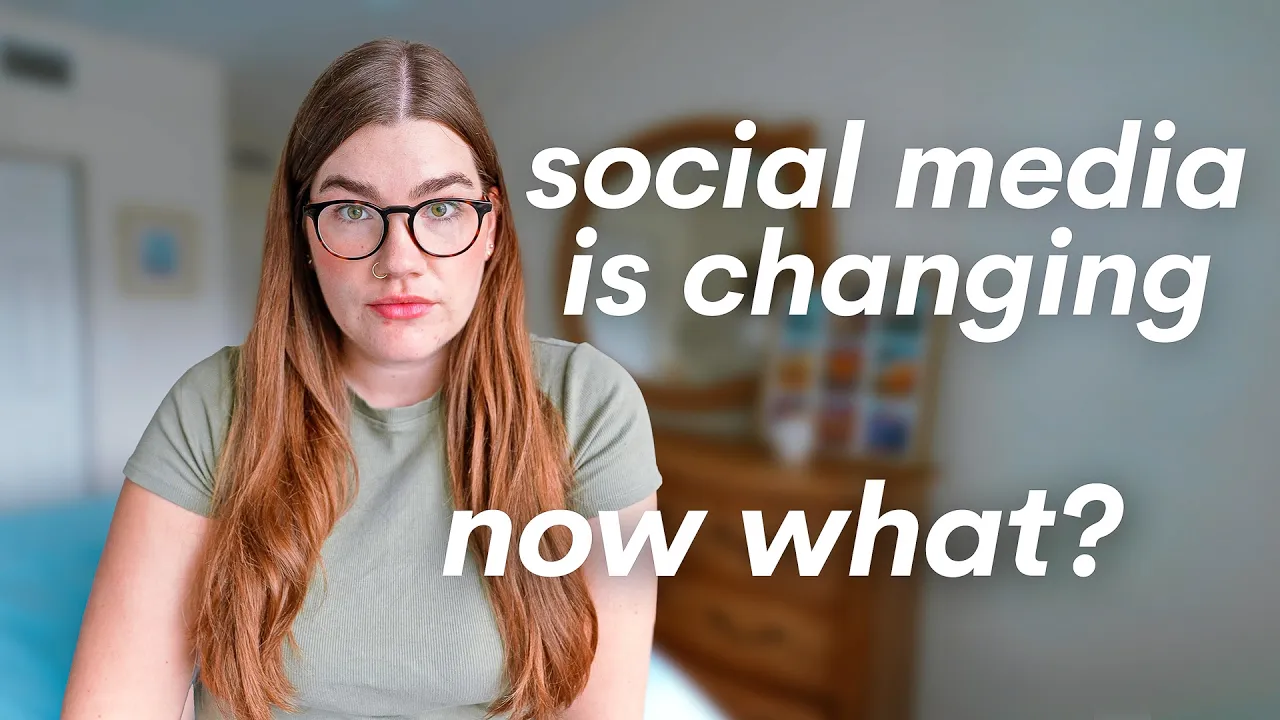
Is it just me or have you also noticed that the internet kind of feels different these days? For content creators, it feels harder than ever to have your stuff actually seen by your audience. Like there's this disconnect, you post a piece of content but only a small percentage of your followers actually see it.
Though on the other hand, it's easier than ever before for new creators to go viral and reach a huge number of people. In my head, I've been calling this phenomenon the death of the follower and the rise of the algorithm. Okay, I gotta give credit where credit is due here.
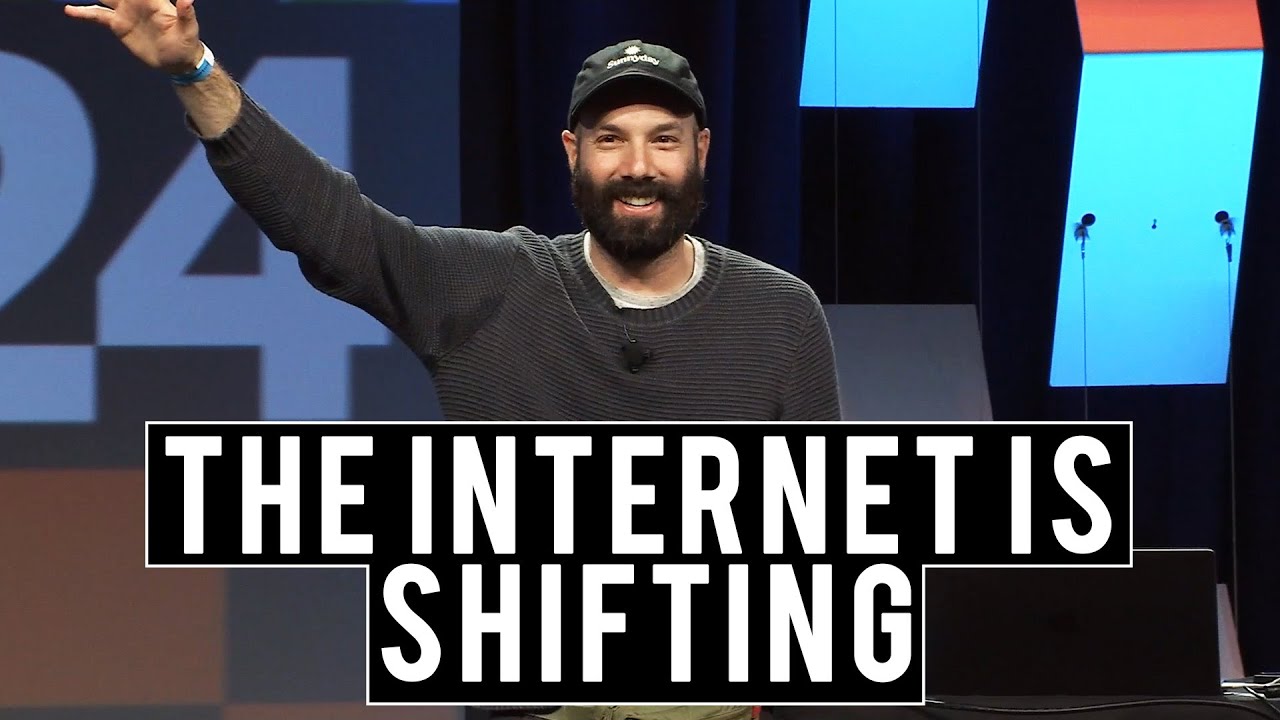
A lot of my thoughts on this are really informed by Jack Conte, the CEO of Patreon and specifically his talk at South by Southwest which was called the death of the follower. I highly recommend you check it out. I'm gonna link the full thing in the description below but truly I think this phenomenon is such an existential threat to the survival of like content creator or influencer as a career path.
So I feel like we gotta talk about it. So today I wanted to make a more chatty video talking you through all of this. Specifically, we're gonna break down the death of the follower and the rise of the algorithm into three parts.
Number one, what's changed? We know that the internet feels different now than it did back in 2015 for content creators and for content consumers. But what exactly has happened to make that change?
We're gonna talk about it. Number two, how have these changes affected creators and why do these continued changes in my opinion threaten the very existence of influencer as a business model? And number three, how do we survive the rise of the algorithm in 2025?
Is it possible for content creation to continue to be a sustainable career for people? And if so, how? Hopefully we can end on a hopeful note there.
By the way, if you're new here, hi, my name's Katie. This is not my typical format. I'm not usually so casual and laid back.
In fact, some might say I've never been chill a day in my life, but I got some really nice feedback on this style of video when I did it about the meta moderation changes recently. So I thought we'd try it out again but this time talking about a topic so existential that I think it literally defines the future of content creation or influencing as an industry, as a sustainable career path for people. And I think it's important.
So I wanna talk through it with you and hopefully together we'll come to some conclusions about what we can all do going forward in order to continue creating content that we love for audiences and communities that we're invested in and for it to be a sustainable way for us to, you know pay our rent and buy our groceries. So let's talk about it. Starting with part one, what's changed since 2020 and the wide scale adoption of TikTok.
There have been some major shifts happening in the social media landscape. It's permeating all of the platforms that we love to consume content on and create content for. And I think you could pretty succinctly call this phenomenon the death of the follower and the rise of the algorithm.
Prior to 2020 and the rise of TikTok, all of our social media apps were based on the premise of following. If you found a creator or account that you liked and you followed it, you would see more content from them. But TikTok proved to the world that you can have a very successful social media app that didn't actually require users to follow anyone at all.
By developing a for you page that was curated based on user behavior, interests, demographics like basically all the data they could get on you. TikTok was better able to keep our attention than the legacy platforms like, you know Facebook and Instagram and YouTube. And ultimately we know that the social media economy is the attention economy.
All of these apps make their money based off having more human eyeball hours on their apps which means more potential for advertisers to sell to us which makes the social media world a game of whoever can keep attention the longest gets the biggest payout and TikTok was winning. So the other social media giants like YouTube and Meta start to get understandably worried about their like hemorrhaging of users over to TikTok. So because of this, two big things happen.
Number one, Meta and YouTube both just absolutely shamelessly copy TikTok by developing their own short form video platforms. So reels and shorts are born. They're just rebranded TikToks.
We all know this. So the second thing is YouTube and Instagram both start to integrate more recommendations into content across their platforms not just in the short form space. So for one, places like the reels or shorts feed is made up of content mostly from people that you don't follow yet.
It's curated based on your interests. But in addition to those places even like the Instagram main feed is now starting to show you more recommendations from people that you don't follow. And therefore you're seeing less stuff by volume from people that you actually do follow.
And all of these changes are being driven by the fact that it generates more time spent on the app which is ultimately the goal of all of these companies. Part two, how does this impact creators? So where does this leave us in 2025?
Cause all the major social platforms including Instagram, YouTube and of course TikTok are showing users content not based on who they follow but based on their behavior and interests. This sort of has two main competing impacts for creators. And it's interesting to me because you could definitely argue about which one is more positive or negative but ultimately it kind of comes down to where you're at in your journey as a creator in trying to grow.
And I do wanna highlight like there is a positive side to this. I feel like when we talk about all of this as creators often it can very much feel like us versus the algorithm which there are some aspects of that. And a lot of people like to yearn for the days of the chronological feed and the way social media used to be.
But the truth is that wasn't a perfect sort of set up for creators either. Essentially the positive impact on creators of these recommendation based algorithm platforms is way, way increased discoverability. Basically in our current setup up and coming creators have a way easier time of breaking in and sort of getting matched with their viewers.
We see this a lot, especially on TikTok like a lot of the biggest major influencers now in 2025 grew on TikTok because of this mechanism. And there is something to be said for that because honestly prior to all of this like back on the day on YouTube, it was incredibly hard for new creators to break in and find an audience. Take it from someone who's been on YouTube since 2011.
It took me until like 2019 to actually like grow a substantial following. And there was a lot of reasons for that. But one of them at least was the fact that it was difficult to get your stuff in front of new people if you were brand new.
This is why back in the day people were doing collabs constantly or trying to make stuff that was more like actually shareable like the type of YouTube video you would click share and like send it to a friend because those were like some of the few ways that you could actually gain a new audience when there weren't recommendation algorithms on your side. So that's definitely a benefit, right? In our current system, new up and coming creators have an easier time getting reach.
But what's the drawback to this all? The negative impact is definitely decreased distribution to your actual followers. So yes, discovery is increased.
You're able to get more reach, get your content in front of new people, but do those new people actually continue to see posts from you even if they hit the follow button? Basically once you have grown and you're an established creator, it's harder now to actually continue to have your content shown to your audience. The social media landscape now is so much more about individual pieces of content than it is about creators.
And this obviously poses a huge problem to the creator industry. Our whole business model as content creators or influencers is building communities. Communities that are invested in the type of work that we do in the stuff that we talk about and the information that we share.
So how can we effectively build communities that we are then obviously able to monetize to turn this into a job? If content distribution is so scattered and we have no guarantee of our content consistently showing up for our audiences. Well, yes, it's certainly easier to hit it big and go viral in 2025 than it was in 2015.
What does going viral and having this wide reach really mean if you can't sustain that attention and turn it into an audience or a fan base that's invested in what you're doing? I know a lot of what I'm saying here might come across as sort of blaming the algorithm for getting lower reach. And if you've watched my channel for a while, then you'll know that I actually talk a lot about how that is not productive.
Over the years, I've seen so many creators being annoyed at the algorithm as like the reason why they're not getting the views they want. And my response to that historically has been, well, maybe it's because you need to try to make your content more engaging. I think that's still valid advice.
I think the thing is like we can critique the system that we're operating in while still at the same time learning the techniques and methods for like optimizing our content under that system. That doesn't mean that that optimization is like right or good or like the best way to create stuff, but it does mean that it's the most effective way to get your stuff in front of more people. That makes sense.
I think we're just in a situation where for content creators, it's kind of about this balance between like just survival, like making sure that your content gets the reach that it needs to so that you can like put food on the table as a content creator. You need to understand the best methods for like getting more views and engagement and stuff so that you can make your AdSense money or get your brand deals or whatever. While at the same time still being frustrated that we've had this fragmentation where a follow or a subscribe doesn't mean what it used to mean.
So I just want to say like, I feel like those two things can exist at once. Like on one hand, we can be trying to do our best to make these algorithms work in our favor so that we can continue doing this as a job and reaching the communities that we want to reach. And on the other hand, we can also be frustrated that this has changed and try to look for more creative solutions for ways we can stay more connected with our communities.
Like I feel like those two things can be true at once. Speaking of that, this brings us to part three, which is how to survive the algorithm as a content creator in 2025. I think one of the first steps is just recognizing the utility of different platforms for different purposes.
The reality is right now, we can't escape the algorithm. We can't escape the system of recommended content over following like that's just kind of a Pandora's box that's been opened and that's where we're at right now with social media. So I think the best approach is to use the algorithms to our advantage as much as possible and try to translate the audience that we're reaching through those platforms into communities that we can cultivate in other places that are more well suited to that.
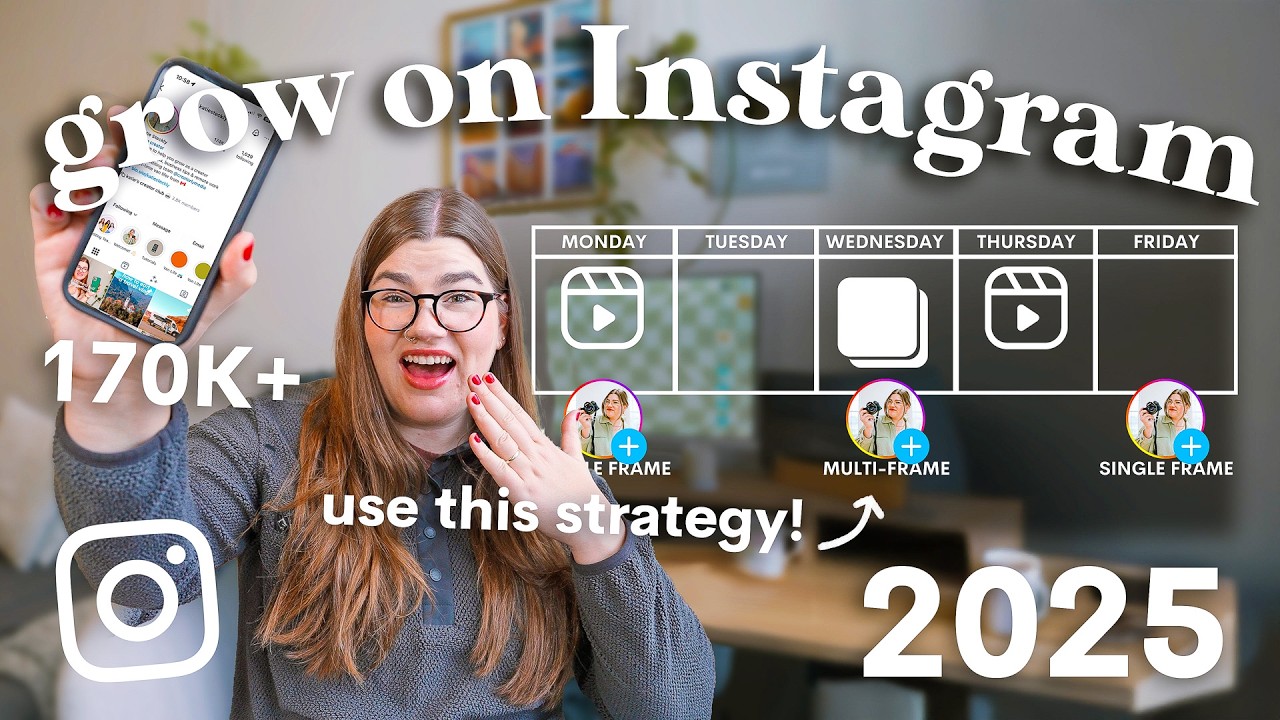
So I guess one example of that is like even within a platform like Instagram, I feel like Instagram still does have features that allow for community building, like a broadcast channel, for example, that allows you to pretty directly reach people who have chosen to follow you or have opted into your broadcast channel. Even Instagram stories are a way that you can reach your existing following or at least a portion of them. And reels on the other hand are kind of your way of meeting new people or gaining that new audience.
So even with an Instagram, you can try to optimize your content for those different purposes with those different features. I feel like even YouTube has this to a certain extent, like in my mind, shorts are very much for reaching new audience members. And ideally you can use your shorts to get people to your long form videos, which is where some more community building can happen.
That's kind of the first part, understand how different platforms have different functions in this whole ecosystem of reach versus nurturing a community. Second part of this formula, I think, is to intentionally optimize some of your content for cultivating connection rather than just forgetting as wide of reach as possible. These algorithmic platforms like TikTok or Instagram reels really, really incentivizes and like honestly kind of change your brain chemistry in a way that just makes you want to create whatever is gonna go most viral next.
And I think we really need to try to resist that urge if you want to actually be able to create an audience that cares about you. We'll purchase using your affiliate links, we'll buy your digital products, we'll like join your membership or whatever it might be. If you want that type of audience, then at some point you need to shift from just creating whatever content is gonna go most viral to creating content that connects with your audience.
Even though we are so, so motivated to just go for that viral hit every time because seeing those high numbers, it just like feels so good. It is such a hit of dopamine, but high numbers don't always represent good connection or like loyalty from your audience. It just means whatever you created, appeal to a really, really wide audience, which there is a time and place for that.
But I think we can't just focus entirely on that, even though the apps really like incentivize us to do that. So what does that look like? Well, it might be like mini vlogs or life update videos, maybe even videos like this that are a little less optimized and a little bit more just chatty and hopefully thoughtful and insightful, but you know, most likely not gonna go viral.
And that's okay, we need to understand that some content is kind of meant for different purposes and measure it by its success in that purpose, not just by, you know, number of views. And the third piece of the puzzle I think is to find a place to connect with your community that is not algorithm driven. You can use the algorithms to your advantage to reach your audience and find new people, but eventually you need to convert them to a place where you have more consistent direct connection to them.
There's lots of different ways to do this that can be up to your preference and whatever like suits your brand best, but I feel like an email list is a great start or even like a Discord server or maybe something like a Patreon or a membership of some kind. It doesn't even have to be paid. I actually feel like it's really great to start a place like this that is completely free.
I think eventually there is potential for you to do this in like a paid way, but I think at least at the beginning, it's really smart to start something like this that is just free. It's a place for you to connect with your community, provide value, but at least you know that like you own that space, you're connected with them, you don't have to battle an algorithm to reach them. Speaking of which, if you wanna be on my email newsletter, I'll link it in the description.
My weekly email newsletter includes like Reels Trends you might wanna try, latest social media news and just like tips and tricks for a content creator. So check that out if you're interested. I just think it's so important to cultivate a place where you have that direct connection to your most dedicated audience members and don't expect this to be like as huge as your Instagram or your YouTube following.
It's gonna be smaller, but that's okay. These are the people who care the most and it means that you can maintain that connection to them. Navigating all of this can be really difficult.
It used to be really, really hard to break in and find your audience. Now it's a lot easier to break in and go viral, but it's a lot harder to maintain that audience once you have it. My hope is that in the future, emerging and like innovative social media platforms might be able to create some creative solutions to this problem.
And if you listen to Jack Conti's South by Southwest talk, you can tell that like Patreon is really trying. But in the meantime, I think that we as content creators are just gonna have to be problem solvers and try our best to take advantage of the benefits of these recommendation algorithms, also looking for other places that we can take our audiences to have more control over our connection to them. Cause the thing is that like a lot of people don't acknowledge is at the end of the day, like the vast majority of us content creators are small business owners.
These algorithmic sites can be so volatile. And a lot of us are truly just like a few bad months or like a bad year away from like not being able to get brand deals or just not being able to like generate an income off of this work anymore. So it's kind of a precarious position to be in, but I think a lot of people don't acknowledge that because there seems to be this overarching perception that all content creators and all influencers are like rich and famous when actually like 99% of us are not.
But I think that actually might be a good topic for an entirely different chatty video. You can let me know in the comments if you want to hear me talk more about like the perceptions of wealth and content creators and the true realities of it, cause I think that could be interesting. But for now, I'll leave you with this.
Try to use the algorithms to your advantage as much as you can. Try to find places where you can take your most dedicated audience members away from the algorithms that you can connect with them in a way that doesn't require like rage bait or like hyper engaging content that just requires you to be able to email them, provide them value, talk with them on Discord, whatever. Cause I feel like that combination of algorithmic driven audience growth and non algorithmic platform community cultivation, I think that is probably gonna be the balance that content creators need in 2025 to sustain this as a career and not just feel like you have a flash in the pan viral moment that like goes away as quick as it came.
Because I really do believe in this job as like a great way to not only earn a living as a creative person, but also be able to like deliver real helpful valuable content to people who are looking for it. So yeah, those are my thoughts for today. Thanks for listening.
Let me know in the comments again, what you think of this style of video. It's sort of out of my comfort zone to be just this raw and real, but I'm trying. And I think it is, I think it's good conversations to have.
Okay, that's it for now. I will check in with you in the next video. Bye.