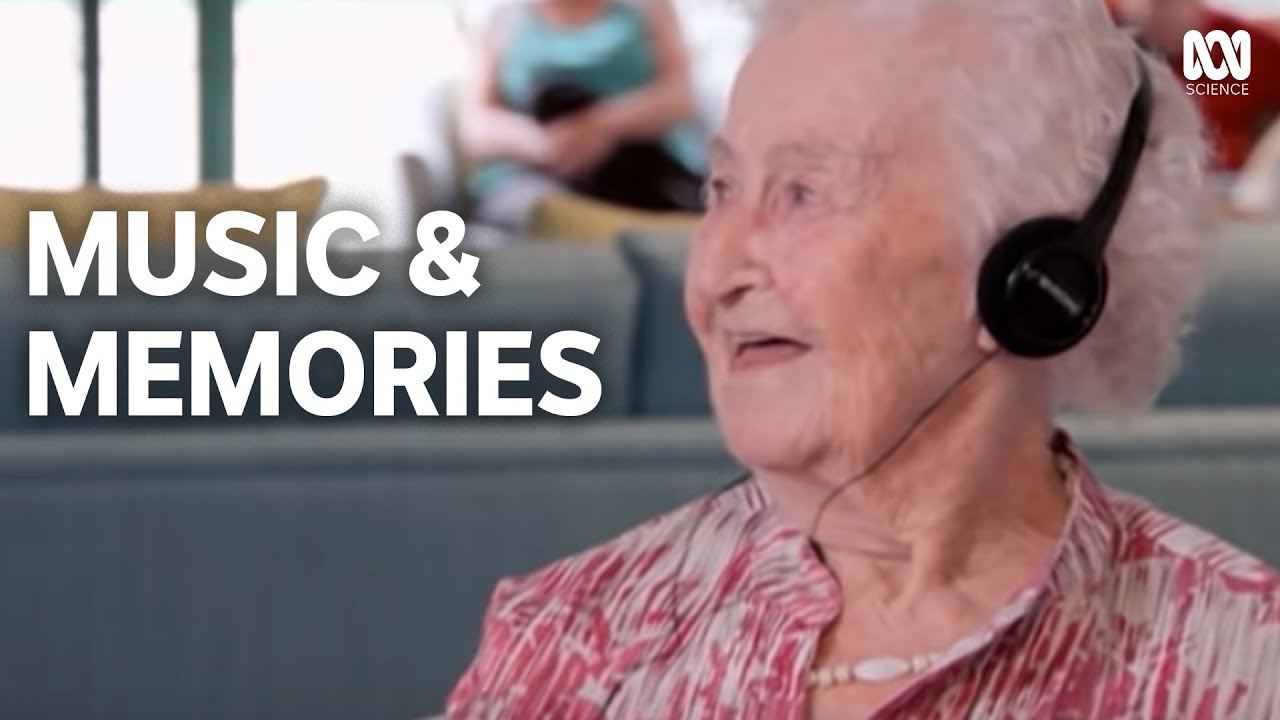
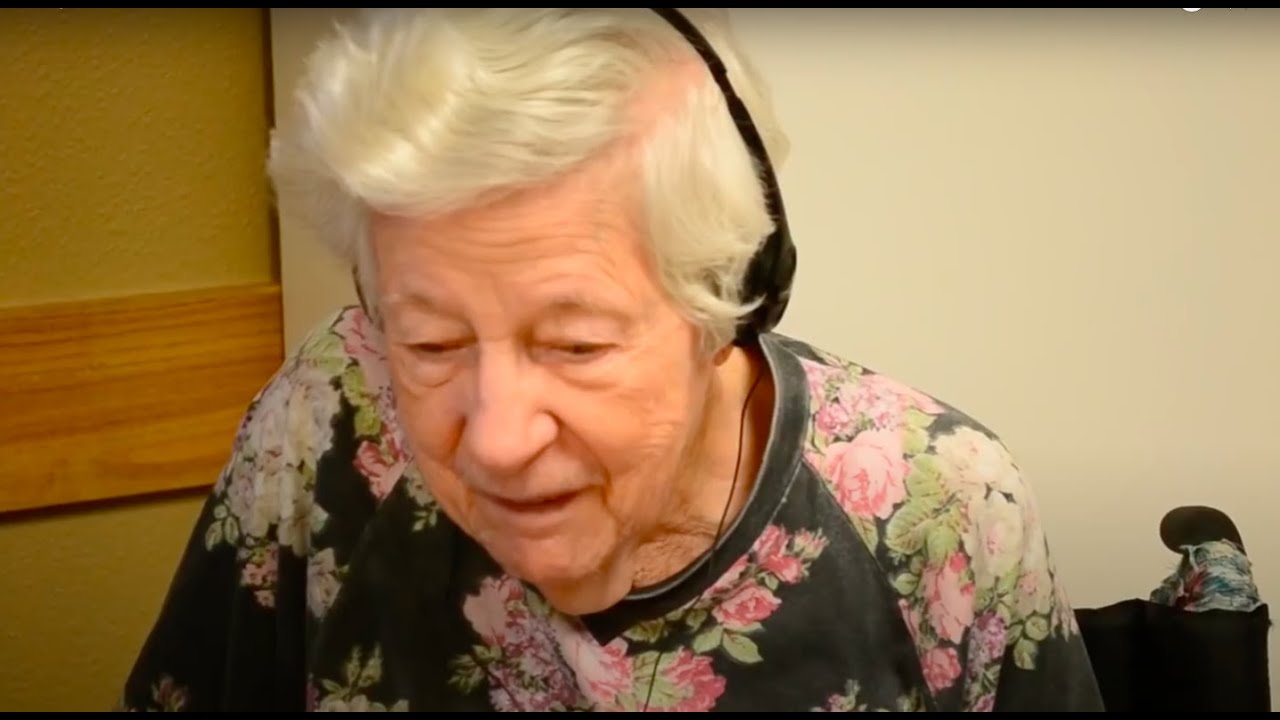
- [Voiceover] How old are you? - [Voiceover] How old am I? - [Voiceover] Yeah. - [Voiceover] I'm 90 years old. - [Voiceover] What was life like when you were a little girl? - Oh God, I've forgotten so much, I can't remember, I just can't. I've forgotten so much. I'm very sorry. - [Voiceover] No, it's okay. What have you forgotten? - I've forgotten what I used to do after I became a young lady. I've forgotten so much. I can't remember. I've been here, I've been here, I've been here 90 years, and if I could remember, I
would tell you, but I don't, I can't remember. - [Man] I want to try an experiment. - [Woman] What? - [Man] I want you to try and let the music take you back into your memories. To travel back into time. And then we'll stop and you can tell me where it took you. - [Woman] (laughs) Okay. - [Man] You ready? - [Woman] Uh huh. ("When the Saints Go Marching In" by Louis Armstrong) - That's Louis Armstrong. ♪ Yes I want to be ♪ In that number ♪ When the saints ♪ - Wow. (chuckles) - He
is singing When the Saints Go By, Marchin' By, and it takes me back to my school days. ♪ I would like to hit the number - Mama told us not to go listen to him, and we would sneak off at night, bring back pictures from the dance, and I worked in Kingstown nine years. And the new building in Kingstown. My brithday, November 20th, 19-- That was in the wartime. I was working in Fort Jackson, and my son, on February the fourth was 69. (laughing) I didn't know I could talk so much. - [Voiceover] This is
Dan Cohen. Six years ago he volunteered at a nursing home, and what he experienced there changed his life. Dan asked me to film him for one day. - Adjusting the camera. - Well then go get her an iPod. - Go get her the iPod, okay. - [Voiceover] He wanted to show people what he was seeing. What was happening when he gave elders with dementia the music they had loved. (flowing string music) - Music connects people with who they have been, who they are, and their lives. 'Cause what happens when you get old is all the
things you're familiar with, and your identity, are all just being peeled away. - [Voiceover] What unfolded that first day moved me so much I ended up following Dan for three years. - [Voiceover] Did you work with elderly people before? - [Dan] Well, I'm a social worker, and so I have worked with elderly people when I was, actually for my internship, but it really wasn't, most of my life was spent in the computer industry. - [Voiceover] Oh, okay. - And this is sort of, for me, putting two things I love together. (plucky string music) We really
want to learn what music someone's gonna really recognize, and enjoy. - One of the residents is a resident who likes gospel music. Church was all his life. And I think that we can start with him. (man quietly moaning) - Henry, speak to me. I want to hear your voice. Can you talk to me? - Mhmm. - So let me hear you, tell me your full name. - Henry has dementia, and he needs total assistance with all his activities of daily living. - [Woman] Hi Papa. Hi Papa. - Huh? - [Woman] How you doing? - I'm
alright, I'm fine, wait. - [Woman] Who am I? - Huh? - [Woman] Who am I, I'm your daughter. - [Henry] Daughter? - [Woman] Mhmm. - [Woman] Which one? - Wait a minute, I know. I got so many, I don't know, God knows. - [Woman] You got so many? Maybe granddaughters. - Well that's what I mean, now this, I don't know. - [Woman] Okay, it's Cherri. How long has he been in the nursing home? Approximately 10 years. It affects me greatly, beacuse he was always, you know, fun loving, singing, you know, every occasion he would come
out with a song. I remember as a child he used to walk us down the street, me and my brother, and he would stop and do Singing In the Rain. He would have us jumping and swinging around poles. He was, you know, he was good. He was always into music, you know. Always loved singing, dancing. - You want your music now? Let's try your music, okay? And then you tell me if it's too loud or not, okay? - Music is inseperable from emotion. So it's not just a physiological stimulus, it, if it works at all,
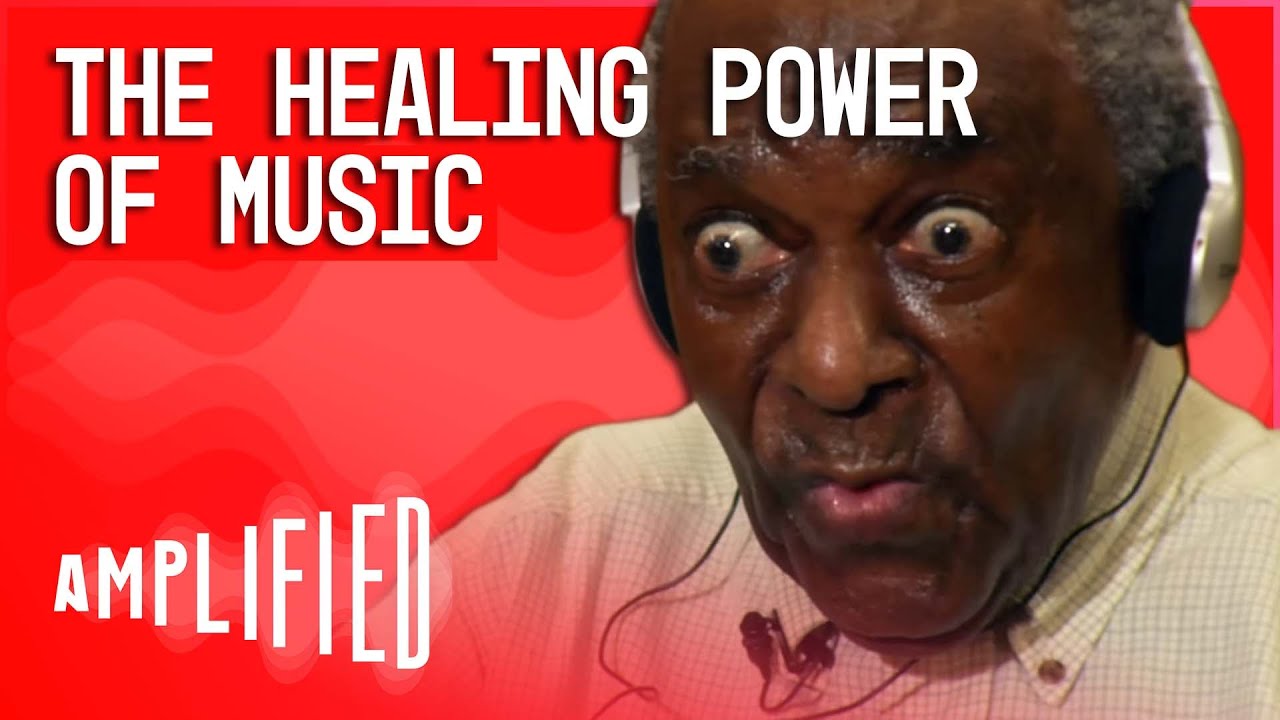
it will call the whole person. The many different parts of their brain, and the memories and emotions that go with it. (faint gospel music) - I'm supposed to sing with this? - You can if you like. (vocalizing with music) - When I first met him he was very isolated and he used to always sit on the unit with his head like this. He didn't really talk to much people, and then when I introduced the music to him, this is his reaction ever since. (laughs) (vocalizing with music) - [Voiceover] Henry waking up did something to all
of us. Everyone in the room felt it. - The philosopher Kant once called music the quickening art, and Henry is being quickened, he is being brought to life. - Yeah? - I'm gonna take the music for one second, okay? Just to ask you a few questions. Okay? - [Voiceover] How awake was he? - I'm gonna give it back to you. - [Voiceover] Was he still lost in his dementia? Or had the music in some way changed that? - [Dan] Henry? - Yeah? - [Dan] Do you like the iPod, do you like the music you're hearing?
- Yes. - [Dan] Tell me about your music. - Well I don't, I don't, I don't have none, I mean. - [Dan] Do you like music? - Yeah, I'm crazy about music, and you played beautiful music, beautiful sounds, beautiful. - [Dan] Did you play music when you were, were you, did you like music when you were young? - Yes, yes, I went to big dances and things. - [Dan] What was your favorite music when you were young? - Well, I guess, well Cab Calloway was my number one band guy I liked. (starts scatting) (fast scatting)
(big band music) - [Dan] Henry? - [Henry] Yeah? - [Dan] What's your favorite song? - Oh, ♪ I'll be home there for Christmas ♪ You can count and plan on me ♪ With plenty of snow ♪ Mistletoe ♪ Presents wrapped 'round you tree, ow ♪ Christmas Eve will carry me ♪ Where that love light been ♪ - [Dan] Henry? - [Henry] Yeah? - [Dan] What was the favorite part of your life? What was your favorite part of your life? - Of my life? The one part of my life was riding a bicycle, grocery boy. -
[Dan] What'd you like about riding a bicycle? - That where I made my money. - So in some sense Henry has reacquired his identity for awhile through the power of music. - [Dan] What does music do to you? - It gives me the feeling of love, romance. I figure right now the world needs to come into music, singing, you've got beautiful music here. Beautiful, oh, lovely. And I feel the band of love, dream. The Lord came to me, made me holy. I'm a holy man, so he give me these sounds, and they say, I'll meet
you. Let me see, ♪ Rosalie won't you love me ♪ Rosalie won't you be sweet and kind ♪ - [Voiceover] What do you think happened with Henry? I mean, what did we just see happening with Henry? - We connected with Henry. We connected with Henry's self. You know, when you're in a nursing home, or when you have Alzheimer's disease you're really struggling with your own thoughts, and confusion, and anxiety-- - [Voiceover] Dan was excited. I was excited. What if all these people we'd seen could be awakened like Henry? - All of a sudden everything falls
into place and you're right there with the music. You understand it, it's pleasurable, you're not thinking about anything else. You're not struggling. - Oh, how lovely. (piano music) - [Voiceover] This is no small problem. There are 5,000,000 people in America with dementia. 10,000,000 people spend a large part of their life caring for them. There are maybe a million people in nursing homes losing their connection to life. - Give me a kiss. Come on sweetheart. Dad. Hello, hello. Johnny? Hey Johnny, how are you? - [Voiceover] I mean, isn't this desire, a desire to awaken another person
to what they are, to what they could be, a deep part of being human? - How often does anybody have a chance to affect the lives of a million or more people? I'm hoping people are ready to come along on this journey. Here you go, you hold this. There you go. (big band music) - [Voiceover] We all feel music is magic. - [Voiceover] I feel like I'm one with the world. - [Voiceover] But for those with dementia it can be a backdoor into the mind. - The parts of the brain which are involved in remember
music and responding to music are not affected too much in Alzheimer's disease, or other dementias. - [Voiceover] Part of the reason why musical memories are so strong has something to do with the way music enters our brains in the first place. - Music has more ability to activate more parts of the brain than any other stimulus. (finger harp music) Music seems to be a cultural invention which makes use of parts of the brain developed for other purposes. Not only auditory parts, but visual parts, emotional parts, and at a lower level in the cerebellum, or the
basic parts for coordination. (crowd cheering) - [Voiceover] When we are young music records itself in our motions and emotions. Luckily, these are the last parts of the brain touched by Alzheimer's. ("Can't Take My Eyes Off Of You" by Frankie Valli) - [Man] It's a great song. - Yup. And could we hold hands a little bit? Ah, that's better. We're too far from each other. ♪ You're just too good to be true ♪ - For the patients with Alzheimer's, ♪ Can't keep my eyes off of you ♪ - It has to be music which has a
meaning for them and is correlated with memory and feeling. ♪ I want to hold you so much ♪ - And by exciting, or awakening those pathways we have a gateway to stimulate and reach somebody who otherwise is unreachable. - And I need life you. I love you. - I love you too. (somber music) - I have one resident that barely opens her eyes, she didn't respond. As much as I tried on her for two years, no matter what I tried. Massage wouldn't work, nothing worked. When Maureen got introduced to the iPods, and the family told
me things that she liked, it was amazing once we put the iPod on her. She started shaking her feet, started moving her head. Her son was just amazed. Okay, can we stop? 'Cause now I'm getting all, I'm seeing her all over again. - What we're spending on drugs that mostly don't work dwarfs what it would take to deliver personal music to every nursing home resident in America. - [Dan] And that's to pause it. To start it up again, and hit the button again. - Couldn't be easier. - [Dan] There you go, okay. - [Voiceover] So
why don't these people have their music already? - Click on the white, on the arrow. - [Voiceover] And why does it take an outsider like Dan to get it for them? (monotone vocalizing) - In today's really crazy system, I can sit down and write out a script for a thousand dollar a month antidepressant, no problem, nobody asks any questions. (monotone vocalizing) If I want to provide a person with a $40 personal music system? That will take a lot of work. Because personal music doesn't count as a medical intervention, you see what I'm saying? It's sort
of a side thing over here. The real business, trust me, is in the pill bottle. - [Nurse] Open for me, alright? - [Bill] Our healthcare system imagines the human being to be a very complicated machine. We've figured out how to turn the dials. Blood pressure, oh, turn that down, you know? Blood sugar, oh turn that down. We have medicines that can adjust the dials. We haven't done anything, medically speaking, to touch the heart and soul of a patient. - Gil? - [Gil] Yes? - They want you upstairs. You have to come take your meds. -
[Gil] No, no, no. - No, you refused this morning, so they want you to come now and take them. - No. - [Woman] Listen, you know it's important, okay? - No. - Look how you're acting, okay? You need your medication. Well Gil is a little different. As you can see, he's a big guy, he's a strong guy. When he gets agitated, we really need things in place that are gonna work, and work quickly. - My anger manifests itself very many different ways. The anger is there, but sometimes I can't express, yeah. - I like to
think of distress as communication. If you give a highly sedating medication to that kind of a person, you're actually taking away the one avenue they have to tell you they have a problem. And the problem with that is you can turn a person who is engaged into a person who is withdrawn into themselves and no longer able to connect with the world around them. - I wish I had my freedom. It's the most important part. That is what makes me most pissed of all, that I can't go out. - The thing people lose most is
those intangibles. The idea of choice, and control. - [Nurse] We're gonna do your medicine now, alright? - [G. Allen] Just every aspect of what am i going to do next is dictated to you in most institutional environments. - [Nurse] Drink some of that. - And music creates spontaneity that you cannot create in an institution. It takes you to a place where you can leave the regimen and go off in a world that you create and that you connect with on your own terms. - [Dan] Hi Gil. - [Gil] Hi. - I've brought you your music
that you requested, and put it on your ears, over your head. That fit okay? - [Gil] Yeah. - [Dan] Okay. And here's your iPod, all you have to do is click the center button one time. ("Will You Still Love Me Tomorrow" by The Shirelles) - I think you're all set. ♪ Would you still love me ♪ Tomorrow ♪ ♪ Tonight with words unspoken ♪ You said that I'm the only one ♪ - [Bill] There is no pill that does that. A medicine can dim the spark or the light, it never brings it out. What they
need is engagement. They need to succeed in the world around them. - [Voiceover] So you want an iPod too? - First, what's an iPod? - He has his favorite music and it's playing. That's all it is, it's just, it's like your own jukebox. - Let's start. - She wants to see what it looks like, the iPod. - [Gil] It's small. - No kidding. - [Michelle] Denise is a bipolar schizophrenic. She's been with us for about two years. - I like... - Denise doesn't hold back any emotion. Her joy is off the charts. Unfortunatly so is
her sorrow, and her anger. So she's very raw, she's very real. - [Dan] Do you know what I'd like to do? - [Michelle] Denise is probably an extreme resident that we have here. - I'm being emphatic, and I have a very vivid imagination. I'm very resilient, but I drop. And I keep on trying, and I drop. But I never stop, and I drop. One of these days I'm gonna drop and stay on the floor. (energetic Latin music) - Careful! - I won't fall. - Okay. - I've lived here two years and never fallen. - Good.
- [Voiceover] I couldn't believe the music let Denise push away her walker. She'd been using that walker every day for two years. (energetic Latin music) - It's Spanish. You're not Spanish. - No, I'm not Spanish. I'm following your lead. - I'm having fun! - Good, me too. - [Voiceover] It's surprising that a little music evokes this much joy. It only makes sense when you understand their isolation. - [Louise] What happens when they come to a nursing home? What are their losses? - I never thought I would be in a situation like this. - [Louise] They
lose their independence. It's sad to say, but sometimes they lose their dignity. - That's it. - Sometimes they're dealing with the loss of a loved one. Imagine losing that all in one day. - [Voiceover] I want to get home. - [Voiceover] Yeah, you do? - [Voiceover] I've been here for the last two or three days. - [Voiceover] Right. What do you want to do at home? - Be with my family. (chuckles) - [Voiceover] Where we goin'? - [Man] Right down here. - People have been here for years that have dementia, they'll still tell you this
is not where I live. - And I can go out this way too. - [Voiceover] Tom has been in this nursing home for five years now. - [Man in white] So they're always trying to escape. - I have to go that way. - They're looking for the exits. That's one of the most frequently asked questions is how do I get out of here. - Hi Lou. Can't get out here either, right? - [Lou] What're you looking for? - 'Cause this isn't there normal world when they come here. Now they're in this world, and this isn't
the world that I know. - It's stuck. - [Voiceover] With few choices, little hope for the future, no control over the medications flowing through them, is it any surprise their minds struggle to adapt? - People close their eyes, and withdraw inward more and more. If the outside world is horrible, I got to the inside to restore my balance. - But after awhile, people just become living dead people. They go into vegetation. And this does not have to be. No. - [Tom] I play it, I play music. - I know, you're a trumpet player right? -
Yeah, and I play in a band. - I want you to come sit over here for a few minutes. - What I've found is that we all have music in us, and when we go through what we go through, like trauma, caused by disease, caused by wars, that gets covered up. (flute music) And I found a way of accessing that with some people. So it's really to help them find that song that they've covered up from the pain so they can sing again. (hand harp music, singing in foreign language) - [Voiceover] Samite was a volunteer
who seemed to have a deep understanding of how music can heal trauma. (singing in foreign language) - I've had a situation where I was actually overwhelmed. I was in the Congo. These people were told that this guy is coming to bring music, the healing power of music, which was a little overwhelming because these were about 150 women who had just gone through rape, who had just gone through the worst abuses you could ever imagine. I think I was inspired actually, 'cause I picked up the flute and I played a really sad melody, and the melody
came from the pain that I knew these women had been subjected to. And when I finished the flute I could see tears running down some of the women's faces. And the next place that I knew that I had to take them was to sing a happy song. So I kicked into (singing in foreign language). And soon they started moving a little bit, and soon they were clapping. (singing in foreign language) And I'm telling you, three hours later we're still singing. And now we're all connected, we're all just one body. Everybody just a sea. (flute music)
When I go to nursing homes they remember these amazing stories, but it's always through music that they're able to express themselves, and that reminds those people we will have a chance to be happy again. (woman laughs) - Music had always been a big part of my life. When I was younger I played the trumpet, I played the organ, I played the piano. When I went off to college in the early 70s I had the requisite giant album collection, which I carried through to my marriage. When I ended up here I lost all of my music.
My world became this facility. - This is solitary confinement. And every human being needs stimulation from the outside. From little babies to old people. If you find the music that the people know there's stimulation communication. And people do not withdraw inward. - [Voiceover] Like many people in this institution Steve found himself alone. - After eight years of being here I finally had the opportunity to get my music. - [Dan] Okay, how's that, good? (rock music) - [Steve] And all of a sudden, vistas which I thought were closed to me opened up. - Have you ever
had music just hit you in a place that immediately brought you to tears and you don't understand why? You know, music has that power. I can remember being five years old hearing this music in the distance, crawling to it. (classical music) It was Rhapsody on a theme of Paganini. You know, crawling to the music, laying on the floor, and crying. - [Voiceover] Music touches us all. How deep does it run inside of us? - Watch. (singing tone) - [Everyone] (singing tone) - [Audience] (singing tone) (singing tone) (singing tone multiple times) - (singing higher tone) -
[Everyone] (singing tone) (singing tone) (singing lower tone) (singing higher tone) (singing lower tone) (singing higher tone) (singing higher and lower tone in succession) (singing highest tone) - Okay. (everyone laughs, claps) - [Voiceover] When does our relationship with music begin? At 22 days a single cell jolts to life. This first beat awakens nearby cells, and incredibly, they all begin to beat in perfect unison. These beating cells divide and become your heart. This desire to beat in unison seemingly fuels our entire lives. (singing and drumming) (singing several tones in succession) - Amazingly, after six months of development
the cerebral cortex is capable of supporting thought. (distant echoing voice) - Yeah, all the ladybugs are super cute. - [Voiceover] Researchers have studied the sounds of newborns, (quietly singing) and discovered that in their cries are patterns that reflect their mother's speech. - No, I know, and you wouldn't bring him. - [Voiceover] This means that even before we're born we're learning how to sing with another human being. (singing progressive tones) (cheering and clapping) - I wondered how everyone knows that. Regardless of what country I'm in it seems like everyone knows that. Now how is that possible,
if it wasn't already inside you? (classical music) - Every child will tend to keep time to music, heard, or imagined, which you will not see in a chimpanzee. (happily cooing) Music seems to be almost as quintessentially human as language. (music swells) This response to a beat may be hardwired, and human, and I think almost all human beings will bring out their inherent musicality. - 277. - You have a little bit of room to grow. - I've got a lot of room to grow, considering it will hold 2,000 songs. - [Dan] That's right. - Do you
have Piano Man? - Piano man? - It's thrilling to me to be able to see a person who's been without music for years and then watch how that person comes alive. I mean that's, as a physician, that's a thrill. (faint jazzy music) But there's something behind that wonderful moment. I mean, how did that happen in the first place? Why were we able to feed and water and medicate this person, but not respond to deeply human needs that he might have? - A century ago they were called nursing homes because you recieved nursing care, and most
of the time it was in a home-like setting. That was before, I guess, our civilization advanced to the point where we created 15,000 nursing homes based on a hospital model. - [Voiceover] How did this become the way millions of Americans end their life? - The civilization of the past hundred years with its startling industrial changes has tended more and more to make life insecure. - [Voiceover] Technology has radically transformed the human environment. Our safety, no longer tied to the home, or the village, became tied to something else. We became urban, and the traditional family structures
began to feel pressure and weaken. As a consequence, by the late 1800s, elders, in alarming numbers, were ending their days in the poor house, alongside the insane and the homeless. - This social security measure gives at least some protection to 30,000,000 of our citizens who will reap direct benefits through old-age pensions. - There was a real awareness that older people in America were sick and poor. And a decision was made to support them, not through the welfare system, but through the healthcare system. And so what we had was this incredible shotgun marriage of the poorhouse
and a hospital, and that's what nursing homes became. - [Voiceover] A new industry was born. This business exploded after the Medicaid Act of 1965. - [Bill] The idea of taking care of elders on a mass scale was something new in human history and it was bound to run into problems. Early on there were accusations of warehousing elders, overusing physical restraints, and even when reformers challenged that practice and reduced it, a new problem came up, the overuse of antipsychotic drugs. These drugs aren't designed for use with elders, and yet they're being massively overused in nursing homes.
(chattering over intercom) - Give me a kissy here. (giggles) Kiss me. Thank you. - American nursing homes actually have some of the best people in our nation. Some of the biggest hearts, most generous spirit, greatest joy and laughter. I love these people. However, they go to work every day inside an insitution that defines people in terms of their diagnoses and their disabilities, and thinks of them as patients first, human beings second. - [Voiceover] He doesn't really initiate conversation. He just kind of exists. - Does he already have music in his room? Does he have a
radio, - [Dan] CD player? - [Woman] I don't think - [Woman] he has a radio in his room, no. - Okay. And he has dementia? - [Woman] Mhmm, he has dementia. - [Dan] Johnny, can you tell us who is this guy? (chuckles) Who's that guy? Is that you when you were in the navy? - Is that me? Do I look like that? - [Dan] Yeah, that's you. - That's not too bad. (chuckles) - A couple of years and a lot of Tommy Dorsey, big band, all of this stuff. Let Me Sort It Out by Frank
Sinatra. - [Dan] How 'bout this one? - [Voiceover] We tried to learn John's story. - [Dan] Who's that guy? - Is that the same guy? - [Voiceover] To help us find his deepest music. - [John] I got more muscles. - [Voiceover] But how do you do this for someone like John? - [Dan] Alright, what about this? - [Voiceover] We were told a few things. He played baseball. - [John] Oh boy. - [Voiceover] He'd been drafted, and served at Los Alamos. (large explosion) It was there that the army gave him shots for radiation poisoning, shots that
caused all his hair to fall out. Lastly, after the war, he performed in Philadelphia under the stage name Larry Stewart. But we couldn't learn this from John. - The hands going, and the-- - [Voiceover] The sensory record, the movie that played only in John's mind called memory, is gone. His love, his dreams, gone. Who are we without our memory? ♪ Oh Johnny, Oh Johnny, please come ♪ - [Woman] It's Oh Johnny Oh, how perfect. ♪ Oh Johnny, Oh Johnny ♪ How you can love ♪ Oh Johnny, Oh Johnny ♪ Heavens above ♪ You make my
sad heart jump with joy ♪ And when you're near I just can't ♪ Sit still a minute I'm so, ♪ Oh Johnny, Oh Johnny ♪ Please tell me dear ♪ What makes me love you so ♪ You're not handsome, it's true ♪ But when I look at you ♪ I just, Oh, Johnny, Oh Johnny, Oh ♪ - [Voiceover] There was no way we could have known there was this much life inside of John. (singing Some Enchanted Evening) - I wish I had a voice like him. - [Voiceover] For Johnny, getting his music and a little
focused attention. - [Woman] You're quite the singer. - [Voiceover] Was all it took to awaken feelings he hadn't felt in years. - I love to do it. - [Dan] When did you first sing? When you were young, did you sing? - I don't know, I'm just a small guy. - [Dan] Yeah. - I'm crying. - [Dan] Why? Are you sad? - I don't know. I love everybody around here. My gang, this is my gang. - [Woman] This is your gang? Yeah? Does it make you happy to sing for us? - Yeah. - Half the people
in nursing homes get no visitors, so it's not like family can do it. The nursing homes don't really have a ready budget for this. The government does not reimburse for music, iPods, and so it really needs to come from somewhere. So what my ultimate goal is to make this a standard of care in all 16,000 nursing homes in the country. That's the goal. - Depends on the nursing home, depends on how proactive the volunteer department is. - [Dan] Is this something you'd want to explore for your own facilities? - Well, I have raised several concerns.
- That you give it to two people, and 10 people are gonna want it and I'm not gonna be able to give it to them. - Frankly, how it's administered. - [Blonde woman] This is a very big place. We have 600 residents here. - Cost is also a significant factor that we have to consider in every, in every program. - [Man on phone] So tell me, how can I help you today. - I'm looking for a donation. - [Man on phone] Sir, one second here. - The research shows it, our experience shows it, there is
no doubt that mainstreaming the use of personalized music, using iPods-- Spoke to the senior vice president and they, you know, they have a no corporate philanthropy policy. There are 16,000 nursing homes in the United States, and the challenge is getting it out there and we could really use your help. - [Voiceover] Sandra Day O'Connor talked to him about your project? - No, about Alzheimer's, support of Alzheimer's Association. Support for Alzheimer's. - [Voiceover] She talked to the man himself? - Yeah. - [Voiceover] And he said no? - Yeah. So what luck am I gonna have? -
[Bill] How's the work going? - [Dan] It's a struggle. - [Bill] Yeah, you're - [Bill] not kidding. - [Dan] It's a struggle. - [Bill] I have to tell you, I'm one of the few people who actually really knows how you feel about this because a couple of decades ago I got really charged up by this idea that we could bring plants, and animals, and children, into the lives of elders. I had these same kind of experiences that you described where I could see people come alive. We had this dream that we'd just go door to
door. But we couldn't penetrate some of the fog of the nursing home. What you're doing is outside of conventional practice, and you have to, and if you're gonna be successful going forward, you have to understand how big a barrier that is. - [Voiceover] Ladies and gentlemen, please find your seats. - [Voiceover] We went looking for answers. It turns out we are not alone. There are lots of people who believe there's something fundamentally wrong with the American nursing home. - I think we are part of a movement that is much, much bigger. I want to work
on culture change. I want to support culture change as a national priority. (audience applauds, cheers) - Hi Bonnie. - [Bonnie] Hey Dan, what's up? - How're you? - We value independence, and have the hardest time, I believe, of any country with the concept of dependence. And so, whereas other folks have integrated aging, we had a unique interest in saying over there, I don't want to see it, I don't want to know about it. - [Voiceover] Why are we changing now? - Why are we changing now? Because it's not working. (laughs) Because it's dehumanizing, and I
think, quite frankly, I think baby boomers are saying this is not acceptable. This is not how I want to be treated when I get older. - [Voiceover] This was inspiring. But are we really interested in changing the way America ages? - You might not realize it but the United States of America has only 6,000 geriatricians in a nation of 300,000,000 people. Even worse, that number's not going up, it's going down. - [Voiceover] This is unfortunate timing because the challenges we're gonna have to face are growing. - We're facing an epidemic of neurologic diseases on a
global scale. (audience laughs) A cheery thought. On this map every country that's colored blue has more than 20% of its population over the age of 65. This is the world we live in. And this is the world your children will live in. For 12,000 years the distribution of ages in the human population has looked like a pyramid with the oldest on top. It's already flattening out. By 2050 it's gonna be a column, and we'll start to invert. And this is why that's not entirely a good thing. Because over the age of 65 your risk of
getting Alzheimer's or Parkinson's disease will increase exponentially. There are 5,000,000 Alzheimer's patients in the United States. In the next 10 years that number will come close to doubling. We do not have the facilities, we do not have the resources, financial or otherwise, to cope with that number of people suffering from dementia. We have to find a way to help them age in place in a healthy manner. - [Voiceover] What do you call that? - It's a... For... - Knife? - No? Fork, or spoon? - She says we just don't understand. I think that's probably true.
You end up being dependent on someone else for everything that you do. You can no longer write your name, you struggle reading, you lose small motor control. You can't even remember how to get in and out of your apartment, or the elevator. - [Voiceover[ So do you remember where's the elevator? Maybe it's here? - Yeah, it could be. Yes. - [Voiceover] Okay. - [Marylou] Yes, I think so. - [Voiceover] Let's press. Do we go down or up? - We have to go down. - [Voiceover] Okay, so do you want to press for me? - [Marylou]
Oh yes, here. This one? - [Marylou] I'm not sure. - [Voiceover] Down, that's up. - [Marylou] So that's down? - [Voiceover] This is down, yes. - [Marylou] Okay. Oh, did I do that badly? - [Voiceover] I don't think so, do you see the light? - [Marylou] Yup, I could see the light. - [Voiceover] Okay. (somber music) - Wooo. Look, look, look, look. Oh beautiful, look at that. Isn't that lovely? Oh, gotcha, I gotcha, I gotcha. Didn't I, huh? - [Voiceover] For Marylou, loving her grandson is easy. - [Marylou] This is going to the what? (laughs)
Oh, yup, where're you gonna go? - [Voiceover] It's just everything else that is hard. - [Marylou] I'm really bad, see. - [Voiceover] But surprisingly, even deep inside Alzheimer's, her capacity for love and affection remains strong. - I have lots of people to talk to me and do all that kind of thing, so. Yeah, I... - [Voiceover] Are you sad 'cause other people don't have that? - Yeah, that's how, of course, because how, how could I do things if I didn't have people with me? So, that's the-- - [Voiceover] This is a hard journey for you,
huh? - Yeah, well, my husband, he'll, he's wonderful. - [Voiceover] Would you like to hear some music? Would you like to listen to some music? - Sure, why not? - [Voiceover] What do you have Dan? - [Voiceover] Here you go. - [Dan] Move your head. - [Marylou] I don't know how to do this. - [Dan] Straight over your ears on your head. Perfect. See the little button in the middle? - That's that? - Yeah, right in the middle. Click it once, there you go. ♪ Round round, get around ♪ I get around ♪ Get around
round round, I get around ♪ I get around ♪ Get around round round, I get around ♪ My kinda town ♪ Get around round round, I get around ♪ I'm a real cool head ♪ Get around round round, I get around ♪ I'm makin' real good bread ♪ - Woo hoo! ♪ I'm gettin' bugged driving up and down the same old strip ♪ I gotta find a new place where the kids are hip ♪ - I could go. - Get out there, go with me. ♪ Get around round round, I get around ♪ My kinda
town ♪ Get around round round, I get around ♪ I'm a real cool head ♪ Get around round round, I get around ♪ I'm makin' real good bread ♪ Get around round round, I get around ♪ I get around, round ♪ Get around, round, round ♪ - Come on guys! ♪ We always take my car 'cause it's never been beat ♪ And we've never missed yet with girls we meet ♪ - I need more. - [Dan] Want to stop the music? - Oh, thank you so much. - [Dan] Okay. - It was, I was so
glad to get it. Thank you. And if I love it, and you were very nice to me, and. - Okay, so those are tears of joy? - Yeah. - [Dan] Okay, just wanted to make sure. - Oh yeah. That's the best thing I've ever had, this thing. This, I don't know how to say it, it's just... It can't get away from me if I'm in this place. - [Voiceover] I thought you were gonna grow wings. - I was trying. (both laugh) - [Voiceover] We wanted to believe music would help Marylou stay with her family longer.
We didn't know if it could do this until we met Norman and Nell. (fast piano music) - Let me take that away for a second Nell. Nell and I have been able to avoid long-term care for a number of years by trying to keep her constantly stimulated. Music has been an enormous part of it. Then you'll play the piano for us? - Yes, but I just want to be with you a lot. - Okay. - Do you mind? - Absolutely not, I'd love that. - [Voiceover] Norman has cared for Nell at home for 10 years
without drugs. Without personalized music Nell would be in an institution. - I've spent 38 years now working on Alzheimer's disease, and I haven't done anything for patients that's as effective as the music therapy is. I wish I had, and I'm still trying, but I really haven't seen anything as positive as that. - [Voiceover] Marylou and Nell have family. Imagine having to navigate this on your own, far from your home. Denise got a message to us that she wanted us to come back. - [Denise] I'm having fun! - [Dan] Good! - [Voiceover] That she had something
to tell us. And we came. - Dan, how are you? - [Dan] I'm fine, how are you? - [Voiceover] Because we knew no one else visits her. - It's a letter from the hospital describing her condition. Metas-- - That means that it has spread. - [Dan] Yes. - So because of that I think it's very serious. - [Dan] Yeah, it is very serious. - You know, life goes on. It goes on! Whether you die or not, it goes on, and I cannot accept that I don't leave something in this world for somebody. I cannot accept
that! You understand what I'm saying? - [Voiceover] It's painful to feel that what you have to give is not needed, that there's no one there to receive your gifts. In our past, in all our stories, in other cultures, elderhood had something to give, and there was always someone there who needed what elders had to give. Is this true in our new world? Does elderhood have a place? - We're taught from a very early age that adulthood is the pinnacle of existence and that older people are really just broken down versions of their former, incredible selves.
We've built a culture that prizes individuals who are able to emulate the success of machines, that can be machine-like in how they live. This is not good news for aging, I have to say, because aging is not a machine-like endeavor. And it's the fact that they're moving into a different way of living that causes America to put them away, to hide them away. What I've learned over a career of working with older people is that American culture is wrong. There is actually life beyond adulthood. (R&B music) There's actually the opportunity to live and grow and
become elders. (speaking foreign language) - Happy Indian people, also all white people. Head happy, belly happy. Of course you are happy. (chanting in foreign language) - We are made to age, and the aging that we experience actually holds in it very important learnings and lessons. - [Voiceover] There is a touch, and it takes a lifetime to achieve. Locking this touch away is like stripping from ourselves part of being human. - These people that we see in this nursing home, their spirits are dumped on because we're blocking them away, but when you bring the music that
spirit is what we see that comes out. The spirit is still fresh, and young. (joyful laughter) - My pain is very painful. - [Samite] Oh, sorry. - But you know what? - [Samite] What? - I can take a lot of pain. - You look like a very strong person. - I am a very strong person. (singing and humming softly) - Very soothing. - [Samite] Isn't it? You need to have that person in front of you who you're gonna be sharing with. - Keep playing. - It's not something you can just switch on. You have to
completely open yourself up. You give yourself, and once you give yourself then it opens up dialogue. - Take this off please. Now when you go back to Uganda, they'll ask you who gave you that. What're you gonna say? - The strongest woman I've ever met. (both laugh) - [Denise] I love you. - I love you too. - [Voiceover] Dan was breaking through. - So, geeze. - [Voiceover] He received a grant to give matching funds to 35 nursing homes. - And it's Colorado. - Okay, and Colorado, so that's got-- - That's five-- - [Voiceover] And this
time the nursing homes were lining up. - Gosh, how many different states. This is gonna be just amazing. - Oh yeah. Here we have 50 headphones, and this represents 50 changed lives. It's great. A lot of music. (laughs) - [Voiceover] After three years of filming Dan had music in 56 homes. We knew this was just a drop in the bucket. - Just changing something in a nursing home somewhere doesn't take you far enough. Our real focus of concern needs to be the 1.6 million people living in nursing homes, and how to make the lives of
everyone better. - I thought this was just gonna be, pew, just like that. People would just take the idea and run with it. They didn't. - [Voiceover] I left Dan knowing he would never stop. I hoped maybe he'd reach the right person and they would help him, and this dream of his would come true. - [Voiceover] We first see Henry unresponsive, and almost unalive. - [Voiceover] Henry? - [Henry] Yeah? - [Voiceover] I found your music. - [Voiceover] Then he is given his favorite music. - Oh! (speaking foreign language) - [Voiceover] His face assumes expression, his
eyes open wide, and he's being animated by the music. - [Voiceover] This is his reaction ever since. - [Dan] Do you like music? - Yeah, I'm crazy about music. You play beautiful music, beautiful sounds. - [Dan] What does music do to you? - It gives me the feeling of love, romance. I'm thinking right now the world needs to come into music, singing. Youv'e got beatiful music here. And there are, I feel the band of love. - You know that little video that I made for Dan, right? I think so kid posted it on to reddit.com,
and it's insane. - I'm getting swamped. I'm behind by 85 emails. 85 people contacted me. And if I had 300 people, I mean, it's just, you know. - Man, you've just gotta, you've gotta scroll down and just read what these people are saying. I'm, you've never heard anybody write anything like this. It's like, it's crazy. - [Voiceover] ] My grandma is very much like Henry. - [Voiceover] We've been trying nearly everything to get her more alert and happy. - [Voiceover] My grandfather died three days ago. - [Voiceover] Music has so much power. - [Voiceover] Her
eyes lit up instantly, and the smile on her face made my day. - [Voiceover] I haven't cried yet, but this has made me start tearing up. - [Voiceover] She was so amazed. - [Voiceover] Maybe if this worked for Henry, it could work for my grandmother. - [Voiceover] When the music ended, my mother looked up. - [Voiceover] She got so emotional, and so caught up in the music. - [Voiceover] I'll hold that memory forever. - [Voiceover] The music carried her away. - I have to do this. I'm going home to see my mother with Alzheimer's. -
She is, at this moment, listening to Ray Charles sing Come Rain or Come Shine, and she has found her place in the world again. - [Voiceover] Got music back in your life Mama. - Were you surprised that clip went viral? I mean millions and millions of people-- - Completely surprised. People just, they watched, and they saw a human being come alive. And when any of us come alive it touches us deeply. - That's why you want to involve the community, both in getting iPods donated, and having the students come into the nursing homes to work
with the residents, find their playlists. (girls chatting) - [Voiceover] We've been afraid to enter these places. Afraid of aging. Afraid of having nothing to give. But music, entering one 94 year old man reminded us. (scatting) - Well that sounds like more work. - [Voiceover] We do have something to give - Oh, my friends. - [Girls] Hi. How are you? - [Voiceover] All we have to do is ask what's your favorite song? - Vinnie, what's your favorite song? - What's your favorite song? - What's your favorite song? - [Woman] What was your favorite song? ("Blackbird" by
The Beatles) - Remember this? - Yeah, that's a lovely one. - That's a beautiful song. - Yeah, beautiful. ("I Want to Hold Your Hand" by The Beatles) Well I have to have that one. - That's right. - [Dan] Ed Sullivan Show? - [Marylou] That's myself. ("Hey Jude" by The Beatles) - [Voiceover] Look how fast her mind is responding to her songs. ("Stand By Me" by Ben E. King) - That's one, that's big. - [Voiceover] In music Marylou feels like she is perfect again, like she's flowing through life. And so it is for all of us.
Music gives us something we hunger deeply for. (singing tones) Something we've pursued for thousands of years, rewired our very brains for. We need music. It awakens in us our most profound safety. The safety of living in concert with each other and our own selves. - [Dan] And what happens to you when you hear it, when you hear it? - I feel good. It's like I got a girl. I want to stay with her. - [Voiceover] And that is why, together, we're gonna do this one small kindness. We're gonna bring life into the places where it's
been forgotten. And together. - Whoa! - Oh! - [Voiceover] We will listen. ♪ I'm a man on fire ♪ Walking through your street ♪ With one guitar ♪ And two dancing feet ♪ Only one desire ♪ That's left in me ♪ I want the whole damn world ♪ To come dance with me ♪ Ohhhhhhhh ♪ Come dance with me ♪ Over murder and pain ♪ Come and set you free ♪ Over heartache and shame ♪ I wanna see our bodies burning ♪ - [Woman] You have a beautiful voice. ♪ Like the old big sun ♪
I wanna know what we've ♪ Been learning and learning from ♪ Everybody want safety ♪ Safety love ♪ Everybody want comfort ♪ Comfort love ♪ Everybody want certain ♪ Certain love ♪ Everybody but me ♪ I'm a man on fire ♪ Walking down your street ♪ With one guitar ♪ And two dancing feet ♪ Only one desire ♪ That's left in me ♪ I want the whole damn world ♪ To come and dance with me ♪ Yay, come dance with me ♪ Over heartache and rage ♪ Come set us free ♪ Over panic and strange
♪ I wanna see our bodies burning ♪ Like the old big sun ♪ I wanna know what we've ♪ Been learning and learning from ♪ Everybody want romance ♪ Romance love ♪ Everybody want safety ♪ Safety love ♪ Everybody want comfort ♪ Comfort love ♪ Everybody but me ♪ I'm a man on fire, he's a man on fire ♪ Walking down your street, walking down your street ♪ With one guitar, with one guitar ♪ And two dancing feet, two dancing feet ♪ Only one desire, one desire ♪ That's still in me, that's left in me
♪ I want the whole damn world, I want the whole damn world ♪ To come and dance with me, come and dance with me, yeah ♪ Yeah yeah yeah yeah ♪ Oh, oh, oh, oh, oh, oh ♪ ♪ Oh darlin' ♪ (scatting back and forth with Dan) - Yeah, well you know me. - [Dan] Henry, thank you very much - Yes, yes, yes, yes, yes, yes, yes, yes, yes. Yes, oh thank you. - [Dan] Thank you.