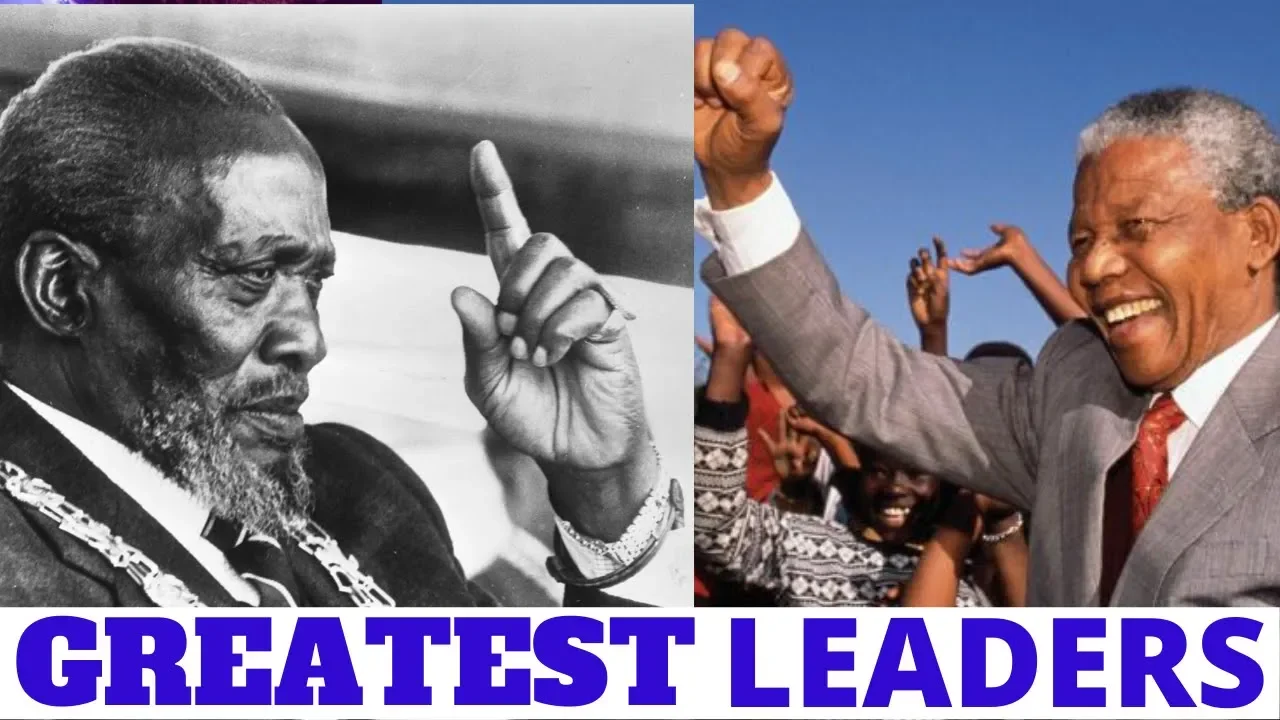
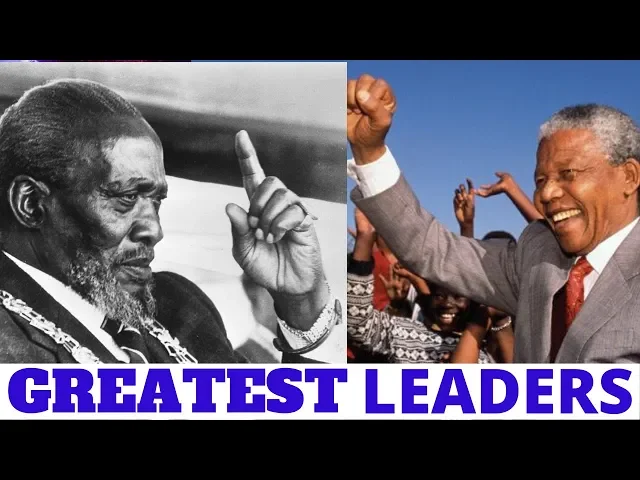
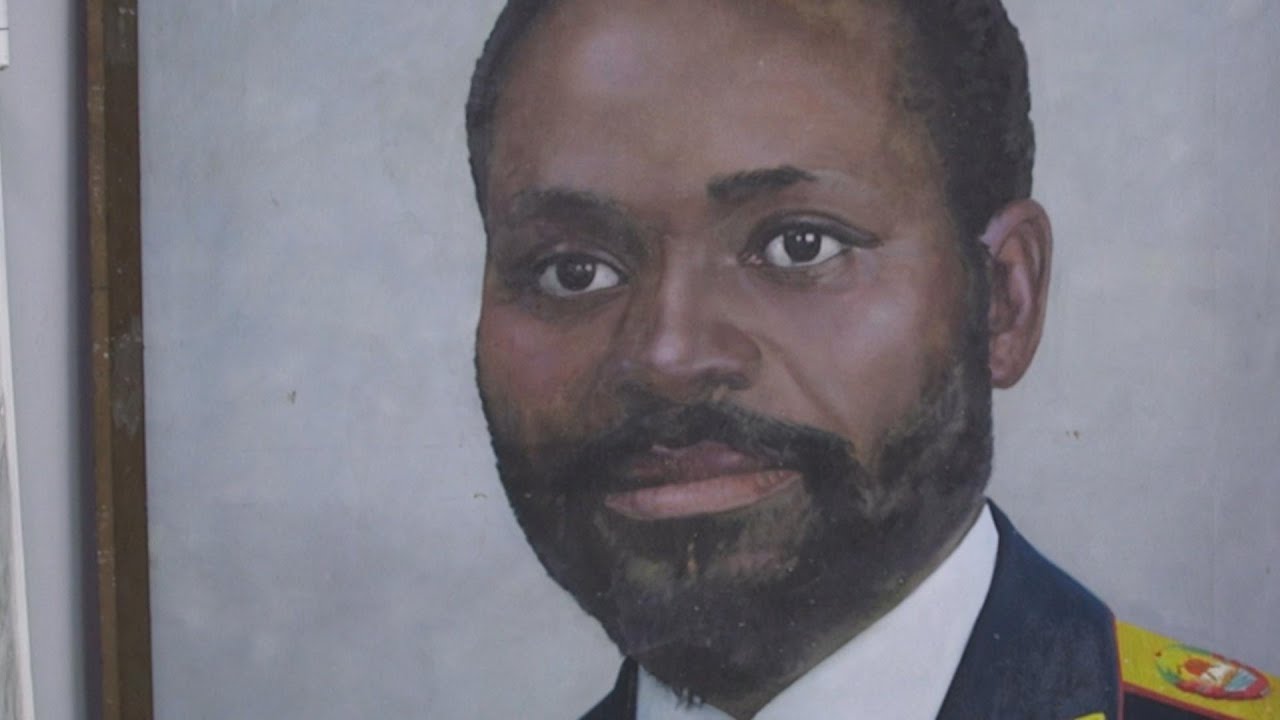
hello displayers welcome back to another exciting and fascinating video and thanks for watching in today's video we are paying homage to some of the greatest african leaders of all time being a leader comes with great power as history has proven those who obtain great power can use it for evil this form of leadership has resulted in large parts of africa falling victim to horrible conditions such as slavery diseases hunger lack of access to clean water and poverty however a few with great power can also use it to bring good into the world some have been jailed in the process while others have even died trying to make life better for african citizens with the ability to communicate delegate and bring the spirit necessary to facilitate change in africa that also makes them great leaders if you're new here welcome be sure to subscribe and turn on notifications so you don't miss any of our videos in no particular order here are the top 10 greatest african leaders of all time number 10 jomo kenyatta the first person to make this list is the first president of kenya jomo kenyatta was born of kikuyu descent in cambo british east africa which shares the same area as modern-day kenya he began his political career in 1929 as a representative of the kikuyu central association jomo kenyatta traveled to london as a lobbyist for protection of the tribal land kenyatta furthered his political skills as he attended school in moscow russia he studied politics at the communist university of the toilets of the east from there he moved his education to london where he studied phonetics at university college in london as well as anthropology at the london school of economics when kenyatta returned home to british east africa he oversaw the school he maintained his political aspirations by becoming elected president of the kenya african union his main platform was to gain independence for kenya from british rule in 1952 this great leader was arrested for facilitating the mao mao of rising which was kikuyu dominant military rebel against the british he was the prime minister of kenya from 1963 to 1964 and became president between 1964 and 1978 he brought stability and economic growth to kenya number nine ellen johnson surlive ellen johnson was the first woman to be elected as head of state in africa she was born in liberia and attended the college of west africa in 1961 she moved to the united states to attend harvard where she studied economics and business administration upon receiving her master's degree in public administration surlive immediately became a public servant in liberia she started her career as an assistant minister of finance from 1972 to 1973 before becoming a finance minister from 1980 to 1985 under the dictatorship of samuel kedo's military ellen johnson was jailed twice and almost executed for speaking out she was released and exiled for 12 years during that time she lived in kenya and the united states while she was gone liberia fell apart much large to a civil war meanwhile johnson sterling became a high-ranking economist in citibank when she returned to liberia in 1997 she ran for president finishing second she was immediately placed back into exile by her opponent charles taylor who accused her of treason surly returned from exile in 2003 and became the chairperson of the commission of good governance finally she ran for president again in 2005. the iron lady won the elections on november 8 2005. in 2011 ellen johnson surly was awarded the nobel peace prize for carving a better future for women number eight samora marshall this influential leader was born the son of a cotton farmer in mozambique throughout his childhood samurai martial bore witness to his parents being forced by the portuguese to turn the cotton fields in the 1950s they were uprooted from their homes to make room for more portuguese settlers samora was educated throughout mission schools upon finishing his cooling the future leader declined a higher education and decided to become a nurse in the capital of mozambique maputo during his 10 years of nursing he became radicalized he joined the mozambique liberation front friendly no and was sent to algeria to receive military training quickly rising through the ranks marshall became the official leader in 1970 following the assassination of the incumbent eduardo munden once mozambique became independent in 1975 martial was their first leader he brought some economic success to the area by refusing to sign the komati accord with south africa this allowed mozambique to keep an economic relationship with the white minority government who was being pushed out by the african national congress one of the main countries opposing the white domination was zimbabwe who ironically enough samora supported upon returning from a trip to zimbabwe in 1986 his plane mysteriously crashed in south africa the course is still unknown but many point a finger to the south african government number seven tomas sankara thomas ankara was born in upper voter later known as bokina faso to remain colleague parents who aspired for him to become a priest however at the age of 20 thomas sankara opted to join the military sent to madagascar for training in 1970 sankara witnessed students and workers uprising against the government seeing this happening in madagascar would have a huge impact on the future of thomas sankara in the early 1980s sankara moved back to the north burkina faso the country was being torn apart by label strikers and military cools with his experience in both sankara became a popular political activist he became the prime minister of the council for the salvation of the people he quickly became involved in international politics even meeting leaders such as fidel castro as well as samurai macho sankara was arrested many times for opposing the leadership of the president jean-baptiste oydrago and eventually was removed as prime minister in may of 1983 during his final arrest however the president became overthrown on august 4th 1983.
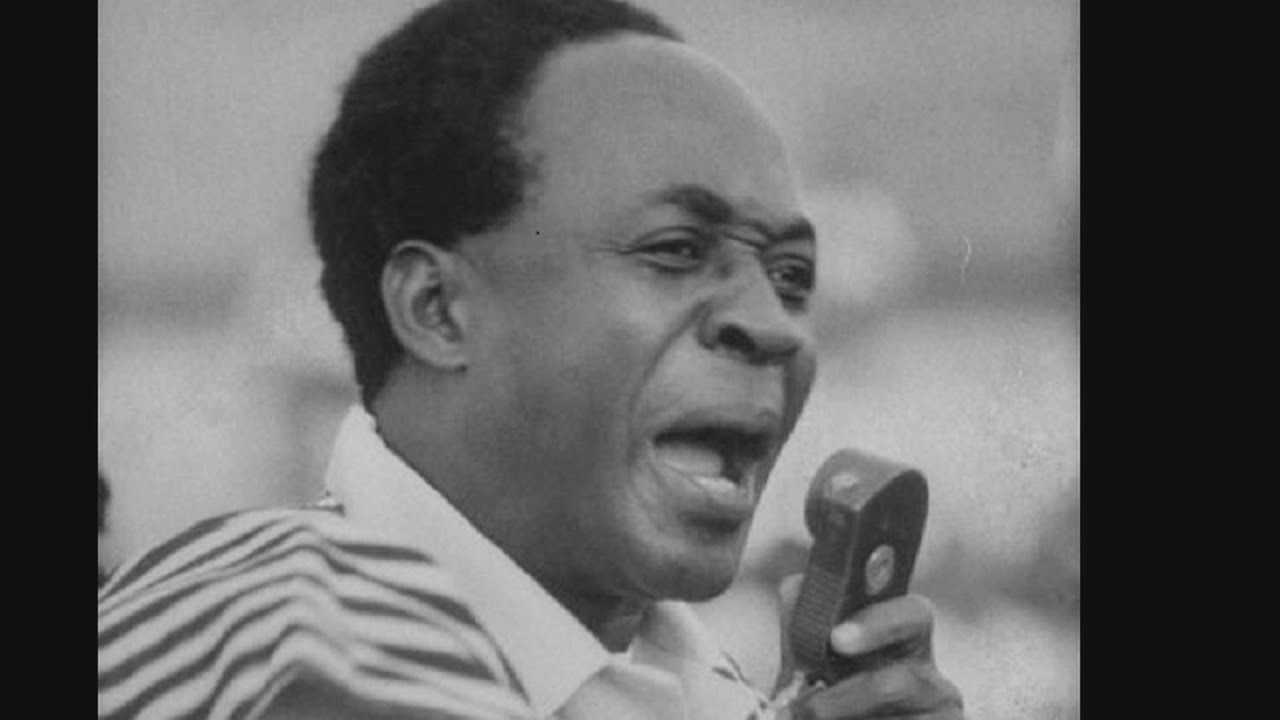
a close friend of sankara bless campari led a group that oversaw the uprising and freed sankara in the process the group formed the national council of the revolution with sankara as president under sankara's leadership the country saw women obtain government jobs literacy rate increase and 10 million trees planted unfortunately sankara was assassinated on october 15 1978 by his one-time friend kompaure in another military coup number six julius nierere nehrer has made a lot of history in africa being the first prime minister of the independence tanganyika and then the first president of tanzania julius nierer graduated from mccarrera college in uganda as a converted roman colleague he taught in roman catholic schools before accepting a job at edinburgh university he graduated with ms in both history and economics promptly returning to tangayika to teach in 1953 nehrer became the president of the tangaica african national union to fight for independence from the british the british nominated nehrer to become a member of the tangaican legislative council however the leader resigned in protest of the state's slow process of achieving independence with nehrer's han tangaika became independent on the 9th of december 1961. although he resigned to work on his writing nehrera jumped at the opportunity to become the first president of tanzania when it became an official country the leader pushed for a socialist way of life and emphasized financial sustainability through tanzania he remained a public servant throughout his life number five patrice lumumba patrice lumumba is remembered for his charisma oratory skills and the major role he played in congo drc's independence this revolutionary congo born politician was born a member of a small ethnic group called batty taylor lumumba attended a protestant mission school upon graduation he got into writing for congolese journals as well as working for the stanley view post office during this time patrice would become regional president of a pure congolese trade union government they were not affiliated to any of the two belgian trade union federations such as the socialist or the roman catholics upon return from a visit to belgium lumumba was arrested under suspicions for embezzlement of the post office after a year imprisoned lumumba was released and got even more into politics he launched and resided over the congolese national movement or movement national congolese without under his rain agriculture took a back seat however the copper and mining industry was booming over time the industry fell and the people of zambia remained hungry he remained in and out of office until 1991.




![Rare Video: Nelson Mandela Speaking on Palestine [Extracts]](https://img.youtube.com/vi/i5TiUhhm7cQ/maxresdefault.jpg)