Cans are entering the digital age. In the Blechwarenfabrik Limburg production data is recorded in real-time for everything that is manufactured here - which means absolute transparency of all information. The goal of course is optimal use of energy and materials.
A specially developed software knows for example the 2,000 panels of tin plating from material storage has to be transported to the spray-painting facility. A management system directs not only the organization in the warehouse, but also the driverless transport system. This digital system is aware at any given time, which article is being moved by which carrying component - which means that at the assembly there are no longer undefined storage spaces.
Additionally, there's less damage to materials since there is no contact with people. This perfectly organized material transport means 100 tons of tinplate are conserved annually. "At our former location close to the center of Limburg, where we had been for 120 years - space was limited.
We would have needed individual solutions for everything. And they would have needed to be tailor-made for us. But here at our new location, we can rely on standard solutions.
" The company invested 30 million euro in their new factory on the edge of the Limburg city limits. In addition to a comprehensive digitalization of production, the most important innovations are this spray painting facility and a laminating station. Both machines provide the surface of the panels or sheet metal with the logos and lettering of the clients.
The advantage of this kind of technology is that after these steps of the process, surface treatment is completed. The sheet metal does not have to be tried in a furnace after coming out of the paint and laminating stations - which means that the new factory no longer needs two furnaces like at the old location, but only one new furnace. That saves a lot of energy.
In addition, there was another measure taken to save electricity: The sheet metal that is laminated - in this case with a protective varnish - passes through a huge hot air chamber and is dried at 200 °C. The energy for this is derived from natural gas. What is unusual in this plant is that the gas flames give the entire company thermal energy.
This is possible through an optimal use of heat loss. Both the warm air of the drawing process as well as the heat loss from the fuse of the flames are used incredibly efficiently. The exhaust from the drawing process flows over the ventilation pipes in the production hall and creates heat if necessary.
The hot fumes from the gas flames on the other hand warm up water through a heat exchanger. This heat exchanger ensures there is heating and warm water in the administration and sanitary tract. On top of that, the warm water is filtered through an absorption refrigerator to create water to drive a cooling process.
Via pipes this cooling water is fed directly to the production line. In addition to heat currents and cooling water flows, there is also energy rich compressed air to be used in production. Via a loop the compressed air is circulated to individual stations of the production line.
An energy management system - or EMS for short - centrally regulates the heating, cooling and compressed air feed as well as the energy supply of the entire production. The EMS sends the flow of energy to where it is needed at any given time. Sensors register the individual consumption.
Like here in the finishing line for tin cans. Every year the Blechwarenfabrik Limburg processes over 20,000 tons of tinplate. Several hundred different kinds of containers like cans, pails and canisters are produced in varying measurements and batch sizes ranging from 1,000 to 20,000 parts.
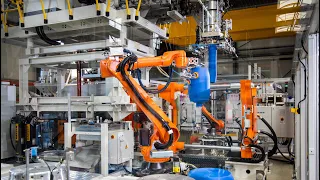
At first the bar stock is rolled or extruded into strips. At the station we see here, it is then welded together. The machine needs compressed air, electrical energy and cooling water.
The cooling is important so that components do not overheat - keeping the welding result optimal. If the can has been lacquered from the inside, the varnish will nevertheless be damaged during welding. Therefore, this machine coats the can with a powder on the inside.
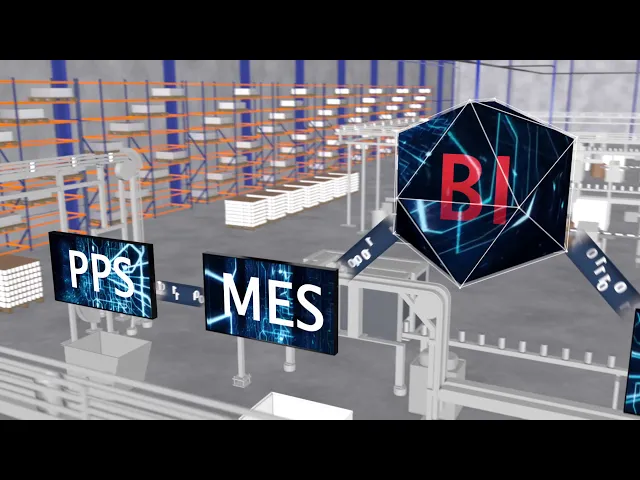
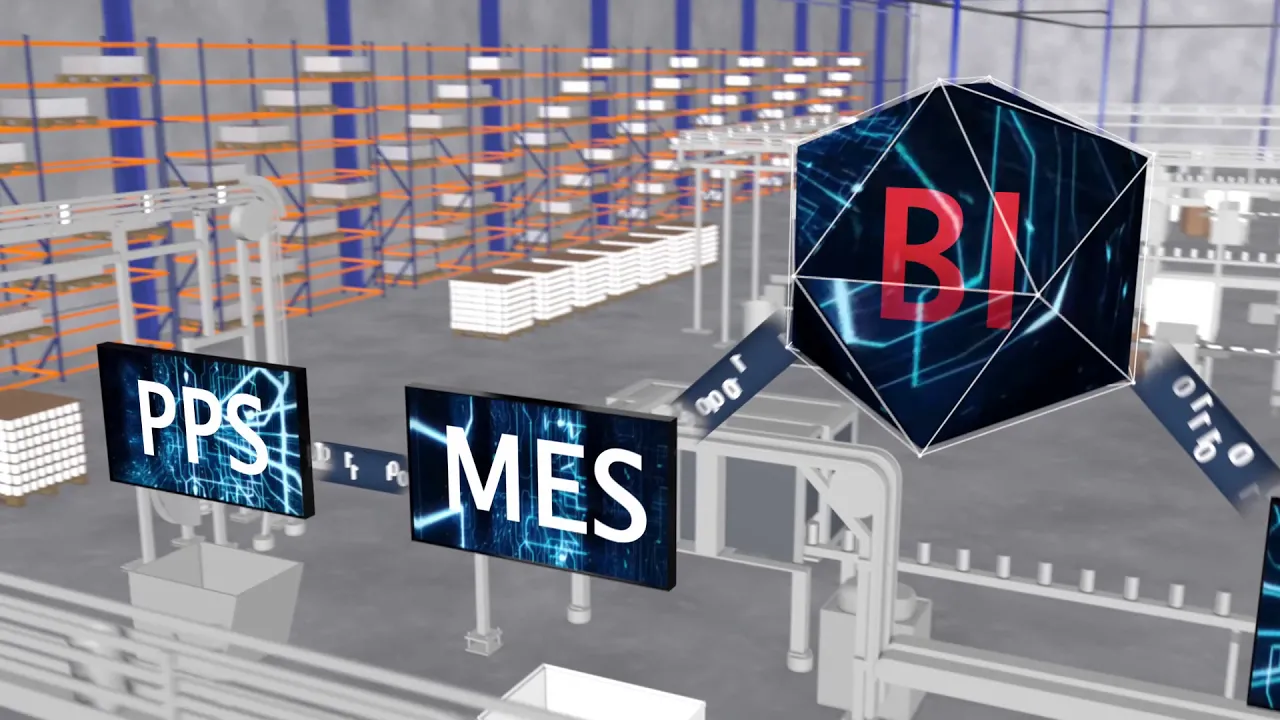
Afterwards electrical induction furnaces will burn off the powder and any damage to the varnish and the inside that occurred during welding is repaired. All of these processes are digitally controlled. A production planning system - also known as PPS - controls the whole production process using a manufacturing execution system - or MES.
At the same time the energy management system - or EMS - analyzes the flow of energy. That means exact data on the amount of compressed air being used at any given moment, the amount of cooling water that is needed and how much electricity was needed. All the data from these software tools flows into a business intelligence system - or BI for short.
Here, production data is juxtaposed with energy data. The BI knows for example how much compressed air is necessary to produce a specific number of cans. If the amount exceeds a certain set point, the B I can immediately alert an on-site technician via a monitor.
The technician can then inspect critical points along the assembly for leakage and if necessary, make repairs right away. That saves not only compressed air, but energy as well. But not only in the case of compressed air is the interaction of the different digital systems and immense help.
The induction furnaces are a significant energy consumer in the final assembly. However, the furnaces are only running when the powder inside the cans has to be fused. Since the furnaces are in use at one point and often another, they hinder the monitoring of the energy consumers.
All data runs together in the BI system. Using data from the PPS and the MES, BI knows however, if the induction furnaces are needed at the moment. BI can create specific set points for energy consumption regardless of whether or not the induction furnace is in the fusing process and using electricity.
If there is a disturbance of an energy consumer somewhere in the system, the actual value will deviate from the set point. BI shares this abnormality with a predictive maintenance system - or PM. The predictive maintenance system then sends the repair team a message via a tablet.
An additional message from a heat sensor gives the decisive indication of a defective electronic motor. Before the defective motor can lead to even higher energy use, it is replaced. That saves additional energy.
What is also energy-saving is how the production planning system automatically switches the compressed air supply off at the assembly via the manufacturing execution system. If there are smaller leaks along the production line, the compressed air would not be able to escape during moments when the machine is not in use. Through the digital compilation of all the production and energy data as well as their continuous analysis, we are alerted that the spray painting facility also needs to be serviced.
Before there are any damages to the tin plating due to a defective bearing in the conveying technology, the bearing is replaced. Material is saved that way and downtime is reduced. "We are aware of our environmental responsibilities as a maker of packaging.
We process 22,000 tons of tin plating per year. Tin plating is 100% recyclable and can be used and reused again and again. " The Blechwarenfabrik Limburg is however not just efficient when it comes to material and energy.
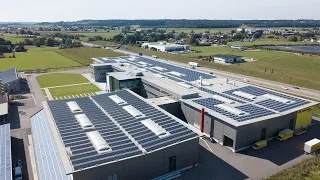
Over 2,500 solar modules on the roof of the assembly hall generate electricity with a maximum output totaling 750 kilowatt. The solar modules produce roughly one third of the electricity necessary to manufacture the cans. To make sure the solar electricity can be used immediately in production and won't be fed into the grid, the warehouse management system - or WMS for short - adjusts the flow of goods in the high bay storage according to the electricity available.
If a client's truck is waiting to pick up goods, then cans have to be loaded quickly on the truck. The WMS distributes the finished cans from various lanes in the high based storage in order to prevent the truck from an unnecessary weight due to broken storage and retrieval vehicles. The rearrangement does not have to happen immediately however - not until the energy management system confirms there is enough solar energy coming from the roof.
That greatly increases the proportion of domestic electricity that is used. At its new location the Blechwarenfabrik Limburg has a complex network of diverse components on almost every level at its disposal. The production planning system, the manufacturing execution system, the energy management system, the warehouse management system, the business intelligence system and the predictive maintenance system organize all of the energy and material flows in the factory.
On top of that, they are continuously sharing data with one another. This comprehensive process of digitalization and the interconnectedness of all components creates decisive advantages. "The potential that digitalization and automation offer and that we have put into practice, has made it possible to use our resources much more efficiently.
We've become much more efficient at structuring how we work, which means that no jobs need to be cut. " The Blechwarenfabrik Limburg produces 80 million tinplate containers annually. Thanks to a comprehensive process of digitalization, energy and material costs of almost half a million euros a year are saved by the company.
That's a competitive advantage. The Blechwarenfabrik Limburg makes it obvious - the future of the can is digital.