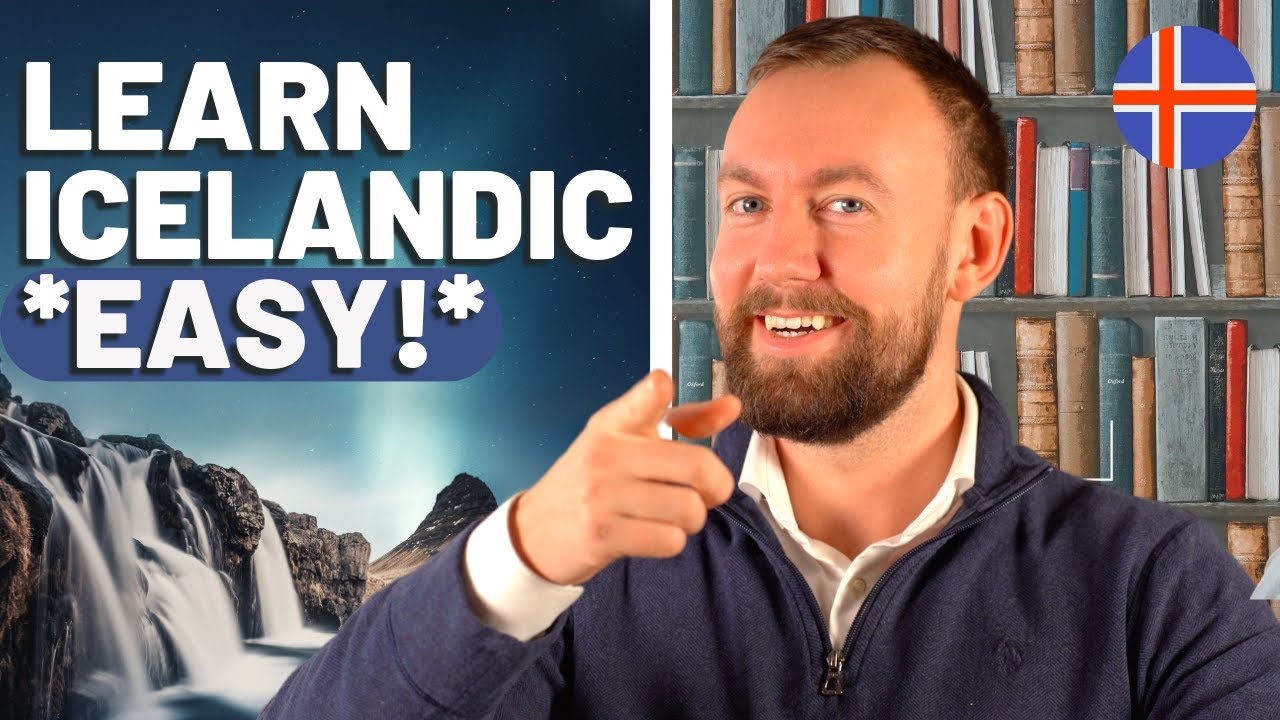
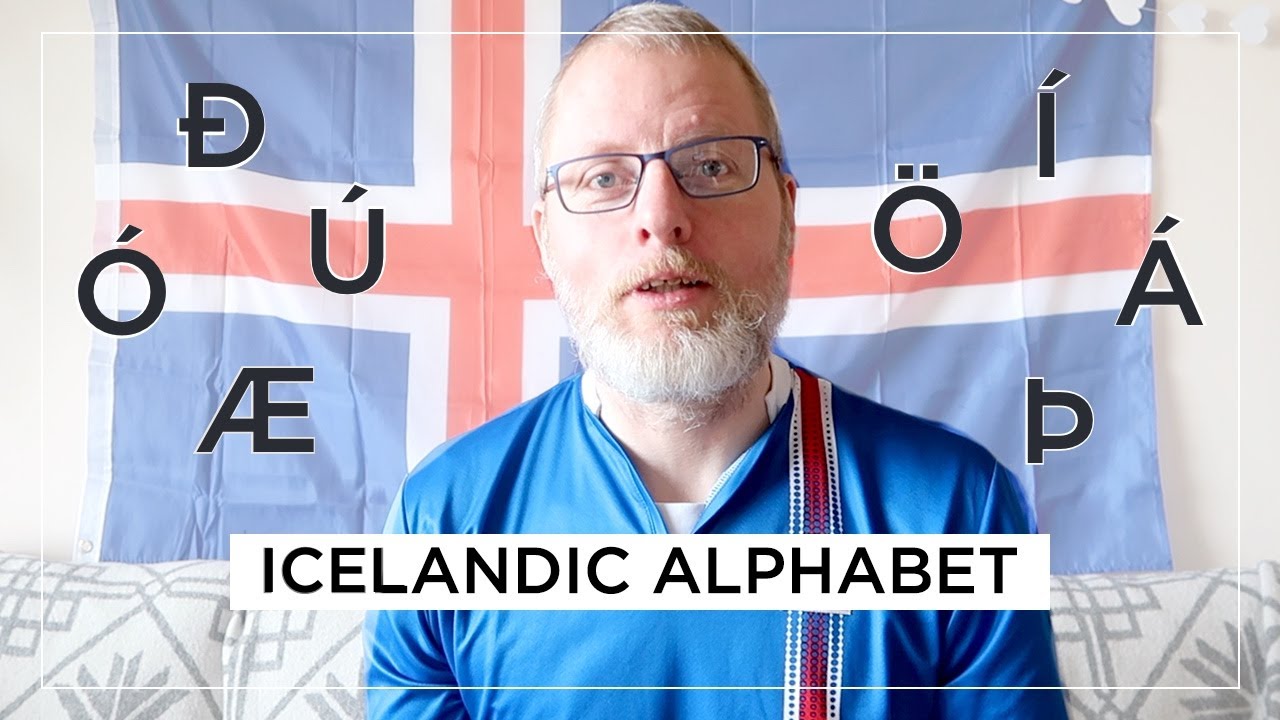
hello my name is ausa and i'm starting this channel let's learn icelandic or lyrem island so the thing is that i'm currently living in italy so i'm trying to learn italian buon giorno but uh so i'm doing this language exchange with a nice italian guy who's trying to study icelandic and this made me realize that there's not really so much material available for for studying icelandic so this is why i decided to start this channel and hopefully it will help someone let's see i am sure you all heard by now that icelandic is a difficult
language and actually icelanders are very weirdly proud about it so if you want to have a sure way to offend an icelander just say that it's super easy and then we'll be like you said my language was easy i'll hate you forever that being said since i am an icelander i'm going to wave my icelandic passport and tell you that icelandic actually is difficult if you do disagree with me and actually genuinely believe that icelandic is an easy language then most likely some of the following is true number one number eight you're a very smart
person because some people are super smart and they learn new languages in a matter of weeks and if you're one of those i mean fantastic for you i salute you and i envy you because i i certainly am not but also it's good to remember that not everyone is a smart so be respectful fold to to other people who are struggling because it's very normal to struggle so if you're struggling that's completely normal don't worry now reason number two for why you might think that icelandic is an easy language is if you already know a
language very well that is very closely related and this means for example the scandinavian languages danish swedish norwegian if you know these then the vocabulary in icelandic will be relatively easy for you also if you know german this will help a lot like really really a lot because the basis of the german grammar is very very similar to the basis of the icelandic grammar so if you know some of these languages this will really really help a lot and if you don't well good luck i mean it can be done no worries people have done
it before so so don't don't worry but but it will not come without effort for sure and then reason of number three for why you might think that icelandic is an easy language is that you might be overconfident okay so maybe your icelandic is not quite as good as you think it is but that doesn't necessarily have to be a bad thing because being confident when learning languages is actually way better than being under confident because if if you're over confident you will be bolder you will try more things and by trying this is how
you learn so if you're over overconfident i mean this is fine and also it might just be that you only care about learning a few phrases and if you only care about learning let's say 10 phrases in icelandic this is not hard it's it's the same as learning 10 phrases in any other languages so i mean if this is your goal then icelandic is not hard no way so it's fine but for most people icelandic actually is a difficult language so if you find it difficult that's completely normal is it the most difficult language on
the entire planet probably not i mean there are so many languages i'm sure there are many that are much harder and then there's always the issue at what's a hard language this is highly subjective and it depends a lot on your like native language environment and also on your personal learning skills for example if we compare icelandic to let's say japanese which is very very different the grammar in icelandic especially the grammar of nouns and and and adjectives is much harder than icelandic compared to japanese but then the japanese writing system is so difficult and
very very challenging so so so and then on top of that they have these counters which are just so to say whether japanese or icelandic is harder i i'm not comfortable with choosing between the two and i think it depends very much on the person and then even if we compare icelandic to a language such as english that i mean it's not completely straightforward to say one is easier than the other because if you compare the the grammar i mean of course the icelandic is a giant and the english is a tiny tiny hat but
when you compare things like pronunciation how to read and write words then i would say that english is much harder because they have this thing where they just throw random vowels on a paper or paper and then you just read them somehow so in that sense english is much harder and also when you look at the vocabulary because english has a huge vocabulary and is also often not very transparent because they pick the words from greek or latin or wherever they get them from and if you don't know these languages it's not easy for you
to understand a word that you've never heard before but in icelandic and in many of the germanic languages we make composite words of many small common words so even if you have never heard the word before you might have heard the components before and then you can sort of understand it right away even though it's the first time that you hear this word so in that sense icelandic is a little bit easier so basically this is all very subjective and it's all very difficult to compare but i'm still going to pull up my icelandic passport
and say that icelandic is above average in in difficulty so what are the main challenges of learning icelandic first of all it's the grammar let's just get it all out of the way the grammar is a and it's it's quite tough i must say it's really really tough to describe it i would say that it's something like maybe german on steroids i think that's a very fair description because the basic underlying system of the grammar is very very similar to german it's almost identical so if you look at it as a superficial level you might
say ah the icelandic grammar and the german grammar are at the same level but actually they are not because of many more complications in the icelandic compared to the german just to make a couple of examples and this is not in no way a complete description but for example if you want to speak conversational german just on an intermediate level something like this yes officially you have four cases of nouns and objectives but in reality if you want to speak and you can do this normally you can really get away with only using three and
this is and then you will speak normal german and it will be absolutely five fine in icelandic you really need all four and there's no way around it if you if you don't know all four you're not speaking at an intermediate level it's as simple as that you really need them another another example is for is that the german has three genders so male masculine female and and neutral and and iceland also has three genders although this looks very similar but it turns out that german has the three gender but then it has only one
plural so basically one plural that sort of applies for all the genders in icelandic you have three genders and then also three genders in the plural and then instead of having four versions of the adjective you have six and it doesn't really sound like a lot but the thing is that this applies to all the adjectives and all the different forms of the adjective so it's not only that you have six adjectives instead of four six forms of the adjective instead of four but all of these six they have four cases and all of these
six they also have the comparative and superlative like good better best and things like this so it quickly winds up and being more complicated and also we just use the cases way more than the germans do the germans sometimes or always they simplify things in a way that is actually very clever clever and sensible to do that iceland is just icelandic is just brute force you just have to use the cases on everything all the time and it's a lot and then on top of that we have far more irregularities compared to the germany that
also makes it harder so in practice icelandic grammar is definite definitely more difficult than german grammar so it's it's quite tough but it can be done but you but you have to look at it as a marathon you're not gonna learn it in a day just do it little by little and then you'll get a feeling for it and and and and you will progress for sure but realistically you will never get it completely 100 correct most icelanders not don't even get it 100 all the time so so don't worry about it the main goal
is just to to get better to improve uh perfection should never be the end goal because then we will never get anywhere overall the grammar is a pain a little bit of pain but we can get through this and this is one of the reasons i'm making this channel to help you a little bit along with this mess okay so the reason number two number two why the icelandic is challenging to learn is that we don't have a lot of people so we don't have a lot of native speakers so it can be difficult to
find someone to talk to and to practice with so so this is one of the challenges and then challenge number three on number three is very related to the second one and that is that this there's not a lot of teaching material uh on the internet i mean i don't think icelandic is a is a part of any of the language apps and basically it's just difficult to find things to work with and to teach you icelandic but this is why i'm here and this is why i'm starting this course so i hope it will
be useful for some of you at least let's see finally i want to make it clear that i am in no way an expert in the sense that i don't have a university degree in icelandic or in any other language for that that matter so technically speaking i'm not qualified to do this but this is the internet where the unqualified just jump ahead and do whatever they want and i'm going to do that too so i will mix mistakes for sure because i've never done this before and also because english is not my native language
i will make mistakes in that and also just because i'm human but the main goal is not to be perfect it's just that hopefully it can be useful and even better if it's a little bit fun for me and for you so please subscribe upload all of that leave comments and key and try to keep it positive and uplifting both for the other students and for myself because if we're not having fun i mean what's the point really icelandic is not the most practical language in the world let's just face that okay at the end
of each lesson i will try to put up a little bit of homework or hey mavina if you will where we do some exercises and try to use the things that we've already learned and now maybe some of you will say better but i don't want to do homework well then don't do it i'm not the boss of you you you do you you do it the way you please but this is just to help you along and i'm just putting it up there because i think it's useful and then really really at the end
i think i will try to put up a short chat or a short conversation with myself where i just speak a little bit in icelandic and put both english and also icelandic subtitles because i think this is really lacking there's no there's not a lot of sources where you can hear icelandic and and see the subtitles and i think this helps a lot when you're starting out and the main goal of this is just to get you used to hearing the language a bit i will not explain how i'm speaking or the grammar so the
first homework is very simple i just want you to answer the question why do you want to learn icelandic okay it can be for many reasons maybe you just think icelandic is pretty or maybe you want to travel to iceland someday and you know a couple of phrases or some basic things maybe you already live in iceland and are desperately trying to learn this complicated language or maybe you've just learned all the languages in the world and icelandic is the last one on your list i mean whatever the reason it is fine you can write
it in the comment box or you just can keep the reason at your heart it doesn't really matter the main thing is just that if you have a reason then you have a goal and that this will help you with the motivation to to continue and to actually improve so that's it that's the homework of today hi hi [Music] is

![How is the Weather? [EP.53]](https://img.youtube.com/vi/XOHr17G-ivk/maxresdefault.jpg)
![The Icelandic Colors I [EP.47]](https://img.youtube.com/vi/x580LnuQHGE/maxresdefault.jpg)
!["I" & "You" in all the Icelandic Cases [EP.45]](https://img.youtube.com/vi/sX9B-vvMMkw/maxresdefault.jpg)
![Icelandic Pronunciation - X, M, R, S, J, and H [EP.03]](https://img.youtube.com/vi/n49qdbNyJ7M/maxresdefault.jpg)
![Icelandic Pronunciation - L [EP.06]](https://img.youtube.com/vi/TRJQgsOWfkY/maxresdefault.jpg)


![The Icelandic Song About Icelandic [EP.50]](https://img.youtube.com/vi/VptBQsz_JNI/maxresdefault.jpg)