Looking at history, it is possible to identify a recurring pattern in moments of social and political instability. There is always a search for a clear enemy, a dictator, a party, an ideology, something or someone that can be pointed out as the evil to be fought. However, there is an even more insidious, more stealthy force that operates not in the basement of power, but in the minds of ordinary people.
A force that the theologian, Lutheran pastor, and German philosopher Dietrich Bonhofer called stupidity. It is not ignorance in the intellectual sense, nor foolishness in the vulgar sense. Stupidity, according to Bonhaofer, is a psychological and social phenomenon that manifests when an individual relinquishes their critical autonomy, allowing themselves to be guided by collective ideas without any conscious examination.
A type of voluntary blindness which makes the person not only easily manipulable but dangerously convinced of being right. This conviction is what makes stupidity more dangerous than intentional evil itself. The evil man acts out of deliberate will.
He knows at some level that he is doing wrong. The stupid person on the other hand believes they are doing good, acts with enthusiasm, with moral conviction, with a sense of duty. And that is why their actions become more difficult to combat.
One cannot appeal to logic, common sense, or rational debate with someone who has surrendered their conscience to the spirit of the times. As Bonhaofer observed in his prison letters, "Against stupidity, there is no defense. Neither protests nor violence can reach it.
Reason is of no use. " In this context, stupidity is not a problem of IQ, but of a surrendered moral conscience. It is a product of the environment, social structures and collective pressure.
In times of oppression and crisis, it spreads like an epidemic infecting even the most educated, religious and socially respectable individuals. People who in times of normaly would never accept certain ideas become their fervent defenders as they no longer think as individuals but as extensions of an ideological system that has captured them. Carl Gustav Jung in the undiscovered self presents a complimentary and equally unsettling diagnosis.
The dissolution of the individual into the mass is the true collapse of civilization. Scientific rationality, technical progress, and the bureaucratization of the spirit create a man who is adapted, functional, but alienated from his own psyche. He no longer thinks for himself.
He reproduces. He no longer feels. He reacts as expected.
Jung calls this collective possession, a psychic state in which the individual unconscious is absorbed by the shadow of the collective unconscious. The result is the birth of a new form of servitude, one in which the subject believes they are free when in fact they are completely identified with values they never consciously chose. This video proposes a deep analysis of this frightening phenomenon, stupidity as a destructive psychic and social force.
Through the thoughts of Dietrich Bonhofer and Carl Gustav Jyung, we will examine how the individual becomes complicit in evil without realizing it. How consciousness is captured by the group and why, in Bonhofer's words, stupidity is more dangerous than wickedness. More than informing, the goal of this video is to provoke recognition.
Because if stupidity is a contagious force, its cure requires a radical return to individual consciousness. And perhaps at this very moment, you are more vulnerable to it than you imagine. For Dietrich Bonhofer, stupidity was not merely an intellectual deficiency or a momentary lapse in judgment.
It was something far more sinister, a spiritual and psychological surrender that turns a human being into an unconscious instrument of power. While imprisoned by the Nazi regime, Bonhofer wrote in his letters that stupidity should be feared more than malice. Because unlike evil, which is aware of itself, stupidity operates blindly but with full conviction.
The stupid person is not someone who lacks intelligence but someone who has chosen to stop thinking. And it is precisely this chosen unconsciousness that makes them more dangerous than a criminal. Stupidity as Bonhoffer saw it is not an isolated flaw of individuals but a social and collective condition.
It emerges most virilently in times of systemic pressure when people seek belonging, stability or meaning in group identity. It is paradoxically a defense mechanism. Faced with complexity, uncertainty or fear, the individual retreats from responsibility and adopts ready-made answers, slogans and dominant narratives.
These people may appear educated, cultured, and even morally upright, but internally they have seeded control of their consciousness to external forces. They no longer respond to truth, but to familiarity. They are not interested in dialogue, but in repetition.
They do not think, they echo. What makes this even more disturbing is that stupidity cannot be overcome with reasoning. It is deaf to argument.
Bonhaofer wrote that neither protests nor the use of force accomplish anything here. Reasons fall on deaf ears. This is because the stupid person is not isolated in their error.
They are supported by the psychological comfort of a group within the group. They feel validated. Their ignorance becomes a shared identity.
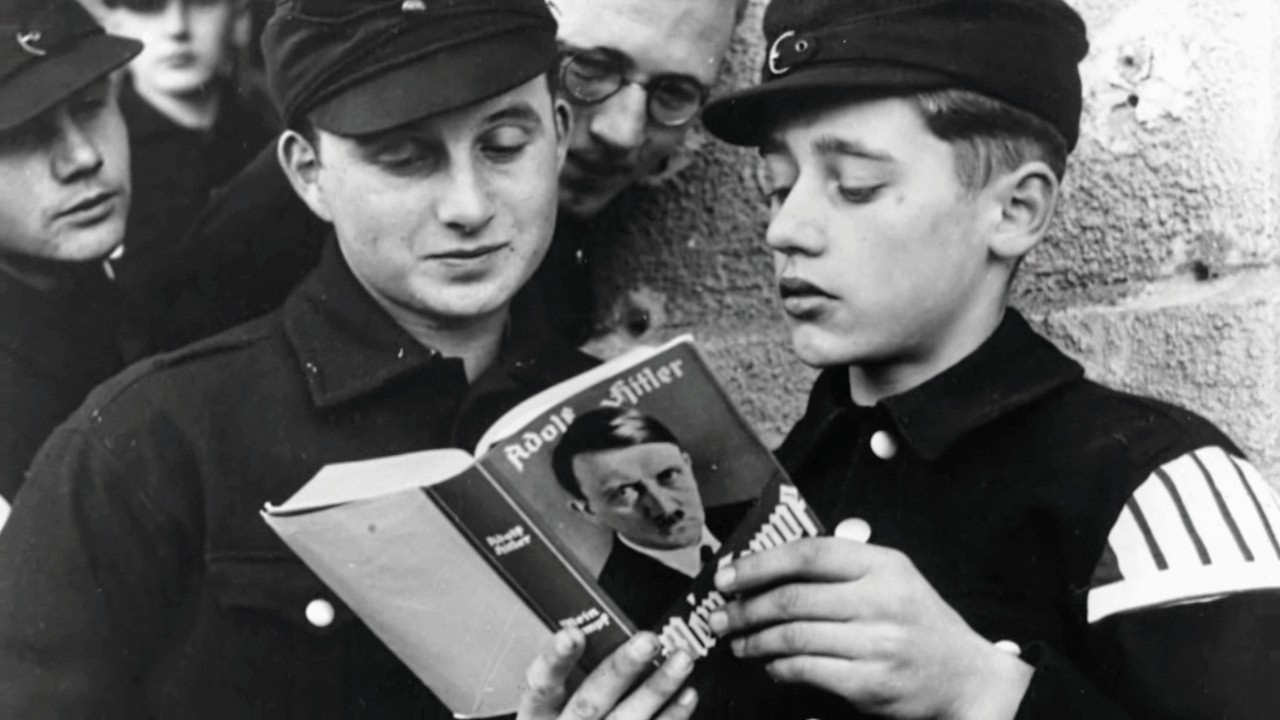
Their refusal to reflect becomes a virtue. In that condition, logic is no longer effective because it is perceived not as a method of discovery, but as a threat to the coherence of the group's belief. Bonhofer's experience under Nazism gave him a clear, terrifying view of how stupidity functions as the soil in which totalitarianism grows.
The regime didn't need to convince people through complex ideology. It only needed to hijack their sense of belonging and feed them simplistic certainties. It didn't require evil masterminds at every level, just willing participants who stopped questioning.
This is why in Bonhoffer's view, even intelligent individuals, even religious and moral people became complicit in atrocity. They weren't evil. They were possessed by stupidity.
In a chilling observation, Bonhofer writes that when speaking with such a person, we sense that we are not dealing with a person at all, but with slogans, catch words and the like which have taken possession of them. This depersonalization is not accidental. It is the intended effect of a system that thrives on conformity.
The individual becomes an echo chamber for propaganda, incapable of introspection, incapable of independent moral judgment. And when stupidity reaches this level, it becomes not just a flaw, it becomes a weapon. A weapon more dangerous than a bullet because it moves through entire populations silently and without resistance.
But if Bonhaofer diagnosed the disease, Carl Jung offered a deeper explanation of its psychological roots. How does a human being become so psychically hollowed out? How does the collective take possession of the mind to the point where thinking ceases to exist?
That's exactly what we'll explore in the next part. If this content is making sense to you, click the subscribe button and subscribe to the channel. Thank you for your support.
Carl Gustafyong in the undiscovered self offers one of the most profound and disturbing analyses of how the modern individual has lost touch with their own soul. While Bonhofer warned about stupidity as a surrender of consciousness to ideology, Jung goes deeper. He reveals how the structure of modern society, scientific, technocratic, and statist.
For Jung, the true catastrophe of modernity is not political or economic. It is psychic. It is the disappearance of the individual as the center of human experience.
At the heart of Jung's critique is the concept of massmindedness. In the attempt to create order, progress and stability, modernity has transformed the human being into a statistical cog, a number within an impersonal system. The state, science, industry, propaganda, all these elements pressure the individual to adapt.
But this adaptation comes at a very high price. The renunciation of subjectivity, doubt, and interiority. What remains is no longer a fully realized human being, but a functional persona, someone who behaves correctly, but does not truly live.
Jung asserts that the overly adapted individual becomes a psychically atomized being. They may appear well adjusted, but internally they are empty, fragmented, disconnected from their unconscious roots. And it is precisely this disconnection that makes them vulnerable to collective possession.
A phenomenon in which ideas, emotions and impulses no longer come from within but from outside. The person believes they are thinking for themselves but they are merely repeating the collective unconscious that dominates them. Like a psychic antenna, they transmit what the system wants them to feel and say.
This alienation from the deep psyche is the fertile ground where collective stupidity flourishes. The individual who does not know themselves becomes an easy prey for simplified narratives, charismatic leaders, and ideologies that promise meaning and belonging. Jung writes, "The mass always produces a leader who becomes a victim of their own inflated ego.
" In other words, the totalitarian leader is at the same time a product and prisoner of the collective mentality. They are the enlarged mirror of the stupidity that surrounds them. And the people already unable to discern follow them fervently.
Not because they are evil, but because they have ceased to be individuals. For Jung, the only way to resist this psychic collapse is through the process of individuation. The arduous path of reconnection with the unconscious, with inner symbols, with the totality of being.
While culture demands adaptation and obedience, the unconscious demands confrontation and authenticity. True freedom according to Jung is not in doing what one wants, but in becoming who one is. This requires courage, pain, and sacrifice, elements increasingly absent in a society anesthetized by superficial comfort and constant distraction.
Jung's critique directly engages with Bonhofer's warning. Both see that the dissolution of the self is not just an individual problem. It is a civilizational crisis.
When the human being abdicates their soul, they become a vehicle for forces they do not understand. They may appear functional, productive, educated, but inside they are a puppet. And when entire masses enter this state, the result is not just stupidity.
It is barbarism disguised as civilization. But how does this dynamic manifest in practice? How do ordinary people seemingly normal become complicit in atrocities or make irrational decisions without realizing it?
Experimental psychology has shed light on this phenomenon. Conformity and blind obedience can suspend critical thinking and imprison consciousness. The experimental psychology of the 20th century sought to show with empirical data how real and frightening these observations are.
Through carefully conducted experiments, scholars such as American psychologist Stanley Mgrim and Polish American psychologist Solomon Ash demonstrated that the average human when placed under social pressure or institutional authority relinquishes their critical autonomy with disturbing ease. And the most unsettling part, they do this believing they are acting correctly. Mgrim's experiment conducted in 1961 at Yale University was a landmark in the history of social psychology.
Its goal was simple yet morally explosive to measure how far an ordinary person would be willing to inflict pain on another simply because an authority figure ordered it. The result was shocking. More than 60% of participants administered potentially fatal shocks to a stranger who was actually an actor just because the scientist in a white lab coat and calm tone said, "Please continue the experiment.
" These people were not sadistic or cruel. They were ordinary citizens, teachers, bankers, housewives. Obedience to authority nullified their moral judgment.
They sweated, hesitated, but continued. Personal conscience was silenced by the belief that someone above knew what they were doing. Mgrim not only exposed the devastating power of authority over individual conscience, but also proved in practice what Bonhoffer had already written in his cell.
The stupid do not act out of malice but out of surrender of reason. Meanwhile, pioneering social psychologist Solomon Ash in the 1950s explored another crucial aspect, group pressure. His conformity experiment involved asking people to identify which line among several was equal to a model.
The answer was obvious, but the participants were surrounded by actors who deliberately chose the wrong answer. What happened? More than onethird of the time, individuals yielded to the majority, even knowing they were wrong.
Why? To avoid the discomfort of difference. To not appear strange.
To belong. Both studies undeniably show what Jung called collective possession. The moment when the individual abandons their critical function in favor of social acceptance.
They know they are wrong but remain silent. They feel something is wrong but obey. This state of alienation does not require explicit violence or brutal coercion.
It is enough to have the symbolic authority of an institutional figure. It is enough to feel the weight of the group's gaze. And it is precisely here that stupidity in Bonhofer's sense establishes itself as a systemic social condition.
When truth is sacrificed for harmony, when thought is replaced by slogans. When the fear of being different outweighs the desire to be free. It is at this point that the human being transforms into an unconscious agent of evil.
Not by intention but by convenience. These studies are not just historical curiosities. They continue to be replicated, updated, and confirmed to this day.
In companies, schools, religious and political institutions, the logic of conformity and obedience remains alive, disguised as professionalism, loyalty or good manners. But what is at stake is much deeper. It is the individual's capacity to remain whole amid the pressure of the collective.
The question that emerges is inevitable. Why do these people who clearly have the capacity to think choose not to think? What causes consciousness to be suspended, ethical judgment to be turned off, and the individual to become a reflection of the system?
To answer this, we need to look at the mechanisms that reinforce this functional stupidity such as strategic ignorance, the reward of passivity, and the punishment of independent thought. And that is precisely what we will explore in the next part. If what you're hearing resonates with you, you'll find real value in my ebook, Beyond the Shadow.
It breaks down Jung's core ideas and gives you tools to understand yourself more deeply. Link is in the pinned comment. At this point, the most uncomfortable question is no longer why people become stupid in the sense observed by Dietrich Bonhofer, but how society rewards this behavior to the point of making it functional.
What Bonhoffer observed amid the moral collapse of Nazi Germany and what Jung described as the fragmentation of individual consciousness finds its equivalent today in the banalization of ignorance. An ignorance that does not arise from a lack of information but from the deliberate choice not to know. This is what social scientists call strategic ignorance.
an active refusal of knowledge when it threatens to disturb the comfort, belonging, or emotional stability of the individual. Human beings embedded in a system that demands productivity, predictability, and obedience quickly learn that questioning, thinking critically, or acting with awareness are behaviors that are punished. Thinking is hard work.
It requires time, solitude, doubt. everything that the modern world has taught us to avoid. Therefore, it is much easier to go with the flow, repeat dominant ideas, adhere to superficial consensuses, and perform public virtues without any real introspection.
In this scenario, stupidity understood as the voluntary abdication of consciousness is not only accepted, it is promoted in large corporations. For example, absurd and unethical decisions are often implemented by entire teams who know deep down that it is wrong. But no one says anything.
No one can say anything because the consequence of that is being labeled as problematic, the pessimist, the complicated one. On social media, shallow, polarized, and aggressive discourses receive likes and engagement, while deep reflections are ignored or ridiculed. In some religious environments, those who question certain dogmas are seen as a threat, while the obedient believer, even if alienated, is exalted as a model of faith.
The system rewards passivity and punishes lucidity. This logic repeats itself at all levels. In schools that train obedience instead of thought, in families that demand conformity instead of authenticity, in media that serve anesthetic entertainment instead of transformative information.
The result is a human being trained not to think, trained not to feel, trained to be useful, but never conscious. Bonhaofer saw this clearly. He noted that even educated, religious, and good people became tools of the Nazi regime, not because they were evil, but because their internal structure had already been shaped to accept order, silence doubt, and repeat narratives.
They became agents of functional stupidity. And the most tragic part, they believed they were doing the right thing. Jung complements this view by stating that modern society fragments us internally.
By ignoring our contradictions, fears and unconscious desires, we project these shadows onto others. The other becomes the enemy, the wrong one, the impure, and our own ignorance masquerades as morality. The denied shadow does not disappear.
It takes on social, political and cultural forms and when collectively channeled it transforms into ideology. All of this points to a brutal truth. The world is not being governed only by evil people but by systems that convert ignorance into virtue.
And the more the individual abdicates themselves, the more this system grows. The question then is not just how to resist, but who is still capable of resisting. The answer for Bonhofer and Jung is not in mass education nor in political revolution nor in more technical progress.
The only possible salvation lies in the awakening of individual consciousness. But what does it mean in practice to restore the individual in a world that demands their obedience? What are the possible paths for this reintegration of the psyche?
This is exactly what we will explore next. In a world where stupidity is functional, where ignorance is rewarded and independent thought is treated as a threat, the most radical resistance is not external. It is internal.
Both Dietrich Bonhofer and Carl Gustaf Jung pointed out each in their own way that the only real antidote to collective possession to the surrender of consciousness lies in the awakening of the individual. But this awakening is neither simple nor romantic. It is painful, lonely and demands a level of brutal honesty that few are willing to face.
It is the process of restoring conscious individuality. what Bonhoffer called costly grace and Jung defined as individuation. For Bonhoffer, living with integrity in the face of evil was not just a moral issue.
It was a spiritual mission. He believed that true faith required the courage to stand firm even when it meant isolation, persecution, and sacrifice. He wrote from prison that the world could only be saved by men and women willing to act responsibly before God and not just in accordance with social norms.
This was the costly grace, the refusal to live on autopilot, the refusal to be just another number in the crowd. Bonhaofer did not believe in salvation through the reform of society but rather through the transformation of the human being one by one. Carl Jung on the other hand saw this process as a deep dive into the unconscious.
Individuation in its deepest sense is the process by which the individual integrates their internal opposites, the shadow, the ego, the persona, the collective unconscious. It is a path of reconciliation with what has been denied, repressed or projected onto others. For Jung, there is no possible liberation without this confrontation with one's own darkness.
And this darkness is not just fear or trauma. It is also conformism, hypocrisy, and selfdeception. The individual who wishes to be free must above all be whole.
Both thinkers reject mass solutions. There is no political, religious or educational system that can replace the inner journey. Bonhaofer said that the world is not healed by transforming it into a great collective organization but by liberating the individual from the shadow of the collective.
Jung echoed this by stating that the salvation of the world lies in the salvation of the individual soul. Both understood that any collective structure when placed above the human being tends toward dehumanization. But how does this restoration occur in practice?
It begins in silence, in doubt, in discomfort. It starts when the individual decides to stop repeating and begins to listen. When they start asking uncomfortable questions, distancing themselves from the group, forcing them to look in the mirror without filters.
When they choose to no longer obey out of fear, but to act out of conscience. when they abandon the desire to be accepted to live authentically. This process requires ruptures with ideologies, with social circles, with family expectations, with identities constructed to please.
It demands the ability to be alone and yet not be lost. It requires faith not in the traditional religious sense but in the profound sense of trusting in something greater than immediate comfort the truth. In today's world where everything pushes us away from ourselves towards consumption, noise and spectacle.
Restoring individuality is an act of war. It is resisting the call of the herd. It is refusing to be just another vector of collective stupidity.
And it is also paradoxically the only path to a meaningful life. Throughout history, the world has been shaped by great acts of evil and by countless acts of silent stupidity. Not the comic or naive stupidity, but the dangerous systematic functional stupidity.
The kind that emerges when the individual abdicates their conscience, closes their eyes to reality, and surrenders body and soul to a narrative that absolves them from thinking. Dietrich Bonhoffer saw this spreading in Nazi Germany. Carl Jung saw it devouring the spirit of modernity.
Both knew that the greatest tragedy was not the existence of evil, but the collapse of consciousness. Today we do not live in less dangerous times. We live in more sophisticated times.
In some places from time to time stupidity presents itself in military uniforms or fiery speeches. It wears lab coats, suits, academic gowns, legal robes, verified social media profiles. It burns books, suffocates critical thinking with an excess of irrelevant information.
It does not prohibit the truth. It merely makes it indistinguishable amid the noise. And so the contemporary individual, distracted, overwhelmed, depersonalized, finds themselves, without realizing it, reproducing ideas that are not their own, living a life they did not choose, serving logics they never understood.
It is in this scenario that thinking for oneself becomes a revolutionary act. Claiming one's own conscience is swimming against the current, against the algorithm, against the dominant opinion, against inherited fears and programmed desires. It is being willing to be misunderstood, criticized, isolated, all to preserve what makes us human.
The ability to discern, to question, to choose with integrity. Thinking for oneself is the most subversive gesture of all because it is the only one that cannot be controlled from the outside and for that reason it is the most feared. The final question is not theoretical.
It is personal. Are you really thinking for yourself or are you just reacting, repeating, obeying? Are you willing to pay the price of lucidity?
Because the world will not be saved by slogans, by parties or by magic formulas. The world will be saved if it is to be saved by conscious people. And consciousness begins with a silent internal decision invisible to the eyes of the system.
The decision to be whole. If this video has provoked you, write in the comments, I choose to think for myself. This will show that you are committed to this journey of truth and consciousness.
And if you feel that this content was important, share it with someone who also needs to hear this and more. Don't stop here. The next video is an essential continuation of this reflection.
Keep watching. I'll see you there.