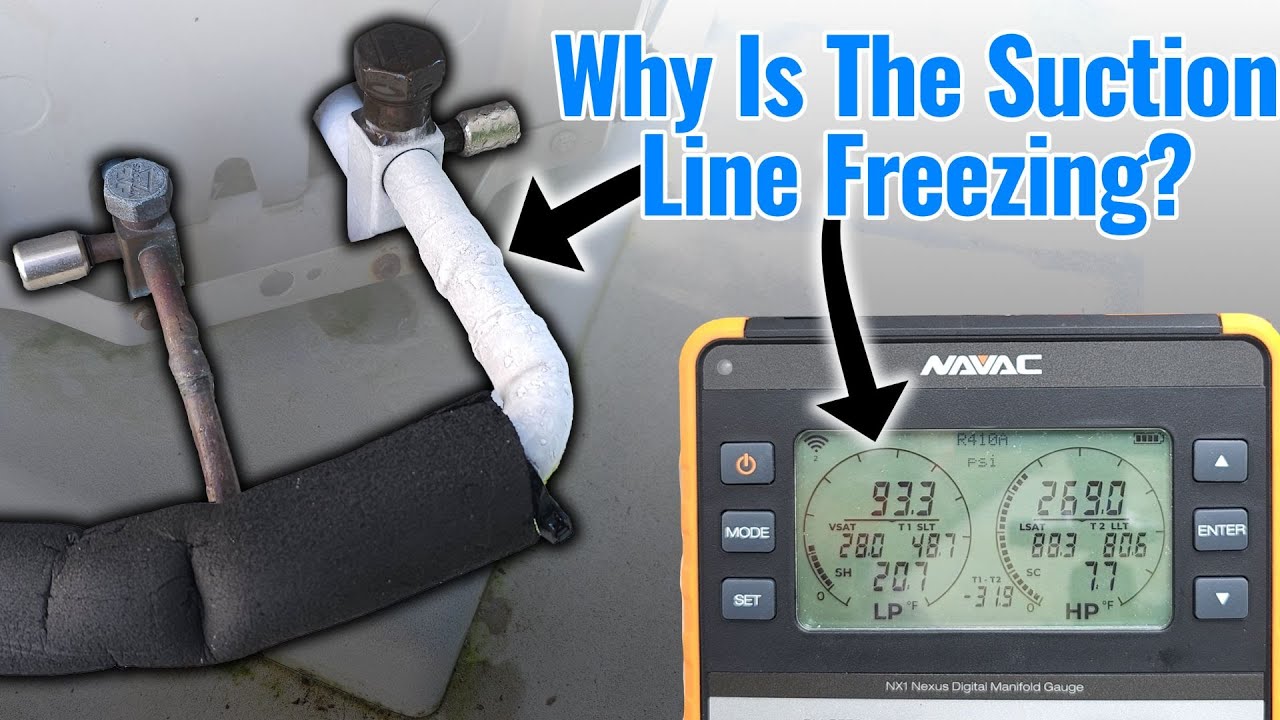
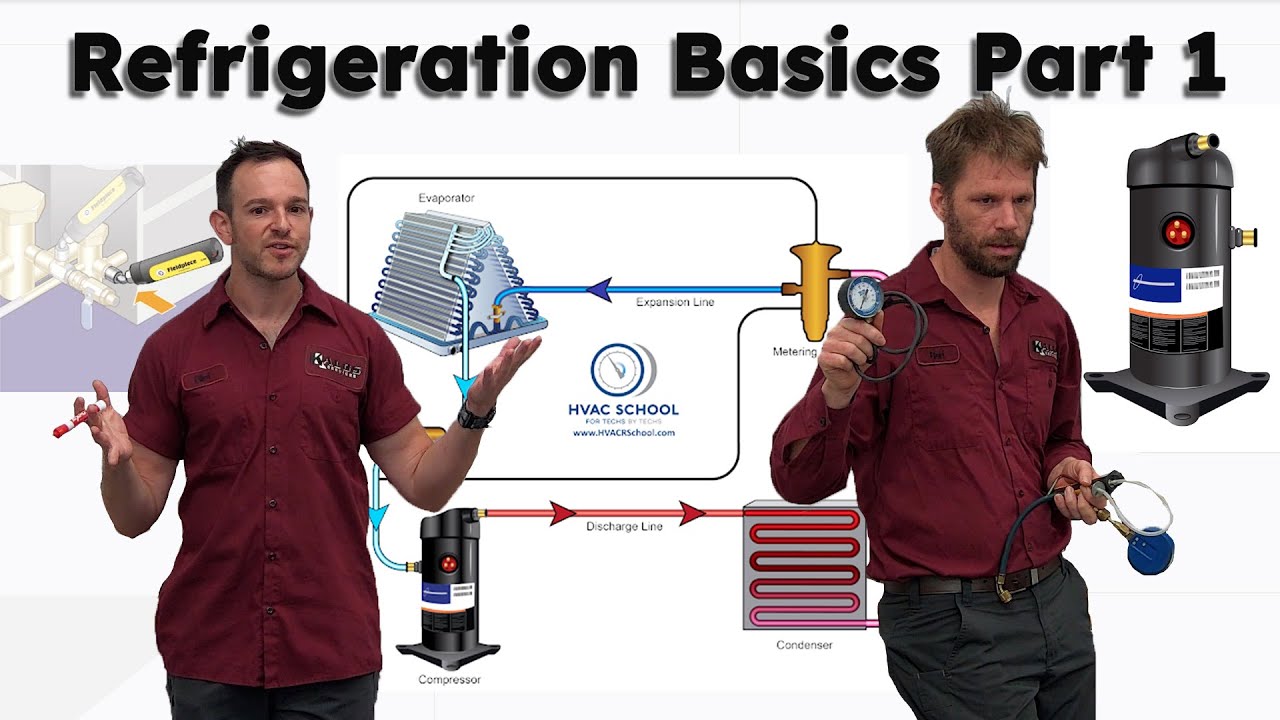
If you walk into a house you guys don't have any houses right now that things are sweating do you that's not that's not an issue that we have at all yes things are sweating vents are sweating Air Handlers are sweating Supply ducks are sweating it's a joke right it's an issue and you're always going to have it hurricane season from now until October middle of October you're going to have moisture hell you're going to have Stuff sweating people like it never did it before and you put in the new unit and now it's worse than
it ever was you're going to get all those types of complaints the best way to solve moisture issues is to deal with the moisture itself right we always try to get cute with it well if we increase air flow then that's going to make it a little bit warmer and then it's going to make it less likely to condense and then we Cause another problem but if you can deal with the moisture itself you reduce issues so you go to the house oh you just installed a doggy door isn't that nice nice right now you
have an open hole that's constantly letting moisture in your house or I see you enjoy watching the kids on the pool deck and you leave the doors open for two hours every day and then you shut them up and you expect your vents not to sweat they will sweat go into any restaurant that Has a big open Leni area this is the new hip thing they they love it and they have an air curtain and that's their solution solution is an air curtain and you go in and every vent in the place is just dripping
it's just sweating and they're like well I don't know the problem cuz temperature is right yeah because those aren't the same thing right moisture content and temperature are not the same thing you're letting all this moisture in and you're not Dealing with it so everything sweats so first thing is don't let the moisture in where does the moisture come from in houses comes from outside and even more so the attic that's what we deal with right let me give you another example this is all obvious stuff right and this is all indoor air quality this
is the type of indoor air quality that the sales teexs for all of our competitors don't even know exists but it's the real stuff it's the real end air quality the Stuff that actually makes people's air better so you have a bathroom and somebody's going to take a shower what should they do when they take a shower to get the moisture out turn on the fan they should turn on the fan right so okay think about this logically if they don't turn on the fan what does that do to the humidity in the house increases
increases it but here's the other thing what happens if they turn on the fan and then they leave it on all day now you Pressurized the room now you've negatively pressurized the room and the house and you've actually made the moisture worse than if you had never turned it on in the first place because you ran it all day long and where did that and where did that air come from to make up for that negative pressure the the attic right here's another one oh your attic is really hot um let's cool down your attic
what are the ways people cool down attics Attic fans attic fan right put a big old powered solar powered attic fan that makes a lot of sense because you know you use the energy from the Sun it spins a fan gets the air out of the attic that's great no it's not it's a nightmare why when you depressurize an attic where does a lot of the air come from the house why because it's not sealed very well so you depressurize the attic you're blowing air out of the attic it comes from the house just do
it As for fun sometime in your own house just to waste a lot of money uh put one on your attic and watch what happens to your runtime of your equipment your indoor air temperature and your indoor humidity on the hottest summer days it's a nightmare powered attic fans are a nightmare if you go to a house that has one and they have a humidity issue whole house fans are even worse obviously for very obvious reasons um they're leaky And when people turn them on and basically oh okay all of a sudden the inside air
all became outside air I mean it's all the same now right hey that's fun let's do that for a couple hours uh it's great if you lived in a house that didn't have air conditioning you know like oldtime Florida where you had big porches and that's how you did it all the time that's fine no problem because you're also not making anything cold so nothing sweats and you have a bunch of People who aren't snowflakes and need it to be 72 degre all the time like we do um which is my joke when people talk
about mid-century modern design you know that's really in now flat SE flat roofs uh big Windows all that stuff and they're like how can I make a air conditioner fit in this beautiful mid-century design and the answer is you get a mid-century air conditioner which is not an air conditioner CU they didn't have them in Houses back then they didn't have them in the 50s sorry it's too early for this the point is is that we really have to think about pressures inside the house it's one of the main things we have to think about
if somebody turns on a kitchen exhaust they you know they're they're a chef they're an at home chef and they got this 1200 CFM kitchen exhaust so that way they can boil a little pan of water what do you think that does to the Humidity and the indoor air quality in the house it immediately makes indoor air out air like that right so think about where the air is coming from we have to think about sealing uh in order to solve these problems if you see stuff sweating think about where the water is coming from
and where it's usually coming from is the attic okay that's where it's usually coming from it could be coming from customer Behavior as well leaving doors open installing doggy Doors um you know running a bathan all day long not running a bathan when they take a shower that kind of stuff one of the best things for that situation humidity sensing bath fans those exist right you just you wire them up so they only come on when there's high humidity in the space or you can actually put in a humidity sensing switch in case so it
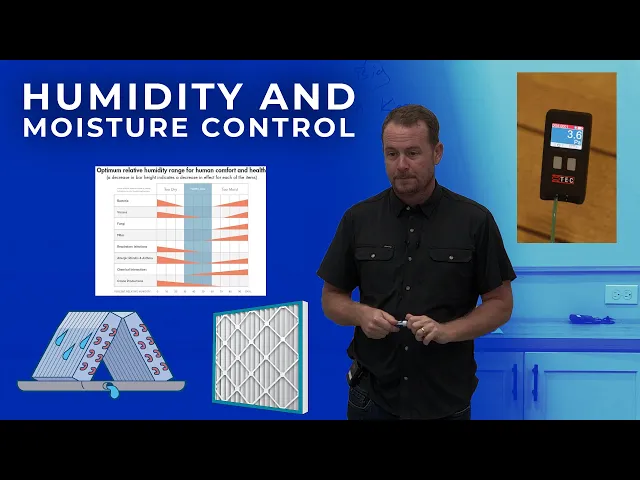
only goes on when the humidity is high and it goes off when it's not even then you got to be careful because if you set It wrong say you set a humidity sensing fan to 45% it's just going to run all the time right so it's not going to S you have to set it so that it comes on when somebody's taking a shower and it goes off once the moisture is ventilated out you guys following what I'm saying here the next thing is Filters I do not want any of you selling anything that is
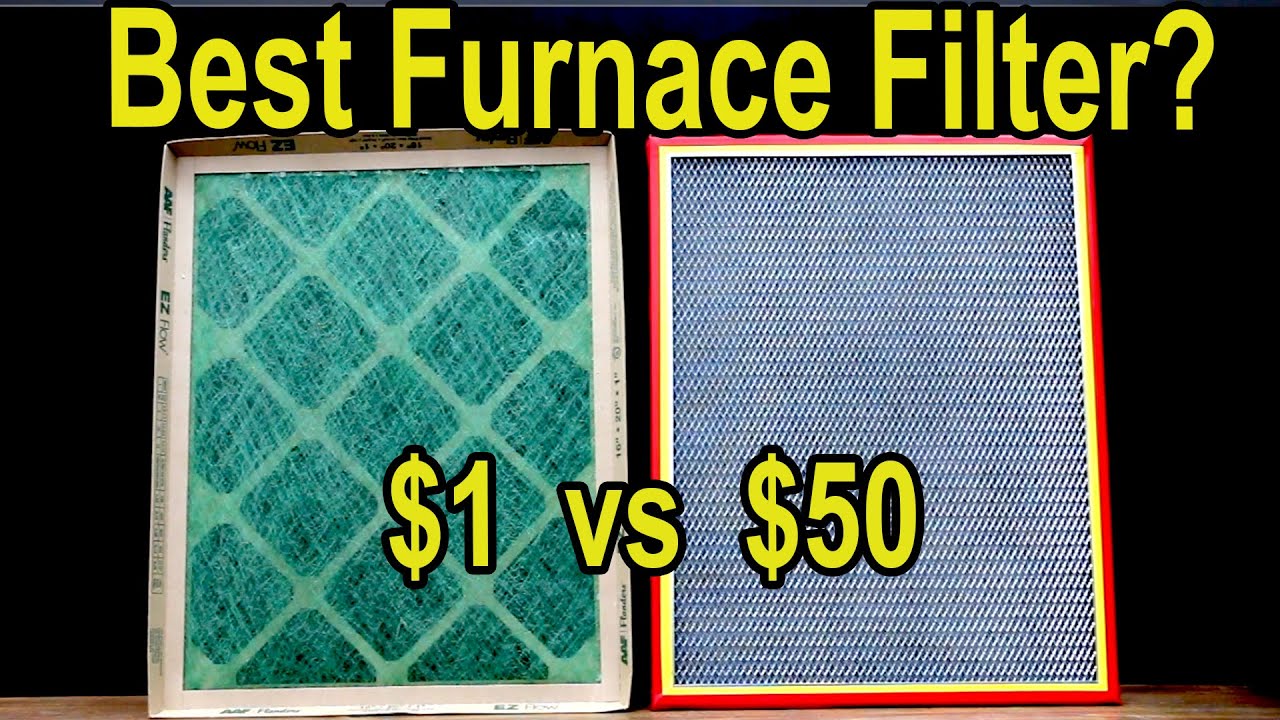
not a filter until you learn how to sell filters okay if some of you right now Are getting spiffs because you're selling is is this still happening like are people selling a lot of stuff it is happening a lot stop it I I don't want you to do it at all I want you to learn how to not do it at all and then you can learn how to do it again I want you to sell filters to clients big thick wide filters right how many what percentage of units that we work on have overhead
returns do you think overhead returns 50% 50% over 50 okay so here's The thing every unit and I I like I want you to start doing this today you know I'm being a little you know I'm being a little dramatic here just to try to wake you up okay but you you I want you to start doing this today every time there's a overhead return and there's a 1-in filter in the unit that client needs to be quoted to put in the biggest possible filter in this Riser that will fit okay so you don't match
the size of the Riser I don't care how big the Riser Is the Riser could be this big now that would be a problem because I need to have really bad air flow so we should be replacing the Riser then right the Riser could be tiny I want you if the space is this big and that's how big we can fit that's the size now again you they're standard sizes so you got to kind of we got to figure out what sizes they are but I want you to put the biggest one in possible why
because it's not hard to Cut back a little bit and just taper some duckboard into it that's a super easy thing to do Elliot even you could do that right even Elliot could do that so it's a piece of cake that solves so many issues it catches so much it keeps the keeps the drain pan cleaner you have fewer drain backups uh it it you know the the air is cleaner the air flow of the systems so much better and they don't have to hardly ever replace the filter because The bigger the surface area of
the filter the longer it lasts the less they have to change it too it's just and those filters aren't that much more like a bigger one is not that much more than a smaller one in fact in many cases at the same price because the filter manufacturers I don't know it's just like it's like a trick in the it's like a glitch in The Matrix um You from One 4 in to the other correct one 4 inch to another 4 inch cartridge yeah moving Kind of fast here um that's what I want you to learn
how to sell is that that hard well there's some things you got to figure out like what are the common sizes you know like they're pretty common like what is the price that we charge oh no wait that's all you have to know it's just those two things right that's literally it that's all you have to know and when we do that for the client they're going to get good Results now again you're not going to be able to do it right that second that's the downside but that is not a hard retrofit that is
not a hard one to schedule and the nice thing is we can schedule it when we want to do it be like all right right now we're really busy but we're going to get that done in the next two weeks we'll schedule it with you whatever it's not they're not going to like be freaking out that you haven't come back so it's kind of Actually nice in that regard you make good margins client is happy you get a spiff on it everybody's doing great if the issue is a humidity problem which is the vast majority
of indoor air quality problems that we Face stuff dripping things growing all that well then you have to think about where is it coming from don't just so like here's here's one you go to a house a vent stripping you take the grill off it's not very well sealed what do you do You clean it off and you seal it is that all you do no then you charge the customer to go around and do all of them in the entire house and you talk to them about the cans and you look at the bath
situation and we look at the the pressure and balance in between rooms and all that stuff I know we're not there yet but if you solve like 10 problems at once it's much more likely that the problem goes away completely than if you just seal That one vent you seal that one vent you may or may not fix the problem because yeah you see solved it there but you didn't actually do anything to deal with the moisture in the whole rest of the house does that make sense MH that's how we want to think about
these problems we want to we want to step back and have a much wider view of the issue and then when people talk to you about things like real concerns that they have like man I don't know like I'm really Concerned about my kid they have all these sensitivities they have all this you can say have you really looked into voc's like have you looked into that because a lot of it has to do with what you bring in in the first place um I would suggest if I were you I would do a lot
of research on that front the materials that you're bringing in and maybe do some changes there clay and plaster is kind of amazing like if if I had a kid who was super sensitive the First thing I would do is go into that room and strip out everything that's new and I would redo it and clay and plaster low VOC clay based paints and then go back in with Furniture that's been around a long time like it's one of the first things I would do but people don't know that unless you are actually able to
like you're not telling them how to live their life but like we're not saying oh okay you know what you need you need a ozone generator Which is what our trade has done for a long time and made People's Health worse that's the first thing we cannot make things worse by what we do and what we advise and understand where this is coming from with me because we would make a lot more as a company if I was like sell bipolars sell them all day right sell Remy Halos or whatever this fancy thing that you
can put in quick and we can make huge margins UV lights that's the answer that would make us a Lot more money all of us but that's not what we do here what we do here is we solve real problems for people and we can and we can make money and they'll be happy and everyone will do well it just is a little harder like you have to have boring classes like this with me and you have to deal with my crappy jokes in order to get to the other end where you like actually understand
how to solve these problems and that's what I want to continue doubling down on we are going To focus on sales because it is part of our job having customer client conversations with clients about upgrades that they that they would benefit from but what we don't want to do is focus on things that give us a short-term win and maybe they're happy maybe they're not happy but most of it is probably up the sibo effect and I say probably because I don't want to get sued um a lot of it is is not functional in
real homes in real people's houses What is functional is the stuff we're talking about here today pressure imbalances humidity moisture sourcing good filtration quickly I want to just address and we're going to come back and address a lot of this again the next time um ventilation in Florida is a nightmare it's not because ventilation is not a good idea bringing air in from the outside why is ventilation in Florida a nightmare humidity because we have so Much humidity in our air so I wish we could just bring in outdoor air like they can in other
states that is a dream but in Florida it ain't great we only should bring in as much as we need to in order to keep the house safe in order to keep CO2 levels at Bay in order to um keep voc's and PM at Bay but filtration and Source control are actually keeping it in in check in the first place is actually a better strategy Than ventilation if you've looked at places I'm not going to name names but some of the like Town Homes we work in and you start looking in some of those returns
and seeing what you see um and they have like wide open fresh air coming in fresh air we don't have fresh air in Florida we have stanky air so you bring in stanky air okay but bring it in carefully right you basically do the same thing by turning on one bath fan inside your house this is what the only Downside with turning one bath fan on is that it comes from the attic and that's the down that's what we don't like about it but the truth is that if we can control that and just reduce
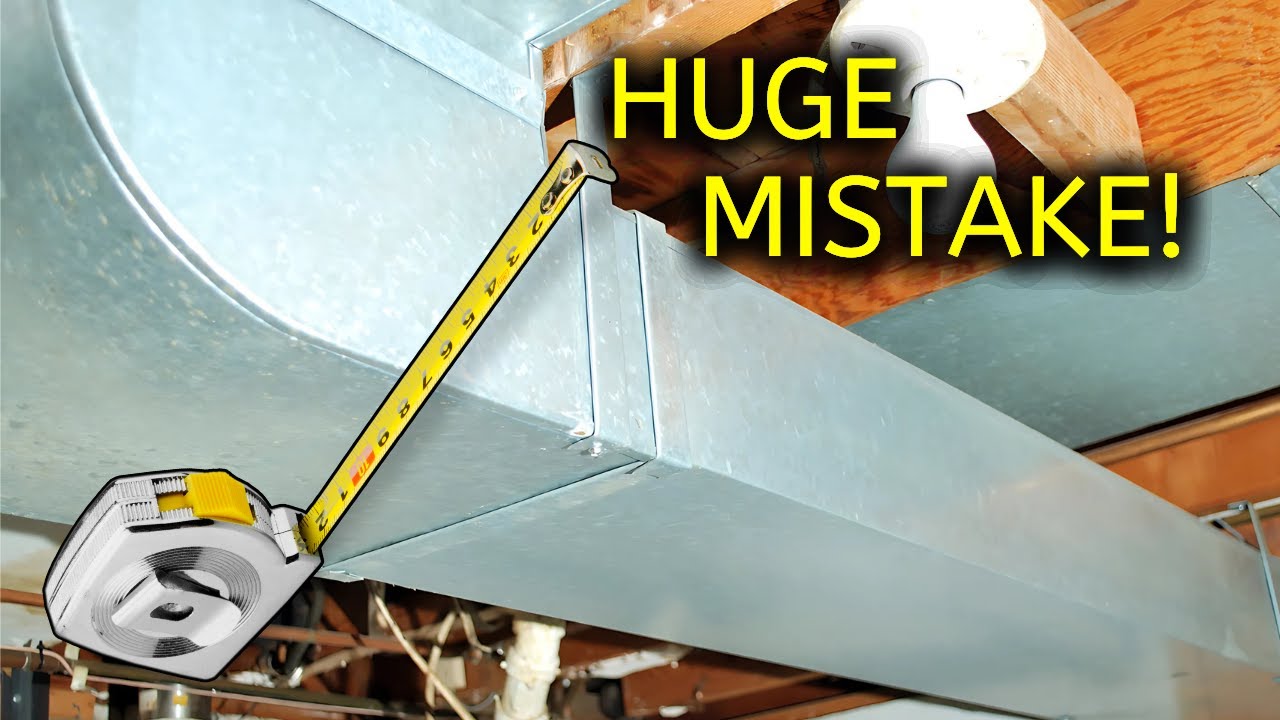
the amount so it's a so it's just a a little bit all the time or a little bit intermittently that's generally going to solve the problem if we can control the sources in the first place duck leakage room room pressure imbalances making sure that uh we're we're sealing stuff Up making sure that we're controlling sources don't do weird stuff weird stuff is like oh hey this vent's sweating let me load some insulation on top of it have you guys ever done that like throwing an insulation on top of a boot to try to make it
go away it doesn't make it go away it makes it worse the vent sweats more because now the vent is colder than it was before you loaded the insulation on top of the vent right there's a lot of weird things we do to Try to solve problems rather than like why is the moisture than in the first place why is it wet let's figure that out now we're going to start by talking about uh leakage and again a lot of different factors um can affect it but take a step back when you look at problems
on a house and again most of the problems that we're facing especially in hurricane season are Related to humidity humidity moisture I'm whenever I do that long pause I'm waiting for you to say something that's just just so you understand what I'm doing there effect yeah it's just like yeah humidity moisture whatever right so if we have if you have something growing somewhere it's probably a moisture problem it's a humidity problem right it's not like it's you know you don't you don't have dirt that all of a sudden Becomes mold or mil do just because
it decides to it's because of moisture in our market and really almost everything is related to that Comfort issues are related to moisture problems you know so on and so forth so it's huge filtration and humidity control are the two biggest things in our market and so controlling the flows of air in and out of the house are actually really really important um so basic principle we talked about this last time Is that if you move a box of air CFM of air right air is air is actually stuff right just so we're clear air
is not the absence of matter it actually is something it's made of nitrogen oxygen moisture a lot of different stuff right and so when we move a box of this air out of this room for example another box of air comes in to fill it to fill the space it doesn't just stay infinitely under negative pressure now that pressure imbalance is what drives that So when we move a box of air out what happens to the pressure inside this room it drops pressure drops and so another box of air comes in and that's just what
happens and so as an example if you have a hurricane and you're blowing uh air on one side of a house that side of the house goes to positive pressure right positively pressurizes which then forces air out the other side of the house that's what we call wind driven ventilation Right but a lot of what we do inside of the house that causes issues with moisture and sometimes filtration dust all that kind of stuff as well is uh mechanically driven so we're actually driving ventilation we're driving air into the space by the equipment itself so
I think I talked about this a little bit last time but I want to focus on the question of why running the fan in the on position we have this thing with some of these blowers right where they're Running all the time and we know that that does Drive the humidity up we know it does houses have humidity problems in our Market when people run fan and on all the time right but why is that so I'm asking it as a question what are your theories why is that running window leaking in the house it's
going to pull that thetic lights anything that's leaking in the compressor not running to remove The Heat and kind of humidify the SP bring in uncontrolled say like heat more L moisture okay yeah I like it that's that's actually a pretty good explanation uh any other theories uh if your the garage it's not sealable you're going to be pulling in the garage air handler into the garage could be leaky could be you know we call those straws any sort of gaps and cracks In the air handler that could be pulling in moisture and anything else
sure what else well um with the fan running it creates different pressures throughout your house well that's kind of what he was saying positive negative pressures so like my house for instance mhm um I have a direct return in my hallway and then at the top of the hallway is like swing down attic door and so like my hallway is going to always be much stronger Negative pressure than the rest of the house right there is the direct return and sometimes when I walk by that direct return I can smell the attic air hit in
my [Music] face that's part yep I'm guess no that's that actually is the one of the biggest reasons and we're going to talk more but the other reason and the one that most people point to is re-evaporation of Moisture out of the drain pan what huh huh what were you saying I was just saying Charlie was right duck leakage um duck leakage right is huge and then we're going to talk about some of the some of the mitigating factors you gave a really good one a good example of a pull down uh attic but there
are others um a lot of people believe that the reason why having the fan the on position causes more moisture in the home is because when that system goes Off now rather than that evaporator coil having just a chance to drip down and drain and out um it just re-evaporated directly and that is a factor so there it's it's Undisputed that that does have an effect but as we've tested it more and more in humid climates like Florida and Louisiana and other places what we found is is that it's as much if not more about
these things that you guys mentioned as it is about um re-evaporation off the evaporator coila Cooling it is actually evaporative cooling in fact if you leave your uh if you you know hook up uh measure quii and you put it in delivered capacity mode and you keep a system running after it shuts off you will actually see that you do get evaporative cooling um but it's what we call adiabatic cooling so all you're doing is converting latent for sensible so you're not actually getting you you don't have a net cooling effect once the evapor coil
actually warms up Initially the evapor coil is still cold and so you do actually get some extra like free BTUs out of that and which is why a lot of Manufacturers do that continued run time once the compressor stops but again for us in our Market we don't want that we want for maximum de humidification as soon as you're Cooling stops we want the blower shutting off right but let's talk more about the more the the more important part of this equation which is what you guys were all Kind of alluding to Adriel and Bert
and Charlie um is this mechanically driven issue and when you have duct leakage that is one of the biggest okay so if you have any duct leakage whatsoever and say you're putting some of your Supply Air in the Attic that means that some of those boxes are going into your attic which means that now your attic is positively pressurized in relationship to the house right so there's that by itself now if it's a ventilated attic That's not you know it's probably just going to end up going outside but that's going to then put your whole
house under negative pressure all the time if the fans in the opposition what does that do pulls in moisture from outside all the time so it makes it a bigger problem message here is in our Market don't run the fan the on position right that's not unless it's unless you have a commercial system or some where you have deification or some other way Controlling humidity we really just don't want that and it's worse during times when you don't have a lot of load so let's talk about this quickly jumping around here a little bit but
these are sort of fundamental principles because you were talking about this Adriel what do you need in order to dehumidify AC running need the AC running right so the number one first thing that matters in terms of the equipment dehumidifying well we're not Talking about how much moisture is coming in because that's in order to figure out a humidity problem you have to know what are the sources of moisture that are coming in or being generated internally and then how much are we pulling out but as far as the equipment is concerned rule number one
it's got to be running so rule number one it's got to be sized properly right but even beyond that let's say you size the system completely properly but a Hurricane comes through and for four or five days it's cool it's windy and there's just tons of moisture in the atmosphere air conditioner is not going to do a lot to help with that especially if you have a few power outages in there right that equipment is not not going to run that much and that's a problem because in order for an air conditioner to dehumidify it
has to run it has to be in cooling mode it has to run so that's rule number one run time is King when it Comes to dehumidification for the air conditioner but what's the second thing that drives the ability for an air conditioner to dehumidify remove moisture airow fan speed fan speed yes but even beyond that there's actually more fundamental principle it is fan speed that's the that's one of the ways we affect this coil temperature cold coil long run time so if you have long run time in a warm Coil are you going to
dehumidify very well no if you have a cold coil but you have short run times are you going to dehumidify very well no several reasons right because it's not just that okay well it's running a good amount of time we want it to run all the time when it's humid if it were up to us we want air conditioners to run all the time because every time they go off coil warms back up now when they come back on that coil is going to get down to temperature it's Got to get below due point and
so it's going to take it five plus minutes before it even starts draining you know that right every time you start up a unit takes five plus minutes it doesn't matter if water is going in the drain pan it's got to come out the drain if it doesn't come out the drain if it's not coming out of the house it's not helping you so how can you tell if a system is dehumidifying well you can look at the drain right in Fact one of the most reliable ways to tell how well how much moisture is
being removed from a house is to actually measure the condensate a lot of the studies that have been done um by Andy ask where down in Naples where he did a lot of the the research on the humidification and just different issues because they have it's even way worse down there than it is here in terms of humidity problems is he just measured condensate that's how he would prove uh What the most effective strategies were and so for you guys see a drain that's really draining it's pulling a lot of moisture out of the house
you see one that's not it ain't and if you've ever again give switch going to switch topics here just quickly if you've ever gone to a system where we installed a duckass and it's been running for a while pay attention to how much water is coming out of the Drain usually it's not a lot when you first started it up it was a lot right you first started it up it was really warm in the space temperature dropped and then you go back and it's maintaining temperature and it's not dehumidifying very well do you know
why that is most sometimes but mostly what happens is for most standard duckass units the way they work is is as it approaches set point they allow the coil To warm up they actually ramp down the compressor while the blower stays the same speed so think about this if your blower blowing the same amount of air and the compressor ramps down what happens to your coil temperature it gets it gets warmer right you're not moving as much refrigerant through the system it's very simple compressor you know what does a compressor do at high speed spins
faster moves more refrigerant right have get More capacity you get more cooling effect if you keep the blower running and you ramp down the compressor it warms the coil up if your coil gets above dup point you stop removing moisture and a lot of ductless systems though they could dehumidify very well do not because they're intentionally letting that coil temperature rise because it's an efficiency thing you get better Energy Efficiency out of it doing it that way but you get terrible Dehumidification right so just something to pay attention to there when you have clients who
are like they've got duckass in their house and it's not dehumidifying very well don't get caught in the loop well hey duckass are really good at dehumidifying theoretically yes they are they could be but the way they're programmed many of them from the factory prevent them from being good at dehumidifying all right so just back to back to talking about leakage and Everything in the space so rubber me throw when you have a house so I'm jumping to the conclusion here just so you cuz I see your eyes glazing over when you have a house
where things are sweating inside the house okay so I'm not talking about ducks in the attic and I'm not talking about equipment in the garage there's three different categories here right ducks in the Attic are one problem equipment in the garage is another problem but stuff inside the House is sweating okay what are the two main things you should do there are two main things you should do I want theories all the open I would yep that would be the number one thing that would be one of the first things you do is you look
and say is there some way that attic air is making it into this house and do you just seal Around the one that's dripping no you seal around all of them solve it make it stop look at can lights look at anything that could be getting attic air into that space cuz for example imagine a cathedral ceiling okay and you got this vent here and this one's sweating but all around it are all these can lights right A lot of times you will see it's just around the edge well when it's just around the edge
it probably is just that can right so you can pull it down and Seal around but a lot of times it's not just around the edge sometimes it's around the edge and it's like dripping from the actual vent that's where you have two things that you want to look at the conditions in that space due to attic air leaking in seal that up up but then the performance of the air conditioner itself meaning how well is it dehumidifying because again we talked about this last time a little bit I Think this idea that well we
want the vent to be warmer so that way it won't sweat what happens when you make a vent warmer how do you make a vent warmer if I wanted to make a vent warmer how would I go about doing itre you could increase your blower speed right what is that do to your system's ability to dehumidify made it worse so what here's what happen happens and this is this so pay attention to this very carefully Because I made this mistake like a thousand times before I understood how this works if you go to a house
today and there's a vent sweating and you say all right I'm going to warm it up I'm going to run the blower speed a little faster right what could it hurt and you run that blower speed a little faster that vent will probably stop sweating for a couple days and then it will sweat worse than it ever Did why is that I would say whatever it's kind like a refriger leak if you add refrig on increase pressure that leak open that was actually leaking in okay I see what you're saying so by increasing the blower
speed interesting that isn't even how my brain was working but but that actually is part of it when you are moving more air whatever leakage issue you had you probably just made worse right that's true duct leakage uh that Mechanic driven ventilation issue that we're talking about here that yes that's true but there's actually a deeper problem here it's no longer deifying it's no longer humidifying so yes you warmed up the vent and so temporarily it takes a while for relative humidity to change in a space it doesn't happen like that so when you had
that vent that was that was cold and it was sweating and you increased the air flow you warmed it up probably by a couple degrees and so Now it stopped sweating but then what happened to the relative humidity in the space it starts creeping in up why because the system now is running a warmer evaporator coil you run higher air flow over the evaporator coil you're running a warmer coil when you run a warmer coil you move less moisture out of the house make sense so but also for the reasons Adriel just said too which
is that you also now increase whatever Mechanically driven ventilation issue bring in an attic air bring in another air you just made that problem worse so this perfect example um and I'm going to talk through this um and again we need to go back with the true flow that's actually something we need to do and also the filter Grill I'll talk about that in a second as as kind of a case um it's a couple things there um but it was running based on I had limited tools of course but um it it appeared to
have Been running higher air flow than it should have because we had a 3- ton air handler matched with a 2 and a half ton condenser okay so if you have a 3- ton air handler match with a 2 and 1/2 ton condenser you probably need to be on the low fan speed tap in order to have it in the right airf flow range right so we had sweating vents inside the house couple sweating vents um sealed around the one because I just found some caul on a shelf uh and and that was actually A
pretty dry day and it was sweating um and then I set the air flow actually lower I tapped it down one tap then I came back on a super humid day like one of these really bad days that we've had the last couple days and it was not sweating anymore which is an indication that by dropping the relative humidity inside the space and by sealing up some of those gaps we solve the problem but again what's the right way to do it system air flow make sure we have the Right air flow and we don't
especially have too much air flow if you have swining vents so it's opposite town of what we think worry less about trying to keep the vent warm and worry more about getting the relative humidity down in the space do that make sense now let's use another scenario though so let's have you any of you ever done this where you have a sweating vent you're like you know what I'll do I think it needs better insulation so you Take insulation and you and you pile it over the vent anybody ever done that before yeah I've I've
done it I did it a bunch of times and it would always make it worse right why does it make it worse when you do that it just reaches Doo faster exactly you're getting it right because that's a case where we're not helping anything the way to keep moisture out is by sealing it that's solves the problem in Fact if you have a vent that's sweating one of the if you want to kind of trick it trick the system a little bit pull the insulation away and seal it really good on the outside and the
inside like if like if you want to do the mac daddy absolutely try to solve the problem that's what you do you're going to get more air flow around it right and the whole thing's now going to get warmer the ceiling around it going to be warmer which is then going to make the vent Warmer everything's going to warm up the surfaces are going to warm up you want surfaces to warm warm up to prevent moisture right if I could if I could put a hair dryer on a vent that was blowing let's say Imagine
This is actually helpful some have these ridiculous like mind pictures right if you have some vent that's dripping in a cathedral ceiling imagine plugging in a hair dryer and rigging it up so it could point at that vent all the time would the vent Sweat anymore no why warm because it's warm warm things don't sweat right cold things sweat so the things that we can fact the things that we can affect are the moisture content of the air that's what ceiling does getting the moisture away dropping our fan speed to the proper levels not we
don't want it lower than it needs to be but getting it to the proper levels so the system Dehumidifies well looking at is the system running enough and that's where sometimes during a hurricane you're just not going to solve the problem you can't like like like if your power's out half the time and like you're going to get stuff growing places like you can't solve it and the clients will get freaky but it's like air conditioners can only dehumidify when they're running and then the answer is well ultimately okay do you want to pull all
the insulation out Of your attic seal your attic put it in two dehumidifiers because then you will never have a problem as long as your power never goes out so you'll have to also get a generator and maybe some solar panels and so if you want to spend a couple hundred, solving the problem so you never have any moisture issues then fine but obviously not practical for us we're concerned about solving it when the air conditioner can run that's all we can do already talked about this duct Leakage is something we have to take a
lot more seriously than we are taking um and some of it is visual like you can tell a lot with visual uh inspections um but things like thermal imaging cameras are really great um it's one of probably the best tools you can use now remember if you've ever used anybody here have a thermal imaging camera I saw we have a couple around um I have one keep in mind thermal imaging cameras on reflective surfaces don't tell you much CU they Reflect whatever whatever the reflection is it's not the actual surface so things like silvery Ducks
silver coated Ducks got to be careful but you can still look at the actual connections things that are like mastic coated all that you're going to get a better sense and so thermal living is all about comparative look at one then look at the other right it's not about the actual value that you get on this on the display meaning the temperature it tells you don't count on That that's not really what you're seeing it's more about comparing one thing to the other hey it all looks fine whoa hey look what I got there cold
spot right that's what you're looking for or hot spot with therm in it's really good for that um we do actually have a duck leakage tester you can call it a duck Blaster is the brand name um that Tec gave to it but we can actually do duct leakage tests it is something that we need to start doing more of um but we do It not as a prescriptive thing every time we show up to a new house but whenever we know at least that there's a problem there's a problem we're having a really hard
time solving we need to nip these problems in the bud and things like blow doors and duck leakage tests can tell us things like is the envelope leaky and where and it can also tell us do we have especially leaky ducks or something going on on that on that side of things now obviously the more Complicated the duck system the more likely a test like that's going to be necessary you're in a track home and you can literally see all of the Ducks they're right there probably not going to need that as much but in
cases where it's big it's complicated it's ongoing that's where we need to deploy these tests more readily meaning stop let's do some more advanced testing here you don't want to use that as a reason to not fix obvious problems though this is The this is the trade-off and we've seen this happen in the past so techs get all right hey we need a duct assessment and then the poor guy who's Tas to do the duct assessment all of a sudden gets 40,000 duct assessments every time a guys don't want to crawl up in the attic
right so there's no these tests are not a replacement for visual inspection I can't tell you how many times I've gone in an attic would we've been there a bunch of times and it's like a duct is Literally apart you know it's like okay anytime there's a duct apart it doesn't matter where that creates a huge pressure imbalance which then results in all this stuff we're talking about so visual inspection is still always necessary and things like thermaling are are really great this next thing and I mentioned it last time but I'm I'm going to
keep um bringing it up is this uh mad air thing so this term Mad air mechanical mechanical air distribution and interacting relationships is a term term that was I think it was first coined in like the early to mid 80s um by a couple building scientists and we've known about this for a really long time so the idea that like every bedroom needs a return you know how like you see you go to really old houses and a lot of them won't and you go to newer houses and they do I think it was Around
2002 in Florida that became part of the code where every room had to have a return to try to balance pressures and as a new t back even up to recent years I didn't understand why that was I didn't really understand why it was so important to balance pressures inside the building right it makes sense that you don't want to have a difference in pressure inside to outside due to duck leakage because you don't want you know you don't want air pulling in from the Attic you don't want air blowing out whenever you open the
door you know that made sense but why you need to balance inside the space and I always thought that the main reason was for Comfort within that room so for example if you have a master bedroom and they shut the door and you don't have a return in the room the the room's going to pressurize and that will make you uncomfortable cuz less air will go in the room right you Guys have all all familiar with that concept right the thing I didn't realize is how much of a difference it actually made because of the
pressure effect that it had throughout the whole house and that's recently only recently and it's jenry Garcia who's A A buddy of mine down in Miami has been doing a lot of testing on this again and kind of brought this back up to the and again this isn't like a this isn't like a Kos thing you know this is like throughout The country there's this conversation that's happening about a lot of these houses that have problems that we never really understood why like it would be the same as the house next door and if you
have this issue here and you don't have it there and what we're learning is is that houses that have these pressure imbalances inside the house results in massive additional load because if you're positively pressurizing the bedroom what's happening to the rest of The house you're negatively pressurizing which means that pulling in more air from outside moisture problems additional load having a hard time keeping up so it's something we need to start paying attention to one of the first things that I look at now when I walk through a walk through a house even if I'm
not there for air conditioning just a friend of mine is like I wonder which doors they keep shut right do you keep this door shut And they think it's really creepy for some reason hey do you keep your door shut when you sleep in there who sleeps in that room I'm like I'm just an air conditioning guy man stop judging me um but it it really matters so for people who keep their doors all open all the time doesn't matter pressure stay balanced people who shut their doors if return and Supply is imbalancing it doesn't
matter which if you have too much Supply if you have too much return If it's imbalanced it's going to result in this mechanically driven uh air this mad air stuff and again Mad air is is wider it's all these other things that affect air pressure with mechanical systems wind we talked about um h hydric buoyancy uh Matt really found that word he really likes it it's a it's a a it's it's a it's a fancy word um the fact that you have uh warm air rises moist air rises exhaust fans duct leakage uh Interior doors
being left closed all these things affect the pressures inside of a space and the things that affect pressures inside of a space greatly impact the load and the humidity does that make sense so what does this have to do with indoor air quality okay so let's back up again quickly what does this have to do with in air quality it has to do with the stuff in the air because when air is coming in the house especially in our Market from the attic You have stuff in the air you don't want attic is not a
clean nice space to be bringing air in from right and the second thing is moisture and those are the two biggest things in our Market people always say the three things you need to control are ventilation moisture humidity um and filtration those are the those are the big three and in our Market we would love to be able to worry about ventilation we would love that to be a big deal to us the reality is is That let's focus on the other two first right ventilation is something that we solve in our market and this
is my opinion but I'm pretty firm on this in our Market if you want to if you want to solve ventilation then you got to put it in a dehumidifier if you're not going to put in a dehumidifier then you don't get to solve the ventilation problem because the issue is if you bring in any amount of outdoor air on a continuous basis in Our Market you're likely to just cause more issues and again a lot of people say well yeah you just got to design for it if you design for it it'll work great
but the problem is you can design for something on paper that then does not get deployed the way it was designed and then things change in terms of how the house is lived in a lot of other factors that you're not accounting for and humidity is just a bigger problem here than any other problem we face if I had To if I had to kind of rank it in terms of filtration humidity control and ventilation I would I would have humidity like way way up here in really big letters and then I would have filtration
here and then ventilation right but ventilation is directly it directly impacts the humidity issue so if we focus on this first or if we make a big deal about this we're probably going to move backwards in terms of our Humidity make sense so am I telling you to shut off outdoor air dampers and every apartment you go work in no I'm not telling you to do that right we do not go into designed and engineered systems and mess with them uh because now we bear the uh the weight of that liability but we absolutely do
point to the challenges that it can produce and provide solutions that will help solve those issues and it starts with the equipment getting the air flow right in The equipment making sure that we're actually doing that for real it then it moves to ceiling sealing vents sealing cans making sure all of that isn't bringing in air and then we can look at those pressure imbalances inside the house driven by Duck leakage and driven by improper return of Supply people running bath fans all the time people never running bath fans right we talked about this last
time you never run a bath fan that's a problem for humidity Every time you take a shower all that moisture stays in the house if you run a bath fan all the time that's even a worse problem for humidity if you had a choice between the two I would probably depending on how many hours you're taking how many teenagers live in your house I would probably rather you never run a bath fan than run it all the time again depending on the size of the bath fan how many you're running that kind of thing same
thing kitchen exhaust kitchen Exhaust is great if you run a couple hundred CFM when you're boiling a pot of water making spaghetti or pus Sketti whenever way however you say it um I don't know why I said that but if you run it all the time or you leave it running for hours after you're done cooking because you just want to get some of the smells out right that can really pull a lot of moisture into the space a lot a lot which is actually Why um the Florida cat is if it's over I'm going
to say this and this may not be right but I think it is if it's over 400 CFM for a kitchen exhaust you have to actually have dedicated makeup hair right there in the kitchen you can't just you can't just run it so if you have a 1200 CFM exhaust like you have in some of these Custom Homes you're supposed to have a big old dedicated uh makeup air right there in that hood assembly so that way it's it's stand the Pressures are staying equalized right there so you're not pulling in all that moisture from
outside makeup air is air coming in from outside correct if you go to a rest perfect example of this I've used this example a lot but there was one time that I well I was noticing that it smelled really bad when you would get close to the bathrooms like really bad like not like somebody took a massive dump but like there's like sewer gas and I'm like and you would go in and they Would have Glade plugins everywhere like just trying to make up for it but it was like this is not healthy but I
also noticed that when you would walk up and try to enter the door would be really hard to to open and so I shot the owner an email and I was like hey you may want to have like whoever does your hood workor look at your makeup air because what was happening is is they weren't bringing in enough outside air to balance those pressures and so what Happens is when floor drains dry out you're pulling sewer gas up in and you have pretty significant negative pressure and that's what was happening so he's like yeah thank
you and the next time I went every time I've gone sense it doesn't smell bad and the doors open nice and easy um it's pretty good indication right I know I know thank you thank you basically I'm the hero of the [Applause] Story I don't think there's any a lot of this we've mostly already covered one thing that I wanted to uh cover quickly though uh from I I want to focus on practical here for you guys um so what do I want you to do differently than what you've been doing um I want us
to stop was that was that critical was that critical I want you to do everything different than what you've been doing what whatever your impulse is at any moment to do do the opposite yes think To yourself would an idiot do this and if so do not do that thing that was a Dwight Sho quote poorly poorly executed I admit um okay first thing is pay attention to every filter every single filter you go to don't think about UV lights don't think about bipolar don't think about um any sort of uh oxidizing magical hydroxy product
think about the filter where is it is it well sealed and Is it appropriate for this application a lot of filters the ones at the one at Justin's house you pull it out right on the frame Phil treat does this right on the frame it tells you what the static pressure is at different air flows I love that it's amazing 20 X20 filter we were supposed to have um 875 CFM math oh man math tricky uh 875 CFM and you look right on it and at 875 CFM it was like 0.15 Ines of static for
a 20 X20 filter okay is That good no the answer is that is not good we were running more almost certainly running more than 875 as it was um so we were probably more like over two and you can tell when you walk up you can see the filter like when you go up to a filter and you can see that it's starting to like bow in on you um and it's like not that old it's not that dirty it's a pretty good indication that the static pressure is is too high now why do people
buy filters like that Extra filtration because it's a MV 11 right it's a MV 11 MV 11 one in filter um you do not have high mve normal size filters that magically somehow uh pull out more stuff without having high static now some people say well no ours has a special electrostatic charge that yeah and it goes away within like three days so either it's not a very good filter in terms of capture so it isn't that high of mve and maybe you're marketing that it is high Merve because Of the electrostatic charge that you
apply to it that goes away in 3 days um or whatever now they're going to sue me because it's a week or whatever but it doesn't last that's the point you put some magical clingy stuff on it it doesn't last so either it gets dirty real fast like way too fast um or it has high static pressure drop across it which is a problem um um or what else is there or it doesn't filter very well like those are your Options with onein filters obviously if you have a big gap around the edges that's a
problem right um and so what are our options to do better our options are either we put in media cabinets every time I see we have a bunch of 1in media cabinets um I'm tempted to just go throw them all in the garbage one weekend and then you're going to come back and you're not going to have any to sell because I want us putting in big filters go Ahead I I I I promise I might I'm not going to throw them away I understand that sometimes you don't have a choice okay I get itations
I get it I get it but but how often do we look at our o so what percentage of units are overhead returns a fair number a fair number probably 50% plus our overhead returns right so in those cases you can put a filter in the overhead return almost always okay so that's an option option b you can put it under the air handler if You have space option C is if it's a direct return and it's close coupled then you can do one of those filter Grill 3-in filters okay but filtration and humidity are
the two things I want you to think about every time on every job on every service call on every maintenance on every new system commissioning think about those two things where is the filter could it be improved what are we using here let's think through it because clients also Understand that they understand filters and they understand humidity in we're in Florida you're uncomfortable when it's humid all right final two things and I'll let you guys go okay sweating units in garages and sweating ducks in the Attic are not the same problem though those are different
problems whenever something is sweating there's two things you need to pay attention to what are the two things is an Enclosed is it enclosed yeah that's that's true I mean that's but I'm I'm talking even more fundamental than that moisture content what is the humidity and moisture content around the unit really D point is the thing that matters that's what we always come back to what is the the doo directly correlates to moisture content what's the D point of the air around this thing that's sweating and what is the surface temperature of the thing that's
Sweating those are the only two things you can control and of the two the better one is always to control the moisture part if you can so if you have ducks that are sweating in the Attic got a look at system air flow to make sure there's not some issue there but in a lot of cases it's the conditions in the Attic that are the problem now obviously if it's sweating because they're you know they're all touch they're all sagging down and touching the insulation And that's where it's sweating or things like that then we
can address that or if the if the connection points are done poorly or the insulation is smashed like that could do it but more often than not the only way to really solve a duck sweating issue is to deal with the conditions in the attic and the only real way in our Market to reliably deal with the conditions in the attic and make sure that it's never going to be a problem Again is spr steal dehumidify spray foam seal pull the insulation out dehumidify now why don't we ever bring that up to clients because that
cost money because that costs a lot of money right and what they will say is well we never had this problem before this never came up before right but I guarantee you if you pay attention something changed they did they added uh they added some sort of Radiant Barrier they changed the roof the trees That used to be small grew up and shaded the the roof there's all these things that can happen that can actually make it worse and a cooler attic is actually worse so what happens what happens to the duct temperature in a
cooler attic comes down correct now again there's this is this is a fine line because hotter air can hold more moisture there's a lot of there's a lot of factors here but in a vented attic where you're moving a lot of outdoor air Through that vented attic especially in the very damp parts of the Year you'll find more duck sweating at night in the mornings than you actually do during the heat of the day that's actually when it gets the worst and again think about it because it's the conditions and it's also the temperature so
when surface temperatures drop you're going to get more sweating that's why ducks in Radiant Barrier attics sweat more than any other case you're going to see Because that Radiant Barrier keeps the ducks cool that's why old black the old black ducks used to have we still probably have some of those out there those don't sweat as much they they'll still sweat at like connections and stuff like that but the actual duct itself doesn't sweat as much because the jacket stays warmer because it's a black jacket it actually picks up more radiant heat because they reflect
to the modern ones they stay cooler on the surface Which makes them sweat more a good example of this is in your uh with your outdoor units sweating the garage unit sweat way more than ad units unless the insulation compromised by getting wet garage units sweat way more than your attic units and it's because when you go up to an attic unit andot heat of the day and you touch it the whole outside casing is going to look pretty hot or like you grab a trust it burns your hand but in a garage there's not
enough heat To make the surface of the outside of your AC pop so in an attic you'll actually sweat less having a an AC in there than in the garage because it makes the outside yeah um final thing that we need to address and I've kind of already talked about this and these are issues that have existed a long time this is not your guys's fault but there are cases where you get units that sweat in garages right and they're worse if They're in closets and garages if You' ever seen that like that is the
absolute worst they just the whole thing becomes a mold Festival in there it's like they're having a little mold party in there um and the reason it's the worst is because that that cabinet cools the entire space radiantly it doesn't do it with air flow so it's not dehumidifying it it's just cooling all those surface temperatures well below dupoint and it goes crazy so one of the best ways is to Get good ventilation now again the problem is if you do something like at a fan um like for example you could rig up I mean
this is crazy but you could literally rig up a box fan that would just blow on the air handler and that would reduce sweating by pretty good amount but why is that it's just mixing the air so that way that surface of that box is staying a little bit warmer that's really all you're doing you're exposing it to more molecules you're Giving it a chance to kind of warm up now most clients aren't going to accept that but so then people are going to be like oh I know what we'll do we'll put in a
fan in the garage and we'll just blow the air out of the garage and that'll solve the problem right why don't I want you to do that because now you're affecting pressures inside the house anything that affects pressures inside the house yeah it will probably solve the issue with The with the uh box sweating with the cabinet sweating but then all of a sudden all the vents in the house will start sweating and the humidity in the house will go up right you we do not want powered attic vents we do not want powered garage
ventilation we do not want whole house fans we do not want anything because again in other markets where we don't have the moisture problem great you came from some other place in the midwest where you don't have the Issues we have and you just love it that's awesome I don't care you can't have it in Florida cuz if we do it in Florida it creates all of this additional water you're bringing into the house that's that mechanically driven ventilation thing you're bringing in moisture we can't do that our number one priority is humidity then filtration
then ventilation and every other IQ fancy Dancy light bulb ion magical box product is way down On the list way down on the list we can get to that someday again once we get really good at these three right let's work on these three and then we can get to all those again and that's the final thing that I wanted to mention because I want I wanted to go back to yeah good point I wanted to go back to what Bert was saying and so like cuz Danielle has this in her house and I just
through conversation with her I've kind of realized this she has a garage door and Right next to the garage door is a direct return and right above the direct return is her thermostat and her house is actually like when we've measured like it's pretty good but the thermostat will drift up a lot during the day it'll be like 78 in here it's not keeping up whatever she's like it feels fine but but we're struggling there but also if you think about it where's the where's the high where's the point of the lowest Pressure in her
whole house bed right there where that return is right and now and she has teenagers and what do teenagers do when they sleep and they go to their room they shut their door right so now what's happening well you're making that problem even worse right so now it's pulling really hard right at that spot and what's right next to that spot a door that's not very well sealed and it's pulling in all that pulling in all that garage air so you see like when You start thinking on this level you start to kind of see
in 3d a little bit like you start to you can start to imagine what's happening inside the house and you can you can solve problems that previously you weren't aware of so what happens if you solve that problem what happens if you get those pressures rebalanced you make sure that door is really well sealed to the garage maybe you move the thermostat possibly what happens now well now you're solving Moisture problems you're solving Comfort problems you're solving you're you're improving Energy Efficiency of the home you're improving because you know because garage a is dirty air
attic air is dirty air so you're improving the overall U you're reducing the um particulate in the air you're reducing the voc's in the air because what do you store in your garage gas chemicals all kinds of stuff that likely is being drawn in you can start to see that Sometimes through solving these little things you solve a lot of problems final thing when you run into a case where you have a humidity problem or you're trying to solve something big try to solve it all at once don't do H we'll try this we'll try
that we'll try this right the more we can do it early this is why the sales process is actually so important the more we can say Hey you may not have a budget for it and that's fine but this is the best thing to do right seal your Attic pull all the existing installation off throw de humidifier up there if you just did that you wouldn't even have to have a dehumidifier interacting with the system honestly like if you just have you're just dehumidifying the attic keep that all to itself foaming it we put do
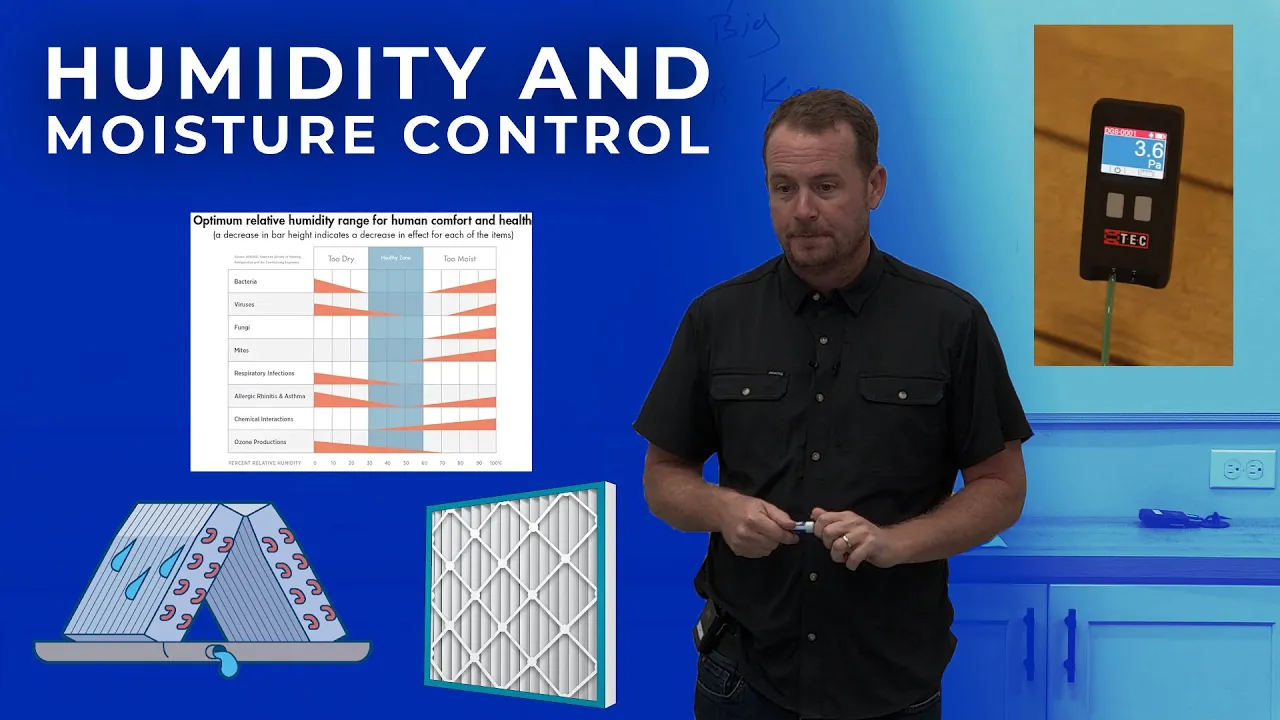
a properly sized system we have a really nice media filter in it um we've sealed all the events we've just made sure that everything's nice and tight in the house we've looked at return and supply and Balance in the various rooms super easy to do with the DGA like literally just throw it under a door literally that's all you do shut the doors throw the tube under is this a door you're probably going to keep shut yeah probably okay great let's look it's systems running yeah it's under3 Pascal is great no problem move on to
the next one okay well it's a little high okay we could probably do a little door under cut here or we could add a bigger passive into The room not a big deal go through the different rooms you don't have to do it on rooms that there's not an issue if they're going to keep the door open you don't even have to worry about it now the next person who buys the house might shut the door and so there's the thing um but just start to start to address this on the houses that you work
on and address all of it as best you can now you don't have all the tools to do it right now but over the next six months To a year we're going to make a pretty significant shift in the residential team where eventually you all are going to have thermal imaging cameras you're all going to have Precision manometers on your trucks and you're going to deploy them on every single job we're going to go to a probes deployment strategy where you use your probes in the same way on every job so that way we can
start to get consistent baselining and it's not going to take away your Knowledge and your abilities it's going to greatly increase it because what we've realized is we do not want to just be a residential shop where we talk a bunch of cool stuff on the internet but we're still ultimately going out and just swapping capacitors cleaning drains all day and not solving big problems for people there's a lot of people who don't want us to solve their big problems and that's fine because it's their house and it's their money we don't need to we
Don't need to brow beat them about it right it's people can live however the heck they want to live in their houses but we need to be providing those options and those Solutions and one out of 10 you'll probably get a really big job out of it right you we'll get an attic foam job we'll get a whole system change out whatever and that's great that pays the bills but it's the customer choosing we can't any longer just be running around like chickens With their heads cut off every summer just bang hanging out you know
8 n service calls just trying to survive and keep our head above water we have to get to the place that we're doing things consistently and we're addressing these issues real indoor air quality problems make sense any questions my question is is the the placement of the filter if you had a metor filter is it better filter back return it's better at the unit if you Have a choice because if you have it at the return turn now that whole duct is under uh more negative pressure so it's more likely to leak and if it's
an existing duct it's likely that that duct is dirty so if you have a choice it's better to put it near the equipment if you can and it's best to put it into the return Riser and make it real big right as big as you possibly can that's the best possible way to do that sweet thanks guys have a good One thanks for watching if you're willing give this video a thumbs up and drop us a comment don't forget to hit that Bell icon to stay updated with all of our future videos and as a
quick reminder HVAC school isn't just a YouTube channel dive deeper with us at our main website hvacr school.com curious for more knowledge on the go we've got you covered tune in the HVAC School podcast available on all your favorite podcast apps and while You're at it join our thriving Facebook group also don't miss out on our free mobile applications available for both both iPhone and Android we're all about Community vortex byx