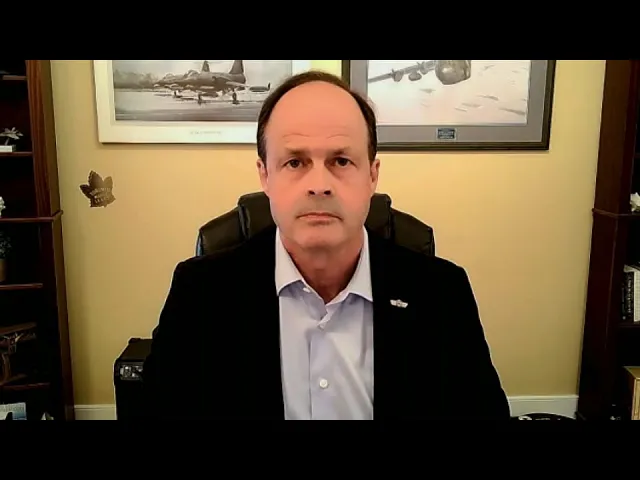
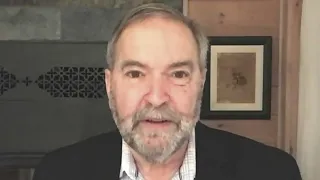
let's turn back to Haiti now as we noted earlier Washington has been pushing Canada to lead a multilateral mission to the country to talk about that possibility we're now joined by General Tom Lawson who from 2012 to 2015 served as Canada's chief of Defense staff General Lawson good to see you again thank you for joining us thanks for having me Michael now Canada as you well know does have a history with Haiti uh what was your first reaction when you heard this request for Canada to lead a mission to that country well first I understand
why Canada might be an obvious choice to lead a mission to Haiti and uh like anyone out there when you see a group of people millions in this case who are in Peril as a result of a failed government uh and roving gangs kidnappings rapes uh great concern uh but beyond that great concern that Canada might try to stand up a military Mission under conditions that are there right now under the conditions that are there you know it's interesting because we do as you know have two Patrol boats right now off the coast of Haiti
but we are hearing that only boots on the ground would really change the situation what's the danger of actually engaging on a a mission that would take soldiers onto the ground well certainly to your point uh risk to the soldiers on the ground is a concern of the commander as he considers this Mission you know on behalf of a half of the Prime Minister if indeed the prime minister is asking him to consider it um and how to mitigate those risks would be the big thing but we've been on a lot of risky missions in
the Canadian Armed Forces there's good training there's good equipment those aren't really my concerns my concerns are that the host nation and large numbers of the population in Haiti don't want International soldiers on the ground to support the legitimacy of uh arguably illegitimate government and uh this has been happening for deck for decades now always without great effect so if Canada were to lead a mission in there it would be a mission where the host nation is not suggesting what the end State the desired end state is and if there isn't a desired end State
then we come to the last concern or the biggest concern I would have and that is uh what's your exit strategy when can you declare success and leave the mission and if there's no clear success Point defined by the host nation or a Way Forward by the host nation uh then there really is no end state that allows that this could go on for years and years and years okay so what can Canada actually do that because at the end of the day we are as you say seeing these kidnappings a rape uh and violence
they go unanswered we're seeing starvation and disease and really there is a Canadian instinct to help so what can this country actually do given the reality that you're outlining politically on the ground right and you know it's not just the Canadian Instinct I think it's a human instinct to try and support those who are in great Peril uh in such a situation in Haiti and uh where Canada has been of course we're the number two contributor uh through uh external Affairs to uh to Haiti and to development in Haiti uh to the United States uh
and the largest portion of our support so far has been by trying to support the police uh by providing armored vehicles to them and uh and then Monies to other parts of uh of the government uh in recent years when the government was in effect so you know there are a lot of things that Canadians can do before the military uh should get involved and I I think that those are things that should be considered long ahead of uh an open-ended military Mission so given what you have just shared with us why do you think
the US is leaning on Canada to lead this mission instead of leading one of their own if they think it is important right now well I think the United States you know sees as we do the horror of what's going on in Haiti and they know that Canada likely has the numbers uh and the capability to do well uh leading a mission down there um of course the problem with the military as small very professional but as small as Canada's after Decades of uh under investment in defense uh is that you have to be very
careful with your prioritization of missions and right now our mission in NATO supporting uh our uh allies on the Eastern side of NATO leading a brigade-sized group in Latvia that's the priority and that's what Canada can support through its uh through its armed forces and in fact there was recently an announcement that our contribution to that mission would be increased if indeed Canada was asked by the U.S and agreed to do this it would require a reprioritization and Canada would likely have to either pull out of that NATO Mission or decrease its size grading and
there's another concern here too this Mission would not be anything like the type of missions that we go on with NATO or even with like-minded nations in the Middle East that is that when we fit our forces into emissions with allies we fit them inside a well-constructed infrastructure that provides medical support airlift Logistics ammunition dumps all of that now Haiti has none of that so if Canada were to lead this Mission they would have to build that from the bottom up other contributing Nations if any would agree to it would be smaller than Canada they
would look to Canada for all of those things that we normally find built into NATO type missions so that's a very different Mission than any Canada has been asked to lead in a long time some important contacts as the US president meets with the Canadian Prime Minister Tom Lawson thank you very much for the time General pleasure being here thank you [Music]