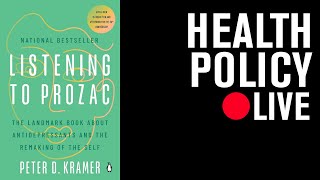
Good evening everyone my name is Kira noello kapor and I am the senior director of health promotion wellness and Athletics at the 92nd Street y thank you so much for joining this spark your health talk this evening a very special talk we are joined by Dr Peter Kramer and Dr Gail saltz to talk about the ear Infamous book um oh there we go um uh listening to Prozac and this is our the 30-year anniversary and the 30-year Re-release with a new introduction of that very book so I think we're in for a very informative and
exciting discussion uh we have many more spark your health events coming up in the near future I'll be putting those into the chat throughout the event so feel free to take a look at those um as far as Q&A goes we will make sure that we have plenty of time at the end of the event for the Q&A so feel free to be typing any questions you have into the chat Throughout the duration of the event and we will make sure we get to those so I would so pleased to be joined here by Dr
Gail saltz Gail saltz is a clinical associate professor of Psychiatry at the New York pres Presbyterian Hospital the author of six books including the power of different the link between disorder and genius and iHeart media podcast host Dr saltz thank you so much for being with us this evening well thank you so much thank you for that introduction and I have the pleasure and really the honor of introducing Peter D Kramer who is a psychiatrist and a Meritus professor of Psychiatry at Brown University he's the author of eight books including against depression ordinarily well the
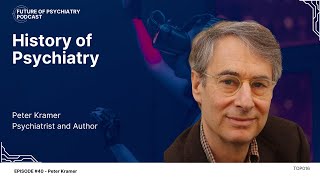
case for anti-depressants and most recently death of the great man a novel about a psychiatrist's effort to treat a buffoonish autocratic national leader his groundbreaking book listening to Prozac is an international bestseller And it's now now available in its 30th Anniversary Edition with a new introduction and afterward with updates by The Author Peter also serves on the group for the advancement of Psychiatry committee with me in Communications which is how we came to know one another and I am delighted to have you with us tonight Peter thank you so this is an example of what
we've been working on together a little which is trying to make Psychiatry understandable and uh to Say why it's important absolutely and in that vein I wonder if you can tell us so 30 years ago you were in private practice in Providence Rhode Island and you were on the faculty of brown what motivated you to write the book listening to proac in the first place I'm GNA go back further to a story of romance I was in my residency at Yale and uh met Rachel who subsequently I've been married to for uh 40 plus years
and uh decided I wanted to be with her and She was in Washington I was going to go down there and I worked with my residency director and he said that I could work in the uh federal government if I did extra work for half a year for the program be supervised in the federal government and work on a program in community Psychiatry so I was very interested in Psychotherapy and in uh bringing services to the underserved uh and so I arranged to do That for half a year and before I arrived that program for
Community Psychiatry was cancelled and I was assigned to be effectively an assistant to the head of the agency that oversaw NIH and some of the other agencies dealing with mental health and I was uh uh asked to master the whole Federal research portfolio to basically know every Grant in The Sciences in uh Mental Health and Drug abuse that was that uh the federal government gave money to and To translate scientific findings for senators and so on and to translate uh uh Jimmy Carter's government policy for research directors uh and then a few years later you
say I was in Providence and private practice so that time in Washington exposed me to an enormous biological research portfolio which I'd know nothing about and to the scientists who uh did the research uh and uh I was in practice when Prozac was Introduced and I was taking notes as I always did I kept process notes for what was mostly Psychotherapy I did do some prescribing and I had a separate page for the medication and What patients responses were and I noticed that the medication Pages were starting to look Al a lot like the Psychotherapy
Pages there were patients saying that the medicines these new medicines had revealed to them something about who they were that they had had Psychological responses they were more confident less neurotic that the medicines were doing things that we expect Psychotherapy to do uh and I thought I can write about this I'd already written another book I was interested in being a writer uh I thought that I had a sense of what the science was that was Behind These apparent personality effects of the new anti-depressants this by back way of background Prozac and later Olof had
Just uh been introduced so that was how I came to think about writing the book I I remember when it came out so well I was at the beginning of my career and it was so mind-bogglingly revolutionary and um and both professionals and everybody in the public was really riveted I mean you know there was the cover of magazines and it was just you know that year was sort of the year of that book and that information but over the past 30 years In retrospect how do you think um the book influenced the field in
a way and how do you think it influenced how people have viewed things like medication and illness yeah I I think it had a number of effects and it's hard to say this without uh you know taking credit for things that are not fully due to the book certainly uh to me but I think before the introduction proac doctors were fairly reluctant to prescribe especially for patients with Lesser uh degrees of metal inless and uh it was an ERA when Americans were just barely uh becoming comfortable with discussing depression being aware of depression discussing mental
illness uh William styron's Darkness visible uh was a big influence but you know came out just before listening to proac uh so that there was a series of books that really decreased the stigma in talking about uh depression I think the book was part of a move in the field more toward A medical model uh if you had a medicine that can really affect depression it puts some of the psychological causes a little bit in the background makes them share space with uh some of the more biological causes I think there was an upsurge of
interest in medical ethics this question of uh what can doctors do that goes Beyond treating acute illness if you could make people more confident who were shy or say is that a legitimate medical undertaking or is that something That doctors uh should stay away from uh so I think there were a number of influences I I wrote the book because I was very interested in this question of how medication affects personality but I would say the book had another public role it was taken to be a book about depression really about major depression which is
not discussed all that much in the book at all uh and uh you know as I traveled the country I was aware that i' sort of opened the door to uh people Discussing depression and looking for solutions that went beyond Psychotherapy so it has been 30 years and in many other areas of medicine you know the there have been just dramatic changes uh you look at many other medical illness dramatic changes and the way things are treated the number of medications that are available um what do you think here you are updating the book um
what do you think has has changed in the last 30 years really in Terms of medications Psychotherapy and in terms of diagnosis and treatment in general well you know depression and maybe this is broader in Psychiatry has been a disappointing area uh for research um we always feel we're on the verge of change and I I would say now we really feel that we're on the verge of change that they're going to be new treatments but you know over the past 30 years our ability to treat depression has not improved all that much and Prozac
speaking strictly in terms of efficacy that is how many people get better is not all that much of an improvement over some of the early anti depressants which were developed starting in the late 1950s however uh doctors were much more comfortable giving Prozac it was easier to dose than the old older medicines had fewer acute side effects um and uh enormous changes that we treating Much more depression so when prac was introduced probably about two Americans in a hundred were on an anti-depressant and now the number is up to you know one and seven one
and8 I mean we're talking 13 14 15% of the population may have taken an anti-depressant in a year now we can discuss whether that's good or bad but certainly included in there is some greater willingness to to treat depression altogether well actually that that was Sort of leads me to the is it good is it bad are we undertreating are we overtreating which also brings up the question you know as you as you move through that um who is treating mental illness to today which I think has greatly changed in the last 30 years so
maybe you can address those those issues yeah you're sort of uh leading the witness but you know in the Carter Administration in public health which is where I was we were really looking to Interest primary care doctors in the treatment of depression and I think proac really turned that switch primary care doctors were very reluctant to prescribe the older anti-depressants because you had to raise the dose slowly there were very bad side effects that excuse me would send people to emergency rooms they were easier to commit suicide on and so you know now the the
majority of anti- depressant prescribing is done by non psychiatrists by internists Obstetricians kind of goes across the board people feel fairly Adept at taking that first step Psychiatry was a little bit resistant to that actually they felt that anyone being for a mental illness should first be evaluated by a psychiatrist but that's pretty much gone by the boards and I think we are comfortable with having some of the initial treatment done by non psychiatrists a lot of depressed people never get one adequate treatment about a Third of people with depression have never had you know
even a brief course of psychotherapy have never had uh even a you know few weeks of medication it's still true that probably the modal number of prescription prescriptions for someone with depression is one prescription they're given a prescription and not given any followup so you know there certainly is some underprescribing it's also true and we can kind of discuss how much of this is Good and how much is bad that much lower levels of illness are being prescribed for and maybe there just some inaccuracy people who don't have a condition that would respond to an
anti-depressant or getting anti-depressants so um I take that to me I mean I I I agree with this I take that to mean there are people perhaps who would otherwise not get any treatment if they were not for example prescribed by their primary care physician or their Gynecologist um and that would be a problem and it's and still there isn't enough access and there's still people who aren't getting treatment but there are also people who are probably being prescribed for um when maybe they shouldn't be maybe really what they should be being offered for example
is psychotherapy um maybe maybe they don't have major depression clinical depression um they're they have something else going on essentially and Would benefit from addressing that whatever that is and then of course there's the issue of you know a primary care physician doesn't do a psychiatric evaluation they do their evaluation which is different um and then they don't have followup you know two weeks later four weeks later to see you know if the person is okay on this med is this med working for them you know do we want to try a different Med all
of those things um can you further Share thoughts on you know yeah so let me give some yes butts to that yes I and I really discussed the appropriateness of prescribing in my prior non-fiction book ordinarily well and there was a study where people went door Todo in Baltimore uh poor neighborhoods and asked people if they were on anti-depressants and if they were effectively did a quick red diagnosis right at the doorstep and it turned out that there were very few pretty healthy People on anti-depressants it might be that those patients primarily had depression it
might be they were anxious whatever it was but being on an anti-depressant was pretty much a marker for some severity of illness and in my own practice I found that when internists or uh family doctors uh refer to patient in I might not think they were necessarily on the right medicine I might want to alter something but I never thought well Why why is this patient being sent to me there's really nothing wrong with him or her usually there was some level of severity well then let's talk about so there's sort of been I feel
like this resurges every few years the someone pops up to say well I've done a study and I have doubts about the efficacy of of anti-depressant right in general and I I you know the sort of the latest hoo-ha was about you know well they don't we we don't they don't really Affect serotonin right and we we've been saying that the whole model about depression is about serotonin which is also frankly up for grabs now as well but that those are the kinds of statements being made so what what does the current data say really
about anti-depressant so I this question about serotonin I really discuss in detail length I hope understandably in the new introduction and the new afterward to listening to Prozac the introduction is Largely about cultural effects but the cultural effects include anti Psychiatry attacks on Psychiatry and then I use the afterward to update the science so in listening to proac I say that this theory about serotonin and similar transmitters causing depression is at least incomplete and probably mistaken so we really the and that was not original to me the field understood there were problems with that theory
30 years ago and really and ordinarily well I trace uh The Field's uh ambivalence about those theories back into the 1960s so really almost as soon as there were anti-depressants there was uncertainty about what role serotonin and norepinephrine were playing that said the other thing I write about in the afterwards there's lots of interesting research right now on serotonin tying it to depression but even more tying it to these personality changes that is if we were to say you know psychologically What is serotonin linked to it's linked to things like dominance hierarchy in animals so
the Lobster near the food source is going to be a high serotonin Lobster uh it's uh you know we urinate and put uh Prozac into the water and uh you know fish get it worms get it birds get it and they have behavioral effects and the behavioral effects are largely toward you know shortcutting niceties and uh uh behaving more boldly which is good or bad depending on the species so I think the connection between serotonin and confidence and uh leadership and that kind of thing is less ambiguous than it was when I wrote interestingly less
uh in dispute than when I wrote listening to proac they're some interesting new research on uh anti-depressants and how they affect depression and some of those leave out serotonin that there's some fairly direct medication effects that the that proac may attach to receptors in the Brain uh fairly directly in a way that doesn't require serotonin and affect depression in that way i' I've shortcut another another question which is do anti-depressants work yes they work there's lots of evidence that they work there's lots of bad debunking uh evidence that really is sort of I call it
zombie research where the sameeh failed studies show up again and again saying that anti-depressants don't work they work uh they work in you know these Very obvious instances where you give someone an anti-cancer drug that can cause depression and if you give an anti-depressant first uh the an cancer drug doesn't cause depression and that's in sort of un unselected populations right we don't we're not uh having to diagnose people with depression to give them the anti-cancer drug they're being given it for another reason um this is a long discussion we can go on with it
but let me let me stop at that point well I Guess to to follow from that um so the big one of the big Concepts as you brought up earlier in in listening to Prozac and the original um is this better than well um so you know it was it was ethic ethically very controversial in terms the idea like are we trying to make designer people are we trying to say um no it's not good to be introverted everybody should be an extrovert everybody should be you know these these are the things that that Make
you better in Life or or that everybody would aspire to be so if we can do it with drugs we should do it and other people saying no that's wrong and of course since that time um you know books like quiet have come out you know that we have a very different understanding perhaps of what it means to be an introvert or an extrovert the difference between introversion and social anxiety um the difference between You know confidence or how much confidence you have in social anxiety but your book first brought this idea of like medicating
things that we don't necessarily call a psychiatric illness so where where are you on that today where's on that today you know I want to say listening to Prozac you know if you read it again in the new edition it it it it poses that question right I think there's a sense that these books about uh quiet and uh there number of other Ones that are sort of against happiness uh presume that listening to Prozac is sort of cheerleading this movement where in fact it's worrying about it LA Times said the book could have been
called worrying about Prozac uh when the book first came out and I think that's right I was saying that um in particular it looked as if the new anti-depressants could be used to push women in a certain direction should women be more assertive uh is a sort of Traditional uh Victorian femininity uh something that we're uh want to put on the siding in favor of uh women who are good uh corporate executives and so on and uh that you know that is the subject matter of the book and um but it came to me for
clinical reasons I mean this book is entirely out of clinical practice so that I had patients in the first instance say to me uh you know I'm this medicine I'm myself at last and I said well right would would you never have Been yourself if this medicine hadn't been invented you know how do we how are we defining the self through medication responses um and also I had patients who did well on the medicine in those days we kept patients on anyti depressant six to nine months a year at the outside would try taking them
off and so patient would come off medication not necessarily be depressed again but come in and say you know I did better with my children on medicine or I have a job Interview coming up I found out was a little uh more responsive quicker uh more cons erative on medication and that was really where those ethical questions came up they came up in entirely practical terms with particular patients is there was there data at the time or is there data now that really addresses what personality changes are routinely seen and of course now there aren't
just ssris anymore there are snris there you know there there are Other classes of anti-depressants and how do those fit in with the the better than well concept right so you know I had really two catchphrases in the book one was better than well which was people who had an ailment largely depression who said I haven't just recovered from that episode I'm better in some way socially and cosmetic psychopharmacology was by analogy with cosmetic surgery using these medicines in a way that would take people from a Normal but less desired social state to a normal
but more desired world one and there you know shortly after listening to proac there was a flurry of research on these lines and it looked as if when you gave normal people without a family history of depression and so on uh the uh ssris medicine like Prozac uh they did show more leadership traits and the leadership included collaboration and I think that probably is a change from 30 years ago to now is our notion of what Assertiveness looks like and what uh Alpha status and a hierarchy looks like includes collaboration it's really not just uh
violence so we're talking about assertiveness not aggression yeah we're talking about true leadership traits for a monkey or a you know mouse or whatever it is we're doing the research on but it looks like it happens in people as well so we know that medication impacts the brain in in certain ways although we're actually We're in reality from a neuroscience perspective we're not even too certain what those ways are at this juncture at a really you know at a molecular level where we're we're really not um but let's turn to um Psychotherapy I'm I'm a
psychiatrist I'm also a psychoanalyst um and you know pretty uniformly when you're talking about psychiatric illness like clinical major depression most studies most studies seem to show that it's the combination Of medication plus Psychotherapy that definitely outperforms either one independently um for for moderate to severe clinical major depression so what what what is the listening to proac version of um of Psych in listening to proac I say that almost all the patients are in Psychotherapy they were that was what my practice was uh you know I said that thing about being interested in community Psychiatry
and Psychotherapy as a way of saying this was not a book Written by a dedicated uh medicator you know uh but um what's I think listening to Prozac against depression ordinary well are really a Trilogy and they follow along an idea and the idea in its most current form is that one thing that anti-depressants do is make the brain more resilient and sometimes in dramatic ways you know so there are studies where you give patients Anti-depressants and they're able to develop perfect pitch in a way that normally you can only develop in uh infancy and
uh that there are uh patients who have amblyopia they have uh the brain is attending less to one eye than the other other and you give them uh proac and you uh put a patch over the highly functional eye and you get back some ability to get bifocal vision uh so again you're you're putting the uh brain into a more flexible infantile State and I think the most current theories and I spent a lot of time in that afterwards writing about this about anti-depressants is one thing they do is make the brain more able to
learn a certain way and I think that may be why the combination of medication and Psychotherapy is so powerful is that you kind of Ender Ro block restore flexibility to the brain and then you can learn but what's interesting about the Contemporary theory is also how much Of that is built into the pill because you if you think a little and this is too complicated you'll have to read about it but if you think a little about what I said earlier which is that serotonin uh makes people sort of less neurotic uh better able to
view the self in a favorable light and the other aspects of the anti-depressant maybe are working on these roadblocks and making learning better you have a medicine that both makes it easier to learn and gives You a more favorable perspective so that maybe these medicines are working through a sort of built-in combination of uh uh you know getting rid of a stuck switch problem and owing for a more favorable sort of learning uh so anyway that as I say that's a little much all at once but um I certainly agree with you ideally if I
were uh depressed I would want some seriously enough that I would want to be on medication I would also want Psychotherapy so which you know has made the the current state um particularly today where there are so many people in need and and not enough providers um has has made it uh exceptionally difficult because of course your primary care physician or your gynecologist is not going to also provide you Psychotherapy um so it it but it's although you know I don't want to under sell primary care doctors there was a study I did a million
years ago about therapeutic Listening how much time doctors spent listening our doctors sadly primary care doctors have less and less time per patient but really they they very parly with these patients where they were able to recognize some level of illness did spend some time uh talking to the patients so I I am largely you know you know the contacts I had with my non psychiatrist uh colleagues uh was was pretty impressed with that um and and I think your to your Point uh people don't often think about the idea that Psychotherapy is really teaching
you something it's it's teaching you the skills so when you are too ill to learn when you're too cognitively impaired by your illness to learn we are sort of stuck in Psychotherapy um until perhaps medication makes you as you're you know a little bit more well and as I guess as you're bringing up it helps you to be able to learn those skills that we're Teaching in Psychotherapy no I mean we haven't talked about what depression is but depressed people often can only think that they're worthless they're horrible life is hopeless and it's it's very
hard to use that as a starting point for progress and I think um that if a medication can give a little change in perspective often that's something a psychotherapist can work with to amplify that so it's other medications um you know there there even though I agree With you that we haven't made as much progress perhaps in the past 30 years to have you know we we've still got a lot of medications that basically are shooting a cannonball at a fly you know that affect a whole system of neurotransmitters because that is that is what
we've got now um so you know there are some that affect serotonin more some norepinephrine some dopamine some Gaba um but you know the book was Listening to Prozac because you saw this real change because as you pointed out proac had fewer side effects than the tricyclic anti-depressants which were the next best thing we had at that point in time what what about some of the other medications and well I think we're at a really interesting moment you know we're looking at psychedelics we're looking at ketamine and those are not well studied I have a
a but I mentioned a funny study in the book ketamine was a A an anesthetic before it was used for depression and somebody thought to do a study where they took depressed patients who needed surgery say for a bad broken leg and they would either give them ketamine in the dose in an anti-depressant dose and then if more more anesthetic was needed use a conventional anesthetic or they would just give them a conventional anesthetic and when those patients came out of anesthesia the ones who been give Ketamine were no less or more depressed everybody was
actually somewhat less depressed and may be some anti-depressant effects in other uh an anesthetics as well but uh you know ketamine is we have lots of hopes for ketamine but it's not if you have doubts about whether Prozac Works you're really GNA have doubts about whether ketamine works and I think in popular culture it's the other way we're sort of tired of proac anybody who can benefit it's Been on it and people are very excited about ketamine there's also a drug that just came out that has uh a fects uh hormones that are related to
hormones that change during pregnancy in women and um uh that looks very promising it's a medicine that is either given intravenously over a long period of time a day and a half really or given for a couple of weeks and then you're then you're off it and patients seem to do well for six or nine months until they Need another uh go round it's expensive you know we don't know what the cost issues are going to be but um I think you know we have a number of promising uh Maps ahead now we haven't discussed
negative effects and I think one of the negative effects has gotten a lot of press is whether it's very hard to get off and depressant if you've been on them for a long time of course none of that's in listening to proac because nobody was very few people were on Anti-depressant for a long time and they certainly hadn't been on Prozac for a long time because it had just been uh introduced um and I think it will be interesting with these medicines like ketamine like some of the hormone-based medicines that you only give for a
short period of time and then stop it will be interesting whether down the road we see effects similar to those that people attribute to withdrawal uh you know or not because in If you it's very hard to withdraw from a medicine that you're just given for two weeks and then you're off for six or nine months yeah I do I do I agree with you that I think we talk too little um publicly about the reality which is that for some people more than others but for a good chunk of people getting off the medication
is really really difficult especially with some of the newest um newer anti-depressants and that we don't talk about tapering perhaps at an Extremely slow rate which you know is is cumbersome and nobody wants to have to do it but it it may be the only way to do it without a lot of suffering um which not in the first place oddly I wrote some about this in against depression I you know there was this perturbation Theory which is was to get rid of depression you had to perturb the brain fairly uh substantially and I always
wanted not to perturb the brain as I got Patients off this is metaphorical talk but you know as I got patients off anti-depressant so we would taper very slowly and you know depression to some extent goes with latitude and I'm practicing in Providence which is in New England and I would sort of aim to have people off medication if I could you know around April May June when the the days were long so we would start nine months before or 21 months before I mean we would have a long Horizon and most of The studies
of tap in you know we're tapering over a month so it's not it's not the same partically I did not see a lot of bed withdraw you know people said I feel like I have a cold for a few days I feel miserable I don't want to go through that again but these longlasting after effects of coming off anti-depressants you know either I was just blind to them or I was had was doing something different with my patients um you know I'm they were not a Big part of my practice I've seen many patients that
really we had to go back and really required like 10% decrease and and you know the way these drugs are produced that's very difficult to do that's the other problem it's very they're not made um in these strengths that allow you to do that at that slow rate and um and so as a consequence I think part of the bad RP I guess I'll say that anti-depressants continue to get is people who are afraid To go on it because they're afraid of how will they and how difficult will it be to get off of it
um no no and I think that's good in a way I think we should have patients worry on the way in and be able to talk to them about what the risks are and people can make informed decisions I mean depression is hard in the informed consent uh Arena as are some of the other mental illnesses because the perspective can be so hopeless uh to Start with but uh yes I think it's not bad for people to worry on the way in well I I I think I'm G to ask you also to weigh in
a little bit about the DSM F because it's you know it's the only tool we have right now to talk about a diagnosis to sort of um say something that we might think to each other as clinicians to say something to an insurance company so that the patient can get reimbursed and to think about perhaps Prognosis um or you know the collection of symptoms we're seeing but it's it's far from ideal um and yet we don't seem to be moving in any other direction right so I thought about writing a book I actually proposed writing
a book that I then did not write as the sm5 was coming out uh about the nature of diagnosis and I didn't write it because so much smart stuff has been written about diagnosis and one of the smart things has to do with how much of A natural kind a diagnosis is so you know on an alien planet carbon will still have an atomic number of 12 uh and it isn't true that on an alien planet you know everyone will have know what anorexia nervosa is it's not it's not a kind in that way and
I think you know in human history history things like schizophrenia manic depression serious depression are are pretty broadly crosscultural I think they're really recognized and you know other things Like anorexia Rosa you know I think sometimes came under the aaces of religion and sometimes uh you know and are more subject to feds and contagion so I mean not to pick that out but I think there are diagnoses in sm5 that are pretty much part of certainly Western cultural history uh and others others that are not and I I think that most psychiatrists think that depression
will be very multiple that there'll be all kinds of depression Depression with complicated genetic bases and so on I am sort of a lagard I I like the diagnosis depression and I think that it it may turn out that there kind of biological bottlenecks that there are things that are really held in common by a lot of these depressive diagnosis whether you get them from having problems with their thyroid or you get them through having been abused in childhood I I don't think that depression is going to uh dissipate And be as diverse as but
but I will say many colleagues who who do think it will and the example you know is the genetics of autism and the genetics of schizophrenia which have been looked into a lot and those do look very diverse it looks like there are lots of ways to injure people's ability to have empathy relate socially used language fluently in the case of autism uh and that is going to turn out to be very multiple you know maybe in its form as Well as in its causes and uh I I don't know that that's going to be
this true of depression but that you know many people don't agree with me who are many very smart people don't agree with me about that Division I I I don't dislike dsm5 either I think we need a way of talking to each other uh we need a way of building insurance companies we need a way of uh making patients feel they have things in common with other people and uh the fact that it is you know Largely observational you know that's just where we are now we hope to do better you know we hope for
what psychiatrist call biological markers you'd like to have a you know a blood test or a response to a a chemical stimulus or something that tells you which disorder you have but we have some of that but fairly little well of course I know you don't have a crystal ball but do you have thoughts about where you see the field heading I mean are you saying You see you see the field moving in a much more biologic Direction I do I mean I I am a great fan of psychotherapy I spent most of my clinical
hours practicing Psychotherapy my third book should you leave which is about intimacy is also largely about odd psychotherapies that I liked and and collected and I think psychotherapies change with the times I think that the older psychotherapies the odd ones that I that probably were Prevalent in the 1960s and 70s were probably as effective as the ones we're using now I'm not you know raising my hand and enthusiasm for CBT or DBT uh I you know I think that as the culture changes psychotherapies change but I I I I don't I'm not like Freud where
I think you're going to discover you know that sexual repression is the bottom of all illnesses and you can cure and so this is better than some other Psychotherapy I think with Medication uh you know we do we do seem better state aged with the ability to do Gene sequencing with computers with AI it's kind of hard to believe that we're not going to do better in the next 30 Years than we've done in the past 30 and I you know I'd love to be around writing another introduction afterwards in 10 years and I think
if I if on this in this meeting I'll put down my marker and say we will be doing better in 10 years than we're doing now bring you back to Say that all right I want to make sure to get to some audience questions um first what is your feeling about the New Frontier of psycho psychedelic Therapeutics ketamine's efficacy for treating depression and anxiety the promising clinical trials for sybin uh also for depression and addiction and MDMA for PTSD yeah I I have very little to say about it because most of what I write about
have written about of my careers from my Clin clinical experience I have no clinical experience I think that the research is um more preliminary Than People imagine a lot of these studies attract people who've already done well on psychedelics so it's sort of a uh pre- preferential group they're going to prefer the Psychedelic to the placebo um however I think it's very promising I think it's very interesting it's certainly goes along with this perturbation theory of interrupting depression that if you really give the Brain a good shape you know maybe that uh sort of resets
the system also and this is in the new afterwards these uh psychedelics and ketamine do a terrific job at this resiliency business you know they really bind to uh something called track B which we won't get into but they bind to something that uh seems to make the brain um uh do better with a particular chemical that Allows it to make new connections between nerve cells and grow new nerve cells so the U psychedelics look very promising on that front are the studies of effects of ssris based only on patient self-reporting or also on feedback
from those interacting with patients in other words are patients perceptions validated by others yes so ordinarily well is about this question like how do we measure depression uh how to doctors Observe depression and you know of course I would say the big problem in drug evaluation is Drug Company involvement and uh the second big problem is that uh a lot of people who uh most patients who enter studies of drugs are people who haven't done well on available drugs because you know for a few cents a day you can be on an anti-depressant interns are
willing to prescribe them so that by the time someone gets to a drug study that person Has failed multiple trials and it's someone who probably doesn't respond to a lot of the conventional treatments uh that said uh doctor observation is a very important part of the evaluation patients are asked how they're doing but they're also you know assessed in terms of their rate of speech uh their uh ability to show up at work you know there all kinds of things that doctors uh look at in in or may not be doctors and maybe uh nurses
or or other people Who administer these tests but um in fact one of the criticisms of um these studies is that often the doctor's assessment is more optimistic than the patients and patients may say they're not doing better and the doctor will say you but how come you know a month ago you couldn't go to your job and now you're going every day uh so that uh people can feel some residual depression residuum of depression when they're uh socially and behaviorally doing a lot Better someone asks is there an evolutionary benefit to depression well you
know this is not my area but yes I mean people are very interested in this question so the starting point is uh times of scarcity so say there is a problem with a food supply maybe animals who Retreat to the cave and spend less energy foraging are going to do better than those who keep banging their head against the wall um that said I Think that largely applies to sadness or um you know some kind of loss of energy but depression as I say is a stuck switch problem what happens is that those probably beneficial
aspects of the ability to to be sad or discouraged uh become self-perpetuating in a way that has very little relationship to the environment and I think you know the easiest patients to treat are ones where they have good social circumstances good social Supports uh some occupational skills marriage perhaps good marriage and when we give them any depress in in Psychotherapy it's easier to move them forward because there are better environmental circumstances but uh they are depressed you can be depressed with lots of good things going on and where going out and foraging would would do
you plenty of good I I I talk about this actually in this my last book The Power of differ The link between disorder and genius is is some of the sort of strengths the wiring that L that is the flip side of some of these illnesses Depression Did where for example um you know most people have a somewhat Rosier view of the world than perhaps is reality depression people with depression might have a much more pessimistic view or they might just have a more realistic view actually a more realistic view of what is occurring in
their environment And of course many people with uh who suffered with depression um once they're you know treated have a unique kind of empathy actually for others and you know a sensitivity for others that people who have not gone through that do but um um someone is ask asking about electroconvulsive therapy as as a treatment for depression well it's another complicated question it you know probably is in the I'm sorry in the acute term um Electroconvulsive therapy is probably the single most effective treatment for really refractory depression in the sense that people get better and
uh doctors are better at giving ECT than than they used to be there are memory problems uh there there ECT as it was given many years ago could be quite destructive to the brain I think ects it's given now is um you know effective while being much less destructive ECT has its problems because it looks as if People who recover with it often need uh subsequent courses sometimes longer courses often they have to be on anti-depressants at the same time so um you know I think if nothing else worked and you were deeply depressed you
ought to want ECT and you probably would be grateful uh you know if you had had a typical result people who have uh totally treatment resistant to medication depression and or psychotic Depression um who have um you know thoughts of suicide that's really intractable can be an incredibly effective um form of treatment yeah and by the way that's you know where ketamine really made its name we haven't talked about psychotic depression which is its own thing but it is as it sounds like a combination of depression and uh delusionality and uh and you know ketamine
was approaching ECT and efficacy in some of the studies so uh You know that might be a place where people go first today um is there any research that you can talk about on the genetics of depression yes and I'm I haven't reviewed this just lately but against depression has a lot of that Ken kendler who was a classmate a residency mate of mine is one of the great researchers uh in Virginia on genetics and you know it looks to be uh when you look at Identical twin studies sort of depression looks to be about
40% genetic and some of what gen is non- gentic is not environmental in the sense that we think of where where that is having to do with abuse in childhood uh you know Financial losses divorce disappointments and so on but it may be things that are intrauterine you know they're all kinds of sort of random biological things that are environmental in a certain sense but they're not uh experiential in the Ordinary way so probably 40% genetic and some other percentage of of things that are uh sort of early very early in life or in a
but not environmental in the ordinary sense you know that said having a very bad childhood does predispose to depression some people who have clinical depressive episodes throughout their lives just better to stay on an anti-depressant forever right I mean that that is the question I mean when Listen your Prozac was written the idea was that if you had very dangerous depressions and you'd had two or three of them and you'd been suicidal uh doctors ought to really keep you on medicine a lot longer um we have people on anti-depressants now for 20 years who don't
meet those criteria they just feel better on the medicine they feel less well off it and and we don't really know what you know we don't know what we're doing there you can't do sort Of a double blind study where you have someone off medication for 20 years and on medication for 20 years no one is going to get a PhD in short order conducting that study uh and it's just not possible to pit and hold patients in that way to constrain them but um yes I we have I like to say we've been lucky
the popular view is that long-term anti-depressant uh use has has been uh very destructive to people and has all kinds of side effects but if you compare It with people who are on antiepileptic drugs for long periods of time you know other things that people use chronically we've been fairly Lucky in the uh negative effects of long-term anti-depressant use you know that said in my own practice I really did try periodically to get most patients off anti-depressants to see if I can do it just out of that General doctorly sense that it's not good to
be on medicines forever But uh we don't know that that's the case and you know there were old studies of anti- schizophrenic drugs where patients who came off ended up on more total medicine and aggregate than patients who didn't come off that once you got a little behind uh it took a lot to catch up uh so we don't really know but um in that vein a few people have written in asking about weight gain sexual side effects and things that we know can absolutely be a part of Treatment with anti-depressants yes absolutely I think
it's um you know especially as patients get older there's uh decreased liido decreased sexual performance in various ways and uh weight gain you know definitely possible not the worst offender in that way among psychiatric drugs but um the patients who a lot of trouble and it will be interesting with these new uh you know Pro satiety anti-craving drugs Whether uh you know that is a possible combination with long-term anti-depressant use um is it still true that bipolar treatment shouldn't include anti-depressants yes you know this is a really interesting question very controversial I have colleagues Z
Meer who save that's the case there was some early studies that when you gave um people who are bi bipolar Antidepressants either they didn't work as well or they increased cyclicity that is they shortened the interval between the next episod that episode and the next episode of depression or Mania that second finding really hasn't held up that well uh I think this is a sort of work with your doctor one uh there are lots of people who are expert in treating bipolar disorder who use uh anti-depressants in the mix especially for the depressive uh component
and and Those depressions can be very hard to treat and I think it's hard to imagine that somebody would not turn to them occasionally that that's again you know I'm not sure I'm giving the the most conventional answer but that's my observation I mean certainly gingerly and concernedly I mean and only with a mood stabilizer on board would yeah no and you want to watch very carefully and have a good relationship with a patient involve the Family get reports from other people uh you don't want to throw someone into a manic episode we're we're getting
toward the end of our time we have an one more question here I think we still have time for do you believe today there is less stigma and resistance to seek help for depression and is this heavily skewed by demographics especially against I think they're referring to lowincome yes I think there's less Stigma I think there's still plenty of stigma and stigma is funny you know once you make something more medical you make it less a weakness of will problem but you may also make it something where you know you don't want your child to
marry someone with the problem so it's a it's sort of a mixed blessing with a medicalization partial medicalization of depression but I think there's certainly less stigma than you know when I started my practice Um and I think there is a fair amount at least of medication use in people on you know Medicaid um whether there's good comprehensive treatment no you know what we started out talking about is certainly the case that the odds that you will get a good you know careful sympathetic Psychotherapy along with the medication are probably very low I think we
we have a long ways to go in terms of real access Um absolutely thank you so much Dr Kramer for terrific set of questions fabulous conversation I feel like the questions could have just kept coming such a great discussion thank you both so much it sounds like a lot has progressed over the past 30 years but we're still looking forward to a lot of rich and exciting research coming out over the next 30 years to come um I'd like to thank everyone especially Dr Kramer and Dr saltz thank you so much for your time with
us this evening um I do encourage everyone to please check out the re-release of listening to Prozac the book and please check out our upcoming spark your health events we have great uh lineup for this coming fall um especially on September 22nd we also have AOL gu and conversation with K Redfield Jameson um and it will prove to be a timely discussion on the transformative power of psychology so And Psychotherapy so if you liked this talk you might like that as well but thank you everyone so much and stay well