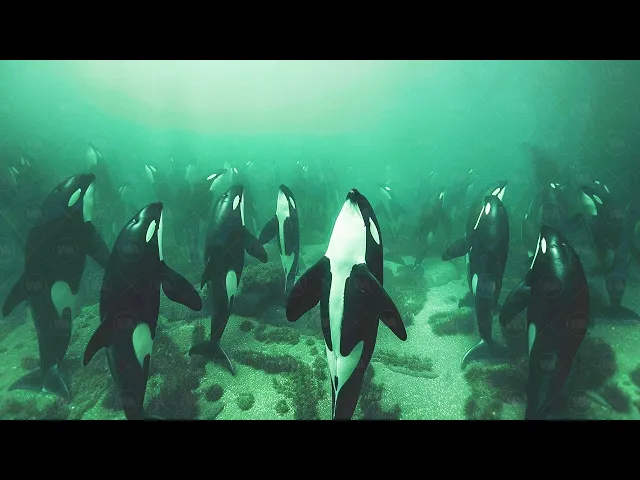
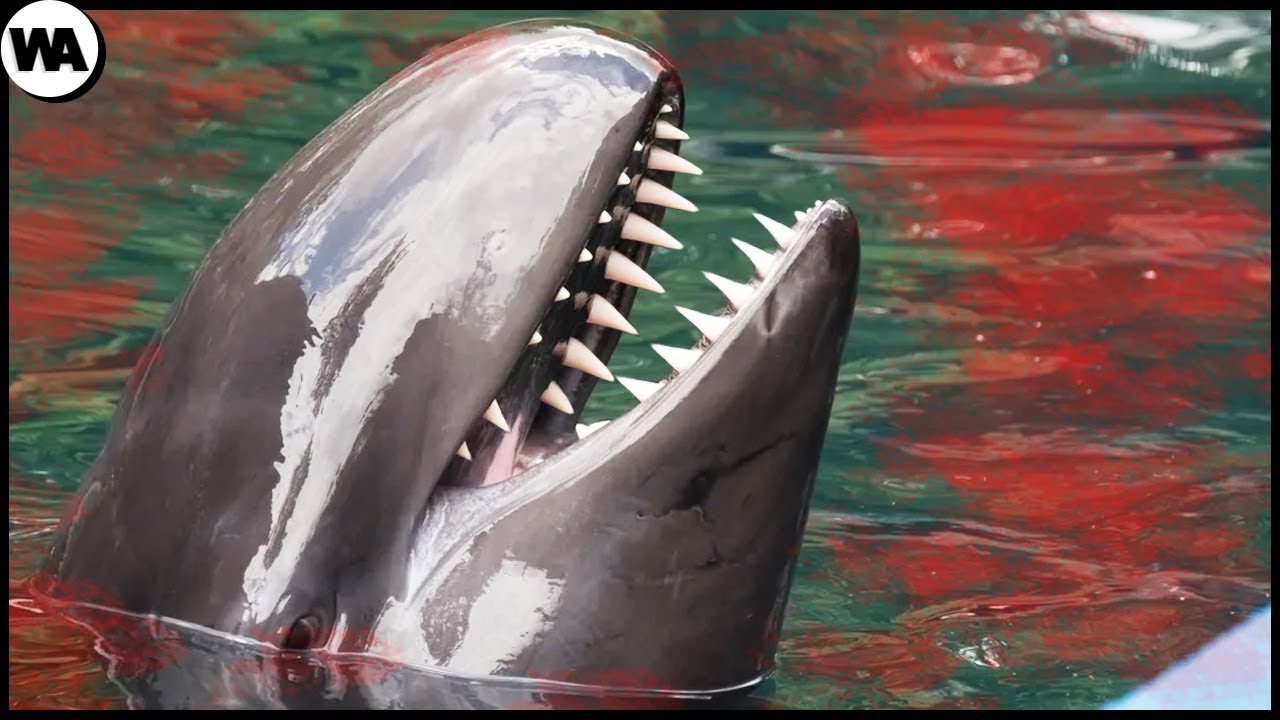
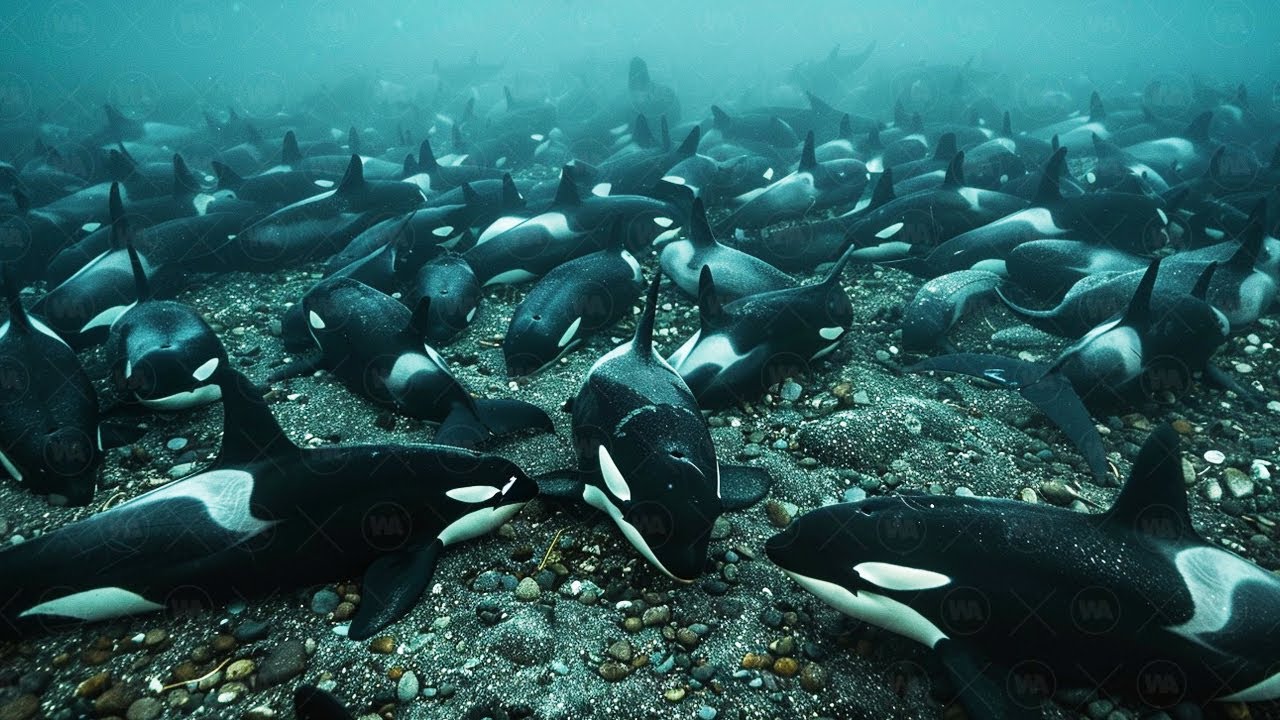
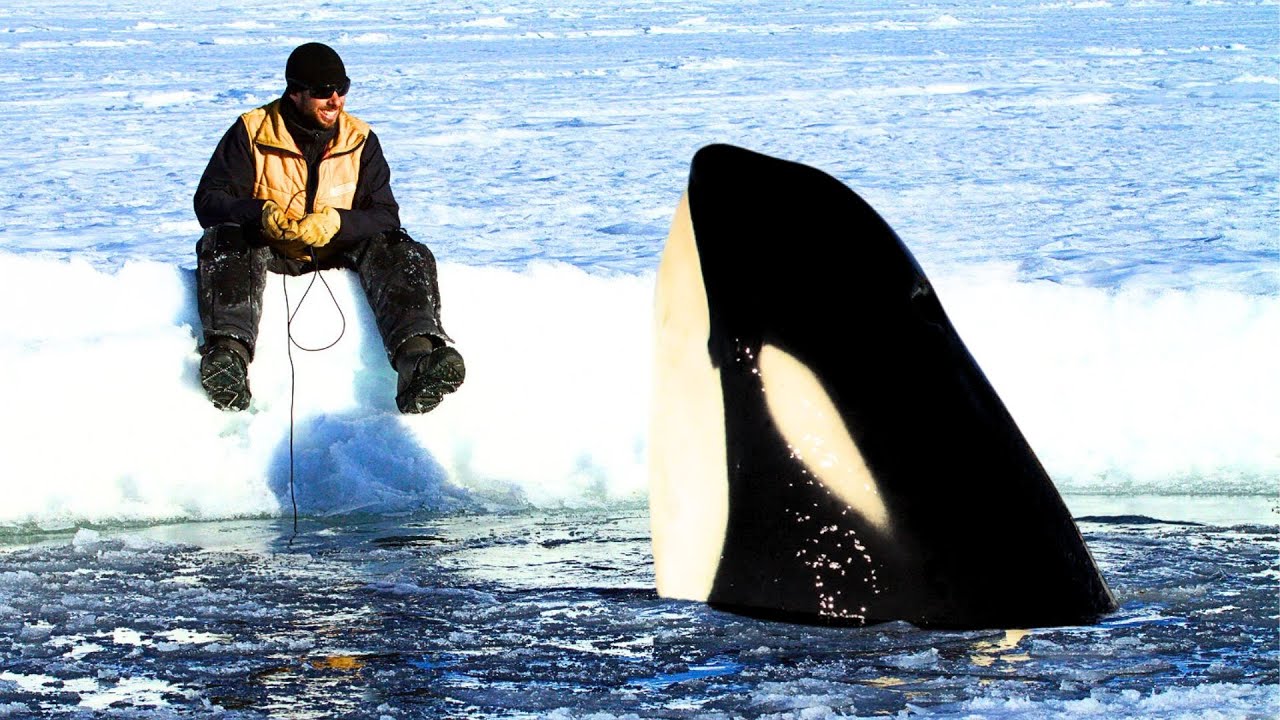
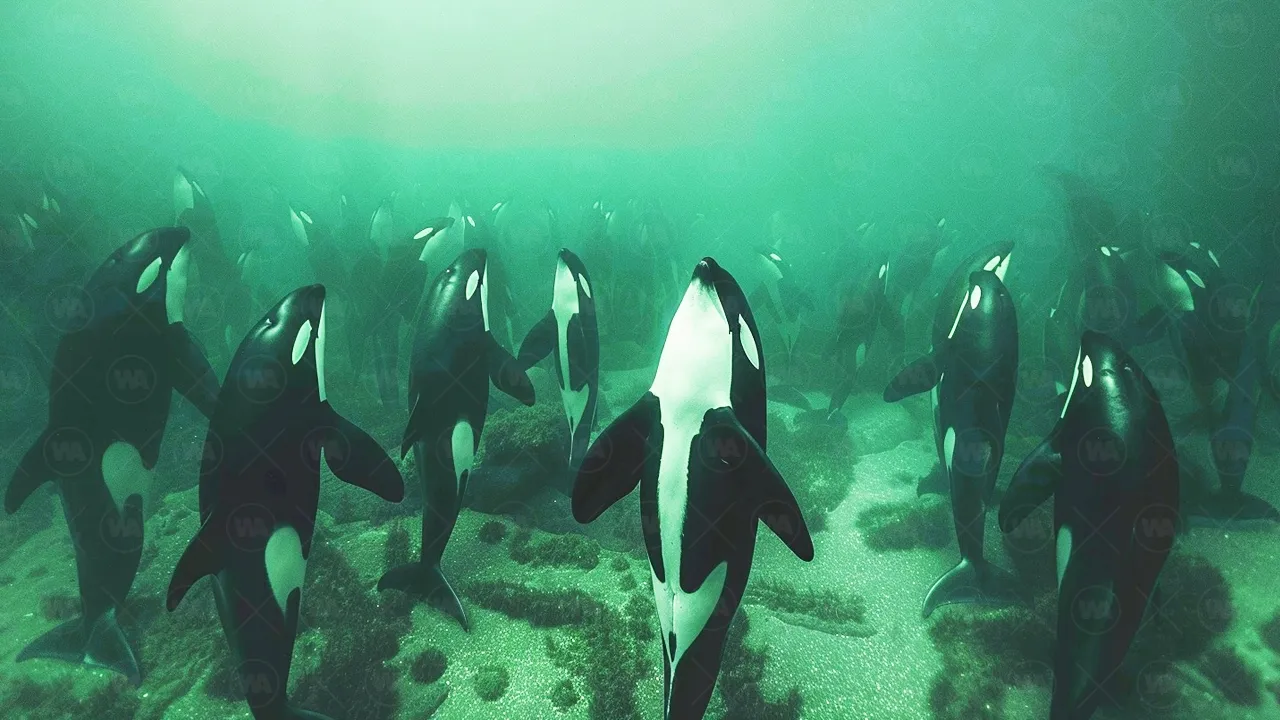
we've already done a similar video about octopuses getting ready for death and I thought why not check out other smart animals that do something similar and who can be as smart as an octopus an orca but this one is complicated well on November 6th 2023 a group of observers and researchers noticed something strange in the waters north of lapa Island in Norway a male Orca was acting very unusually it was clear he was in trouble and seemed to be preparing to die two other orcas huddled together nearby holding the male at the surface so he
could breathe orcas can stay underwater for up to 15 minutes but they usually come to the surface to breathe every few minutes it was clear the male felt really bad he was exhausted but his group just wouldn't let him die for almost an hour they kept him at the surface till they finally gave up but even when the male died the orcus kept fussing around him they swam back and forth trying to revive the male this might be the first instance when the death of an Orca was recorded in the North Atlantic and possibly anywhere
in the world but the story didn't end with the male's death an hour or two later observers from another ship saw young orcus trying again to keep the male at the surface it's unclear whether the male survived and managed to rise from the depths himself or if his body was pushed up by his kin and then there's a question why did the orcus stop the male from dying or was it preparation for death but then what was it about well the intro took a while but oh well now some coffee oh I didn't get much
sleep today just an unobtrusive reminder to hit the like button if you forget to do it okay first we need to figure out how orcas and other sitations actually die the most common opinion sounds like this in old age the whale simply suffocates and drowns because it can no longer rise to the surface and breathe but there's one catch no one has ever seen seen a satation drown without human intervention no stranded whale has been autopsi to figure out the cause of death we humans assume that old whales drown because they have to keep using
energy to reach the surface but in reality adult whales don't need to swim too hard to stay afloat and breathe air The Only Exception is calves who haven't yet accumulated enough fat for good buoyancy the most likely reason an elderly whale dies is that it can't catch prey and slowly loses strength from Hunger basically it's similar to top Predators on land orcas have a neat trick though they can share food among themselves for instance there's a known case where a disabled Orca missing two fins was fed supported and cared for by its family but it
seems like this is an isolated example it's quite possible that the ability of orcas to feed a family member depends on luck the type of orcas the prey they eat the size of the Pod and a bunch of other factors care can't save everyone the old citation slowly realizes it can't hunt like it used to so it's time to prepare for death the animal becomes less active barely shows any interest in food and doesn't interact with others and when it has no strength left the whale just sinks to the bottom without much struggle the fact
that other orcas tried to help and keep the maale at the surface seems to be a sign of caring but if air was the only problem the male wouldn't have died it just just lived to its limit and couldn't struggle anymore by the way old age for an orca is 70 to 80 years old for females and 60 years for males it's believed that the oldest Orca lived up to 105 years but there might have been a mistake in the calculations what happened after the orcas left their dead companion alone it's known that Orca carcasses
fully decompose over decades and can provide food for an entire ecosystem on the ocean floor shortly after death decomposition processes begin and orca can bloat because of the gas inside and even float to the surface if this happened to our male he probably became dinner for sharks and seabirds but they all released excess gas and the male started to sink slowly going to the bottom and down there they're already waiting for him no it's not like sea creatures have a schedule for when orcas die but every such case is a celebration regardless of how deep
the Orca died after death it still became a source of food for a bunch of animals they can Feast on the body of an orca for over a year sometimes even up to 2 years if the Orca was large enough how long has it been since the male died less than a year the feast is in full swing demeral fish crabs lobsters and lots of other scavengers are eating the fat and muscles down to the bones eventually the body turns into a pile of bones ready to be collected and taken to a museum but this
needs to be done before the oosax worms get involved they were first discovered in 2002 and since then scientists know that these are the most important animals responsible for bone Decay the worms break down collagen and fat add oxygen to the bones and this speeds up the Decay process if you think about it worms that eat bones are like something out of a horror movie fortunately they only eat carcasses worms like edax Muka florus whose name literally means bone eating snot flow pour their bacteria-filled root system into the bone while their feathers flutter in the
open water absorbing oxygen deep in these roots the worms produce acid and enzymes that break down various elements of the bone and they don't just eat bones but also reproduce right there releasing many eggs into the water column for from which larvae hatch then they settle on nearby bones and continue to break them down anyway our male still has a long way to go before he meets the worms it'll take at least 10 years and then between 10 and 50 years later bacteria will take care of the bones producing hydrogen sulfide a gas that smells
like rotten eggs they'll completely break down our male Orca oh and then I remembered the heart-wrenching story of a calf of an orcan named taliqua it was born on July 24th 2018 18 off Vancouver Island and died just minutes later afterward there were many reports of talaa caring the dead calf on the surface for a very long time it was seriously so long in total the mom carried the calf on her head for at least 17 days perhaps all that time the Orca was trying to keep the baby above water so he could breathe together
with her calf she covered approximately 1,000 miles tala's relatives sometimes helped her carry the dead calf and may have even fed her throughout this time the Cal already dead slid off its mother's snout more than once and each time the Orchid dive to retrieve it I'm telling you it's a heart-wrenching story eventually talaa abandoned the calf's body because it began to decompose and although it's seen as an expression of grief like mourning try looking at the situation from another angle orcas are known to support their dying k at the surface so they can breathe so
maybe tala's actions were indeed a desperate attempt to save the calf think about it it makes sense but conclusions of course can only be drawn from indirect evidence does what's happening resemble morning definitely by the way scientists are confident that not only talaa but also members of her pod interacted with the calf's body after its death They carried it lifted it swam around it according to the director of the whale Museum all this is like a wake or funeral practice adopted by orcas such ceremonies can last for several days so that every member of the
Pod can pay respects and mourn the law sometimes orcus surround around their dead comrades showing curiosity in other cases they go even further they stand guard near the bodies and keep them afloat scientists also point out that taloa behavior isn't unique other orcam mothers frequently carry deceased calves on their heads talaa simply did so for an unusually extended period in general that's why I assume she was trying to save the calf by the way Anthropologist barbar King who studies animal emotions is convinced in the case of taliqua it was indeed genuine greef people often mistakenly
attribute human qualities and logic to animals but this is not one of those cases orcas are very intelligent and very social that's enough for them to experience real grief after all feelings like sorrow or love are not exclusively human and who else can get these feelings if not orchids researchers describe taliqua as an incredibly attentive mother who seems to treat her Offspring with great tenderness she played with her first calf longer and more than orcas typically do then most likely tala had one to two unsuccessful pregnancies which affected her deeply 17 days of mour is
indeed long but for a mother of her nature it's more than understandable several biologists confirm that orcus can grieve Melissa regant a biologist from the University of Milano Bok in Italy and co-author of a 2016 study on this topic emphasizes orcus experience pain and stress and know that something bad has happened during another study there were reports about how orc is held dead dead calves in their mouths pushed them through the water and touch them with their fence and also well just in case you need additional arguments during these 17 days of morning females from
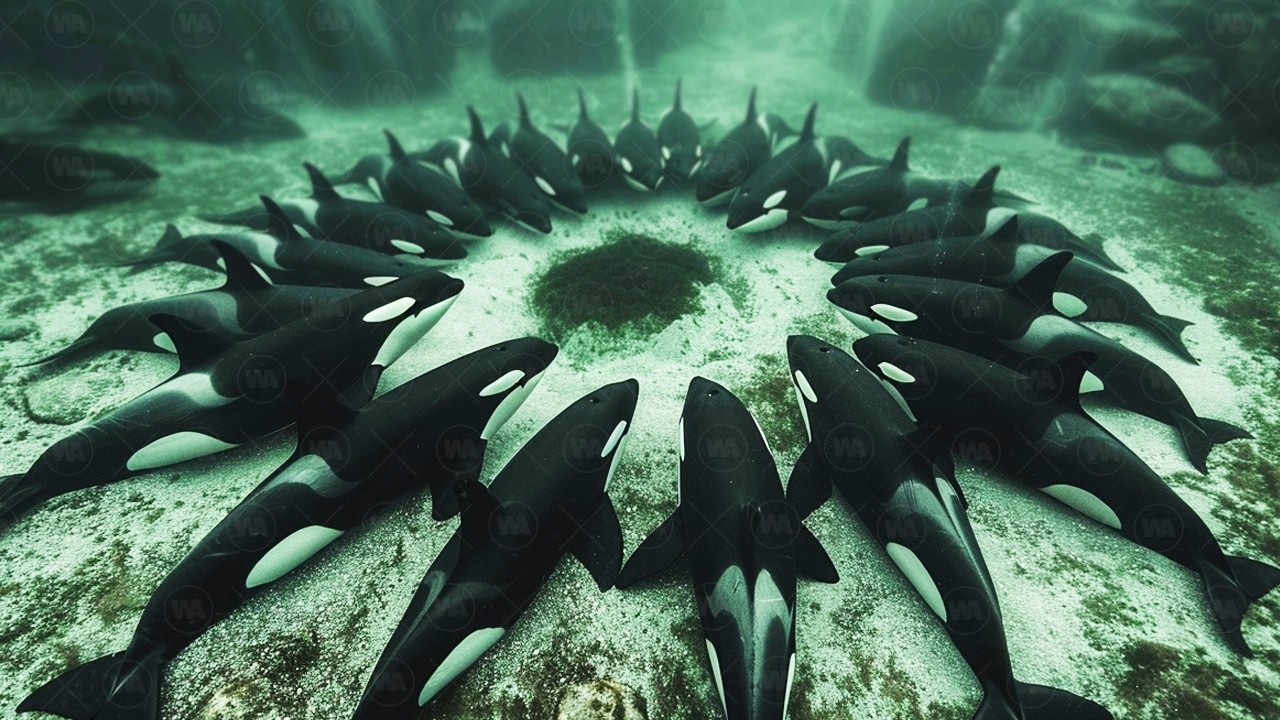
talo quaz pod gathered around her in a tight Circle it was an act of clear emotional support that lasted at least 2 hours so I did a bit of Googling it's believed that animals ability to grieve is linked to brain size cognitive abilities and the skill to form strong social bonds within their group in the case of orcas they take all three boxes knowing all this reports of orca caring for the sick and preventing them from dying seem the most natural I already mentioned a disabled Orca that was fed by its pod this is a
young male who lost two flippers along with the ability to hunt however instead of being abandoned or rejected by its pod and left to Die the guy found protection from other orcas the Pod had seven orcas five females a massive male and a young disabled man while the others hunted Brides whales a species of large B whales the finless male stayed at a distance and didn't join in yet he still got food these observations are one of the few pieces of evidence that a wounded Orca can survive with the help of its pod in 1996
a group of researchers found that another Orca calf was missing its tail and part of its dorsal fin which were believed to have been cut off by a boat's propeller the wounded Orca named Stumpy was not seen for many seasons and was presumed dead then Stumpy returned and it turned out he was perfectly fine rather rather than sticking with one pod Stumpy swims with at least five different ones and they all feed him once observers saw two females dashing through the waves each carrying a big Herring for Stumpy they also guard him from boat so
Stumpy doesn't get hurt anymore in short the guy's got a good deal considering his situation but let's get back to morning according to the latest news it's manifested not only towards The Offspring but also vice versa in March 2024 there was a report about a young Orca that refused to leave a lagoon off Vancouver Island she entered the Lagoon with her pregnant mother but she died during a seal hunt accidentally throwing herself ashore dozens of people tried to overturn the stranded female and give her water but the Orchid didn't survive over the next 5 days
Rescuers tried to return the baby to the sea but instead the 2-year-old female moved further into the Lagoon the situation was complicated by the fact that there's a 30-minute window each day when the water rises during high tide this is enough for the baby to float out the rest of the time it's too shallow and the current is too strong but the young female continued to stay in the lagoon as if mourning her deceased mother or perhaps she was waiting for her return Rescuers tried to guide the calf into the ocean using orca's acoustic cries
like these it didn't work none of the other methods worked either even though the rescuers seemed to have tried everything they could for example they tried to capture the Orca and transport it using a rope it didn't work out the young female turned out to be too smart around 10 boats tried to herd the Orca using oomi pipes to create a loud noise underwater these pipes are made of reverberating metal and when partly submerged they can be struck with a hammer but this also didn't help they even brought in a violinist who played for the
Orca during high tide people still hope to return the animal to the open ocean many violin notes resemble Orca vocalizations so the plan was a good one and the or even seemed interested but still didn't swim away in the end the calf spent over a month in the lagoon then managed to get out on its own and swim away maybe it gave up or perhaps on the contrary it found the strength to keep on living unfortunately this isn't a happy ending because orcas are too social which means the young female will need to find her
pod it must belong somewhere otherwise it won't work out the question is where exactly and how long it'll take to find it can a 2-year-old calf survive alone I hope so let's wish your luck and also hit the like button see you later