From the free press this is honestly and I'm Barry Weiss president elect Donald Trump announcing the appointments of additional members of his administration today tonight Trump announcing that a department of government efficiency will be led by Tesla CEO Elon Musk and FC ramaswami on Tuesday night Donald Trump announced that the richest man in the world Elon Musk along with entrepreneur and former presidential candidate VC Ramaswami will head a new Department in the trumpet Administration they're calling it the department of government efficiency or Doge Dogecoin is surging as you might know following the president-elect's victory getting
an extra boost following some headlines around Elon Musk so we saw Dogecoin surge as much as 20% on Tuesday night right after Donald Trump formally announced the department of government efficiency which he called Doge in a hat Tip to the dog themed meme coin aside from the very strange fact that internet meme culture has now landed in the White House Doge coin is a meme coin and if you don't understand what I just said fear not I'm sure Nelly will cover it in TGIF tomorrow but what the announcement solidifies if Trump's win hadn't already is
the Triumph of the counter Elite in other words a bunch of Oddball Outsiders pulled together got behind Trump and ran against an insular band of outof touch Elites supported by every celebrity in Hollywood and the oddballs won and they're about to reach shape not just the government but also American culture in ways I don't think we can fully imagine how they did that and why is a question that I've been thinking about pretty much non-stop since last Tuesday and there was one person more than any other that I wanted to discuss it with and that
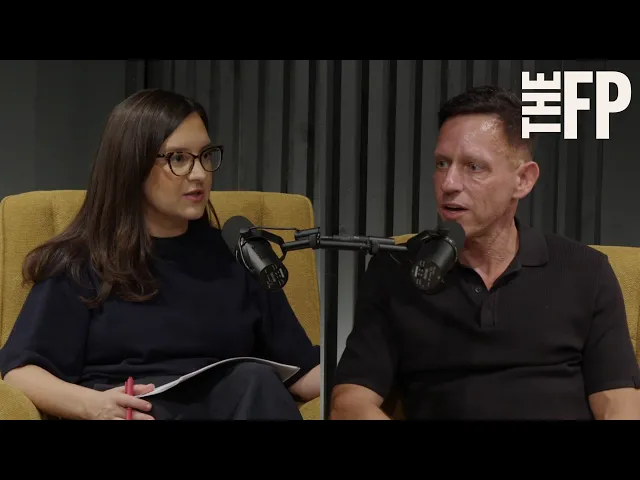
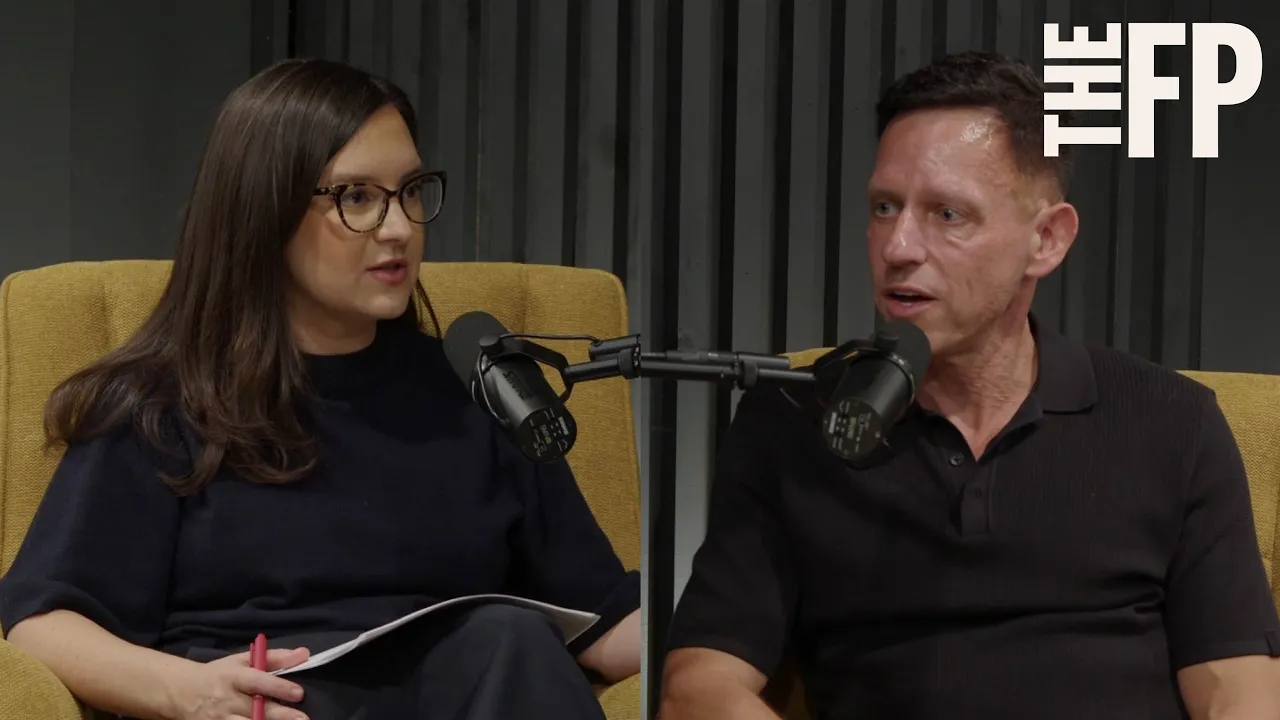
is the Vanguard of those anti-establishment counter Elites Peter Teal people describe the billionaire venture capitalist in very colorful terms he's been called the most successful Tech investor in the world and also a political kingmaker others call him the boogie man of the left but he is the center of gravity at least in a certain part of Silicon Valley and he's created a kind of world around him there's the teal verse teal bucks and teis to say he's an obsessive cult following would be an Understatement if you listen to my last conversation with teal a year
and a half ago on this show you'll remember that Peter was the first person in Silicon Valley to publicly Embrace Trump in 2016 I'm Peter teal I build companies and I support people who are building new things from social networks to rocket ships I'm not a politician but neither is Donald Trump he is a builder and it's time to rebuild America that year he gave a very memorable speech at the RNC Every American has a unique identity I am proud to be gay I am proud to be a republican a speech that many in his
orbit thought was a step way too far and he suffered for it he lost business at the startup incubator Y combinator where he was a partner many prominent Tech leaders criticized him publicly like VC and Twitter investor Chris Saka who called Teal's endorsement of trump one of the most dangerous things he had ever seen Jason calacanis one of the hosts of the all-in podcast wrote at the time if you are backing Trump you are choosing the side of hate racism and misogyny there is no compromise on this issue calanis wrote It's not a difference of
political opinion it's about what kind of human being you want to be well a lot has changed since then for one teal has taken a step back from politics at least publicly he didn't donate to Trump's campaign this time around and there was No big RNC speech but the bigger change I'd argue is a cultural one teal is no longer the paria of Silicon Valley for supporting Trump there's Bill Amman Mark Andries David saaks sha Maguire and of course Elon Musk among many other Tech Titans some of whom used to support the Democrats who have
joined the Trump train on the surface teal is someone who seems full of contradictions or at least paradoxes he's a libertarian who is found common cause with nationalists and Populists he likes investing in companies that have the ability to become monopolies and yet Trump's White House wants to break up big Tech he's a gay American immigrant but he hates identity politics and also the culture wars he pays people to drop out of college but also in this conversation seems to still venerate the ivy league but perhaps that's the secret to his success he's beholden to
no tribe but himself no ideology but his own and why Wouldn't you be when you make so many winning bets from co-founding the epayment Behemoth PayPal and the data analytics firm paler which was used to find Osama Bin Laden to being the first outside investor in Facebook Teal's investments in companies like LinkedIn paler and SpaceX to name a few have paid off big time his most recent bet helping his mentee JD Vance get elected senator of Ohio and then Vice President of the United States seems to have paid off big Time I guess the next
four years will determine just how high Teal's profit margin will be today Peter teal explains why so many of his peers have finally come around to Trump why he thinks Kamala and liberalism more broadly lost the election we talk about the southern border tariffs and trade deals student debt Israel and foreign policy the rise of historical revisionism on the right the blurry line between skepticism and conspiracy and his contrarian ideas About what a dreaded World War II might look like this is a conversation you will not want to miss stay with [Music] us Peter teal
welcome to honestly thanks for having me Barry thanks for making the time okay we last spoke I don't know if you remember this we were in Miami it was May of 2023 and the world was a very different place Joe Biden was the president and he was the presumptive Democratic nominee there Was a Republican primary underway you were supporting Ronda santz but you weren't being very loud about it and you know Trump was sort of on the outs with a lot of people the amount that has changed over the past year and a half is
profound six months after our conversation October 7th happened it felt like the world sort of shifted on its axis then Trump won the GOP nomin in July Biden dropped out of the race Kamala was coronated of course Trump survived this wild assassination attempt near my hometown in Butler Pennsylvania and then last week was the election and Trump not only won the White House he won the popular vote and now it looks like the Republicans are poised to control all three branches of government I think it's an understatement to say that we're living in a changed
world I think and the reason that I wanted to sit down with you today is that you saw Saw so many of those changes coming and you can make an argument that you maybe saw them even too early um so I want to start with the kind of a broad question which is how are you feeling about this political moment that we're in I I wouldn't say I'm ecstatic but I'm relieved I I think I would be incredibly depressed if the election had gone the other way and you know it's it's probably a little bit
asymmetric I would been we I'm less happy than I would be Unhappy had it gone gone the other way um you know I never actually supported uh DeSantis I I did meet with him a couple of times maybe toyed with the idea a little bit DeSantis felt promising in early 2021 when he was sort of the courageous covid governor and by early 2023 um it felt like he was a little bit too locked in on these on these culture wars and I I didn't believe that that was you know they're important but They're not the
most important thing and so it it already felt very very off in um in early in early 2023 to me were you surprised by what happened on Tuesday night cuz some have credited you for predicting it you said it was going to kind of be a blowout in One Direction or the other I didn't think it was going to be that close and uh and I suppose I didn't think that Harris was going to win by a big margin so if you combine those two things it's a way of saying That I I thought it
was going to be a solid win for Trump I mean you know um he was way behind in the polls in 2016 and 2020 and both of those were you know extremely close and if you just believe the polls hadn't been fully adjusted and they hadn't fully corrected whatever mistake they were making in the polling from four or eight years ago um and the polls were even that suggested you know that suggested it was going to be a very very solid win and then and then on some Level I think it was just a collapse
of liberalism you know say say more I mean of liberalism or of the democra liberalism the Democratic party I I think it's too narrow to blame it on you know a somewhat scile Biden and a you know somewhat goofy kamla Harris um and it was sort of just a you know some somehow it was just this much broader collapse it feels like a much more decisive election you know in a way you can say in 2016 Trump beat the Republicans the bush Republicans and um he sort of maybe lucked out or snuck by Hillary and
um she didn't take him seriously at all you can't say that about 2024 everyone knew it was going to be the Midwest states Pennsylvania Wisconsin Michigan the Democrats gave it their all they you know spent two or three times as much money as Trump spent the last you know three four months and uh it it just didn't work they certainly the Institutions try to prosecute him prosecute him criminally they try to take get him off the bout they try to stop him in every way possible and so unlike 2016 this time it was Trump against
the Democrats the Democrats gave it their all and uh and it it just collapsed you know one other dimension of it that's so so many different observations one can make but one other dimension of it that I find Striking is uh is that if we talked about this in 2016 would be you know the Republicans are this party of white voters and old voters and they're going to die um and eventually they'll be replaced by younger and more diverse Democrats this was the whole demographics is Destiny argument and so for Trump to be able and
eight years is actually a long time and there are you know a lot of Republican voters from 2016 who are not alive anymore and so For Trump to be able to win in 2024 and by a much more significant margin at least in the popular vote than in in um 2016 it means you had to change the minds of millions of people and you had to do something that if you believe that demographics Destiny or identity politics means that people cannot listen to reason and it's all subject to these subrational factors like your race or
your gender or your sexual orientation or something like this then nobody would Ever be able to change their mind you you exploded the LIE of identity politics that um you know your identity matters more than the argument or the case and and Trump made an argument JD man made an argument they made a made a strong case and I think there was no argument on the Democrat atic side it was it was free of substance free of ideas you know people people say that uh that Harris struggled in saying how she was different from Biden
how she was Substantively different from Biden but you know it's that that's that's too narrow way of putting it she had nothing to say of substance on anything and so obviously if you have zero substance then there's also zero substantive difference with Biden I want to pick up on the idea of the democratic party maybe even liberalism collapsed it's you know one striking there there's so many striking visuals of this campaign but I think one Of them is when you look at the murderer row of celebrities and the pretty people that were lined up behind
the Democratic ticket whether it's it's literally everyone it's Oprah it's Beyonce it's you name a Hollywood celebrity there you go and on the other side yes you had a few sort of dissonant from the elite like Elon Musk but you had you know podcasters you had my pillow guy you had you know not anyone that people would maybe choose uh if they were thinking About who to who to seek endorsements from the sort of Curry's popular favor what does that say about like where the culture is yeah I mean look these things are always very
overdetermined but but I I would say it it tells us that celebrity isn't what it used to be and uh celebrity used to have a certain mystique and it has been somewhat deconstructed and we you know we think of a lot of the Hollywood celebrities a lot of the you know music celebrities as Um as just these um you know leftwing ditto heads um and um you know they may be smart people they're not allowed to articulate smart things they're not allowed to be individuals and uh you know one one of the the Striking thing
is I I don't think there is room for individual thought left on the left and um it's certainly not in Hollywood and I think you know Hollywood in the 1990s it was liberal but you know behind closed doors You could say very transgressive things and you realize it was this liberal show you were putting on and then there parts of it you believed and parts of it that you could question I don't think people are able to have uh conversations even in small groups at dinners behind closed doors in a liberal context people are not
allowed to think for themselves same thing for University professors you know when I was I know when I was at Stanford in the ' 80s early '90s Uh it was overwhelmingly liberal but you had a lot of thoughtful liberals there were still such a thing as an eccentric University professor and that's a species that's basically gone extinct and uh and then we we can go down you know down the list of Institutions you know there were you know there were Elder Statesmen type figures people who have been in the government for a long time and
um were very thoughtful and had had you know a good nuanced perspective And there were all these ways this was more true on the left on the Democratic side on the liberal side than the Republican side the the progressives thought of themselves as more Elite and the smarter people and um and and uh but there's just no individuality left whatsoever and then you know the story of people like Elon or py gabard or uh RFK Jr or may maybe yourself is um is at some point um this sort of straight jacket where you're just joining
the Borg is not what you signed up when when you started as a liberals you know I've known Elon since 2000 24 almost 25 years and um you know he was not never doctrinaire but for the first 20 years you know he was left of center um you know was he was a Tesla was a Clean Energy electric vehicle company um the Republicans were these people who didn't believe in climate change uh and and so it was it was sort of naturally much more comfortable in Sort of Deep Blue Democratic California and then at some
point Elon shifted and I and it's overdetermined why he shifted or why you shifted or some of these other people did I didn't shift Peter every everyone yeah but but everyone feels that way of course but but I but and I know these things are overdetermined but I but I I keep thinking part of it is just this sort of straight jacket is not What you all signed up for well this intellectual straight jacket where you're not allowed to have ideas even if you agree with 80% It's never enough you have to be 100% and
uh you know one one of the other metaphors I've I've used is that you know um the the left the Democratic Party it's like the Empire they're all Imperial Stormtroopers and you know we're we're the ragtag Rebel Alliance and it is a it's a uncomfortably diverse Heterogenous group and you have you know I don't know a teenage Chewbacca and a Princess Leia type character and then we have you know we have a um autistic C3PO policy wonk person and it is a you know it's it's a ragtag rebel alliance against the empire I thought a
lot about I don't know if you were into the Hunger Games in the same way you were into Star Wars but like a lot of to me like the people that I know that either sat out this that were reliable Democrats and Liberals who either sat out this election or voted Trump for the first time did not do it because they like Donald Trump most of them find him abhorent um they did it because they wanted to give a middle finger to the capital like in The Hunger Games analogy because they felt all of the
things you're describing um and I think one of the things I'm thinking about in the aftermath of the election is you know will the Democrats sort of double down On all of the narratives and the myths that have landed them in this place you can watch it right now on MSNBC where they're still talking about they're somehow finding a way to look at black voters going to the right Latino men especially going to the right and somehow it's still a story of misogyny and white supremacy or are they going to sort of spend their time
in the wilderness regrouping um in much of the way the Democrats did sort of after Carter's loss and then of course you have like you know Al from and James Carville Etc building the Clinton machine yeah although that took that took 12 years it took took a long time I don't I don't know but I I I wonder I worry that um the sort of skill for introspect reflection thought has just really really atrophied and there's you know there's but isn't losing a very good lesson in it it should be but you know somehow the
Democrat it's it's it's a long history but you know the clintons in the 9s it was it was triangulation which was you know maybe a little bit nihilistic moderate compromise seeking but behind closed doors I think you had you know very smart people in the Clinton admin Administration who had debates and were able to articulate things then you got to some Centrist consensus View and there was a big shift with Obama in 2008 and you know in a way you could say There were only two people in the Obama Administration two two individuals him and
her and um you know everybody else was just an NPC you were just going with the Borg and it was it was you very quickly figured out what the consent was and then it was uh rigidly enforced and it had a certain power but then uh there were all these ways it went very wrong and uh and then you know and then the Obama Legacy was that you know you got Hillary Clinton in 2016 you know probably Biden was their best candidate in 2020 was almost blocked by Obama and then in 24 you ended up
with uh with Harris um who you know was sort of pushed by Obama both as VP and then for president uh this last summer for my mom who I know listens to the show an NPC is a non-player character it's sort of like a zombie it's like a z like a zombie yeah I think in 2020 everyone maybe not everyone but Many people even those who supported Trump could tell themselves a story that his presidency was some kind of anomaly now I think with this overwhelming Victory historians are going to be telling themselves a very
different story well say it was the 2020 was the fluke right explain that well it's uh yeah this is what seemed important to me about the 2024 election because uh I think the Hollywood movie term is redning retroactive continuity And it's uh it's like you have a you have a popular character who dies in an avalanche but the people want him back and then we somehow find a way for him to survive and make it back and uh you may and then you come up with a way to make it retroactively continuous so we have
to tell a story of what happened the last 8 years and if Harris had won the story would have been 2016 was a fluke we can ignore it and you know liberalism is basically fine and we can Go back to the sort of somewhat brain dead but comfortable Obama consensus and uh and it seems to me that uh the the straightforward retroactively continuous story is that 2020 was the fluke and it was it was one last time for this onen regime with a you know aen President Biden to daughter over the Finish Line one last
time um but it was not you know it was not a sign of Health at all you were able to put it together there were all these paradoxes you know um maybe One of the one of the crazy paradoxes of um of the diversity politics is that uh it you know is that if you one of the lessons of the last three elections for Democrats is maybe they can only elect old straight white men and um and the logic of it would be that uh if you if you if you go with a diverse person
you always have to go with a specific category let's say KLA Harris is a black woman but maybe that doesn't mean that much from my as a gay guy or um maybe um Maybe it's alienating to Latinos or something like this and so as soon as you concretize this abstract idea of a diverse person into a specific person um you lose way more people than you get I mean I don't know it's maybe 7% of our population are black women and so yeah maybe Harris helps with 7% and but then isn't the logic of identity
politics that it should hurt you with the other 93% if you say you should vote for candidate X because candidate X shares Your trait but I think one of the interesting things about this election unlike the Hillary Clinton election which was all about sort of girl boss lean in female power empowerment KLA Harris you know almost didn't talk about it no it obvious no it obviously didn't work anymore but I I think yeah I think I think the last time the identity politics worked for real was probably the 2008 election with with with Obama and
it worked because in 2008 it we were Still in a pre-internet world and a pre-internet world meant you could tell one message to one group of people and a different message to a different group of people and so for black voters Obama could say he was a black person and they should vote for him because he was black like them and to White voters Obama could say he was a post-racial person and they should vote for him because he was post-racial um by the time you get to 2016 It doesn't actually work yeah Hillary can't
tell um you know women to vote for her because she's a woman and um men to vote for her because she's a post-gender person or something like that and you know the sort of microt targeting Mark Penn political strategy from the 90s was way past its cellb cell by date in 2016 so yeah so somehow um although I will say both presidential candidates interestingly in this election sort of had one message for Arab Muslim voters Certainly in parts of Michigan and a very different message for Jewish voters in the same state so I'm just wondering
if the rule always holds that that one is that one is complicated I suppose and we can analyze in a lot of ways but I I suppose it's it's it's it's evidence of just the total collapse of the democratic party if you lose ground among both Jews and Muslims like how do you do that and um And uh and I can come up with all sorts of ways to explain it but let's just say as a fact it it it sort of suggests to you that wow if you can't even gain with one of those
groups at the expense of the other this whole identity politics thing has gone super super Haywire but yeah it's you know comma didn't know how to how to talk about it in in the right way and maybe maybe there was there was no way no good way to do it but but I don't think this is a conversation they Can have on the Democratic side because Biden was the Compromise he was the old straight white male and the promise was he's going to be the last one we'll ever have we need him this one time
to get through in 2020 so somehow they knew that this was the most electable person in 2020 and then of course we'll get a more diverse person after Biden but then sort of two three four 2023 wow it's anybody post Biden is worse than Biden and then It's only when the senility really really catches up that we have to do something and um and then and then somehow the consensus shifted very quickly to we don't have time for a primary therefore we have to go with kamla haris Harris therefore we have to have this wishful
thinking that she's the most wonderful candidate ever even though that's not something we beli for the three and a half years before and um and then you know it works for a few Weeks but then unravels pretty pretty badly as we all saw just one hypo and then I'll move on I guess I'm curious if you think the X Factor in this election was Trump or kamala's weakness in other words if Trump had been running against let's say Pennsylvania Governor Josh Shapiro or someone like a West Moore or perhaps even a Gavin Nome would it
still have been a blowout you it's always hard to do these Counterfactuals but my my intuition is that it was it was a it was a broader failing of the democratic party it was not just Biden's fault it was not just Harris's fault uh I don't think I think all these people are not that impressive you know if if we if we go with Elite credentialing uh you know JD Vance went to Yale law school if president Trump were here he would tell you went to Penn it's an Ivy League school yes he would you
can't you can't be a dummy and they only take the smartest of the smart people there and he tell you that and um and you know I don't know in the 90s Bill Clinton was Yale law Road scholar um Obama was Harvard Law Hillary Clinton was Yale law they had impressive Elite credentials and there was a collapse with Biden I think in retrospect we can say it was a transition from smart to dumb or Elite to non- Elite and it was University of Delaware and then commo is um Howard UC Hastings law school um walz
even dumber even more mediocre and um there is nothing Elite left and I think I you know I don't know Gavin Newsome was University of Santa Clara not a very elite place at all um Shapiro was a little bit smarter but it's like Georgetown Law School which is still a lot less Elite than um than but this is hilarious because you're someone who does not believe in the like in in the Fact that these places should still hold the prestige that they do you think that they're corrupt and rotten so square square the Paradox that's
coming through here I can I can believe they're corrupt and rotten and uh and that they still select for very smart people and and and and find it amazing that the Democrats no longer believe in them and that they've come around to my point of view that there's or maybe that they are so rotten that they they are no longer good Places to learn how to defend liberalism maybe maybe there are good places for training conservatives you know if if you go to Yale law school and if you're one of you know five people in
the class of 170 who's still conservative at the end you'll be pretty good at understanding what's wrong with liberalism you'll have thought about it a lot and you'll be a more thoughtful person and so it will actually train you well to be a conservative and we're Right right to to Value the you know the small number of conservatives who come out of that that Gauntlet as as quite talented people but um you know if you're if you're a liberal and you graduate from from any of these places I don't think you you would do a
better job defending liberalism and it wouldn't some you know so I don't know um I don't know who the smartest young Liberals are Pete Buddha jig if you know if you try to make him Square the circle and defend You know the incredible deficits the inflation you know the outof control border you know all the substantive policy that were wrong it would be more embarrassing than Harris because we expect Budig to be smart and it would just show how incoherent it is you know if it's word salad coming out of Harris maybe we can blame
it on Harris um if you had someone really smart it would be more embarrassing so maybe maybe the Liberals were correct to say that they Could no longer pick someone from an elite school because it would it would sort of blow up all of liberalism whereas now we can still pretend that it was you know just the fault of Biden or Harris I I think although I think it was much broader than that I think I think the whole thing is how you go bankrupt gradually then suddenly and and at some point it's just passed
the cell by date and it's over and you know it's somehow I don't know the 20th Century lasted it was it went on in this zombie way for like another 20 years in the 2000s and 2010s and somehow you know the 20th century is actually over and uh and this sort of New Deal liberalism political correct leftism this whole constellation of you know um the progressive cult that is the University you know the these things have have finally unraveled and there there people like me who are you in some Ways oppositional to this or fighting
this for a long time and and uh and it's it's it's of and felt like man this stuff never changes you know I start I started the teal Fellowship uh to encourage kids to drop out of college in 2010 and I remember 2019 N9 years later I was at this event at MIT and the University president was talking it was all these bromides it was like it was 2005 and man we're never going to make progress these institutions you know They're unreformable but they don't need to reform and uh and five years later you know
the collapse has been has been pretty big and it's it's hard I I don't see how how it recovers I you know they will they will figure something out but it's not obvious how they will I mean something I've been thinking about a lot since Tuesday night is like does Peter teal feel Vindicated in this moment I I um sure sure but but you know I I think There are me is that an embarrassing thing to answer yes to well it's it's you you must feel Vindicated I mean here's here's how I was thinking about
it like in 2016 you were the boogeyman okay MH I'm sure you were called that in a million articles but that's what it was and you were sort of alone as the maybe the way i' think about you as like the Vanguard of the counter Elite you were you made history you were at the RNC you were the First gay man to ever speak at the RNC and it didn't lead to a Cascade of other people let say standing with you and this election you have Bill Amman Mark Andre Elon Musk I want to talk
in a little bit about what created that shift but you were ahead arguably by eight years there's no in my view there's no way you couldn't feel Vindicated yeah I think I think the um well I I think the fantasy I had in 2016 was something like there were there were all these deep Substantive problems that I think exist in our society I think our society is too stagnant we're not making enough progress there's a way the intergenerational compact has broken down the younger generation is finding it um much harder to get their footing and
um and yeah there's sort of all these ways that our society is no longer progressing the economy is not doing as well all all sorts of different variations of this problem of stagnation Or even outright decline that I I'd been talking about for a while and uh and I think my fantasy in 2016 was that um Trump was was a way for us to force a conversation about the stagnation um you know make America great again was the most pessimistic slogan that any any presidential candidate certainly any Republican candidate had had in a 100 years
because it was maybe you were going to make it great again but you're going to start by Saying we are no longer a great country I felt it was a politic it was this powerful political way of articulating this problem of stagnation you know what do you do about it hard to say first step is you talk about it first you how do we make our country great don't know but probably first step is not as great as we think we are and then maybe we can become great again if we sort of level set
and admit where we are and uh and so that was sort of my fantasy and then I I Don't think I don't think the country was remotely ready for this and certainly not the Democratic part of the country I I don't know if they're I don't know if the Democrats are ready for it I think the country as a whole is and uh and and so there you know there is there is sort of summit mission that man there was a lot of stuff that Trump was right about there's a lot of stuff where things
sure feel feel like they're on the wrong track and uh and I I I Think that's where we are in a very very different place let's talk a little bit about the shift that happened in Silicon Valley okay because I think it what happened is what's called a preference Cascade you probably know that term better than me but it's essentially when when several people maybe a group of people around the same time realize they're not the only one and in fact you know maybe they represent if not majority a powerful minority and I Remember I
remember it very clearly because it was the day our son was born our son was born in a few hours later um Trump got shot at in in Butler and I watched as people who had sort of all of the Aesthetics had been indicating to me that they were Trump supporters but all of a sudden with the picture of trump and all of them retweeting it it became oh my God like abundantly clear as one after the other sort of started to basically endorse him with this picture Yes explain that phenomenon to me because like
me I'm sure you know lots of people who have sort of like one Politics on Signal or WhatsApp and another politics in public and I felt like over the course of basically from July to the election the gap between those things sort of radically narrowed what happened yeah it's um it's probably something like what what you described It's uh there was some degree to which um it was safer for people to speak out when other people were speaking out you know once once you know if you know you're lying and you know that everybody's lying
and you know that everybody knows that everybody knows that everybody's lying um you know at some point it becomes pretty unstable and it can just all of a sudden you know shift pretty fast into was Elon the critical ingredient did he give people Cover I think Elon was incredibly important to it uh I think there was a there were a lot of pieces that had that had built built up in in Silicon Valley uh there was a you know there's always there was always a way where um for many years people had been doubling down
on the wokeness the political correctness you know inside these companies and um and and then it's always an ambiguous thing if something is not working let's say wokeness isn't Really working it's not making your employees happier and more productive and more constructive and it's instead deranging it but the ambiguity is does that mean you need to have more wokeness or do you need to cut it out all together and for you know for a number of years um the intuition was well we just have to do a little bit more and we have to try
a little bit harder and do a little bit more and then you know there's there's some point where it just Got exhausted and uh and certainly certainly a lot of the uh the um the top Tech Founders and CEOs felt comfortable telling me this behind closed doors and maybe they're just telling me things that I want to hear but I tend of think they're telling me what they really think and um and so I was yeah was very aware of this incredible disconnect and it was in Silicon Valley I think it was a lot of
it was um experienced as corporate Governance as you know how ridiculous it's gotten to manage these um ideologically deranged Millennial employees and you know uh There Was You know I I won't I'll try not to name names but you know one one of the bigger companies that was in San Francisco you know um the people in 2017 the founders told me you know was you know they weren't sure they could take any more money from me because I supported Trump and it was sort of difficult to explain To their employees but it was about a
12-month period by by 2019 you know they hadn't shifted to being pro Trump but it was they really appreciated my courage and they um they they organized their company where you know they had uh the hiring goals were to shift employees away from San Francisco Bay Area as fast as possible so we are we have x% of people working in San Francisco and we want to reduce that percentage as quickly as possible for a company as big As we are and and that was and then you know if we if we build our employee Workforce
in any place other than San Francisco it'll be less woke and less crazy and more productive and and so this was the kind of just very prosaic conversation you had about you know how to how to manage a company and then and then at some point um at some point we got the preference Cascade that was was 2024 but yeah OB obviously Elon gave um gave people a great deal of Cover you know there's I mean I mean it certainly it certainly seemed incredibly dangerous to me what he did incredibly courageous you know what would
have happened to him if um if if Trump would have lost and then um and then and then certainly uh it uh it was well you know may maybe all all the rest of us can be a little bit more courageous than we otherwise were going to be but he he gave cover to everybody one of the things that was being said on both sides Before the election by Oprah and Elon and they sounded different saying it but it was the same message was that if their candidate didn't win this was going to be the
last American election I thought that was totally nuts but maybe you don't um or maybe you hear it differently let me I I didn't want to believe Elon when he said this and I you know I I texted him A few weeks before the election and told him you know I hadn't believed you when you said this at first but it's but I I think it's because psychologically I don't want to believe that I don't want to believe that the country is so far gone that you have to leave the country or something and um
but then it was the sense in which I I felt that he was he was correct was that if um if Trump with what I think but much better substance much better on so many Things um could not win in 2024 Against the Machine um the machine would always win and if the machine always wins you no longer have a democracy you know you certainly no longer have a democratic process within the Democratic party you know we always debate the election Shenanigans in November of 2020 the far more extraordinary thing was March of 2020 where
Biden comes in fourth place fifth place in Iowa New Hampshire and Then somehow gets rammed through South Carolina all the other candidates drop off so this is the extremely non-democratic Primary in the Democratic party in 2020 and then an even less Democratic process by which Biden was replaced with Harris and uh and yeah it was going to be this um and if if the machine could um could defeat Trump I I thought it was reasonable that it would gain even more power and somehow be unbeatable and you know the Country would be would become California
become a onep party State and it would be far worse than California because the constraint on California is people can leave California it's much harder to leave the us when you say the machine explain what you mean by that it's um well it's it's it's it's sort of a question of what it what is actually going going on in the Democratic party or in this Progressive cult that is the Left and maybe a cult is is too kind a word because you know a cult normally has a cult leader there's like Le one person who's
thinking inside a cult the cult leader and uh it is again it's a machine because there are no individuals and it's like you know it's like um you are just a small Cog in the machine and you're destined to become an Ever smaller COG in this ever bigger machine and that's that's kind of that's kind of uh the vibe of it and uh and it doesn't You know ideas don't matter um debates don't matter you know speech doesn't matter it's it's it's it's it's it's just some kind of fast consensus formation process we we get
to an answer and then um and then we uh we rigorously enforce it I you know it's it's always too extreme to describe like the Communist party or something like this but it is it's just this extremely regimented process that's um you know somehow not very Democratic not very Thoughtful not very Republican you know not very American okay one of the things that interested me about your role in this election cycle is you know when you look back at 2016 you were all in right you gave you know tens of millions of between Trump and
then I think 16 Republican candidates including senator now VP elect JD Vans who will get to but you sat this presidential election cycle out and you were at the Aspen ideas Festival not a place that I expect to see you um and you said this if you hold a gun to my head I'll vote for Trump but I'm not going to give any money to his super pack why the Aspen ideas Festival it's a 75% liberal audience so even in front of it's way big more than 75% I will say when I showed up there
I was like the most rightwing person if you take me literally uh Barry I I'll just make this point um and you held a Gun to my head in front of a liberal audience and I would say I'm still voting for Trump even if you hold a gun to my head in front of this very liberal audience uh you better believe that I'm very very Pro Trump uh I also said that I you know I I didn't think the money would make that much of a difference and it it turned out really not to right
it was it was uh it was you know Trump was insanely outspent and it it didn't matter um and um but yeah I uh I think What I mean is like you're all in in 2016 and then it feels like you sort of retreated other people stepped into the breach but you retreated and if I see a pattern to your life and the bets you make you're often very early and very ahead and so I I guess I wonder what that pulling back indicates I I don't know I I art I articulated in various contexts
why I thought Trump was going to win why he should win uh you know what I went on to Discuss at the at the um Aspen Adas Festival the probably the thing I said that was the most scandalous was just descriptively he's going to win he's going to win by a big margin because uh for that audience you know it's always hegelian the actual is the ideal and so his and so if you say that Trump's going to win that's the way of saying Trump should win and he deserves to win and that was the
and so the most scandalous thing I could have told those people was Not I'm going to work really hard for Trump and it may or may not succeed the most scandalous thing I could tell them was you know Trump is on The Winning Side of history and he's going to crush it whether I help him or not so that was the most shocking thing and there were like Audible gasps when I said that to that audience you said in one interview in 2023 that the Trump Administration was crazier and more dangerous than you expected what
do you mean by that it it Felt very unstable it felt it felt dangerous for the people who got got involved you know there were there were um you know all sorts of people who got prosecuted um people went to jail you know they probably did things that were wrong um they were also subject to crazy double standards and uh and so uh yeah there was sort of there were aspects of it that felt like you know a circular firing squad where you know it was I don't know This um you know and and so
yeah there were all sorts of things where um it felt like there was a lot of uncompensated volatility for the people that uh that that that got that got involved at the time um I I I still I still have some worries that it I I I I'm I'm certain it will be much improved this time I still worry it will not be improved by enough or a different way of formulating it um would be that uh you know one of The paradoxes of our elections is the elections are always relativistic exercises it's basically two
candidates which one do you like more or which one do you hate less it's more more negative which one do you hate less and um and uh and then once the elections over we have just one president and then that person gets put on this pedestal and they are always found to fall way short of that standard so elections are relativistic after the elections it's it's absolute And so I I have I have a worry in the back of my head that there are elements of that that will repeat that uh you know on a
relative basis Trump was um greatly to be preferred to us you know on an absolute basis uh um there all these ways I expect him to fall short you know in some ways the problems are extremely difficult they are harder than they were eight years ago you know the uh the Border issue is out of control so you know maybe uh maybe you need to Actually Deport people instead of just building a wall and that's a far more violent far more drastic thing to do and uh you know the the the the foreign policy situation
is M you know I me there's a crisis in Russia Ukraine there there the Iran problems far worse than it was 8 years ago the uh the China Taiwan thing you know there sort of all these ways that it feels like the world is sleepwalking to Armageddon I think Trump is better than Harris um you know Is he good enough to stop us from Armageddon I hope so not 100% sure that he's good enough one of the I think very um proper fears of those that opposed Trump was the fact that in the first Administration
he had a lot of people around him who you know perhaps some on the right would view them as swamp creatures but perhaps other people me included would view them as public servants that were trying to sort of keep the keep this thing on the Rails many of whom you know were burned or fired on Twitter or suffered as you said you know reputational damage things like that and the idea is like he's burned through the a list the b list the C list and who's left do you share that fear do you think that
there that's that's well founded um not at all really okay I don't know I think uh I think they have I think they'll have a much stronger bench this Time I think a lot of the I don't know sort of let's say establishmentarian swamp creature people they ended up with um were not that good you know I don't know and I I don't want to pick on too many individually but someone like General Mattis at defense as the defense secretary you know how bad your people skills have to be that you fall for the Elizabeth
Holmes Theos fraud and you're on the Board of her company and uh ge SCH fell for that too to be fair and I don't think you consider him a he was a lot older you know I I I expect you know a general I the probably ways they're too regimented I expect them to have good skills at judging people and leading people and um there aren't that many frauds in Silicon Valley that that you fall for the biggest one in the last decade you know may I mean maybe FTX I don't know that's the fair
l i mean rer Murdoch fell for it too uh he he he invested and he was not not on the board but but but you know it's it's uh I I think there were sort of all these ways uh the um I I don't think these people were were that good and they were not good at at rethinking rethinking some of the priorities and uh you know I I don't I don't think you know there there are ways that Trump does not have you know A overarching ideological agenda it's not reaganite it's not a programmatic
agenda but it is it is sort of a it is a there is a direction that you know the neocon interventionism um went wrong it needs to be re we need to rethink um the failures of especially the bush Republican era uh there's you know there's there's a sense that um the globalization project has gone very haywire and again it's not clear what What you do instead and there's a part of globalization in theory it was a good thing a borderless world a world in which they're No Boundaries to trade the movement of goods immigration
the movement of people um Capital the movement of finance and the power of banks uh ideas free flow of information the internet so this was this was globalization in theory and then in practice so much of it somehow Got Hijacked by you know corrupt actors Actors that are adversarial to the US the WTO is a free trade organization that by 2001 was hijacked by communist China and uh and then there is some way the stuff needed to be rethought and again Trump I don't think had a had a great ideology on this but but directionally
I believe he was correct that we needed to somehow rethink these things and the place where the swamp creatures were very unhel as they didn't want to rethink things they Did not and I I think and I do think this is where the second Trump Administration but will will will be in a different place Trump's almost 80 years old he's not going to change his character and who he is and if you're someone let's say who has a great life you're may maybe you're maybe you're in Silicon Valley maybe you're looking and thinking wait wow
maybe I could make a big difference in this Administration and you just see the way that he CHS Through people what's going to make you overcome that this theoretical person to decide to kind of move to Washington DC and give it a shot well I like I just don't see that aspect of it changing you know I I I don't think I don't think Trump is going to change his views that strongly but again I don't I don't think he's that Pro um I mean his character not his views his Character uh but I I
I think they I think he was right to fire they they they they were wrong to hire a lot of the people they hired they were right to fire a lot of them because they were not aligned they were not remotely aligned with the administration you know there's there's some way to do it and there's some way not to do it you know it was I know again I don't want to pick on too many individuals but Bolton as National Security adviser he was picked because He agreed with Trump on one thing which was that
Iran was a problem and he disagreed with Trump on everything else and uh I I think I think Bolton didn't have a terribly well-formed set of views on on China and uh and it was it was it was not a priority so probably disagreed with it as a priority if if nothing else and uh and then yeah maybe Trump should have known this and should not have hired Bolton um or Bolton should have been aware of it and should have been able to um figure out a way to you know to work um um you
know within you know the rough direction that have been set by by Trump and uh it it it just blew up so yeah my my I My Hope Is there will be way fewer firings and they'll do they'll do a better job the first time around in 2016 you were had a hand in suggesting candidates for Trump's Administration Vanity Fair which I'm sure you don't Read called you the shadow president who's in that role this time some people you know see Elon Musk camped out at Mar Lago and saying it's him other people are watching
as you know potential appointees like Bridge kby are making their way to pilgrimage in Tucker Carlson's house in Maine is it him that's calling the shots who who are the people that are most influential in Trump's year right now I think Trump is calling the shots I think president Trump is calling the shots he's probably thought about it a lot more than he did when he when he came in in 2016 I'm not sure he'll get everything right but I think he is he is going to be much more focused on bringing in people that
are you know roughly in sync with a program and uh I I'm I'm hopeful it'll be often a much better start but I think I think you know at the end of the day the buck stops with with Trump and this was this is a way where it is very Different from Biden or what whatever the last four years we just had were okay I want to talk about some of Trump's Poli policies he campaigned on a few policies that seem very inconceivable to me one of them is this 20% tariff on all goods from
other countries and a 60% tariff on goods from China should we take him you know seriously but not literally there is that going to happen and if so what does that look Like well um I don't know Barry there's so many levels one can go through this um there are well maybe let's start with this is are those tariffs a good idea in your view uh they are I I think directionally they are a good idea um in in practice you you probably want to be more nuanced in you know there's some things you want
to tear of some things you want to be more more careful about uh but you know there is there's a way free trade Theory From the classical economics the 19th century works and it's countries trade with each other but it assumes what it assumed was that you had comparable labor standards comparable regulations you had free flow of capital so if you make money you can invest it and then and then um the free trade Theory it implied that things would be in near equilibrium that um you wouldn't have countries with chronic trade surpluses or chronic
trade deficits if You have a chronic trade deficit as the United States States has um it tells you um I think that there's you know something incredibly off in the in the Dynamics there's a political way to think about this too which is and use free trade in scare quotes there is a way that free trade as it currently operates benefits certain parts of the US and hurts other parts it we have a very strong dollar it some Ways it helps Silicon Valley in some ways it helps um uh Wall Street and the financial system
because um the trade deficit the current account deficit gets recycled into the US so if you have a you know if you have a multi billion dollar trade deficit and China ends up with hundreds of billions of dollars that it doesn't want to spend on us goods or services its only choice at the end of the day is to invest that money in the US the money gets invested Through the banking system and the banks make money so in a way you can think of the Wall Street banks are long the trade deficit the bigger
the deficit the more money they make when the deficits go down the banks blow up and something similar happened between 2006 and 2009 2006 we had an $800 billion current account deficit and basically you had to have $800 billion of fake Financial products that Wall Street had to sell where it's like a AAA rated subprime Mortgage bond that some clueless Bank in Denmark buys up from from the US and at some point okay we don't really want to buy these bonds and maybe we don't want to sell Goods to the US because there's nothing we
can do with the dollars the trade deficit current account deficit collapsed and then we had the uh 2008 Global financial crisis which again was at the time centered on the US the US Banks so there's sort of a way may maybe these deficits are good but the the the Sectoral effect in the US is that it really helps certain parts of the US economy at the expense of others and the you know probably the you know one of the sectors that's hurt the most are these swing States Pennsylvania Ohio Michigan Wisconsin where you know they
they were in the business of manufacturing of building you know Goods that in some sense had to be competitive in This Global um Global Market and and um and politically You know one way to analyze the elections in 2016 was that Trump in 2016 said we're going to do something about this Rust Belt problem in the Midwest and they failed to do much in the next four years and then those States reverted to the Democrats and then four years later in a way the Biden people did even less and so Trump's been given another chance
to do something so so there's sort of a political economy way of thinking Of the trade deficit where if you say what Trump needs to do or what JD Vance needs to do to get elected president 2028 is to fix the Rust Belt problem in the Midwest and maybe yeah maybe the tariffs are bad in some aggregate sense but just for the Republicans to politically win you have to do something for for uh those parts of the country um but I think you know look I think I think the other the other theory on this
is that Uh there's a game theory to it as well where if you have counterparts that are um engaged in extremely unfair trade maybe maybe you have to threaten tariffs as a way to get them to open up if you're if you're always saying we're never going to do anything you know you you will end up with a very subpar uh kind of a free trade world so this is this where even if in theory we believe in free trade I never want free trade treaties negotiated by people who are Ideological free Traders because they
will always think they don't need to negotiate anything and then there's so many other points I can let me make one one one last point on this um is uh if you did 60% across the board tariffs on China um it probably would be very very bad for Chinese companies and China it would only be mildly bad for us consumers because an awful lot of stuff would get shifted away from China and because Trade is not we always model it is between two countries well the thing people say to scare people is you do you
want to be yeah sorry it's and I think there's a lot of stuff that doesn't get shifted back to the US I I don't believe that's what happens so you know the iPhone you can't build those economically in the US so it doesn't get shifted from China to the US if you put 60% tariffs on iPhones um and it costs twice as much to Make them the us then they just cost more but what what I think will happen is you you shift the iPhones to Vietnam or India or places like that and maybe maybe
our def trade deficit doesn't go down but we at least aren't helping our geopolitical rival Vietnam is an evil communist country but it's not bent on world domination so um so if you if you shift manufacturing from China to Viet Vietnam that hurts China it is maybe mildly negative for American consumers It's really good for Vietnam but uh but in this geopolitical calculus that seems seems very much in the American interest Trump has promised not just to close the border which I think everyone can now acknowledge after the election has become extremely chaotic and dangerous
but he's promised to deport something like 11 million people do you think that's actually going to happen I I don't think I I I don't I don't think they're literally going to Do that uh uh and then you know at at the same time there there is some there's some big big way these these things you know need to be need to be rethought a lot and uh like trade um you know there there there's a there's a theory of immigration where it somehow grows the GDP you it's it's grown the economy um and and
I always think um one of the differences in Immigration debates between Europe and the US is in Europe immigration is is mainly a Cultural issue and you end up with a lot of immigrants who maybe don't share um European cultural values and then Europe's societies are bad at culturally assimilating these people and there sort of our a set of cultural challenges with uh with immigration I think the US is still pretty good at assimilating people culturally even with a lot of the ways our public schools and other institutions aren't working as well as they used
to um but I think the Challenges with immigration are more of a of an economic nature in the US and uh and that uh even though there are ways that um immigrants can grow the pie it also has these effects of um of uh creating incredible um incredible SKS incredible winner loser Dynamics in the US uh the I know the and I go through all these different V variations of it you know I I myself am an immigrant you know my my parents uh I was born in Germany we immigrated to the US and in
1968 sort of the craziest year ever people thought my parents were out mind leave Germany and come to the US the 1968 year the country was self-destructing and uh I'm you know very fortunate they did and so I can't be sort of a categorical anti-immigrant person uh or at least it be sort of weird pulling the ladder up behind me type of dynamic but at the same time I think um there one one should somehow be able to talk about all the ways that it Creates these incredible econom SKS and distortions and uh the um
I don't know I'll just go down one particular vertical that I think uh is pretty important which is um Henry George is this late 19th century Economist uh who was um he was considered quasi socialist in the late 19th century he's considered semi- libertarian in the early 21st century which maybe tells you something about how our society changed but the uh the Basic georgist Obsession was real estate and it was if you weren't really careful you would get runaway real estate prices and the people who owned the real estate would make all the gains in
a society because there's something extremely inelastic about real estate especially if you have strict zoning laws or things like this um um um uh the dynamic ends up being that uh you add 10% to the population in a city and maybe the house prices go up 50% and um and maybe people's salaries go up but they don't go up by 50% and so uh the GDP grows but it's a giant wind windfall to the Boomer homeowners and to the landlords and it's um it's a massive hit to the lower middle class and to young people
who can never get on the housing ladder and um and there's sort of a way that I I model what's happened in the US in Britain Canada a lot of the anglosphere countries is a georgist real estate Catastrophe where uh where basically uh and you know there's sort of ways I can describe this in Los Angeles where we live you know but all sorts of places where uh yeah the real estate prices the rents have gone up more and more if we talk about the inflation problem in this last was inflation and immigration but the
uh you know and there's a way you could talk about in inflation in terms of you know the prices of eggs or groceries um but You know that's not that big a cost item even for lower middle class people the really big cost item is the rent and I think um I think in some ways uh Trump and JD Vance did did manage to shift the conversation a little bit to this real estate problem and again I don't want to you know blame it all on immigration but if you yeah if you just you know
add more people m to the mix and you're not allowed to build new houses because of zoning laws where it's Too expensive or it's too regulated and restricted then um then the prices go up a lot and it's this incredible wealth transfer from The Young and the lower middle class to the upper middle class and the landlords and the old and there are reasons you might not want to do that there are a lot of reasons you might not want to do it so that's that's sort of a very no invidious distinctions involved this is
just sort of a basic econ one point That uh we can't even make you know I think most Americans though when they're thinking about the border and immigration are thinking about you know particular stories that were you know I think rightly made a big deal in this campaign they're thinking about criminals and drug cartels and sex trafficking and things like that they are not thinking I don't think we should Deport the Mexican you know grandmother living in West Hollywood or whatever and Is that what we're going to see um well I I I would say
that the the incredibly open border has put an incredible stress on the social Fabric in a lot of ways um and yeah there's definitely the fental crisis there are you know the Narco drug gangs uh you know there all these sort of crazy extreme stories that shouldn't happen at all and that tell you tells you something's very off but then I think there's also you know there's also a General version where you know I don't even know what the numbers are but you have a Los Angeles public high school system in which you have to
teach in 30 different languages or something like that and in which you know um the public schools aren't working and um and then and then the uh you know the amount people people have to spend on on rent in these places is so much higher than it was 30 40 50 years ago as a percent of income And uh and that's you know that's a stress on immigrants it's a uh it's a stress on the people they're competing with directly this this is a sense in which you know if if you say that uh the
immigrants you know let's say I don't know lower middle class Mexican immigrants are competing with lower middle class Mexican people in La then as an economic matter those are the people who should be the most Anti it if we go with identity politics they should Say well you know we want more Mexicans but if if you actually think of it in econ one terms um no maybe you don't want more people competing for your um you know two-bedroom apartment and driving up the rent even more or even more people crowding in and um you know
um paying money uh paying money to the landlord you know if you're a Bangladeshi Uber driver in New York City do you want a lot more bangladeshis this is always you know this is always the Point I make about cloning where we can have all sorts of ethical debates about cloning but the econ one intuition is if we came along with 100 clones of Barry Weiss with competing talk shows you know you might might say well I I can't you know we can debate the ethics of this but we should be talking about the economics
and you would be right say I'm kind of nervous about the economics band cloning um Trump I'm just I'm just saying we should we should at least be Able to talk about the economics let's talk about education an issue you care a lot about Trump has promised to get rid of the Department of Education saying it's unnecessary and effective and a tool of the W culture wars and he's also threatened to cut funding for higher education and I guess I want to ask you a first principal's question which is you know should taxpayer dollars go
to support private universities like Harvard and do you think that getting Rid of the Department of Education would be a good thing yes it would be a good thing I I think you have to pick the battles of what you can do uh and where you can you can change things uh I think I think there are I don't know there are there are a lot of indirect ways you can you can shift things there is um the NIH gives research grants a lot of those go to university scientists and then there is A overhead
budget which is typically something like 40% if you get a million dollar Grant maybe 40% of that or like 66% overcharge gets charged by the university in in overhead I believe that number can be arbitrarily reset and you can you can reset that as a much much lower number and uh it seems to me and so a nuanced argument would be I want more money to go to the scientists and I want less money to go to the woke administ rtion and diversity and what we Know is this bloated um you know diversity machine overhead
and um and you know we won't defund the universities simply but we're going to we're going to change the overhead expensing and I I believe that number can be unilaterally zeroed out by executive order or Changed by executive order and uh so I think there are there are you know I think the Department of Education is one of these weird departments where very little can be Done and very little changed but there are things like that that can be done that are quite dramatic there's obviously you know a student debt crisis that's completely out of
control it was you know 300 billion in student debt in 2000 it's it's now um approaching $2 trillion and then and there sort of is a way that it's crept up on people that uh is sort of subtle I was looking at this the other day so if you look at it by cohort if you graduated from college in 1997 um 12 years later 2009 you had um you paid off most of your student debt it took you a long time so probably the student debt meant you were slower to start a family to buy
a house so you know it sort of probably in some ways had this deleterious effect on your career but there was some way that you took on all this debt and you could gradually get out of the hole and then gradually the debt grew faster than the value of the college degree grew Economically and by 2009 the graduates of 2009 are the first cohort where the median student with debt in 2009 when you look at them 12 years later in 2021 the debts higher and and which means that uh you know that you can't even
keep up with the interest payments on the student debt it's so big and the value of your college degree for the most part is so low you get an English PhD you end up with a a barista at Starbucks or some something like this And you know there obviously some exceptions like computer science but uh most most degrees had so little value the debt was so big but then it it it takes 12 years to realize that it's not working like it used to because for for a long time the colleges can just say well
you know it eventually pays off it takes a while and maybe that's true but if it's no longer true um man are you in a deep hole by the time you realize it so there's something that's that's very Very off with it you know I I'm I'm actually somewhat sympathetic to the the Biden policy that you know may maybe on some level you need to just forgive the student debt because people will never be able to pay it off and we need to have some realistic level setting um I don't think it they should be
bailed out by the taxpayers and I think you know some of it should be should be um this some it has to be hit To the bond holders the debt and some of it has to be hit to uh the colleges mhm and uh and probably a lot of college if if if the colleges were even partially liable for all these unpaid debts most of them would be out of business and so there's yeah there's there's something so there are sort of a number of these things that you know they're they're coming to a head
regardless I don't think Trump needs to particularly do anything let me give you let me give It's going to implode on its own it is it's an exponential growing uh student debt problem it's an exponentially growing debt problem generally and uh you know there's we had for many years you could kick the can down the road but eventually end up with a pile of cans and no Road and that's sort of where we are with the student death thing or or another you know I think this was a very strange 2024 election where uh there
were all these Big issues that I think were were not being discussed so one one other this is you know this is what speculate was one of the really big issues um even bigger than just the student debt problem is maybe the bankruptcy of a number of blue States and blue cities Illinois Chicago probably the tri-state area New York City maybe even San Francisco maybe Los Angeles and um and what we did in 2020 was we used CO as a cover to bail all These places out then 2021 they spent even more money in this
runaway Biden spending and part of it was was um a way to bail out all these failed blue cities and blue States and uh we should not be throwing good money after bad and all that Trump trump doesn't need to do something heroic like shutting down the Department of Education or getting Congress to reduce Appropriations all he has to do for the blue cities and blue states to blow up is sit on his hands And do nothing there was you know there was a 1970s history in the Ford Administration where New York City almost went
broke and Ford sat on his hands and it was the most popular thing Ford was down 30 points he came back to almost winning re-election in 1976 and one of the main it was it was very popular not to bail out New York City because people know we don't want to throw you know good money after bad and uh and and and and so I think I Think there are you know this this is sort of if if you if you look at the possibilities of changing the system there's a way the inertia seems so
high that if it's if we have to you know get rid of the Department of Education I don't think that will ever happen and then I think the Democrats have nothing to worry about because Trump won't really do anything but if actually for the system to continue you need to get crazy new Spending approved and all the Trump has to do is not approve the new spending that's where I think you're going to be able to force radical change radical change in California in New York in Illinois where um you know these places have to
reform themselves or go bankrupt I want to talk a little bit about JD Vance whose name has come up a few times um you gave $15 million to help him get elected in the 2022 midterms it might be the best $15 million arguably that You've ever spent but you'll tell me and I think you introd uced Trump to JD Vance in 2021 at Mar Lago now at this time JD Vance was singing a very different tune he had called Trump reprehensible he had talked about him as being America's Hitler obviously we've come a long way
uh in in those three years um and I guess I want to ask you know what did you see in him that made you bet that made you bet so big on him um well you know um I I first met him in 2011 when uh had a you know met a group of people at uh Yale law school and did a small lunch with the federal Society group there and uh you know he worked for one of my Venture funds and became friends over over the years and and uh he was I don't know
just a very thoughtful person um who thought very deeply about about a lot of these these these issues and uh I'm probably I don't know I'm probably always a sucker for smart thoughtful People you know but but in 2011 when you meet a young JD Vance were you thinking future president of the United States I don't I don't know no I I don't think but I no I I thought I thought he was he made a great first impression and then uh and then you know um yeah we sort of worked together for a number
of years and uh and um you know I got to know him better over time um I do I do think you know the the probably all These different ways that JD would do a better job articulating his his shift since since um 2016 and I think I think you know I don't think he was saying things like that in 2018 or 2019 I think it was it was more sort of in the 2016 uh around the time when he wrote the hillbilly LG book and and he was sort of you know in some ways
became um the way to explain Trump to you know liberals liberal Elites and and there was sort of a part of that that I think felt um felt very good to JD and then um and then there was some part where at some point he felt like they weren't really interested in anything he had to say and um and maybe maybe it was just sort of like a prop where um you know if we if we bought his book we understand we don't need to read it we don't need to actually think about Anything in
it but if we've if we've bought his book um we've understood this as as as as as well as we need to and so so I think I think I think the yeah I think the personal version on on the on the JD Van Story was on some level in 2016 um he believed there was a way to convince liberals to figure out you know a way to solve some of these deep problems immigration economics you know the crisis of the Midwest and um and then at some point um he thought they weren't really interested
in solving them at all and that maybe maybe Trump somewhat more aders Arial approach was actually more correct than he had first thought one of the shifts that we're seeing inside the Republican party is not just on sort of um doctrinaire free trade um but is on foreign policy and there's a shift I would say from let's call it I don't know what to call it like the the neocon Worldview that typified the bush years to something that I don't think is quite isolationist but is different right you have someone like JD Vance saying I
got to be honest with you I don't really care what happens to Ukraine and I wonder how you're making sense of that shift because you know at the all-in summit a few months ago and you referenced it already in this conversation you said we're sleepwalking into Armageddon and from my Perspective you know when I hear different versions of um America's trying to do too much America should not be the world's policemen America needs to kind of pull back from the world Focus inward my visceral reaction ction is well then someone's going to fill that vacuum
and it worries me um and I don't think that makes me some kind of neocon War Monger to be concerned about that and I I worry that there's a kind of caricature of a debate happening Right now where anyone that feels concerned about the decline of American power or defensive of American muscularity gets easily dunked on because it's not the cool thing right now to say um on the right yes I I would love for you to make sense of where you think the right is Shifting um and how you think this Administration is going
to conduct foreign policy well I I do think Pro probably a lot of these things are you Know more subtle and you know more nuanced and we have to it's probably best to always talk about particular countries and particular situations uh I don't exactly know what you're supposed to do about the Ukraine right now I I'm not sure that um the Trump Administration has a strongly set policy on that at all uh there's definitely a historical thing where one one could say that the um the Relentless NATO Expansion might not have been a good idea
and there were ways that uh you know um I don't know we don't want the Russians to have troops in Cuba or Mexico and maybe if NATO has troops in the Ukraine you know should we have thought a little bit about how far we how far we uh we pushed that that envelope and um and then at the same time you know there's there's a part of It where we are where we are in 2024 and uh you probably can't you know simply Retreat from the Ukraine um without it just becoming a route and I
I don't think Trump uh president Trump wants a repeat of what happened with Biden and Afghanistan you know I think I I don't know you know in the in the Middle East context I I I always think that there's an isolationist approach there is an idealistic you know almost utopian Neocon approach as was articulated by Bush 43 in a second inaugural address in 200 5 which was I mean it was just going to transform the whole world in a in a way that was Fantastical and you know just you could tell was not going to
end the way it was advertised and then there's again sort of this in between Messi dealing with the reality the Middle East approach and uh I don't know I I I don't I don't Think the US and Israel are you know perfectly in sync but but I I do think that uh if we simply deferred to Israel and um on things related to the Middle East we'd have a far serer policy we'd have a far more realistic policy and the Israel you know in a way the neocons were pro-israel the Israelis didn't trust the neocons
because Israel is a small country it needs to be realistic and the neocons were these crazy idealists and so the Israeli View if I It's complicated thought about this so much the way I would the way the way I would summarize the Israeli view is you know what do you think about Syria um they're no good Rebels everybody in Syria is bad you know we don't like Assad we don't like the Isis people you know you know maybe you can be somewhat involved you don't want to be that involved in Syria um you know the
Saudis yeah it's a feudal monarchy it's better than the Alternatives and um and uh and the the problem the one problem is Iran because you know if they get nuclear weapons you know it changes the playing field in the whole region and so you know what when I first met Netanyahu in January 2009 one month before he came back as prime minister the only thing he wanted to talk about was Iran and that was you know and that's that's the sense in which I think the Trump foreign policy with the Middle East will be pretty
closely in sync with Israel where you will at least be focused on the same problem the same question and and you know the the reason we don't want Iran to get nuclear weapons you know you know maybe it's a crazy theocracy and it will use them but even if Iran doesn't use them just having them will somehow change the whole playing field I think one of the international things a president was supposed to do Post 1945 was stop Nuclear proliferation because if too many countries get nuclear weapons that's one of the ways we sleep walk
to arm again because eventually something if you have 100 countries with nuclear weapons I don't think that's a stable Game Theory equilibrium of of the world and you know one of the lessons I take of the ear of the mid 20th century was every time a country got a nuclear weapon we got a regional War the Soviet Union gets the bomb in 1949 the Korean War starts in 1950 because when the Soviet Union backs North Korea we can't bomb Russia and then they can back North Korea with impunity and we get a massive massive Regional
War um and that's in a way the price for being asleep of the switch and letting the Soviets get the bomb 1964 communist China gets the bomb Vietnam War explodes in 1965 and again China can back North Vietnam with impunity we can't Reciprocate and and then the and then the way I understand you know why would an Iranian nuclear bomb be a catastrophe because you know the degree to which Iran can support this you know um plethora of Bad actors the houth the Hamas people and Hezbollah and and on and on uh throughout the Middle
East you could not retaliate against Iran if if there are nuclear power you can't retaliate against Iran and uh and then the degree to which they will Support all the whole Middle East will explode and so we don't have to we don't have to go to the sort of crazy theocracy that's gonna that said they'd use the bomb and would use it it's it's I think it's just it's it's just the nature of it and and I think there's a way that Israel understood this and there's a way the neocons you know lost the forest
for the trees like you know there there were ways the Israelis and the Saudis probably had misgivings about The Iraq War because you know Iraq was the country that's blocking Iran and if you weaken Iraq aren't you strengthening Iran and in the end and in some sense that's what happened in some sense that's what happened over 20 years Trump over the past 48 Hours has made a number of appointments on this score it looks like Marco Rubio is going to be the Secretary of State Michael Walls is going to be a national security adviser Alise
stonic is going to the UN that's a pretty hawkish group I I think they're all pretty hawkish on China and and I think that is probably you know that's probably the other the other um the other I don't know place where you know I don't want to say things are coming to aead but where um we we have to Really you know F find a find a better balance than we've been than we found in in the past in the past few few few decades and uh uh I think I think um I believe all
of them I I wouldn't say that they will prioritize China at the expense of everything else but I think they will they will prioritize China um you know more more than the Biden Administration and um more than the Europeans would one last question and then I want to talk about sort of the future of the and populism there's a sort of grotesque thing happening in certain precincts of the right where I guess the way to describe it would be sort of like a Revival of Patrick Buchanan's view of things like World War II that felt
pretty settled you know Hitler's the Villain church will save the West um I'm sure you've noticed some of this and I wonder where that historical revisionism is coming from um and why you think it's so seductive to people in this moment man you know these things are these things are always difficult to score culturally but I I'm you know I'm tempted to say that the you know I mean you never want to defend the Nazis and you never want to defend Hitler And it's just there are probably some Fringe people who say they're on the
right that do this but isn't this 90% a left-wing scop of sorts where it's you know it is uh I don't know you know first rule of high school debate is whoever you know brings up Hitler Los right and you know this was in a way what but a lot of people on the right are bringing up Hitler on their own you don't see it I I don't I don't see people doing it in posit way or you Know it's it's here's how I would put it let me let me you have to yeah i'
want you to give me like the actual quotes where okay let me phrase it another way I I don't and I don't think even Buchanan would would would do this I I I challenge you to come up with a even a Buchanan quote and he wrote a lot over decades where let let me phrase in another way there's a strain on the right right now to go back to what you Said about how make America great again was sort of the ultimate I've never heard that that's really insightful like the ultimate pessimistic slogan I think
there is a group on the right that feels so let's be generous alienated enraged um frustrated at the direction of the country that they've given into a kind of nihilistic we deserve for everything to fail we deserve for everything to burn it down which is I I I I don't think I don't think that's that's correct and certainly and certainly there's a way that's all that can be is like a negative self-fulfilling New Age bad prophecy where if you know if you if you're a white supremacist who thinks that um the white people are all
going to be losers um I don't know if you're correct but what I suspect you personally will do is you will eat a lot of donuts and move into a trailer and um and so it it's a self fulfilling Negative prophecy about what will happen in your life um and and so yes I I don't I don't believe in doing anything like that at all um I I think there are there are ways that the US is overstretched there are ways that uh you know we have to I'm not sure prioritize but there there are
some kind of there's some kind of constraints there's some kind of way in which we don't have the the money there's no money left and and there is you know the budget Deficits there there things like this there are there are certain types of constraints if I had to do the the history uh the 20th century history the um I don't think this is revisionist but the way I would tell the history of the 20th century is that we had two world wars and um and the thing that's extremely confusing about the two World Wars
is that they teach diametrically opposite lessons and the lesson of World War II is you do not Appease um you do not appease dictators and if you give an inch they will take a mile and you let you know Hitler take the sedan land and then it was all of Czechoslovakia and then you know it was Austria and and then it it just went on and on and on and uh and then but but World War I um teaches the opposite lesson which is you don't want to have a network of secret alliances entangling alliances
with hair trigger mobilization and Escalation schedules where um you know you have this Tinder Box in Saro where the assassination of the arch Duke Ferdinand somehow triggers you know this this four-year congration that destroys Europe and um and and that you in a way you know the place where appeasement came from in the 1930s and you in part it was because it felt like there was no money the depression you know everybody was bankrupt you couldn't spend money on the military you couldn't spend money on Anything but um but part of it was was okay
this is the way we course correct for World War I we're not going to have this hair trigger escalation and and so it and then the the difficult Paradox is if we're going to avoid World War III you know I think you somehow have to learn the lessons of both Wars and um and so somehow you can't have you know you can't have excessive appeasement and you also can't go sleepwalking into Armageddon and they're they're in a way Opposite lessons and um and then and then perhaps you know I I won't say that you should
be 100% World War I and 0% World War II but my you know contrarian intuition where I'd be maybe 60 70% focused on World War I and 30 or 40% on World War II is I think we always have a recency bias we're always fighting the last war and um the last World War was World War II and so that's the one we're obsessed with drawing the lessons from and um and and my contrarian intuition Is that if we have a World War it'll be more like World War I it'll look like what's been happening
the last few years where it says gradually escalating configration but it will it will happen you know it'll happen overnight it it will it will not be it will you know World War II people could see coming for a long time World War I had this you know this this this crazy feel you know the other thing that's more like World War I than World War II is um World War I the pre-World War I World was one that was incredibly connected through globalization through trade and finance one of the books that I think is
always a super interesting one to read was 1910 Norman Angel um wrote this book the great illusion what was the great illusion it was this bestseller sold books around the world in all the countries that would eventually fight World War I what was the thesis the thesis the great illusion was that the Great illusion was that there could be a World War and there could not be a World War because everybody would lose and um and it it would make as much sense according to Norman Angel for the UK to go to war with Germany
as it would make sense for London to invade um the county of Hertford Hertfordshire the adjacent County to London because um you know the stock market in London would go down more than The value of any property could grab in Hertfordshire in a world that was connected through finance and trade and there was that felt very Global like it was in 1913 um it was obviously insane to have um a World War and then it nevertheless happened and there was you know there was and then I think there's a way that the globalization regime was
deeply unhealthy deeply unstable and th those are the kinds of lessons you know we should yes so I I don't know I Definitely think there are you know we don't want to be Chamberlain you don't want to sort of be um doing those mistakes from the 1930s at all uh I also think it's it's it's worth uh thinking very hard about where was where was Norman Angel wrong and you know why why why did the great illusion turn out not to be a great illusion at all populism is in Vogue right now and populism is
something that always makes Me wary because populism leads to scapegoating and scapegoating leads to blaming minority groups and often Jews and I see this sentiment um and you see it playing out on Twitter all the time people love this phrase a lot of people on the right Vox popul Vox day voice of the people is the voice of God and I can't think of a wronger thing that has been said um I don't think the voice of the people are the voice of God um yes and I Wonder I wonder if you know you're someone
who looks back to history obviously how do you contain populace energies and harness them in a productive way away without them running rough shod over any number of minority groups well um Let me let me start in a slightly uh different way and this is plagiarizing sort of an idea that Eric Weinstein likes to popularize a lot but it's uh this thing called a Russell conjugate which is um two words that Are um synonyms but are emotional antonyms okay and so a thinkink and a whistleblower maybe it's the same thing but a whistleblower is a
good person and a thinkink is a bad person so they're emotional antonyms even though they're kind of s they're kind of the same thing if you think about it and um I I would submit that a Russell conjugate of sorts is populism and democracy and um democ democracy is good populism is bad um and it's democracy when people vote the Right way and it's populism when they vote the wrong way and what that what that tells us is that uh there's probably a lot in these in these Concepts that needs to be to be really
really unpacked and um and so yeah I uh you know I you know I'm I I share your concerns about popul ISM um I also have concerns about democracy for the exact same reason you know it's it's uh it if everyone just gets to vote on everything That's just rampant majoritarianism and there obviously are all sorts of ways that Minority Rights get oppressed or you know the the libertarian version is that wealthy people probably just have their property voted away from them so you know respect property rights minorities get trampled on so there are all
sorts of ways in which um you know we're we're not supposed to have rampant majoritarianism and then the the kinds of you know the Kinds of checks on that you know it was republicanism is supposed to be a check on Democracy where you don't the people don't vote on things directly they vote on them indirectly and you elect representatives and then the Constitution is supposed to be a check on republicanism where you know even the legislature can't just do whatever it wants and it has to still be compatible with the Constitution and uh and then
that's that's kind of um that's kind of The the intuition I would have about our society now I um I do wonder if this is not that accurate a description of of the United States um you know I I don't think we are too populist or too Democratic because you know yeah maybe there's a mob of Voters but they don't really get to do all that much on a day to-day basis and uh and the problem you know I I would say is maybe more that uh we're less of a constitutional republic than we used
to be and it hasn't shifted From the constitutional republic to this mob of Voters but it's shifted from the constitutional republic to this sort of unelected technocratic bureaucracy you know the Deep state things like that and maybe that's what you need to have in a technologically advanced Society where you know you need experts you need you know a Central Intelligence Agency you need to have secrets secrets about nuclear weapons secrets about other things and so there Are all kinds of ways that um an advanced technological Society by its very nature is far less populist or
Democratic than the US was even in its 18th century conception one of the things I've been thinking about since Tuesday but really over the past few years is this sort of intermural fight um between the elites what you've called the Borg or the NPCs or the blob um and the group think um they control so many of our institutions And the Democratic party and then the what you've described as the rebel alliance um there's a debate I think happening inside the rebel alliance between people who are maybe on the more radical Fringe of it who
say um we don't need institutions really we don't need Gatekeepers or there's something about gatekeeping in and of itself that's corrupting um and I think you can see this let let's just I'll use a specific example part of this whole like make America healthy again Maha movement RFK phenomenon I think is very healthy and it's about a skepticism of big Pharma and a skepticism you know an idea that you know why should we go along with the fact that there's chemicals in all of our food why shouldn't we be skeptical of the fact that you
know 35% or something crazy like that of American kids have pre-diabetes these crazy Health outcomes that let's be skeptical yes and but then it can tip just so fast Into vaccines cause autism territory and I guess I wonder how you think about the fine line between um skepticism of a maybe an elite whose gatekeeping has been too strident or too zealous or too narrow and falling into a Rabbit Hole or falling maybe off the map where you're in a place where there's sort of no gatekeeping and no institutional Authority at all does that make sense
yeah there are not uh man you always ask uh really easy Questions just I've just been thinking about this one so much because I've watched as I've watched the understandable emotional Arc where people who were told you're conspiracy theorist only to have their conspiracy let say about the origins of covid be proven right but by that time they've already fallen off into the deep end where they're trafficking and all kinds of things that seem truly crazy yeah well um let me uh let me Articulate one all the different types of Institutions you can do you
can do this with intelligence agencies or with you know um you know um I don't know environmental institutions or um but maybe maybe one kind of institution where you can ask this question about is science as an institution and the way I always think of the history of science um was that it it started as a two-front war against both excessive dogmatism and excessive Skepticism and so if you are over in the 17th and 18th century a scientist was a heterodox thinker who didn't believe in let's say the decayed Aristotelian scholasticism of the Catholic church
and you were maybe were empirical and there were these dogmas that um that you were open to questioning but you also couldn't be extremely skeptical so if you if you you know can't trust your senses and if I don't believe you're sitting there extreme skepticism is also Incompatible with science so extreme dogmatism was incompatible extreme skepticism is incompatible and the problem problem is yeah it's easy to be against one but if you're you know if you're always just against dogmatism then maybe you're too skeptical of everything and if you're always against skepticism you know maybe
you're too dogmatic and and so there's this very complicated balance where we need to be both anti-dogmatic And anti- skeptical and you know and probably my my feel for it would that in the 17th and 18th century you know it was probably more anti-dogmatic than anti- skeptical but it was you know some of both but if we fast forward to 2024 and um you asked scientists you know where where is science too dogmatic and where is science too where are people too skeptical where people being too dogmatic and I think there are Whole long list
of things where they say there are climate change Skeptics there are vaccine Skeptics there are um there are Darwin Skeptics there are you know there are all these people who are too skeptical and the skepticism is undercutting science so we're we're on war of Skeptics of all sorts and then if you asked the scientists where are the scientists too dogmatic I don't think they could tell you a single single thing where science Is too dogmatic and doesn't that tell you that we have completely lost the sense of balance and we are way too that you
know we are what what what has become science you scare quotes around science is something that is more dogmatic than the Catholic church was in the 17th century and um that um and that uh you know at the margins um yeah we you know you can't go all out skepticism and there's you know obviously there's a slippery slope to Nihilism and you know that doesn't work but uh that's you know directionally that's where we have to we have to course correct and yeah I I don't think you know I don't and then and then you
have to go through you know all these specific issues and think about it I don't particularly think that uh vaccines lead to autism um if they did I don't think our science is capable of figuring it out because the results would get suppressed because um it would Um you know it would undercut you know the the lobby for vaccinations and you know there obviously are a lot of good vaccines do and uh and uh if if they if there was some truth to it that would undercut it and and I'm pretty sure that question isn't
being investigated you know there has there has been a dramatic increase in autism in in recent decades we don't have particularly good explanations for it um surely it's something we we should be thinking about More and um yeah so again I I don't think vaccines um lead to autism I I do think it's the sort of question um that it would be healthy if we were allowed to ask a little bit more than we are and you know and then and of course um there were all you know we just went through this crazy exercise
with the the uh the co epidemic where you know we somehow cut off skepticism so prematurely so many times where Not only would was the skepticism healthy but the Skeptics were right you know so there were people who were skeptical of the um you know of the um eating the bat from the food market and know it was it was you you needed to be you know you needed not to be so dogmatic about the bat eating bats Theory and it was no somehow the eating bats theory was the politically correct Theory which is kind
of unbelievable it's disgusting to a bat what sort of a society is it where people are starving so much they need to Eat bats you know but I think the fear is if you go down the hey maybe vaccines cause autism place you can wind up very very quickly in a place where polio is back and measles are back because you see what I mean yes um how do you know when you've gone too far in the skeptical Direction uh well I no I I I I conceded there is there's a point where you go
too far but at the same time my my my feel for it is that Directionally you know the science establishment is is way too far in the dogmatic side way way too little you know on the skeptical side maybe like we take climate change as an issue you know um maybe you maybe there's there's some part of that I you know I believe is true but there are you there are a lot of parts that are open for debate you know is maybe methane is a bigger greenhouse gas than carbon Dioxide in which case it's
cows flatulating in the Amazon are worse than you know um when cars running on oil and uh or and then you know you have all sorts of questions about um you know and then and then yeah and all sorts of layers of things that uh that uh that can't be discussed so yeah my my intuition is these these institutions have gotten very very unhealthy you know there's always there's always a culture Wars riff I have on this where where those of us on the conservative side who are critics at the universities often focus on the
humanities as the part that's you know most corrupt most corrupt and most transparently corrupt but the Sciences are more esoteric and um and you know if um you know the cancer researchers haven't made any progress in curing cancer in 50 years or the string theorists made even less progress in physics um but these Things are so esoteric isn't that a hint that maybe the Sciences are even more corrupt you know the government analogy I always use is you know um which is the most um messed up agency the government is it the post office the
DMV or the NSA the National Security Agency and um I would submit it's obviously the NSA because you can go to the DMV and the post office and you can see that people are sitting around loafing all day and not Doing much work and it's obviously corrupt and non-functioning and um it's so transparently corrupt that it's maybe not that bad at the NSA we have no clue what they're doing and U and then my political intuition is that that's a clue that it's um it's probably more corrupt more mismanaged than the post office or or
the DMV we had you know two um the you know the Harvard versus Stanford tale of the two University presidents that were fired I I was you I Went to Stanford is it was Claude Dean gay at Harvard it was the um you know the diversity um woman who plagiarized all all these all these things and everybody could see that there was a lot that was ridiculous and was transparent that she deserved to be fired same year mark Tessie LaVine the neuro white male um neuroscientist who as far as I can tell all of his
research was multi-decade Fraud stole tens of millions of dollars but it's like you know it's this complicated question of you know you know you know are you going to go through all these papers and show that the photos were doctored in a certain way and and so um and so and I'm not saying the Sciences are necessarily worse than the humanities but they they've both failed and if harder to see you're saying and and then my intuition is that that has to be a really Important part of the story of what's gone wrong with you
know with the universities with uh with our our society and and uh and uh um and there's probably yeah there's probably some part where where we haven't asked enough questions we haven't been skeptical enough um and then this is uh this is where yeah I don't know not sure RFK or Joe Rogan or any of these people are you Know correct about everything but it's it's it's so much fresher so much healthier than this um incredible um Echo chamber that is the consensus mainstream media or that is the um group think of peer-reviewed science even
if that skepticism and the freshness is coming as it is right now with a lot of um there's a lot of ugliness that's attendant to that flinging open of the Gates let's just put it that way yeah although I I want to say maybe maybe we're exposing the ugliness that is unfortunately part of these things not quite working as well as they're as they're supposed to and that you know maybe maybe these institutions have have been really really broken for a while and we need to and it's we need to somehow find a way to
have this conversation let's imagine a 100 years from now and someone's looking back at At this whole at the story of the late 20th century and then of course the 21st century that I think you would argue sort of started late if we boiled it all down is it really just all the story of of the technological revolution of the internet that has fundamentally changed our politics the tone of it the language of it that it led to Trump's rise that it has brought the collapse of so many of our institutions like is that the
Headline story that you think is going to be written yeah I'm always a little bit hesitant to make it completely about tech because in a way that's the you know when you say that Tech is omnipotent omniscient you know if it's not Omni benevolent it's Omni malevolent and it's sort of um you sort of turn it into you know the judeo-christian god or some something like that is um um and then And then you know it's always my jardian cut is if you make something into god um you are making it into a scapegoat for
all the problems too and so that's that's sort of where I'm always that that's where I'm instinctively hesitant to do this um but with that qualification uh yes I think I think it's a I think it's an incredibly important change I think there are there are ways the internet made things transparent that were not transparent And um and there are a lot of things that did not work do not work as well when they're made transparent you know markets become more efficient as they're made more transparent um and then scapegoating probably works less well if
it's transparent you know if we if we think that um you know we have a psychosocial problem we need to pretend someone's a witch to solve it it's probably we're going to be less motivated witch Hunters And it will not have the kind of cathartic effect it might have still had in some you know medieval society and um and the question is always is politics like markets or is it like scapegoating and the internet you know in some ways you know has deconstructed exposed you know the politicians you know there's there's a way Trump was
the first internet president and this was a thought I had Already in 2016 man all the other people they didn't realize how fake they looked they don't realize how incredibly fake they are and yeah you could do this fakeness in this pre- internet world even television was you know a deconstructive medium which was hard for them to master but um but the internet was you know it it it really exposed the fakeness and then and then there is a part of it that feels that feels lossy because these institutions don't work as Well anymore and
I don't you know I don't think we can do without them and we haven't quite figured out how to get through to the other side um but but I also I also have this you know this this is the place where I have a I know historicist even Progressive view I don't think you can go back and we can't you know you can't uninvent the internet and so we have to you know we have to find a way find a way through it but but yeah I think I think I think It it changed things
in in very very big ways you know and certainly one can focus on the E economics and the you know the incredible wealth creation uh but but I think it was also this thing that was you know socially and culturally significant there's there's always a science fiction riff I have on it and I'm never quite sure this is completely correct but uh I think in a way you know there all these science fiction books that were written and There are books where they anticipate things sort of like the internet where you have like you can
go on your computer and you can read books on it but but this sort of small packet modality of information was like 140 characters on Twitter and the ways in which this would radically change the nature of society I don't think it was anticipated by any science fiction novel to speak of and so maybe the internet was the Biggest invention that was not anticipated by any science fiction writer at all and what I what I submit to that might tell you is that it represented sort of a change in the nature of human consciousness or
the structure of our society that's that's more radical than we than we think because it it was not anticipated by anybody but your famous you know your famous line of course is you know we were promised flying cars and all we got Is 140 characters but maybe what you're saying is the 140 characters are more revolutionary they they were they are they are revolutionary on a social cultural level I I always question you know how much how much they added to GDP how much they add to economic growth um you know there's a way as
human beings we're I always think we're material we're embedded in Atomic world and so if you know if you have a you know if you have A shiny surface on your iPhone and the screen you're addicted to and you don't notice you're in a Subway in New York that's falling apart and you're in a decrepit apartment run with lots of rats in it um you know uh you know this world of bits you know is not really a substitute for the world of atams and so uh there's a way in which I still stick with
with that concern I I would like us to be making progress on all these other fronts but uh I I don't want to minimize The the way in which the internet was significant politically and culturally even if um you know it didn't you know make the Millennials much wealthier than the Boomers Peter given the fact that you were I don't know if I would say a PR predicted this moment but we're definitely definitely early and given how right you are in the bets that you make I think people would love to know you know what
are the maybe the books or the essays that you read that you think Best either predicted this moment or explain the moment that we're living in wow I'm so bad at that uh I'll tell you mine yeah yeah I think Martin gur's book The Revolt of the public was extraordinary like Trump's not mentioned in the book it came out before the whole Trump phenomenon he focuses on the Arab Spring and really just the way that um the the the tension between the center neilus call the Tower and the sare and The way that the center
the sare sort seed power um that's the book I'm recommending a lot to people right now maybe maybe I'll give a negative answer um the the one that as always the one that somehow I think got it completely wrong but I still don't know what it means is the fukuyama book the end of history and um and you know and history was supposed to end in this sort of Social Democratic Liberalism and it you know it's sort of unclear and this seemed very correct in the 1990s and then you know obviously 9/11 sort of suggested
that things could move in a somewhat retrograde Direction um and then you know and then of course the rise of China didn't seem exactly liberal but people had hopes that as China became wealthier it would become more Western and more more liberal and then you know I always say You know X comes to power in 2012 but 2017 is s when he's made president for life and in some sense 2017 is maybe um the year that the end of History comes to an end and uh and then and then it's very it's very confusing what
this means because we we do want to make sense of our history and and where it's going and um if it's if it's not over uh if it's if it's open uh you know I always come back to it's you know we can we can talk about Trends and forces but it it it it does matter what people do and there's room for human Agency for individual Agency for thought and uh and I I think part of what will shape it I hope our conversations like the one we had today Peter teal thank you so
much for coming on honestly honestly thanks