Okay welcome to the fifth session of the peking university series to celebrate the centenary of merchant russell's lectures at peking university in 1920 to 1921. my name is arthur shipper and i am the chair of this session the session will proceed as follows first i'll briefly introduce our esteemed speaker Then he'll give his lecture of about an hour feel free to write your questions to him in the q a function at the bottom of your zoom screens after the lecture there will be a 30-minute panel discussion and general audience q a i'll first introduce our
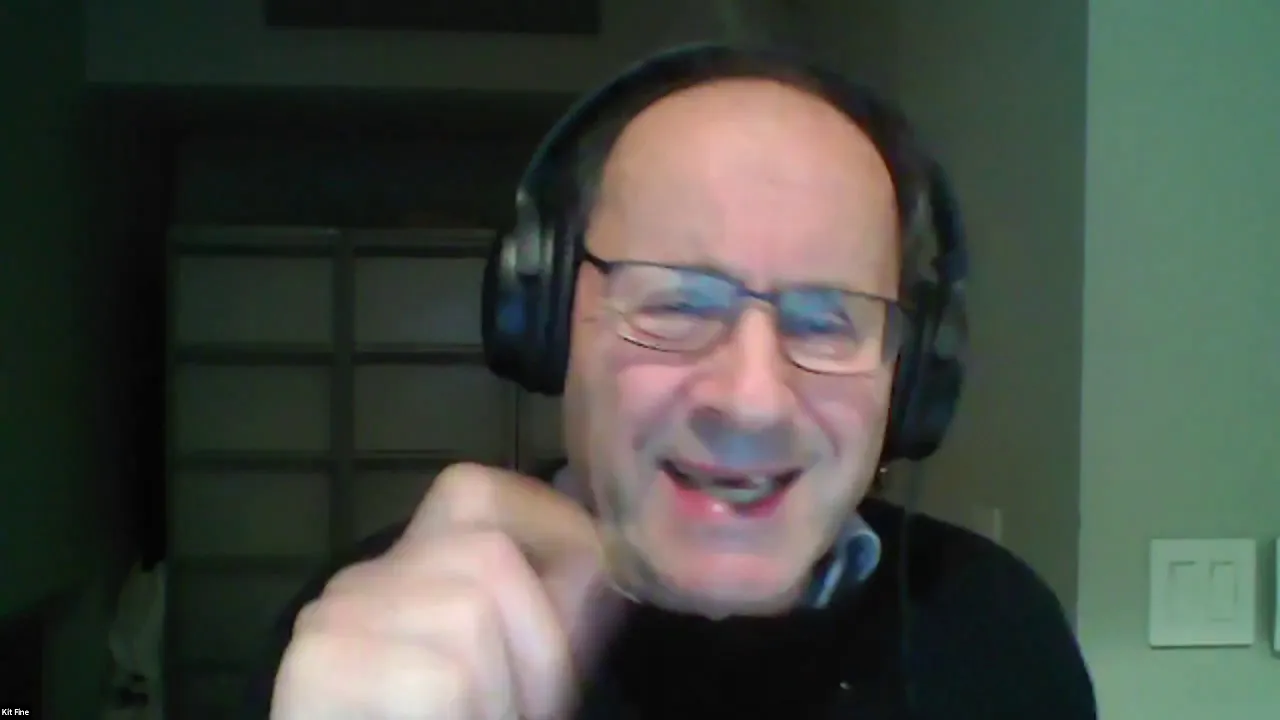
main panelist michael raven then i'll present some of the q a questions to our speaker please keep them coming It is truly a great honor for me to introduce our speaker for today professor fine is university professor and silver professor of philosophy and mathematics at new york university he holds many of the most prestigious awards and fellowships including those from the guggenheim foundation the american academy of arts and sciences the national center for humanities the british academy and the alexander Von humboldt foundation he's published over 130 journal articles five books and many more are forthcoming
his work is groundbreaking and debate shaping has been cited many thousands of times and ranges over a wide area in philosophy especially in metaphysics philosophy language mathematics logic and the history of philosophy And on topics ranging from the nature of modality the existence of arbitrary objects vagueness the nature of time intense meriology reference realism hylomorphism the nature of mathematical objects and truths negation and many many more topics he is most recently most famous for reinvigorating or rather almost single-handedly bringing the notions of grounding Essence fundamentality and truth maker semantics center stage into the contemporary philosophical
landscape his methodology brings the utmost rigor seriousness and courage to every subject matter with which he engages in metaphysics he introdu he for instance cuts through mere discussions of how we talk or the limits of our knowledge To discuss the subject matter itself kit fein has deeply influenced many philosophers including myself and i think it is very safe to say that he is one of and many would say the most important philosopher alive and working at the moment it is a great honor for me to introduce him and his lecture entitled what is truth maker
semantics to celebrate bertrand russell's lecture Series at peking university almost exactly 100 years ago hereby we bring together two of the most profound and most important philosophers in the history of our discipline welcome professor fine thank you very much and thank you arthur and yang zhing for for inviting me it is indeed a great honor and privilege uh to be speaking um In this series um i hope after that tribute i i won't disappoint anyone but i i'll do my best to live up to your expectations uh i should perhaps begin by saying that russell
was was a hero of mine when i was in high school and it was actually through reading russell's work that i became interested in philosophy um so when i was in high school this was a long time ago um i i was I studied mathematics what's called a level which is a higher exam that you take uh before you go to university uh and i was uh deeply troubled by the explanations that were given in in calculus especially things like gradients and so on and so forth i i had a sense without really being articulated
but we weren't being given rigorous definitions now it turned out that there Were two books by um bertrand russell in our school library one was introduction to mathematical philosophy so i thought well maybe this will have an answer to some of my concerns and sure enough it did i i divided the book and uh there's actually among other things an explanation of the limit and so on and so forth which which was uh which is a revelation to me the other book of brussels that was in The the library was uh his sister western philosophy
and uh although this was very different i also found this very gripping and in fact i may still have these notes i wrote a notes notes on every single chapter of that book it's quite quite a big a big book probably as a result i have it now a distorted uh view of the history of philosophy and western philosophy but there so so be it Um also um russell in the odd way connects with what i'm going to be talking about um because when i was teaching um in the mid-60s at the university of warwick
i i lectured i gave some lectures on logical atomism and actually and i think it's around 1967 or 68 i had the the first um first glimmers of doing a truth-making semantics which was to some extent had Been inspired by by russell's work in logical optimism which does emphasize the connection uh between language and the facts um uh an actual fact i wrote um i wrote um i wrote some copious notes later which actually got lost i don't know where they are and uh so maybe that if i had lost them i would have done
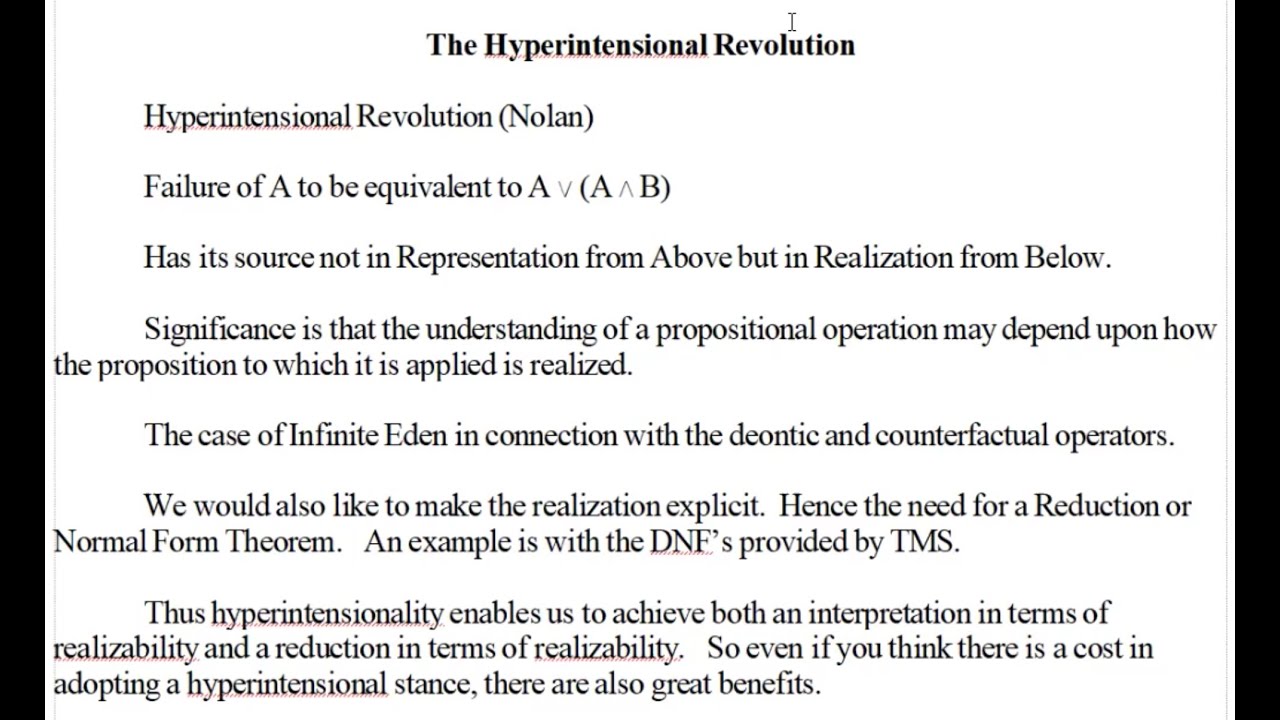
some of this work earlier but but so be it i've made up for it by by Thinking about truth cosmetics the last 10 years or so what i'm going to do in these lectures is really just give you a thumbnail sketch of what truthmaker semantics is and of how it can be applied and what i thought i might do is uh try to bring out how truthmaker semantics is what is part of what daniel nolan has called the hyperintentional revolution in Philosophy uh and what it is about truth maker semantics and these hype the hyperintentional
aspect of truth-maker semantics that's of significance okay um uh because this is actually i think it's quite a difficult but but interesting question uh so i won't just be look looking actually makes medics applications are they looking at the in light of this More general general theme okay uh now truthmaker semantics is an instance of what you might call truth conditional semantics so the basic idea behind truth conditional semantics is that to know the meaning of a sentence is to know its truth conditions the conditions and it is true and to know the meaning of
other parts of speech is to know how they contribute to the Truth conditions of a sentence this idea perhaps goes back to fraga but it's a very familiar idea in the philosophy of language now a truth conditional semantics can take many different forms so i'm certainly not going to discuss all of them but the most prominent today is the so-called possible world semantics so under the possible world semantics a Truth maker is a possible world some possible way if you like that the the world could be and um a possible world where they can then
be a truth maker for a sentence if the sentence is true in that possible world um so under this uh this version of uh truth conditional semantics uh the meaning of the sentence or the proper if you like the proposition that It expresses is the set of possible words in which it is true and that gives uh what's often the thought regard as an intentional theory of meaning the two sentences are going to have to say meaning or express the same proposition if they're true in the very same possible worlds and in particular if two
sentences are are logically equivalent logic according To classical logic uh that in that special case they'll also be true uh in the same possible worlds and so have the same meaning so possible semantics doesn't distinguish a meaning between logic equivalent sentences now we can regard truth maker semantics as both um uh a refinement and an extension of the possible semantics So one way of thinking of it is in the following way look in the possible semantics we say we may say in attempting to determine the meaning of a sentence that it's true in these boss
words and not in others but when we say that the sentence is true in a possible world we're not saying what it is in that possible world that makes it true we're just saying the Information we have is that it's true in that world we have no information at all about what if anything in the world makes it true okay so under the possible semantics it is raining or it's not raining and uh it's it's it's cold or not cold uh will have the very same truth conditions they'll be true in the same possible worlds
namely every possible world but you might well think well look there Is a difference in meaning because in any possible which one of them is true what makes it what makes it the sentence true is different in the two cases in the case of it's raining or not raining what makes it true is the presence or the absence of rain whereas um what makes it is cold or it's not cold true is the presence or absence of of cold so if you look inside the world and see What makes it true you'll see that these
sentences have a have a different meaning uh so that's one way in which truthmaker semantics is a refinement of possible semantics uh there's another way in which is an extension because we're not and this is actually it took me a lot it took me quite some time to appreciate this time we're not just looking at possible truth-makers that is possible states of Affairs which we could regard as being part of a possible world we also want to look at impossible states of affairs so we want to say there may be truth makers for a sentence
that actually are not possible states of affairs not even part of any a possible possible possible world um and there are uh so this is a genuine extension of of the of of the notion um And there are various reasons to make that extension one is that there are reasons for wanting every sentence to have a truth maker so if a truth maker uh so if a sentence is impossible there can be no possible state or state of rehearsals truth makers you have to you need impossible state of affairs um i sometimes think of this
extension of the of the field of truth-makers to Impossible truth-makers it's like the extension of the number field uh so you know the normal way of measuring is with well counting is the integers and then we measure with rationals and then we have we we feel the need in order to solve those equations have irrational numbers and so on so it's somewhat similar to that that there's a need to have certain things in Certain states truth-makers existing which may not be among the truth-makers we originally admitted into our ontology now what is now there are
other semantics uh that also have these partial and impossible uh truth-makers what's distinctive as for example in situations situation semantics uh which was in its heyday in the late 60s early 70s and so on uh also Uh allows for this kind of uh framework what's this what's most distinctive about truth-maker semantics is that truth-making is exact what i call exact that is a truth-maker has to be relevant as a whole to the sentence that it makes true okay so we can say that rain is a truth the presence of rain is a truth maker of
the sentence is raining or is not raining but we wouldn't say that rain the Presence of rain and cold is a truth maker uh because that state of affairs is not wholly relevant to the truth of the sentence so and i when this when a truth maker is wholly relevant relevant as a whole i say it's exact so it's this feature of truth-making that is exact that's most distinctive i think about the uh the truth-maker what i call the truth-maker approach and uh for a logician it actually really Goes against the gray because when people
have done this sort of semantics they said oh well if you've got a truth maker then any extension of the truth maker should be a treatment and this gives you a nice mathematical theory we're very familiar with it's called monotonicity i mean we're very familiar with that condition things are very nice when you have it and so people are just Almost out of habit assume that they would have this condition okay but i think there's a great deal to be gained by relax by relaxing that condition and not not insisting upon one ethnicity i guess
the same has been been true in in the study of default reasoning people people naturally assume that there was a monotheistic condition so if you added premises to an argument would still be Valid and then people thought well maybe something you said for a notion of ability which isn't isn't the case it goes against the grain but uh there's something can be said for it and and similarly similarly in this case okay okay so that's a general introduction to the idea of of truth-making uh so what i want to do now is uh just give
them uh a sketch of how truth making Smooth advances would apply to classical classical logic uh and it uh it may you may find it helpful to refer to the notes but i i'm not sure that it would be essential for you to do that okay now when you have a semantics there's usually a pre-semantic setup so even before you try to give meaning uh to your sentences or expressions of your language There's some framework which you uh ex employ in assigning that meaning that's the pre-semantic setup so in the case possible semantics that consists
of a pluribus or a collection of possible worlds um in the case of truth makers semantics we we the pre-semantic setup has a little bit more structure we have these things which i which you can call states And for me the term state is a term of art it's whatever can serve as a truth-maker so they don't have to be states or states of affairs in any intuitive sense of the term okay um but we need a convenient term for the money and so i call them states okay and we need a little bit of
structure on these states we we we need them to stand in relationships of part whole So we want to be able to say that one state is part of another so the president take the state which consists in the presence of cold of rain that's part of the state that consists of the presence of rain and coal so there's this relation of parthole among states and for many purposes and not for all purposes we will need to exploit or take advantage of the distinction Between possible states and impossible states okay so we draw a line
so to speak between the possible and the impossible states uh actually this that that the state division among the states is not required for all of the applications uh this actually is a very interesting fact because uh the possible semantics presupposes this notion of possibility Presupposes us as it were in the very notion of a possible world that the the that we're just we're dealing with this modal notion um but there are many applications during the legislative but don't require at all the modal notion uh but just require the meteorological notion and actually my view
i think is that uh the merological notion that a Parthole is more fundamental for the understanding the basic logical relations than the modal notions in fact in truth-maker semantics as we'll see the um the connectives are defined without reference to the notion of possibility possibility comes in another place so this to my mind is a very interesting aspect of truth like semantics which which which comes out of the of of of the way you actually give provide State the clauses for the connectives um now um so to make this formally precise we define something which
you might call the state space so a state space consists of a set of states these are the potential truth makers we might distinguish the possible states so this will be a subset of those states and uh but there's a condition that it's natural to have which is that if a State is possible then any part of that state is also possible in fact that's the only condition on the possible states that we were acquiring um and it's also very natural that perhaps not necessary for all applications to assume that if we got any number
of states whatever they'll they'll have a fusion we can put them together um Mathematically speaking we get what's called the least upper band so this fusion will contain all the other states and it will be the least of the states to contain all the other states so any other state that contains all the other states will contain this particular state just think of this diffusion so the fusion of the presence of rain in the presence of re a cold will be the presence of Cold rain um so that's the idea of a state space and
there's i think there's i may need some defined notions um uh let me with this one in the in the notes which is just the idea of two states being compatible so two states are compatible when they're fusion is a possible state um also since every set of states has a fusion There'll be there'll be the fusion of the empty set of states which is something i call the null state um that state is is a part uh of uh of every state and and if you like there's nothing that it takes for the null
state to obtain it it obtains it attains for free okay there's also actually i'm not sure i'm going to need it that's what you might call the full State which is a fusion of all states and if there are incompatible states then the the fusion will itself will be will be an impossible state it will be the the biggest state and the the biggest biggest impossibility okay so let me state the clauses for uh a classical truth-maker semantics and one way of thinking of it is as follows that instead of asking you know when is
a sentence true In the possible world we're asking now when when will the state in the possible world or maybe even an impossible state make the sentence true and we want to understand that idea of making true exactly so that the state that makes the sentence true must be exactly relevant as a whole to the sentence it makes true and it turns out that we need what's sometimes called a bilateral semantics that is a semantics That has clauses both for when a sentence is made true and also for when it's made false okay and it
actually turns out in this semantics but uh and actually this is a huge significance i think turns out in the semantics the two sentences can agree on their truth-makers uh but disagree on their falsity majors um so and at that reason uh you have to give birth through you Have to give clauses both on the side of truth-making and on the side of hosting making now i've listed these clauses under the heading classical tms they're at the bottom of the page so you have a model which assigns truth makers and falsity makers to the sentence
letters of your language um and then when it comes to a disjunction the truth-maker of a disjunction would be a truth-maker for One of the disjuncts so that's straightforward but the truth-maker for a conjunction will not be a truth-maker for both con conjuncts because that doesn't um that will not preserve uh exactness so um a truth-maker for it is raining coal would be the presence of rain and coal but that's not an exact truth maker for Each conjunct it's actually irrelevant it should make it for neither conjunct because it it contains this irrelevant element okay
so what we say instead is that the truth-maker for a conjunction is the fusion as a fusion of truth-makers for the conjuncts that's what we say now a falsity maker for a conjunction would be a falsity maker for one of the Uh conjuncts and a falsely make of a disjunction will be a fusion of truth-makers uh for the disjuncts of another few makers of the foster makers for the districts okay so those those are the truth-maker clauses for um for the connectives okay um and um there are two defined notions i should introduce they'll be
useful later one is The idea of inexact truth-making so we can say that a state is an inexact truth-maker for a sentence if it contains an exact rhythmic it has an exact truth-maker as a power so rain and cold is not an exact truth made for the sentence it is raining and it is cold but it is um sorry it's not exactly to make it with the sentence It is raining but it isn't in exact truth because it contains an exact truth making namely the presence the presence of ray okay and another notion will need
some notion of equivalence where we say that we can say two sentences are equivalent if they have the same truth-makers and in fact there's no we can have a stronger notion of equivalence where we have full equivalence if they have The same truth makers and the same falsity makers but uh but now we can just be content with the notion of equivalence okay so that in a nutshell oh there's there's uh there's something else in the notes and i'm just gonna avoid it um when we're doing classical logic we want to avoid certain situations we
want to void for example that some possible state might be a Truth maker both uh for um for first and a falsity maker for a sentence because then the sentence could be both true and false okay so the various conditions where we have to appeal to the uh to this notion of a possible state that we need to impose on on the truth and positive makers and it's because we impose those conditions Um that we get classical logic without imposing those conditions there's actually no not even any way of defying the notion of a toxicological
truth okay but i'm let me just uh leave that okay okay um so let me come to the hyper intentional revolution and i think it maybe it was uh daniel nolan who used this expression and and i he talked about the hyper Intentional revolution in metaphysics uh but i think it's it's as much a revolution in the philosophy of language if it is a revolution so it's much a revolution in in the philosophy of language or in semantics and of course the two are connected because if you have some metaphysical concept you may well express
it in language um so they're really two sides of the Of the same coin um so what what what hyperintentionally is roughly speaking is the idea that we might need for semantical or metaphysical purposes to distinguish between intentionally equivalent sentences ones that are true in the same possible worlds and it's it's very easy to see that the truth maker semantics is hyper Intentional uh this is on the second page it's under the second line under the high potential revolution and so look at the two sentences a versus a or a and b it's raining versus
it's raining or it's raining and cold okay they don't have the same truth-makers because one of the truth-makers for it's raining or it's raining and cold is the presence Of rain and coal that's an exact truth-maker because it's a truth uh it's a an exact truth making of the second disjunct and so truth maker of the disjunction but it's not a truth maker probably for the first sentence it's raining okay so that's a very simple example of how two um intentionally equivalent centers are not going to be equivalent uh in the under the Truth-maker semantics
and actually that failure of of equivalence is very significant in in the application of the of the theory i mean just to give you a sense um i can tell johnny that he can have have candy uh like he may have candy or i might say he may have candy or candy and ice cream Well he'd much prefer me to say the latter because that gives him permission to have both whereas the first doesn't give him permission to have both okay so it looks as if now there's a difference between having candy on the one
hand and having candy or candy and ice cream on the other hand so that's just one simple illustration of how there can be a significant distinction between these two Now philosophers of language recognized i've recognized for a long time that there can be hyperintentionality um so they recognize for example the belief many of them some still resist actually but many of them recognize that for example belief context can be hyperintentional so you can believe that hesperus is phosphorous but not believe that hesperus is phosphorus Okay but what they thought is that when there is hyperintentionality
it arises from the way the proposition in question is presented okay so it's the difference there's a difference in the so this is certainly fragrance view the reason why we have opacity in these belief contexts is because of a difference in sense because of the way the reference is presented so they They've always thought that that difference is the difference in the way something which is what you're really talking about is presented um uh so if you like it's it's presentation from above we we go into this sort of we go higher up uh and
so we're looking down at what's of interest to us and it seems to me that the source of Hyperintentionality when it comes to truth-maker scientists is completely different it's not to do with how something in the world is is represented it's to do with how this thing of interest to the proposition is realized what it is in the world that realizes a proposition so we may have a possible world's proposition which is the same in the case of a Versus a or a and not and a or a and b but how that prop how
that thing gets realized what it is in the world that makes it true how it gets realized what's that really down there doing the work is different than the two cases so whereas before we were thinking hyperintentionality in terms of presentation from above now we're thinking of high potentiality as arising from realization from below Uh there are find the distinctions in the world that need to be taken into account that it's taking that cat simply at the more basic level of meaning okay now so as i say the the source uh of the hypertension is
quite different and that means that the way it arises the context in which it arises is quite different because whereas you might think the first kind of hype Intentionality has to do with the presentation from burke will arise when rep in these in case of propositional attitudes or mental mental attitudes where with the way the world is presented to us is significant we would expect hype intentionality of the second sort to rise in more objective contexts where the representation is not in question but we're actually the relationship to The world is what is in question
and it seems to me it's that shift in perspective that makes this other source of hyperintentionality so it's so so so interesting now you may ask well why should we care about this more fine-grained uh notion of content why should we worry about the different ways the same proposition from another point of view Can be realized okay and i i think actually to grasp this is really to grasp the significance of truth maker semantics the reason is this that often the truth-makers or the way the intentional proposition gets realized the realizations are what matter to
us okay we're not interested in these propositions at this higher level but in something more basic in the world That makes these propositions true so um uh let me give a couple of illustrations of this one is with permission when i permit someone to do something what i'm interested in there are the particular actions that are committed the particular actions i'm not interested in certain the truth of certain propositions being permitted i'm Interested in what i'm allowed to do again in the case of counterfactuals often the interest is not in just some kind of actual
consequence of some arbitrary truth but in the count in the counterfactual conference are particular events that's where our interest is focused okay now the fact of the matter is that if you have an intentional proposition You often cannot tell from the intentional proposition what those particular facts are it's impossible to say this is a very significant fact which means that you cannot even interpret the relevant notions so this can be illustrated in a very dramatic fashion by uh example which i call infinite eden many of you may not know this there's a garden of eden
but there was Another garden of course has enough famous apple in it but there was another garden that had infinitely many apples in it next door and um god said to this is the case of ambition god said to eve you you may eat infinitely many apples from infinite eating and eve went ahead and at the forbidden fruit that's why Actually that's why she did it no one ever said this but anyway she and god said what what what are you doing and she said well look you permitted me you talked to the proposition what
you put in this is the proposition they eat infinite in the apples from um uh infinite eden but the proposition they infinite minneapolis from infinite eden is necessarily equivalent to the Proposition made infinitely apples from infinite eden or eden because if they eat infinite apples from infinity didn't like eat infinite measurements for infinite eating or eden because i could only eat one apple from eating and that's certainly if i eat if they have many apples from eden or infinite eating then since there's only one apple in eaton i i will have eaten infinite medical so
These two are necessarily equivalent and don't you know that we can also always substitute intentional equivalence so in effect you permitted me to uh to eat infinitely many apples from eden or infinite eating well at this point god would give eve an exercise in uh the fact that permit permission is a a high potential operator the fact is if i just tell you these Possible worlds these are the possible worlds in which i eat infinitely my apples in infinite eden if that's all i have there's those words i can't tell you i can't say that
this this that this proposition concerns the apple there's nothing in that proposition that tells me that this proposition concerns the apples in infinite eating as opposed to the as the apples and Infinitely eaten or eaten there's nothing there's nothing you can it's impossible to tell okay so this is a case in which we take if you take the intentional view you permission statements can't even perform the basic function of being a guide to action and the similar point holds in regard to counterfactuals suppose eve's on her best behavior and Doesn't in fact eat any of
the apples and i can ask well what if she had eaten infinitely many apples from infinite eden might she'd eaten an apple from from eden well no you said but uh but that proposition that she had infinitely many apples from eating is equivalent to eating infinite miracles from infinite eating or eden so in that case i'll formulate it back where i should Listen yes so if i'm considering that kind of faction i ask well what changes in the world am i envisaging then again i cannot say i just don't it's impossible properly this is that
i really need to emphasize it's impossible properly to interpret what you're saying uh there's a further point of it made which is this um often Even if we know how to interpret the sentence we want to be able to explicitly indicate its meaning in terms of these more basic facts in the facts concerning the realizes of the proposition and what that in effect means is that we actually want to be able to compute what the meaning is in these other terms so from a logical point of view that That's equivalent to having a normal form
theorem theorem every you want every sentence to be equivalent to certain kind of normal form from which you can read off how uh what the what the relevant connections are among the actual truth makers uh let me give a simple example we all we all know about truth tables so if you've got a formula classical Sentential logic it's truth value would turn on the truth value of the component sentences so that's the bottom what's involved the truth value of the companion sentence but that's different from there but actually now explicitly state in the object language
how that is the case if i just had material of conditional in my language that's the only thing i had i wouldn't be able to explain using that Simply that connective i wouldn't be able to say how that translates into into truth conditions um but if i have or under not or i just guys i need i guess well actually yeah now i can give a destructive normal form like i say every sentence is equivalent to a disjunction of state descriptions where the state description is a conjunction of atomic sentences or Their negations and now
i can given that this i cannot compute the normal form i can read off the truth table okay and from the point of view we had to use these symbolisms it's very helpful to have something like a normal form there okay so that's something else we might might have i'll i'll come i'll come back to this point okay all right so i just wanted to say Something about the what hyperintentional revolution was and why i regardless significant and what i want to do now is to consider some applications in the light of this hyper intentionality
um uh i was i was told that there are linguists and logicians and philosophers here and i wanted to give an ex example that might have some interest to all Each of these groups i i don't know if we're going to have time so we'll we'll just we'll just see how it goes okay uh so my first example is with is with count of actuals um now i seem to remember daniel nolan in this paper on the hyperintentional revolution says you know we need to take into account counter possible such as counterfactuals impossible on the
scenes But even without considering that case we need to have a hyper intentional view of counterfactuals it seems to me um and so uh i'm actually now just giving a thumbnail sketch of of a truth maker semantics for counterfactuals that i've suggested um and the idea is this that we add let's suppose we just fix we fix on the actual world so i'm just concerned with what's true or true in the actual world and the idea Is then we have a transition relation among the states so here's the world and then i take a state
and i imagine me myself imposing that state on the world and saying that i need to change the world so that state holds that will result in some other changes maybe not a a a a determinant change but maybe a range of different there may be a range of different Possible changes that will result so then in that case i want to say that the initial state transitions into one or other of these other states so we have this transition relation which is relation between states meaning that um when s transitions to to t that
means t is a possible outcome of making the an opposing state s on the world okay um and now We can give a truth maker semantics uh for the counterfeit actual we'll say that the count of natural if a were to be the case in c would be the case it's true if you is in the following following case if you were to take any truth maker for a and look at any state to which it transitions look at any possible outcome of that truth maker then it would be an Inexact truth maker for c
so both the notions of exact and inexact truth-maker involved here i'm saying any exact truth-maker for a will transition always to an inexact truth-maker cece okay so take if the match would just well struck it would wha it would light here the state the truth maker for the match would struck is that Is the striking of the match there may be one or more outcomes of this depends whether the universe is deterministic um and we say the counterpart is true for all those outcomes we'll include us apart uh um an exact truth maker for for
the bachelor match lady so that that that is a a truth maker semantics for the counterfactual which relies critically on this idea of the of the of truth exactly Makers for the antecedent and the consequent um so we're actually uh piggybacking on the truthmax semantics we already have okay so um one thing that's that's nice about this is that it immediately saw it's built into the semantics what the particular facts are that are relevant to the evaluation of the counterfactual So it immediately solves the problem that we had over infinite eden because if the antecedent
is uh eve uh eats this infinite bunch of apples or that infinite bunch of apple blobber all always from infinite eden then things will be fine god's not going to punish it and things will be fine uh then things would be fine um now the way we evaluate that is we look that way and the antecedent is now An effective disjunction she is eats this infinite bunch of apples from infinity or that bunch so a truth maker will just be eating infinite buns which are apples from infinite eden and of course the outcome of that
is that the god is not not displeased okay now if if uh the antecedent with this logical equivalent or necessary equivalent antecedent that she eat infant number of Apples from uh eden or infinite eden then among the disjuncts would be her her eating and infinitely many apples including the apple from eden okay and so we'd have to consider what would happen then and of course if they were she would do that god would be severely displeased um so we actually are distinguishing between these two anti-scenes which are Intentionally equivalent in terms of the truth-makers in
that way we avoid the problem of infinite eden okay uh let me uh there's a very significant application i think of this uh of this approach um which is made in a paper by ray briggs though it's it's also mentioned in uh a paper i wrote uh as well but not discussing any detail Uh some of you may know about causal modeling so this is in the style of judea pearl uh so the idea we have some variables and the value of one variable may depend upon the value of the variable so we have some
equations to indicate how the value of one variable may depend upon the value of of another variable and then if you've got a bunch of Equations of this sort you can explain you can give what's called an interventionist interpretation of counterfactuals you can say well this is how things these are the values the variables have now what if i were to change intervene and change the value of this variable how would their values of the other variables change okay and you can give it a very natural rule to do this Basically you don't look back
and you do look and you look forward okay so if i change the value of this variable and this this variable depended through equation on other on other variables so i i leave those alone but if there's some variables that depend upon this variable then i change them accordingly okay that's the ba that's the basic idea some quirks but anyway that's the basic Idea now that semantics only tells you only tells you what the count of actual consequences would be of changing the values of certain variables but if you had a logically complex antecedent in
the counterfactual it doesn't tell you at all what the what how to evaluate that counterfactual okay so this is a case where We have as well the primordial counterfactuals which concern very particular events in the world or particular changes but we don't know how to evaluate account of actual it contains an aperture proposition now what you can do is uh you define the transition relation basically that interventionist semantics gives you a transition relation it tells you whenever you have a One state which consists of specifying the values of the variables it tells you what the
outcome will be and then you can use the clauses in the truth-making you can use the clauses in the truth-maker semantics to evaluate arbitrary counterfactuals okay so the truth that semantic is just ready-made so to speak for extending the semantics to the more general general case now one actually nice feature of this Is we also get a kind of normal form so um many kind of actuals will not be of this primordial sort saying if you change these variables to these va if you change the values of these variables then you'll get this change blah
blah blah blah they'll often be very complex they may have embedded counterfactuals and so on so forth okay um and what you can do is show that you can actually get a reduction so Sort of um to the kind of actually this primordial form so it's a kind of normal form theorem um and this puts certain principles it puts them in a very different light so one principle is simplification so this is the principle that says the count the counter factual if a or b then c is equivalent to the counterfactual the conjunction of two
counterfactuals If a then c and if b then c if johnny were to eat candy or ice cream then he would be sick that's meant to be that should be equivalent according to this principle that johnny would be candy he would be sick and if johnny ice came he would be sick that principle is denied under the usual possible world or semantics okay but it's actually trivially true under the um truth maker semantics um So many people think oh well uh battle of intuitions here maybe this pragmatic explanation so so forth you know you've given
a semantic estimation but you know we can perhaps explain in some other way why you're inclined to think the principle is is correct but the point of what she emphasizes forget all that this principle is playing a very important role A very important role which is enabling us to get a normal form it's enabling us to simplify when the counterfact to tell us explicitly when the counterfactual is true because we've got this disjunctive and scene and we've now just got the disjuncts okay so it's like uh having a normal form in sentential logic okay and
similarly with some of the so-called Import export rule the counter factual if a would be the case that if b were to be a case and c would be the case so you want that to be equivalent of a and b would be the case and c would be the case again that affects the sim uh a reduction of reduction so we could see at the end of the day that the explicitly but the truth like all county fashion is just going to depend upon These very basic counterfactuals all right so um that is uh
one of the applications um maybe i only have time for the uh one other application i have two in here one is to intuitionistic logic which is meant to be for the magicians and the other is for deontic updating which is i guess partly for the linguist but also for the philosophers let's do let's do deontic uh dating okay so we're gonna do a little bit of Deontic logic um so there's a standard possible semantics with the um basically permission is treated like diamond like a possibility operator an obligation is just like box like a
necessity operator and so the thought is we have the set of ideal worlds a worlds in which all obligations are met and then uh phi proposition 5 is permissible if it's True in one of those worlds and fires uh obligatory if it's if it's true and sorry that's actually true it fires true in some in some some some of those worlds and fires obligatory if it's true in all of those worlds the truth maker semantics for permission obligation is very different so what instead of a set of ideal worlds we have what i call a
code of conduct so A code of conduct and now i'm imagining now that it's uh actions uh uh that are in question here's actions have been committed or or made said to be obligatory and of course you confuse actions you have a whole bunch of actions and then you get what you might call the core selection and the code is a set of courses of Action um which are ideal in the sense that that first of all that they're permitted and the secondly that that cause the causes of action which you've fulfilled all your obligations
so they're permitted and your course of action will be permitted and uh it'll be one also which you you meet all your obligations of course you could you could have one Without the other you could uh it could be permitted but it may maybe you there are certain obligations you you know fulfilling you could fill all your obligations but still do something that's not permitted you're not not a completely good boy um all right so uh that's that's that's that's a code of conduct so it corresponds to this set of ideal worlds Uh and then
we can say that um an action is permitted if there's some ideal course of action that contains it as a okay and we can say an action is obligatory if every idea of course of action contains it as a power so uh now there's this big problem updating problem which i think was first raised by uh But by lewis and although i'm going to be talking about deontic updating they're very similar issues for other kinds of updating for example with belief revision okay so uh a lot of what i'm going to say will apply to
belief revision and and some of us have actually been working on this on the truth-maker approach to the belief revision and i should say that i wrote briefly on deontic updating and Um uh daniel roth's child and steve diablo have a more recent but unpublished paper on uh deontic updating which is which is sort of in line with what what i'm going to be saying okay now in the passwords framework so what i can this is what what's what's what's the anticipating well you know i'm under certain obligations and uh you know and then i
might say you Know well you meant to work every day of the week and i say you can take mondays off i say that yeah i mean i'm in a good mood you can take mondays off uh what now am i committed to do in other words i so we think of it in terms of this set of ideal worlds somehow that set must change before that that's it didn't contain any New worlds in which i took monday off but now it must conclude words which i took uh monday off but which worlds the worlds
in which i take monday off and kill you um the worlds in which i take every day off no but which worlds okay well if you just look at the semantics for the daunting operators from the possible framework There's nothing sensible you can say there's nothing sensible you can say this there's no way of distinguishing the good worlds that you are now permitted to to bring about as opposed to the bad worlds simply no way to do it thank you this looks like a very big problem um this is not a problem it is such
a problem The truth maker framework okay because we can say this look we have these ideal courses of action okay and maybe all of them have you working every day of the week monday to friday okay uh now i say you may take monday off what what does that mean well actually you could still work every day of the week if you wanted and you gave didn't say you had to take Monday off so you know if you wanted you could work on monday um but also what you truly want to say is well look
i can work tuesday wednesday thursday and friday but and then just forget them and forget about money take monday off okay but now we can explain what that involves because what we're doing is we're Looking at that state or action in which you take mundy off and we're looking at the and now we're looking at the largest part of this other state which you work every day of the week and look at the largest part of that which is compatible with taking mundial so if you like i'm subtracting taking monday off from the state in
which i work every other week and then i get the state in which i work Tuesday wednesday thursday and friday and and don't work on monday so uh we can actually define define uh within the the actually this is the case where the mariology is doing some work where opinions these relations are part all and it's attracting and so the fact is we now have the technology to define this the idea of subtracting one state from another okay and that's Uh that's already there in the semantics and in this way we can define the anticoagulant
okay so um what i also wanted to say and uh let me just briefly mention this is that again we can solve the problem of infinite eden because what uh eve is permitted to do in one case is to eat infinite minneapolis from infinite eden and of course that just means she's Permitted to perform one of these disjunct acts actions which wouldn't include her eating the the forbidden fruit uh it's also possible and this is actually a a much more difficult question as is um to to prove some kind of normal form there uh it's
especially difficult and i only have an um Published work on this to do this when we also have conditional obligation conditional permission so we don't say you simply say you're obliged to do this or admit it to that but oblige under these circumstances committed under those circumstances but so something similar can be done in those cases so i'm going to miss miss out uh i said simon sort of uh uh really used up my time i'm going to miss out the intro Application interesting logic uh but let i want to emphasize that um these are
just two of many applications of truth-maker semantics that have been made applications to ground for example the very similitude people have actually also started apply it to to proper problem questions of probability uh uh i've i've looked at the uh is problem in this in this in this connection and um Many other so it i think many many people uh have the sense that the the the the this is is actually a really quite useful technology that you can use next in in trying to get a better understanding of various notions concepts of philosophical interest
uh and with those remarks i i will end thank you thank you professor fine um so There are lots of lots of questions streaming in from the audience um i'll i'll i'll look at those and and and and choose some for professor fine to well choose the easy ones okay yeah i'll choose the easy one but i thought no for sure uh before before i went before doing that i wanted to just introduce our main panelist actually um it's so it's my honor and Great pleasure to present our um michael j raven to give the
first questions he's associate professor at the the university of victoria in british columbia an affiliate associate professor in philosophy at the university of washington and besides writing uh the internet encyclopedia philosophy entry about kip fine is also after professor fein one of the Leading experts on grounding and essence and he's edited the rutledge handbooks for both of these topics and published more than 34 articles on these and other topics in the in some of the best journals in our field including in defense of ground in the australasian journal of philosophy explaining essences forthcoming and filled
studies And is logic out of this world forthcoming in the journal of philosophy welcome mike to to ask a um find some some questions well thank you i'm it's a privilege and an honor to be allowed to ask a question um given the uh occasion i thought it would be appropriate to attempt to uh relate some of uh fein's work to uh russell's work uh and uh you mentioned a philosophy of Logical atomism of course russell wrote early on there that he nearly produced a riot at harvard when he argued that there were no uh
or rather there were negative facts and even though this is a virtual session i have no desire to incite a riot so i'm not going to ask that question but i do want to ask uh uh another question about a sort of fact That uh russell was infamous for arguing in defense of and this was a general facts uh he of course thought that in addition in addition to atomic facts there were general facts and find himself in extensions of truth maker semantics to uh the quantifiers has likewise expressed sympathy for totality facts and this
raises various questions so on the metaphysical Side there are questions of you know what a totality fact is and what if anything might might ground them um on the semantical side there's the question of how to properly amend the quantificational clauses to to you know put them to work uh um now finance suggested a methodology in which we can compartmentalize these uh questions so we may if you like quarantine the Metaphysical questions about the totality facts when our purposes are just strictly semantical and i think overall this is a very wise methodology and i suspect
that you know breaking proper quarantine is a source of endless confusions uh nevertheless you know there are instances where considerations sort of specific to the case might might Call the quarantine measures in in doubt and uh one might wonder whether totality facts are such a case so um i just have a few thoughts about totality facts in particular and also about the methodology of martin excuse me compartmentalization in general and i want to just invite uh find a reflect on them so just where i'm coming from the unamended semantic clauses uh such As the ones
in the handout um are you know neutral over the internal structures of the truth or false making uh states except in so far as those states are to be regarded as neurological fusions of others um by contrast it's perhaps somewhat less clear whether this neutrality really extends to a totality fact after all you know a totality fact can't just be a Fusion of the instances of a generalization otherwise that would seem to make it redundant um there's no point in adding it then and uh it's unclear what other meteorological structure it might have on the
other hand we don't seem to want to say that there's no internal structure because then this makes it difficult perhaps to distinguish between The totality factor state from the non-totality facts except for its special appearance in the the quantificational clauses themselves so i wanted to ask may we reasonably ignore these sorts of considerations when our purposes are just strictly semantical and if not is there more to be said about totality facts sort of on the semantical side strictly Or do we need to sort of break quarantine and engage with the uh the metaphysics of the
totality fact uh eventually um that's a great great question um um i i i don't know whether you need to break the quarantine or not but it would pass be like governor newsom you know that it's just a very mild violation of quarantine well someone would like to think okay um i know if my chinese audience will Understand that reference but anyway um the um so uh i guess my general position would be this um when we're doing the semantics for the quantifiers uh what what we'll say something like this that uh supposed to be
an unrelativized quantifier so we see for all x5x um and what will make this true is a totality fax that's indexed to a subset j Of individuals so in fact that totality of fact is saying j are exactly the individuals that there are and then that will be fused with the relevant ins truth makers for the relevant instances of of five so for each for each particular individual in that set j will want to have a truth maker for the fact that jay thighs and then we Want to fuse all those truth makers okay um
so that actually will be the general form of the clause now um the um the question outside the question now is if we're to get the logical truths that we want what conditions do we need to impose on these totality facts so so in a if we're actually dealing with classical logic uh a natural condition is this that If you've got a totality factor j and the totality factor for j prime where j and j prime are distinct sets they should be incompatible so it can't be true both but these this set of individuals is
exactly the individuals there and also that other said yes you know i haven't actually done the hard work of determining exactly what those conditions would be but what i'd like is that um It would be certain semantic this is you know this general idea of division of labor so it's just going to be the semantics that will lead you to adopt certain constraints on what the totality facts facts are um uh and not any metaphysical considerations um uh and i suspect those constraints would be basically modal constraints so although you may well Think look uh
well you might ask you know well um are there meteorological relations between these totality facts and uh other facts and probably that's probably i'm not sure about this probably the semantics could remain neutral on the question it will make no difference to the logic so even though you might well think you know well there are some moral meteorological Facts of the matter uh probably for semantical purpose well i don't know again this is all conjectural okay but um uh now let me just say on the metaphysical side i actually think that's a very serious problem
uh what what is the grounds universal statements uh so i don't take that question at all at All lightly um so that's part of the reason why i'd want to avoid it for the purposes of doing semantics okay um great thank you um i think um one of our other panelists julius chernhair your colleague at uh peking university has has has a question as well um julius yeah thank you um and ah thank you thank you for the great Talk um i have a rather big picture question um in the beginning you said that the
approach is kind of meant to extend possible worlds framework um basically as i understood it because it's not fine-grained enough um to capture some of the truths uh of sentences and but then later on it seemed like you you seem to you you seem to suggest that Um it's kind of meant as a replacement for uh for possible worlds framework for example when you talked about deontic at deontic logic it seemed like a possible word framework has to go for ideal strings of actions for example and then secondly with regard to fraga it seemed to
me that you were suggesting that there's some that there are some truths where we want this bottom-up Approach where we want to know what the things in the world are that makes these things true but fraga might still have something true to say about a whole range of other cases where we want this top-down kind of approach so the question is what's the intended scope of your approach is it supposed to replace ultimately um possible world semantics or is it supposed to Um is it supposed to just add on to it fine-grain it a little
bit okay thank you that's a very interesting question uh so when i made these remarks about truth maker semantics uh refining and extending um possible semantics what i had in mind is is is the conception of truth-making was both a refinement and an extension i wasn't talking about Truth-making semantics as a whole um so um i actually think that there may be certain applications i'm not exactly sure what they are but where the possible semantics is fine so you don't need to make these these various distinctions i mean it's possible science has been tremendously tremendous
success we don't want to overturn everything that is done but when it when there are these Problems um it may well be that i'd like to think of truth maker semantics as as an alternative to the possible semantics so we really are uh for example given quite different clauses for the deontic operators um or the count of actual so in those cases it's it's genuine it's not sensitive now very interesting question as to how You might combine this bottom up uh uh form of hypertensionality with the top down and i really haven't thought about that
um so basically um yeah um so so here's an example i mean i i i have this view of semantic relationism so that maybe that's an aspect of top down so um So like for me um hesperus and phosphorus are co-referential but they don't stand they're not strictly co-referential in a certain sense um so that's actually a representational difference of a certain sort so they both directly refer to the very same object um how you would combine semantic relationships with truth exactly is something that i haven't really Thought about so but that's a very interesting
question as to how um this more forgetting or quality for a game view of hyperintentionally might combine with this with other view um and i i really don't i don't have any considered thoughts on that on the topic i'm afraid thank you um okay there there's a whole stream of questions And um i saw that there were a couple of similar questions about um about the application of truth maker semantics to to to modals a modal logic and so possibility and necessity um i guess they were they're just kind of vague questions to potentially say
more about how you think that um possibility and necessity can be captured with the truth maker Semantics would would you like to do that yeah so actually you know i said you know possible semantics is good for certain things and when one of the things you might think is good for is is modal logic uh but actually there's some there's some doubt about that um uh and uh i i i say this semi facetiously because You know classical modal logic done in the possible framework is is a great thing um but there is a use
of these modal expressions um to which the standard possible semantics isn't doesn't apply and this has to do with this idea of free choice if i say mary maybe in paris or frankfurt uh that seems to my sorry might be might Be that that seems to imply that she might be in paris and that she might be in frankfurt and of course the possible semantics doesn't have that that implication again if i say that her being frankfurt or paris is compatible uh with uh um have been late for the meeting of being on time for
the meeting Let's see uh that that would actually be taken to imply that it should be both both those possibilities that she's in paris and that she's in frankfurt should be compatible whereas again that's not a prediction that would be made so insofar as our interesting possibilities is is an interest in the possibility of particular facts Uh standard modal logic is not adequate but the very same reasons the standard deantic logic isn't adequate so so that's the case uh that's a case in point another way even even when possible semantics may be adequate uh that
is not give you the incorrect logic it may be inadequate in another way that is not informative enough okay so There is this project which i call exactification and that is if you've got a semantics that isn't exact it might be possible semantics you can always ask well i want a bit more information i want to know what it is in the world that's doing this work and making the thing true okay and possible semantics says look diamond p is true in the world let's accept this if p is true isn't possible But then what
is it about the clearly not everything about that world is his bears on on this so what is it about the world that makes it true but p is possible okay so we want to know what i think a relevant truth maker is okay and truth makes science can provide an answer to that and this is what they call the exactification of the semantics so it's not that you're saying the other Semantics is wrong but the other semantics is telling us what the innings that truth-makers are and what we want to know is what the
underlying exact truth-makers are and that gives us more information actually actually relevant to what i was going to say about nutritionistic logic because there's creepy semantics for interesting technology and um you can exactify that you could say Well gets this idea that the condition or a piece of information forces or makes true a sentence and then but then you can ask well that piece of information may contain the great deal that's irrelevant so what what is in the piece of invasion and when you ask push on that question you can get an underlying exact semantics
that's very like what's called the bhk semantics the brow heightening Komograph semantics which is done in terms of proofs uh so what you can say is in the under in the underbelly so to speak of the crooky semantics is something like um this bhk semantics and that's much more informative about what's going on okay so when we're like and no one's i don't think anyone's really tackled this uh a number of people have gone it but to try to give a more informative Semantics for example for for regular modologic even even if you accept the
normal possible things um great um i think there's a kind of potentially a follow-up to this where um one of the phd students here actually asked a question about so he asked is the possible world semantics derivable from the truth-making semantics or a fragment of the latter to sketch The truth-making content of a proposition in the world do we need a function to specify all the truth-makers in that world since there could be many exact truth makers in one world like a lot of dogs could make they're sorry just can you read can you can
you read the second half of that question again because i i think uh i didn't quite get it i got the first One okay whether whether it's a special yeah yeah basically yeah the relationship between them whether it's derivable and the second part is to sketch the truth-making content of a proposition in a possible world do we need a special function to specify all the truth makers in the world so is there a special function that gets us the derivation Okay so let me first of all address the the first question i made but i
haven't fully understood the question um possible semantics can be seen as a special case of the truth maker semantics um and because you could imagine that uh the only truth makers are other possible worlds so they're not going to stand in any meteorological relationships with one to the other Now we do need this condition that ev every every set of states has a fusion so the empty set of states has to have a fusion that would be a null state that lies that is a part of every one of these possible worlds and there also
has to be a fusion uh there has to be a thing at the top which is the imposter the impossible world so we have a kind of diamond structure of all these possible worlds Uh you have to sing at the bottom which is the null state you have this thing at the top which is the full state and if you do a truth maker semantics with in that structure it's essentially the same as the possible semantics that's a very special case where the if the underlying state space has that structure essentially gives you the uh
the possible world Possible world semantics now there's another question which is this if you've can we incorporate possible worlds into the state space okay and you can you get then you then get what i call the w space so we can define a world state that's a possible world as a state that's possible max that's maximally possible so it's possible and it's not a proper part of any other Possible state so those those those are the worlds okay and then i say oh a w space is one which is such that every possible state is
contained in a world state so it can always be extended okay that's a very strong assumption but you can make that assumption um and then for certain purposes it's helpful to work within within the w space i try to avoid it as fast as Possible it seems like a very strong assumption to me that is to be avoided if you can um now the third aspect is if you're working within the w space you might be interested in this notion which is kind of hybrid notion maybe the question was getting this might you think not
just of this state being a truth-maker for this sentence but of this state in this world so we Bring in both the state and the world this is it's a state in this world that's a treatment and i've sometimes been tempted by that and for some reason i don't really like it and i've tried to avoid it i don't i but that there's a very interesting question as to whether we have any need of a notion of that sort and maybe the the question was getting at something like that In that question so we have
a kind of double index thing it's a two-dimensional semantics if you like where we value it since it's relative to a state and a world and intuitively we're thinking that that it's it's the sentence is true in the world because of this state um great i think um there's a there's a follow-up question to the to The question asked by one of the panelists julius chernheir and alex salt asks i think professor fein's response to psalms on semantic relationism suggests a response to julius chernar's question we see the influence of the top-down approach to semantics
in the relationism and the bottom-up approach in the fact that names refer obliquely as in fragra i would Love to hear what professor fine thinks about this suggestion um so that that's from alex salt yeah well i really haven't thought seriously about how to combine these semantic approaches so i prefer not to to say anything um i i think it's an interesting uh question um i have to confess you know um i'm not a coherent thinker so i have these ideas and i don't Actually know how they so the ideas arise from very particular problems
i think well this is but um i don't actually know how the various ideas fit together and actually i think that's a mistake to try to develop a coherent point of view um uh because i think these sort of global considerations of coherence can lead you away from the truth so often very Systematic considerations physics is a wonderful example of this physics isn't coherent but it has these wonderful theories that deal with this phenomenon if they're if physicists have been interested in coherence they know it would never have made the progress that it did and
philosophers are too interested in me in development here at systematic point of view They're like likely to miss out on on illuminating solutions to problems particular quick problems that they face um anyway i just i just want to throw that in i think i think that's beautiful that's the excuse for my laziness [Laughter] okay i think there are there are a couple of questions that were uh kind of related um uh from from a few of the uh people in The audience so the first one goes like this is hyper is the hyper intentional revolution
genuinely revolutionary what if i can account for the difference between a and a or a and b in terms of inferences which might constitute the meaning of connective of the propositions in question for instance the differences of the two can be accounted for by Different inference roots but if this is possible it seems that meanings don't come from below at all from the world and yeah there was another question related to this about disjunction um yes yes that's an interesting thought so uh clearly there are other ways of accounting for for the difference um on
a structuralist conception of propositions for example they would be clear between a And a or a and b because we would think of the propositions expressed by the sentences as having a struct a structure similar akin to the structure of the sentences themselves um so it's certainly not necessary to think of these differences in the bottom-up uh way um but i guess the thought is that um uh it uh so what's revolutionary is not really uh Thinking that you might be able to count for the differences in some way or another it's a wanting to
account for them in this very particular way in terms of this bottom-up approach that is the exact truth-makers and and secondly thinking that various um non-psychological uh concepts uh should take account of differences of this of this sort uh so uh So i think it's the the what's revolutionary uh it's i shouldn't call it the revolution this is nolan's term anyways uh but anyway if you like what if anything is revolutionaries is those those two aspects of it um so yeah okay i think i think we have time for um one or two more questions
i think uh so there's Um there are also a couple of questions for instance compare comparing the truth maker semantics to [Music] uh the default logics you you meant you mentioned uh you mentioned the default logics um in your talk but um so so i guess one of the questions here is hyperintentional reasoning happens to be found in other logics and formal settings why is truth maker semantics Better than for instance the default logics uh quite a broad question but yeah default logic is well i guess it's many different things but it's it's quite it's
quite different so um so normally within default logic you would allow the substitution of classical equivalence that's not really in Question um so uh you know what's that bird called there but what's the standard what's generic name for a bird anyway peak is a bird therefore uh peaky flies and then you add the premise uh peak is uh uh what's a bird that doesn't fly um uh penguin penguins are flat ping is a penguin yeah piggies are Penguin and and now you can no longer make the inference okay so that's that's the kind of phenomenon
a lot of these people are interested in they couldn't care less whether you formulated those premises in logical equivalent terms okay so that's uh so it's a different uh it's not the it's not it's not even hyperintentionality it's it's a feature of a certain feature of deduction that they're questioning Namely the addition of premises will preserve the abandoned argument that's a different that's a different thing what i was the reason i talked about default logic is that this this is a um just another instance of monotonicity or a monasticity requirement that um that you know
that if you increase something you can still get the same out of it That's that's the monotheistic assumption and i'm saying monitor these default logics question that assumption so you've increased the premises you add more premises you can't necessarily get the same out of it and similarly if you increase a truth maker you can't necessarily get the same sentences true so i just was drawing an analogy that this Both these cases are failing monthly and also pointing out uh that there's a very in both cases there's a very natural inclination to accept monotonicity um um
so that that was the point of the analogy but we as i say we don't really have hyperintentionality in the case of default logic i don't i it's not as it's standardly construed Yeah yeah i as far as i'm aware anyway yeah