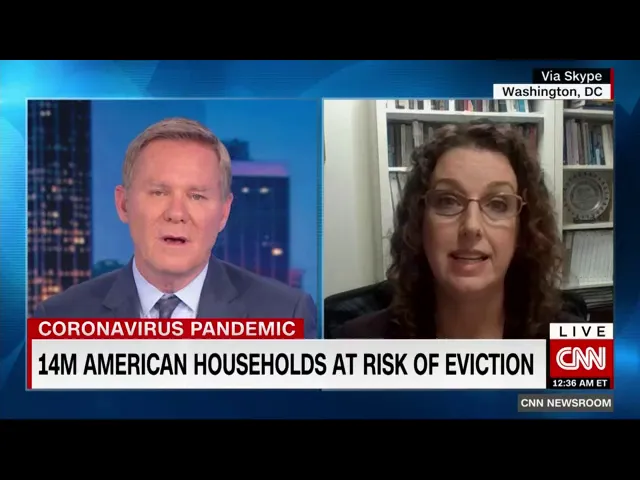
diane yentel is the president and ceo of the national low-income housing coalition she joins me now um this is such a crazy situation just just what could be the impact of the eviction moratorium expiring in a human sense give us a sense of the magnitude i know you talk about an eviction tsunami sure well it's very clear that if the federal government doesn't act and act soon that we are facing the possibility of tens of millions of people losing their homes this winter during this height of covet 19 and the consequences of that would be
catastrophic for children and families for communities and for our country's ability to contain the pandemic you know evictions can be really profoundly uh traumatizing and destabilizing they lead to increased financial insecurity they lead to harmful health consequences and certainly now during the pandemic increased evictions will lead to increased spread of and potentially deaths from covert 19. yeah i mean the housing issue what it's done is put yet another spotlight on how coronavirus has basically exposed exposed inequality in america racial health inequalities but financial too as you say i mean we see the lines for food
handouts we see these evictions looming and meanwhile of course congress not doing its job yes there has been really a shocking and shameful failure on the part of the federal government to respond to covet 19 i mean from allowing it to spread so uncontrollably in the first place to really failing to protect low-income americans from the financial fallout you know in low-income renters they know well what the consequences are if they are unable to pay the rent so they do everything they can to make sure they do pay that bill and that often means foregoing
other necessities so like store-bought food which is why now we're seeing this just overwhelming demand at food banks and it means other other trade-offs too it means maybe not buying that expensive medication that they or their kids need or it means not paying the internet bill uh despite their kids needing that in order to get virtual school you know and renters are just really stretched very thin to the point absolutely and and the other thing too is i think you know we're talking about the moratorium explaining but the pandemics already seen evictions right i think
in texas alone i read 17 000 evictions have been initiated since the pandemic began 300 000 more could be coming and that's just texas that's right the the cdc eviction moratorium generally speaking is doing what it was intended to do which is keep tens of millions of people who would otherwise be evicted housed during the pandemic but it's flawed and there are holes through which renters are falling and evictions are proceeding there's been at least 150 000 evictions nationally that have occurred during the pandemic now if the cdc eviction moratorium does expire we're looking at
anywhere from 12 to 17 million households with up to 40 million people within them potentially losing their homes this winter and just quickly and finally you touched on this earlier but you've equated uh housing to health care this is a health issue explain that yes housing is health care absolutely even before covert 19 there was a very clear connection between homelessness and housing instability and harmful health consequences from everything from diabetes and asthma to um mental health challenges um and certainly now our homes are our best protection during this global pandemic and when our collective
health depends on our ability to stay in our homes you know we all have a stake in ensuring that tens of millions of people don't lose theirs yeah i saw a terrible number i thought i think renters right now owe an estimated 70 billion in back rent let alone what what's uh to come diane yantel thank you so much appreciate the work you're doing thank you now