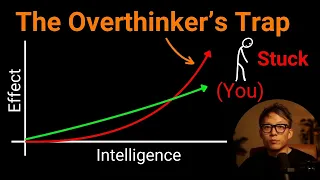
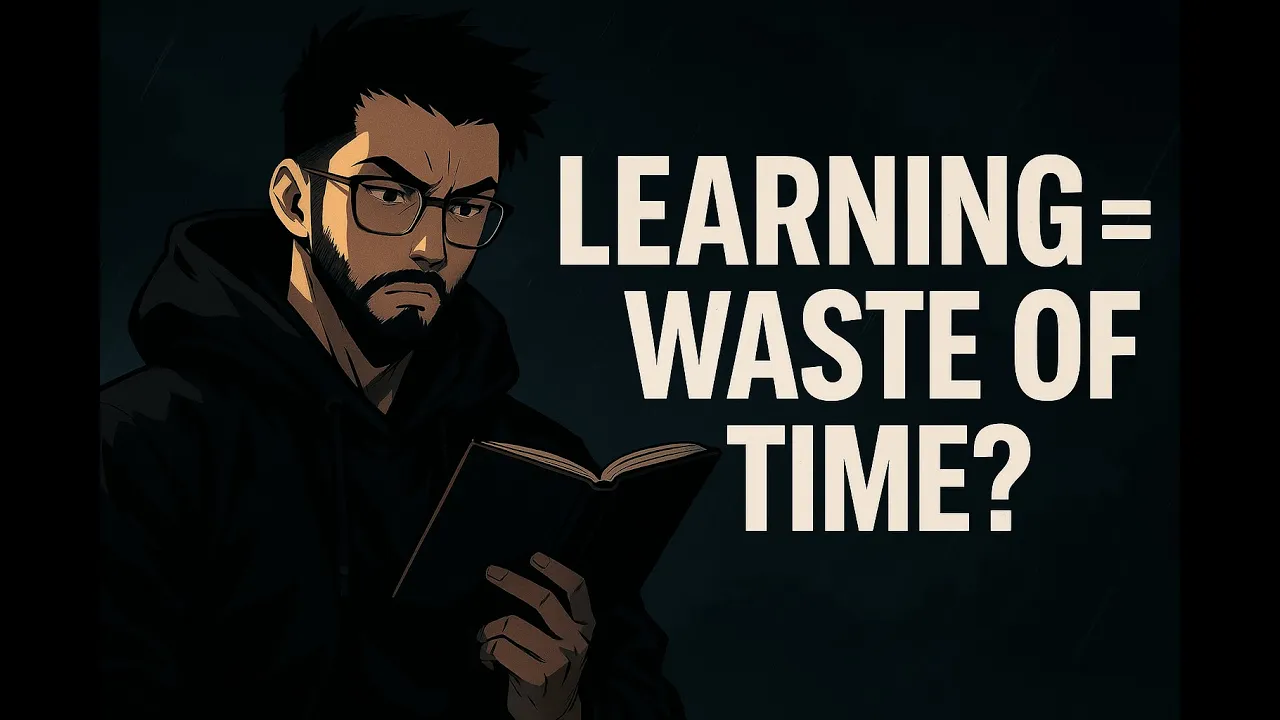
How many times have you heard advice like you need to upskill, you have to learn new habits, and you have to keep improving, you should read more books, and just a bunch of self-help advice like that. But at the end of it, and I'm very guilty of this as well, and so are a lot of other creators that I personally follow. And while this advice sounds good, most of you don't really benefit from it, even if you try and apply it.
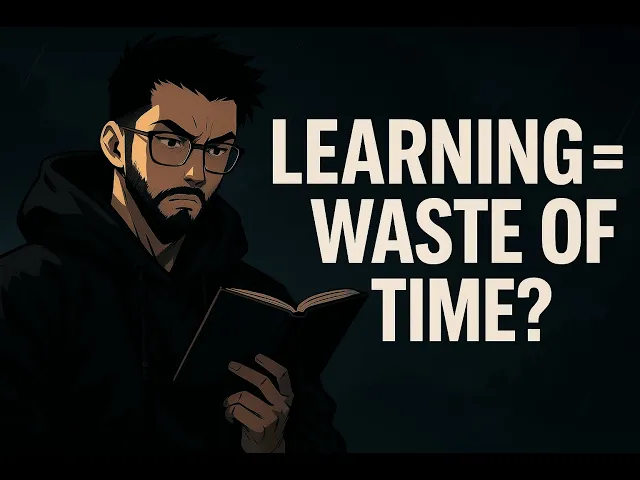
Learning a skill or building a habit just for the sake of it is doing nothing for you. If you don't have an actual end goal to tie this action to, you're just wasting your time. The ambition to learn something without the intention to apply it to a challenge is just a form of mental self-pleasure.
You rack up expertise, but you don't really have a problem to solve. You stand on top of the hill like you've done something, but none of your expertise or hard work is battle tested. You're accomplished, but only in your own bubble.
So in this video I want to break down why people get stuck in a cycle of perpetually learning things but they don't get any results from it and how you can make learning actually work for you. And this video is going to be relevant for everything. Your career goals your fitness goals and any other personal goals that you might have what am I learning and why look around you see people trying to upskill in many domains.
You see people trying to pick up new habits meditation. Someone's trying to read one book a week. someone's trying to trace uh a certification or an online course in coding or whatever the case and when you actually ask them why they're doing this, they don't really have a specific answer.
Their answers at best are aspirational, but they're vague. I've heard it's useful. I saw online that it's a high income skill or this is supposed to be good for me or whatever the case.
You will always get vague results if the reasons why you're doing something are also vague because your decision- making is also going to be based on very vague metrics. And plus, when you don't have a specific reason to learn something and you don't have direct transferability onto real life, you're also not likely to stick with it. And by a stroke of luck, even if you manage to stick with it, you don't know what to do with a majority of this information cuz you didn't have an end goal in mind.
You essentially have picked up a toolbox, but you don't know where to use which tool and whether or not it's usable in the first place. Why having an end goal matters? Now, compare this to someone who learns with some intent.
Someone who's learning better soft skills in communication because they want to build a personal brand or get better at interviews is going to get better returns from the skill that they've learned. Someone who picks up a specific skill in coding because it's directly tied to their job immediately becomes more employable and has better employment opportunities. Someone who wants to get into the habit of eating healthy and training regularly because they want to get in shape for the summer is more likely to stick with it because they have an end goal to tie it to.
The difference is that when you have a reason to do something or you have an end goal to tie it to, you're more likely to stick with it and you're more likely to benefit from it once you do. So, pick a goal. What is it that you're trying to solve?
What is the project? What is the problem that you're trying to solve in your life? Once you identify the milestone, the achievement or the hindrance, then you pick up the skill that's most relevant to solve it.
I, for example, am very new to this whole YouTube thing, right? For me, it becomes all the more important to learn things like tonality, storytelling, etc. The skill is supposed to have a direct impact on my life.
And if it doesn't, I have to ask myself if it's worth learning in the first place. Let's say some legit person online says copywriting is one of the best skills that you can learn, but you're slogging your ass 10 hours a day at a job where the most writing that you do is in an email. How does that have any direct translation onto your life?
You're better off learning a bunch of things before you even arrive at copyrightiting. Now I'm not saying but if you're looking at things from the lens of you're going to do a bunch of things before you reach a single thing that will actually benefit you and at that point you're just wasting your time. The end goal helps you escape the skill acquisition trap.
The skill acquisition trap is the cycle that we just spoke about. You have a bunch of courses bought. You have a bunch of certifications.
You watched 100 tutorials and all you've done is wasted your time. the right way to learn a skill or build a habit without wasting time. Here's how I think you should approach the process of learning.
Number one is to start with the end in mind and preferably during this time also start the process. So if let's say you're trying to get into creating content. Don't wait for yourself to master all the skills where you learn how to create content and edit content and whatnot.
Start creating content and as you go you learn more things through exposure itself. Number two is to choose skills that actually help the process. Once you've started the process of creating content, you'll very quickly understand what might be something that will help you once you learn it.
Copyrightiting, editing, lighting, and understanding the basics of YouTube SEO, for example, might help you massively. You can spend your time on those things that you know that will help you instead of doing a bunch of things then realizing that most of these things aren't even applicable in the first place. Number three is to apply as you learn.
Once you've, let's say, started creating content and you're 10 videos in, every time you create a video, you get a chance to flex this muscle of this newly acquired skill. So, if let's say your lighting is something that you've gotten better at, your next video should have better lighting than the one that you have today. Every skill that you learn should be tested in real world scenarios immediately.
Not only does it sharpen your ability to solve problems, but it also tells you whether or not this source that you're learning from is legitimate in the first place. Look, learning is not a process of just collecting trophies as you learn. It's about acquiring the right tools that will help you get to where you want to go.
There is nothing superior about knowing a topic so deeply where you can write entire books about it, but you can't solve a single problem in your life or someone else's. The idea is to build capabilities to battle test them, not to go to sleep telling yourself that you could if you wanted to. That's a moral high horse that will fall pretty quickly when put to the test.