so the etruscans are civilization that are not addressed as frequently in world history for all that they did for some of the more prominent uh locations in the ancient mediterranean um but definitely keep in mind that the ancient etruscans in particular were extremely influential to the romans which we will see next unit so the ancient etruscans who refer to themselves as the rosena settled in etruria which is this area between the arno and the tiber rivers so it's kind of in the uh northwest central portion of modern day italy so etruscans like genetically speaking were
most likely a mix between native italians so people that have been living here since the neolithic period and people that had migrated from the south including these groups of people that the romans would refer to as barbarians so by around 600 bce the etruscans controlled most of the north and central parts of modern-day italy and they were pretty actively trading and traveling abroad um using seafaring technologies they were trading with the greeks there were um a couple of greek settlements in the southern part of italy at this time um that they were engaging in trade
with they also engaged in trade with people in north africa as well so they borrowed many motifs from mesopotamia and greece in terms of design and architecture etc they also imported a lot of the the gods from the ancient greek pantheon but they had a lot of gods and deities of their own so etruria it is not super similar to greece and rome in the respect that ancient etruria was never really like an empire or a state um its cities like for most of its history existed quite independently from one another they were united really
only in a common language and religion there was a period of about a hundred years where there was something called the etruscan league um so these cities that have kind of like a target on them were part of the so-called etruscan league and they would oftentimes engage in trade with one another or have a more kind of like centralized ideology so even though they were eventually assimilated by rome which would set up right over here the romans inherited many of their cultural traditions and technologies from the etruscans including lots of aspects of their rituals even
like cultural things that we very much associate with ancient rome like gladiatorial combat were initially developed by the ancient etruscans so in terms of architecture there's not much ancient etruscan architecture that currently exists most of what we know about etruscan architecture comes from these various necropolis or one necropolis basically this word means a city of the dead that have been discovered in ancient etruscan cities so um these two primary sites are tarkinia and chavetti which are mentioned in the video at the end of the lectures so the most striking elements of these necropolis are these
elaborately painted interiors um of these tombs oftentimes they were painted and decorated in such a way to emulate an etruscan home so this is consistent with the idea that the etruscans basically believed that the afterlife would be very similar to the life that they lived while they were breathing most etruscan temples were destroyed either deliberately um or because they were made out of perishable materials and they eventually disintegrated over the course of time so most of what we know about ancient etruscan temples come down through us through the writings of a roman architect named vitruvius
so temples were very highly influenced by the greek temples but they had a couple of specific tuscan features for one thing a lot of these temples were made out of mudbrick they had etruscan column capitals and bases which were basically doric columns with bases um and they placed sculptures outside of temples um rather than on the inside there's also this very distinct greek letter pi shaped entrance that is used in many edifices associated with the etruscan so you can see that the lentil is slightly overlapping the posts right here and it kind of creates this
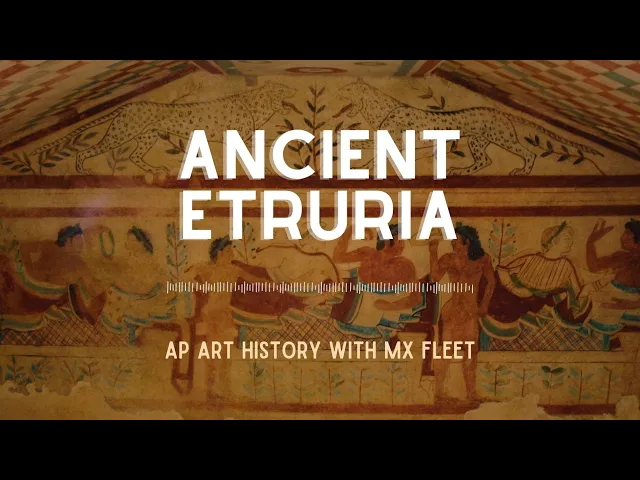
this greek letter pi and the openings are slightly trapezoidal rather than being um completely parallel to the um or completely perpendicular to the ground in terms of paintings um we're super lucky to have paintings from this period and the only reason that they exist is because they were sealed inside of these tombs away from the elements um we don't have that much greek painting to compare these paintings to other than stuff that the greeks painted on phases and a couple of isolated wall murals um but we can see a lot of similarities between the work
of the ancient etruscans and the ancient greeks um very similarly to the ancient greeks men are typically painted with darker kind of like more olive toned skin or like a tan tone whereas women are portrayed as very pale there's also lots of background elements to these murals that suggest a more rural setting so something that is outside of like a more urban center so this is really suggesting that the etruscans valued these rural settings and being out in nature there was certainly a value to be had in being in more urban areas but there's lots
of elements of culture that are that are evident in art that show that these kinds of spaces are valued as well what's also striking is that most of the images that we have of people from ancient etruria they're having a good time people are celebrating we have this dude chasing another dude and for some reason they're not wearing pants we have these figures that are dancing there's a lot of also like coupling that is happening with the figures you you very rarely see a figure in isolation usually like even if there's a scene where there's
like some sort of tension or combat like their figures are put into groupings um the um etruscans really emphasized pairing and like community so that's something that we're oftentimes seeing reflected in these murals what's also interesting is that all these images that show play and recreation are located inside of tombs so in the western world we typically associate death with something that is very sad and somber like funerals are a rather sordid affair they're very somber everybody's wearing black um but all of these people are having fun instead of like mourning the death of the
deceased individual they're kind of like celebrating the life that they had in terms of sculpture there are again lots of connections to the work from ancient greece we have the occasional archaic smile we have this long stylized hair oftentimes in these kind of like knotted or braided patterns the figures are somewhat stiff in the ways that they are arranged we're not quite getting the contrapposto like we're seeing in the classical period of ancient greece also the etruscans did not really use marble at all there was plenty of marble in this region and the ancient romans
would eventually take advantage of it to create their gazillions of marble copies of greek sculptures but the etruscans weren't really a fan of it they actually heavily preferred terra cotta clay which is an additive method rather than a subtractive method so etruscans were also masters of bronze casting and their work was highly sought after by surrounding civilizations and would eventually be kind of like assimilated into roman culture as well another key thing at least in sculpture is that most of the figures in sculpture are clothed including men so that's something that's slightly different from archaic
greek sculpture and these figures are tend to be a little bit more dynamic and how they occupy space so you can see that this apollo right here or apple as he was called in ancient etruria has this kind of like more active gesture one arm was probably at the side and the other was projecting forward all right getting into our artworks for ancient etruria so this is the reconstruction of the temple of minerva and the sculpture of apollo or apple as he was known to the ancient etruscans so there's a clear greek influence here we
have a triangular pediment and this kind of post and lentil orientation you can see that there's these very simple column capitals on top of these columns um but these columns also have bases which is um kind of not something that we're seeing in the doric order from ancient greece so what we know about this temple which no longer exists basically the only thing that's left are the foundations um are provided to us from the writings of vitruvius so the temple was raised on a pretty high podium and bore these three large entrances each of which
led to a small broom or a cello so we're seeing a lot of similarities between this and the white temple on top of the ziggurat where it's relatively simple layout and like separate rooms probably for more individual worship this is not congregational worship like we're seeing with a lot of monotheistic religions later so most of these etruscan temples were not grand in scale they weren't super super fancy at least most of them weren't based off of the writings from these roman architects they tended to be smaller and interestingly they were seldom in [Music] locations that
were urban so it's not like you had a city um and then you had the temple like at the center of the city or kind of like in the more urban areas like we saw with the acropolis in ancient greece this is uh these kinds of temples were more often times located in nature um and they were oftentimes in these enclosures on what they considered sacred ground so um basically also the etruscans were also known for building on really high hills so they would have like really high steep hills and they would just build stuff
on top of it so oftentimes these kinds of structures were built particularly high so the statue of aploo or apollo right here was one of four that were once placed on the temple roof to demonstrate the gods that were being honored inside of the temple so as we can see with this figure he has this forward-facing stride and you can see it's a bit more of an active pose than we would typically see in ancient archaic greek art our next piece is the sarcophagus of the spouses so this piece is terra cotta similar to the
statue of apollo right here um and as you can see in this image this is a sarcophagus of a married couple again the etruscans really emphasize pairing and relationships um in their culture especially between um people who are married one of the things that is also quite noticeable and different from ancient greek culture is that men and women are often times depicted together so this is something that was particularly scandalous to the greeks and romans they thought that the etruscans were just like extremely promiscuous because the women were like a lot of the house and
allowed to like do things whereas in greek and roman society women were expected to stay inside and basically do housework and bear children so when we see writings from the ancient greeks and romans they're very disdainful towards the etruscans at times what we see in this sculpture is a greater emphasis on the torso and upper body region rather than the legs when you look at the sculpture the legs kind of seem to be an afterthought they're kind of surrounded in this kind of like ambiguous drapery and you can see the feet poking out the the
female figure has these pointed shoes that are typic that are pretty typical of a etruscan fashion at this time and the male is barefoot there's not too much anatomical modeling the muscle groups and skulls do not appear to have been sculpted using a model or reference when we look at the profiles especially this is a fairly atypical um profile in terms of like the figure has a pretty sloping forehead and the eyes are kind of carved on the surface of the clay rather than incised in the skull as a typical human would so the legs
bend at the waist and in this unnatural l shape so it if you try to replicate this pose at your desks you'll find that it's very difficult to put your legs out at this angle while you're facing frontally um so there's this kind of twisted perspective in sculpture which is unusual to see and the figures appear to be reclining on this fabulous invention in my opinion called a banqueting couch so instead of eating with tables and chairs um like most of us do in the western world the etruscans created banqueting couches and they had like
several different kinds of them so basically they would usually chill out with their spouse on the couch and eat delicious food out in nature which sounds fantastic to me so in this image we see this symbiosis between the male and the female figure there the man is also kind of slightly looking towards the woman so they're you can notice that their hands are kind of in these cupped gestures so at one point in time these um their hands probably held eggs which were a symbol of the afterlife in etruscan art so like rebirth and new
beginnings this sarcophagus was very large too for a piece that was constructed in terra cotta and actually had to be constructed out of four separate pieces that were attached after firing there's a lot of complicated things that have to happen in order for large-scale terra cotta pieces to occur particularly when you fire the pieces when you put them in the kiln to cure the clay you have to make sure that there are no air bubbles or like sealed off areas because if you put an object in a kiln that has an air pocket then the
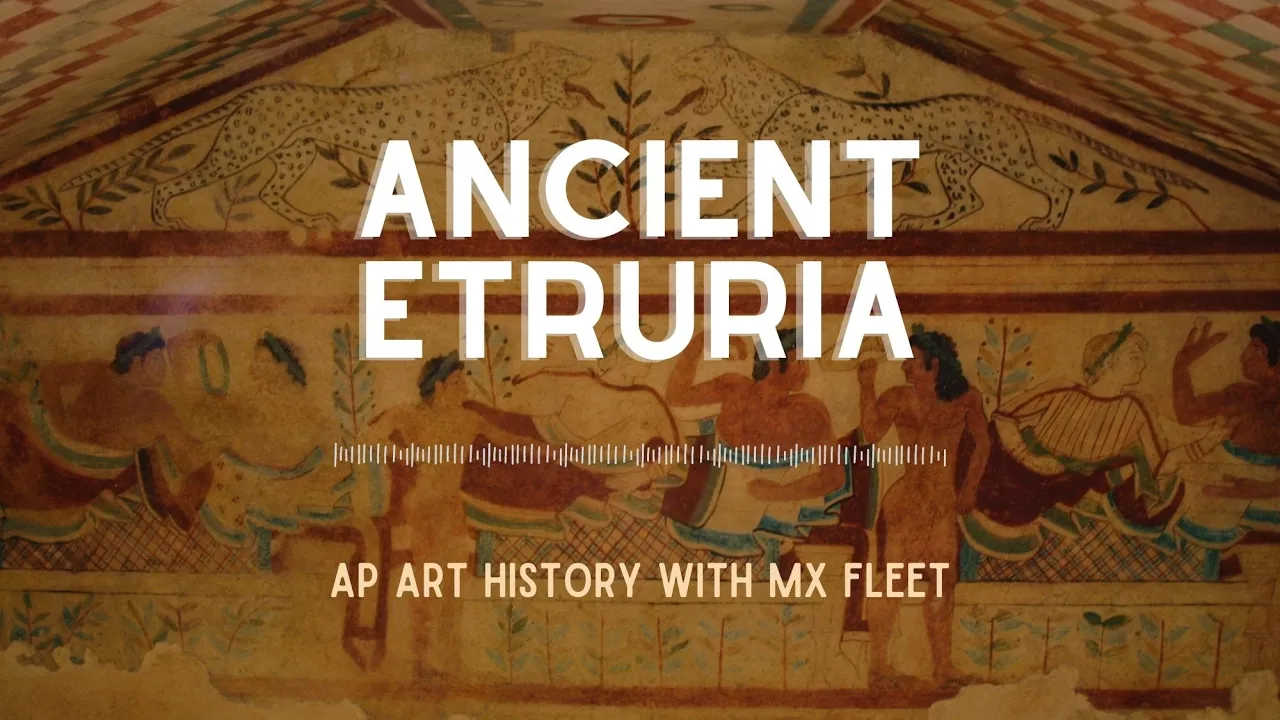
air will expand in the heat and the piece will explode this is the tomb of the triclinium so this particular tomb gets its name from this fabulous invention called the triclinium which is a type of banqueting couch so we can see in these figures right here a very similar pose to what we saw in the sarcophagus of the spouses this cultural element of a banqueting couch so these scenes are very lively and joyful we again have lots of couples and figures in groups you very rarely see figures in isolation in etruscan art even with our
statue of apollo right here there is evidence that he had many other figurative sculptures associated with him and it might have been enacting a scene from mythology so we have this focus on community rather than individuals and there's also elements of the background particularly the foliage i mean there's also some animals as well you can see this wave-like pattern so there might be a river or an ocean nearby that is suggesting a more rural setting so basically kind of like the 2500 year old equivalent of a picnic so this is inside of a tomb again
you would typically expect at least from a western perspective to see more somber tones um figures that are mourning in kind of like the western sense in terms of like looking sad but these figures are celebrating they're eating lots of food and they're dancing and they're playing instruments the ceiling is adorned with these more geometric motifs you see um the checkerboard pattern and then there's also lots of circles on the ceiling circles are oftentimes associated with time in the cycle of life in ancient etruscan art um tombs were also rarely for individuals it's not like
you would have like one tomb for one person um they were much like the crypts that we have in the western world which is basically like a a small-ish like chapel-like building where members of the same family are interred um over the course of several decades so um again like many two malls share this common theme this is certainly not unusual for an etruscan temple for people to be celebrating and having fun they're festive rather than focused on mourning this is a great video right here that i highly suggest that you watch it's about three
minutes long talks a little bit about etruscan art and we'll give you some images of other tune paintings from this period