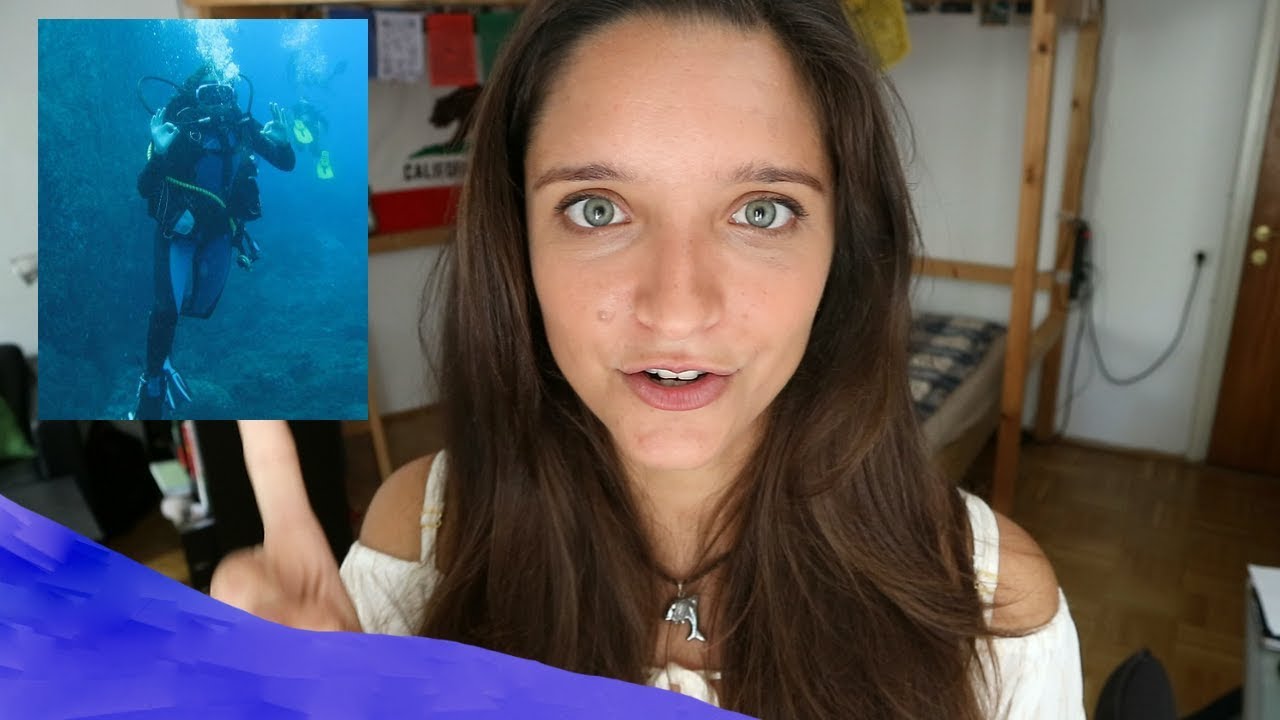
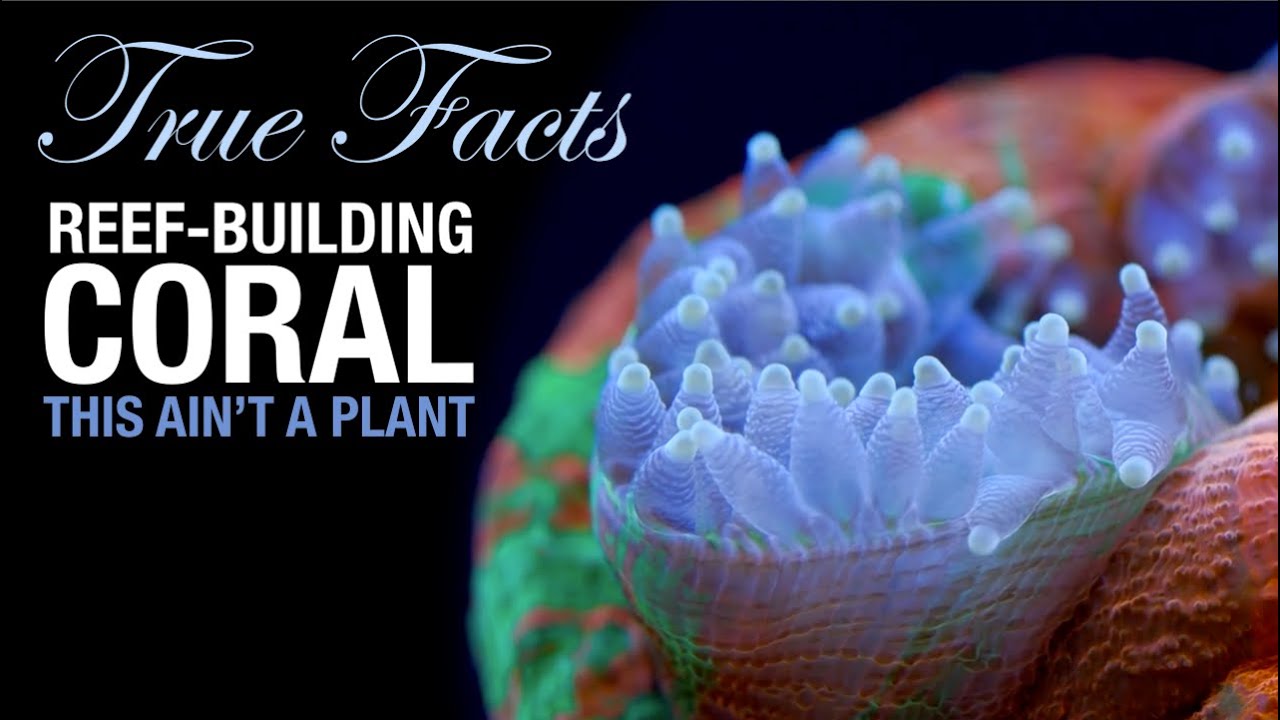
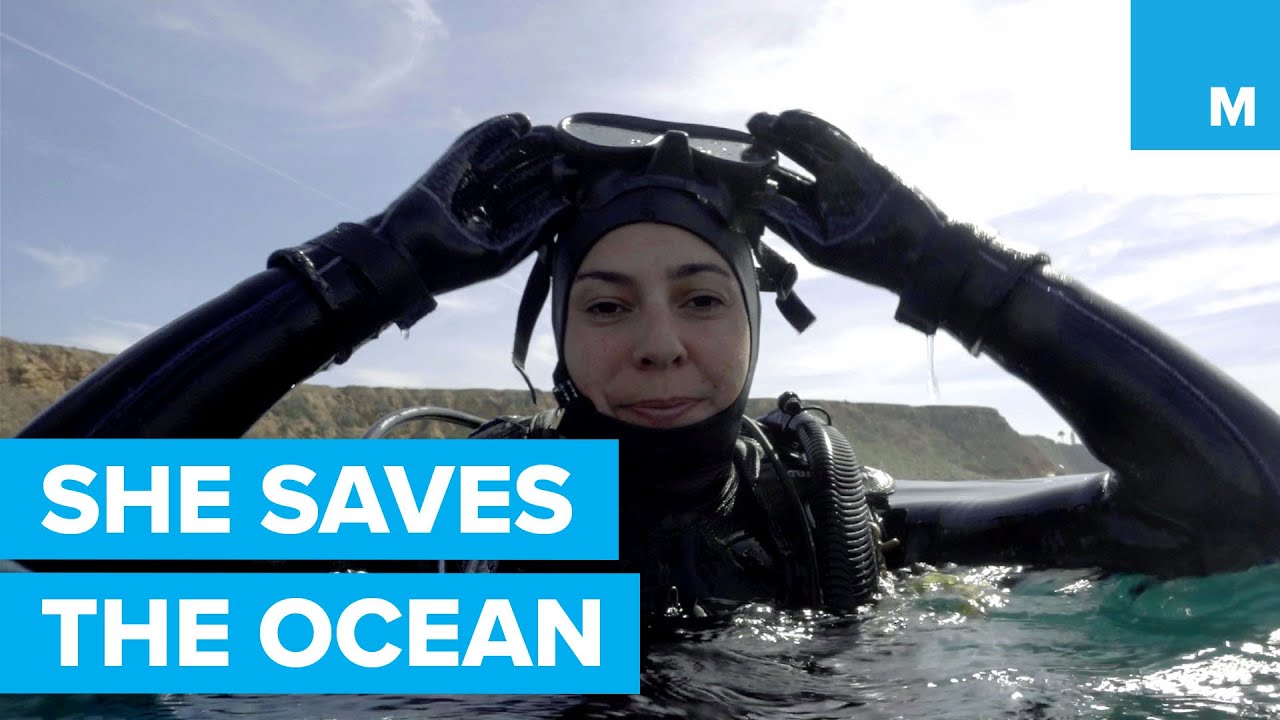
LIVELY MUSIC My name is Ayana…. and this is my office. AYANA: I decided to become a marine biologist because I fell in love with the ocean when I was about 5 in the Florida Keys when I first saw coral reefs.
I thought they were fascinating. NARR: Ayana is working toward her PhD at the Scripps Institution of Oceanography. She hopes to help preserve the corral reels for future generations by studying how fishing practices affect the ecosystems of the reefs.
AYANA: I guess the most rewarding thing about being a marine biologist for me is the opportunity to have a real impact on conservation of marine resources. AYANA: Scripps has an amazing collection of fishes. There are over 2 million specimens in the collection, representing over 5000 species of fish from all over the world.
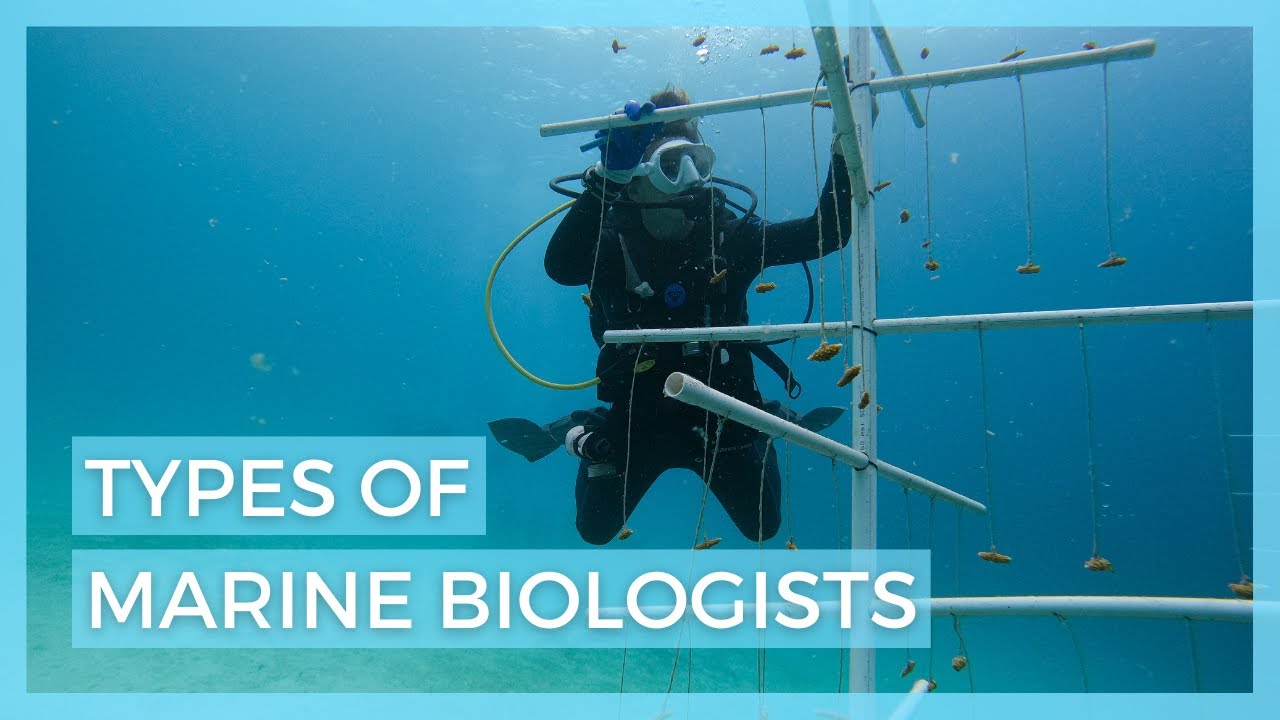
NARR: As a marine biologist, Ayana divides her time between research and classes in San Diego, and her field studies on Curacao - an island just off the coast of Venezuaela. AYANA: The ultimate goal of my research is to be able to create a proposal for the island of Curacao to give them an idea of how to manage their resources sustainably. So that includes both setting aside certain areas as protected where fishing is not allowed to occur and also having regulations for the type of fishing that does still occur.
” NARR: Ayana has three research sites on Curacao, each set with traps made by local fishermen. She has modified some of the traps with exit slots to allow certain fish to escape. AYANA: This is Acanthurus bariene, also known as the surgeon fish.
It’s very commonly found in the Caribbean and also where I do my research in Curacao. And it often winds up in my fish traps. So I want to know how wide the fish is.
This one is 16. 07 millimeters. Knowing how wide they are will help me figure out how wide the exit slot has to be so that they can get out.
Something I didn’t expect was to find so many large moray eels in my fish traps. They can be up to 2 meters long and have some pretty scary looking teeth AYANA: This is a control, so they are really caught. ADVISOR: Can’t they get through?
AYANA: No, they can’t get through, it’s a one inch—this is the actual mesh size ADVISOR: Okay AYANA: There are two different types of slots that I am testing to see if the fish will find them and exit and I am targeting the juveniles and the narrow bodied species as the fish that I want to see exit the trap because they have very little economic value. They don’t really have much meat on them so fishermen aren’t trying to catch them for food. So we are going to Santa Marta uh and I am going to open the traps today – to let all the fish out which is something that I really enjoy doing NARR: There are eight traps at each of Ayana's research sites.
She moves the traps around each week to study how the different trap designs work in various locations along the reef. AYANA: The number of hours in my work week is highly variable. So when I am in San Diego and working on campus it’s like a regular 9 to 5 job.
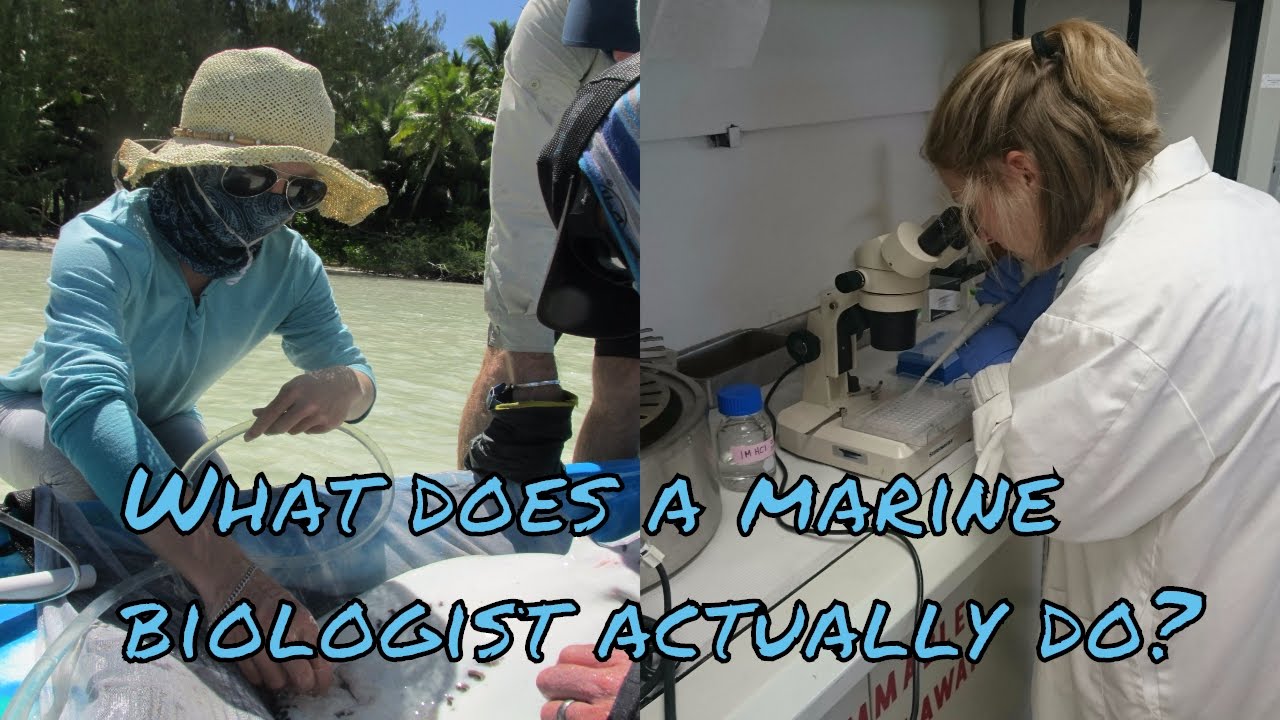
I do a lot of background reading to keep up with the literature in the field. I meet with my advisers. I take classes.
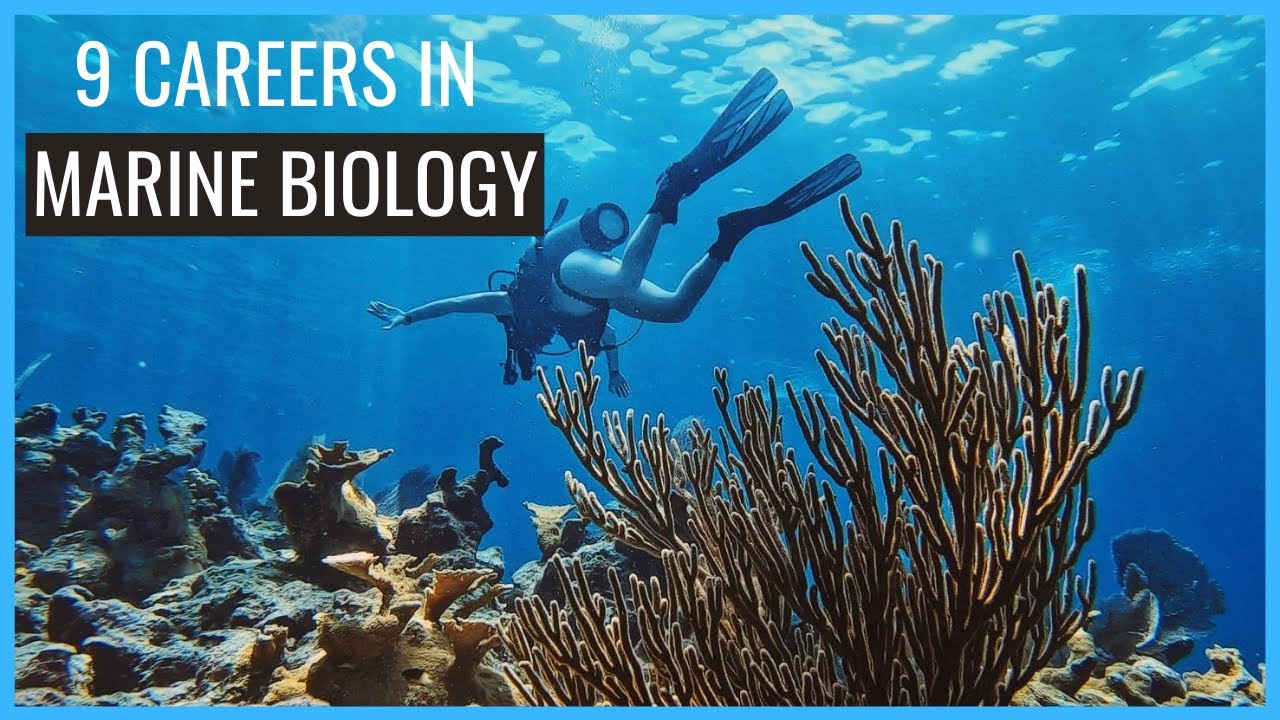
But when I am doing field work, its completely all consuming and I wake up and I get ready to dive and I do 3 dives a day and when I get home I enter data and I prepare my gear for the next day and on the weekends I do statistical analysis and prepare for the next week. . .
there is a lot of data to enter and I think so far I have recorded information on over – well over 1000 individual fishes. So it’s a lot to keep track of. So these are the data sheets that I use underwater.
And you can write underwater if you use a pencil. Here in San Diego for leisure I spend a lot of time at the beach. I live a block from a gorgeous beach and so I go down there just often times to read or to play football with friends or go swimming.
I think marine biology is one of the fields that at least for me you are able to merge sort of playing and working. You go scuba diving, you spend a lot of time in the ocean. You have to spend a lot of time at the beach and at the same time you have the opportunity to do work that is really important for conservation and the combination of being fun and doing something useful.
In Curacao I have a lot less time for leisure activities especially because its really important when you are diving to get a lot of sleep so uh but I have started taking salsa dancing lessons there which is a ton of fun. This is getting serious, I think we’d better ditch the goggles. Divers get really upset when they see the fish in the traps and its been a traditional area of conflict between fishermen who use traps and divers because divers often cut the traps open to let the fish out.
So I have worked very closely with the diving community to make sure that the divers understand that the goal of my project is to help the fisheries department here find a more environmentally friendly way to manage the trap fishery. So the reason that I am most excited about doing this research is that the results will actually be used pretty much immediately. They are in the process of writing new laws for managing the fishing here on the island of Curacao and the results of my research will be used to determine how those laws are written.
which is wonderful motivation to get in the water and do 300 dives because as a conservation ecologist that is my goal to do research that has direct applications to developing policy. You can absolutely make a good living being a marine biologist whether that is as a professor or as a government employee or what I plan to do is work for a non profit. NARR: Like most marine scientists who have to set their own schedules, Ayana finds it easy to work hard when you're doing what you love.
AYANA: I love not having a desk job. I love that my office is anywhere in the world where there is an ocean. You are not going to become a millionaire by studying fish but the travel perks are pretty fantastic.
And you can definitely design your research plan to land you just about anywhere in the world. Everything’s going well, just another day at the office.

![Is being a marine biologist worth it? [Vlog]](https://img.youtube.com/vi/iKhNx6ocogc/maxresdefault.jpg)