We used to do something called, excuse my language, [ __ ] Fridays, which [laughter] is where people would come along and they would talk about something that they tried, which did not work at all. And we would have senior people throughout the business do this as well. And then having people within the room offer feedback as to what can you do next time to make it better or how is a way that You could pivot this idea to either try and create it into something that would be valuable for the business or actually maybe we
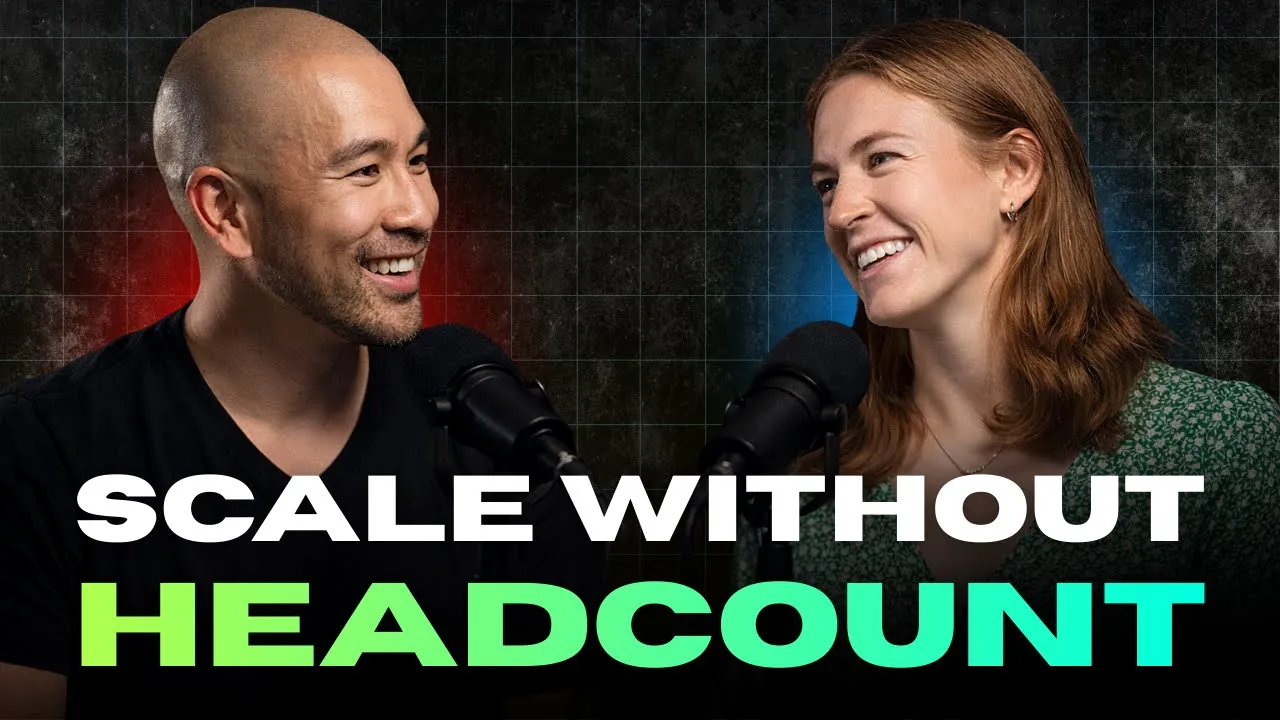
just bin it off and that was a fantastic learning. So those kind of conversations as long as they're done correctly can continue to build psychological safety. Hey, welcome back to the Revenue Vault, the show where we break down how top sales leaders build systems, teams, and go to market engines that actually Scale. Hey, I'm Mark Shan, CEO of Benley, and today's guest is Jessica Stackpool, vice president of sales at MVF. Now, in just seven years, Jessica has earned eight promotions and built a track record most sales leaders never touch. She's consistently delivered above target as
both an individual contributor and a sales leader, including multiple years, the highest billing rep in the business. Now, at MVF, Jessica leads a global go to market For a new product suite with more than 40 sellers across the US and the UK. She's built an internal sales academy, launched China new revenue streams, and scaled a new division from zero to 4.6 6 billion run rate in just 18 months and is currently tracking roughly 160% to target. Now she's known for building structured predictable sales motions, tight cross functional line with product and marketing teams and creating
cultures where teams move fast, learn Fast and own results. Now in this episode we talk about what leaders underestimate when scaling a sales or why the ability to pivot matters more than the original plan. how to build real feedback loops across sales and product and what it actually takes to create predictability without slowing growth. So if you're building a sales or launching new go to market emotions or trying to scale without losing momentum, this conversation is packed with Realworld insight. Let's get into it. So Jessica, you've been really successful scaling your sales or what's something
your peers often underestimate about building a scalable sales or >> that is a good question. Um, do you know what I think it is? The ability to pivot. I think a lot of times people have an idea as to what they want to achieve and you spend a lot of time sort of project managing and thinking about the way that you're going to market. You Do a lot of research. you put together a lot of plans and actually maybe you know day one it's a fantastic start and you you rock it into the market and
you have some good conversations but actually over time being able to look back at what you've done and realize perhaps the original strategy that you went to market with whether it's the product itself whether it's the pitch whether it's the way that you're trying to bring people into your sales funnel it might Not actually be as optimal as you might have thought at the beginning. So, I think being able to look back on that and really be self-critical at every single stage and keep having that reflection is the one thing that's super important to make
sure that you can always be optimizing moving forwards and not just run in the direction that you kind of set out on day one. >> Yeah, 100%. I think it's you're so right where sometimes, you know, as leaders, We have like um we have the plan we put in place and then we'll have like the horse blinders on, right? So, we're like, "Okay, let's just go." if we're not careful, you know, we look up 6 12 months later, we're like, we're nowhere close to where we need to be. So, >> absolutely. I think, sorry, just
to add to that, I think as well, you know, one one element that can come into that is when it's a plan that you've communicated internally and then a lot Of people are sort of invested in it and they're expecting you to go in one direction. Sometimes I think people can feel that pivoting away from that plan can be seen internally as perhaps a failure because you're saying this didn't work and we're needing to change what we're doing and we're needing to go in a different direction. Actually for me failing fast at something, pivoting and
then going on to the next thing is way more important. And being able to Circulate that internally as well rather than just sort of go out on that journey that you've set out because it's what you've internally communicated. I think that can be something that people kind of rely a little bit too much on as well. >> I think that is such a great point because there's a little bit of the um the political dynamic of like kind of your reputation. You you put a plan in place. So in your experience um because You work
in a very nimble environment. How have you been able to communicate effectively to other stakeholders, to your peers, to leadership when you're making those pivots? So it doesn't seem like you're just like just like you shooting from the hippo a little bit. >> Yeah, absolutely. Yeah, I think communication is, you know, the number one thing there and making sure that you're creating forums where you're keeping all key stakeholders up to date On what's going on. So, within my very um close core group of stakeholders that work on this daily with me, we implement the scaling
up methodology. So, we have daily huddles where we jump on together and we discuss, you know, what are the priorities for the day? Are there any roadblocks that we can see are going to come up that will not allow us to kind of hit the goals that we've set out for that week? That's something that we discuss at the start of the day every Single day to make sure that we have alignment. But then we also have check-ins with wider groups of stakeholders throughout the month and then throughout the quarter as well. So with a
wider leadership team, we catch up on a weekly basis just to make sure that everyone's continuing to go in the right direction. If we need to make any pivots, those are discussed really openly and we get feedback in the moment. It's not something that we have To go away and sort of think about and come back to the group and there's not a huge amount of delay. And then every month I also sit in front of the board and I tell them exactly what's going on within my department, where we're seeing successes, where we're seeing
um you know threats to us being able to deliver our numbers for that quarter, whether there's anything I need. that's the point where I can request, you know, submit uh business cases for more Resource or request support from other teams who maybe I don't have an accountable stakeholder for. That's the opportunity to really get that level of communication in front of those people to make sure that we've then got all of the resources that we need in order to continue driving towards that common goal. So I think it's just that transparent communication and feedback that
means that you're always making sure that the relevant people are aware Of what's going on so that everybody can pivot and kind of follow along that journey together. I love that because it sounds like for you know for you you have very specific thing a structure already in place right so you have that weekly leadership meeting you have the monthly board meeting so it's really really transparent now you mentioned like the daily huddle and in in your or typically who's part of that daily huddle that you Have to hold you know to kind of set
the vision for the day >> yeah so it's myself who's the sales stakeholder and then we've got a campaigns delivery manager and then somebody in the product team as well joins every sort of other day to make sure that you know they don't need to be there every day but to ensure that they've got visibility as well. So we'll always discuss what are the campaigns that we know are coming through, which Are the campaigns that are live, do we see any delivery problems with that and then later on in the day, I have my own
daily huddle just with my go to market specialists in terms of the salespeople as well. So again, a great check-in for us to discuss what opportunities are coming up for them that day, what do they need from the campaigns team? any feedback that's been provided by clients in the previous day as well is a great opportunity to raise that then because I Think when you're building something new especially with a go-to market function getting inmarket feedback the time it's being given is so crucial because you know a week can go past and we've completely changed
the way that we're talking about our product or you know we've again pivoted and decided that we're going to take the product off in a different direction if we within that week get a fantastic golden nugget of information from a client about either What they like about our product, the value they see in our product, or potentially something that they don't see as valuable within the product. We want to make sure that information gets to the right team as soon as possible to ensure that again we're we're actually moving with client feedback rather than just
having an idea in our heads as to what we want to take to market and then just pushing forwards with that. Well, what I love uh Jessica about this is It's it's very simple in terms of what it is, but I find most don't execute to that level, right? Because most of them don't even want to do that, right? They're like, "Oh, we don't want to have these daily huddles. We don't want to huddle with, you know, proc and engineering. We don't want to huddle with our daily our sales team every day. It's too much."
But I found personally, it's like it's like running a sports team. And so like when you have these Things, it's like a cadence of accountability, but then you have like a really tight feedback loop. >> So you're able to make faster pivots. You're able to get faster market feedback. Now, one of the things you mentioned earlier was, you know, being able to like reflect and and make changes and pivots based off what you're seeing. Is that is that like a separate process you personally run for how you reflect or is it more in just these
Normal cadences you put in place that allows you to realize, okay, it's time to make a shift? >> Combination of both. So one of the things and the way that I love to kind of lead as you know a director within the business is continuing that feedback loop and always raising that information to relevant stakeholders who it might be appropriate to. So we've got the structure where we do the feedback sessions within our monthly leadership Meetings. We've always got a section within that monthly leadership to go through market feedback. But also when I hear something
from a client that I think could be valuable to product development, I will always share it in our Slack channels and in our groups. Whether it's positive, again, I want to give the team the appreciation. If somebody's really enjoying our product, seeing value from it, we want to communicate that to non-clientf facing Individuals within the business to ensure that they're really seeing value of what they're generating. but also when it's maybe a suggestion as to what we could be doing with the product or a piece of feedback about a part of the product that doesn't
work. I always want to share that as soon as possible into the channel because it might be that I don't have the solution or the idea as to how we can take that piece of feedback and actually act on it but Somebody might else might be able to read that and know what to do with that piece of feedback. So I think it's just always giving that honest communication and having that open and transparent relationship with your internal stakeholders can create opportunities that you might not have previously known could have even existed. You know, we
can sit in a meeting room like this for an entire day and do strategic thinking about where we want our product to go, But actually it's the clients who are going to be buying it and their piece of feedback is going to be so much more valuable. So just making sure that that's always open and available to all of the stakeholders I think is so important. I love that level of transparency through your whole or right because um and especially that last point you mentioned where we could sit all day in a boardroom have big
big master plans you know whiteboard Everything but the customer determines they pay with their decisions in their dollars right >> I remember early on had a really great sales exec uh why became even a frontline sales leader he sent me this uh l kind of cheesy a laminated uh uh sheet and all it said on there in big bold letters was the answer is never in your office. And it was it was it was a good reminder. >> I was like, "Oh, yeah. That's right." If It's like, you know, if we have problems, you know,
with with the clients or, you know, uh with customers, with the product or with our, you know, our our sales team, >> we can't try to think our way through it. [laughter] >> Let's go see what's going on. Let's go talk to the customer. Let's talk to the reps. Let's talk to the the product. Let's talk to the different departments. Let's get in the [clears throat] weeds And together, can we actually solve the problems? And I think that's um it's it's very clear your or really embodies that which I think is very very cool. >>
Yeah, absolutely. I think it's the difference between a business that sells a product and a business that's willing to help their client solve a painoint and you know um solve that problem for them. And I think if you only focus on creating your own product, you take so much of a internal view on what that Product should be. Whereas actually the only reason that you've created a product is to solve your client's solution, solve their painoint. So if you can take that feedback and use that to continue building your product, it's going to make it
more valuable and better than anything we could have internally thought of because essentially, you know, one client's problem is going to be very similar to the rest of your clients as well. So Yeah. No, I I really like that as a saying. That's great. Well, I think it was also very cool too, Jessica, is like I think when when I think about this the sales work, I got to imagine when they say level transparency, it probably makes them feel more excited about your organization cuz they can see like cool like what we're doing actually has
an impact where I think in some let's say really mature organizations, they're like we're just a number. What we say Doesn't really matter. I mean have you seen because of tight feedback loops this have a cultural get this culture getting developed as a result of that like a positive culture where reps really believe in the product? >> Yeah. Yeah absolutely. I think it's it's one of the things that I always try and transmit through any type of goal or target that I'm setting for the team is it's not just a number go and hit it
because you're a salesperson. It is this Is what our business is trying to achieve. This is the vision. This is our why. The why is always going to be the customer. This is what we're trying to help our customers to achieve and this is the value they're going to be getting out of it. Okay. Now, how does our goal as a team ladder up into that strategic vision for the business which will then essentially help our clients as well? I think to your point, if you're just a number coming in every day hustling to Try
and hit a number for the sake of hitting a number, that wouldn't motivate me personally. But knowing that you are a part of delivering your bigger strategic vision for the business and then also helping your clients to achieve X, Y, and Zed, to me that actually gives you a mission. It gives you something to be able to work towards. And I've always found to your point that that motivates people better because they genuinely feel like they're A part of something rather than they're just trying to put a number on the board for the sake of
it. >> 100%. Well, I think it's really interesting. It made me think of um you know years ago I worked for this um uh an organization. Um they're $10 million company called Centas and they basically provide like uniform services, facility services. They sell based businesses. They're like one of the biggest companies in that space specifically. And I remember, you know, talking with um uh one of the the senior vice president of sales. So he had a massive organization. So he probably I think had probably two three thousand sales reps across the board, hundreds of managers,
you know, dozens of directors, dozens of VPs. And whenever he would come into town and talk to any of the sales team because it's when there's that many levels, if you will, it's a very mature organization. It's very easy to get to Get disconnected from what's really going on. And I remember like one of his speeches he had was he like does anyone know what type of business we're in and people are like oh you know like you know we we provide like you know uniforms like you know we sell to hospitals like lab coats
you know if it's if it's a industrial facility you maybe their uniforms construction like carhe heart and he's like yeah that's that's the actual thing but what Business are we actually in everyone's like I don't know like solving problems you know helping them with their whatever he's like we're actually in the job creation business. He's like, and he's like, let me explain. He's like, when we as a sales or perform at our highest level and we sell a lot of business, what happens is now we we we end up going we go and buy more
trucks for delivering products and services. We go and we we hire more People in our plants and factories. We go and hire more service people. We and because of that, we hire more salespeople, administrative staff and all that stuff. So the more you sell, the more jobs you create and the more jobs you create, the more money goes back into the economy and your local economy grows. So when you're out there, you have to remember you are in the job creation business. And I still remember that you don't like, you know, this is By or
15 years ago at this point. I'm like, what a great visual to understand. And it makes me think a lot about what what you guys are doing over at your company too, right? It's like you're not just saying, hey, just hit your number, make some money. It's like this is you are part of something greater. It's mission driven >> and you have a choice now to be a part of that or not. >> Yeah. Yeah. That's amazing. I'm Yeah, That's I'm not surprised that's a story that you remember. >> Yeah. It's still remember this day
as a rep like that's powerful, right? >> Yeah. >> So, as you think through about your running a sales or and you've been really successful, you had like a number of promotions in a very short time. Um what's one belief you you hold about leading a sales organ you think most people would potentially disagree with? >> That's a good one. I would say I I think it goes back to feedback. You can tell that feedback is a big thing for me, but I I very much run my sales organizations with a two-way feedback. And this
might be something that a lot of people who already do, but I know from some colleagues who went on to other businesses since have come back to me afterwards and said, "This is now something that I don't get through my New manager, and I just wanted to reflect on it and let you know how valuable I did find this, and it's something that I'm now asking for within my new role." is when we come into pipeline reviews, you know, each week as check-ins with those individuals, I'll always start those conversations not with how are you
performing this week, but actually how have I performed for you this week? What do I need to do differently next week to help you to Achieve your goal? And I think it just almost reframes those conversations to make sure that they know this isn't a one-way conversation where you just have to deliver your numbers and if you don't, you know, then we start getting serious in terms of performance conversations. But I want all of my individuals to know that I'm there to support them. I don't micromanage them. I don't chase them in the week, but
they have half an hour of my time every week Where we can sit down together and they can say this that you did for me this week was really valuable when you jumped on the call with me and you know you opened up x y and zed through the conversation that was great actually I on reflection would have liked to have had you on this call maybe you know next time we get you into this conversation or there might be something else that they're able to give me but I also think that it creates more
ownership for the Individual then over their pipeline line conversations because if they're able to start by giving their feedback and then they go into their own presentation of their pipeline that week, it's all led by them. So, they talk me through how many opportunities they've created, what the, you know, proposals have been that they've put out this week, what the slippage has been, or what they've been able to progress, and they own the entire conversation. It's never me Checking in on them. What have you done this week? It's, okay, I'm ready to sit here and
listen. you tell me what I can continue doing to help support you. Um, it might be something that a lot of sellers do as I say, but it's something that people have come back to me and said that they really valued at the time. >> Well, I'll tell you right Jessica, I think most are not doing that [laughter] to be quite frank. Well, and you know, I, you know, I've ran, you know, 100 plus person orgs and, you know, I had dozens of managers and and, you know, I've spoken to tons of CRO, sales VPs,
u, frontline sales leaders. I have found generally speaking many of them they say the words they want to have this like two-way feedback culture open door policy whatever they want to state but their behaviors and action don't reflect the words they're saying >> and I think it's really powerful what You're doing right there which is you are inviting them to give you very open feedback because I think many of them are scared to hear what that person may have to say at any level >> right Um, I remember early on, uh, I learned a very
similar strategy, you know, um, from a really great, you know, sales VP because he did to me. It was kind of the same thing. I learned it from him. I'm like, okay, I should do something similar because it was very Simple. Hey, so how how am I doing for you? Uh, what can I do more of? What can I do less of? >> What am I doing that's driving you crazy? >> You know, as as as a sales or as a sales team, where do you think we are the weakest? where can we get stronger?
So, and it was really interesting because um when we get that feedback and then we create that environment and then we actually execute on the feedback over Time they start to trust you more. So, in some you know some some reps they really trust you when you start sometimes they're middle some not at all >> and it's like it reinforces the top ones helps to build the middle ones up and the bottom ones start to move up as well. So, I think it's like >> a really really key strategy and I love that. Was that
something you did every week for every pipeline review? It's something that with new starters I would Do and then as you say you build that level of trust. So it's something then that actually you don't need to have it at the beginning of every session moving forwards because people know okay she's not just asking for the feedback she genuinely wants it. And also I think one thing that's so important is if someone gives you feedback and valid feedback of course if somebody gives you feedback which is just a complaint because they're not putting the time
in or the Effort in and they're not getting the results that they want. That's then a coaching opportunity where you say okay this is the feedback that you've given me. What is it that you want to achieve out of giving me that feedback and how can we kind of circulate back to make sure that what you're doing will get you to the objectives that you need rather than it just becoming a complaint. But for the ones who really take it on board, it becomes something that Actually each week there might not be a piece of
feedback and I don't have to nudge them because I know that when they do have something that they need to share with me. We've then built up that relationship where they're comfortable to do so and that it will come up organically because they feel, you know, that psychological safety with me that it's something that I will be able to take on board on and they genuinely believe that it will be implemented Moving forward. So to your point, it's not something that kind of comes up every week, but once you've created that structure and that environment,
it's something that comes out as and when it's needed. >> That's powerful. I love that. You're so right. And what about, you know, if you're in a higher level role and you like maybe multiple layers from like the rep level, how would you recommend a leader in that in that role do the same Thing? because they may not have that conversation every week with a you know with a rep but how could they also create open lines communication create that tight feedback loop do you think >> yeah I think it's obviously organization to organization it
will be very different but we've also we we do some things within MVF to create this kind of psychological safety and make sure that the environment of failing is one that we promote >> and the idea of you can go out and try things they will not always work but actually they're always an opportunity to gather data gather feedback understand what's working and the entire business can benefit through learning from it so we used to do something called excuse my language [ __ ] Fridays >> which is [laughter] people would come along and they would
talk about and this wasn't just within the sales team although we did then silo It off and have a sales specific one but people would come along and they would talk about something that they tried which did not work at And we would have senior people throughout the business do this as well. And when we then took it into a silo and did it for the sales team, we would again have senior people sitting there talking about things that they tried that had failed and then having people within the room kind of offer feedback As
to what can you do next time to make it better or how is a you could pivot this idea to either try and create it into something that would be valuable for the business or actually maybe we just bin it off and that was a fantastic learning. So I think again those kind of conversations as long as they're done correctly can continue to build that psychological safety that actually within MVF we don't have that sort of hierarchy where people are concerned About having conversations with people senior to them. It's always a learning opportunity and anyone
within our business will give anyone else within our business 30 minutes to have a coffee. That is something that we really encourage. You know, I've had so many coffees with the CEO and when I first joined the business, I asked for one in my first week with the sales director. Then she sat down with me and we talked about sort of my uh potential career at MVF, her career. And just having that level of communication throughout the business, I think makes people a lot more willing to give that feedback and to then have those conversations
when they do have something that they want to share because it is more of that. Again, it's a bit of a buzz word, but open door policy where people are open to having conversations with others within the business rather than just kind of staying within their own level. >> I think it's really really really cool because um there's I think there's a lot of like these uh subtle uh simple things that are just done really well. Like for example, the [ __ ] you know, the [ __ ] up Friday. I think it's actually a
brilliant idea, right? I think I think Apple had they didn't call that I don't know what they called. They had something very similar with, hey, we just fail forward, right? Right. So if we're not we're not going forward, we're Not going to innovate. Like that's just what happens. We're not going to get better, right? So I think it's very very similar and it sounds like it really ripples through the whole org, which I think is like really really cool. >> Now we're going to pivot a little bit, right? Because you have built some, you know,
multiple brand new go to market motions from scratch and has found a lot of success and you probably have pivoted all the way through. Can you maybe walk Us through uh your current revenue motion from initial lead to close? >> Yes. So all transparency, it has been chaotic. It's still pretty scrappy in terms of what we're doing. Um, but we are working on it every single day. And actually, if you'd asked me this question 6 weeks ago, Marcus, it would have been very different to what it is now. This is literally how quickly we are
changing. Love it. >> So it started as a opportunity where Essentially I was the core person driving the new revenue. the people within our hunting team, so our new business sellers would go out and identify market opportunities and then they would bring me into the conversation if the products that I'm leading on were a good fit. >> Now, [clears throat] I've just gone out to we've got uh the most of our sales team sitting in Austin and Texas and I don't know if you can tell by my accent, But I'm based in the UK. I'm
in London. >> I figured you weren't from Austin, Texas. >> [laughter] >> apart from this map of London behind me, but otherwise um and so I've just gone out there for the third time in the last two quarters to go out. So we've done different stages of training with the team out there. >> Awesome. >> The first one was introduction to these Are the products, this is the go to market strategy that we want to take. This is giving you awareness so that if you see opportunities within your current pipeline because what I'm leading on
is an upsell. to our existing core products rather than something completely new. Then you can bring me in and I'm going to support you taking this to market. Then the next time we went out there, it was more of a okay, teach them to fish rather than fish on their Behalf and show them, okay, these are the different ways that you can pitch the product. These are the kind of pain points that we're looking for. These are the opportunities where you can really go and explore them in more detail with these other products. And then
the last time I went out it was more of a handing off of the opportunities. So within these products it is more opportunity spotting where we know that there is a great upsell opportunity rather than a Pure go to market function at the minute. But actually the reason that I say something is changing is that what we've done is we've identified that there's a huge target addressable market that we could now be unlocking with these products that I've launched that wouldn't be a good fit for our core business. >> So we're now actually creating rather
than this being only an upsell motion. What we're doing is we're currently Looking to build out an SDR motion who will be able to go out to this t um target account list that we've created and start driving net new opportunities within this solely. That's our plan for January. So the reason that I say it's scrappy is we actually haven't identified exactly what the route is going to be at the moment. But again, we are trying things and we're going to have that going for three months. We're going to have very precise metrics that We're
going to follow to understand if it's working. If it is great, we're going to start scaling that. If not, again, that could be, you know, the next topic for our [ __ ] Friday and it's something that we've learned from and it's something that maybe we won't continue to do into Q2. >> Well, I think it's really really cool, right? Because this is real life, right? This is real life of, you know, launching a product to go to market and See how it kind of flows from there. And it sounds like initially you're focused on
having more of an upsell upsell motion, right? And now you're going to focus on the the, you know, the new business logo uh new, you know, the new new business uh motion. What kind of drove you to make that shift? >> It was understanding again the client feedback and where the value of our product actually was versus where we thought it would be. >> So we thought that the value of this product was layered on top of our other products. So essentially a very quick kind of overview of what we do is we're a media
and marketing platform. We run mostly bottom of the funnel lead generation for scalable businesses in order for them to deliver against lofty targets. >> What I'm now launching is top and midfunnel brand awareness campaigns. Yeah. >> And where we thought that they would provide value was if somebody's buying bottom of the funnel from us through our channels, through our sources, if we can introduce their brand to our audience earlier in the funnel, that's going to increase their conversion rate on the leads that we send to them. And that's where we saw the value of the
product. So, if you're not buying our bottom ofunnel leads, we wouldn't necessarily see that the top ofunnel is something That you would want to invest in. Now actually what we've started hearing from the market is some of our top offunnel activity is showing up in AI overviews and is getting clients listed in those LLMs which is as I'm sure everybody who watches your podcast knows >> getting visibility within AIS is something that every single business right now is trying to understand what they can do and actually the value of us being able to produce a
piece of content From our third party content brand and talking about a client even if they're not buying leads from us that can still provide value because if it's helping them to get visibility within the AIS that's something that they really really want to do and want to invest in. So again, we saw the value of our product one way, which we wouldn't have thought there would have been an addressable market outside of our core business, but actually what we heard back from the Market is the value of this product is is nothing to do
with what you already sell to us and we want to invest more in this because it's opening up a new KPI for us that previously we haven't known how to improve against. So actually what that then allowed us to do is understand okay well we can then do this for anybody and they don't need to be a perfect fit for our bottom of funnel campaigns where we take a lot of care in qualifying our opportunities because we Know who will and won't work within that service and we don't work with clients who we know it's
not going to be a product that will be valuable for them. >> That's very cool. Right. And and for you because now you have this new hypothesis. That's how I think this is a hypothesis. this is what we want to go after. Um, when you have a hypothesis like this, um, and you mentioned like, you know, probably having an outbound team, etc., are you redeploying current Resources or you guys going to hire a whole new team and kind of go from there? What's kind of plan you have in place? Because it's I I think it's
like for some orgs, they'll be like, >> let's just have some existing people do it first before >> before we invest resources into a hypothesis that we're not 100% certain it will pan out. >> Yeah, it's a good question. So the first thing I did was when we first started to Get this feedback in, I obviously went out and gathered more data. So this isn't just a one person said this, let's change our entire go to market [laughter] feedback. >> Right? >> So I heard this piece of feedback from one client. I went back to
all the clients that we previously sold to and asked them questions to try and uncover without asking them directly. I wanted To uncover the value that they were seeing in the product and a lot of them started mentioning AI. Then I found a conference where I knew AI visibility was going to be one of the main topics in New York. And I went out there and I spent a lot of time meeting people within New York to understand, hey, this is a problem. How are you going to solve it currently and every single client that
I spoke to spoke about the need for third party partner content? And so it Started to build up this business case that it was okay. Yes, it is still a hypothesis, but we know that the need is there. So it's now a hypothesis that comes with data. And then what we were able to do was to your point leverage our existing sellers to go out and start having conversations within their clients to again prove that this hypothesis was genuine within those different categories. and then off of the back of that create a business case To
go to the board and say this is something that we need to invest in. We need to move quickly to be able to make the most of this opportunity and that's where then the ball started rolling in terms of okay how can we bring more individuals into the business and create some specialism within this particular go to market function. >> I think it's awesome. I think it's a very good it's like the the way you describe it. very scientific approach And how you go about launching it, right? Where I think a lot of people fail
was like, "Oh, we talked to a few customers and clients. Okay, we think it's pretty good. Let's just go and hire a bunch of people now. >> Let's just like, you know, put them in a room, make them outbound, and go after a list. See what happens from there. And hopefully we have product market fit. It's going to be awesome. Oh, it doesn't work after uh 6 12 months. Let's fire The whole team and go a different direction, you know, which is obviously not going to use the resource." I think so. I think it's a
really really cool way. So, you know, for you, um, when you look at deals, this could be within your I guess probably in your past process, right? When deals typically stall, what's what's the most common root cause you see in your experience? I >> think it goes back to and I mean, in short, qualification. So, understanding Why have you taken a deal from initial conversation through to a proposal? >> And it's that difference that we spoke about at the beginning on have you sold them a product? Yeah. >> Or have you shown the prospects that
you have a solution that will solve their pain point? >> And I think the most of the times that deals start to slip is where you haven't gone through the process with your decision maker, your economic buyer, Whatever terminology you want to use, you haven't shown them the implication of, hey, we've discussed that you have this painoint. >> We've discussed that by implementing my solution, we will together be able to solve your painoint. And the implication of solving that painoint is that you will then be able to achieve x y and zed or you'll be
able to save you know a b and c. If you've gone through that journey with them and you've created Such a solid business case, I genuinely believe at every point, even if you know their priorities start to shift, you'll always be able to go back to them and push on that painoint that you've created together because you know that it's something that they've now come to the realization that they have to solve within their business and you just have to help them kind of go over their internal roadblocks in order to get that budget. Whereas
if you've sold them a Product that looks shiny and it feels nice and it might make their life a little bit easier, that's something that they can always shift to the back of the queue because you haven't done that depth of discovery with them where you've created it into something that is going to be that persistent pain point that if they don't solve. You know your numbers as to what the implication of that not being solved each month is going to be. and you can use their own Numbers back to them in order to create
that level of urgency. >> 100% right. You know, it's classic spin selling at best if you will, right? And you know, I find a lot of sales people generally speaking, especially if they work in like tech, they get really excited about what they have. It's cool, shiny, new, and they think the product will sell itself. Uh, and that that might work, you know, call, you know, the pre-zer era, if you will, where it's Like easy to get money and it's like everyone's got money to spend. The econom is going great. But when times are tougher,
markets a little markets are uncertain, people are more hesitant to spend money. So we have to link that level of pain. And I think it ties back to even what you mentioned before, even what you do internally with your org, which is you're linking like, you know, the ro the role of the rep all the way through the highest level priorities of The business. It's like the same thing with the prospects, which is like being able to link the problem that you're solving to the highest priorities, you know, the implications like you mentioned. That's how
we get deals actually move forward. That's how we get them to break free from a mission bias and actually break free of status quo. Uh which I think is really really really cool. So what's really interesting with with your biz about pivot and start into You know a new go to market motion if you will right? What's maybe one challenge you run into with your sales or if it doesn't get like fixed or figured out next 12 months you'll be kicking yourself >> pipeline funnel and the visibility and the predictability of that. So as I
mentioned in summary, our current go to market function and the sort of funnel that we have is quite chaotic. We're trying so many different angles at the Moment. We're investing in new resources and you know we we have different accountabilities and currently different funnels as a result of it because we're just testing and actually in 12 months time if I communicated in the same way about our funnel that would be a huge failure. You know, we need to get this to a position of predictability because we need to be able to accurately forecast what our
revenues are going to be. And the only way you can accurately Forecast is if you can have confidence in between the stages of your funnel what your expected conversion rates would be and what your expected slippage will be. At the moment, because we're pivoting and we're changing so quickly, we haven't been able to build up statistical data to rely on >> because we don't have enough of it. Exactly. Yeah. >> Um, but I think we need to as we move through maturity and get to the point Where this is a product that has now been
launched to market which we are getting very close to and we have confidence in what our funnel is, we need to start building up that data so we can have more predictability so we can have more accuracy in our numbers essentially. >> 100%. So with that being said, right, because you mentioned um often this is going to be a new motion for you guys to go into. Um have you uh do you give I Know you pivot really rapidly which is really really cool but you know when you go to a whole new motion like
this do you set like a mental timeline? Okay, we're going to give us 90 days for this to work out or something to to make sure before you pivot again. Is there like a timeline you kind of gauge roughly in your head? Yeah. So we do we run on a quarterly basis and as I mentioned so we have our daily, weekly, monthly, quarterly Standups um with different levels of stakeholders and we always set ourselves targets that we need to deliver by the end of the quarter and if we haven't got there that's a good opportunity
to look back and understand was it because of a route that we took not working out do we need to again pivot that but I think to you know your point if you don't set yourself strict timelines it's very easy for something to just slip and suddenly you've been testing something for 6 Months. >> But if you haven't actually concluded was it a success or was it a failure? A test can end up then la lasting 12 months and actually you can't be in testing phase for that long. You need to make some decisions and
then you need to create some structure otherwise you're just going to be sort of you know flailing around without any decision as to which direction you actually want to go in. >> Uh have you ever read the book? It's called The 12week Year. I think it's by Brian Moran. >> Oh, no, I haven't. >> So, um really good book and um it's it's I love the principle behind it, right? Because oftentimes, you know what what it talks about is most a lot of people set like annual goals, annual plans and um and whether they're mature
organization or if they're in start for personal, professional, whatever, they Set an annual plan. They're they're all except for the year. This coming year, we're going to do x amount of revenue, whatever. Um, but it's kind of like what Mike Tyson said is everyone's got a plan till they get punched in the face. And you know, and you're right, sometimes like six months in, suddenly we we forgot the plan. We we haven't deviated. We haven't changed. We haven't re reflected. And suddenly we're like, "Oh man, like it's we're we're too late to Pivot now." Or
maybe it's nine months in or whatever. It's like it's too late at this point. And especially in in a role like yours and many other execs, I mean, you're not going to last long at that point if especially if it's like trends gone that long. What the 12-week year talks a lot about is um instead of planning for a year, you build 12week sprints. So basically a quarter if you will, right? >> So it's like, all right, cool. Like you Know, for example, it might be like, all right, 12 weeks, this is our hypothesis. Here's
exact things we're going to do each week. And now we we ex the plan for 12 weeks. It's it's a simple focus, but that's all we do. And then after 12 weeks, then we reflect and then we pivot. Again, you're kind of similar already, right? But it's like I found that to actually be really great for even from the highest level I do for my own business, right? I did when I run You know 100 person plus org as well. I've done even as a rep because even as a rep when you kind of build
that plan it's like a little bit easier to run your run it quarter to quarter and be focused versus like this year as a rep I'm going to close three million bucks and then you know nine months in like oh my god I'm close only close a million bucks versus like all right this quarter we're going to close like you know we're going to close like 750,000. All right, Here's the exact plan. Every week are the exact tasks I'm gonna do and that every week my focus is just those tasks. You you're doing some kind
of similar already, but that might be a book worth uh looking into because um it kind of runs into the model you're already doing already in a really structured way too. So >> yeah, absolutely. No, thank you. I'm going to look it up for sure. >> 100%. So if for example, this might Become a tricky question. If you if your CEO said, "Hey, Jessica, I want you to I want you to double revenue the next 12 months and you don't get any more resources, okay, we can't any more headcount." [laughter] If you had those constraints,
what would you need to change? What would you do? >> It's a tricky question and something that I can see happening actually. So, you're probably getting me one step ahead of my next conversation. >> Good. Good luck. >> Yeah. Um do you know what I think it would be is truly understanding from the campaigns that we have launched where they've been successful going back to those clients and again so this AI product was just one product of a suite that we've launched but going back and understanding okay where we've had success why have we had
success and what are the parameters of that type of client that have meant that these Products have been successful because we sell on a uh renewal basis so It's not a subscription where you've signed up for a year and brilliant, you've got your revenue. We have to keep getting clients to renew with us. So that's why on our call products, our ability to qualify a prospect before we speak with them as to whether or not they're going to be a good fit is so crucial for our sales team because you don't want to be putting
in hours trying to um engage a Type of company that then you have the first conversation with them and you understand you're not going to be a fit for our solution. I think what I would do and what I should be doing is really digging into, okay, we've got this target addressable market, but which are the clients that I know >> that product is going to be successful for versus the ones that I think it's going to be successful for and what are the characteristics of those types of Businesses. So essentially, how can I identify
what are the exact ICP that I need to be going for so that we can concentrate all of our limited resources because you're being mean and not giving us any extras [laughter] and making them as efficient as possible to ensure that every conversation that is had is more likely to get down that route of okay, we found your pain point and our solution is the one that can solve it. >> 100%. I love it. Right. I love your um logical scientific step-by-step approach to running the business right across the board. I think it's um you
know I think a lot of leaders almost run off like gut instinct. They're they're not going they're not getting the data. They're not really taking a look at trends. They're not making decisions based off that because you know I find it's like you take the data as one piece and you take other other data sources and you Maybe have some gut feeling too and you together you make a decision towards where you want to go and that's what that's what you're doing based off of what you told me today. So I think it's very cool
versus some leaders are like uh you know what today feels like a good day to do this. Let's just go do this. It's a gut feeling and they and they do a lot of flavors of the week if you will and then uh you know the team is confused and everyone's confused. It's Not good not a good thing. So it's been an amazing conversation. Jessica, if people want to learn more about you or MVF, where can they find you and learn more about you and MVF? >> Uh they can find me on LinkedIn which will
also direct them to MVF where they can find out loads more about all of our different uh services and solutions. That's a wrap on this episode of the Revenue Vault. If you got value, here's your next step. Go to Venleyconsulting.com/teams and get a free performance scan of your sales or we'll show you exactly where deals are still and how to fix it. And if this episode gave you even one insight worth sharing, send it to a sales editor you respect. I'm Marcus Shannon. Extra bean in the room.