How the Maya Civilization Viewed Astronomy Humans have always had an innate need to observe the sky and the stars throughout history. On the European continent, civilizations such as the Greeks, Egyptians, and Babylonians developed essential astronomical knowledge that revolutionized knowledge and is still used today. But there was a civilization in America that was not far behind, the Mayans.
The Mayan civilization was one of the most important on the American continent; they developed essential agriculture, mathematics, and astronomy knowledge. They were the first civilization to implement the number zero in America; they knew how to predict eclipses very accurately and created one of the most accurate calendars in history, which caused the panic of many people in the past decade. How did this civilization develop such complex knowledge, and what was its worldview?
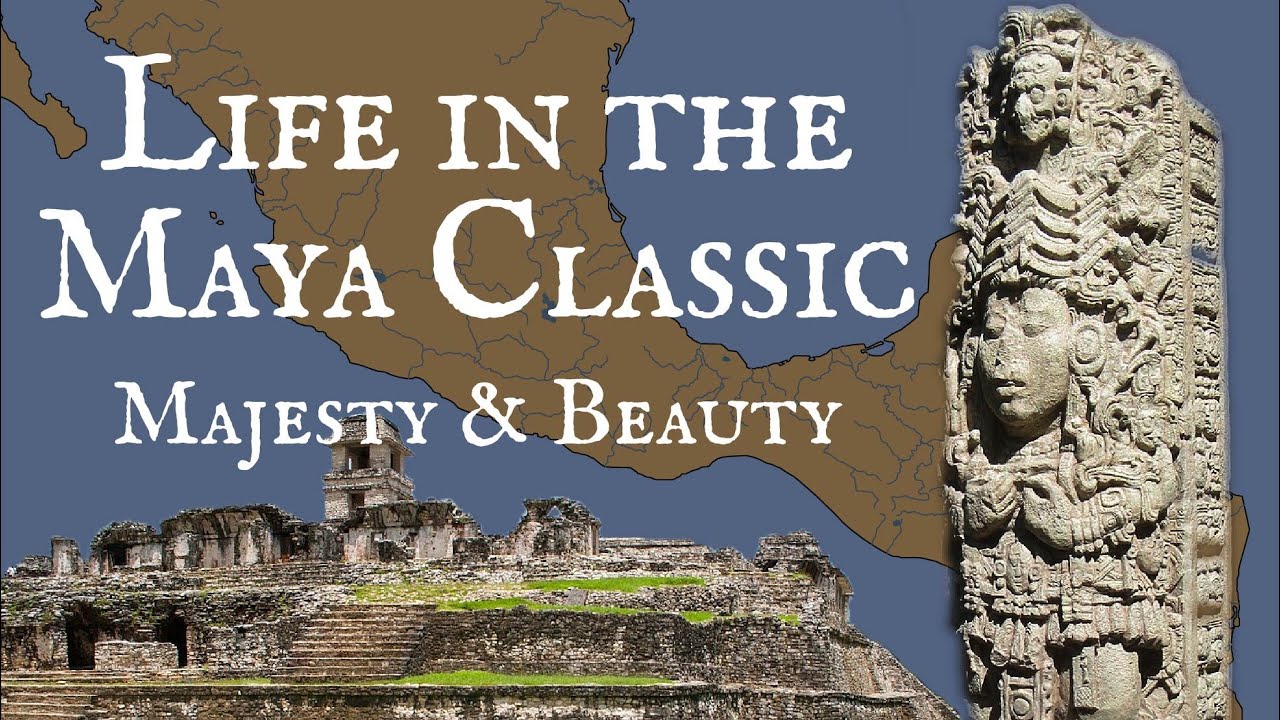
In this video, we will find out. TIME The Maya were a civilization that developed in Mesoamerica, specifically in the region where the states of Yucatan, Campeche, Quintana Roo, Chiapas, and Tabasco are currently located as the countries of Guatemala, Belize, Honduras, and El Salvador. The oldest records of the Maya date back to 1,800 B.
c. And the last city to be abandoned dates from 1697 AD. The reasons why a civilization as large and thriving as the Maya disappeared are not entirely clear.
Still, the most reliable historical records point to wars, famines, and natural disasters playing a significant role in ending one of the most enigmatic cultures. COSMOVISION The Milky Way was the central part of Mayan cosmology; they called it Waka Chan and directly connected with Xibalbá, the underground world of the divinities of disease and death. Like Indian culture, the Maya were polytheistic; they believed in different deities.
These deities received different names and properties; for example, the planet Venus was called Ah-Chicum-Ek', the morning star. In Star Mayan language is called "ek" and is also the surname of many people in the Mayan region today. The Maya conceived the cosmos as a structure divided into three levels, and each level was divided into four corners.
The celestial vault was on the upper level, where the main astronomical phenomena took places, such as the sun’s path, eclipses, or solstices. At the intermediate level was settled the world of mortals. All aspects of their daily lives developed on this level; in this sense, the earth was conceived as a large square area whose corners were oriented in the direction of the cardinal points.
The lower level, located under the water of the oceans, was occupied by the underworld called Xibalbá. In this dark place, the sun fights a ruthless struggle after its daytime tour of the celestial vault. The Mayans did not worship the solar presence, but the spirit it represented, which they called Ahau-Kin; this powerful spirit fought every night against the infernal beings and deities in the Xibalbá and, after defeating them, restarted its journey through the upper level of the universe.
The relationship and closeness that the Mayan people had for their deities were so great that their lives were governed for what their gods dictated to them. TIME COUNT When the first Spaniards arrived in the Yucatan Peninsula, they observed that the Maya counted time using the cycle of the lunar phases. Bishop Diego de Landa stated in his notes: "They (the Maya) have a perfect year like ours, 365 days and 6 hours.
" The Maya had two ways of counting the passage of time using months. In the first form, they divided the year into lunar months of 30 and 29 days which they called "uh," which means moon. The lunar months were counted from the first appearance of the crescent Moon in the evening sky to the next.
Therefore, this definition approaches the modern concept of the synodic month, which describes the cycle of the phases of the Moon. The second way of counting time for the Mayans was to divide the year into 18 20-day periods, and each period was called winal jun ek'eh. This second method left them with 5 days used as festive dates at the end of each year.
Like any long-lasting chronometric system, the Mayan calendar has a starting point, day zero. That initial day is 13. 0.
0. 0. 0, that is, 4 ajaw, 8 kumk'u, which in translation to the Julian calendrical system to which we are accustomed is equivalent to September 8, 3114 a.
C. CALENDARS The Mayans believed that the stars were their gods, and they told them what to do, so to remember the divine mandates, they created calendars in which they captured the movement of the stars. Their obsession with understanding what was happening in the sky led the Maya to create precise calendars.
In the Mayan calendar, several time accounts coexist: 1. The sacred calendar (tzolk'in or bucxok, 260 days) 2. The solar cycle (Haab, 365 days) 3.
The 52-year-old calendrical wheel 4. The long count of 5200 Tunes (5125. 36 years) 5.
The lunar count of 18 lunar months 6. The Venusian count of 584 days 7. The Night Lords' Account or Bolon Tiku 9 Days Among some others, these were the most used.
One of the systems most used by the Maya was the famous long-count calendar, a system in which they combined the 260-day tzolk'in calendar with the 365-day Haab calendar to form a synchronized cycle lasting 52 tunes, equivalent to 18,980 kines. The basic unit of measurement of the Mayan people was the kin, this represents a solar day, followed by the tun, which represents a year; 52 tunes are 52 years, and 18,980 kines are 18,980 days. The Mayan count was carried out according to the vigesimal system; it was based on the number 20 instead of the number 10 as the system we use today.
And the dates were represented if columns that were read from the bottom up in a positional system that used zero to represent vast quantities. In this way, they had calendars where they could count up to 1 million days, equivalent to more than 2,500 years. A period of time much impressive if we consider that very few civilizations in history made calendars that could represent so many centuries.
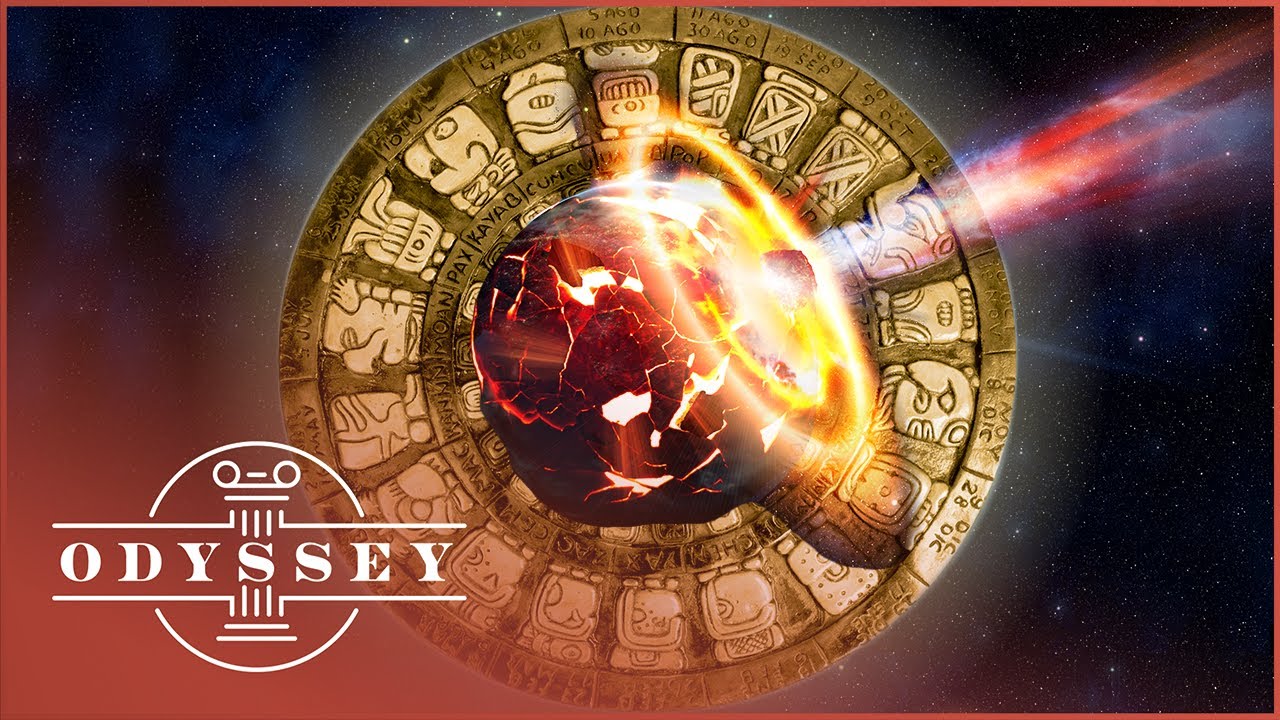
Thanks to this long-count calendar, the Maya recorded past and future astronomical events with astonishing accuracy. And just as the Mayan calendar has a zero day, it also has an end, archaeologists calculated this end, and it was initially determined that it was December 21, 2012. Due to the accuracy of its measurements and predictions, the Mayan calendar was assigned a certain prophetic content in America.
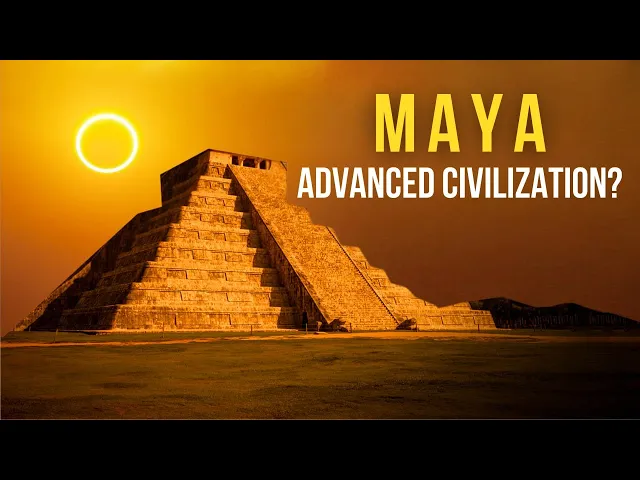
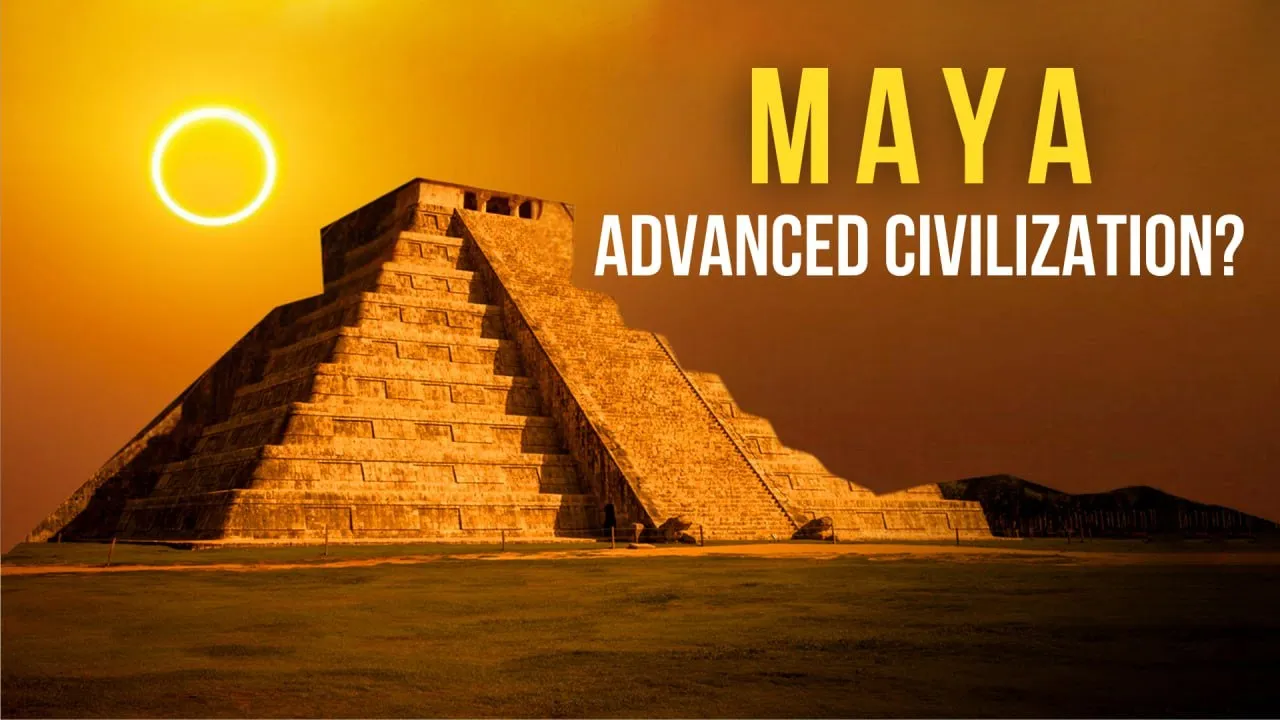
Many media took advantage of the confusion to promote this date as the end of the world; even a very popular film was made based on that date. Today we know that the Maya did not predict the end of the world, simply the end of one long-count cycle and the beginning of another. MONUMENTS TO THE STARS The Mayans built many constructions whose primary purpose was to capture important astronomical events; one known is the pyramid of Chichen Itza.
This pyramid is known for the famous "descent of the Kukulcan," an optical phenomenon in which you can see the figure of a snake formed by the shadow of the pyramid’s steps, which is only visible during the spring and autumn equinoxes. Like Chichen Itza, the Maya built dozens of unique places that captured astronomical events that were very important to them in their worldview. Another Mayan observatory was located in the archaeological zone of Palenque Chiapas.
This was an essential center of the Mayan civilization between the fifth and ninth centuries, during which it alternated times of glory and catastrophe. At this site, the Mayans built a 4-story high building that protruded above the treetops and used it for observational purposes. It was an astronomical observatory witwhereey could see the sunrises and sunsets.
The Mayan pyramids and observatories fulfilled an essential function in their culture and beliefs; an example of this is found in the Pyramid of Tonina, another Mayan archaeological zone where one of the pyramids has a small pond at the top where they stored water. But that water was not to consume; that pond fulfilled the function of a mirror; in this way, on the starry nights, the astronomers could see the stars reflected in the water and thus make better notes of what they saw without having to be looking at the sky. THE STARS AND CODEX The Maya had an apparent obsession with understanding how the stars moved to such a degree that they built many buildings to observe them better.
Unlike other cultures, the Maya did not have optical technology such as telescopes to make their observations, so they used only their sight and exemplary patience. Every night, they looked at the stars and the rest of the stars for years, wrote down what they saw, and put all their observations on paper. These documents with valuable astronomical information are the Mayan codices.
One of these is the famous Drsden codex which contains an almanac with the synodic cycle of Venus, which is reflected with annotations of the dates of the first and last apparitions of the planet as "morning star" and "night sta. ”. This document also captures the phases of Venus in an evident and detailed way.
You may not know it, but, like the moon, Venus also has phases that look very similar to those of the moon. It is impressive that the Mayans already knew that Venus was not a star but a celestial body like the moon, only much farther away. They knew that this planet had phases and how long it took to circle the sun, all without the need for complex devices such as telescopes using only their ingenuity and a compulsive obsession to better understand the universe around them.
Today the Maya are still one of the most enigmatic and impressive civilizations; they came to make predictions and calculations so precise about the stars that their calendars are considered prophetic. Without a doubt, the Maya were a civilization ahead of their time.