Donald Trump destroys TV host; his response leaves America in shock. The studio buzzed with anticipation, its massive LED screens glowing with the title "Unfiltered Truth. " Cameramen adjusted their angles, producers whispered last-minute instructions through their earpieces, and the audience, packed tightly in their seats, sat in silent expectation.
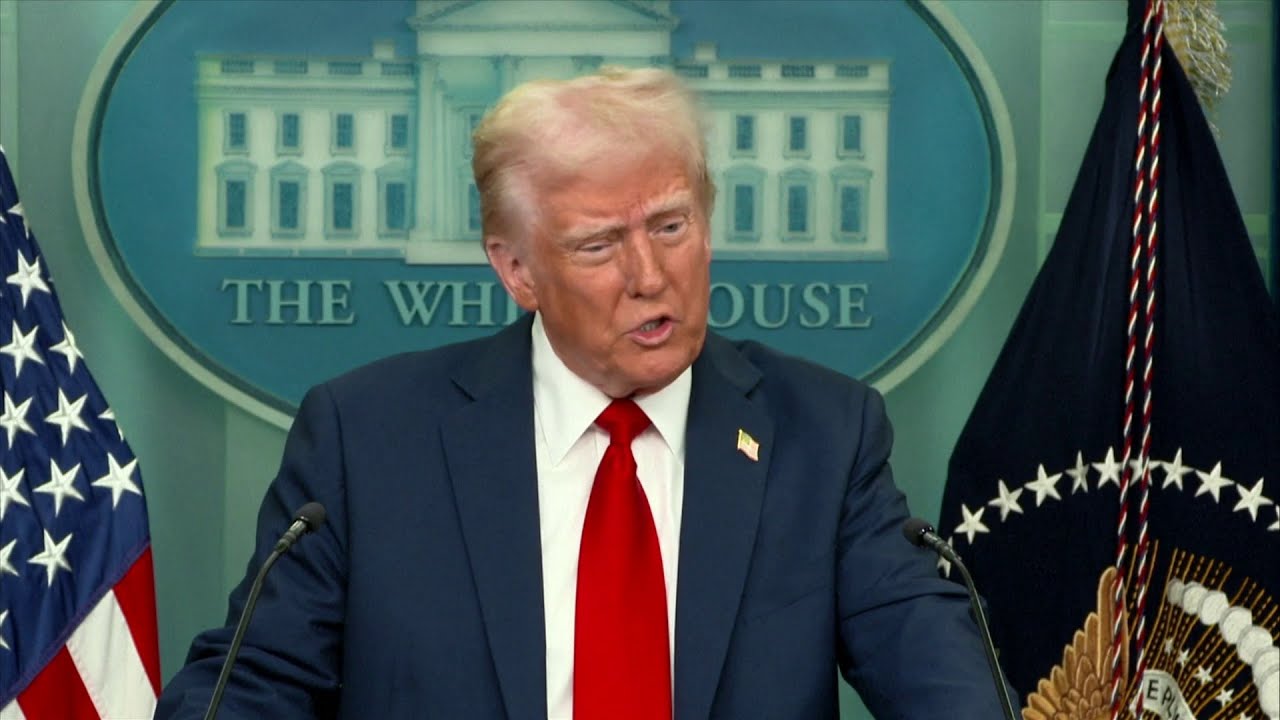
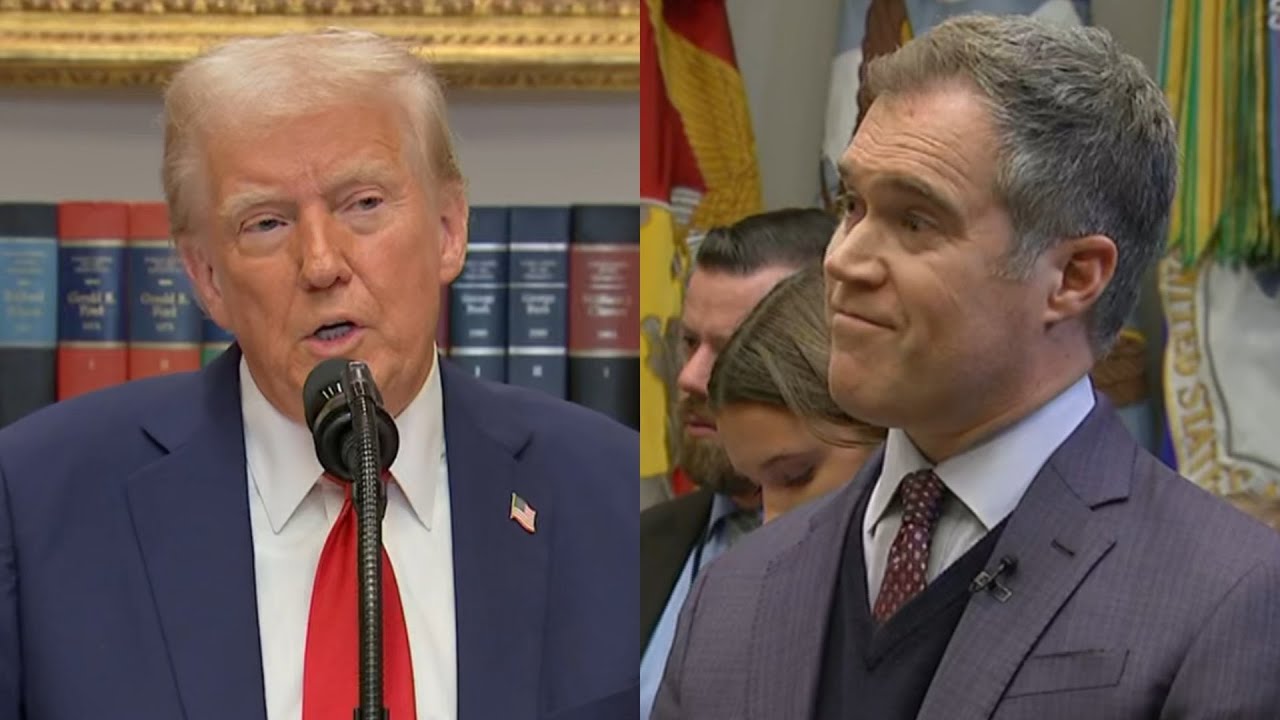
At the center of the stage sat Donald Trump, a towering figure of both political power and controversy. Drssed in a dark navy suit, his presence was commanding, his expression unreadable. He had been in countless interviews before, but tonight was different; this wasn't just another talk — it was a battle of narratives, a war of perception.
Across from him, in an identical chair, sat Emily Roberts, a seasoned journalist known for her relentless questioning and refusal to back down. Her eyes, sharp and calculating, studied Trump like a chess master analyzing her opponent. She had prepared for this moment meticulously, armed with files, reports, and statistics that would leave no room for evasion.
The air in the studio thickened as the countdown began: 3, 2, 1. The bright studio lights flared to life, illuminating the stage with a cold, calculated glow. Emily picked up her notepad, flashing a polite yet piercing smile.
“Mr Trump,” she began, her voice steady, almost surgical. “Thank you for being here tonight. ” Trump leaned back slightly, his fingers laced together, a smirk tugging at the corner of his lips.
“I have a feeling this is going to be interesting. ” The battle had begun. Emily wasted no time; she flipped through her neatly stacked documents, each page filled with carefully curated questions meant to corner her guest.
The audience sat motionless, their eyes darting between the two figures at the center of the stage. She exhaled, steady and controlled. “Mr Trump, let's address the elephant in the room.
You were once admired by millions, hailed as a businessman who defied convention, a leader who claimed to speak for the people. ” A brief pause. “But today, many see you differently.
Reckless, divisive, a man who bends the rules to serve his own interests. ” She lifted her gaze, locking onto his. “You've made sweeping changes to platforms you control.
You've openly criticized powerful figures. You've challenged the status quo. But at what cost?
” The words hung in the air, thick with unspoken weight. The audience leaned in, waiting. Would he deflect?
Would he fight back? Trump didn't flinch. He didn't rush to answer; instead, he tilted his head slightly, studying her as if measuring the weight of her words before deciding whether they were worth responding to.
Then he chuckled, low, measured, deliberate. “Tell me, Emily,” he said, leaning forward just slightly, “who exactly are these 'many' you're referring to? ” A murmur rippled through the audience.
Emily's smile remained, but there was the briefest flicker of hesitation in her eyes. “The public, the people who once supported you but now question your true motives. ” Trump nodded slowly, his expression unreadable.
“The public? Or the version of the public that the media chooses to present? ” A shift, subtle but undeniable.
Emily adjusted in her chair, refusing to lose control. “Are you suggesting that the concerns surrounding your leadership are nothing more than media fabrication? ” Trump leaned back, his voice calm but firm.
“I'm suggesting that people should ask themselves why they are being told what to think. ” The tension in the room deepened; some in the audience exchanged glances while others sat completely still, processing what they had just heard. Emily saw what he was doing; he wasn't just answering questions, he was reframing the entire conversation.
She tightened her grip on her pen, determined not to let him dictate the flow of the debate. “Let's talk facts then,” she said, flipping to another page in her notes. “You took control of one of the largest social platforms and immediately made radical changes.
Some called it necessary reform; others called it chaos. ” Her gaze sharpened. “Since then, misinformation has surged, extremist voices have grown louder.
Do you take responsibility for that? ” Another direct hit. The room stilled, the air thick with the weight of the question.
Trump didn't hesitate; he leaned forward, his voice unwavering. “Emily, your question assumes that allowing more voices to be heard is a bad thing. ” A pause.
“But tell me this: who decides what's misinformation? The government? The media?
A small elite group of so-called experts? ” Silence. The audience was no longer just watching; they were thinking.
Emily knew she couldn't afford to let him shift the power balance any further. She squared her shoulders, ready to strike harder. This was far from over.
Emily felt the weight of the conversation shifting, and she didn't like it. Trump wasn't just answering; he was steering the discussion, forcing the audience to question their own assumptions. She had seen many high-profile figures crumble under pressure, but Trump wasn't crumbling.
If anything, he was thriving in it. She straightened in her chair, her pen tapping lightly against the stack of notes in front of her. Stay in control.
Redirect. Keep the pressure on. She glanced down at her notes and then back up.
“Mr Trump, let's be clear. You claim to champion free speech, but you also decide who gets to speak on your platforms and who doesn't. ” Her tone sharpened.
“You criticize those who control the flow of information, yet you hold the power to silence voices yourself. So tell me, how are you any different from the very institutions you claim to fight against? ” The audience inhaled collectively; a dangerous question, one that left no room for an easy escape.
Trump didn't miss a beat. He leaned back in his chair, exuding the confidence of a man who had faced and overcome far greater battles. “Emily, you're right about one thing.
I do have control over the platforms I own. ” He paused for a moment, letting the weight of his words settle before leaning forward, his voice calm, deliberate, but. .
. Here's the difference: they decide what information you're allowed to see. I simply allow people to see everything—the things they agree with and the things they don't.
A murmur rippled through the audience. The truth does not fear scrutiny. His voice dropped slightly, his words carrying an undeniable weight.
Only lies need censorship. Emily pressed her lips together; this was dangerous ground. He wasn't just defending himself; he was dismantling the very premise of her argument.
She forced a slight smile, refusing to let him dictate the tempo. "So you believe that there should be no regulation, that every voice, no matter how dangerous or misleading, should be amplified? " Trump tilted his head.
"I believe people should be given the right to determine the truth for themselves. " He let the words hang in the air before continuing, his tone turning colder, more pointed. "Because history has taught us something, Emily: when a small group controls what is and isn't true, it ceases to be truth; it becomes power.
" The room fell silent. A few members of the audience nodded; others shifted uncomfortably in their seats. Emily knew she couldn't afford to lose control of the conversation.
She adjusted her posture, flipping to a new section of her notes. If he wanted to talk about power, then she would take the conversation to its logical conclusion. She leaned in slightly, her voice steady.
"Fine, then. Let's talk about power. " She locked eyes with him.
"You don't just control a platform; you control industries. You shape economies. You hold influence over politics, technology, and the media.
That kind of power comes with consequences. " A beat. "So tell me, Mr Trump, do you take responsibility for the consequences of your actions?
" The question sliced through the air like a blade. For the first time, Trump didn't immediately respond. The studio lights seemed harsher; the silence heavier.
Emily had just changed the stakes. This wasn't just about platforms anymore; this was about him. The studio felt like it had frozen in time.
The hum of the overhead lights, the subtle rustling of notes from the producers in the control room—everything seemed distant, muted, irrelevant. All that mattered was the question hanging in the air, sharp as a blade and aimed directly at Donald Trump: "Do you take responsibility for the consequences of your actions? " Trump didn't immediately answer.
He didn't smirk or brush it off with a quick quip. Instead, he sat still, his fingers laced together, his gaze unwavering. For the first time that night, there was no immediate counter, no reflexive maneuver.
He was considering his words carefully. Emily held her breath. She had spent years refining her approach, pressing into the uncomfortable spaces where answers became difficult, where defenses cracked, where the truth—or something close to it—emerged.
This was the moment, the moment where she could finally turn the tide. Trump took a slow breath and leaned forward slightly. "Emily, your question assumes that giving people a voice is dangerous, that allowing different perspectives to exist creates harm.
" His voice was low, measured—not defensive, but thoughtful. "But I ask you this: who decides what voices are dangerous? You?
Your network? A handful of elites sitting in boardrooms, deciding what the public can and cannot hear? " The audience murmured, a ripple of shifting perception moving through the room.
Emily, however, remained unmoved. She had been expecting this; she had anticipated he would try to reframe the argument to shift the weight of responsibility elsewhere. She didn't blink.
"I'm not asking about who decides what is dangerous, Mr Trump," her voice was cool, deliberate. "I'm asking about you, your decisions, your influence—whether you acknowledge that your choices have real consequences for millions of people. " Trump's jaw tightened slightly, barely noticeable, but Emily caught it.
There it is. The tension in the room thickened. Trump exhaled and nodded, as if acknowledging the complexity of the moment.
"I do take responsibility, Emily; I always have. " A murmur spread through the audience. "But let's be honest about what we're really discussing here.
" His eyes locked onto hers, intense and unyielding. "You don't want to talk about responsibility; you want to talk about control—about whether I should have the power to make decisions that disrupt the system, that challenge the narratives people like you uphold. " Emily leaned forward slightly.
"Are you saying you've never made a mistake? Never taken an action that led to unintended harm? " Trump tilted his head, considering.
"Of course not. No one is perfect. But the difference between me and those who want to silence me is that I don't pretend to have all the answers.
I don't dictate what people should believe; I give them access to information—real, unfiltered information—and let them decide for themselves. " His voice dropped slightly, carrying more weight. "Because when you allow a select few to control the truth, you're no longer protecting people; you're ruling them.
" Emily felt the conversation slipping, felt the room tilting in his favor. She had one last play. She took a deep breath, placed her pen down on the desk, and leaned back slightly.
Her voice now softer, but more dangerous than before, cut through the silence like a knife: "Mr Trump, you've spent the evening warning us about the dangers of unchecked power, about the elites who manipulate the truth, about those who control information. " A pause. "But have you ever stopped to ask yourself, what if one day you become exactly what you claim to fight against?
" Silence—not just in the studio, but in the minds of everyone watching. The words landed with the force of a hammer, striking at the very foundation of Trump's argument. Emily let them linger, watching his reaction closely.
For a moment, he didn't respond. Then slowly, he leaned back in his chair, folding his hands together, his expression unreadable. When he finally spoke, his voice was quieter than before, but no less firm.
"Emily, that is a very good question," the audience collectively inhaled, "and it's one I ask myself every single day. " Emily's brow furrowed slightly, not because she was doubtful, but because she hadn't expected him to admit it so easily. Trump exhaled slowly, his tone shifting from combative to reflective.
"I don't deny that I have power. I don't deny that I influence people. But there's a fundamental difference between someone who uses power and someone who abuses it.
" His eyes narrowed slightly. "The real danger isn't in how much power someone has; it's in whether they allow themselves to be questioned. " The room was silent.
"The day I refused to be challenged, the day I use my influence to silence those who disagree with me, that is the day I will have become what I warned against. " Emily said nothing, because for the first time that night, she wasn't sure how to respond. Not because she agreed, not because she was convinced, but because in that moment, Trump wasn't just debating her; he was speaking directly to everyone watching, and they were listening.
She needed to pivot to regain control, but the words weren't coming because something had shifted. This wasn't just an argument anymore; this was a reckoning, and every single person in that room knew it. A hush fell over the studio, the weight of Donald Trump's words still lingering in the air, pressing down on everyone present.
The audience wasn't just watching anymore; they were thinking, questioning, reconsidering. Emily Roberts sat still, her fingers lightly brushing against the stack of notes she had so meticulously prepared; yet at this moment, they felt useless. This interview had transformed into something entirely different from what she had expected.
It wasn't just a battle of words; it had become something far greater, a battle of perspective. She straightened, refusing to let the moment slip away. "So let's take this to its final question, Mr Trump," her voice was steady but slower now, more deliberate.
"You've spoken about the dangers of controlled truth; you've argued that power should be questioned. But let's not ignore the reality: you hold immense power yourself. You control businesses, influence economies, and shape narratives that reach millions.
If one day you change, if you become the very force you claim to stand against, who will stop you? " It was the ultimate challenge, a direct strike at the heart of everything he had argued. The studio lights cast a sharp glow on Trump's face, highlighting the deep-set intensity in his eyes.
He didn't speak right away; instead, he let the silence settle, let the weight of the question press down on the audience before he finally leaned forward, resting his hands on the desk. "Emily, you ask that as if power itself is the problem. It isn't.
" His voice was quieter now but no less powerful. "The issue isn't who has power; it's what they do with it. " A pause.
"And more importantly, whether they allow others to hold them accountable. " Emily raised a brow, but she didn't interrupt; she wanted to see where he was going with this. Trump exhaled slowly.
"I know the dangers of power because I've seen them firsthand. I've been on both sides of it. But let me make one thing very clear: if the day ever comes when I start silencing those who question me, if I ever use my influence to crush opposing voices instead of allowing debate, then I will have lost.
" The words hung there, their meaning unmistakable. A murmur spread through the audience; some nodded, others looked skeptical, but no one was indifferent. Emily finally spoke.
"That's a bold statement, Mr Trump. But how can the public trust that you will hold true to it? " Trump gave a small, almost knowing smile.
"They shouldn't trust me blindly; they shouldn't trust anyone blindly. That's the point. " He gestured toward the audience, toward the cameras broadcasting to millions.
"People should always question, always challenge. The moment you stop asking questions is the moment you give someone else the power to think for you. " Emily held his gaze.
The tension between them had shifted; it was no longer adversarial, it was something else—a realization, a reckoning. She exhaled slowly, leaning back in her chair. She glanced at the audience, at their expressions.
They weren't just watching; they weren't just absorbing; they were processing. She turned back to Trump. "I'll admit, I didn't expect this conversation to go this way.
" Trump's smile widened just a fraction. "Neither did I. " A flicker of something passed between them—not agreement, not concession, but understanding.
Emily glanced at the control booth. The producers were signaling that they were nearing the end of the broadcast. She turned back to Trump, then to the camera, addressing the millions watching.
"Tonight, we've debated power, truth, and accountability. You may agree with Mr Trump; you may not. That's for you to decide.
But there is one question that remains, one that has nothing to do with politics or personal beliefs. . .
" A pause. "Are you questioning the world around you, or are you simply accepting what is given to you? " The silence in the studio was deafening.
She let the moment settle before continuing. "Because the truth, no matter where you stand, is not something handed to you. It is something you must seek for yourself.
" A beat. She turned to Trump. "Mr Trump, thank you for your time tonight.
" He nodded. "Thank you, Emily. This was.
. . interesting.
" The camera zoomed out, the lights dimmed slightly, and the broadcast ending music began to play as the screen faded to black. The conversation didn't feel over because it wasn't; it had only just begun.