Some years ago, an Indian man was facing trial in an Australian court. What had he been accused of? He had been stalking two Australian women for months.
He used to call them repeatedly, tried to approach them, and even referred to himself as their boyfriend. Despite the proof, he was not convicted. Can you guess why?
Because his lawyer argued that he was innocent, calming how Bollywood had influenced his unruly actions. [“Stop stalking me! ”] [“There’s no one else to stalk other than you.
”] [“I don’t care. Just stop stalking me. ”] The lawyer stated that such behavior was ‘normal’ in India.
The man confessed that after watching Bollywood movies, he had come to believe that if he stalked the women incessantly, they’d eventually fall in love with him. The weirdest part is that after listening to this argument, the judge acquitted the man. This is the state of Indian men abroad.
Even the judges in foreign have come to accept that Indian men are creeps. Recently, a video went viral in which a Japanese tourist was seen playing Holi in Delhi. The tourist didn't lodge a police complaint, but many criticized the men's indecent behavior.
It’s wrong to generalize, to say that every Indian man is a creep. Unfortunately, this is how Indian men are perceived. In fact, if you type ‘bobs and vagene’ on Urban Dictionary, here’s what you’ll see… This might strike you as funny.
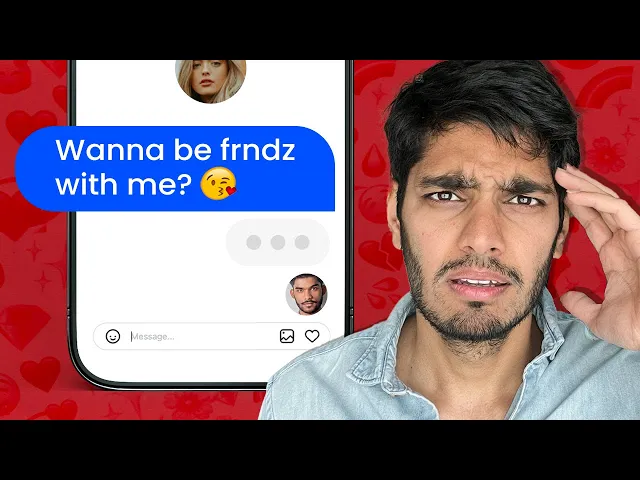
But we must ask: Why do some Indian men behave this way? The first reason is the lack of male-female friendship in India. A few years ago, a 21-year-old man took to Reddit to talk about a problem —a problem that’s all too common among Indian men —how to approach a woman?
[“I might be a stranger to you. ”] [“But you define me…you complete me”] He said ever since he was a child, talking to a girl has been considered inappropriate in his society. Consequently, he always hesitated to make eye contact with girls.
He would change directions if he saw a girl walking in his direction. When he entered college, he was infatuated with a girl. But he didn’t know how to approach her.
Thus, he followed her for four months and texted her on Facebook. He even got closer to the girl on Facebook. But he never met her physically because he felt shy approaching her.
Even though the girl had stopped responding to his messages, he kept texting her. The girl had even blocked him on Facebook. Surprisingly, he even wrote three books about the girl.
[“Who wrote this? ”] [“My tears and broken heart. ”] Imagine he went to this length for a girl he had never physically conversed with.
His case isn’t unique. In our society, male-female friendship is considered inappropriate. There’s a village called Unchera, about 100 km from Delhi.
In Unchera, the houses are structured differently. Here, there are rooms outside the houses called Baithaks where unmarried men sleep and spend most of their time. These men are not allowed into their own homes for reasons apart from dining or emergencies.
They can’t interact with women. You might think this is a rural phenomenon. But that’s not true.
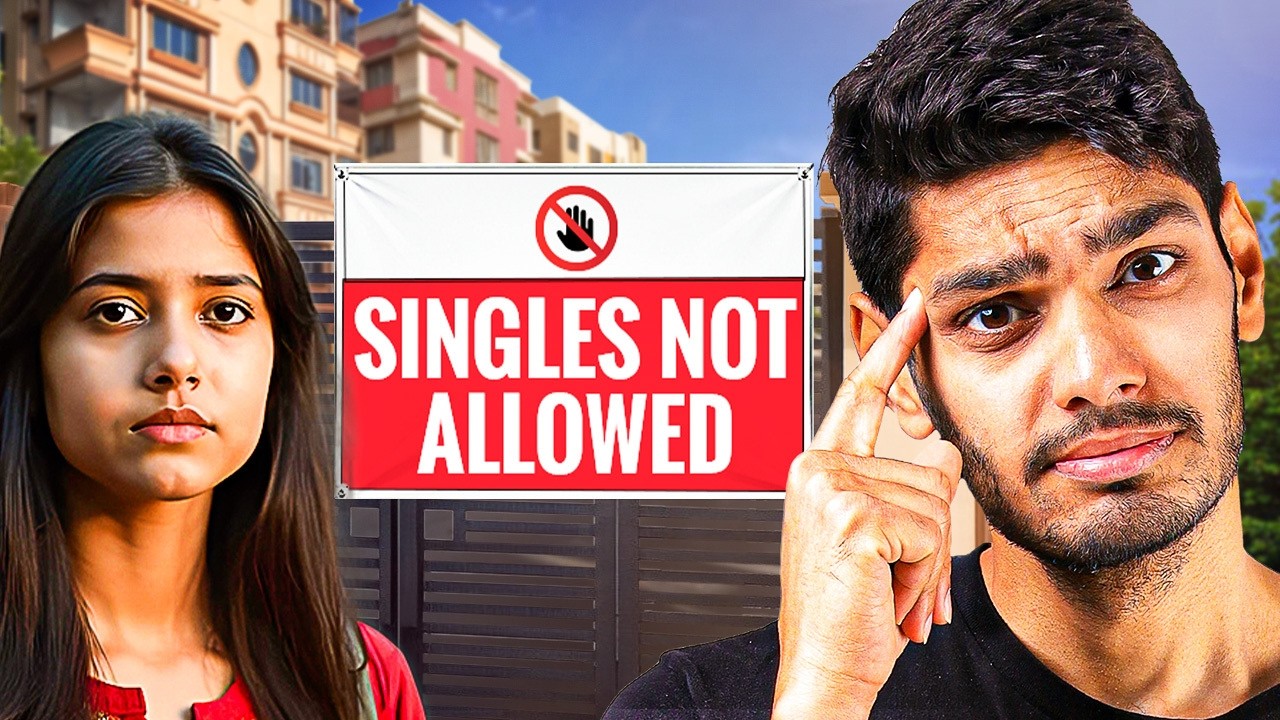
Despite over 95% of schools being co-educational in India, many continue to practice segregative practices. For example, this Kendriya Vidyalaya has installed CCTV cameras on its premises, and this school in Bangalore has separate classes for girls and boys from the 9th standard. Let's take the case of Rudrani Gupta.
She attended a private school. In class 12, she was chatting with a male classmate on her way home from school. “And her immoral behavior was caught on CCTV!
” The principal summoned both and reprimanded them. What does it show? That boys and girls aren’t allowed to talk to each other.
This is the same message imparted by Bollywood. [“A man and a woman can never be friends. ”] [“It’s just a veil…"] ["to mask the burning,"] ["unbridled passion of the two souls.
”] Male-female friendships are rare to be found in Bollywood movies. Even when it’s depicted, friendship is nothing more than preparation for romance. [“What’s love?
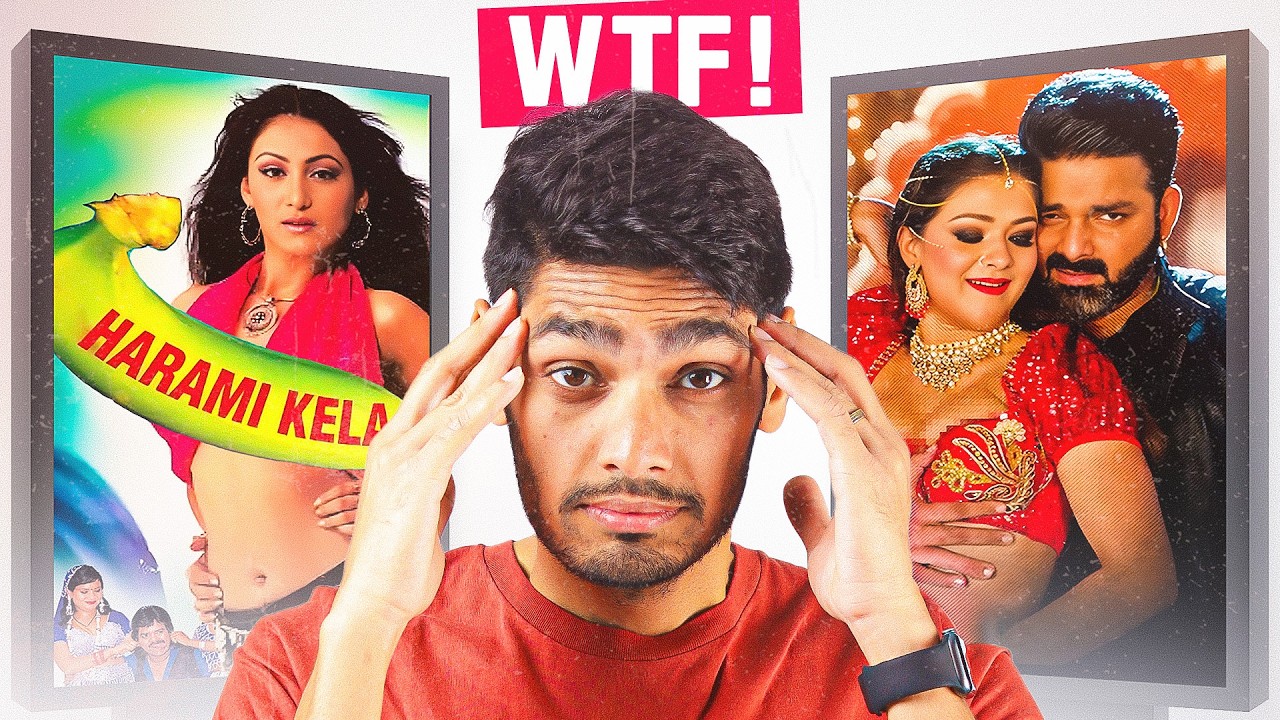
”] [“Hmm…love is another word for friendship. ”] [“Omaaguu Turu lobe. ”] Some movies have a simple plot: the man’s creepy, and the woman falls in love with him.
The same’s the case with Indian songs. You might say this happens only in the movies and not in real life. But sadly, that’s not true.
The Australian case was one such example. Let's take another case from Delhi. In February 2016, a woman went missing.
The story that came to light 36 hours later shocked everyone. In 2014, a man called Devendra Kumar laid eyes on Dipti for the first time at the Rajiv Chowk Metro station. Then, Devendra purchased two autos and began plotting a plan to abduct Dipti.
He stalked her over 150 times in this period, observing her every step and move. In 2016, he kidnapped Dipti and took her to a village 80 km away from Delhi. He kept telling Dipti he was a savior and would “take care” of her if she agreed to marry him.
When he realized his plan had failed, he dropped her at a railway station. During the interrogation by the police, it came to light that he was inspired by Shah Rukh Khan’s character from the movie Darr. The third problem is the lack of personal space.
In 2014, an Indian travel expert from the UK claimed that "staring at women is an Indian pastime". The UK's foreign office advised women traveling to India to wear dupattas to prevent people from staring at them. Incidents like these come to light as well… This is very similar to the following movie scene.
[“Very good my boy. . very good.
”] [“You’re brave. You’re the manliest man alive. ”] So, why do Indian men act this way?
Let’s be clear that it’s not only men who stare. Even women do it too. In this video, you can notice these women staring at the foreign tourist.
If you question this behavior, you’ll get justifications like: there’s nothing wrong with it, and it’s simply looking at someone. It’s because Indians aren't taught about the concept of personal space. Anthropologist Edward T Hall carried out a study on this matter.
He proposed four types of spaces: Intimate, personal, social distance, and public. Intimate distance is when you share less than 1. 5 feet with another person.
We usually see this in couples or family members. Personal distance is when you maintain a 1. 5-4ft distance with the other person, i.
e. , with your friends. When you're 4-12ft apart from another person, that becomes the social distance.
This is maintained with acquaintances and relatives. Lastly, public distance is anything more than 12ft. For example, politicians or celebrities.
The problem is that many don’t follow the concept of personal space. Many people see it fit to violate a stranger’s personal or intimate space. Apart from staring, some people even play loud music on public transport.
Probably because they don’t grasp the concept of personal space at all. Once, I was traveling in a bus in Bihar. An aged man sat next to me and grabbed my hand, twisted it to check the time on my watch, and then released it.
I’m pretty sure he didn’t realize that his behavior was strange. In a country like India, a personal place is a luxury. Some people have no alternative but to commute to work using crowded Mumbai local trains.
Private space in such trains is nonexistent. Many Indian families live in modest houses. It’s difficult to get a room of one’s own in such houses.
[“So, this is the room. ”] [“It costs INR 5000/month”] [“And five people share it! ”] Do you think you can expect to find a personal space in this environment?
Unfortunately, due to such creepy behavior, Indian men are stereotyped on TikTok. This mostly results in racism. For instance, the ‘Durgesh’ meme went viral in 2017.
The story was that a man named Sanjay had been trying to meet girls online. But every time, his date would turn out to be Durgesh. This meme became popular all over the world.
But soon, the truth behind these photos came out. It turns out the young man in these photos was with his father, who's disabled. But this photo was shared as a meme all over the world.
Obviously, creepy men should be rightfully punished. But stereotyping all Indian men set a bad precedent. Now, what’re the solutions for this?
First, we need to recognize that we behave according to societal norms. Humans are products of the society they belong to. Thus, to change someone’s behavior, one must start by bringing a change in society.
Society should be held responsible here as well. Including lessons on gender equality and respectful behavior in schools and universities is another solution. But these lessons should be carried out on a regular basis.
They should be well-planned. This is what the Haryana government did. It partnered with an NGO called Breakthrough.
Historically, Haryana’s sex ratio has been among the worst in India. The NGO initiated a program called ‘Taaron ki Toli’. This program was introduced in several government secondary schools.
Under the program, the NGO would hold 45-min long sessions with the children every three weeks. These sessions held discussions on gender roles and taught children how to communicate with people of different genders. These sessions went on for 2.
5 years. At the end of 2. 5 years, a survey revealed that the children who participated in the program held gender-progressive views.
Such programs that work on the ground level are crucial. They should aim at creating long-lasting changes. Another solution must come from up above —from Bollywood.
[“Let me be honest…today, I’m ashamed of being a human. ”] [“I saw some disgusting dance moves while celebrating the New Year in Bangalore. ”] [“I don’t know how you see it…but it made my blood boil.
”] [“Women don’t wear short clothes…”] [“You, the people, hold a short and regressive ideology. ”] [“Why don’t you talk to him? ”] [“He’s the one I rejected…”] [These disgusting monsters don’t come from other planets…”] [They live and walk among us.
. . ”] [“Hey, what are you doing to my bike?
”] [“Do you know what’s more shameful? ”] [“Some people have the audacity to justify harassing a woman. ”] [“.
. . have the audacity…”] [“Stop it…stop being hypocritical.
. . ”] Hopefully, Akshay Kumar and his colleagues will work towards bringing a change… If you like this video, please subscribe to the channel.
I recommend you watch this video. I discussed something you might have noticed —some Indian men holding hands. Do check out this video.