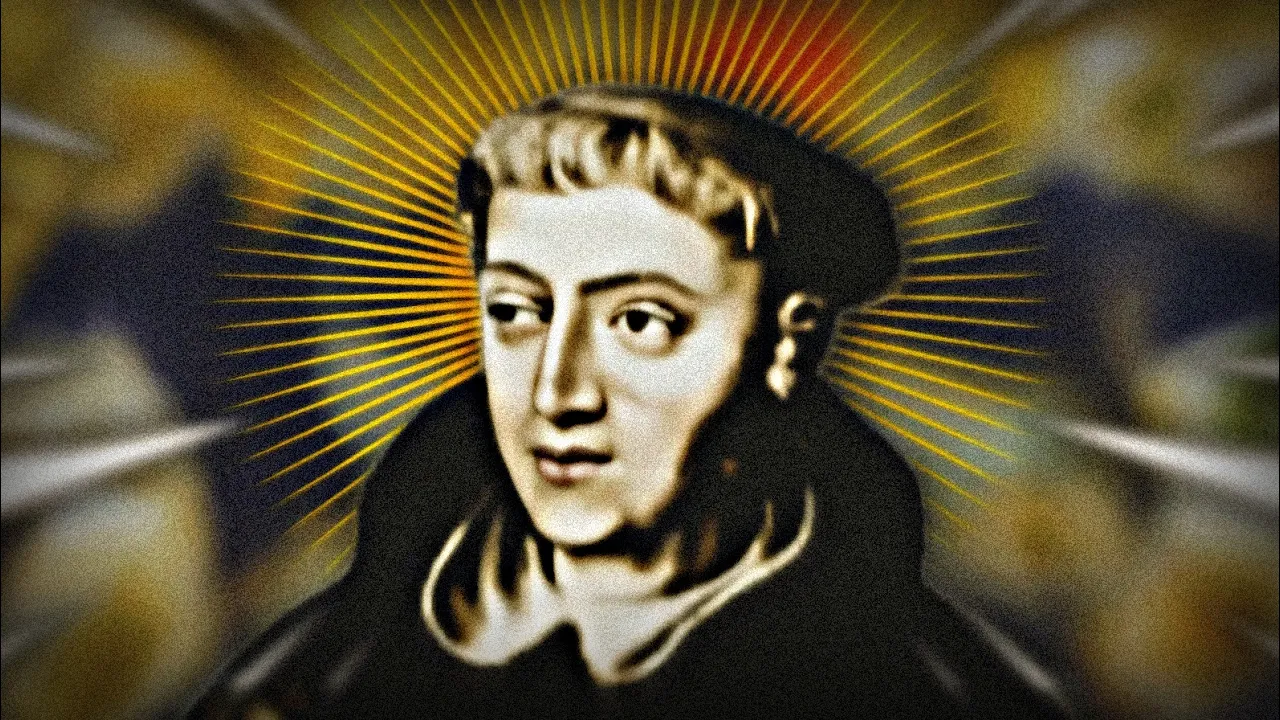
in the late 16th and 17th century there was basically the space race of theology there were hundreds if not thousands of the smartest and best educated men in the history of the world fighting one another with one object in mind this singular object was to push the science of theology further than it had ever been pushed before but there is one Theologian who Towers Above the Rest a theologian who like the greatest Theologian of all time St th aquinus died young and wrote much a theologian who was trained by the greatest masters of the era
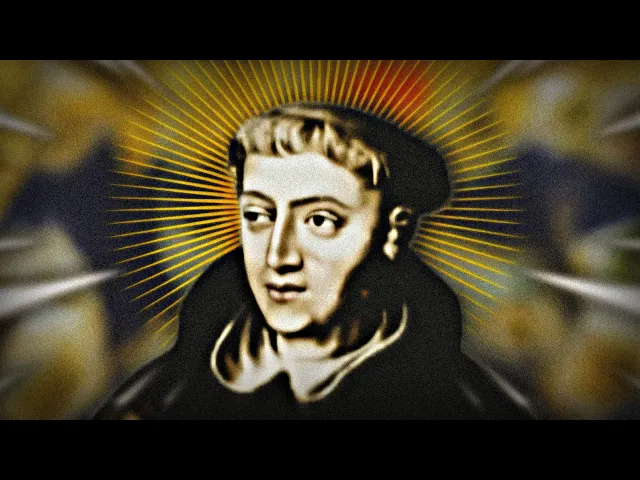
and Rose Above the Rest to become the greatest defender of St Thomas in the history of theology in fact his Fame was so great during this time that he was called a second Thomas and the king of Spain handpicked him to be his Confessor this Theologian is John of St Thomas the story of the life of John of St Thomas begins with Peter Pono Peter was a German nobleman who worked for the arch dukee of Austria Archduke Albert iith it's important to note that German is being used in the broadest possible sense his family is
actually from upper panonia which if you look at the map does not really seem German it's really Austrian it is kind of funny to look at all the different biographers of John of St Thomas argue about what his specific ethnicity is but anyways the arch Duke decided to send Peter to Spain to do some work for him and while Peter was at Spain he met a noble woman named lady Maria it is said that this was a very happy marriage and both mother and father were quite virtuous on July 9th 1589 they had a son
who they named John now what's interesting is that John was actually baptized a few hours after his birth by a Dominican saint St Bartholomew of bragga who was the Archbishop at the time as an aside interestingly enough Pope Francis actually was the one who canonized St Bartholomew in 2019 so very clear there's total Dominican control in the Vatican as to the early life of John not much detail is given by the biographers they basically said that he was known for his piety and sharp intellect but they basically say that about everybody in that age so
you can't really put too much weight on it now the way that education worked back then is quite interesting and it would have looked a lot like a medieval University you would have the school that you would go to before University or college which would be below about the age of anywhere between 12 and 14 and then your college study initially would be about the Arts which would include things like philosophy language mathematics history and so on then after you studied the Arts you could actually go on to specialize in some sort of field like
theology ology or medicine or law so when John was in his early teenage years he went to go study at the University of coimbra to study the Arts which at the time was in lisban Portugal during that era coimbra was probably one of the most influential centers of scholasticism in the entire Catholic World it was actually the center of a certain group of Scholastics called the Kim brenes and they were Jesuits who were known for writing very long commentaries on the works of Aristotle beside this there were many famous Scholastics at the school while John
was there including the famed Jesuit Francisco Suarez but after he graduated his father was actually sent to Flanders by the arch dukee while he was in Belgium he enrolled at the University of louisan to do his theological study since while he was in Lisbon he actually finished his master of arts degree which was quite impressive for the age in which he finished it at now this is actually the earliest display of his Brilliance that we see like his previous University Lan had a very famous reputation for its Scholastic theology at this time there was the
famous biblical commentator cornelus alap day and the infamous defender of Molina leius both of these individuals are huge names in the history of theology but there was also a channel favorite who was at louen at the time the famous and eminent commentator on the Suma the great exponent of the virtues according to the mind of St Thomas Johannes wiggers who actually directly taught John of St Thomas we know this from the fact that John of St Thomas was in the same class as the infamous heretic Cornelius Jansen who himself was taught by Johannes wiggers so
from this we can deduce the fact that John of St Thomas who is at the same college that Johannes wiggers was teaching at was actually taught by Johannes wiggers at louan the future of John of St Thomas actually became set in stone he was a brilliant student who garnered the respect and admiration of both his students and his professors and was here that he struck up a friendship with one of his professors father Tomas Torres father Tomas was a Dominican Scholastic who actually inspired John of St Thomas to join the Dominican order father Tomas actually
recommended a particular Convent in Madrid that John would eventually go to Father Tomas sent John off with letters of recommendation he finally took the Habit in 1612 when he was only 23 years old now ordinarily when you join a monastic Community like he with the Dominicans there's a very long period of formation that you have to go through before you're able to do anything else now John was so famed for his learning that before he even turned 25 he was sent off to teach the Arts at a university the University of alala the University of
Alcala was even more famous than the other two universities that he had been at combined and here he was a junior member of The Faculty teaching the Arts and he was also in charge of some of the spiritual formation of the students now I can not even underestimate how important the University of alala is for the history of Baro scholasticism it is Baran the greatest University out of all of the Scholastic universities and it has the biggest names of any of the universities I'll list off a few for you Francisco Suarez Francisco de vitoria Domingo
bz Bartholomew de Medina Gabriel Vasquez and Francisco zumel and if you don't recognize any of these names these are basically some of the most important ones before the time of John of St Thomas and after the time of John of St Thomas there would be many more extremely extremely important Scholastics who taught at alala after eight years of teaching the Arts he actually began lecturing on the Suma of St Thomas in his early 30s actually approximately the same age that St Thomas began lecturing on the sentences and soon after he was appointed as an associate
professor of theology at the University where he would teach for over 20 years in that era of University there were basically two important chairs the morning chair and the evening chair and a chair is basically a time in which you are able to lecture the evening chair was the second most important time in which you were able to lecture and the morning chair was the most important time in which you were able to lecture these are obviously Prime spots because those are the two times in which the most individuals are going to be showing up
and listening to your teaching now John of St Thomas was given the evening chair at the University of alala in the year 1630 and it was said that even while he had the second most coveted spot the evening chair he still even due to this had the largest lectures much larger than the morning chair because everybody flocked to the lectures of John of St Thomas and they loved him both for his Brilliance and for the clarity of his expression it was during this time that he actually began to publish works of theology in 1631 a
year after he got the evening chair it's important to remember that a lot of these Works were published far and throughout the entirety of Europe and the way that it worked was if you were the author and you published your work through a publisher and they printed it they would give you a portion of the sales even if you were in the religious life and due to his Fame John of St Thomas made a lot of money through publishing all of these books but it said that he actually just gave all of his money to
his Convent and to the poor he never kept a dime for himself the man who held the morning chair spot was named father Pedro de Tapia he would eventually be the Archbishop of Seville but he was actually also a famous Scholastic during this time in 1640 he actually became a bishop and left his morning chair spot so the morning chair spot was open and naturally John of St Thomas was appointed to this role but he would only be in this evening chair spot for 2 years before disaster struck but before getting into that there are
a few more details that we need to know about his teaching career and the various other positions that he was given at this time time if you remember back in John's early life he studied at the University of coimbra one of the most famous Scholastics of coimbra was Francisco Suarez Suarez despite his eclectic attitude was one of the greatest if not the greatest Scholastics of this era yet Suarez would actually be one of the main individuals that John of St Thomas would oppose throughout his theological career now in order to understand this you need to
understand what was the main driving for force behind theological advancement during this era that is the opposition between The Eclectic Spirit and the strict observant Spirit but I actually explained this in another video so during Second scholasticism there's basically two types of Scholastic the strict observant Scholastics and the eclectics the strict observant Scholastics were part of various different religious orders that requir them to strictly follow a certain Scholastic so for example strict observance Tomas were usually Dominican or in The Franciscan order some of them strictly followed blessed scotus others St Bonaventure or if we look
at the augustinians it was usually aidus Romanus but on the other hand there were those who basically mixed and matched their opinions and those who mixed and matched their opinions were known as eclectics in the Jesuit order they were usually eclectics although they had a very high regard for St Thomas aquinus as every other school did now John of St Thomas was a Dominican and therefore he was a strict observance toist on the other hand Suarez was a Jesuit and therefore he wasn't of the strict observance but was more or less of a broadly tomisic
minded eclectic individual because while he didn't strictly follow St Thomas he still held him to be a central Authority and even critiqued some of the Dominican positions stating that they had misinterpreted St Thomas on certain points thus the teaching career of JN of St Thomas involved besides all of the positive explanations of the Suma of St Thomas the reputation of sarez other schools like the scotus and other eclectics like Vasquez in order to understand Jon of St Thomas you have to understand his undying and unwavering Devotion to the Angelic doctor St Thomas aquinus he always
defended the positions of St Thomas aquinus above the positions of other doctors and even above his own private opinions on certain matters this devotion flowed from his prudence and humility not trusting his own judgment but trusting the Judgment of the common do doctor of the Catholic Church who the church has given the Judgment of safety to it's important to remember that St Thomas wasn't merely an intellectual model for John of St Thomas just as the popes have told us again and again St Thomas isn't merely an intellectual model but also a moral model one of
his biographers said quote it suffices for us to note with them that the new religious began a holy career which he completed gloriously from his entry into the order taking the angel doctor as a model whom he wanted to imitate no less than to be his disciple he seemed to revive this Angel of the school by the regularity and innocence of his morals by his love for Chastity study silence Prayer by his Oblivion of the world and himself in a word by the faithful imitation of all his Christian and religious virtues having thus begun with
this fervor of spirit which first attracted the esteem of his brothers and soon after the admiration of all of the people of Spain he continued until the last period of his life walking steadfastly in the footsteps of his illustrious model if any change was noticed it was only through the new progress he continuously made in the paths of perfection such is in a word the just idea that contemporary writers have given us of this excellent religious no less an excellent Theologian end quote as to his teaching he fought against the general Spirit of false Scholastic
ISM which merely sought to over complicate and he returned to the great Simplicity and unity of the golden age of scholasticism he did this by utterly refusing to answer these subtle useless questions that were ordinarily answered by other theologians during his day further he limited himself to what he could discover in scripture tradition or the magisterial teachings of the church either what is immediately and clearly stated or what is easily deduced from those teachings this disposition came from his study habits one of his biographers recounts quote his reading was accompanied by prayer his sleep was
short in light his food and drink were minimal and he spent long hours in silence and study through intense study he sought to grasp the difficult and profound questions of theology overcoming them with fasting and prayer it is said as ramira testifies that through rigorous discipline he was able to penetrate the Obscure and complex question of angelic impeccability obtaining Divine Light through the austerity of his fasts and the constancy of his prayers end quote this was all sustained by the intense devotion that John of St Thomas had to the sacraments he would confess each day
do his Penance and then celebrate Holy Mass and receive the Eucharist every single day so interestingly enough John of St Thomas just like St Thomas aquinus went to daily confession he was also known for his great qualities as a teacher and Scholar his arguments were precise his teaching was clear and he was always humble when teaching this attitude of humility and latitude that he showed towards fellow Catholics in those lawful lcit positions that the church allows is actually something that nearly every single one of his biographers recounts it is said that he never once spoke
a harsh word in a disputation and he realized that a lot of these disputations were meant to inflame the pride of the scholars rather than Aid in the discuss discovery of truth there's another comment that said that he never hurt the feelings of anyone else in a disputation but I'm not really sure what that's supposed to mean uh so take that for what you will one of his biographers comments on his manner of acting quote this humility was reflected in his gentleness in argument and modesty in response never wounding or provoking anyone with his words
he always displayed innate gentleness in his speech and modesty in his actions never see seeking to offend or despise anyone nor showing the prideful and harsh attitude that some professors exhibit even when attacked and debate by others with harsh words he never allowed himself to be angered or to retaliate preferring to remain silent rather than defend himself if the truth was not at stake he considered it Unworthy of a Christian's gentleness and the Dignity of a theologian to tarnish the Purity and Majesty of divine wisdom with human folly or to engage in quarrels like women
or children indeed those who feel ashamed of their defeat lash out in anger end quote but at this time he actually wasn't merely a normal teacher throughout his time at the University he frequently was in contact with many eminent clerics and Statesmen throughout the entirety of the world who would ask him very many practical questions about governance due to this he was given a very high position in the Spanish Inquisition it was actually given the task of revising the entire index of forbidden books during this this time there was a new heresy which had Arisen
named jansenism I don't have the time to go into all of the details of jansenism but Jon was actually asked to judge certain professors to whether they adhered to heresy or not and these professors were actually at the University of louisan where he had studied decades before he soundly and honestly investigated their works and received the testimonies of respected figures who vouched for them so John made the decision not to condemn them for heresy some have taken this to be some sort of friendliness that Jon had towards jansenism or the jansenists but this is simply
not true even the jansenists never claimed John of St Thomas for their own which they frequently did with other theologians this is simply the actions of a man who understands the gravity of the situation to accuse John of jansenism is just as silly as accusing St Augustine of plagi ism or donatism because he was very careful and took a very long time before he even threw out the accusation of heresy against them on top of this you cannot forget that John was above all a pastor and a spiritual writer as a pastor he frequently preached
the word of God and he also sat in the confessional with people and he became known for the excellent counsels which he gave in the confessional but as I mentioned disaster struck two years after getting the morning chair and This Disaster was actually motivated by his notoriety as an excellent Confessor This Disaster was the attention of the king of Spain Philip IV in 1643 King Philip asked John of St Thomas to be his Confessor and to have a spot at court it is said that John received this as a death sentence and said to his
Religious brothers it is finished fathers I am dead pray for me of course John attempted to convince the king to reverse his decision to continue to let him teach and write like he had been doing for decades before but the king refused to hear his requests and appointed him as Confessor anyways so John an obedient and loyal son of his Monarch agreed on two conditions first he would not force him to accept any ecclesiastical dignities and allow him to remain a simple priest until the day he died second he asked that only that money which
he needed to sustain him be actually given to him and the rest of the exuberant salary that was and given to these confessors would be distributed to the poor it is here that we see John's love for Holy poverty even within the grand luxury of the court of the king he lived as simply as he had lived before in his cell one of his disciples writes of him that quote he was so devoted to Poverty that he would not have dared to pay even the fee for delivering a letter without the permission of his Superior
humbling clothing humbling a cell he tolerated no ornament of Rich Furnishing he was not overly abundant in books painting the walls of his cell only with his own blood and quote now that blood comment may sound really weird but we'll get into this a little bit later in court he took advantage of his position not for himself but in order to Advocate to the King on account of the poor the poor the orphans the widows actually gave John the title Our Father near the throne due to the fact he was constantly begging the king to
give them more and more and more help and interestingly enough he was actually even loved by the soldiers because during this time there were many soldiers who were very poor there were many soldiers who came back injured and they lived the rest of their lives in poverty but John realized that they needed help so he distributed alms to them stating that for others it was charity but Distributing the alms among the soldiers who were injured was Justice in June of 1644 the King traveled to go to war now obviously John went with the King yet
when he was in the town of Fraga John was struck with an illness that would be his last during his illness he gave his last confession a general confession and then received the sacrament but the way that he conducted himself during the reception of these sacraments shows forth his eminent piety a biographer writes quote he was attacked by the burning and malignant fever that overtook him when he recognized the symptoms he prepared himself for death though his mind was was pure and his soul free from all stain he wished to be cleansed nevertheless by a
more severe and general examination and repetition of his entire life in a sacramental confession and Absolution of all his past sins so that he might receive the sacred Body of Christ and viaticum with a pure mind this was his Ardent desire as he Lay Dying surrounded by his brothers and friends as well as many Nobles who were concerned for such a great man's life he could not bear to remain quietly in bed when he heard the Lord approaching and despite his weakened State and violent shakes of his body he rose to meet the Lord who
came to him he fell on the ground and knelt in adoration end quote now when this is referring to the lord it's obviously referring to the Eucharist so when he knelt down before the Eucharist in his weakened State he declared two things first he declared that he had never given any sort of bad advice to the King which wasn't conducive to the glory of God the public good and the honor of the Monarch the second thing he declared was that in his 30 years of teaching he had never written or said a single thing that
he did not believe was in complete concordance and harmony with the teaching of St Thomas aquinus the Angelic doctor then he passed away on the 15th of June 1644 at the age of 54 the entire country especially the clerics and the poor more in the death of John even the King was said to never really be the same after the death of John the king lauded the advice that John gave not only the spiritual advice that he gave but also the Practical political advice that John gave now there was a mention earlier of the walls
of John of St Thomas's cell only being painted by his blood what the author meant by this is that there were those who obviously went into his cell after his death to collect his things and in there they found many instruments of mortification and hair shirts and you know things like that and all of his personal books were actually stained with his blood from the amount of penance which he did throughout his life besides this his penitential Spirit was evident during Lent when he only ate bread and drank water for the entirety of the 40
days now what was John of St Thomas's influence after his death it really is impossible toate how large his influence was within the tomisic school Vincent kinson writing a few decades after his death wrote quote in the Brilliance and penetration of the Angelic doctrine of St Thomas he is second to none end quote and as I mentioned above even during his lifetime there were those who were calling him a second Thomas the most important impact that John of St Thomas has is with the Fidelity that he showed to the teachings of St Thomas this Fidelity
is that by which he would be known throughout the history of theology which is very much in accordance with his wishes a 20th century author comments quote the most glorious names of Francisco Victoria Domingo DeSoto and Mel corano may sound better in certain ears there may be those who are more enamored with Suarez Molina araga and Gabriel Vasquez but no scholar commented on the works of the Angel of the schools with more Fidelity than John of St Thomas end quote but what works did he leave behind first he left behind his famous cursus philosophicus in
this he systematically set sets forth the teaching of philosophy that one would need in order to study theology this systematic study takes up three very large volumes recently the volume on logic has been of interest to very many people my friend Astro who is Scholastic X on Twitter actually recently translated one of the volumes in addition to this about 2/3 to 3/4 of the volume of logic is translated in three different books the material logic of John of St Thomas basic treatises outlines of formal logic and the tractatus deis the first two of these provides
the bulk of what we have in English the third one doesn't really provide much unique except a translation of question 22 in the second part so keep that in mind anyways what's unique about this is the excellent Genius of the style of John of St Thomas he doesn't provide a mere summary or a complex series of disputations first he provides a very lucid summary of Aristotle and then then he goes on to provide a profound synthesis along with very many disputed questions which would have been debated during this time second he left behind his equally
famous cus theologus which is 10 volumes long basically every single issue of theology is treated in this work he begins by writing a very detailed outline of the Suma which is actually translated into English called the introduction to the suo of St Thomas aquinus further he has a work on the authority of St Thomas where he defends many of the controversial thesis that some have said contradict the teaching of the magisterium most famously he provides a very strong defense of St Thomas's view of the Immaculate Conception stating that it didn't actually contradict the teaching further
he has an extremely interesting summary of Lombard sentences in his cursus theological as in his philosophical course he has the perfect balance between summary synthesis and disputation his style is marked by a strong dependence of the Holy fathers and on scripture and a refusal to engage in useless questions one author said of the cursus theological quote even though there are many doctors who have written commentaries on the various parts of the Suma theologica of the Angelic doctor yet John of St Thomas shows himself so eminent in this book that he yields pracy to none and
in posterity there will also be no one to surpass him he is an author not a compiler as the true doctrine of the Tomas shine in this book The Genius of St Augustine the Sublimity of the Angelic doctor the critique of St Jerome erudition of St Gregory the energy of St John costum the Elegance of St cyprian the unction of St Bernard and the Excellence of all the other doctors end quote besides his course of philosophy and his course of theology he actually left behind a few practical works first he left behind a certain book
of meditations second he left behind certain catechism of Christian doctrine and third he left behind a guide to making a general confession John's explanation of Christian doctrine was actually meant to Aid Spanish missionaries in preaching the gospel throughout the world and it has been translated into Latin I'm actually translating it from Latin to English for some Latin practice so if any of you are interested make sure you subscribe so you can get that when I release it also as a side note I'm absolutely willing to translate his devotional works as well uh but unfortunately I
can not find the Latin versions I can only find either Spanish or Italian versions of both of those so if any of you know of Latin versions or better yet an English version uh definitely send it to me anyways that's all that I have for you I hope you enjoyed this video and as always God bless